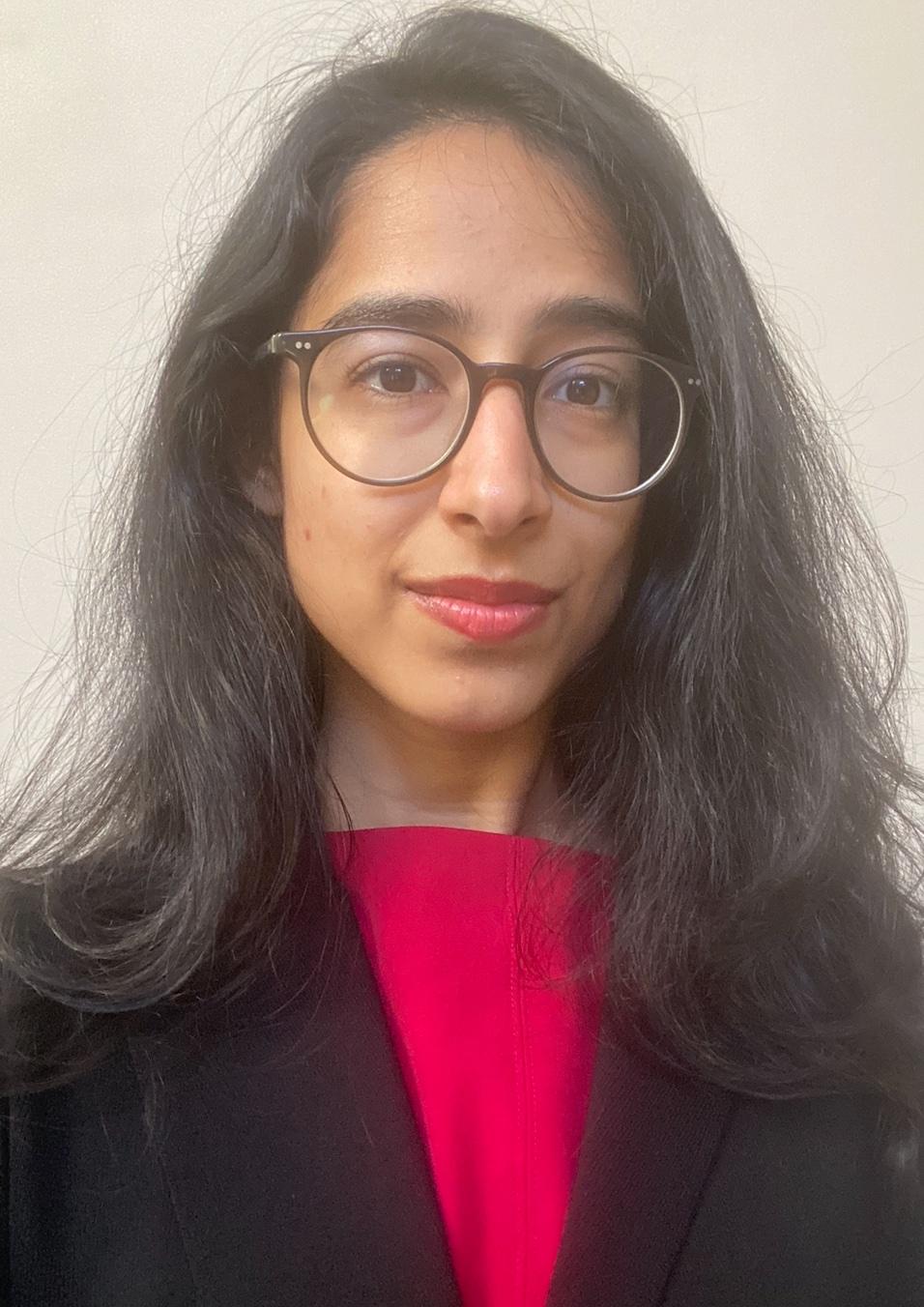
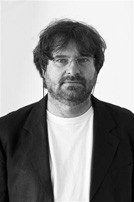
Nadia E. Brown is a Professor of Government and Director of the Women's and Gender Studies Program at Georgetown University's College of Arts and Sciences. She holds a Ph.D. in Political Science from Rutgers University and specializes in intersectional analyses of Black women’s politics, legislative studies, and identity politics. Her work emphasizes holistic approaches to understanding race, gender, and their intersections in political systems. Dr. Brown leads the #MeTooPoliSci Collective, focusing on eradicating sexual harassment in political science, and co-PIs a million-dollar NSF grant addressing systemic issues in the discipline. She is editor of Politics, Groups and Identities and contributes to The Monkey Cage blog. Her research spans Black women’s legislative representation, digital activism, and feminist methodologies, with award-winning books including Sisters in the Statehouse and Sister Style . Education: Ph.D. in Political Science, Rutgers University Key Affiliations: African American Studies Program, #MeTooPoliSci Collective Research Methods: Case studies, ethnography, interviews Her advocacy extends beyond academia, influencing public discourse on racial justice and gender equity through media engagement and policy-focused scholarship.
Patricia M. Thornton is an Associate Professor in the Department of Politics and International Relations (DPIR) at the University of Oxford and a Fellow and Tutor in Politics at Merton College. She specializes in Chinese politics, focusing on state-society interactions, authoritarian governance, and the legacies of the Cultural Revolution. Her research explores institutions, practices, and networks shaping governance in China, including works like *Disciplining the State* (2007) and *Red Shadows* (2017). She has held leadership roles at Oxford, including Chair of the Sub-Faculty of Politics and International Relations, and served on editorial boards such as *The China Quarterly*. Her work addresses contemporary challenges like authoritarian resilience, social control mechanisms, and political dissent. Research Interests: - State formation and governance in China - Authoritarian political systems - Memory and legacies of the Cultural Revolution - Party-state dynamics and social movements - Comparative political institutions Publications highlight themes like economic governance, social movements, and policy implementation. She has supervised numerous PhD students, many now leading academics in Asia-Pacific studies. Her contributions to understanding China’s political evolution are complemented by media commentary on current events, including analysis of Xi Jinping’s governance strategies and societal trends. Awards: Merton College Fellowship Key Projects: Edited *To Govern China* (2017) and *Red Shadows* (2017)
Sho Konishi serves as Director of the Nissan Institute of Japanese Studies and Associate Professor in Modern Japanese History at the University of Oxford, holding dual appointments in the Faculty of History and the Oxford School of Global and Area Studies. His interdisciplinary work bridges Japanese studies with transnational intellectual history, focusing on non-imperial connections between Japan, Russia, and global networks. Undergraduate studies completed as a U.S. military school cadet after extensive coursework in Russia Georgetown University: Philosophy and International Affairs University of Chicago: Ph.D. in History (Theology and History) Postdoctoral fellowship at Harvard University Konishi's research centers on intellectual and cultural history with emphases on transnational encounters, anarchist thought, and the history of science. He investigates non-imperial knowledge production across 19th-20th century Japan, Russia, and Eastern Europe, with particular focus on symbiosis theory, linguistic democracy, and the role of nonverbal communication in epistemology. His work challenges Western-centric modernity narratives through examinations of anarchist natural science and transnational emotional histories. His publications reveal consistent engagement with alternative epistemologies and cross-cultural exchanges, spanning transnational history, the history of science, and cultural studies. Key themes include Japan-Russia intellectual networks, anarchist cooperative movements, and non-imperial frameworks that reposition Japan within global knowledge systems rather than colonial paradigms. ICAS Book Prize 2023 – Humanities for Japan’s Russia: Challenging the East-West Paradigm Konishi contributes to international academic governance as Advisory Board Member for the Esperantic Studies Foundation, External Faculty at the University of Chicago Stevanovich Institute on the Formation of Knowledge, and International Advisory Board Member for Manchester University Press's Anarchist Studies Series. His cultural impact extends to architectural projects like the Venice Biennale's Philippine Pavilion through 'Symbiogenesis: The Art of Bayanihan Architecture'.
Peter Werner is a Full Professor of Behavioral Economics and Policy Design at Maastricht University's School of Business and Economics, where he leads research in the Department of Economics (Microeconomics & Public Economics section). He progressed from Assistant Professor (2016-2017) to Associate Professor (2018-2023) before attaining his current full professorship, demonstrating sustained academic contribution within the institution. His educational foundation includes: Ph.D. in Economics, University of Cologne (2005-2009), thesis: 'Behavioral Economics and Agency Problems: Empirical Studies' Diplom-Volkswirt in Economics, University of Cologne and Stockholm School of Economics (1999-2005) Werner's research centers on applying behavioral insights to real-world systems , with dual focus on fundamental social preference mechanisms and practical policy design. His work bridges laboratory experiments with field applications, particularly in wage transparency , pension decision architecture , and organizational incentive structures . Recent methodological innovations integrate population-level surveys with experimental economics to measure preference stability during crises like the COVID-19 pandemic. Analysis of his 2022-2025 publications reveals expanding scope from traditional labor economics into climate behavior and intergenerational solidarity, while maintaining core expertise in experimental methodology. Key trends include increased focus on Dutch pension systems, risk communication frameworks, and cross-generational discrimination patterns using nationally representative samples. His primary recognition includes: Marie Skłodowska-Curie Individual Fellowship (2017-2019) for 'Wage transparency in companies' (Horizon 2020 Grant 745894) Werner actively secures competitive funding through major initiatives: Current: Netspar Theme Project on risk preference measurement (Instituut Gak) Recent: Netspar pension savings project (2019-2023) Past: Marie Curie Fellowship (2017-2019) He coordinates the UM Behavioral Insights Center and co-organizes the M-BEES/M-BEPS symposia series, fostering research-practice integration. As co-director of the UM Behavioral Insights Center—one of the university's research spearheads—Werner leads interdisciplinary teams applying experimental economics to public policy challenges, with particular emphasis on pension communication and labor market transparency through partnerships with Dutch governmental and financial institutions.
William Hurst is the Chong Hua Professor of Chinese Development in the Department of Politics and International Studies (POLIS) at the University of Cambridge . He is a Governing Body Fellow at Wolfson College and is affiliated with the Centre for Development Studies and the Centre for Geopolitics . Hurst has been a faculty member at the University of Cambridge since 2013. Prior to this, he held positions as a postdoctoral fellow at the University of Oxford and as an assistant professor at the Universities of Texas and Toronto. His research spans four major themes: labor politics , contentious politics , political economy , and the politics of law and legal institutions , with a regional focus on China and Indonesia . He is currently completing a book manuscript on the comparative politics of law and legal institutions in China and Indonesia since 1949, based on over a year of fieldwork in each country since 2006. Hurst’s publications reflect a deep engagement with the evolution of Chinese and Indonesian governance, labor rights, urban development, and legal reform. His work critically examines how authoritarian regimes manage legal institutions, labor unrest, and urban transformation, offering comparative insights into state-society relations in East and Southeast Asia. While no specific students or awards are listed in the provided text, Hurst’s academic trajectory and publication record indicate a strong commitment to both research and pedagogy in development studies and comparative politics.
Sanjay Subrahmanyam is Distinguished Professor of History and Irving & Jean Stone Endowed Chair in Social Sciences at UCLA's Department of History. A globally recognized historian of the early modern period (15th-18th centuries), he previously held prestigious positions at the Collège de France (2013-2021), University of Oxford (2002-2004), and Ecole des Hautes Etudes en Sciences Sociales in Paris (1995-2002). He founded UCLA's Center for India and South Asia (2005-2011) and maintains significant academic engagement in France through media appearances and lectures. His educational background includes: M.A. in Economics (First Rank with Gold Medal), Delhi School of Economics (1982) Ph.D. in Economic History, Delhi School of Economics (1987) Honorary D.Litt., University of Calcutta (2015) Doctorat honoris causa, Université catholique de Louvain (2017) Subrahmanyam's research revolutionized global historical methodology through his pioneering concept of 'connected histories,' which challenges Eurocentric periodization and emphasizes horizontal connections across regions. His work spans South Asian political culture, Indian Ocean trade networks, Iberian imperial systems, and Mughal court dynamics, consistently integrating multilingual archives and visual sources. He demonstrates exceptional mastery in synthesizing Portuguese, Spanish, Persian, Tamil, and Sanskrit materials to reconstruct non-Western perspectives on early modern globalization. His recent publications reveal intensified focus on transcultural encounters, maritime archaeology, and the material dimensions of empire. Works like Across the Green Sea (2024) and Mirrors of Empire (2026) showcase his shift toward analyzing ego-documents and visual culture to explore identity formation in frontier zones. The consistent thread remains his critique of civilizational boundaries and emphasis on fluid cultural exchanges across the Indian Ocean world. His scientific recognition includes: Infosys Humanities Prize (2012) Dan David Prize for History (2019) Prix International de l'Histoire (2020) Fellowship in American Academy of Arts and Sciences (2009) Corresponding Fellowship in British Academy (2016) Guggenheim Fellowship (2011-12) Subrahmanyam has mentored nine doctoral students to completion, maintaining active collaborations with Muzaffar Alam (University of Chicago), Velcheru Narayana Rao (University of Wisconsin), and David Shulman (Hebrew University). His editorial leadership includes co-editing The Cambridge World History (2015) and serving over a decade as Joint Managing Editor of the Indian Economic and Social History Review . He currently directs major international projects on Indo-Persian travel writing and Mughal intellectual networks. Though not leading a traditional laboratory, he coordinates the 'Connected Histories' research initiative across UCLA, Collège de France, and University of Chicago, fostering interdisciplinary teams examining early modern knowledge circulation. His public engagement includes regular contributions to French media (France 24, France Info) and curated exhibitions like the Codex Casanatense project.
Gyu Tag Lee is a Professor in the International Studies Department at George Mason University Korea, specializing in Cultural Studies with a focus on K-Pop, media criticism, and the globalization of culture. He holds a PhD in Cultural Studies from George Mason University (2013), an MA in Communication from Seoul National University, and a BA in English Language and Literature from the same institution. Having completed three years of military service in the Republic of Korea Air Force, he has been teaching at George Mason University Korea since 2014. His research interests span Cultural Studies, Media Criticism, Popular Music, K-Pop and Hallyu, Globalization of Culture, and Music Industry studies. Professor Lee is particularly recognized for his expertise on K-Pop's global expansion, cultural appropriation issues within the industry, and the relationship between Korean cultural identity and global pop music markets. His extensive publications reflect a consistent focus on K-Pop's evolution, from its historical roots to contemporary challenges and future directions. His work examines the tension between local Korean identity and global appeal, the role of digital platforms in fan engagement, and the cultural politics surrounding K-Pop's international success. Professor Lee's research demonstrates how K-Pop functions as both a cultural product and economic phenomenon with significant implications for understanding transnational cultural flows. As a respected commentator in the field, he serves on the selection committee for the Korean Music Awards and has been featured in numerous international media outlets including Wall Street Journal, South China Morning Post, Netflix's documentary Explained, and major Korean broadcasters such as KBS, MBC, and SBS. His insights on cultural appropriation in K-Pop have been particularly influential in shaping discussions about cultural sensitivity and global cultural exchange. Professor Lee teaches courses including Media Criticism, Globalization and Culture, K-Pop, Hallyu, and Korean Society, and Korean Popular Culture in a Global World, bringing his scholarly expertise directly into the classroom to educate the next generation of cultural critics and analysts.
Anupama Rao is Professor of History and MESAAS (Institute for Comparative Literature and Society) at Columbia University, with affiliations in Women's, Gender and Sexuality Studies and Human Rights. She is based at Barnard College, where she holds office hours and engages in interdisciplinary teaching and research. Her educational background includes a B.A. with honors from the University of Chicago and a Ph.D. from the Interdepartmental Program in Anthropology and History at the University of Michigan. Rao’s research spans South Asian history and anthropology , gender and sexuality studies , caste and race , social theory , comparative urbanism , and colonial genealogies of human rights . She is known for her groundbreaking work on anti-caste thought, particularly the political philosophy of B. R. Ambedkar, and for theorizing caste subalternity in modern India. Her scholarship critically examines the intersections of caste, gender, urban space, and political subjectivity. Her recent and ongoing publications reflect a deep engagement with global racisms, Cold War humanism, and justice futures. Key themes across her articles include Dalit aesthetics, subaltern urbanism, affirmative action, and the transnational dimensions of caste. Her work shows a consistent trend toward interdisciplinary, postcolonial, and decolonial frameworks that challenge Western-centric epistemologies. Fellow-in-Residence, National Humanities Center (2008–2009) Fellow, Center for Advanced Study in the Behavioral Sciences, Stanford (2010–2011) Fellow, REWORK, Humboldt University, Berlin (2014–2015) Global Humanities Institute Awardee, CHCI (2023) Rao has served as Senior Editor of Comparative Studies in South Asia, Africa, and the Middle East (2012–2021), President of the Society for the Advancement of the History of South Asia (SAHSA), and member of the South Asia Council of the Association for Asian Studies. She is Principal Investigator for the Mellon-funded Global Humanities Institute project Global Racisms, Cold War Humanism, and Just Futures (2022–2024) and co-directs Geographies of Injustice at Columbia’s Center for the Study of Social Difference. She has secured major research grants from the ACLS, NEH, SSRC, and Mellon Foundation. She advises and mentors graduate students, though specific names are not listed in the text. Rao directs the Institute for Comparative Literature and Society and convenes the Ambedkar Initiative, fostering interdisciplinary research and public engagement on caste, race, and justice. She leads and participates in multiple research collectives, including the Geographies of Injustice project and the Asian Spatialities initiative. She is deeply involved in institutional leadership through her roles at the Institute for Comparative Literature and Society and the Ambedkar Initiative, both of which serve as hubs for critical humanities research.
Renaud Morieux is Professor of European History at the University of Cambridge and Fellow of Pembroke College. His research explores borders between Britain, France, and the wider world since the 18th century, with focus on migration, oceans, incarceration, and the social history of war. He holds editorial responsibilities for journals including Past & Present and Revue d'Histoire Moderne et Contemporaine . Research Interests: Morieux investigates maritime borders through interdisciplinary lenses combining legal history, family studies, and global perspectives. His projects examine political deportation in the Indian Ocean and a reflexive history of European statelessness. His award-winning publications analyze cross-Channel relations, war captivity, and oceanic governance. Article Analysis: Morieux's scholarship demonstrates consistent focus on transnational networks, legal pluralism, and subaltern agency. Recent work explores colonial knowledge systems, penal transportation, and epistolary communities, reflecting innovative methodological approaches to reconstructing marginalized histories across imperial spaces. Awards and Honors: Philip Leverhulme Prize for History (2014) Leo Gershoy Award for The Channel: England, France and the Construction of a Maritime Border (2017) Mémoires de la Mer book prize (2009) Advising and Grants: Morieux has supervised 10+ PhD students on topics ranging from naval mutinies to famine philanthropy. Current doctoral candidates explore Sir Joseph Banks' networks, WWI prisoner repatriation, and oral culture in the French Atlantic. His research receives international funding including EU and UK research council support.
Carol Carpenter is a Senior Lecturer and Associate Research Scholar at Yale University's School of the Environment. She has held teaching and research positions at Syracuse University, the University of Hawaii, and Hawaii-Pacific University, and a research role at the East-West Center. Her expertise spans environmental anthropology, conservation, sustainable development, and gender in agrarian systems. She earned a B.A. from SUNY Binghamton and M.A./Ph.D. from Cornell University. Her research focuses on the social science of conservation, economic anthropology in agriculture, and gender dynamics in ecological systems. Notable fieldwork includes four years in Indonesia studying rituals and social networks, followed by four years in Pakistan as a development consultant on social forestry and women's issues for USAID, the World Bank, and the Asia Foundation. She joined Yale in 1998 and published Power in Conservation: Environmental Anthropology Beyond Political Ecology (2020) and co-edited Environmental Anthropology: An Historical Reader (2007). Her recent work critiques conservation practices through an anthropological lens, emphasizing cultural contexts and gender roles. Earlier studies explored resource management in Pakistan, including women’s labor in agriculture and afforestation impacts. Her articles span decades, addressing topics from ritual ethnobotany to development surveillance in Bolivia. While no specific grants or lab affiliations are detailed, her consultancy roles highlight applied research in development sectors. No awards are explicitly mentioned, though her academic contributions are substantial.
Tiraana Bains is an Assistant Professor of History at Brown University, specializing in modern Britain and the global British Empire. Her research investigates the contested formation of the British imperial state in South Asia between the 18th and 20th centuries, emphasizing participatory and revolutionary dimensions of imperial governance. PhD, Yale University, 2021 MA, Yale University, 2015 BA, Yale University, 2015 Postdoctoral Fellowship, Modern Intellectual History, Dartmouth College, 2021–2023 Her research interests lie at the intersection of imperial history, political authority, and intellectual frameworks of empire. She examines how both elite and non-elite actors across Britain and South Asia contested and shaped imperial rule, taxation, and labor systems. Her work positions British imperial formation not merely as coercion but as a dynamic, ideologically charged process comparable to revolutionary state-building in America and France. The recent publications reflect a deep engagement with sovereignty, imperial connectivity, and the intellectual history of empire. Her articles explore the collapse and reconstitution of imperial presidencies, dual sovereignty between Mughal and British powers, and broader conceptual attempts to 'think the empire whole.' These works span journals in British, global, and South Asian history, indicating a transregional and interdisciplinary approach. While no formal scientific awards are listed, her publications in leading historical journals and her active research program suggest strong scholarly recognition. Tiraana Bains teaches undergraduate courses at Brown, including HIST 1267: The Global British Empire, 1600–The Present and HIST 1974E: The Intellectual History of Imperialism . She is currently completing a book titled Instituting Empire: The Contested Makings of a British Imperial State in South Asia, 1750–1800 , which promises to make a significant contribution to the field. Her postdoctoral training at Dartmouth further underscores her expertise in intellectual history. Though no lab or research team is mentioned, her collaborative publications suggest engagement with a broader scholarly network at Brown and beyond.
Jaan Masso is an Associate Professor at the University of Tartu, Estonia, where he has been affiliated with the Faculty of Economics and Business Administration since at least 2001. He currently serves as Chair of the department, Head of the Chair of Economic Modelling, and Programme Manager of the Master's programme in Quantitative Economics. His research focuses on applied econometrics, economic development, foreign direct investment, and labor economics, with particular emphasis on Estonia and the Baltic region as catching-up economies. He has published 146 scholarly works with over 23,000 reads and 1,745 citations, demonstrating significant scholarly impact in his field. Masso's research interests span multiple interconnected areas including foreign direct investment effects , productivity analysis , gender wage gap studies , innovation economics , and labor market dynamics . His work often employs rigorous econometric methods to analyze firm-level and regional economic data, particularly from Estonia and other Baltic states. His recent publications (2023-2025) show consistent scholarly productivity across multiple journals, with particular focus on foreign ownership effects, gender pay gaps in academia, FinTech sector development, and innovative methods for measuring firm innovativeness through web data analysis. His scientific contributions demonstrate expertise in analyzing economic transitions in small open economies, with methodological strengths in econometric analysis of firm-level data and innovative approaches to measuring economic phenomena.
Giuseppe Fontana is an Associate Professor of Political Economy (SECS-P/01) at the University of Sannio (UNISANNIO) in the Department of Law, Economics, Management and Quantitative Methods (DEMM). He has maintained an active research profile for over two decades, establishing himself as a significant contributor to Post-Keynesian economics and monetary theory. His research interests include: Post-Keynesian Economics Monetary Theory and Endogenous Money Macroeconomic Policy and Financial Stability Financialization and Socioeconomic Impacts Economic Methodology and History of Economic Thought International Trade and Exchange Rate Theory Stock-Flow Consistent Modeling Fontana's scholarly trajectory demonstrates a consistent focus on heterodox economic approaches, particularly Post-Keynesian theory. His work evolved from theoretical contributions in the early 2000s to increasingly policy-relevant analyses of contemporary economic challenges. His recent publications show special attention to the Eurozone crisis, the impact of the COVID-19 pandemic on European economies, and the theoretical foundations of monetary production. He frequently employs stock-flow consistent modeling to provide comprehensive analyses of macroeconomic phenomena, challenging mainstream economic frameworks with alternative theoretical perspectives. Fontana has established important collaborations with scholars like Emiliano Brancaccio, Riccardo Realfonzo, and Marc Lavoie, demonstrating his integration within international networks of heterodox economists. His work has been published in leading heterodox economics journals including the Cambridge Journal of Economics, Journal of Post Keynesian Economics, and Review of Political Economy, as well as in edited volumes with major academic publishers like Palgrave Macmillan and Edward Elgar.
Andreas Eckert is Professor and Chair of African History at Humboldt University Berlin, where he also serves as Director of the International Research Centre "Work and Human Life Cycle in Global History" since 2009. Previously, he was Head of Department at the Institute of Asian and African Studies (2008-2009) and Dean of the Faculty of History and Philosophy at the University of Hamburg (2004-2006). His academic career includes visiting professorships at Harvard University, Maison des Sciences de l'Homme in Paris, and Indiana University. Professor Eckert's research focuses on African history in the 19th and 20th century , with particular emphasis on the history of the state, urbanization, and historiography. His scholarly work extends to comparative history of colonialism , history of work/labour history , and global history . His approach combines deep regional expertise in African contexts with transnational and comparative perspectives that challenge traditional historical narratives. Eckert's publication record demonstrates a consistent engagement with themes of state formation, labor relations, urban development, and historical methodology in African contexts. His work spans from detailed case studies of specific regions like Douala and Tanzania to broader conceptual explorations of how Africa fits into world historical narratives. A notable trend in his scholarship is the examination of entangled histories that connect local African experiences with global processes of colonialism, decolonization, and postcolonial state formation. His notable achievements include: 2012 Guest Fellowship at Freiburg Institute of Advanced Study Election as chairperson of "Forum Transregionale Studien" (2011) Major Grant from the German Ministry for Research and Education for the Institute "Work and Human Life Cycle in Global History" (2009) Election as chairperson of "Arbeitskreis für Moderne Sozialgeschichte" (2007) Managing Editor of the Journal of African History (2004-2011) Fellowship in the Royal Historical Society (2000) As Director of the International Research Centre "Work and Human Life Cycle in Global History," Eckert has secured significant funding including a major grant from the German Ministry for Research and Education (2009-2015). He has also served on the Board of the International African Institute in London and has been actively involved in scholarly organizations including the "Forum Transregionale Studien" and "Arbeitskreis für Moderne Sozialgeschichte." Under Eckert's leadership, the International Research Centre "Work and Human Life Cycle in Global History" brings together scholars from multiple disciplines and countries to examine the historical dimensions of work and human life cycles from a global perspective. The center serves as a hub for innovative research that transcends traditional geographic and disciplinary boundaries.
Professor Cristina Iannelli holds the Personal Chair of Education and Social Stratification at the University of Edinburgh’s Moray House School of Education and Sport, affiliated with the Institute for Education, Community & Society (IECS). She is a Fellow of the British Academy and the Academy of Social Sciences. Her research focuses on social stratification in education and labor markets, social mobility, youth transitions, and quantitative data analysis. She has led major international projects like the ESRC-funded ‘Understanding Inequalities’ (2017-2021) and previously co-directed the ESRC Applied Quantitative Methods Network (AQMeN). Key contributions include analyzing educational policies, intergenerational mobility, and curriculum impacts on inequality. Her educational background includes a PhD from the European University Institute (Florence) and prior roles as a Research Fellow at the University of Edinburgh. She has supervised 14 PhD students across topics like educational inequality, policy analysis, and labor market transitions. Awards include ESRC research fellowships for projects on educational structure and social mobility. Recent work highlights include analyzing sibling data to study intergenerational transmission of advantage, cross-country comparisons of STEM enrollment disparities, and the role of spatial job opportunities in labor market outcomes. She chairs the European Research Network on Transitions in Youth (TIY) and advises ESRC’s Data and Infrastructure Expert Group.