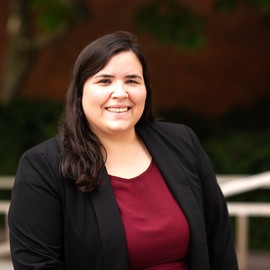
Professor Jane Zhang is a faculty member in the School of Economics at the University of New South Wales (UNSW), affiliated with the Business School. Her primary research focuses on the intersection of behavioral economics, political economy, and gender studies. Key areas of investigation include competitive behavior, protest dynamics, and institutional impacts on gender disparities. Her work employs experimental methodologies in both lab and field settings, with notable studies analyzing Hong Kong's antiauthoritarian protests through game-theoretic lenses and exploring the roots of gender gaps in competitiveness across cultural contexts. She has published in top journals such as the Quarterly Journal of Economics and Proceedings of the National Academy of Sciences . Recent research highlights include examining how curriculum design influences ideological perspectives, analyzing persistent political engagement patterns in social movements, and evaluating data quality in experimental elicitation methods. Professor Zhang collaborates extensively with global researchers and maintains a focus on bridging theoretical frameworks with real-world policy applications. No scientific awards or formal advisees are listed in the provided materials.
Prof. Dr. Susanne Brandtstädter holds the Chair in the Anthropology of Globalization at the University of Cologne since 2015, where she researches changing China, value systems, and social transformation. She also serves as adjunct professor at Xiamen University's Department of Anthropology and Ethnology. Educated with a Magister Artium in Social Anthropology (1993) and a Dr. Phil in Social Anthropology (2000) from Freie Universität Berlin, she has held academic positions at the Max-Planck-Institute for Social Anthropology , University of Manchester, and University of Oslo. Her research spans globalization , Chinese kinship , moral reasoning , and anthropology of justice . Fieldwork conducted in Taiwan , Fujian , and Shandong regions explores socio-cultural transformations in the context of China's modernization and global integration. Editorial roles include Executive Editor of China in Comparative Perspective and board membership at HAU: Journal of Ethnographic Theory and Critique of Anthropology .
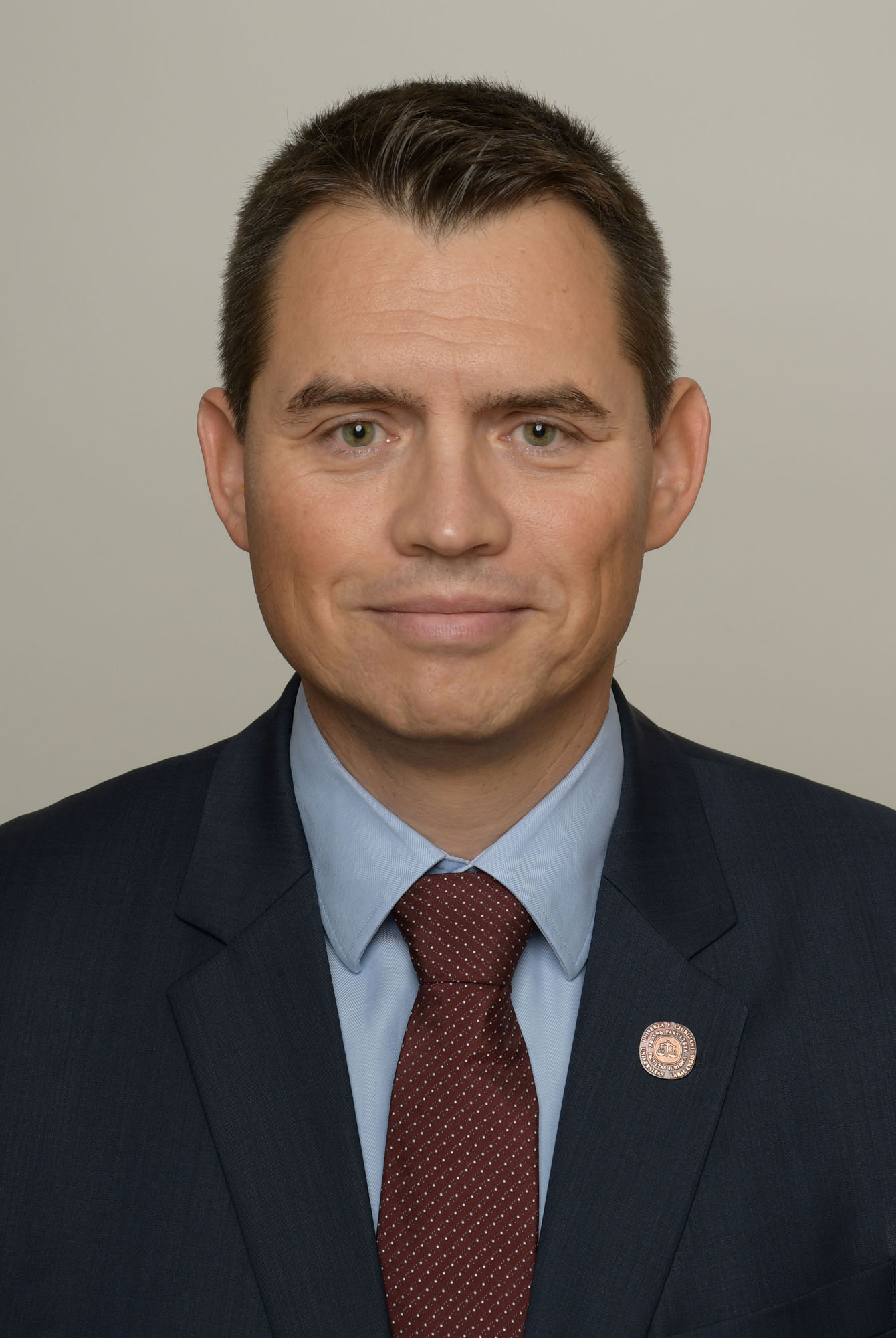
Prof Dr Grega Strban is Full Professor of Labour and Social Security Law and Head of the Labour and Social Law Department at the Faculty of Law, University of Ljubljana, where he previously served as Dean (2018-2022) and Vice-Dean for Economic Affairs (2010-2018). He maintains a dual academic affiliation as Senior Research Associate at the Department of Public Law, University of Johannesburg. His institutional leadership extends to heading the Faculty of Law's research program group since 2014 and coordinating the EU MoveS project on workers' mobility and social security coordination. Strban's research focuses on Labour Law, Social Security Law, and European Union Law with particular expertise in cross-border social security coordination, healthcare rights, and the impact of digitalization on social systems. His scholarly approach integrates comparative legal analysis with practical policy development, examining how social security systems adapt to demographic shifts, labor mobility, and technological disruption. Recent work explores the tension between solidarity principles and individual responsibility in welfare systems, alongside the legal challenges of long-term care provision in aging societies. His publication record demonstrates consistent engagement with evolving social law paradigms, particularly evident in his 15 most recent articles spanning 2021-2024. These works reveal three dominant thematic clusters: (1) cross-border healthcare coordination and reverse discrimination issues in EU law; (2) adaptation of social security systems to digital labor markets and mobility patterns; and (3) conceptual evolution of social rights frameworks toward universal dignity-based protection. The publications strategically bridge theoretical legal analysis with concrete policy recommendations for national and supranational institutions. Scientific Recognition Alexander von Humboldt Fellow (continuous since 2010) Three-time recipient of Faculty of Law's Most Echoed Researcher Award (2020, 2021, 2023) Roger Dillemans Award for Excellence in Social Security (KU Leuven, 2004) Best Young Lawyer of the Year 2000 in Slovenia Strban's advisory impact extends through multiple high-level appointments including membership on the European Committee of Social Rights (Council of Europe), presidency of the Slovenian Association for Labour Law and Social Security, and vice-presidency roles in both the International Society for Labour and Social Security Law (Geneva) and the European Institute of Social Security (Leuven). His practical influence manifests in national policy through leadership of the Permanent Arbitration Court for collective labor disputes at Triglav Insurance and membership on Slovenia's Strategic Council for Health. Current research infrastructure includes coordination of the EU MoveS project and ongoing collaboration with the Max-Planck Institute for Social Law and Social Policy where he serves as external expert following his Humboldt Fellowship.
Jeremy Milloy is an Associate Professor in the Department of History at Wayne State University, part of the College of Liberal Arts and Sciences. His research focuses on the history of work, workers, and workplaces in the U.S. and Canada, particularly examining workplace violence, capitalism, and substance use in historical contexts. He earned his Ph.D. in History from Simon Fraser University in 2015. Key publications include Blood, Sweat, and Fear: Violence at Work in the North American Auto Industry (2017), which won the 2018 Cugnot Prize, and co-edited volumes like The Violence of Work (2021). His work addresses topics such as workplace heroin interventions, legal responses to labor disputes, and fast-food worker organizing. Teaching responsibilities span courses on American labor history, capitalism, and Detroit’s history. Milloy frequently engages with public audiences on labor issues and has contributed to media discussions on topics ranging from unionization to working-class cinema critiques. His research bridges academia and public history, emphasizing the intersection of work, health, and societal structures. Awards include the Cugnot Prize and recognition for his innovative exploration of labor history’s contemporary relevance. He actively contributes to revitalizing labor studies through academic collaborations and interdisciplinary approaches.
Anne Berg is an Associate Professor at the Department of Education, Uppsala University. Her research focuses on education history, social history, and 19th-century studies, with a particular emphasis on civil society development, gender dynamics in labor movements, and the economic foundations of voluntary associations. She has led major projects like 'Cost of freedom? The Material Conditions of the Emergence of Civil Society in Sweden during the 19th century' (Swedish Research Council, 2018–2020) and 'Bourgeois feminism or class solidarity? Working class women's actions and strategies in the bourgeois movement around the turn of the century 1900' (2019–2021). Her work bridges historical analysis with contemporary debates on education, state policy, and social movements. Key publications include studies on worker organizations, educational financing, and the intersection of gender and class in Nordic history. She collaborates extensively with institutions across Sweden and contributes to academic journals like Historisk Tidskrift .
Valentina Gonzalez-Rostani is an Assistant Professor in the Department of Political Science and International Relations at the University of Southern California. She is also affiliated with the Mobilization and Political Economy NSF-REU program at the University of Pittsburgh, which supports underrepresented students in social science research. Prior to joining USC, she was a Postdoctoral Research Associate in the Department of Politics at Princeton University. Her educational background includes a Ph.D. in Political Science from the University of Pittsburgh (2024), an M.A. in Political Science from the same institution (2021), an M.S. in Public Policies from Universidad Catolica del Uruguay (2019), and a B.A. in Accounting from Universidad de la Republica (2015). Gonzalez-Rostani specializes in political economy, with a focus on understanding how economic polarization fuels political polarization. Her research examines the political consequences of job automation, including effects on political attitudes, voting behavior, and political participation. She also develops methodological tools such as hierarchical models with spatial autocorrelation and computational methods to measure populism. Her work spans advanced economies and the Global South, with particular attention to Latin America. Her recent publications reveal a strong trend connecting technological change with political outcomes. She has produced influential work on automation and political apathy, right-wing populism, and the interplay between economic and cultural factors in shaping political behavior. Her methodological contributions include innovative approaches to analyzing political discourse using social media data and developing scalable tools to measure political phenomena. She is a member of the 2025 APSA Task Force on AI and Political Science, where she serves on the committee on economic inequality and the labor force. She also co-directs Razones y Personas, a 14-year-old blog where social scientists publish weekly pieces on politics and policy, with a focus on Latin America and Uruguay. Gonzalez-Rostani is deeply committed to mentoring underrepresented students. She is affiliated with the Mobilization & Political Economy NSF-REU program, which supports the research paths of underrepresented students. Her work on inclusive mentorship has been published in PS: Political Science & Politics. Before moving to the United States, she worked in Uruguayan politics as a grassroots organizer and advised a member of Congress. She teaches courses on Text as Data for Social Scientists, Introduction to Data Analysis, and The Politics of International Trade at USC. Her methodological expertise includes R programming, natural language processing, machine learning techniques, and advanced statistical modeling.
Ewa Magdalena Godlewska is a Professor at the Department of Political Systems and Human Rights , Faculty of Political Science and Journalism, Maria Curie-Skłodowska University (UMCS). Her academic career has focused on the protection of national minority rights, Polish-Austrian relations, European ethnic policies, and contemporary migration dynamics. 1999–2004: Master's Degree in Political Science, UMCS 2004–2008: Doctoral Studies in Political Science, UMCS 2008: PhD in Humanities (Political Science) from UMCS 2021: Habilitation Degree in Social Sciences (Political Science and Administration), UMCS Her research spans human rights protection , particularly for national and ethnic minorities , with emphasis on Austria. She examines European migration trends , integration policies , and ethnic governance frameworks. Godlewska's publications analyze Austrian constitutional protections for minorities, EU migration crisis responses, and anti-immigrant rhetoric in Austrian public life. Her work bridges theoretical and policy-oriented studies on European migration politics and minority rights implementation . She has participated in projects funded by the European Social Fund, including "PWP Badania, innowacje, rozwój" (2013) and "Polsko-włoski program Wsparcie dla Rozwoju" (2017). She is a member of the Polish Political Science Association and vice-president of its Lublin branch.
Łukasz Lewkowicz is an Assistant Professor at the Chair of Political Thought and Political Communication , Institute of Political Science and Administration , Maria Curie-Skłodowska University (Lublin, Poland). He also serves as a Senior Analyst in the Visegrad Group Department at the Institute of Central Europe . With a PhD in Political Science (2011) focusing on Polish-Slovak transborder cooperation, he has held academic roles since 2011 and previously worked at the UMCS Branch Campus in Puławy (2014-2018). Doctoral: Political Science, UMCS (2011) Master's: International Relations, UMCS (2009) Master's: Political Science, UMCS (2007) Research Interests center on Polish-Slovak relations , Slovak domestic and foreign policy , and regional cooperation mechanisms like the Visegrad Group and Three Seas Initiative . His work examines cross-border cooperation in Central Europe , political communication , and geopolitical thought , with a unique focus on speleohistory through studies of 19th-century cave explorers. Recent Publications (2020-2021) analyze Ukraine-Slovak relations , Three Seas Initiative challenges , and pandemic response policies in V4 countries. Earlier works (2011-2019) explore historical dimensions of Polish-Slovak cooperation , paramilitary organizations in interwar Slovakia , and transborder tourism frameworks . Scientific Achievements include: Individual Award IV degree from UMCS Rector (2021) Rector's Award for high-impact article (2020) Multiple UMCS research grants (2013-2018) National scholarships (2006-2011) His International Engagements feature research stays at institutions in Slovenia , Slovakia , Czech Republic , and Lithuania , including lectures under the Erasmus+ program . He has also contributed to policy debates on the Lublin Triangle initiative (2020) and Belarusian crisis (2020) within V4 contexts.
Donna Goldstein is a Professor of Anthropology with a focus on political anthropology, race, gender, and corruption in Latin America. Her work critically examines the intersection of power, violence, and cultural practices, particularly in Brazil and Hungary. Fields of Interest: Political Anthropology, Race and Ethnicity, Gender and Sexuality, Science and Technology Studies, Medical Anthropology. Goldstein’s research spans topics like illiberal politics during the Trump era, corruption in governance, and the cultural politics of childhood and violence. She has contributed to debates on nuclear expertise, pharmaceutical crime, and the historical reconstruction of ethnic identities. Her publications highlight the role of gesture and spectacle in politics, the ethical challenges of scientific research, and the structural violence embedded in health and social policies. She has engaged with comparative studies of environmental and health crises across regions. Goldstein is associated with the California Series in Public Anthropology and has reviewed works on sleep disorders, addiction, and beauty standards, reflecting her interdisciplinary approach. Notable Themes: Political Spectacle, Ethnographic Methodology, Structural Violence, Bioethics, Environmental Risk, Post-Truth Politics.
Annette Rasmussen is an Associate Professor in the Department of Culture and Learning at the Faculty of Humanities and Social Sciences, Aalborg University, Denmark. She holds a PhD in Educational Sociology and is affiliated with the Collaborative Organizational Learning (CO-LEARN) research group. Her work spans a wide range of topics within educational sociology and history. Her research interests center on educational sociology and history, with specific expertise in gender and education (particularly home economics), citizenship education, talent and excellence policies, governance in Nordic upper secondary education, adult education, and ethnographic research methods. Her work often employs qualitative and historical analysis to explore issues of equity, inclusion, and power in educational systems. The trends in her recent publications indicate a strong focus on the historical development of home economics education in Denmark and Scandinavia, especially its role in shaping women's citizenship, employment, and social status in the 20th century. She also conducts significant comparative research on educational governance, policy, and the experiences of newly arrived students in the Nordic region. Her methodological approach is predominantly qualitative, often utilizing ethnographic and narrative sources. PhD in Educational Sociology Annette Rasmussen has been actively involved in numerous research projects and has supervised PhD students. Her work on PhD careers, talent policies, and educational governance demonstrates her engagement with contemporary challenges in higher and secondary education. She is a prolific scholar, contributing to key journals such as Studies in Higher Education , Adult Education Quarterly , Language and Intercultural Communication , and Nordic Journal of Educational History , as well as publishing with major academic presses like Springer, Routledge, and Palgrave Macmillan.
Dr. Magdalena Lipnicka is an Assistant Professor at the Department of Social Theory and Sociology of the Family, Institute of Sociological Sciences, Faculty of Social Sciences, John Paul II Catholic University of Lublin. Her work bridges sociology, cultural studies, and comparative higher education research. Research Focus: Sociology of family, cultural elements in translations, Bologna Process implementation in Europe, political sociology of populism, and social policy. Awards & Memberships: Member of the Polish Sociological Association. Functions: Course coordinator (2019-2020). Recent Research Trends: Her publications emphasize comparative institutional analysis (e.g., Bologna Process in Poland and the Netherlands), cultural translation of realia (e.g., Dutch children's literature in Polish), and sociopolitical dynamics (e.g., PVV party's popularity, secularization of Dutch society). Scientific Activities: She has presented at international conferences and conducted research at the University of Twente. Her work often employs theoretical frameworks like new institutionalism and resource dependence theory. Dr. Lipnicka supervises bachelor's theses on topics such as family sociology, social perception of violence, and cultural determinants of social issues. Her supervision reflects a commitment to understanding familial and societal interplay through empirical analysis.
Lena Hipp is a Professor of Social Inequality and Social Policy at the University of Potsdam and a Research Professor in 'Work, Family and Social Inequality' at the Berlin Social Science Center (WZB). She has held these positions since May 2023, following her prior role as an S-/W2 Professor in Social Structure, Work, and Organizations at the same university from 2017 to 2022. She led the WZB research group 'Work and Care' from 2012 until April 2023. Education: PhD in Organizational Behavior, Cornell University, 2011 Undergraduate studies at Albert-Ludwigs-Universität Freiburg, Institut d’Etudes Politiques Paris, and Freie Universität Berlin, 1997–2003 Policy advisor, German Bundestag, 2003–2005 Her research focuses on social inequality, sociology of work, gender, family, welfare states, and organizational sociology . She employs advanced research methods and comparative analysis to study labor markets, care work, and policy impacts. Her recent publications address gendered work patterns, remote work, migrant care labor, and attitudes toward maternal employment, often using survey experiments and panel data. The trends in her recent articles show a strong emphasis on gender disparities in labor markets , particularly during and after the pandemic, the role of organizational and welfare policies in shaping equality, and the transformation of work through digitalization and platform economies. Her work bridges theoretical sociology with empirical policy-relevant research. Scientific Awards: No awards explicitly mentioned in the provided text. Advising and Grants: Lena Hipp supervises students and leads multiple externally funded research projects. Her current projects include analyses of working hours (Hans Böckler Foundation), sorting on online care platforms (DFG), youth views on solidarity (Stiftung Mercator), and gendered labor market inequalities during the pandemic (BMBF). She has completed significant projects on care work, good work, and the impact of COVID-19 on women in Berlin. She is also involved in public engagement, including co-producing short films on 'good work' and career choices in relation to dating. Labs and Teams: She leads or has led the 'Work and Care' research group at WZB and is affiliated with the doctoral program 'Good Work' at the Berlin Social Science Center. Her collaborative network includes researchers across Germany and internationally, particularly in comparative social science and policy analysis.
Angela S. García is an Associate Professor at the Crown Family School of Social Work, Policy, and Practice at the University of Chicago. Her research focuses on international migration, law and society, race and ethnicity, urban sociology, and social policy. She holds a PhD and MA in Sociology and Latin American Studies from UC San Diego. Her academic affiliations include courtesy appointments in the University of Chicago’s Department of Sociology, as well as roles at the Population Research Center, Center for Health Administration Studies, and multiple interdisciplinary centers focusing on race, Mexican studies, and Latin American research. Externally, she collaborates with the University of California San Diego’s Center for Comparative Immigration Studies and the Scholars Strategy Network. García’s recent work examines the sociopolitical implications of immigration policies, including deferred action programs, census participation by undocumented populations, and the intersection of violence and migration. Her analysis emphasizes how legal frameworks and local policies shape immigrant integration, political engagement, and everyday survival strategies. Her research has been published in leading journals, with thematic trends in migration governance, policy impacts on marginalized communities, and comparative studies of legal systems across regions.
Lisa Hellriegel is a Researcher and doctoral candidate at the University of Bremen, Faculty of Social Sciences, working within the Department of Social Sciences. Since August 2023, she has been employed as a research assistant in the project 'Hinter der Norm: Praktiken der Sexualität zwischen Säkularisierung und Verwissenschaftlichung, 1848–1930' (Behind the Norm: Practices of Sexuality between Secularization and Scientificization, 1848-1930). From September to December 2024, she held a doctoral scholarship at the German Historical Institute London. Her academic background includes a Master's degree in History from Universität Hamburg (2018-2021) and a Bachelor's degree in History and Political Science from Universität Hamburg and Trinity College Dublin (2015-2018). Lisa Hellriegel's research focuses on the history of sexuality, particularly the historical evolution of perceptions and legal frameworks surrounding sexual violence. Her work intersects with memory studies, gender history, and urban history. She employs diverse methodological approaches including archival research, oral history, and analysis of legal and medical documents. Her research often examines how urban spaces shape and reflect societal attitudes toward sexuality and violence. Her dissertation project 'Von Sittlichkeit zu Selbstbestimmung?' investigates the transformation in societal and legal perceptions of sexual violence against adults from the Weimar Republic period through to the late 1960s, with particular emphasis on the 1973 German legal reform that shifted the conceptualization from 'moral violation' to 'violation of sexual self-determination.' This research compares cases from German cities (Hamburg, Berlin) with English cities (London, Birmingham, Manchester) to analyze the impact of political systems and legal frameworks. She has been actively involved in collaborative research projects, particularly regarding the Dessauer Ufer concentration camp site in Hamburg, working with survivors' testimonies and developing public history initiatives. Her work demonstrates strong engagement with both academic and public audiences through various presentations and publications.
César F. Rosado Marzán is a Professor of Law at the University of Iowa College of Law, specializing in labor and employment law with a focus on alt labor , worker centers, and international labor frameworks. His research bridges ethnographic studies of Chicago-based worker centers with comparative legal analysis across Chile, Puerto Rico, and South America. Key research areas: Labor rights enforcement, wage theft criminalization, moral economy of worker centers, and cross-regional labor policy comparisons Collaborative works: International framework agreements, sectoral bargaining mechanisms, and global supply chain labor dynamics His book manuscript examines how resource-limited worker centers expand rights through social capital and strategic framing. Recent publications appear in journals like Law and Social Inquiry and Chicago-Kent Law Review .