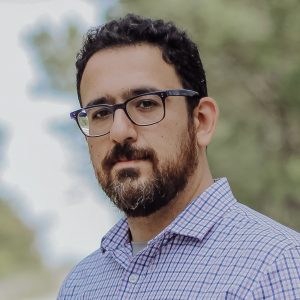
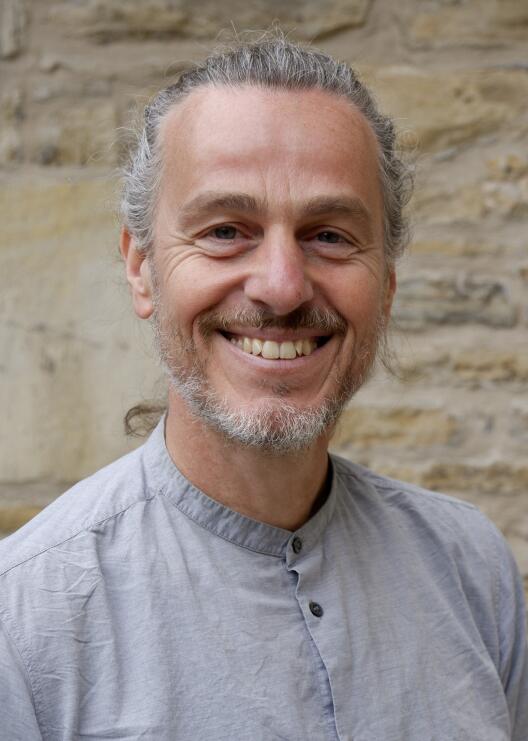
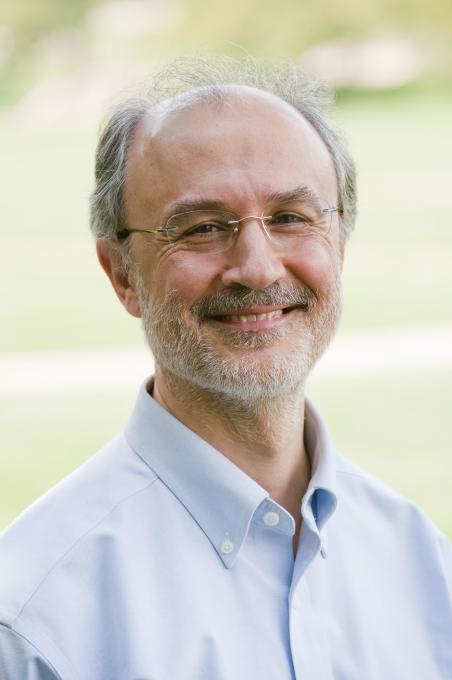
Ali Karjoo-Ravary is the Richard W. Bulliet Assistant Professor of Islamic History at Columbia University, specializing in the intellectual, social, and visual histories of premodern Islam through Arabic, Persian, and Turkic sources. His research intersects historical writing, cosmology, Sufism, and multilingual poetry in the Islamic East (Mashriq). Education: Ph.D., University of Pennsylvania (2018) M.A., University of Pennsylvania (2016) B.A., SUNY Stony Brook (2011) His current book project, Muhammad’s Song: Politics, Performance, and Cosmology in the Fourteenth Century , examines post-Mongol Islamic monarchy through Kadi Burhaneddin's life and rule. He also explores Sufi visual iconography, science fiction's relationship to religion, and architecture's role in evolving Islamic discourses. Scientific Awards and Fellowships: Bard Graduate Center Visiting Fellow (Fall 2020) Wolf Humanities Center Graduate Research Fellow (2016-2017)
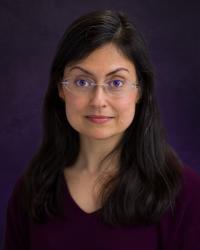
Purnima Dhavan is an Associate Professor of History at the University of Washington's College of Arts & Sciences, holding the Giovanni and Amne Costigan Endowed Professorship. She specializes in early modern South Asia (1500-1800), focusing on religious and cultural identity, Mughal institutions, and literary networks. Her research integrates interdisciplinary methods, with adjunct affiliations in Near Eastern Languages and the Jackson School's South Asia Center. Education: PhD in South Asian History from the University of Virginia (2003), MA (1998), and BA (1996) from the University of Michigan. She has taught at multiple institutions, including the College of St. Benedict/St. John’s University and Bowdoin College. Research Interests: Mughal literary culture, Sikh warrior traditions, gender in pre-colonial societies, and environmental history. Notable works include her book *When Sparrows Became Hawks* (2011) on Sikh militarization and a forthcoming project on literary associations in Mughal urban centers. Publications span peer-reviewed journals and edited volumes, emphasizing pre-colonial South Asia’s intellectual and socio-political dynamics. Awards include the Howard Keller Chair and NEH fellowships. Service: Extensive contributions to academic governance at UW, including roles in the Faculty Senate, departmental leadership, and national professional organizations like the American Historical Association and Association of Asian Studies. Languages: Native Hindi speaker, advanced Urdu/Persian/Punjabi, and proficient in Spanish.
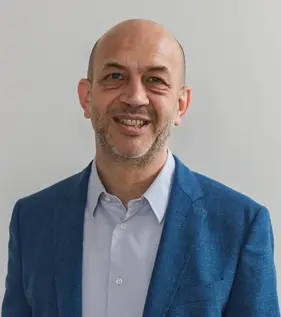
Prof. Dr. Christoph U. Werner is the Chair of Iranian Studies at Otto-Friedrich-University Bamberg since 2019, following his 12-year professorship at Marburg University (2007-2019) and previous academic roles. He specializes in Iranian Studies with focus areas in social history , legal institutions , Shiite religious structures , and Persophone literary history . As a Research Dean of Humanities and Cultural Studies (2023-2025) Managing Director of the Institute of Oriental Studies (2021-2025) President of Societas Iranologica Europaea (2019-2023) , he leads major academic initiatives. His research spans Qajar-era legal contracts Waqf (endowment) systems Persian-Ottoman-Georgian historical interconnections Manuscript studies of Persian documents , often combining archival analysis with interdisciplinary approaches. Recent publications focus on 20th-century Persian cultural politics, early modern Persian-Ottoman interactions, and legal epigraphy. He collaborates extensively with institutions like the University of Oxford's Invisible East and DFG Priority Programme Transottomanica . His editorial work includes Orientalistische Literaturzeitung (2022-) Persimone blog (2022-) Bamberg University Press publications and multiple Iranian academic journals.
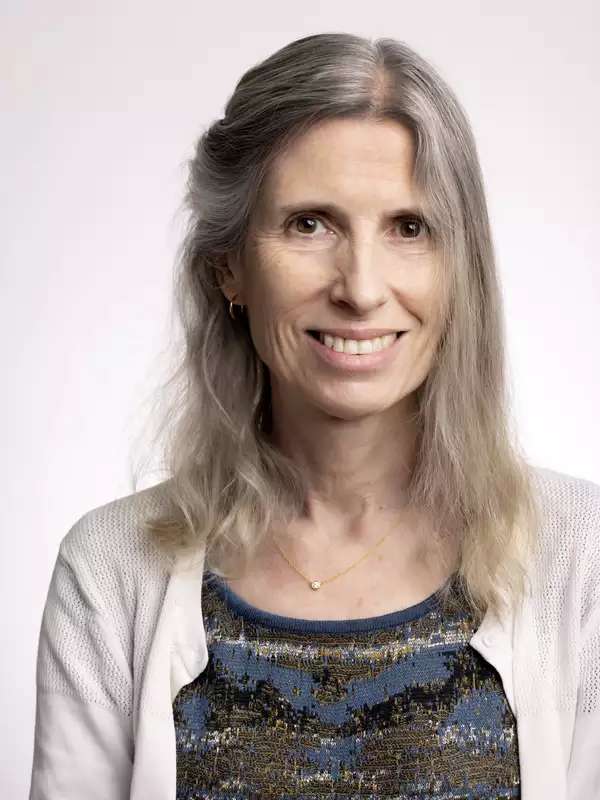
Kazuyo Murata is a Senior Lecturer in Islamic Studies at King's College London, based in the Department of Theology & Religious Studies within the Faculty of Arts & Humanities. She specializes in pre-modern Islamic intellectual history with a focus on Sufism, falsafa (Islamic philosophy), and Persianate traditions. Her research bridges theological aesthetics, metaphysics, and comparative philosophy, particularly exploring themes of beauty, love, and human perfection in Sufi thought. Dr. Murata holds a PhD in Islamic Studies (with a joint MPhil in Medieval Studies) from Yale University and a BA (summa cum laude) in Philosophy and Religious Studies from SUNY Stony Brook. She is a Fellow of the Higher Education Academy and a member of the Royal Asiatic Society. Her monograph *Beauty in Sufism: The Teachings of Ruzbihan Baqli* (SUNY Press, 2017) analyzes the role of beauty in the cosmology of the 13th-century Persian mystic Rūzbihān Baqlī. Recent work includes comparative studies of Plotinus and Sufi conceptions of beauty, and analyses of Rūmī's mystical poetry. She teaches undergraduate and graduate courses on Islamic thought, Sufism, and Islamic philosophy. Current research focuses on 'Sufi Recipes for a Life Lived Well,' a Leverhulme-funded project (2025–2026) exploring ethical and spiritual frameworks in classical Sufi literature. She has delivered invited lectures on topics such as Sufi conceptions of beauty and well-being in contemporary contexts.
Alexander Key is an Associate Professor of Comparative Literature at Stanford University, specializing in Classical Arabic literature and the intellectual history of Arabic and Persian-speaking worlds from the 7th century onwards. His scholarship focuses on the philosophy of language, literary theory, and cross-cultural translation. Ph.D. in Arabic and Islamic Studies from Harvard University (2012) Current research: Arabo-Persian linguistic intersections, poetics in translation, and pre-modern theories of syntax and affect His articles span diverse eras and topics, including: Medieval Arabic language philosophy (5th–11th century) Modern Arabic political poetry analysis (20th–21st century) Comparative methodologies bridging Islamic and Western traditions A key editorial role includes: Board Member of Stanford University Press Advisory roles at Habib University and Stanford’s Markaz Resource Center His work bridges academic publication with public discourse through: Contributions to Arcade Colloquy Interviews on poetics, religion, and contemporary politics Podcasts and literary salon discussions
Timo Kaartinen serves as Professor of Social and Cultural Anthropology and Vice Dean for Research and Doctoral Education at the University of Helsinki 's Faculty of Political Science . Since 1992, he has conducted extensive research in Southeast Asia with a focus on Indonesia, exploring communicative practices, narratives, and cultural responses to uncertainty. His teaching spans social change in bachelor's, master's, and doctoral programs, covering environmental anthropology, political anthropology, cosmologies, religions, and linguistic anthropology. PhD in Anthropology, University of Chicago (2001) Docent (Adjunct Professor), University of Helsinki (2011) Research interests center on ethical discourse in Indonesian Islamic universities, resource politics in oil palm estates, and linguistic anthropology with emphasis on storytelling, folk poetry, and minority language revitalization. His work combines ethnographic focus on Southeast Asia with theoretical contributions to frontier studies and postcolonial anthropology. Recent publications examine frontier temporalities (2020-2025), Islamic transformations (2019), and oral narrative structures (2017-2013). Key projects include ARCTIC Research Centre (2025-2029), Diversity in Society and Life (DIVSOL) (2025-2030), and Religious Movements in Ethical Life (2019-2023). Grants from the Academy of Finland and University Profiling Funding support these initiatives. Academic activities include keynote speeches at international conferences (e.g., Empowering Local Wisdom 2014, Labor Migration in Asia-Pacific 2013) and editorial roles. He has conducted fieldwork in Indonesia since 1992, focusing on Bandanese cultural heritage and Maluku religious dynamics . His methodological approach combines ethnographic fieldwork with historical document analysis .
Rahim Shayegan is an Assistant Professor of Iranian at the University of California, Los Angeles (UCLA) Department of Near Eastern Languages and Cultures, and serves as Director of the Pourdavoud Center for the Study of the Iranian World and the Program of Iranian Studies. His research spans multiple historical periods and linguistic traditions of Iran. Education PhD in Iranian Philology & Ancient History, Harvard University MA in Old Iranian Philology & Ancient History, Sorbonne University BA in Philosophy, Comparative Philology, and History, University of Cologne His expertise includes Sasanian history, Iranian epigraphy, and comparative philology, with significant contributions to understanding ancient Iranian religions and historiography. He has received prestigious awards for his scholarship, including the Ehsan Yarshater Book Award and Guggenheim Fellowship. Academic Leadership Director, Pourdavoud Center (2017–present) Jahangir and Eleanor Amuzegar Chair (2013–present)
Rachel Fell McDermott is Professor of Asian and Middle Eastern Cultures at Barnard College, Columbia University, specializing in South Asian religions, particularly the Hindu goddess traditions of Bengal in India and Bangladesh. Her work bridges religious studies, human rights, and comparative religion, with a strong focus on Kali, Durga Puja, and the literary legacy of Kazi Nazrul Islam. Education: A.B., Religious Studies, University of Pennsylvania, 1981 M.Div., Harvard Divinity School, 1984 A.M., Study of Religion, Harvard University, 1986 Ph.D., Study of Religion, Harvard University, 1993 Her research centers on the religious and cultural dynamics of Bengal, exploring themes such as goddess worship, ritual practices, religious poetry, and the intersection of religion with politics and identity. She is deeply engaged in comparative religion, examining how religious themes like suffering, sacrifice, and divine femininity manifest across traditions. Her scholarship also addresses diasporic religious experiences, digital religion, and interfaith dialogue, particularly between Hindu and Christian communities. The 15 most recent publications reflect a sustained scholarly engagement with goddess traditions, especially Kali and Durga, as well as broader themes in South Asian religion, including Tantric symbolism, festival culture, and the reception of Hindu deities in the West. Her work spans ethnographic, historical, and textual analysis, often highlighting the contested and evolving nature of religious canons. She frequently contributes to major academic anthologies and journals in religious studies, South Asian studies, and comparative theology. Scientific Awards: No specific awards listed in the provided text. As a senior professor and managing editor of major academic volumes, she has likely advised numerous graduate students and secured research funding, though specific names and grants are not mentioned. She teaches courses such as “Why Do Bad Things Happen to Good People?” that explore theodicy across religions. She is currently on leave for the 2024–2025 academic year, indicating ongoing active involvement in academic life. She is involved in significant editorial projects, including the third edition of The Sources of Indian Traditions , and is working on translations and a monograph on Kazi Nazrul Islam. Her scholarly presence includes invited lectures at institutions such as Princeton, the University of Connecticut, and the Bangla Academy in Dhaka, reflecting her international recognition in the field of South Asian religious studies.
Ruggero Vimercati Sanseverino is a Full Professor of Hadith Studies and Prophetic Tradition at the Center for Islamic Theology, University of Tübingen. His research spans Hadith transmission in Sunni and Shiite traditions Prophetic worship and Islamic imitation piety Dynamics of tradition and renewal in Islam Islamic spirituality and religious practices His academic journey includes a PhD from Aix-Marseille University (2012) and a Master’s from IREMAM/CNRS (2007). He has led projects like The Presence of the Prophet (DFG-ANR) and contributed to interdisciplinary dialogues on multireligious societies. The 15 most recent articles reflect his expertise in Hadith methodology Sufi spiritual traditions Prophetic hermeneutics Comparative Islamic studies Key collaborative works address interfaith dynamics and Islamic responses to secularization. He supervises PhD candidates and contributes to editorial boards, including the Theologie, Bildung, Ethik und Recht des Islam series at Nomos Verlag. His work bridges classical Islamic scholarship with contemporary theological challenges.
Hakan Özkan is a Privatdozent and Research Associate at the Institute of Arabic and Islamic Studies, Department of Middle Eastern Studies, University of Münster, where he has been working since 2007 in various capacities. He was awarded his Venia Legendi (Habilitation) in November 2019 for Arabic and Islamic Studies with his thesis 'History of Eastern Zajal – Dialectal Arabic Verse Poetry from the East of the Arab World.' His academic background includes a Franco-German doctorate completed in 2006 from Université de Provence and University of Cologne, supervised by Claude Audebert and Monika Gronke, with external reviewers including Wolfhart P. Heinrichs from Harvard University. His educational background includes: 2019: Venia Legendi for Arabic and Islamic Studies, University of Münster 2002-2006: Franco-German Doctorate in Arabic Studies and Narratology (Université de Provence and University of Cologne) 1995-2000: Master of Arts in Islamic Studies, Oriental Languages and Literatures (University of Cologne) 2000-2001: Course program in Modern Standard Arabic and Syrian-Lebanese dialect at Institut Français d'Etudes Arabes de Damas Özkan's research focuses on premodern Arabic dialect poetry, particularly zajal and muwashshaḥ forms, narratology, prosimeter literature, socio-literary history, and diachronic dialectology. His interdisciplinary approach bridges linguistic analysis with literary criticism, examining how dialectal forms evolved within Arabic literary traditions across different historical periods and geographical regions. He has conducted extensive field research in Arab countries including Syria, Egypt, Lebanon, Tunisia, and Morocco, with particular emphasis on the historical development of poetic forms from the Mamluk through Ottoman periods. His publication history demonstrates consistent scholarly contributions to Arabic literary studies, with his 2020 monograph 'History of Eastern Zajal' representing a landmark study in the field. His recent work has expanded to include analyses of religious poetry praising the Prophet Muhammad in zajal form, wine poetry in Arabic literary traditions, and the integration of dialects into Arabic language teaching methodologies. His scholarly output spans monographs, critical editions, encyclopedia entries, journal articles, and book chapters across multiple languages including German, English, French, and Turkish. Among his academic recognitions: 2018: Second place on shortlist for W2 Professorship for Arabic Language and Translation Science, University of Leipzig 2008: Offered Junior Professorship at American University in Cairo (declined) 2007: Second place on shortlist for maître de conférence position at University of Nancy 2007: Official Qualification from National University Council (CNU) for positions as maître de conférence at French universities Özkan has served on numerous academic committees, including appointment committees for professorships in Sinology and Arabic and Islamic Studies at the University of Münster. He has been a juror for the Sheikh Hamad Award for Translation and International Understanding in Doha and has served on the steering committee for the 'Translation for Dialogue' program of the Anna Lindh Foundation. His editorial work includes reviewing for Mamluk Studies Review, Die Welt des Islams, and Middle Eastern Literatures since 2012. His scholarly activities extend to linguistic fieldwork on Pontic Greek dialects in Turkey and organizing significant academic conferences including 'The Race Course of Literature – An-Nawāǧī and His Contemporaries' in 2018 at the University of Münster. His multilingual capabilities (Arabic, Turkish, German, French, English, Persian, Ottoman Turkish, and knowledge of Modern Greek) enable his comparative work across multiple linguistic and cultural traditions in the Mediterranean region.
Nizar F. Hermes serves as Associate Professor and Department Chair in the Department of Middle Eastern and South Asian Studies at the University of Virginia, concurrently holding the position of Director of Graduate Studies. His office is located in 141 New Cabell Hall, with Spring 2025 office hours held Tuesdays from 12:00-3:00 PM. He maintains dual professional email contacts through the university system. His academic foundation includes: PhD in Comparative Literature, University of Toronto Dr. Hermes' research program centers on North African and Mediterranean literary traditions, with deep specialization in premodern Arabic-Islamic cultural production. His work investigates poetic representations of urban spaces, cross-cultural encounters between the Islamic world and Europe, and the transmission of literary heritage across the Mediterranean. Particular attention is given to Maghribī poetic imagination, elegiac traditions, and the intersection of literature with food history and refugee experiences. His methodological approach combines close textual analysis with historical contextualization to reveal continuities in Arab literary consciousness. Analysis of his recent publications (2014-2025) reveals three dominant scholarly trajectories: 1) The literary reconstruction of North African cities through poetic elegies, 2) Cross-cultural encounters documented in Arabic travel literature and folk poetry, and 3) The representation of European 'others' in medieval Arabic texts. His 2024 monograph 'Of Lost Cities' synthesizes these threads while his edited volume 'The City in Arabic Literature' (2018) establishes foundational frameworks for urban studies in Arabic literary criticism. No scientific awards or fellowships were documented in the source materials. While his role as Director of Graduate Studies indicates active mentorship responsibilities, specific student advisees and grant funding details were not provided in the available documentation. His scholarly output demonstrates sustained engagement with graduate education through publications on teaching methodologies for Arabic humanistic literature. No dedicated research laboratories or formal collaborative teams were referenced, though his co-edited volumes and multi-author publications suggest active participation in scholarly communities focused on Mediterranean studies and comparative literature.
Professor Ahmet T. Karamustafa serves as Professor and Department Chair of History at the University of Maryland, College Park, and holds affiliations with the Roshan Institute for Persian Studies and the School of Languages, Literatures, and Cultures. He also serves as Senior Advisor to PersDig@UMD. His research focuses on medieval and early modern Islamic intellectual history, Sufism, and Ottoman Turkish religious texts. Key works include Sufism: The Formative Period (2007) and God’s Unruly Friends (1994), exploring ascetic movements and mystical literature. Current projects include The Flowering of Sufism and Vernacular Islam . His academic contributions span editorial roles in major publications like Cartography in the Traditional Islamic and South Asian Societies (1992). Research expertise bridges religious studies theory, Ottoman manuscript analysis, and medieval Anatolian religious dynamics. Administrative experience includes directing Washington University's Religious Studies Program and co-chairing the American Academy of Religion’s Study of Islam Section (2008–2011). Research interests emphasize comparative religious frameworks, Sufi textual traditions, and the interplay between Islamic intellectual history and regional cultural contexts. His work critically engages Western models of religion through Islamic conceptual frameworks like 'din,' offering new methodologies for studying premodern Muslim thought.
Dr. Razak Khan is a Research Fellow in the History Research Group at CeMIS (Center for Modern Indian Studies). His academic journey includes a DPhil from Freie Universität Berlin (2014) and postdoctoral fellowships at the Max Planck Institute for Human Development and Friedrich–Alexander University Erlangen–Nürnberg. Research Focus: Early modern/colonial India, South Asian Islam, Urdu public cultures, history of emotions, Indo-German comparative histories, and global intellectual history. Key Projects: His Habilitation project explores 'Minor Cosmopolitanism' through Syed Abid Husain's writings, while his book Minority Pasts (OUP, 2022) examines locality and belonging in Rampur. Publications: 15 recent works span transnational Indo-German intellectual histories, emotional geographies, Urdu archives, and Indo-Islamic cultural studies. Collaborations: Co-edited The Incomparable Festival (Penguin, 2021) and contributed to interdisciplinary volumes on emotions and migration.
Katrin Bromber is a German Researcher at the Centre for Modern Oriental Studies in Berlin, where she has led the research group "Progress and its Discontents: Ideas, Practices, Materiality" since 2014. Her career spans senior research roles at ZMO and academic teaching positions at the University of Vienna. Nationality: German. Language skills: Native German, fluent English/Swahili, moderate Amharic, good reading knowledge in French/Russian, basic Tigrinya. Habilitation (2009–): African Studies, University of Vienna PhD (1993): African Linguistics, University of Leipzig MA (1988): Swahili Studies, University of Leipzig Katrin Bromber's research interrogates intersections of body politics , sports history , Swahili linguistics , and Ethiopian modernity . Her work traces how physical culture, media representation, and colonial/imperial narratives shape national identities across Africa and Asia. Current focus: "Progress" as contested concept in Ethiopian and Gulf urbanism. Key article trends reflect her translocal methodology: 2017 studies on Ethiopian stadiums and fitness culture ; 2014-2013 publications analyzing East African military press , sports branding in the Gulf , and Swahili poetry ; 2007-2000 works on colonial linguistic politics , Indian Ocean slavery , and German colonial Swahili promotion . Recurring sub-fields: body as political text, translocal modernity, media historiography. Scientific Awards: Research Grant of the Berlin City Council (1999-2000): Gendered Slavery study Service to the Scientific Community: Chairwoman, Academic Association for Horn of Africa Studies (2012–) Editorial Advisory Board - Stichproben. Vienna Journal of African Studies (2015–) Editorial Advisory Board - Studies of Department of African Languages and Cultures (2015–) Teaching Experience: Textlinguistics, Mediacommunication, African Linguistics, Swahili (elementary/advanced), Swahili Literature, Swahili in Arabic Script at Leipzig, Humboldt-Berlin, Free Berlin, and Vienna universities Anthropology of the Body at Mekelle University Summer School Field Research: Tanzania (1993-2003): Swahili Poetry, Intellectual History Kenya (2005): Indian Ocean WW2 UAE/Bahrain (2009): Sports and Body Cultures Ethiopia (2009-2015): Sports, Body Politics
Dr. Marle Hammond is a Professor at SOAS University of London in the School of Languages, Cultures and Linguistics, specializing in Arabic Literature and Middle Eastern and North African cinema. She earned her PhD from Columbia University in 2003 and has held prestigious fellowships at St. John's College and as a British Academy Postdoctoral Fellow at Oxford University before joining SOAS in 2010. Her educational background includes: PhD in Arabic Literature from Columbia University (2003) Postdoctoral Fellowship at St. John's College Research Centre (2002-2006) British Academy Postdoctoral Fellowship at Oxford University (2007-2010) Dr. Hammond's research focuses on Arabic women's writing across historical periods, examining grammatical gender and sexed subjectivities in Arabic and Persian literary traditions, the intersection of madness and poetry, and Arabic-language cinema with particular attention to early Egyptian melodramas. Her scholarly approach combines literary analysis with gender studies and cultural history perspectives. Her recent publications demonstrate a strong focus on recovering and analyzing historical women writers and poets from the Islamic world. Through works like "Rayhana 'The Mad': Her Persona and Poetry" (2024) and biographical entries on figures such as Sara al-Halabiyya, Hafsa bint al-Hajj, and Taqiyya bint Ghayth al-Suriyya, she has contributed significantly to expanding the canon of women's literary contributions in pre-modern Islamic societies. Her book "Arab World Cinemas: A Reader and Guide" (2024) represents a major contribution to film studies of the region. Dr. Hammond has received notable recognition for her work: Winner of the First Annual Journal of Middle East Women's Studies Book Award (2011) for "Beyond Elegy: Classical Arabic Women's Poetry in Context" British Academy Midcareer Fellowship (2017-2018) British Academy Postdoctoral Fellowship (2007-2010) External Examiner for Oxford University (2018-2020) and Exeter University (2018-2021) Associate Editor for the Palgrave Encyclopedia of Women's Writing in the Global Middle Ages (2022) Dr. Hammond has supervised doctoral students including Kubin, K. (2023) on "Affects of Shame and the Postcolonial: Identity, Recognition and Belonging" and Boulos, T. (2023) on "Breaking the Silence: Pain, Torture, Resistance and Bearing Witness in the writings of Palestinian Prisoners of War and Administrative Detainees." She has served on editorial boards and as Book Review Editor for Middle Eastern Literatures (2014-2015). Her scholarly influence extends through invited talks at institutions including Oxford, UCL, and King's College London, as well as appearances on BBC Radio 4's "In Our Time."