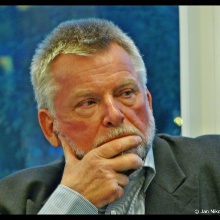
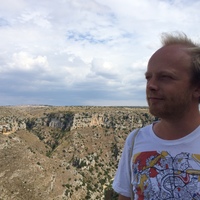
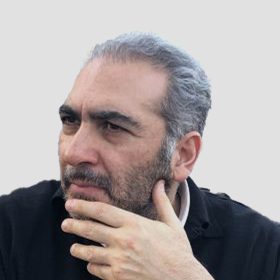
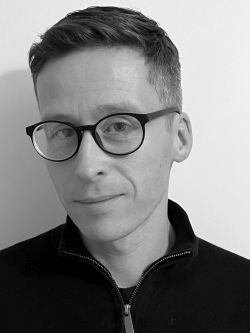
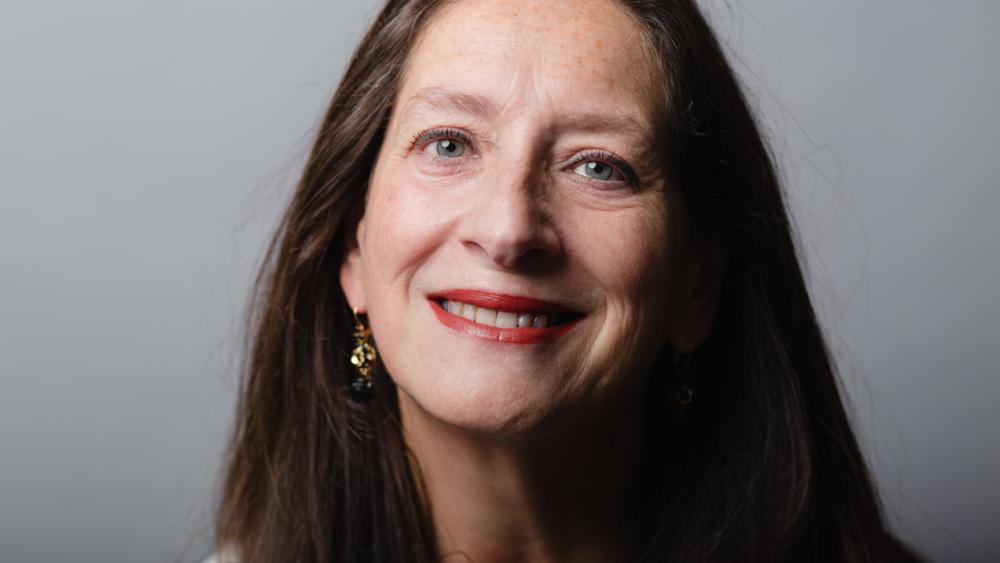
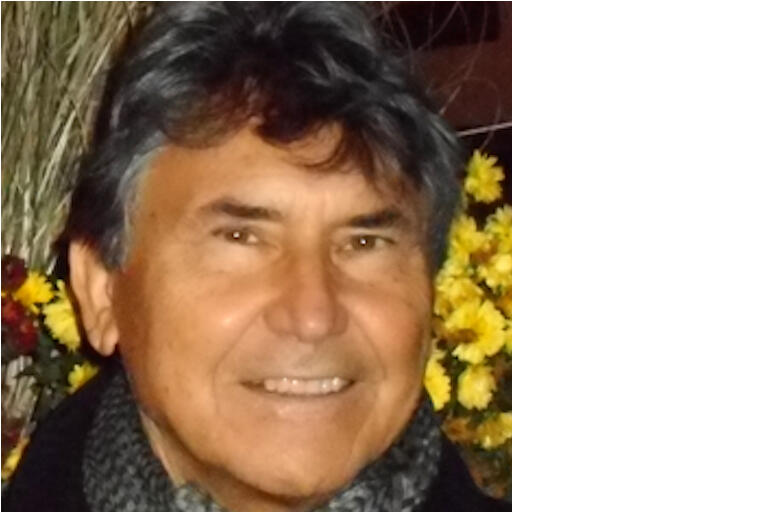
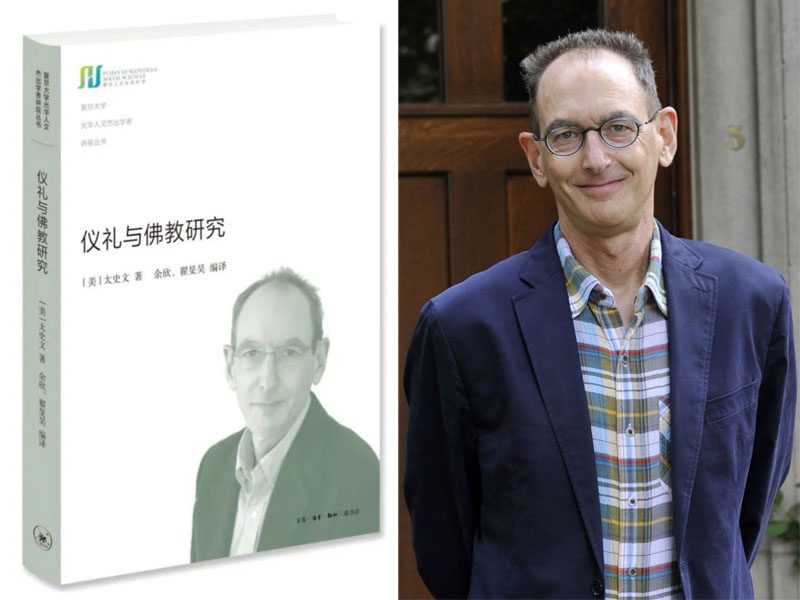
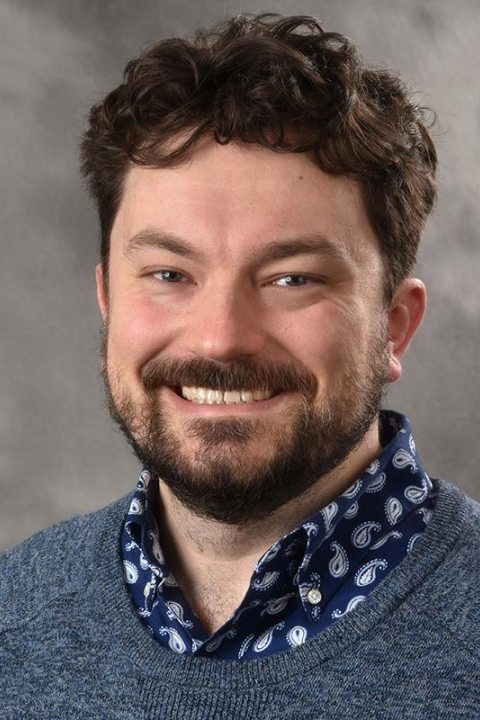
Professor Adam Yuet Chau is a Fellow and Director of Studies at St John's College and holds the Professor of the Anthropology of China position at the Faculty of Asian and Middle Eastern Studies, University of Cambridge . His academic journey includes training at Stanford University (PhD in Anthropology, 2001) and teaching roles at Oxford and SOAS before joining Cambridge in 2008. Focus on Chinese religions and their social dimensions Specializes in ritual theory and cultural transformations Develops comparative frameworks for understanding religious practices His research spans religion under socialism , hosting in political/religious contexts , and ritual polytropy . Recent projects include editing Chinese Religious Culture in 100 Objects and analyzing 'spheres' (界) in Chinese society . Publications like Miraculous Response (2006) and Religion in Contemporary China (2011) establish him as a key figure in religious anthropology. Current and past PhD/MPhil students explore topics from temple festivals in Taiwan to religious subjectification . He actively reviews for leading presses (Cambridge, Oxford, Harvard) and journals ( Ethnos , Modern China ), and participates in international academic workshops.
Gerhard Hirschfeld is an Honorary Professor at the Department of History, University of Stuttgart, and has served as Director of the Bibliothek für Zeitgeschichte since 1989. His research focuses on Social and Cultural History of World War I , Comparative Occupation History of World War II , 20th Century Netherlands History , and Academic Emigration post-1933 . He has been a Fellow of the Netherlands Institute of Advanced Studies in the Humanities and Social Sciences (1996/1997, 2006/2007) Fellow of the German Historical Institute London and held leadership roles including Chair of the German Committee for the History of WWII (1991–2000) and President of the International Committee for the History of WWII (2000–2010). His publications span monographs, edited volumes, and essays on occupation policies, collaboration, and exile studies. Recent works emphasize the media representation of WWI , continuity of nationalist rhetoric , and ethical dimensions of historical taboos . He contributes to journals like Zeithistorische Forschungen and Tijdschrift voor Geschiedenis . Scientific awards include Fellowships at NIAS and DHIL Editorial leadership in academic series like Zeit der Weltkriege and Schriften der Bibliothek für Zeitgeschichte and advocacy for interdisciplinary war studies.
Arthur Weststeijn is an Assistant Professor in Political History at Utrecht University, specializing in the history of the Dutch Republic and its colonial empire, the history and contemporary politics of Italy, and the history of Spain and Latin America. He is affiliated with the Department of History and Art History within the Humanities faculty and is part of the Research Institute for History and Art History, focusing on International and Political History. Dr. Weststeijn's educational background includes: PhD in History, European University Institute, Florence (2010) RMA in History, European University Institute, Florence (2006) MA in Philosophy, University of Amsterdam (2005) MA in History, University of Amsterdam (2004) Erasmus Exchange, Universidad de Sevilla (2000-2001) His research focuses on the intellectual history of power, particularly examining ideas that express and contest political authority through two main themes: colonialism (how ideas have shaped European colonialism and resistance against it) and republicanism (how resistance to autocratic rule has given rise to ideas of liberty, citizenship, and democracy). His work spans early-modern Dutch colonialism, anticolonial thought, the history of democracy, and connections between ancient and modern forms of settler colonialism. He has published extensively on early modern republicanism, the political uses of classical heritage, and the making of modern Italy. Weststeijn's scholarly output demonstrates a consistent focus on the intersections between political thought, colonial history, and republican theory. His work often examines how historical ideas continue to shape contemporary political discourse, particularly regarding democracy, citizenship, and colonial legacies. He frequently engages with both European and transatlantic intellectual traditions, showing particular expertise in Dutch and Italian political thought. His notable awards and fellowships include: Fellow, Huntington Library, San Marino, California (Summer 2022) Fellow, John Carter Brown Library, Providence, Rhode Island (Spring 2019) Director of Historical Studies, Royal Netherlands Institute in Rome (2011-2017) Dr. Weststeijn has served as a visiting researcher at prestigious institutions including the Cambridge Centre for Political Thought, University of Southern California, University of Wisconsin at Madison, and University of Padua. He frequently appears as an expert commentator on Italian culture and politics in Dutch media and maintains an active public intellectual presence. He is involved in multiple research initiatives including the IOS research themes on Contesting Governance, Futures of Democracy, and Longtermism and Institutional Change. His work often involves interdisciplinary collaboration with archaeologists, classicists, and scholars from various humanities disciplines.
M. Rahim Shayegan is a prominent scholar in Iranian and Near Eastern studies, specializing in Old and Middle Iranian philology, Achaemenid-Sasanian history, and Greco-Roman-Iranian cultural interactions. He holds a PhD from Harvard University and has conducted postdoctoral research at the University of Göttingen and Sorbonne. His work bridges philology, epigraphy, and historical analysis to explore ancient political ideologies, religious traditions, and cross-cultural exchanges. Education: PhD, Iranian Philology & Ancient History, Harvard University MA, Iranian Philology, Sorbonne University BA, Philosophy & Comparative Philology, University of Cologne Research Interests: Iranian epigraphy and royal inscriptions Political dynamics of pre-Islamic Iranian empires Greco-Roman and Iranian cultural dialogues Zoroastrianism and ancient Near Eastern religions His publications include seminal works like Arsacids and Sasanians: Political Ideology in Post-Hellenistic Persia (2011) and Cyrus the Great: Life and Lore (2019). He has held prestigious fellowships at the Guggenheim Foundation and is a member of the Austrian Academy of Sciences. Awards: Ehsan Yarshater Book Award (2012) Academia Europaea Membership (2019–) Courses Taught: Achaemenid Civilization Sasanian History Old Persian Cuneiform Zoroastrianism and Ancient Religions
Professor Steven J Reid is a leading scholar in Early Modern Scottish History and Culture at the University of Glasgow , where he has held a professorship since at least 2023. His work bridges intellectual, political, and religious history from c.1450 to c.1650, with a focus on James VI and Mary Queen of Scots . A prolific editor and author, he contributes to major academic series and institutions like the Hunterian Art Gallery. Research Interests Intellectual, political, and religious history of Scotland Jacobean Scotland and Renaissance/Reformation dynamics Latin literature and its cultural role Andrew Melville's educational reforms Key Publications The Early Life of James VI (2023) on royal minority Co-edited volume on The Afterlife of Mary Queen of Scots (2024) Studies in Neo-Latin poetry and educational history Contributions to Oxford Handbook of Calvin and Calvinism (2021) Projects & Grants Co-investigator on RSE-funded Mary Queen of Scots memorialization project AHRC support for Bridging the Continental Divide (2012-2015) Leverhulme Trust international network participant Fulbright Scholars Award at Yale Divinity School (2012) Teaching History 1A: Scotland’s Millennium Special Subject: The Reign of James VI (1578-1603) Module: The Life and Afterlife of Mary, Queen of Scots
Lucia Dolce serves as the Numata Professor of Japanese Buddhism within the Department of Religions and Philosophies at SOAS University of London, part of the School of History, Religions and Philosophies. Her academic base is room 342 in the Russell Square: College Buildings campus. Her educational background includes: Laurea MA (University of Venice) PhD (Leiden University) Professor Dolce's research centers on two interconnected projects: first, the discourse on the body in medieval Japanese Buddhist rituals and its connections to continental Tantric practices, emphasizing ritual fluidity and performative theory applications; second, contemporary Buddhism-Shinto syncretism with focus on revival of premodern practices in Kyoto shrines. She also examines Tokyo's urban pilgrimage routes like the Seven Gods of Fortune, analyzing institutional negotiations and religious marketing dynamics. Her journal articles (1992-2023) consistently explore ritual knowledge transfer in Japanese Buddhism, with recent works on scriptural repurposing and tantric exegesis highlighting material culture and practice-centered approaches. Earlier publications establish foundational studies on Nichiren Buddhism's esoteric dimensions, astrological cults, and celestial body worship, revealing enduring thematic threads across three decades of scholarship. Scientific awards: No awards listed in provided text Advising and grants: She currently supervises four PhD candidates: Rachel Williams (Japanese Secularity), Haruka Saito (Repentance Rituals), Sooyeun Yang (Korean Astrological Buddhism), and Yeonju Lee (Korean Nationalism). Previous supervisees include twelve PhD graduates such as Emanuela Sala (2022, Sannō Shintō), Ronit Wang (2022, Thai Hell Parks), and multiple 2011 completions. Dolce led the Newton Fellowship-associated project 'The Lucky Gods of Tokyo' (2014-2016), investigating spatial politics in Buddhist-Shinto pilgrimage networks.
James Grantham Turner is the James D. Hart Chair and Distinguished Professor of English at the University of California, Berkeley. He specializes in 18th-century British literature, gender and sexuality studies, Renaissance and Early Modern studies, narrative and the novel, poetry, and drama. His research bridges literature and art history, focusing on sexuality, gender, ecology, and classical antiquity. He holds degrees from Oxford University (B.A., 1968; M.A., Cert.Ed.; D.Phil., 1977) and has taught at institutions including Oxford, Sussex, Northwestern, and Michigan before joining Berkeley in 1990. Turner’s recent work includes The Villa Farnesina: Palace of Venus in Renaissance Rome (2022), winner of the PROSE Award in Art History, and Eros Visible: Art, Sexuality and Antiquity in Renaissance Italy (2017). His research explores interdisciplinary histories of sexuality, combining European literature, social history, and art. He has contributed to major exhibitions at the Metropolitan Museum of Art, National Gallery of Victoria, and the Getty Museum. Awarded fellowships from the Guggenheim Foundation, NEH, and ACLS, Turner’s scholarship spans over 100 articles and books. He has served on editorial boards for PMLA , Eighteenth-Century Studies , and others. His recent conference papers include discussions on Milton’s cosmology and Renaissance erotic art. He currently teaches at Berkeley and maintains office hours in Wheeler Hall. Turner’s research also intersects with global sexualities, food studies, and classical mythology. His work emphasizes cross-cultural analysis, from Italian Renaissance palaces to Enlightenment-era libertinism. He continues to explore intersections of art, literature, and sexuality across pre-modern Europe.
Seb Falk is a College Fellow and Research Fellow at Girton College, University of Cambridge, and a Senior Admissions Tutor. He holds academic roles including Praelector and Director of Studies for the Cambridge Foundation Year. His research focuses on medieval mathematical sciences, particularly astronomy, navigation, and the history of scientific instruments and texts. Falk earned a BA in History and Spanish from Oxford University, followed by an MPhil and PhD in History and Philosophy of Science from Cambridge. His research explores the interplay between religion, literature, and science in the Middle Ages, challenging the 'Dark Ages' narrative. Key projects include studies on late medieval astronomical tables and instruments, and a global comparative analysis of natural sciences around the year 1000. Falk has published widely, including the acclaimed book The Light Ages (2020), which was shortlisted for the Hughes Prize and awarded the Osterbrock Prize in 2025. His articles span topics like medieval astronomical practices, manuscript studies, and the cultural history of science. Falk is also a sought-after media contributor, appearing on BBC programs and podcasts, and has engaged in public outreach through lectures and museum collaborations.
Stephen F. Teiser is the D.T. Suzuki Professor in Buddhist Studies and Professor of Religion at Princeton University. He holds the Old Dominion Research Professor title in the Humanities Council (2022-2023). His work focuses on Buddhist rituals, Chinese religious history, and the intersection of Indian and Chinese religious traditions. Teiser delivered lectures at Fudan University, shaping his research into broader scholarly discourse. His book Ritual and the Study of Buddhism (2022) explores Buddhist rituals in Chinese contexts, emphasizing cross-cultural and methodological insights. His research bridges medieval Chinese religious practices with modern academic frameworks, addressing topics like funerary rituals, lay communities, and textual interpretation. His academic contributions span Buddhist historiography, ritual studies, and East Asian religious history. Notable works include analyses of the Ghost Festival, Dunhuang liturgies, and comparative religious texts. Teiser’s interdisciplinary approach highlights the adaptation of Buddhism in Chinese culture and its global scholarly relevance. Awards: Old Dominion Research Professor (2022-2023) Teiser’s research also engages with collaborative international projects, such as co-editing volumes on divination and East Asian manuscripts. His work emphasizes the importance of language and cultural context in interpreting religious practices, making his scholarship foundational for understanding Buddhism’s evolution in China.
Hiroto Yoshihara is a Professor at Waseda University's Faculty of Letters, Arts and Sciences, School of Culture, Media and Society, specializing in Japanese intellectual history, Buddhist studies, and Sino-Japanese comparative literature. With a Master of Arts from Waseda University, he has conducted extensive research on ancient and medieval Japanese literature, religious history, and cultural exchange between Japan and China. Yoshihara's research interests focus on Japanese intellectual history, ancient and medieval history, Japanese and Chinese literature, Buddhist studies, and Shinto studies. His work particularly examines the intersection of religious thought and literary expression in premodern Japan, with special attention to figures like Prince Shotoku and Sugawara no Michizane (deified as Tenjin). His comparative approach reveals the complex cultural flows between Japan and continental Asia. His scholarly output shows a consistent focus on religious narratives, particularly Buddhist traditions, and their literary expressions. A significant portion of his recent work analyzes the reception and adaptation of Chinese literary and religious traditions in Japan, especially during the Heian period. His research demonstrates how Japanese intellectuals engaged with continental models while developing distinctive local traditions. Yoshihara received the Kubota Utsuho Award in 1987 for his contributions to Japanese literary studies. His research has been supported by numerous grants from the Japan Society for the Promotion of Science, including projects on East Asian cultural exchange and religious thought during Japan's regency and Insei periods. He has directed significant research projects, including the Institute for Japanese Religions and Cultural History at Waseda University (2021-2025). His international collaborations, particularly with Chinese academic institutions, reflect his commitment to cross-cultural scholarship and the global dimensions of Japanese religious and literary history.
Erik Wade is an Assistant Professor in the Department of English and Creative Writing at SUNY Oswego. He holds a PhD from Rutgers University and has taught at Rheinische Friedrich-Wilhelms-Universität Bonn in Germany. His research focuses on race, sexuality, and national identity in early medieval English literature, with a particular emphasis on how these themes intersect with religious texts and cultural narratives. He currently directs the Medieval and Renaissance Studies minor and serves on the advisory board for Exemplaria: Medieval, Early Modern, Theory . Educational Background: PhD in English, Rutgers University (2018) MA in English, University of Oregon (2011) BA in English and History with a minor in Medieval and Renaissance Studies, SUNY Oswego (2009) AA in Humanities, Onondaga Community College (2007) Research Interests: Interrogates racial and sexual discourses in medieval literature Examines how early English texts constructed national identity through contested themes like rape culture and racial hierarchies Investigates global influences (e.g., Byzantine theology) on medieval English thought Challenges Eurocentric narratives in medieval studies Recent Publications Highlight: His work analyzes trans and queer themes in medieval hagiography, the racialized language of 'Anglo-Saxon' terminology, and the intersections between animal studies and gender relations. He co-authored a Smithsonian Magazine article deconstructing the term 'Anglo-Saxon.' Teaching and Advocacy: Teaches courses on medieval global literature, critical theory, and premodern identity. Actively promotes inclusive pedagogy and addresses systemic racism in academic disciplines through published opinion pieces and collaborative projects like the upcoming Race in Early Medieval England (Cambridge UP).
Mohammad Fazlhashemi is a Professor of Islamic Theology and Philosophy at Uppsala University's Department of Theology (Systematic Theology). His work bridges Islamic intellectual traditions with contemporary issues like democracy, environmental ethics, and interreligious dialogue. Current affiliations: Uppsala University, Faculty of Theology Key research areas: Islamic political philosophy, ecotheology, gender in Islam, and theological responses to modernity Email: mohammad.fazlhashemi@teol.uu.se Recent publications highlight trends in Islamic ecoethics (e.g., Islamic Ecotheology , 2025), critical analysis of classical texts (e.g., Critical-constructive interpretation of Islamic documents , 2024), and political theology (e.g., Justifying political decisions through theological arguments , 2016). His scholarship often engages comparative frameworks, as seen in works like Occidentalism (2005) and Shiʿite Salafism? (2022). Mohammad Fazlhashemi's impact spans both academic and public discourse, with contributions to debates on Islam and modernity in outlets like Expressen and Svenska Dagbladet . His co-authored book Visdomens hus: Muslimska idévärldar 600 - 2000 (2017) demonstrates his interest in Islamic intellectual history across eras.
Dr. Siobhán Dowling is a Senior Lecturer in Education at the School of Education, University College Cork (UCC), with expertise in Religious Education, Music Education, and the intersection of The Arts in Education. She earned her PhD from the University of Wales, Trinity St David, Lampeter, UK, in 2011 and has served in both teaching and administrative roles at UCC since 1998, including Director of the Structured PhD in Education. Education: PhD (2011) in Biblical and Musical Reception History, University of Wales, Trinity St David. Current Roles: Senior Lecturer, Tutor, Placement Supervisor, Director of Structured PhD in Education. Her research focuses on the reception history of biblical narratives in music , particularly themes like the Sacrifice of Isaac, Eve, and the Book of Samuel. She explores collaborative learning in teacher education and integrates creative pedagogy in Religious Education. Her work spans interdisciplinary analysis of the Bible’s influence on music, art, and cultural identity. The 15 most recent publications highlight her pioneering work on biblical stories in musical compositions (2025), visual and musical reception of Dives (2024), and peer-reviewed studies on collaborative learning (2023). Her contributions to the Encyclopedia of the Bible and its Reception (2025–2016) cover topics like patriarchs, psalms, and gendered biblical figures. Scientific Awards: Recipient of two book awards in the USA for co-authored work 'The Bible in Music: A Dictionary of Songs, Works and More' (2015). Research Grants and Supervision: Awarded multiple Erasmus+ Staff Mobility Grants (2023, 2014) for international training and a Kurt Weill Foundation Travel Award (2014). Supervised PhD, MEd, and PME students while serving as Internal/External Examiner. Leadership: Coordinated UCC’s Cohort PhD in Education (2001–2014) and led the MAAP in Guidance and Counseling program. Delivered invited seminars at KU Leuven, University of Tuebingen, and Trinity College Dublin.
Yi Gu is an Associate Professor of modern and contemporary art and visual culture at the University of Toronto Scarborough (UTSC), with cross-appointments in the Department of Arts, Culture and Media and the Department of East Asian Studies. Her scholarly work centers on Asian visual culture, particularly China's artistic and photographic history from the early twentieth century to the present. Her research interests include cold war visual culture, post-socialist art, Chinese photography history, contemporary photography in Asia, mass art and amateurism, and visual methodologies across disciplines. Gu's work is driven by examining the political ambitions and social functions of art, as well as the politics of aesthetics. Her recent research has focused on aesthetic capitalism and digital surveillance in China, leading to studies of the Digital Countryside initiative and CCP aesthetics anchored in agrarian imaginary. Gu's publications reveal a consistent engagement with visual epistemology, particularly how Chinese artists and photographers have negotiated modernity, nation-building, and transnational influences. Her work spans from early twentieth-century open-air painting practices to contemporary digital visual culture, demonstrating how visual practices serve as critical sites for understanding China's social and political transformations. As co-editor of the open-access academic journal Trans Asia Photography and convening member of the research project 'Alternative Collections and Digital Humanities: Twentieth-Century Chinese Art and Visual Culture,' Gu actively contributes to expanding the field of Asian visual studies through collaborative scholarly initiatives. At UTSC, Gu teaches undergraduate courses on modern and contemporary Asian art, lens-based media in Asia, public art, and art and digital culture. Her scholarly approach combines art historical methods with visual culture studies, media theory, and cross-disciplinary perspectives to examine how visual practices shape and are shaped by political and social contexts in China and beyond.
Aglaia McClintock is an Associate Professor of Roman and Ancient Law (IUS/18) in the Department of Law, Economics, Management and Quantitative Methods at the University of Sannio. Her research examines Roman legal institutions through interdisciplinary lenses including anthropology, gender studies, and symbolic analysis. Research Focus: She specializes in archaic Roman criminal law, gender dynamics in legal systems, the evolution of punitive practices, and cross-cultural juridical symbolism. Her work frequently intersects with: Anthropological interpretations of legal concepts Historical analysis of women's rights and social weapons Ritual aspects of justice administration Comparative Indo-European legal traditions Publication Trends: Her recent articles (2016-2024) demonstrate concentrated scholarship on: 1) deconstruction of archaic penal systems and social control mechanisms, 2) gender-focused reexamination of Roman legal anthropology, and 3) symbolic analysis of justice iconography in classical civilizations. Methodologically, she employs textual analysis, linguistic etymology, and socio-legal contextualization. Awards & Recognition: No scientific awards or fellowships are documented in available sources. Academic Service: She has contributed to international conferences on Roman law and authored commemorative works for legal scholars like Francesco Salerno. No information regarding student advising, grants, or laboratory leadership is present.