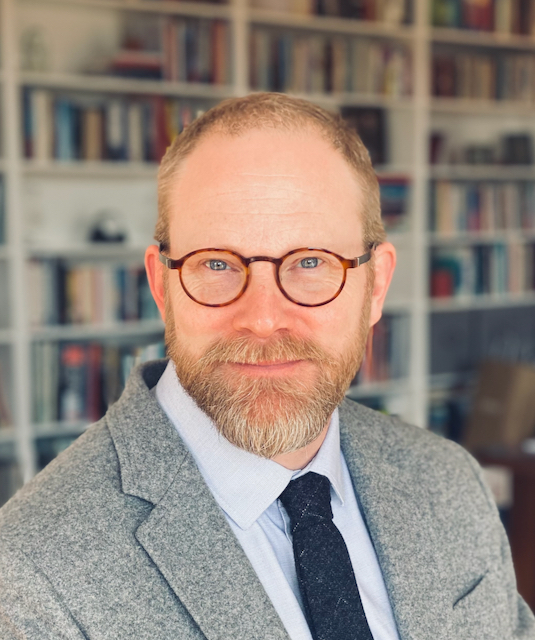
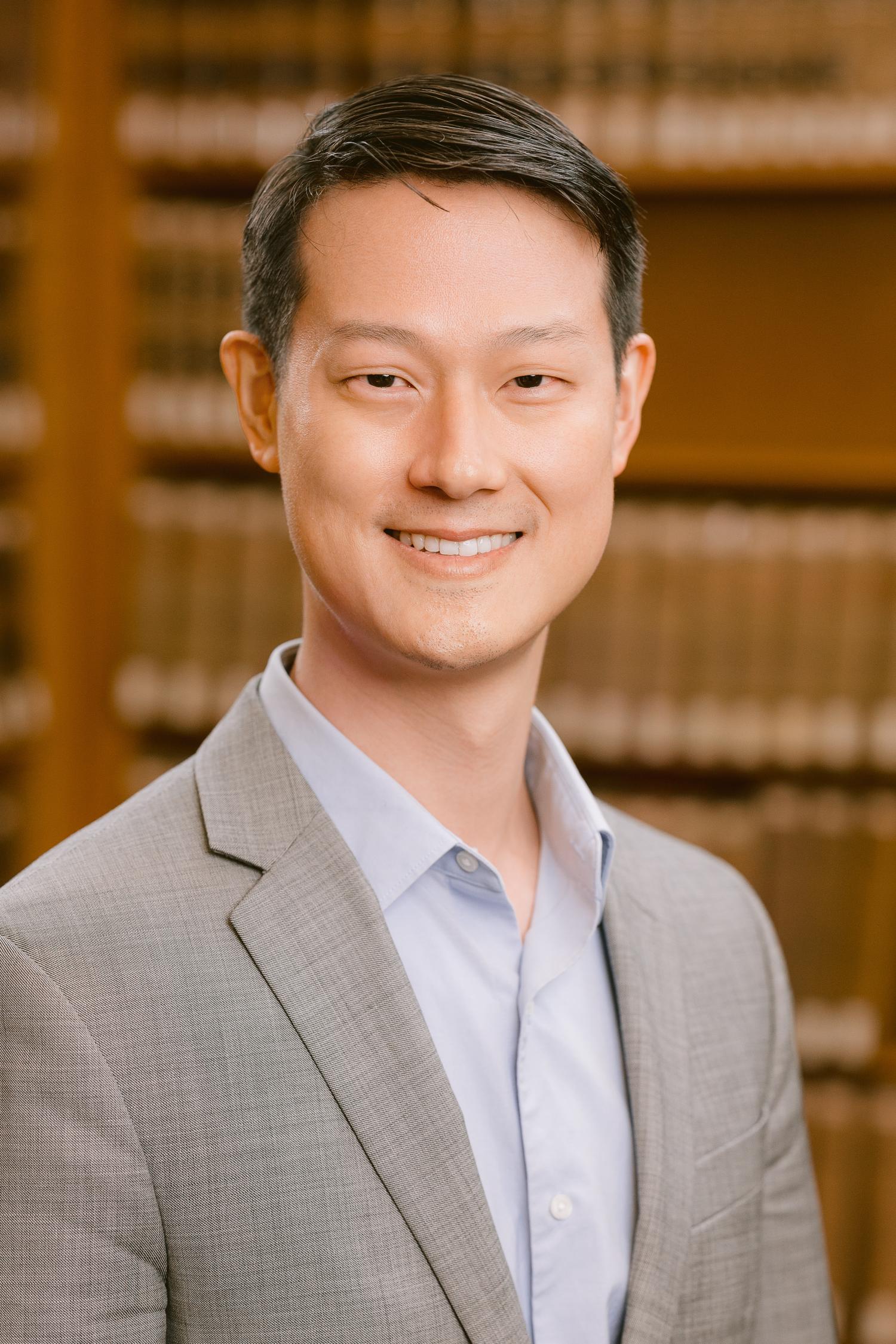
Dr. Mark B. Smith is an Associate Professor in Modern European History at the University of Cambridge’s Department of History. His research focuses on Soviet and European history, particularly the Soviet Union’s social structures, welfare policies, urban development, and cultural dynamics from Stalinism through late socialism. He teaches courses on welfare states, Soviet life, and 20th-century European violence. Key research areas include Soviet urban housing programs, welfare state evolution, and Cold War-era cultural exchanges. His publications analyze topics like Khrushchev’s housing reforms, post-Stalin urban welfare systems, and Soviet pension policies. Smith has co-edited special issues on European urban societies and authored books such as *The Russia Anxiety* (2019) and the forthcoming *Exit Stalin* (2026). He advises doctoral students on Soviet history, welfare states, and Cold War topics. His work bridges legal history, social policy analysis, and cultural studies, emphasizing how everyday life reflected broader ideological and structural changes in Soviet society.
Marisol De La Cadena is a Professor in the Department of Anthropology at the University of California, Davis, with affiliations in Science and Technology Studies (STS). Her work bridges anthropology, political theory, and environmental thought, focusing on ontological divergence and multispecies relations in Latin America, particularly in Peru and Colombia. Department: Department of Anthropology School: College of Letters and Science University: University of California, Davis Email: mdelac@ucdavis.edu Office: Young Hall 315 Her research centers on the intersection of modern politics and non-modern or ahistorical ontologies, especially through what she calls "ontological openings." Drawing from deep ethnographic engagement with Quechua-speaking interlocutors in the Andes, she explores how earth-beings, humans, and nonhumans co-constitute worlds that exceed Western categories. Her theoretical contributions challenge conventional boundaries between nature and culture, history and timelessness, and politics and cosmology. Her recent fieldwork in Colombia examines human-cow relations on cattle ranches and in veterinary schools, situating these practices within broader ecological crises and post-conflict transitions. Her publications reveal a consistent interest in how ethnographic concepts function as both empirical observations and theoretical tools. The body of her work, including key articles like "Uncommoning Nature" and "Runa: Human but not only," reflects a deep commitment to rethinking anthropological method and theory. Her research trends emphasize ontological politics, multispecies ethnography, and the decolonization of knowledge, contributing significantly to contemporary debates in STS and anthropology. Her scientific honors include: John Simon Guggenheim Memorial Foundation Fellow (2008) Lewis H. Morgan Lecture Series Invited Speaker, University of Rochester (2011) Invited Researcher, Center for Advanced Studies, Norwegian Academy of Sciences (2015) Guest Speaker, Mellon-Sawyer Seminar, University of Cape Town (2010) She has been principal investigator on several major grants, including the John E. Sawyer Mellon-Sawyer Seminar on the Comparative Study of Cultures (2012–2016), a Wenner-Gren Conference Support Grant (2009–2010), and multiple research fellowships from the Guggenheim, Wenner-Gren, and American Philosophical Societies. These grants have enabled collaborative, transdisciplinary research on cosmopolitics, indigeneity, and the anthropology of worlds. She is affiliated with research initiatives such as the Sawyer Seminar on the Comparative Study of Cultures and contributes to global academic networks in anthropology and STS. Her work fosters dialogue between indigenous thought, continental philosophy, and ethnographic practice, creating spaces for alternative modes of knowing and being.
Anthony Rollett is a Professor in the Department of Materials Science and Engineering at Carnegie Mellon University , where he has been a faculty member since 1995. He serves as the Principal Investigator and Co-Director of the NASA-supported Institute for Model-Based Qualification & Certification of Additive Manufacturing (IMQCAM) and co-director of the Next Manufacturing Center . Prior to CMU, he held leadership roles at Los Alamos National Laboratory (1991-1995). Education: Ph.D., Materials Engineering, Drexel University (1987) MA, Metallurgy and Materials Science, Cambridge University (1977) Research Interests: Rollett’s work focuses on microstructural evolution and microstructure-property relationships in 3D using experiments and simulations. His expertise spans additive manufacturing , metal 3D printing , materials for energy systems , grain growth , recrystallization , and stereology , with techniques like high-energy diffraction microscopy (HEDM) and dynamic x-ray radiography (DXR) . Scientific Contributions: He has over 320 peer-reviewed publications and an h-index >80 . His recent articles highlight machine learning for laser processing , fatigue analysis of additively manufactured alloys, and design optimization for heat exchangers in supercritical CO2 and solar thermal applications . Scientific Awards: Fellow of ASM International (1996) Fellow of the Institute of Physics (UK) (2004) Fellow of The Minerals, Metals & Materials Society (TMS) (2011) Cyril Stanley Smith Award (TMS, 2014) Member of Honor, French Metallurgical Society (2015) US Steel Professor (2017) Francqui International Professor (2020-2021) International FAME Award (2023) Leadership & Impact: Rollett co-led the development of a NASA Space Technology Research Institute for additive manufacturing and established a new master’s program in additive manufacturing (2018). His research group is funded by industry , federal agencies , and Pennsylvania state grants . He also serves on the Basic Energy Science Advisory Committee and Defense Programs Advisory Committee for the Department of Energy.
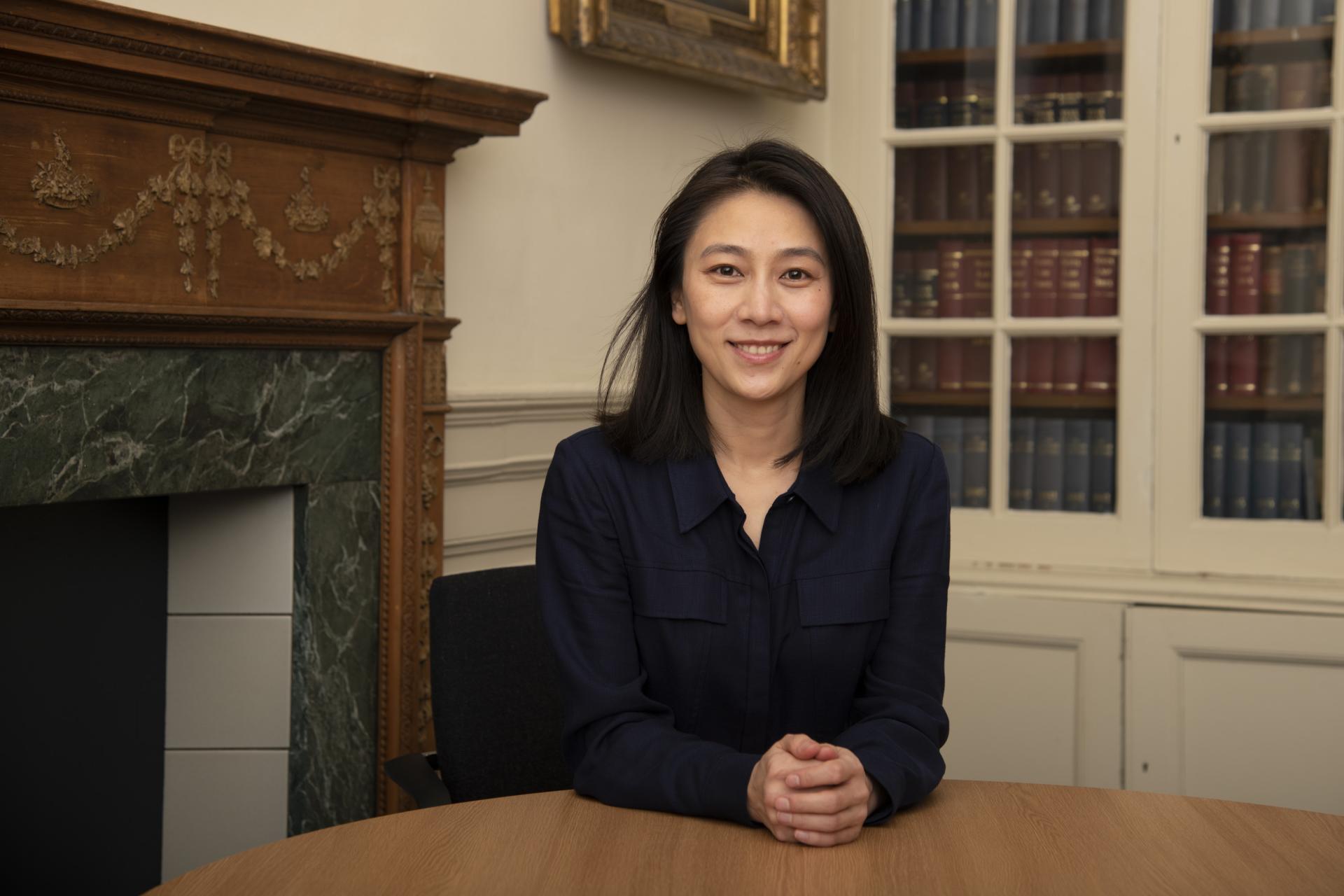
Patricia M. Thornton is an Associate Professor in the Department of Politics and International Relations (DPIR) at the University of Oxford and a Fellow and Tutor in Politics at Merton College. She specializes in Chinese politics, focusing on state-society interactions, authoritarian governance, and the legacies of the Cultural Revolution. Her research explores institutions, practices, and networks shaping governance in China, including works like *Disciplining the State* (2007) and *Red Shadows* (2017). She has held leadership roles at Oxford, including Chair of the Sub-Faculty of Politics and International Relations, and served on editorial boards such as *The China Quarterly*. Her work addresses contemporary challenges like authoritarian resilience, social control mechanisms, and political dissent. Research Interests: - State formation and governance in China - Authoritarian political systems - Memory and legacies of the Cultural Revolution - Party-state dynamics and social movements - Comparative political institutions Publications highlight themes like economic governance, social movements, and policy implementation. She has supervised numerous PhD students, many now leading academics in Asia-Pacific studies. Her contributions to understanding China’s political evolution are complemented by media commentary on current events, including analysis of Xi Jinping’s governance strategies and societal trends. Awards: Merton College Fellowship Key Projects: Edited *To Govern China* (2017) and *Red Shadows* (2017)
Professor Christopher Carman is the Stevenson Professor of Citizenship at the University of Glasgow, holding a PhD from the University of Houston. He has served in leadership roles including Head of Subject (Politics & International Relations), Head of the School of Social and Political Sciences, and Deputy Head of the School. His research focuses on political representation, electoral processes, public opinion, and Scottish politics, with notable contributions to studies on the Scottish Parliament and rural-urban political divides. Carman has led the Scottish Election Study (SES) since 2011 and co-leads the NORFACE-funded RUDE project on European rural-urban dynamics. He also contributes to the Glasgow-Nankai Joint Graduate School and the Stevenson Trust, fostering citizenship education and democratic research. Education: PhD in Political Science, University of Houston (2000). Previous academic roles include professorships at the Universities of Strathclyde and Pittsburgh. Research Interests: Political representation alternatives (e.g., public petitions systems), electoral behavior, Scottish and UK politics, direct democracy, and comparative legislative politics. Recent work addresses rural-urban divides in Europe and political compromise in democratic systems. Key Projects: Scottish Election Study (SES), Rural and Urban Divide in Europe (RUDE), and studies on political scandals and multilevel governance. His publications span electoral studies, comparative politics, and political behavior, with a focus on institutional trust and democratic engagement. Grants and Funding: ESRC and NORFACE grants support his research. The Stevenson Trust supports his work on citizenship education and public lectures.
Deval Desai serves as Reader in International Economic Law at the University of Edinburgh's Edinburgh Law School, a position he has held since 2020 after serving as Lecturer from 2020-2023. His academic career includes research positions at Harvard Law School and the Geneva Graduate Institute. Dr. Desai also brings extensive practical experience from a decade working with the World Bank on rule of law and governance in sub-Saharan Africa, as well as advising the United Nations on rule of law issues. Dr. Desai's educational background includes an MA in History and French Literature from Oxford University, followed by legal training at City University/BPP Law School (PGDipL and PGDipLP), and advanced law degrees (LLM and SJD) from Harvard Law School. At Harvard, he held prestigious fellowships including the Byse Fellowship, Program on Negotiation Next Generation Fellowship, and Institute for Global Law and Policy Fellowship. MA (Oxon), History and French Literature PGDipL, PGDipLP, City University/BPP Law School LLM, Harvard Law School SJD, Harvard Law School Dr. Desai's research centers on law and development, administrative law and regulation, theories of the state, and patterns of knowledge and authority across the Global North and South. His work examines institutional reform processes, particularly how expertise and knowledge operate within rule of law initiatives. His interdisciplinary approach draws from legal and social theory, development studies, international relations, and performance studies, as evidenced in his monograph Expert Ignorance (Cambridge University Press). His recent work focuses on fiscal sociology, administrative law in the Global South, and the politics of social welfare provision. Dr. Desai's publications span leading journals in law, political science, and development studies, revealing a consistent focus on the intersections between legal institutions, governance, and development. His work demonstrates increasing engagement with comparative methodologies and critical perspectives on knowledge production in global governance. Recent articles show particular attention to fiscal policy, welfare systems, and responses to global crises like the Covid-19 pandemic, with comparative studies between India and European contexts. Dame Muriel Spark Medal (2024, Royal Society of Edinburgh) Chancellor's 'Rising Star' Award (2023, University of Edinburgh) Member of the Young Academy of Scotland Fellow of the Royal Society of Arts Fellow of the Young Academy of Europe Dr. Desai has secured significant research funding from diverse international sources, including a £2.1 million Swiss National Science Foundation Sinergia grant titled 'Reversing the Gaze: Towards Post-Comparative Area Studies' where he serves as PI. He also leads projects funded by the British Academy, University of Edinburgh's Big Ideas Accelerator, Scottish Funding Council, and Foreign, Commonwealth, and Development Office. His commitment to mentoring is evident through his recognition with the Susan Manning Award for Inspiring Mentor and his leadership in establishing programs like the Global Scholars' Academy at the Geneva Graduate Institute and the Global Justice summer school at CEU. As editor-in-chief of the Cambridge University Press book series 'Elements in Legal Theory and the Global South' and serving on multiple editorial boards, Dr. Desai plays a significant role in shaping scholarly discourse. His current research projects examine 'loss' in legal institutions guiding transitional processes, constitutional implications of fiscal arrangements in fragile contexts, and social welfare provision in India and Italy.
Professor Tatsuhisa Tamura is affiliated with the Faculty of Law at Waseda University , specializing in Public Law . His academic career spans over two decades, with a focus on local government law, administrative law, and economic regulation. Research Interests include: Public Law : Constitutional frameworks and local governance structures. Disaster Relief Law : Legal systems for JSDF deployment in crises. Economic Regulation : Impacts of deregulation on administrative law. Civic Accountability : Judicial control mechanisms like resident litigation. Policy Reform : Decentralization and carbon-neutral governance. Recent Publications (2015–2020) address municipal financial systems, citizen litigation frameworks, and disaster response protocols. His work emphasizes balancing efficiency with democratic control in shrinking societies. Grants & Projects include: 2025–2029: Sustainable Public Official Law (JSPS Grant). 2019–2022: Civil Defense Systems in Large-Scale Disasters . 2017–2021: Legal Regulation of Local Government Enterprises . 2021–2025: Comparative Studies on Personnel Administration . Teaching involves courses like Local Government Law and Administrative Law at Waseda’s Graduate School of Law. He also contributes to public policy debates on carbon neutrality and judicial transparency.
Dr. Charilaos Nikolaidis is a Senior Lecturer at Essex Law School, University of Essex, specializing in international human rights law and the intersection of law and literature. He received his LLB from City, University of London, LLM in International Business Law from University College London, and PhD in Law from King's College London. His research focuses on international human rights law, particularly the theory and implementation of the right to equality, and the relationship between law and literature. Nikolaidis has published extensively on equality jurisprudence, comparative human rights law, and democratic challenges in European contexts. Nikolaidis's publications demonstrate consistent focus on human rights jurisprudence, particularly equality and non-discrimination within European legal frameworks. His work spans theoretical explorations of legal equality, comparative analyses of European and US privacy rights, and practical examinations of democratic challenges in Greece and beyond.
Dr. Ruiqiao Zhang serves as a Senior Lecturer in Corporate Finance, Corporate and Commercial Law at the University of Edinburgh's School of Law, where she is affiliated with the Edinburgh Centre for Commercial Law. Her office hours are held Thursdays from 13:00-14:00, and she can be contacted via telephone (+44 (0)131 650 6957) or email (Ruiqiao.Zhang@ed.ac.uk). Her academic credentials include: Bachelor of Law and Bachelor of Science from Chinese institutions Master of Civil and Commercial Law (China), Master of International Commercial and Trade Law (Netherlands), and Master of Comparative Law (Canada) Doctor of Civil Law (DCL) from McGill University under Professor Lionel Smith Dr. Zhang's research centers on trust law evolution in financial markets, with emphasis on comparative analyses between Common Law and Civil Law systems—particularly China's adoption of trust principles. Her work examines trustee roles in commercial contexts, beneficiary interests in commercial trusts, and regulatory frameworks for trust applications in asset management. She bridges theoretical legal concepts with practical financial market demands, highlighting tensions between traditional trust structures and modern entrepreneurial functions. Analysis of her publication trends reveals consistent focus on trust law's adaptation to financial innovation, with increasing attention to Chinese regulatory frameworks and cross-border implications. Her research spans corporate finance, international trade law, and property rights, demonstrating how commercial trusts evolve from guardian entities to active financial instruments while navigating jurisdictional complexities. No scientific awards were documented in the provided materials. Dr. Zhang accepts PhD students and maintains active advisory roles with the Scottish Ethnic Minorities Lawyers Association, China Law Society, and Cross Party Group on China of the Scottish Parliament. Her consultancy work connects academic research with policy development in UK-China legal cooperation, including participation in the Third UK-China Rule of Law Roundtable. She contributes to the Edinburgh Centre for Commercial Law's research initiatives, focusing on commercial trusts' regulatory challenges and their integration into civil law jurisdictions through comparative legal studies.
Margarita Boenig-Liptsin is a tenure-track Assistant Professor of Ethics, Technology and Society at ETH Zurich's Department of Humanities, Social and Political Sciences, a position she has held since September 2022. Trained in Science, Technology and Society with dual PhDs from Harvard University (History of Science) and Université Paris-Sorbonne (Philosophy), she brings interdisciplinary expertise to examining the relationship between technology, power, democracy, and ethics. Her research spans several interconnected areas focusing on transformations to human identity and citizenship in relation to information technologies across time and cultures. She investigates the social and political aspects of digital technologies, identity and selfhood in technological societies, ethics of technology, and comparative cultures of innovation. Her work uniquely bridges historical analysis with contemporary ethical concerns, examining how concepts like human dignity evolve alongside technological developments from punch cards to AI governance frameworks. Her recent publications (2023-2025) reveal a strong focus on AI ethics, data justice, and the philosophical implications of algorithmic systems. These works demonstrate her consistent interest in how technology shapes democratic processes, citizenship, and ethical frameworks. Her research shows progression from historical studies of computer literacy programs to contemporary analyses of generative AI's impact on knowledge production and everyday ethics. Her scientific recognition includes: NSF funding for her collaborative project on Silicon Valley's innovation imaginary Mozilla Foundation Responsible Computer Science Challenge grant (2018-2021) Academic Data Science Alliance support (2020-2022) Sorbonne Université's Paris IAS Chair on 'Major Changes' (2021-2022) At ETH Zurich, she leads research and teaching initiatives that build connections between engineering and social sciences. Previously at UC Berkeley, she directed the Human Contexts and Ethics Program, developing the Human Contexts and Ethics component for data science education. Her work consistently emphasizes translating social science theory for diverse audiences and connecting scholarly work to community needs in Zurich, Switzerland, and Europe. She teaches courses including 'Artificial Intelligence and Human Values' and 'Research in Ethics, Technology and Society' for the Fall 2025 semester.
Maria Eugenia Bartoloni is a Full Professor of European Union Law at Sapienza University of Rome, Department of Legal and Economic Studies. She is also a member of the doctoral program faculty for "Internationalization of Legal Systems and Fundamental Rights" at Università della Campania "L. Vanvitelli" and previously served as its Master's Degree Course President. She coordinates the journal Il Diritto dell’Unione europea and serves on editorial boards for multiple EU law publications. Education: PhD in International and EU Law from Macerata University (2004), Law Degree (1999) from Macerata University. Research Interests: Focus on EU constitutional law, international legal norms coordination, fundamental rights application, judicial protection limits, and EU foreign/security policy. Her recent work explores the EU's unique legal frameworks for maritime concessions, the Charter of Fundamental Rights' scope, and the evolving legal dimensions of EU international relations. She has participated in numerous national and international research projects. Scientific Awards Marie Curie Fellow (2015) Principal Investigator for SELECT Project – "StrEnghten Lay and honorary judges European CompeTencies" (JUST-AG-2020 / JUST-JTRA-EJTR-AG-2020)
Peter C. Caldwell is the Samuel G. McCann Professor of History at Rice University and Director of the Program in Politics, Law, and Social Thought. He specializes in modern European history with a focus on Germany, constitutionalism, welfare state development, and political thought. His research spans Weimar Republic legal crises, postwar West Germany, and 19th/20th-century intellectual movements. Education: PhD (1993), MA (1989), and BA (1987) from Cornell University, New York University. Awards include the George R. Brown Award for Teaching (2016) and Humboldt Fellowship. He has authored/co-authored major works like Democracy, Capitalism, and the Welfare State (2019) and Germany Since 1945 (2018, 2023 revision). Teaching focuses on European political history, comparative welfare states, and 19th-century political thought. Current research examines democratic rhetoric in contemporary Mexican politics and authoritarian constitutionalism. Advised over a dozen undergraduate theses on topics ranging from Weimar Republic legal theory to Cold War historiography. Publications span German constitutional history, Cold War dynamics, and East German politics. His work bridges legal, economic, and cultural dimensions of modern European history with interdisciplinary approaches to political theory.
Keith Ewing is a Professor of Public Law at The Dickson Poon School of Law, King's College London since 1989. Previously, he held visiting professorships at the University of Western Australia (1992), University of Alberta (1987-88), and Osgoode Hall Law School (1982). Earlier roles included positions at the University of Edinburgh (1978-83) and University of Cambridge (1983-1989). His research focuses on labour law and constitutional reform, particularly the intersection of social rights and constitutional frameworks. He teaches undergraduate Public Law and graduate European Labour Law. His publications span constitutional law, human rights, and labour rights, with recent works addressing post-Brexit legal frameworks, trade agreements' labour provisions, and emergency governance during the pandemic. Notable books include MI5, the Cold War, and the Rule of Law (2020) and co-edited volumes on the Right to Strike in International Law (2020). His articles frequently analyze judicial roles, electoral democracy, and transnational legal challenges. Ewing has led projects such as the CONPRE initiative (2015-2017) on parliamentary human rights protections and a British Academy-funded study on counter-terrorism and human rights (2007). His work contributes to UN SDGs related to justice, equality, and sustainable development through legal reforms.
Joshua Feinzig serves as a Visiting Assistant Professor of Law at Duke University School of Law, specializing in civil procedure, administrative law, transnational litigation, and conflict of laws. His research examines how courts, agencies, and private actors structure adjudicative processes across overlapping legal systems, with a focus on transnational coordination through administrative procedure. His academic credentials include: J.D. from Yale Law School M.Phil. from the University of Cambridge as a Gates Cambridge Scholar B.A. summa cum laude from Yale University Feinzig's scholarship bridges constitutional, administrative, and international legal frameworks, analyzing procedural mechanisms that shape substantive outcomes in domestic and transnational contexts. His work demonstrates particular expertise in voting rights, presidential power dynamics, financial punishment jurisprudence, and cross-jurisdictional legal interpretation. His recent publications reveal a consistent focus on systemic interactions between legal regimes, with emerging trends examining how procedural rules channel authority across borders and within bureaucratic structures. This interdisciplinary approach spans constitutional challenges, regulatory governance, and comparative constitutional interpretation. His scholarly contributions have earned recognition through: Benjamin Scharps Prize for best third-year paper at Yale Law School Marshall Jewell Prize for best second-year contribution to a specialized journal Gates Cambridge Scholarship for graduate study Prior to academia, Feinzig clerked for Judge Diane P. Wood of the Seventh Circuit Court of Appeals and practiced appellate litigation at WilmerHale, authoring briefs for federal courts of appeals and the U.S. Supreme Court while representing clients in cross-border disputes involving foreign law and agency adjudications. His pre-legal career included fieldwork in immigration detention facilities and policy work with Taiwan's Ministry of the Interior on transpacific migration regulation.
Bryan H. Choi is an Associate Professor of Law at the University of Colorado Law School , where he bridges law and computer science to address software and AI safety. His work on software liability has influenced national cybersecurity strategy discussions. As an Adviser for the ALI Principles Project on Civil Liability for Artificial Intelligence , he shapes legal frameworks for emerging technologies. Education : JD and AB in Computer Science from Harvard University; clerkships with U.S. Court of Appeals judges Leonard I. Garth and William C. Bryson. Roles : Former joint appointment at Ohio State University Law School and Computer Science Department; Faculty Fellow at UPenn's CTIC; Director of Law and Media at Yale's ISP. Research Focus : Choi's scholarship examines software liability , AI accountability , and privacy law through interdisciplinary lenses. He critiques institutional approaches to software safety and advocates for empirical legal frameworks over participation-based models. Recent Articles address AI malpractice , NIST software standards , and forensic tool validation , reflecting trends in AI regulation and cyber-physical system liability . His 2021 NSF grant funded technical-legal methods for safety-critical systems. Awards & Grants : National Science Foundation (NSF) Grant (2021) Adviser, ALI Principles Project on Civil Liability for Artificial Intelligence Community Engagement : Active in Law and Computer Science communities , serving on committees for the ACM Symposium , Cybersecurity Law and Policy Scholars Conference , and co-organizing the AAAI Bridge Program on AI and Law .