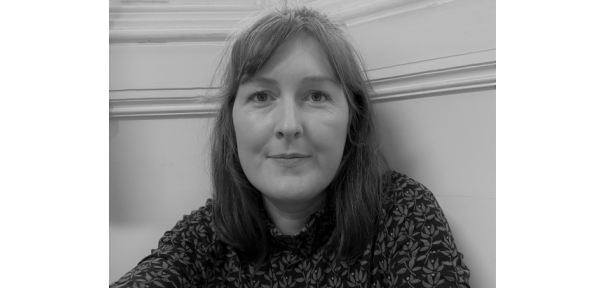
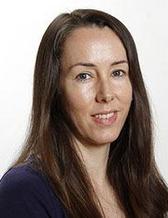
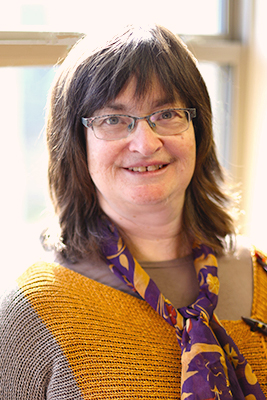
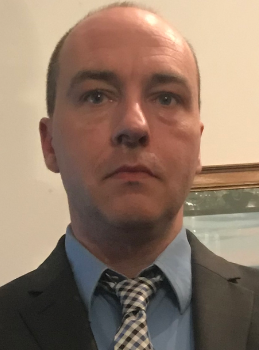
Dr. Laura McMahon is an Associate Professor in Film and Screen Studies at the Faculty of Modern and Medieval Languages and Linguistics , University of Cambridge. She is currently on sabbatical leave and will return in Easter Term 2024. Her research explores intersections between film and philosophy , with a focus on French and Francophone cinema , decolonial approaches , feminist theory , and ecocritical perspectives . Dr. McMahon’s work examines how contemporary feminist filmmakers like Onyeka Igwe and Khady Sylla engage with archives to reframe history through speculative reimagining . She also investigates ecological themes in Claire Denis’s films and the ethics of animality in global art cinema. Her monograph Animal Worlds: Film, Philosophy and Time (2019) and edited collections like Animal Life and the Moving Image (2015) highlight her contributions to debates on nonhuman representation and deconstructive aesthetics . Her recent publications analyze documentary practices , postcolonial archives , and critical repurposing in moving image work. She welcomes inquiries from MPhil and PhD students working on related topics. Her teaching and research are affiliated with the Cambridge Film and Screen initiative and the Cambridge Italian Research Network (CIRN).
Salikoko S. Mufwene is the Edward Carson Waller Distinguished Service Professor of Linguistics at the University of Chicago. He holds additional appointments on the Committees on Evolutionary Biology, Conceptual and Historical Studies of Science, and African Studies. His research integrates ecological perspectives into evolutionary linguistics, focusing on language contact, creole genesis, language endangerment, and the impact of colonization and globalization on linguistic diversity. Education: PhD in Linguistics, University of Chicago (1979) Key Themes: Language evolution, creole languages, population structure, decolonial linguistics, language policy Mufwene’s work emphasizes the role of population dynamics in language change, drawing parallels with biological evolution. His recent articles examine topics such as the cultural-artifact nature of language, the ecological drivers of creole hybridization, and the decolonization of linguistic paradigms. He has also contributed extensively to debates on language endangerment and multilingualism in super-diverse societies. Scientific Awards: Fellow, Linguistic Society of America (2018) Fellow, American Philosophical Society (2022) Fellow, American Academy of Arts and Sciences (2023) Collège de France lectures (2003, 2023-24) Summer Institute of the Linguistic Society of America (1999, 2005, 2015, 2017)
Heather Congdon Fors is a Senior Lecturer at the Department of Economics, University of Gothenburg. She holds a Ph.D. in Economics from the University of Gothenburg (2006), an M.A. in Economics from the University of Waterloo (1999), and a B.A. (Honours) in Economics from the University of Manitoba (1997). Her research focuses on development economics, education, child labor, and political economy. She has led the research project 'Child labor and school attendance in India' (2014–2018) and serves as a reviewer for journals such as the European Journal of Political Economy and Economic Inquiry. Her teaching expertise includes macroeconomics, statistics, institutional economics, and international economics. She has completed pedagogical training programs including HPE201 to HPE103. Her work explores topics such as the impact of globalization on education, land certification on schooling in Ethiopia, and the persistence of harmful cultural norms like female genital cutting in Africa. She has published extensively in peer-reviewed journals and authored reports on child labor policies, institutional change in post-colonial states, and gender biases in education. Fors has contributed to interdisciplinary projects, including analyses of bureaucrats' use of cost-benefit analysis in environmental policy and the long-term impacts of colonial missions on cultural practices. Her research bridges theoretical frameworks with empirical studies, addressing global challenges such as sustainable development goals and educational inequalities. She is based at Vasagatan 1, Gothenburg, and can be reached at heather.fors@economics.gu.se.
Anna Berge is a Professor of Linguistics at the University of Alaska Fairbanks, directing the Alaska Native Language Archive. She holds a PhD from the University of California, Berkeley (1997), specializing in the documentation, description, and historical analysis of Eskimo-Aleut languages, particularly Unangam Tunuu (Aleut). Her research integrates linguistics with archaeology, genetics, and environmental studies to explore prehistoric language contact and divergence patterns along the North Pacific Coast. Her work focuses on morphosyntax, discourse analysis, and language revitalization for highly endangered languages. She teaches courses in Morphology, Field Methods, Community Language Documentation, and Eskimo-Aleut Linguistics, emphasizing practical skills for language preservation. Berge's multidisciplinary approach addresses Aleut language divergence from Eskimoan branches, leveraging data from multiple disciplines to reconstruct linguistic prehistory. She actively collaborates with Indigenous communities in Russia, Alaska, Canada, and Greenland to archive linguistic materials and support language maintenance initiatives.
Chi-Ming Yang is a Professor of English at the University of Pennsylvania's School of Arts & Sciences, where she has established herself as a leading scholar in literary and visual culture studies with a focus on race, empire, and East-West cultural exchanges. Her interdisciplinary approach bridges British, American, Asian, and Latin American studies while examining historical periods from the early modern era through the 18th century to contemporary contexts. Educational Background: Ph.D. in English from Cornell University B.A. in Comparative Literature from Stanford University with emphases in Spanish, Chinese, and English Professor Yang's research interrogates the intersections of race, visual culture, and imperial histories through multiple disciplinary lenses. Her work explores how objects, images, and texts function within global networks of power and representation, with particular attention to transpacific and transatlantic connections. She has developed significant expertise in chinoiserie, material culture, and the visual dimensions of racial formation across historical periods. Her recent publications demonstrate a growing interest in ecological perspectives on race and empire, particularly evident in her 2021 article 'The Song of the Rice Bird,' which innovatively examines plantation slavery through avian migration patterns. Her scholarship consistently bridges historical analysis with contemporary concerns about representation, power, and cultural exchange. Professional Recognition: 2022 Best Advisor Award in English, Sponsored by the English Undergraduate Advisory Board Professor Yang maintains an active advising role, having chaired doctoral dissertations including Jacob Myers' 'Noxious Life: Figuring Vermin in the Natural Histories of the Anglophone Caribbean' (2025) and Cassidy Holahan's 'Dramatizing the Novel: Transmedial Exchange in the Long Eighteenth Century' (2023). She regularly participates in departmental workshops and events, including the 2024 conversation with Sharon Holland exploring Black feminist perspectives on animal life in relation to Octavia E. Butler's work. Her teaching portfolio reflects her interdisciplinary approach, with recent courses including 'Science Fictions of Octavia E. Butler,' 'Orientalisms,' '18th-Century British Poetry,' and 'Arts of Abolition and Liberation,' demonstrating her commitment to connecting historical scholarship with contemporary social justice concerns.
David Arbesú is Professor of Spanish at the University of South Florida, serving as Head of the Spanish Section and Graduate Program Director for the MA in Spanish within the Department of World Languages. He has presented at over 70 national and international conferences on medieval and Golden Age Spanish literature. His research specializes in manuscript studies, codicology, and palaeography, with significant contributions to Golden Age textual scholarship and Florida colonial history. Arbesú has discovered key historical manuscripts including Pedro Menéndez de Avilés' conquest records and legal proceedings concerning colonial Florida, demonstrating interdisciplinary expertise in literary analysis and historical documentation. Recent publications (2018-2023) reveal sustained focus on critical editions of medieval Spanish texts like Sendebar and Libro de los gatos , alongside colonial Florida manuscripts. His work consistently bridges philological precision with historical context, producing authoritative editions that illuminate textual transmission and cultural frameworks of Iberian literature. Arbesú serves on the Editorial Board of Harvard UP’s Dumbarton Oaks’ Medieval Library Spanish Series and as Book Review Editor for La corónica: A Journal of Medieval Hispanic Languages, Literatures, and Cultures , maintaining active leadership in scholarly publication standards.
Roswitha Skare is a Professor of Documentation Science at the Department of Language and Culture, UiT The Arctic University of Norway, within the Faculty of Humanities, Social Sciences and Teacher Education. She is actively engaged in research and teaching, focusing on documentation studies, public libraries, archives, museums (LAM sector), digitalization, and film history. Her research interests include: Documentation and document theory Paratext and digital documents Public libraries and their role in society Libraries and social media Migration and refugee services in libraries Film history, especially silent films and early documentaries Cultural memory and Sámi cultural resilience Institutional convergence in cultural policy Her recent publications (2019–2025) reveal a strong focus on public libraries during and after the Covid-19 pandemic, the role of libraries in supporting immigrants and refugees, theoretical developments in document studies, and historical film analysis—particularly Robert Flaherty’s Nanook of the North . She frequently collaborates with scholars such as Andreas Vårheim, Noah Lenstra, and Sigrid Stokstad. Her work appears in journals like Journal of Documentation , Library & Information Science Research , and Proceedings from the Document Academy . Roswitha Skare teaches courses such as: MDV-1001: Multimediale dokumenter: Historie, teori og analyse MDV-1203: Bibliotek og formidling MDV-1207: Dokumentinstitusjoner og digitalisering MDV-1206: Prosjektoppgave i bibliotek- og dokumentasjonsvitenskap She supervises bachelor’s, project, and master’s students in library and documentation science. She is a member of the research group Engaging Conflicts in a Digital Era (ENCODE) and participates in projects such as LAMCOM – Libraries, archives, and museums in the community and SAMCOM - Sámi cultural centers as community and cultural resilience infrastructure , which explore the societal roles of cultural institutions and Indigenous resilience. No scientific awards are listed in the provided text.
Max Cavitch is an Associate Professor of English at the University of Pennsylvania's School of Arts & Sciences, specializing in American literature, psychoanalytic studies, and cinema. He joined Penn in 1999 after earning his B.A. from Yale and Ph.D. from Rutgers. His research spans 19th- and 20th-century literature, African American studies, and interdisciplinary fields like animal studies and gender theory. Cavitch has authored influential works such as *American Elegy* (2007) and co-edited volumes on Whitman and early American studies. He directs Penn's Psychoanalytic Studies program and edits the blog *Psyche on Campus*, honored with the 2022 American Psychoanalytic Association's Excellence in Journalism Award. His teaching includes courses on psychoanalysis, autobiography, and American poetry. Cavitch has held fellowships from the Fulbright Foundation, Newcombe Foundation, and others. His recent projects explore world autobiography, psychoanalysis in academia, and the history of 'ashes' as a conceptual and material symbol. Award-winning scholar and educator, Cavitch's work bridges literary criticism with clinical theory, media studies, and transnational frameworks. He advises doctoral students in American literature and affiliated programs, maintaining active collaborations with institutions like the McNeil Center for Early American Studies and the Psychoanalytic Center of Philadelphia.
Nathan Martin is an Associate Professor of Music Theory at the University of Michigan, School of Music, Theatre & Dance. He joined in 2015 after postdoctoral fellowships at Columbia, Harvard, Katholieke Universiteit Leuven, Hochschule für Musik Freiburg, and Yale. He holds a PhD from McGill University’s Schulich School of Music (2009). His research focuses on the history of music theory and musical form analysis, particularly the works of Jean-Philippe Rameau and their reception among Enlightenment thinkers like Jean-Jacques Rousseau. He integrates intellectual history with practical analytical methods, emphasizing both contextual and emic perspectives. Recent interests include adapting empirical social science and linguistics methods to study musical form. Key publications include articles on Rameau’s harmonic concepts, Rousseau’s musical writings, and global music theory history. His 2014 article on Rameau’s supposition/suspension theories earned the Society for Music Theory’s Outstanding Publication Award. He co-edited Formal Functions in Perspective (2015) and served as co-editor of Music Theory & Analysis until 2019. Professional highlights include the Edward T. Cone Membership at the Institute for Advanced Study (2018–2019) and a 2023 visiting researcher role at the Max Planck Institute for Empirical Aesthetics. His work bridges historical analysis with contemporary empirical approaches, fostering interdisciplinary dialogue in music theory.
Professor Gabrielle Lynch is a leading scholar in Comparative Politics and African Studies at the University of Warwick. She holds the academic rank of Professor and serves as PAIS Impact Director, Comparative Politics cluster lead, and Warwick UCU Equalities Officer. Her research focuses on ethnic identities, elections, transitional justice, and social media's role in African politics. Lynch earned her BA, MPhil, and DPhil from the University of Oxford. She has conducted extensive fieldwork in Kenya, Ghana, and Uganda, supported by grants from the ESRC, Warwick Policy Support Fund, and others. Her awards include the ESRC Award for Outstanding International Impact (2019) and the Market Research Society’s President’s Medal. Lynch is editor of African Affairs and a member of the African Studies Association of the UK and British Institute in Eastern Africa. Lynch’s work bridges academia and public engagement, including columns in The Saturday Nation and The East African . She founded the African Judiciaries Research Network and co-authored influential books like Performances of Injustices and The Moral Economy of Elections in Africa . Her research emphasizes democratization challenges, electoral integrity, and the intersection of technology and politics in Africa.
Dr. Jeni Mitchell is a Lecturer in the Department of War Studies at King’s College London, affiliated with the School of Security Studies under the Faculty of Social Science & Public Policy. She specializes in future war studies, space security, and the evolution of rebellion, serving as co-director of the Future Threats Lab within the Centre for Science & Security Studies. Her work emphasizes human-centric approaches to analyzing existential threats and their societal impacts. Her education includes a PhD from King’s College London, where her doctoral research focused on civilian victimization by non-state armed groups. She has held positions at Chatham House, the Brookings Institution, and the Middle East Institute. Teaching responsibilities include MA modules on future warfare, spacepower, and insurgency, while she also directs the MA International Relations and War program. Mitchell’s research explores future threat perceptions (particularly in space), futures research methodologies, and the intersection of war, genocide, and utopian ideologies. Her methodological innovations, termed ‘future-crafting,’ employ creative formats like films and games to model conflict scenarios. Notable collaborations include work with the Freeman Air and Space Institute and King’s Wargaming Network. Recent publications address Ukraine’s apocalyptic imaginary, space-based threat analysis, and refugee-warrior dynamics. Her research group activities include the Environmental Security research group and contributions to widening participation initiatives like the 2024 Summer School in international security.
Nicolas Mathevon is a Professor at the University of Saint-Etienne, with a focus on Animal Behavior and Bioacoustics . He currently serves as Director of Studies at Ecole Pratique des Hautes Etudes and leads the ENES Team . His research explores acoustic communication across diverse species, including crocodiles, seals, penguins, and humans, with particular emphasis on vocal recognition, signal evolution, and neurobiological underpinnings. Major collaborations include Dr. T. Aubin (CNRS), Dr. I. Charrier (marine mammals), Dr. N. Grimault (crocodilian bioacoustics), and Prof. D. Reby (human communication). He also co-edits a new book, The Voices of Nature , published by Princeton University Press. His recent work spans ecoacoustic monitoring for conservation, multi-modal communication in crocodiles, and cross-species analysis of distress signals in bonobos, chimps, and humans. Neurobiological studies include brain activation patterns in response to vocalizations and sound localization mechanisms in reptiles. Scientific Awards include senior membership in the Institut universitaire de France .
Timothy Hampton is a Professor of French and Comparative Literature at the University of California, Berkeley , and serves as Director of the Doreen B. Townsend Center for the Humanities . He was previously the Director of the Designated Emphasis in Renaissance and Early Modern Studies and co-chairs the Democracy, Free Speech, and Values study group. His research explores intersections of literature and politics , poetry and song , and the history of emotion and diplomacy in Renaissance and early modern periods. Recent projects include a 2022 France-Berkeley Fund grant on poetry translation and a Diebold Foundation grant for interdisciplinary cultural studies. Notable publications include Bob Dylan: How the Songs Work (2019) and Cheerfulness: A Literary and Cultural History (2022). Upcoming works address premodern colonialism and American education through memoir and cultural critique. His scholarship appears in MLN , Critical Inquiry , and public venues like Salon and Aeon/Psyche .
Prof. Dr. Barbara Mittler is Professor of Sinology at Heidelberg University and founding co-director of the Heidelberg Centre for Transcultural Studies (CATS) and the Cluster of Excellence 'Asia and Europe in a Global Context.' Her research explores Chinese cultural policy, print media, musicology, visual culture, and transcultural studies. Mittler's scholarly contributions include groundbreaking work on Cultural Revolution culture, early Chinese print media (particularly women's magazines), and the transcultural flows of cultural production. Her current projects examine Mao as a global icon and comparative studies of Asian 'fathers of the nation.' Her publication record demonstrates consistent focus on cultural transmission mechanisms, with recent research developing transcultural frameworks for understanding cultural exchange and historical analysis. Publications reflect an interdisciplinary approach combining visual analysis, media studies, and historical methodology. Mittler has received numerous honors including the Fairbank Prize, Heinz-Maier-Leibnitz Prize, and memberships in the Leopoldina and Heidelberg Academy of Sciences. She leads major initiatives like the China-Schul-Akademie developing educational materials about China for German schools.
Marisol De La Cadena is a Professor in the Department of Anthropology at the University of California, Davis, with affiliations in Science and Technology Studies (STS). Her work bridges anthropology, political theory, and environmental thought, focusing on ontological divergence and multispecies relations in Latin America, particularly in Peru and Colombia. Department: Department of Anthropology School: College of Letters and Science University: University of California, Davis Email: mdelac@ucdavis.edu Office: Young Hall 315 Her research centers on the intersection of modern politics and non-modern or ahistorical ontologies, especially through what she calls "ontological openings." Drawing from deep ethnographic engagement with Quechua-speaking interlocutors in the Andes, she explores how earth-beings, humans, and nonhumans co-constitute worlds that exceed Western categories. Her theoretical contributions challenge conventional boundaries between nature and culture, history and timelessness, and politics and cosmology. Her recent fieldwork in Colombia examines human-cow relations on cattle ranches and in veterinary schools, situating these practices within broader ecological crises and post-conflict transitions. Her publications reveal a consistent interest in how ethnographic concepts function as both empirical observations and theoretical tools. The body of her work, including key articles like "Uncommoning Nature" and "Runa: Human but not only," reflects a deep commitment to rethinking anthropological method and theory. Her research trends emphasize ontological politics, multispecies ethnography, and the decolonization of knowledge, contributing significantly to contemporary debates in STS and anthropology. Her scientific honors include: John Simon Guggenheim Memorial Foundation Fellow (2008) Lewis H. Morgan Lecture Series Invited Speaker, University of Rochester (2011) Invited Researcher, Center for Advanced Studies, Norwegian Academy of Sciences (2015) Guest Speaker, Mellon-Sawyer Seminar, University of Cape Town (2010) She has been principal investigator on several major grants, including the John E. Sawyer Mellon-Sawyer Seminar on the Comparative Study of Cultures (2012–2016), a Wenner-Gren Conference Support Grant (2009–2010), and multiple research fellowships from the Guggenheim, Wenner-Gren, and American Philosophical Societies. These grants have enabled collaborative, transdisciplinary research on cosmopolitics, indigeneity, and the anthropology of worlds. She is affiliated with research initiatives such as the Sawyer Seminar on the Comparative Study of Cultures and contributes to global academic networks in anthropology and STS. Her work fosters dialogue between indigenous thought, continental philosophy, and ethnographic practice, creating spaces for alternative modes of knowing and being.