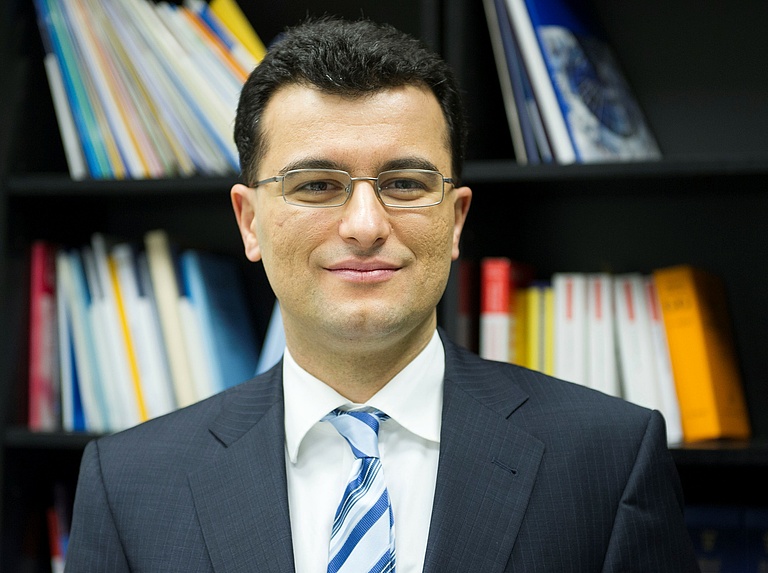
Dr. Jose R Juan Sanchez is a full Professor at the Faculty of Law, Universitat de València, specializing in Procedural Law within the Institute of Criminology and Criminal Science (ICCP). He serves in the Administrative Department and leads the NCPJ New conflicts and judicial process research group. Doctorate in Law (1997) from Universitat de València Thesis: Autonomous Communities as Parties in Civil Proceedings Supervised by Dr. Manuel Ortells Ramos His research focuses on procedural law, judicial management, and legal reforms. He investigates tribunal jurisdiction, victim rights, and data protection in criminal proceedings. Recent work includes Photovoice analysis of pandemic healthcare systems and efficiency in Spanish criminal justice. Key article trends span judicial reforms (2015-2024), victim rights in EU legal frameworks (2020-2023), digital justice systems (2016-2017), and social justice in legal education (2022-2023). His work bridges law, criminology, and policy analysis. Current affiliations: Universitat de València, ICCP Institute Research group: NCPJ New conflicts and judicial process
Alyssa King is an Assistant Professor at the Faculty of Law, Queen's University, specializing in courts, comparative procedure, and issues of adjudicator legitimacy. Her research focuses on access to justice, federalism, arbitration, and the intersection of international law with domestic systems. She holds a PhD and JD from Yale University, an AB from Harvard University, and a Master 2 from the École des Hautes Études en Sciences Sociales. Previously, she clerked for U.S. federal judges and contributed to legal journals like the Yale Law Journal. Her work examines procedural harmonization, transnational judicial practices, and legal systems' interactions. Education: PhD in Law, Yale University (2018) Juris Doctor (JD), Yale Law School (2012) AB in Social Studies (magna cum laude), Harvard University (2008) Master 2, École des Hautes Études en Sciences Sociales Her research explores how adjudicators navigate legitimacy in cross-border contexts, including arbitration and federal systems. Key themes include procedural ethics, judicial mobility, and legal frameworks for pandemic responses. She teaches Contracts and actively engages with global legal challenges. Awards & Recognition: No specific awards mentioned in the provided texts. Advising & Grants: No advising roles or grants explicitly listed, though her research likely involves institutional support. Labs & Teams: Not specified in the provided information.
Professor Peter Nicolas is the William L. Dwyer Chair in Law and Director of the Intellectual Property Law & Policy Graduate Program at the University of Washington School of Law. He holds adjunct professorships in Gender, Women & Sexuality Studies and Music. His primary affiliations include the UW School of Law, where he has been a faculty member since 2000. He previously served as Associate Dean from 2008–2010. Education: B.A. Economics (1991), M.P.P. (1992), University of Michigan; J.D. (1999), Harvard University; A.A.A.S. (2021), Shoreline Community College (Music Performance); B.A. (2023), University of Washington (Music). Research focuses on the intersection of music law and copyright, constitutional law, LGBTQ+ rights, evidence law, and federal courts. His work bridges legal scholarship with music theory, with recent courses including Copyright Law, Music Law & Policy, and Intellectual Property Theory. Notable contributions include Evidence: A Problem-Based and Comparative Approach (5th ed., 2025) and Harmonizing Music Theory and Music Law (2023). His writings address topics like AI music fraud, streaming royalties, LGBTQ+ legal protections, and post-Obergefell jurisprudence. Frequently quoted by media outlets on music law and IP issues. Former roles include Research Economist at the University of Michigan and Ann Arbor City Council member. Labs/Teams: Leads the IP LL.M. program and collaborates with interdisciplinary music law initiatives. Consults on high-profile cases involving LGBTQ+ rights and evidentiary standards.
E. Lea Johnston is the Clarence J. TeSelle Professor and Professor of Law at the University of Florida Levin College of Law. She is a leading expert in mental health law, criminal law, and criminal procedure, with her work appearing in top law reviews and peer-reviewed interdisciplinary journals. Her scholarship has been widely cited by legal scholars, appears in leading treatises, and has received attention from courts and social scientists. Her theory of sentencing forms part of the theoretical framework for the standard textbook for forensic psychiatry fellowship programs. Professor Johnston earned her A.B. from Princeton University and her J.D. (cum laude) from Harvard Law School. Before entering academia, she worked as a litigation associate at Arnold & Porter LLP in Washington, D.C., served as director of the Maryland Public Interest Research Group, and clerked for Judge Richard Tallman of the U.S. Court of Appeals for the Ninth Circuit. Johnston's research primarily focuses on the intersection of mental health and criminal justice. Her work examines how mental illness impacts criminal responsibility, competence to stand trial, sentencing, and diversion programs. She has made significant contributions to understanding diminished responsibility doctrines, insanity defenses, mental health courts, and assisted outpatient treatment. Her scholarship often employs interdisciplinary approaches, integrating legal analysis with insights from psychology, psychiatry, and behavioral sciences to develop more humane and just approaches to mentally ill offenders within the criminal justice system. Her publications demonstrate consistent scholarly output with significant impact across multiple disciplines. The trajectory of her work shows an evolution from foundational analyses of legal standards for mentally ill defendants toward more comprehensive reform proposals addressing systemic issues in how the criminal justice system handles mental illness. Elected to American Law Institute (2020) Former Chair of Criminal Justice Section, American Association of Law Schools Former Chair of Law and Mental Disability Section, American Association of Law Schools Member of Legal Scholars Committee, American Psychology-Law Society Professor Johnston has significantly influenced both legal scholarship and practice through her theoretical contributions and practical recommendations. Her work on sentencing theory for mentally ill offenders has been incorporated into forensic psychiatry training materials, demonstrating real-world impact beyond academia. While specific grant information isn't detailed in the provided text, her extensive publication record and leadership roles suggest substantial research support throughout her career. Her scholarship serves as a critical bridge between legal doctrine and clinical mental health practice, offering frameworks that balance therapeutic needs with justice considerations.
Neal R. Feigenson serves as the Lynne L. Pantalena Professor of Law at Quinnipiac University School of Law, where he has been a faculty member since 1987. He teaches core courses including torts, evidence, civil procedure, and visual persuasion in the law, blending doctrinal instruction with interdisciplinary perspectives on legal cognition. Education: BA, University of Maryland JD, Harvard University Professor Feigenson's scholarship fundamentally explores how cognitive and social psychology shapes legal decision-making processes, with particular emphasis on the transformative impact of visual and multimedia evidence in courtroom settings. His research investigates juror perception biases, the psychological mechanisms behind legal blame attribution, and the evolving challenges posed by digital evidence presentation in both physical and virtual courtrooms. This work bridges empirical psychological research with practical legal theory to address critical issues in evidence evaluation and judicial procedure. Analysis of his recent publications (2021-2024) reveals a concentrated focus on virtual legal proceedings, demonstrating how video evidence framing influences juror judgments about police conduct and damage awards. His scholarship consistently examines the tension between technological innovation in evidence presentation and foundational legal principles of fairness, credibility assessment, and human interaction within the justice system. Scientific Awards: No specific scientific awards, fellowships, or major honors are documented in the available sources. While detailed information about student advising and research funding is unavailable, Professor Feigenson maintains an active scholarly profile with over 60 publications. His professional activities center on teaching and research within Quinnipiac's law school, where he maintains an office in the School of Law and Education building (Room 110C) and welcomes media inquiries regarding his expertise in legal psychology and evidence law.
Katažyna Bogdzevič is a Professor at Mykolas Romeris University (MRU) Law School, specializing in Private International Law , European Law , Human Rights , and Environmental Law . She leads the MRU Human Rights LAB and contributes to the Environmental Management Research LAB, focusing on legal frameworks for ecosystem services, climate change mitigation, and stakeholder engagement. Key Research Themes: Integration of Private International Law with Environmental Law , analysis of legal conflicts in nature-based solutions, and name rights under international human rights conventions. Policy Engagement: Serves as advisor to Lithuania's Minister of Justice Ewelina Dobrowolska , emphasizing knowledge transfer to legislative and judicial practices. Email: roffice@mruni.eu
Prof. Dr. Foroud Shirvani is a distinguished Professor at the Chair of Public Law within the School of Law at the University of Bonn. Their research focuses on property law , state liability law , environmental law , constitutional law (including fundamental rights, party, and parliamentary law), and social law with a constitutional foundation. Additional expertise spans municipal law , police law , and energy law . Department of Law, University of Bonn Chair of Public Law Research trends include the socialization of property , compensation for pandemic-related expropriation-like interventions , and procedural limits to property rights under administrative law . Shirvani’s work bridges historical legal developments (e.g., expropriation law from the 19th century to the Weimar Constitution) with contemporary challenges like housing shortages and energy policy. Key publications include: Property without owners? (2024, co-edited with Judith Froese) Commentary on State Liability Law (2024, co-authored with Hans-Jürgen Papier) Compensation for expropriation-like interventions (2022) Commentary on Article 34 of the Basic Law (2020, co-authored with Hans-Jürgen Papier) Shirvani actively contributes to constitutional and administrative law , with a focus on the intersection of property rights and public policy.
Judith Fauth is a researcher at the Technical University of Munich's Chair of Computing in Civil and Building Engineering, where she pioneers digital transformation in building permit processes through Building Information Modeling (BIM) and digital twin technologies. Her work bridges civil engineering, computer science, and public policy to streamline regulatory compliance across international contexts. Her research expertise spans Building Permit Processes , Digital Building Permits , Ontology Engineering , and Process Modeling , with emphasis on developing standardized frameworks for global permit system benchmarking. She investigates how semantic technologies and digital twins can automate regulatory compliance while accommodating regional variations in construction law and administrative practices. Analysis of her 2023-2025 publications reveals three dominant trends: (1) integration of digital building permits with digital building logbooks for lifecycle data management, (2) development of ontologies like OBPA for automated permit reviews, and (3) creation of taxonomies and process models (e.g., PACE-BP framework) enabling cross-national comparisons of permit systems. This work increasingly incorporates sustainability metrics and stakeholder-specific KPIs. Within TUM's research infrastructure, Dr. Fauth contributes to the BIM Lab and Digital Twinning research groups, collaborating on projects involving Gaia-X-based data frameworks and semantic modeling of the built environment. She teaches practical software development skills through the SoftwareLab course, preparing engineering students for digital construction workflows.
Ulrich Magnus is a Professor affiliated with the Max Planck Institute for Comparative and International Private Law in Hamburg. His primary affiliation is with the institute, though his email domain suggests a connection to the University of Hamburg's law faculty (jura.uni-hamburg.de). He holds the academic title of Professor (Prof. Dr. iur., RiOLG). Research interests focus on comparative law, international private law, and civil procedure, reflecting the institute's thematic emphasis. No specific articles, grants, or awards are listed in the provided text. His current role appears active, with no indication of retirement or part-time status. Contact details include the address: Mittelweg 187, 20148 Hamburg, and the email provided.
Su-Hua Lee is a Professor of Law at National Taiwan University (NTU) and an affiliate professor in the School of Pharmacy. She has served as a full-time faculty member at NTU since 2016, following academic positions at National Tsing Hua University and National Taipei University. Her expertise spans intellectual property law with specialized focus on pharmaceutical and biotechnology applications, competition law, and civil law. Her educational background includes: Bachelor of Laws from National Taipei University Master of Laws (Magister iuris comparativi, M. iur. Comp.) from Rheinischen Friedrich-Wilhelms-Universität Bonn Doctor of Laws (PhD) from National Taiwan University in 2006 Professor Lee's research examines the complex interplay between intellectual property frameworks and specialized industries, particularly pharmaceuticals and biotechnology. She has conducted extensive comparative analysis of German and Taiwanese legal systems, informed by her time as a visiting researcher at the Max Planck Institute for Innovation and Competition in Munich (2005-2007). Her scholarship addresses critical issues including patent linkage systems, infringement damages calculation, trade secret protection, and the application of competition law to digital platforms. She frequently bridges theoretical legal concepts with practical policy implications, making her work highly relevant to legislative and regulatory development. Analysis of her recent publications (2022-2024) reveals three dominant trends: 1) Examination of IP challenges in digital environments (internet marketing, social media trademarks), 2) Pharmaceutical regulation issues (patent linkage, term extension, public health crises), and 3) Economic dimensions of IP enforcement (damages calculation, multi-sided platform economics). Her work consistently incorporates comparative perspectives, particularly from German legal frameworks, while addressing Taiwan-specific legal and policy contexts. Professor Lee leads a research team that has been instrumental in drafting Taiwan's drug approval-patent linkage legislation since 2015. She serves on governmental expert committees related to intellectual property and pharmaceutical affairs and participates in regional academic networks focused on Asian intellectual property law development. Her research has been supported by multiple grants from Taiwan's Ministry of Science and Technology, Ministry of Health and Welfare, Intellectual Property Court, and Fair Trade Commission. Her scholarly contributions span numerous law journals in Taiwan and internationally, with publications covering patent law, trademark enforcement, trade secrets, and the intersection of intellectual property with competition policy. She has also contributed chapters to several edited volumes on intellectual property systems in Asia and comparative approaches to patent enforcement.
Dr. Kenneth Grad is an Assistant Professor at the Faculty of Law , University of Manitoba , specializing in criminal law, evidence, legal history, and human rights. His research examines hate speech regulation, constitutional law, and historical contexts of legal prosecutions. Education: B.A. (University of Toronto), M.A. (History, Queen’s University), J.D. and Ph.D. (Osgoode Hall Law School), LL.M. (Harvard Law School). Kenneth's scholarly work focuses on: Development of criminal sanctions for hate speech Legal history of Holocaust denial prosecutions in Canada Intersections of criminal law with constitutional protections Alternative civil remedies like the Marcus Hyman Act Impact of judicial precedents on bail procedures Evolution of self-defense doctrines in Canadian jurisprudence His publications span multiple peer-reviewed journals, with recent contributions addressing pandemic-related speech issues and comparative legal analysis. Kenneth's research combines doctrinal analysis, historical inquiry, and contemporary policy evaluation. Scientific Awards: 2023-24 R. Roy McMurtry Fellowship 2023 Switzer-Cooperstock Student Prize 2020-23 SSHRC Bombardier Doctoral Scholarship 2022 Peter Oliver Prize in Canadian Legal History Multiple scholarships and law prizes from Osgoode Hall Law School As a practicing attorney, Kenneth has appeared before all Ontario court levels and holds bar credentials in Ontario and New York. He previously clerked for Justice Morris Fish at the Supreme Court of Canada and practiced civil litigation in New York City.
Andrea Jamardo Lorenzo is an Assistant Professor at the University of León , affiliated with the School of Law and working within the Department of Public Law . Her research focuses on Procedural Law , with particular emphasis on Chain of Custody mechanisms, Technology in Law , and Legal Education innovations. Education : PhD in Law from the University of León (2023), thesis titled La cadena de custodia: análisis sistemático , supervised by Dr. Piedad González Granda. Her research explores the legal configuration and technological evolution of chain of custody systems in both national and European contexts. She investigates how digital evidence handling , AI applications , and cybersecurity protocols impact judicial integrity and procedural guarantees. Recent work also addresses pedagogical methods like flipped classrooms and role-playing in legal education. Analysis of her publications reveals trends in criminal procedure reforms , comparative chain of custody models (Spain vs. US), and ethical implications of legal technology . While no scientific awards are documented, her work contributes to debates on judicial efficiency , fundamental rights , and data protection in criminal contexts.
David Opderbeck is a Professor of Law and Co-Director of the Gibbons Institute of Law, Science & Technology and Institute for Privacy Protection at Seton Hall University School of Law. His expertise spans artificial intelligence compliance, cybersecurity, data privacy, intellectual property law, and the intersection of law with theology and neuroscience. He teaches courses such as Cybersecurity Law and Policy, AI and the Law, and leads the Data Privacy and Security Compliance Program. Additionally, he holds affiliations with Seton Hall's Department of Religion and is a Faculty Associate at Harvard's Berkman-Klein Center for Internet & Society. Education: JD from Seton Hall University School of Law; LLM from NYU Law School; PhD and MA in Systematic and Philosophical Theology from the University of Nottingham and Fuller Theological Seminary. Research focuses on AI ethics, cybersecurity policy, and theological dimensions of law. Notable works include Law and Theology: Classic Questions and Contemporary Perspectives (2019), The End of the Law? Law, Theology, and Neuroscience (2021), and the upcoming Faithful Exchange: The Economy as It's Meant to Be (2025). His recent articles address AI training data rights, regulatory frameworks for biotech innovation, and encryption policy dilemmas. Service roles include Co-Director of the Gibbons Institute since 2003 and arbitrator for the American Arbitration Association in tech-related disputes. His work bridges legal scholarship with practical policy solutions for emerging technologies.
Dr. Jasper van den Boom is currently a Postdoctoral Research Fellow at the Chair for Civil Law, German and European Competition Law at Heinrich Heine University Düsseldorf. He holds a Master’s degree from Tilburg University in European Economic & Competition Law and completed his PhD there with a thesis on digital market regulation. His research focuses on competition law, digital regulation, energy law, and cybersecurity. He has taught at Utrecht University and supervised theses on competition law and digital governance. Key achievements include nominations for the Tilburg University Dissertation Award and KNHW Award for interdisciplinary work. His research spans topics like Digital Markets Act (DMA) enforcement mechanisms, ecosystem competition analysis, and cybersecurity policy. He contributed to policy reports for the Dutch National Cybersecurity Centre and co-authored studies on EU competition law’s interactions with digital markets. Dr. van den Boom’s work bridges legal frameworks with technological and economic realities, emphasizing practical regulatory solutions for modern challenges in digital ecosystems and energy sectors.
Louis d'AVOUT serves as Professor of Private Law and Chairman of the Department of Private Law and Criminal Sciences at Paris-Panthéon-Assas University, where he also directs the Master's program in International Private Law and International Trade Law. His academic leadership extends to editorial roles in major legal journals and expert consultancies for the European Commission and French Ministry of Economy. His educational foundation includes an LLM from Paris I/Cologne and a Doctor of Law degree. Key research areas encompass conflicts of laws and jurisdictions, international trade, European integration, and foreign rights, with particular emphasis on compliance frameworks and business regulation in cross-border contexts. d'AVOUT's recent scholarly output (2016-2025) reveals evolving expertise in European legal harmonization, international arbitration mechanisms, and private international law's adaptation to global commerce. His publications consistently address jurisdictional conflicts, enforcement procedures, and regulatory challenges in transnational business environments. Notable accolades include: H. Texier Prize of the Academy of Moral and Political Sciences (Institut de France) Goldman Prize Dennery Prize of the Chancellery of the Universities of the Academy of Paris As academic supervisor for the International Private Law Master's program, he shapes specialized legal education while maintaining active external engagements. His consultancy roles for the European Commission (2017) and French Ministry of Economy (2008, 2021) demonstrate applied policy influence, complemented by editorial leadership for the Revue critique de droit international privé and Droits journal. He has directed annual chronicles on European Union Private International Law (since 2014) and International Trade Law (since 2007), establishing sustained scholarly contributions to legal doctrine development through systematic analysis of emerging jurisprudence and regulatory trends.