Anna Ayse Akasoy is a Professor at the City University of New York (CUNY) Graduate Center, affiliated with the Comparative Literature, History, Liberal Studies, Medieval Studies, Middle Eastern Studies, and Global Early Modern Studies departments. She holds an M.A. and Ph.D. from Johann Wolfgang Goethe-University, Frankfurt. Her research focuses on Islamic intellectual history History of philosophy and science History of falconry and veterinary medicine Cultural and religious contacts Entangled and global history Akasoys work bridges disciplines such as ethics, epistemology, and cultural history, with a particular emphasis on cross-cultural exchanges between the Islamicate world and other regions. Her recent projects include a cultural history of falconry in the Middle East, Muslim-Buddhist contacts, and philosophical narratives of decision-making in the Islamic world. She has published extensively on medieval Islamicate literature, philosophy, and intellectual history, contributing to edited volumes and journals. Her collaborations with scholars like Charles Burnett and Ronit Yoeli-Tlalim highlight her interdisciplinary approach to historical and cultural studies.
Jean-Pierre Filiu is a Full Professor of Middle East Studies at Sciences Po (Paris) , affiliated with the CERI research center since 2009. A historian and Arabist, he combines academic research with diplomatic experience, having served in Jordan, Syria, Tunisia, and the USA during his 18-year tenure at the French Ministry of Foreign Affairs, including advisory roles to three French ministers. Current affiliation: Sciences Po (Professor of Middle East Studies) Research affiliation: CERI (Centre d'études et de recherches internationales) Visiting professorships: Columbia University (New York), Georgetown University (Washington) Media presence: Weekly columnist at Le Monde since 2015 Research Focus : Filiu's scholarship centers on contemporary Islamic movements, Middle Eastern geopolitics, and Arab world history. His work examines: Radicalization processes and extremist ideologies French-Middle East diplomatic relations Regional conflict dynamics Religious apocalyptic narratives Post-conflict state structures Digital media's role in revolutions Publication Trends : Recent works emphasize the Middle East's evolving political landscape, with special attention to: ISIS emergence and deep state connections French secularism (laïcité) debates Arab historiography approaches Visual storytelling through graphic novels Regional power networks Humanitarian crisis analysis Scientific Recognition : Palestine Book Award (2014) for Gaza, A History International acclaim for Apocalypse in Islam Regular policy commentary in prestigious outlets Professional Activities : Filiu maintains active diplomatic analysis, including his Le Monde blog since 2015, and has conducted specialized teaching programs like the Conflicts and negotiations in the Middle East master's course.
Dr. Alexander van der Haven is a Professor of Religious Studies at the Department of Archaeology, History, Cultural Studies and Religion, University of Bergen. His research spans Jewish history, conversion dynamics, and the intersection of religion with madness. He contributes to comparative religious analysis and intercultural scriptural studies. Key research areas include: Religious conversion in early modern Europe Sabbatian messianic movements Religion and mental health Hebrew-Qur’an translation history Fin-de-siècle religious subcultures Eschatology in Jewish-Christian interactions His publications reveal a focus on 17th-19th century religious transformations, analyzing how communities negotiate identity through conversion narratives, apocalyptic texts, and cross-cultural adaptations. Van der Haven examines religion’s role in violence, tolerance, and intellectual history. He co-edited Religion and Madness Around 1900 and led the project Religious Minorities Online . Current work engages October 7th’s aftermath and Jewish-Muslim relations in South Asia.
Dr. Marcin Kowalski is Assistant Professor at the Institute of Biblical Studies, Faculty of Theology, John Paul II Catholic University of Lublin. He specializes in Pauline letters, socio-rhetorical criticism, and intertextuality between biblical texts and Greco-Roman/Jewish traditions. PhD in Biblical Theology (Pontifical Biblical Institute, 2011) Habilitation in Theology (KUL, 2019) His research focuses on Pauline pneumatology, ancient rhetoric, apocalyptic empire criticism, and socio-cultural contexts of Corinthian correspondence. Recent publications explore connections between Paul’s theology and Stoic concepts of pneuma , as well as biblical anthropology. Scientific awards include: 2020 Phoenix Award for spiritual writing Multiple Rector’s Awards for academic excellence He serves as editor-in-chief of The Biblical Annals and directs the Abraham J. Heschel Center for Catholic-Jewish Relations at KUL. His media work includes TV and radio programs on biblical themes.
Ariadna García-Bryce is Professor of Spanish and Humanities at Reed College , where she has taught since 2001. A leading scholar of early-modern Spanish literature and culture, her work interrogates the intersections of time, politics, gender, religion, and visual culture in the Hispanic Baroque. Education: Diplôme Supérieur, Université de Paris, Sorbonne (1985) BA, Comparative Literature, Yale University, magna cum laude (1989) MA, Spanish Literature, Princeton University (1993) PhD, Spanish Literature, Princeton University (1997) Research Focus: García-Bryce’s scholarship centers on how sixteenth- and seventeenth-century Spanish and trans-Atlantic authors re-imagined temporality, authority, and the body in the wake of global Catholic expansion and mechanical clock time. Her monograph Experiencing Time in the Early Modern Hispanic World: After Apocalypse (2023) explores eschatological anxiety and new temporal regimes, while Transcending Textuality: Quevedo and Political Authority in the Age of Print (2011) examines the political stakes of Baroque poetics. She has published extensively on drama, visual culture, rhetoric, gender, and the afterlives of Baroque aesthetics in Latin America. Teaching: At Reed, she offers courses ranging from Female Sinners and Saints in the Early Modern Transatlantic World and Visual Art in Spanish Baroque Literature to the foundational Humanities sequence (HUM 110 & 211). Previously she taught at Hamilton College and Columbia University. Articles & Scholarly Impact: Her recent articles (2011–2023) cluster around three major veins: (1) re-readings of Quevedo that foreground temporality, masculinity, and political crisis; (2) studies of Calderón and visual culture that probe the politics of spectacle and royal iconography; and (3) feminist analyses of early-modern women’s writing and representation. Together these works chart a trajectory from Baroque Spain to twentieth-century Latin America, emphasizing the enduring resonance of Golden Age aesthetics. Conference Activity & Outreach: García-Bryce is an active presence at international venues such as the Renaissance Society of America, the Asociación Internacional de Hispanistas, and specialized Quevedo and Baroque symposia. Her invited talks at Princeton, Cambridge, King’s College London, and other institutions disseminate her research to diverse scholarly communities.
Prof. Bernhard Oestreich is a Professor of New Testament at Friedensau Theological College since 1978. His career spans over four decades, focusing on Biblical Exegesis, Homiletics, and Performance Criticism. He earned his Ph.D. from Andrews University in 1997 and has held pastoral roles in Leipzig and Güstrow (1971–1977). Education: High School Diploma (1967), Theology Diploma (Friedensau, 1971), M.Div. Equivalency (Andrews, 1980), Ph.D. (Andrews, 1997) His research explores Pauline epistles , apocalyptic symbolism , and ritual theology , with a focus on performance criticism and intercultural interpretations. Articles like Investigations into the Sound’s Message of Philippians (2018) and Metaphors and Similes for Yahweh in Hosea (1998) reflect his interdisciplinary approach blending literary analysis, theology, and ritual studies. His publications examine ecclesiological dynamics , moral tensions in early Christian communities, and liturgical practices , including translations of his work into Croatian, Czech, and French. He has contributed to Adventist ecumenical theology through works on baptism, footwashing, and the doctrine of the Trinity.
Jamel Velji serves as Associate Professor in the Department of Religious Studies, specializing in Islamic intellectual history with emphasis on apocalyptic traditions and political philosophy across medieval Islamic contexts. Education: B.A. from Haverford College M.A. from McGill University Ph.D. from University of California, Santa Barbara His research explores the interplay between eschatological beliefs and political authority in Islamic history, particularly within Fatimid and Nizari Ismaili movements. Key interests include Shiism, dream interpretation in Islamic tradition, and the cultural history of coffee. His methodological approach combines textual analysis with historical contextualization to examine how apocalyptic narratives shaped religious and political institutions. Recent publications reveal consistent thematic focus on authority construction through apocalyptic rhetoric, demonstrating cross-traditional comparisons between Islamic and Christian eschatological frameworks. His work positions medieval Islamic apocalypticism as central to understanding political legitimacy and social transformation in pre-modern Muslim societies. Scientific Awards: US Department of Education Jacob K. Javits Fellowship Josephine de Karman Fellowship Institute of Ismaili Studies Dissertation Writing Grant Social Sciences and Humanities Research Council (SSHRC) Canada Doctoral Fellowship Dr. Velji's research has been supported by major international fellowships recognizing his contributions to Islamic studies. His dissertation work received dedicated funding from both Canadian and US governmental bodies, alongside specialized grants from Islamic studies institutions, reflecting the interdisciplinary significance of his apocalyptic history research.
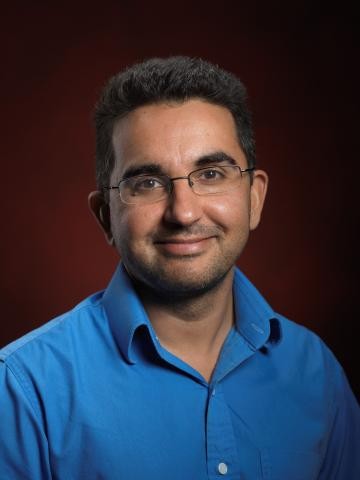
Dr. Benjamin Wold is a Lecturer at the School of Religion, Theology, and Peace Studies , Trinity College Dublin, and serves as Director of TCBS (likely Trinity College Biblical Studies). He teaches modules on Jewish Thought and Practice, the Apostle Paul, and the Historical Jesus and Gospels. His research focuses on Ancient Jewish thought and practice (2nd c.BCE to 2nd c. CE) , including the Dead Sea Scrolls , Synoptic Gospels, Book of Revelation, conceptualizations of evil, and ancient apocalypticism. His work bridges early Jewish and Christian textual cultures, emphasizing wisdom literature, intertextuality, and theological anthropology. Email: woldb@tcd.ie Publications highlight interdisciplinary trends, merging biblical studies with cognitive science, social anthropology, and textual criticism. Key themes include apocalyptic visions, debt ethics in Matthew and Qumran, flesh/spirit dualism, and the reception of wisdom traditions in early Christianity.
Patrick Mason is a Professor in the Department of History, Cultures and Ideas at Utah State University 's College of Arts & Sciences. His work bridges historical analysis with contemporary religious discourse, focusing on Mormon studies, American religious history, and violence studies. Academic Home: Utah State University College: College of Arts & Sciences Department: History, Cultures and Ideas Research Focus Mason's research explores Mormon identity in relation to violence, gender, race, and doctrinal evolution. His scholarship interrogates how religious communities navigate historical trauma, cultural contradictions, and modernization pressures, particularly within the Latter-day Saint tradition. Recent Publication Trends Recent articles show sustained engagement with Mormon apocalypticism , gender dynamics , and ethical paradoxes in religious history. Key topics include nonviolence in LDS theology, racial formation within Mormonism, and the intersection of faith with American national identity. Academic Leadership As a professor, Mason contributes to graduate-level Mormon studies education while maintaining an active research agenda that intersects with broader questions of religious violence, cultural memory, and institutional ethics.
Giovanni Panno is a PartTime Lecturer at the Department of Philosophy, University of Tübingen, with a habilitation in Political Philosophy and History of Philosophy (Italy, 2024). His research spans Political Philosophy , Ancient Philosophy , and German Idealism , focusing on intersections between utopian thought , messianism , and self-movement in Late Antiquity . He has taught at Tübingen since 2008 and served as a Gymnasium teacher in Balingen since 2010. Research Interests : Ancient and Early Modern Political Thought, German Romanticism, Philosophy of Religion, Neoplatonism, Kantian Apocalypticism, Fichte-Hölderlin-Novalis Dialectics Projects : Habilitation on 'Plato's Nomoi: Dionysian Element and Law', systematic studies on Stoicism/Epicureanism, and Fichte's 'Wissenschaftslehre' reception. Panno's publications (2004–2020) center on early German Romanticism, Plato's political theology, and Kant's eschatology. He has edited works on Hölderlin, Plato's Laws, and Novalis, while translating key German texts into Italian. His scientific awards are not explicitly mentioned.
PD Dr. Carola Dietze is a Senior Lecturer in Modern History at Justus Liebig University Giessen, specializing in terrorism history, European security dynamics, and intellectual history. She leads the sub-project 'Security of the State and Security from the State in Europe, Russia, and the USA in the 19th Century' within the SFB/TRR 138 'Dynamics of Security'. Her research focuses on the origins and evolution of political violence, transnational security policies, and the intellectual legacy of figures like Helmuth Plessner. Education highlights include a PhD from Georg August University of Göttingen (2005) and Habilitation in Modern and Contemporary History (2013). She has held academic roles at TU Braunschweig, Ludwig-Maximilians-Universität Munich, and the German Historical Institute Washington D.C. Her work combines historical analysis with interdisciplinary approaches, notably in her upcoming Oxford Handbook of the History of Terrorism . Research awards include the prestigious Heisenberg Fellowship (2015) and Hedwig Hintze Prize (2006). Her scholarship bridges historical methodology with contemporary debates on security, modernity, and ideological conflict. Current projects explore comparative terrorism historiography and the intellectual contributions of German-Jewish exiles. Her publications span monographs, edited volumes, and journal articles analyzing 19th-century terrorism, Helmuth Plessner's sociological thought, and transnational media events. She actively participates in international research networks on historical teleologies and security studies.
Dr Aideen O'Leary is a Lecturer in Celtic & Anglo-Saxon Studies at the University of Aberdeen, where she is also the Director of the Research Centre for Celtic & Anglo-Saxon Studies, Programme Co-ordinator, and Race Equality Champion for the School of Language, Literature, Music and Visual Culture. She holds a BA and MLitt from Trinity College Dublin and a PhD from the University of Cambridge, and has previously taught at University College Cork and the University of Notre Dame, USA. BA, Trinity College Dublin MLitt, Trinity College Dublin PhD, University of Cambridge Her research centers on the interactions between Celtic and Anglo-Saxon worlds and Latin literature, with a focus on medieval religious texts, apocrypha, and cultural perceptions. She explores topics such as the Irish apocryphal Acts of the Apostles, the figure of the Irish druid Mog Ruith, and foreign views of Ireland from antiquity to the 12th century. Her work bridges historical, linguistic, and literary approaches to early medieval Europe. The selected publications reflect a strong trend in hagiography, apocryphal literature, and the transmission of religious ideas across cultural boundaries. Her research often examines how Latin texts were adapted in Irish and Anglo-Saxon contexts, and how religious identities were constructed through narrative and satire. She also investigates the role of satire and stereotypes in shaping intercultural perceptions. Royal Society of Edinburgh Arts & Humanities Small Grant (2015–16) British Academy/Leverhulme Trust Small Grant (2015–17) Carnegie Trust Research Incentive Grant (2016–17) Principal’s Excellence Fund, University of Aberdeen Santander Mobility Award Dr O'Leary actively supervises PhD students and has secured multiple research grants for individual and collaborative projects. She has organized academic events such as the 'Subversions of Classical Learning' conference series and contributes to public engagement through festivals and lectures. She leads the MA in Celtic & Anglo-Saxon Studies and teaches courses on Old English, Modern Irish, and medieval cultural history. She is a key member of the Research Centre for Celtic & Anglo-Saxon Studies and the Sir Herbert Grierson Centre for Textual Criticism and Comparative Literary History, and plays a leading role in promoting equality and diversity within her school.
Beth Singler is Assistant Professor of Digital Religion(s) at the University of Zurich, where she serves as Co-Director of the URPP Digital Religion(s) and Principal Investigator for the project "Post-AI Religion and Religious AI: Reciprocal Disruption and Futures." Previously, she was a Junior Research Fellow in Artificial Intelligence at Homerton College, University of Cambridge, and worked on the Templeton-funded project "Human Identity in an Age of Nearly Human Machines" at the Faraday Institute for Science and Religion. Co-Director, URPP Digital Religion(s), University of Zurich (2025-) Principal Investigator, "Post-AI Religion" Project (2025-) Co-Lead, Media Existential Encounters and Evolving Technology Lab (2023-) Assistant Professor in Digital Religion(s), University of Zurich (2022-) Director of Studies, Theology, Religion, and Philosophy of Religion, University of Cambridge (2020-2022) Her research examines the social, ethical, philosophical, and religious implications of advances in artificial intelligence and robotics. Singler employs cultural and digital anthropological methods to explore how religions respond to AI through rejection, adoption, and adaptation frameworks. Her work demonstrates the entanglements of religion and AI, analyzing our imaginaries of these technologies and ideas about their utopian or dystopian futures. She has produced several documentaries, including the award-winning "Pain in the Machine" (2017 AHRC Best Research Film of the Year). Her recent publications reveal a clear focus on AI's relationship with religious traditions, examining how established religions understand creation within AI contexts and how secular groups interpret AI as a tool for liberation. The articles show increasing attention to post-AI religious formations, existential conversations with AI systems, and the material dimensions of digital religious practices. Her work bridges theoretical analysis with empirical studies of online religious communities and their engagement with emerging technologies. AHRC Best Research Film of the Year Award (2017) Digital Religion Research Award (2021) Fellow of the International Society for Science and Religion Singler serves on multiple advisory boards including the AAR AI and Religion Unit, the Human Augmentation Research Network, and advisory boards for Templeton-funded projects on biohacking and spiritual yearning. She leads the MEEET Lab at UZH, which investigates media, existential encounters, and evolving technology. Her public engagement includes documentary production and participation in global networks like AI and Faith.
Matthias Henze is the Isla Carroll and Percy E. Turner Professor of Biblical Studies and Founding Director of Rice University’s Program in Jewish Studies, where he has taught since 1997. His work bridges Hebrew Bible scholarship, early Jewish literature, and Syriac studies, focusing on texts outside the canonical Bible such as the Apocrypha, Pseudepigrapha, and Dead Sea Scrolls. Ph.D., Harvard University (1997) M.A., Harvard University (1996) Master of Divinity, University of Heidelberg (1992) Research Interests Dr. Henze’s research centers on the literary history of early Judaism, apocalyptic literature, biblical ethics, textual transmission, and the history of biblical interpretation. He emphasizes the interconnections between canonical and non-canonical texts from the Second Temple period (4th century BCE–2nd century CE). Key Academic Contributions He has authored and edited nine major works, including a critical commentary on 2 Baruch and a three-volume analysis of the textual history of the Deuterocanonical scriptures. His publications reflect a commitment to making ancient texts accessible to modern audiences while maintaining scholarly rigor. Awards & Recognition George R. Brown Award for Superior Teaching (2009, 2010, 2015) Phi Beta Kappa Teaching Prize (2003) Graduate Student Association Teaching and Mentoring Award (2015) John Freeman Faculty Teaching and Mentoring Award (2022) Faculty Award for Excellence in Research, Teaching, and Service (2019) Leadership & Innovation In 2009, he founded Rice’s Program in Jewish Studies, fostering interdisciplinary research on Jewish cultures from antiquity to the present. He co-founded the Joan and Stanford Alexander South Texas Jewish Archives in 2017 to preserve regional Jewish heritage and has led initiatives on antisemitism studies.
Konstantinos Moustakas is an Associate Professor of Byzantine and Early Ottoman History at the Department of History and Archaeology, University of Crete, Faculty of Philosophy. He has been teaching at the University since 2002, progressing through the academic ranks from contract lecturer (2002-05) to lecturer (2005-10), assistant professor (2010-2023), and associate professor (since December 2023). He also serves as associate educational staff at the Hellenic Open University since 2006 and was a research associate at the Institute of Mediterranean Studies of FORTH between 2004 and 2011. His research focuses on the comparative study of Byzantine and Ottoman institutions and social realities, the social, economic and demographic history of Byzantium and the medieval Balkans, Byzantine views of the Ottoman rise, and late Byzantine historiography. His work demonstrates particular expertise in analyzing the transition from Byzantine to Ottoman rule, with emphasis on socioeconomic and demographic aspects. Moustakas' publication record reveals a strong focus on Byzantine-Ottoman interactions during the 15th-16th centuries, with particular attention to population studies, institutional comparisons, and historical narratives. His recent work shows increasing specialization in mapping Christian populations in Ottoman Anatolia and analyzing Byzantine perspectives on Ottoman legitimacy. His research methodology combines textual analysis with demographic and institutional studies. He currently serves as the scientific director of the research program "Mapping the Christian population of Asia Minor during the 15th and 16th centuries," which represents a significant contribution to understanding the demographic transformation of Anatolia following the Ottoman conquests. Moustakas has established himself as a leading scholar in Byzantine-Ottoman transition studies, with a particular focus on demographic history and institutional comparisons. His work bridges traditional Byzantine studies with Ottoman historical research, creating valuable interdisciplinary connections.

/prod01/channel_3/media/tcd/tcbs/images/Benjamin-Wold.jpg)