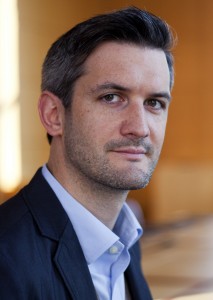
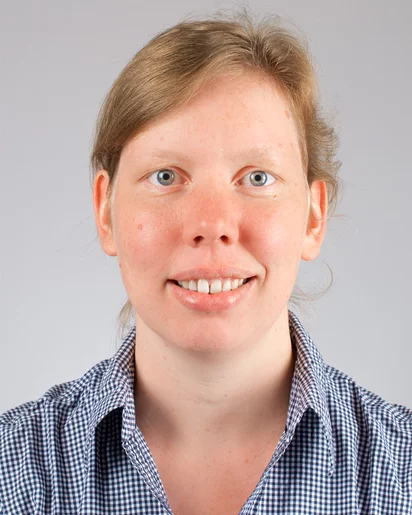
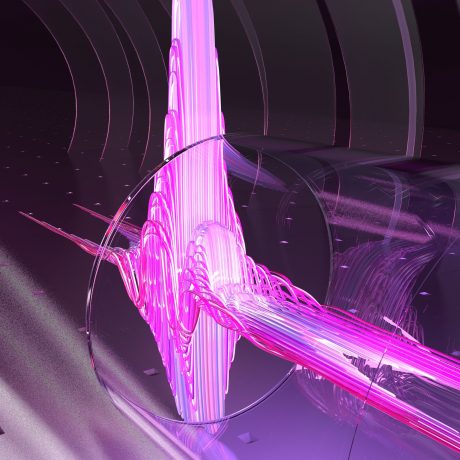
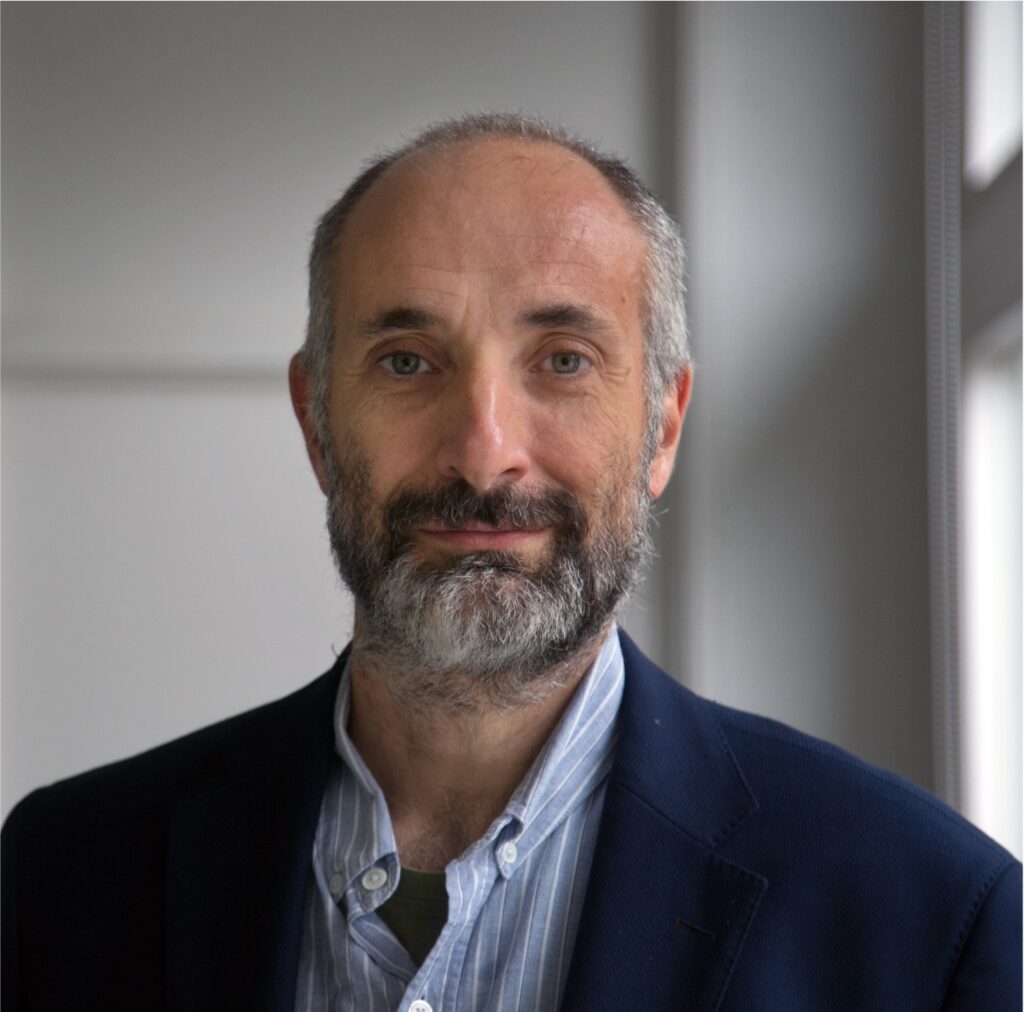
Prof. Matthias Fuchs is a Professor and Head of Department for Accelerator Research and Development I at the Karlsruhe Institute of Technology (KIT). His research focuses on advanced accelerator technologies, laser-plasma acceleration, and ultrafast X-ray science. He is affiliated with the IBPT group (Institut für Beschleunigerphysik und Teilchenphysik) and coordinates activities at the Department of Physics. His work bridges fundamental plasma physics with applied accelerator engineering, aiming to develop next-generation compact light sources and ultra-short wavelength technologies. Research interests include laser-plasma electron acceleration, quasi-isochronous storage ring dynamics, and nonlinear X-ray optics. His team explores parametric excitation mechanisms, high-order beam dynamics, and novel X-ray wave mixing phenomena in materials like silicon. Collaborations involve developing predictive laser stabilization techniques and high-bandwidth imaging systems for precision experiments. No scientific awards are explicitly listed, but his contributions to the Snowmass 2021 report on advanced accelerators highlight his influence in the field. He leads the Accelerator Research and Development I group, overseeing projects like the FLUTE compact storage ring commissioning and compact transverse deflecting system experiments. His lab work focuses on creating tunable X-ray sources and studying betatron radiation generation through transverse oscillating bubbles in plasma.
O.J. Luiten is Full Professor in the Coherence and Quantum Technology group at Eindhoven University of Technology. His research focuses on fundamental quantum physics, materials science, nanotechnology, and life sciences, with emphasis on improving temporal resolution in electron microscopy and developing ultracold electron sources. He leads the Coherence and Quantum Technology group and is a core member of ICMS. His research interests center on quantum materials, ultrafast electron microscopy, and coherent light-electron interactions. Key areas include: Ultracold plasma applications for high-coherence electron sources Coherent manipulation of electron beams using laser light X-ray generation via electron beams His publications demonstrate a consistent focus on advancing charged particle beam technologies and light-matter interactions, with recent work emphasizing compact X-ray sources, ultrafast microscopy, and quantum electron manipulation. Scientific Awards: Smart*Light: Een tafelmodel synchrotron (2016) He leads multiple research projects including 'ICS-SAXS: Hard X-ray metrology' and 'Smart*Light 2.0', collaborating with institutions like ASML. Manages labs for ultrafast electron microscopy and quantum beam technology.
Dr. Alexander Thomas is a Professor in Nuclear Engineering and Radiological Sciences at the University of Michigan’s College of Engineering, and a cross-appointed Professor in Applied Physics at the College of Literature, Science and the Arts. His research at the Center for Ultrafast Optical Science (CUOS) focuses on computational and experimental laser-plasma interaction physics, particularly laser wakefield acceleration of electrons for compact particle accelerators. His work investigates high-intensity laser-plasma interactions (up to 10 22 W/cm²) to study relativistic electron dynamics, radiation generation, and quantum effects. He develops advanced computational models like the FARSIGHT Vlasov-Poisson code for non-equilibrium plasma physics, relevant to inertial confinement fusion and fast ignition scenarios. Current projects include optimizing laser-driven proton beams, characterizing photon-photon scattering, and advancing the ZEUS laser facility. Key trends in his recent publications include high-intensity laser wakefield acceleration, plasma-based photon acceleration to extreme ultraviolet, magnetic field generation in laser-solid interactions, and quantum electrodynamics (QED) studies. His research leverages facilities like the Hercules 300 TW laser and ZEUS, with applications in radiography, astrophysics, and radiation reaction studies.
Kirsten Andrea Schnorr is a Researcher at the Paul Scherrer Institute (PSI) in Switzerland, working within the Center for Photon Science and Laboratory for Femtochemistry. She joined the SwissFEL team in 2018 to develop the Maloja endstation for atomic, molecular, and non-linear physics, leading its design, construction, and operational commissioning for cutting-edge XUV/X-ray experiments. Her educational background includes: PhD in Physics (2014), Ruprecht Karl University Heidelberg, completed at the Max Planck Institute for Nuclear Physics under PD Dr. Robert Moshammer; thesis focused on XUV pump-probe experiments of electron rearrangement and interatomic Coulombic decay in diatomic molecules. Schnorr's research centers on photo-induced ultrafast relaxation mechanisms in atoms, molecules, and nanoparticles using time-resolved techniques at Free-Electron Lasers and High Harmonic Generation sources. She pioneers multi-color pump-probe schemes with ultrashort X-ray pulses to steer non-local decay processes like Interatomic Coulombic Decay and Electron Mediated Decay, enabling real-time observation of electron dynamics and proton transfer in molecular systems. Her publication trends (2025-2020) reveal dual expertise in fundamental molecular dynamics and instrumental innovation. Key themes include proton transfer in water dimers (Science Advances 2023), Coulomb explosion in iodinated compounds (2025), and engineering breakthroughs like compact gas attenuators (2023) and polarization control systems (2024), frequently published in Physical Review Letters, Nature Communications, and Journal of Synchrotron Radiation. Scientific awards: Peter Paul Ewald Fellowship from the Volkswagen Foundation (2015), supporting her research on non-linear relaxation processes at UC Berkeley's Physical Chemistry Department under Prof. Stephen Leone. No formal advisees or student supervision are documented. The Volkswagen Foundation fellowship served as her primary grant, funding postdoctoral work on real-time relaxation studies; no additional grants are specified. Her instrumental leadership at SwissFEL suggests mentorship of junior scientists, though no individual students are named. Schnorr directs the Maloja instrument at SwissFEL while contributing to the ATHOS beamline development. She collaborates extensively with PSI's detector teams (e.g., JUNGFRAU advancements) and international groups like UC Berkeley's Physical Chemistry Department, driving initiatives in ultrafast beamline technology and molecular dynamics experiments.
László Veisz is a Professor at the Department of Physics and Head of the RElativistic Attosecond physics Laboratory (REAL) at Umeå University. His research focuses on ultrafast phenomena in high-intensity laser-plasma interactions, attosecond science, and relativistic nanophotonics. Key projects include nonlinear attosecond spectroscopy (2021–2024) and relativistic nanophotonics (2020–2025). Research areas encompass relativistic plasma dynamics, ultrafast laser systems, and advanced pulse characterization techniques. His group develops compact laser-driven accelerators and investigates attosecond light-pulse generation from plasma surfaces. Publications highlight breakthroughs in femtosecond X-ray generation, spatio-temporal analysis of relativistic plasmas, and dual-energy electron beam creation. Collaborations include work with Nobel laureates and contributions to the 2023 Nobel Prize-winning physics research. REAL lab innovations include novel methods for pulse compression, plasma lensing, and nanoscale acceleration. Ongoing work focuses on optimizing optical parametric amplifiers and exploring relativistic effects in nanoplasmonics.
Ahmad Fahim Habib is a Research Fellow in the Department of Physics at the Faculty of Science, University of Strathclyde, United Kingdom. He is actively engaged in advanced research in plasma-based particle acceleration and free-electron lasers, with a focus on achieving ultrahigh 6D brightness electron beams. He is affiliated with major international collaborations, including SLAC National Accelerator Laboratory and the EuPRAXIA project. Research Fellow, Department of Physics, University of Strathclyde Visiting Researcher, SLAC National Accelerator Laboratory (2024) Member, Collaboration Board – EuPRAXIA Preparatory Phase (2024) Principal Investigator and Co-investigator on multiple funded research projects His research interests lie at the intersection of plasma physics and accelerator science. He specializes in developing novel techniques for generating and accelerating high-brightness electron beams using plasma wakefield and hybrid acceleration schemes. His work aims to enable next-generation free-electron lasers with attosecond and Ångstrom-scale resolution, which could revolutionize ultrafast science and imaging. Key areas include plasma photocathodes, energy spread compensation, beam brightness optimization, and staging of plasma accelerators. He leverages high-performance computing and experimental collaborations to validate theoretical models. The recent publications of Ahmad Fahim Habib reflect a strong trend toward advancing the performance limits of plasma-based accelerators, particularly in achieving cold, high-brightness electron beams for free-electron laser applications. His work spans experimental, theoretical, and computational domains, with a focus on overcoming key challenges such as energy spread, emittance, and beam stability. The recurring themes across his articles include brightness enhancement, photocathode development, energy compensation techniques, and hybrid acceleration schemes, all aimed at making plasma accelerators viable for future light sources. Scientific Awards: Saltire Emerging Researcher Award (2021) APS DPP Travel Award (2017) DAAD FIT Worldwide Scholarship (2015) Ahmad Fahim Habib has been actively involved in securing research funding and leading projects. He served as Principal Investigator for the 'Ultra-high brightness beams from hybrids plasma accelerators' project funded by the SUPA Saltire Emerging Researcher Award (2022), and is currently a Co-investigator on the DOE-funded 'High-gradient acceleration of electrons in plasma and dielectric structures' (2024–2026). He has also participated in the Doctoral Training Partnership at the University of Strathclyde (2016–2024), supporting PhD research. He is accepting PhD students and has supervised doctoral work, including his own thesis completed in 2024. He is actively involved in experimental and theoretical research groups focused on plasma accelerators. He collaborates with leading teams at SLAC, EuPRAXIA, and the University of Strathclyde’s plasma physics group. His work is part of a broader effort to develop compact, high-performance particle accelerators for scientific, medical, and industrial applications.
Professor Stuart Mangles is a leading academic in laser-plasma physics at Imperial College London's Department of Physics, part of the Faculty of Natural Sciences. His research focuses on high-intensity laser interactions, plasma-based accelerators, and applications in quantum electrodynamics (QED), X-ray imaging, and material science. He leads projects like the EuPRAXIA initiative, developing compact particle accelerators. Recent work includes experiments on radiation reaction effects, muon production, and ultrafast X-ray imaging of dynamic phenomena. Mangles' lab leverages cutting-edge laser facilities to explore topics ranging from warm dense matter to medical irradiation techniques. Research Highlights: Developing laser wakefield accelerators for compact, high-brightness X-ray sources Investigating quantum effects in ultra-high intensity laser-plasma systems Pioneering applications in radiobiology and industrial imaging Advancing shock dynamics and material phase transitions understanding His work bridges fundamental physics with applied technologies, with significant contributions to the European Strategy for Particle Physics and international collaborations.
Tenio Popmintchev is an Assistant Professor at the University of California, San Diego (UCSD), previously affiliated with the JILA institute at the University of Colorado Boulder. His research focuses on extreme nonlinear optics and attosecond science, particularly in developing tabletop X-ray lasers and high-harmonic generation techniques. He holds a Ph.D. in Physics from the University of Colorado Boulder (2010). Key research areas include phase-matched generation of coherent X-rays, ultrafast imaging of quantum materials, and applications in magnetic circular dichroism spectroscopy. His work has led to breakthroughs in generating high-brightness X-ray pulses using mid-infrared and ultraviolet lasers, enabling compact and cost-effective X-ray sources. Notable achievements include the Science News Young Scientist award and multiple patents on X-ray generation methods. His research has been published in top journals like Science and Nature Photonics , with contributions to ultrafast laser technology, coherent X-ray sources, and quantum design of light. Awards: Science News Young Scientist award (2016), U.S. Patents 8,462,824 (2013) and 61873794 (2015). Labs/Teams: JILA (Boulder), UCSD Physics Department labs. Future Work: Expanding tabletop X-ray laser applications, improving laser efficiency, and exploring quantum materials dynamics.
Dr. Herbert Legall was a researcher at the Max Born Institute for Nonlinear Optics and Short Pulse Spectroscopy (MBI), focusing on advanced X-ray imaging and laser plasma physics. His work emphasized developing compact laboratory-based X-ray microscopy systems, particularly in the 'water window' spectral region, enabling detailed studies of biological and material samples. He contributed to innovations in soft X-ray sources, synchrotron applications, and ultrafast spectroscopy techniques. Research areas included nanoscale imaging, laser-plasma interactions, and structural analysis of biological samples under extreme conditions. Key affiliations: Max Born Institute Dr. Legall’s research combined optical engineering with fundamental physics, advancing applications in biomedical imaging, materials science, and environmental mineralogy. Notable projects involved designing high-brightness X-ray sources and optimizing sample preparation methods for high-resolution studies. His publications span journals like Optics Express, SPIE Proceedings, and the Journal of Physics Conference Series, reflecting collaborations with international teams on cutting-edge imaging and spectroscopic instrumentation.
Giuseppe Sansone is a full professor of experimental physics at the University of Freiburg, leading the Attosecond and Strong Field Physics group. He holds an Internal Senior Fellow position (Sep 2024–Apr 2025) and previously held postdoctoral fellowships at RIKEN (Japan) and the Max-Planck-Institute (Germany). His work focuses on attosecond metrology at free-electron lasers and ultrafast molecular dynamics using coincidence spectroscopy. Key contributions include the development of the Extreme Light Infrastructure Attosecond Light Pulse Source (ELI-ALPS) in Hungary. His research spans attosecond pulse characterization, quantum control in extreme UV domains, and coherent control mechanisms in molecular systems. Education: PhD in Physics (2004, Politecnico Milano), career progression from assistant to associate professor at Politecnico Milano before joining Freiburg in 2016. Research interests include: attosecond temporal structure analysis, nonlinear XUV applications, wave-packet manipulation in Rydberg states, and femtosecond polarization shaping. His experimental setups leverage seeded free-electron lasers and advanced spectroscopic techniques. Publications highlight advancements in photoelectron interferometry, resonance dynamics, and ultrafast nuclear motion studies. His work bridges atomic/molecular physics with cutting-edge laser technologies. Awards: JSPS Short-Term Postdoc Fellowship (2007), Alexander von Humboldt Fellowship (2009-2010). Lab leadership: Director of the Attosecond and Strong Field Physics group at Freiburg, contributing to ELI-ALPS infrastructure development. His team focuses on time-resolved XUV-IR coincidence spectroscopy and novel attosecond timing tools.
Stéphane SEBBAN serves as Director with HDR (Habilitation à Diriger des Recherches) qualification at ENSTA Paris, Institut Polytechnique de Paris. He is affiliated with the Applied Optics Unit (LOA) where he leads research initiatives in Semantics of Hybrid Systems (SSH) and Ultrafast particle and X-ray sources (UPX). His research focuses on ultrafast laser plasma physics, with particular expertise in developing laser-plasma particle accelerators. His work contributes to ENSTA Paris's research axis on ultra-short laser plasma physics, which explores how femtosecond laser pulses generate plasmas with extraordinary properties. These specialized plasmas produce enormous transient electromagnetic fields capable of accelerating particles at magnitudes exceeding conventional magnet-based techniques. SEBBAN's research has significant industrial applications including compact high-intensity lasers, electromagnetic protection systems, medical laser-plasma therapy, radiobiology, radiotherapy, and ophthalmology. His work enables advancements in ultra-rapid matter observation during phase transitions, eye surgery techniques, medical imaging, lightning rod systems, and infrastructure protection. His laboratory develops X-gamma radiation sources from ultra-short laser plasmas, offering new possibilities for non-destructive testing with potentially orders-of-magnitude improvements in spatial resolution compared to conventional radiography systems.
Vincent Wanie is a Researcher at the Center for Free-Electron Laser Science (CFEL) within Deutsches Elektronen-Synchrotron DESY, Hamburg, Germany. His work focuses on developing ultrafast laser-based technologies for time-resolved experiments, particularly few-femtosecond UV light pulses and electron/nuclear dynamics in photoexcited states of matter. Academic Career: Scientist (since 2021), Postdoctoral Researcher (2020–2021) at CFEL/DESY; PhD (2015–2020) and Fast-Track Master's (2014–2015) at INRS-ÉMT, Canada. Education: PhD in Energy and Materials Sciences (2020), thesis on few-femtosecond dynamics; visiting PhD at CFEL (2018–2020) and Politecnico di Milano (2016–2018). His research spans ultrafast laser technology, attosecond physics, and molecular dynamics. Key areas include high-order harmonic generation, plasmonic field sampling, and real-time tracking of electron/nuclear motion in molecules. Recent publications highlight advancements in deep-UV/XUV pulse generation and time-resolved molecular spectroscopy. Vanier Canada Graduate Scholarship for PhD research. Wanie's work contributes to refining attosecond science applications in chemical and material systems, with a focus on compact laser setups and international collaborations through his visiting positions at CFEL and Politecnico di Milano.
Prof. Dr. Florian Grüner is Full Professor (W3) of Physics at the University of Hamburg, heading the Accelerator Physics Group within the Faculty of Mathematics, Informatics and Natural Sciences. He is also affiliated with the Center for Free-Electron Laser Science (CFEL) and serves as Principal Investigator in the Cluster of Excellence "Quantum Universe". Education: 1994–2000: Physics, Ludwig-Maximilians-Universität München, Diplom (with distinction) 2003: Ph.D. in Physics, Ludwig-Maximilians-Universität München (summa cum laude) Research Focus: His research spans two major areas: laser-plasma acceleration and biomedical imaging . The group pioneers techniques for laser-wakefield acceleration and develops novel X-ray fluorescence imaging (XFI) methods for medical applications. Notably, they achieved the first in-vivo immune cell tracking using XFI, overcoming limitations due to Compton scattering in large objects. Awards & Honors: 2023 Innovation Award on Synchrotron Radiation Multiple lecture prizes (2013–2019) for excellence in teaching 2004–2005 DFG Postdoc Scholarship Doctorate and diploma with highest honors Leadership & Service: Since 2019, he serves as Ombudsperson at Universität Hamburg and is a member of the Academic Senate. He previously held roles including Managing Director of the Institute of Experimental Physics (2013–2016) and Deputy Scientific Director of the University College (2013–2014). Collaborations & Funding: His group actively collaborates with the University Medical Center Hamburg-Eppendorf and participates in major initiatives like the Extreme Light Infrastructure (ELI) and DFG Transregio TR 18. They welcome students for bachelor’s/master’s theses and doctoral projects in accelerator physics and biomedical imaging.
Peter H.A. Mutsaers is Assistant Professor in the Coherence and Quantum Technology group at Eindhoven University of Technology. His research specializes in accelerator technology development for scientific instrumentation. Key research areas include: Ultrafast electron microscopy techniques Compact X-ray source development (Smart*Light project) Laser-cooled focused ion beams Beam physics and instrumentation Recent publications demonstrate advances in electron beam characterization, ultracold electron sources, and synchronization techniques for time-resolved microscopy. His work enables sub-picosecond resolution in material characterization. He leads technical development for the Smart*Light project creating a compact, tunable X-ray source using inverse Compton scattering. Education includes PhD from TU/e (1995) on proton microprobe design. Mutsaers teaches courses in accelerators, experimental physics, and subatomic physics.
Professor Dino Jaroszynski is a leading academic in the Department of Physics at the University of Strathclyde , within the Faculty of Science . He is a Principal Investigator in multiple high-impact projects, including those at the Scottish Centre for the Application of Plasma-based Accelerators (SCAPA) , and contributes significantly to international initiatives such as LaserLab-Europe . His research focuses on laser-plasma acceleration , ultra-short electron bunches , and coherent radiation sources , with applications in medical physics and compact particle accelerators . His work bridges fundamental plasma physics and real-world applications in healthcare and advanced instrumentation. The recent publications indicate a strong trend in high-dose-rate radiobiology , attosecond electron bunches , and plasma-driven terahertz and X-ray sources , reflecting a multidisciplinary approach combining accelerator physics , optics , and biomedical engineering . His scientific recognition includes being a: Fellow of the Royal Society of Edinburgh (FRSE) Fellow of the Institute of Physics (FInstP) Professor Jaroszynski leads major research grants, including projects funded by the Air Force Office of Scientific Research (AFOSR) and internal university initiatives, focusing on ultra-compact radiation sources for cancer treatment and plasma undulator studies . He supervises postgraduate researchers and contributes to the development of next-generation accelerator technologies. He is actively involved with the SCAPA facility , where he manages experimental campaigns using high-repetition-rate lasers for plasma acceleration and radiation generation, positioning Strathclyde as a leader in advanced accelerator R&D.