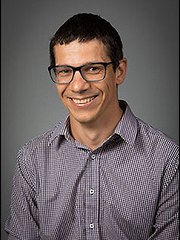
Prof. Dr. Michael Kramer is a Professor of Astrophysics at the University of Manchester and a Scientific Member (Managing Director) at the Max Planck Institute for Radio Astronomy. He leads the COMPACT Research Group and specializes in radio astronomical fundamental physics. University of Manchester: Professor for Astrophysics Max Planck Institute for Radio Astronomy: Managing Director, Radio Astronomical Fundamental Physics Research Interests: Dr. Kramer focuses on pulsars , neutron stars , and gravitational physics , using these as tools to test general relativity , detect gravitational waves , and study transients in the Milky Way. Recent Research Trends: His 15 most recent publications emphasize fast radio bursts (FRBs) , axion dark matter searches , black hole imaging , and pulsar timing arrays for gravitational wave detection. Studies include the M87 jet, Galactic Center magnetars, and MeerKAT telescope optimizations.
Prof. Dr. Thomas Kupfer is a Professor of Stellar Astrophysics at the Hamburg Observatory, part of the Department of Physics in the MIN Faculty at the University of Hamburg. He leads a research group focused on compact binary systems and gravitational wave sources relevant to the LISA mission. University: University of Hamburg School: MIN Faculty Department: Department of Physics Position: Professor of Stellar Astrophysics Email: thomas.kupfer@uni-hamburg.de His research centers on the late stages of stellar evolution, particularly ultracompact binaries such as AM CVn systems, white dwarfs, and hot subdwarfs. He is deeply involved in time-domain astronomy through his leadership in the Zwicky Transient Facility (ZTF), where he served as calibration scientist, communication coordinator, and lead of the Galactic Plane science working group. He currently leads a high-cadence survey of the inner Galactic Plane using ZTF data. Prof. Kupfer is an active contributor to the LISA Consortium, having chaired the Early Career Scientist Working Group and currently leading the Galactic binaries effort in the Multi-messenger Working Group. His work bridges observational astronomy, data quality assurance, and future space-based gravitational wave detection. He has supervised multiple PhD students including Sumari Barocci-Faul, Corey Bradshaw, Eric Stringer, and Weitian Yu, and leads a team of postdoctoral researchers. His academic career includes an Assistant Professorship at Texas Tech University and postdoctoral positions at Caltech and the Kavli Institute for Theoretical Physics (UCSB).
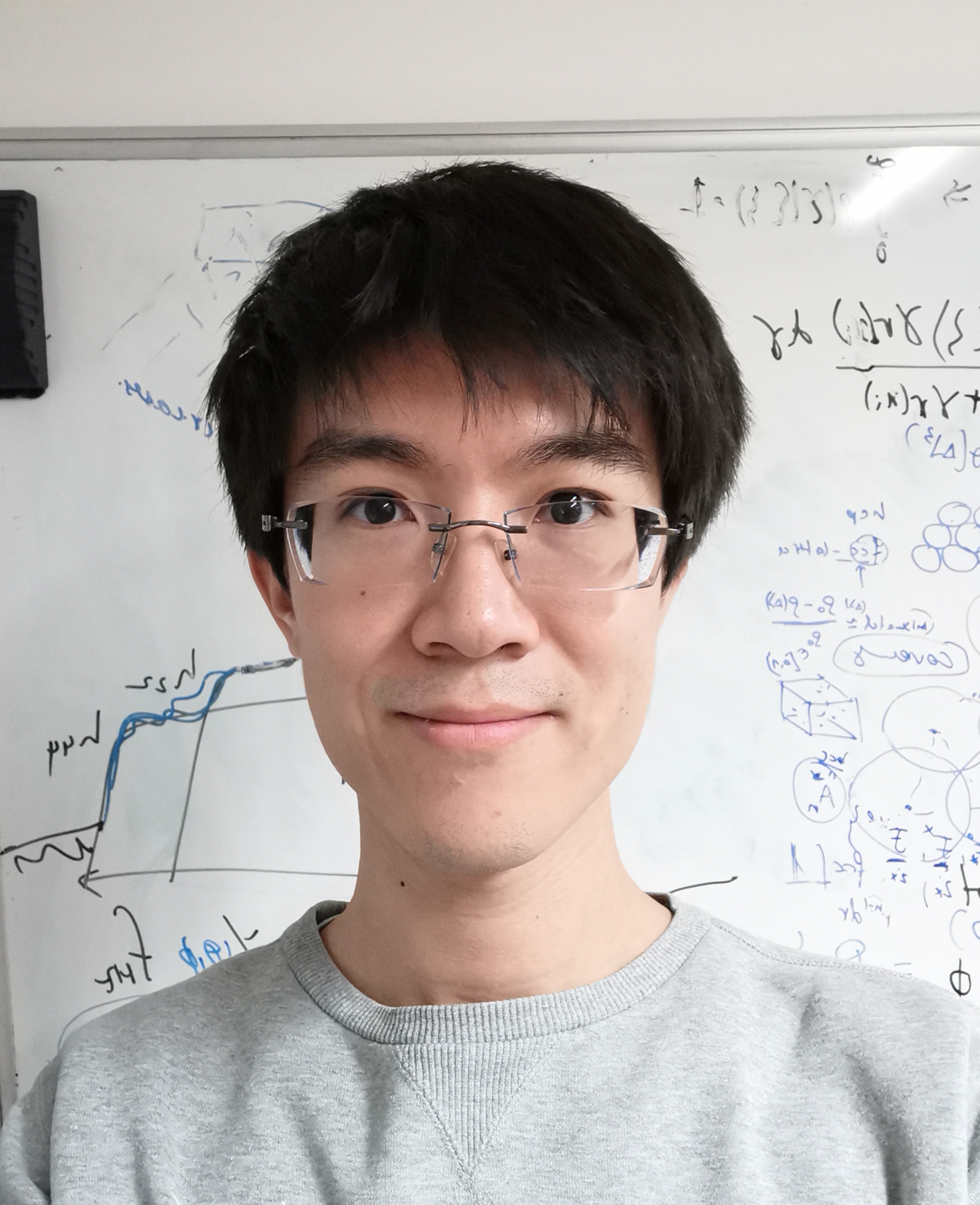
Yifan Wang is a Postdoc/Research Fellow at the Department of Astrophysical and Cosmological Relativity , Max Planck Institute for Gravitational Physics (Albert Einstein Institute) in Potsdam, Germany. He obtained his B.S. (2015) from the University of Science and Technology of China and his Ph.D. (2019) from the Chinese University of Hong Kong. From 2019-2023, he worked at the Observational Relativity and Cosmology department in AEI Hannover. Research Focus : Data analysis of gravitational waves from compact binary coalescence, multi-messenger astronomy, testing general relativity, and black hole ringdown phenomena. Publications : His recent work (2025-2019) spans gravitational wave detection, compact binary systems (black holes/neutron stars), waveform modeling, multi-messenger correlations (gamma-ray bursts, FRBs), and tests of general relativity using open catalogs. Key subfields include eccentric binary black holes, quasi-normal modes, parity symmetry, and subsolar mass binaries. He collaborates with Alexander H. Nitz, Collin D. Capano, and others, contributing to LIGO/Virgo collaborations and catalogs like 4-OGC. Tools & Collaborations : Actively develops Python-based gravitational wave analysis tools (e.g., pycbc, pycbc-plugin-seobnr) and contributes to open-source projects. His GitHub activity reflects commits, pull requests, and code reviews in gravitational wave software repositories.
Daniela Doneva, Ph.D., is a Lecturer at the Institute for Astronomy and Astrophysics (IAAT) , University of Tübingen. Her work spans theoretical and computational astrophysics, focusing on nonlinear gravitational phenomena in modified theories of gravity. Key affiliations: Institute for Astronomy and Astrophysics (IAAT), University of Tübingen Degree: Ph.D. in Physics Research interests include: Black Hole Scalarization : Spin-induced and curvature-induced scalarization mechanisms in black holes and neutron stars. Modified Gravity Theories : Einstein-Gauss-Bonnet, scalar-tensor theories, and teleparallel gravity extensions. Gravitational Wave Physics : Modeling waveforms, stability analysis, and LISA mission applications. Numerical Relativity : Simulations of compact object mergers and nonlinear evolutions. Her publications emphasize computational methods (e.g., neural network surrogates), stability analysis, and observational constraints from gravitational wave detectors like LISA. No scientific awards or student advisement details were found in the provided texts.
Achim Schwenk is a Professor at Technische Universität Darmstadt specializing in theoretical nuclear physics, strongly-interacting many-body systems, ultracold quantum gases, and nuclear astrophysics. His research bridges fundamental nuclear interactions with astrophysical phenomena like neutron stars. His work focuses on ab initio calculations, effective field theory, and dense matter properties. Recent publications highlight applications to neutron star equations of state, neutrinoless double beta decay, and nuclear structure uncertainties. Scientific awards and honors are not explicitly mentioned in the provided text. His research group at TU Darmstadt utilizes advanced theoretical frameworks like chiral effective field theory and many-body perturbation theory.
Christian Lange is a Research Fellow at the Mathematical Institute of Ludwig-Maximilians-Universität München (LMU Munich). He holds a PhD and specializes in differential geometry, geometric topology, and orbifold theory. His current teaching includes a lecture on Riemannian Geometry (Summer 2025), focusing on advanced topics in geometric analysis. His research emphasizes orbifold structures, geodesic flows, and curvature properties. Notable contributions include studies on closed geodesics on orbifolds, systolic inequalities, and the interplay between billiard dynamics and Alexandrov geometry. Lange collaborates internationally, addressing problems in Riemannian geometry, symplectic topology, and geometric group actions. Publications highlight work on orbifold curvature bounds, Besse metrics, and deformations of Finsler structures. His 2023 paper in Journal of the European Mathematical Society proved a diameter gap theorem for sphere quotients. He also explores connections between Lorentzian metrics and Lipschitz regularity in geometric analysis. Supported by institutions like the Simons Foundation, Lange’s work bridges pure geometry with applications in topology and mathematical physics. His research group focuses on geometry and topology, contributing to foundational questions in differential and metric geometry.
Karsten Danzmann is a Professor at Leibniz Universität Hannover and Director of the Max Planck Institute for Gravitational Physics (Albert Einstein Institute) since 2002. He leads the Laser Interferometry and Gravitational Wave Astronomy department, focusing on advanced technologies for gravitational wave detection. Education : Diploma in Physics (1977), Universität Hannover PhD in Atomic and Molecular Physics (1980), Universität Hannover His research interests span gravitational wave astronomy, laser interferometry, quantum measurement, and space-based detector technology. He pioneered key innovations at the GEO600 detector, including squeezed light implementation and high-power lasers, now used in LIGO, Virgo, and KAGRA. He also leads the LISA space mission consortium for low-frequency gravitational wave detection in space. Scientific awards : Honorary Doctorate (RWTH Aachen, 2025) Edison Volta Prize (2018) Princess of Asturias Award (2017) Gruber Prize (2016) Hall of Fame der deutschen Forschung (2019)
Victoria Grinberg (she/her) is a Researcher and Project Scientist at the European Space Agency (ESA), with a focus on space science and high-energy astrophysics. She serves as the Research Fellows Coordinator and co-organizes the X-Wind collaboration, which integrates X-ray astronomy with stellar wind theory. Grinberg's expertise spans spectral and timing analysis of X-ray binaries, accretion/ejection processes around black holes and neutron stars, and the study of clumpy winds from massive supergiant stars. Her research combines multi-energy range observations and innovative methodologies to probe accretion geometry in extreme relativistic environments. She also bridges astronomy with climate science, assessing the carbon footprint of large astronomy meetings and advocating for sustainable practices in academia. Grinberg is actively involved in public outreach, delivering talks in English and German, contributing to educational initiatives like ARTÉ twitch streams, and creating scientific illustrations and academia-themed cartoons. Victoria Grinberg's recent publications highlight her ongoing work in X-ray binaries, black hole and neutron star environments, and stellar wind dynamics. Her articles often integrate spectral-timing techniques, polarization studies, and multi-mission data from NICER, Chandra, and INTEGRAL. Key trends include the analysis of accretion disk geometry, wind density structures, and the impact of stellar wind variability on X-ray emission mechanisms.
Irene Parada is an Assistant Professor and Serra Húnter Fellow at the Universitat Politècnica de Catalunya (UPC BarcelonaTech), Spain, where she is affiliated with the Department of Computer Science in the College of Mathematics and Computer Science. She is a member of the Research Group on Discrete, Combinatorial and Computational Geometry, contributing to both theoretical and applied aspects of geometric algorithms. Her academic background includes a PhD in Computer Science from Graz University of Technology (2019), a Master’s in Advanced Mathematics and Mathematical Engineering from UPC (2015), and a Bachelor’s in Mathematical Engineering from Universidad Complutense de Madrid (2014). She has held postdoctoral positions at the Technical University of Denmark, TU Eindhoven, and Utrecht University. Her research lies at the intersection of computational geometry, graph drawing, and algorithmic robotics. She investigates geometric graph representations, reconfiguration of modular robots, crossing numbers, and motion planning algorithms. Her work combines theoretical depth with practical applications in robotics and visualization. Her recent publications, appearing in top venues like SoCG, GD, ESA, and Algorithmica, reveal a strong trend toward geometric graph theory, reconfiguration problems, and algorithmic complexity. Topics include optimal compaction of sliding cubes, upward planar embeddings, and Fréchet-based trajectory analysis. Best paper award at EuroCG 2022 Best paper award at ICALP 2021 Excellent Course Evaluation at TU Eindhoven (2020/2021) She has advised and collaborated with numerous researchers in the field, though no formal students are listed. She has taught courses in Numerical Computing, Algorithms, Data Structures, and Motion in Robotics at UPC, Utrecht University, and TU Eindhoven. She has not received public mention of grants, but her Serra Húnter Fellowship and Margarita Salas postdoctoral position indicate competitive funding support. She is actively involved in the Research Group on Discrete, Combinatorial and Computational Geometry at UPC and collaborates extensively with researchers across Europe, particularly in Austria, the Netherlands, and Germany.
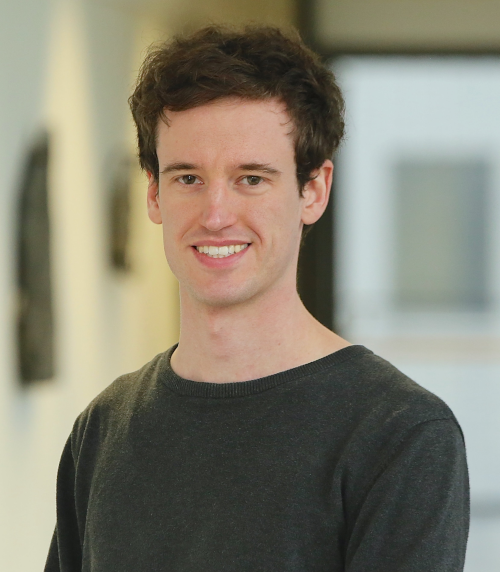
Matthew J Green is a Research Fellow in the Department of Physics and Astronomy at the University of Oklahoma , with a visiting fellow affiliation at the University of Colorado . His work focuses on the evolution of compact binary systems , particularly AM CVn-type binaries and short-period black hole companions to main-sequence stars. He maintains a cataogue of mass-transferring ultracompact binaries and uses TESS lightcurves to study photometric signatures like ellipsoidal modulation and Doppler beaming . His research explores magnetic braking , common envelope evolution , and the anomalous properties of donor stars in AM CVn systems. His publications include analyses of eclipsing AM CVn binaries (e.g., Gaia14aae), TESS-based binary population studies , and constraints on short-period black hole binaries . He also contributes to scientific outreach through planetarium volunteering and writing for Astrobites .
Professor Norbert Langer is a faculty member at the Argelander Institute for Astronomy, part of the Faculty of Mathematics and Natural Sciences at the University of Bonn. His research focuses on the physics and evolution of massive stars, including their end stages as supernovae and compact objects. Professor Langer's primary research interests include: Massive star evolution Origin of the chemical elements Compact stars in binaries Gravitational wave sources Cosmic nucleosynthesis Neutrino and cosmic ray production His work particularly examines how massive stars form and evolve as members of binary systems, with detailed consideration of binary interactions from early stages through to double compact object mergers and gravitational wave emission. This research has significant implications for understanding stellar evolution, cosmic phenomena, and fundamental processes that shape our universe. Professor Langer has published influential research in top astronomy journals, with recent publications focusing on presupernova evolution, black hole mergers, and gamma-ray burst progenitor models. His work demonstrates consistent focus on understanding the life cycles of massive stars and their role in cosmic phenomena. As a leading researcher in stellar astrophysics, Professor Langer contributes to advancing knowledge of how massive stars shape the chemical composition of the universe and produce some of the most energetic events observed in astronomy.
Philipp Podsiadlowski is a Professor of Physics in the Astrophysics sub-department at the University of Oxford and a Tutorial Fellow at St Edmund Hall. He holds the Klaus Tschira Visiting Professorship at the Heidelberg Institute for Theoretical Studies (HITS) from May to December 2023. His research focuses on theoretical astrophysics, including stellar evolution, binary systems, supernovae, gamma-ray bursts, and gravitational wave sources. He leads the Fireworks Initiative, an international collaboration studying cosmic explosions and their implications for galaxy evolution. Notable awards include the Humboldt Prize Fellowship (since 2015). Research interests span binary star dynamics, common-envelope evolution, and progenitors of supernovae and gamma-ray bursts. Collaborations include work with HITS groups (SET and PSO) and international networks. Teaching includes advanced astrophysics courses and doctoral supervision. His work on SN 1987A and gravitational wave sources highlights contributions to understanding stellar mergers and compact object formation.
Justus Neumann is an observational astronomer and postdoc in the Galaxy and Cosmology Department at the Max Planck Institute for Astronomy (MPIA) in Heidelberg, Germany. He works within the Extragalactic Star Formation group led by Dr. Eva Schinnerer, focusing on galaxy evolution and the role of galactic structures in shaping cosmic systems. Current Position: Postdoc at MPIA Research Focus: Barred galaxies, star formation, IFU observations Institutional Affiliation: Max Planck Institute for Astronomy Collaborations: PHANGS, MaNGA, TIMER surveys Neumann's research examines how galactic structures like bars and spirals influence the distribution of stars and gas, driving chemical evolution and star formation. His work utilizes advanced integral-field unit (IFU) observations to analyze barred galaxies, uncovering links between bar dynamics and stellar populations across cosmic time. Recent publications highlight his contributions to understanding azimuthal stellar population variations, gravitational torques in active galaxies, and molecular gas fraction drivers. Collaborative efforts span projects like PHANGS-JWST, MaNGA, and TIMER, with a focus on high-resolution astrophysical data. His affiliations include the Extragalactic Star Formation group at MPIA, where he contributes to analyzing galactic dynamics and star-forming processes using multi-wavelength observations.
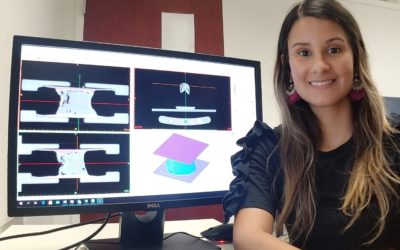
Maria Ramirez-Tannus is a Colombian astronomer and researcher at the Max Planck Institute for Astronomy (MPIA) in Heidelberg, Germany. She holds a PhD from the Anton Pannekoek Institute at the University of Amsterdam (2019), under supervisors Lex Kaper and Alex de Koter. Her primary role is as an independent postdoc in the Planet and Star Formation department, focusing on massive star formation and its impact on planet-forming disks. She co-leads the eXtreme UV Environments (XUE) collaboration, leveraging JWST observations to study planet formation in extreme radiation environments. Research Interests: Formation and evolution of massive stars Properties of remnant disks around massive young stellar objects Interstellar environment in high-mass star-forming regions UV radiation effects on protoplanetary disks Notable Contributions: First molecular detection of water/CO 2 in Earth-like planet zones under extreme UV irradiation Thermochemical models revealing compact, gas-depleted disks resilient to photoevaporation Multi-epoch studies of M17's massive stellar population Outreach & Leadership: Co-founder of the Mothers in Astronomy initiative (2022), amplifying voices of mothers in astronomy. Active in public science communication through talks in Colombia and international conferences.
Camille Diez is a Research Fellow at the European Space Agency (ESA) within the Space Science Faculty. Her work focuses on observational astrophysics, specifically accreting neutron stars in X-ray binary systems and their surrounding environments. She utilizes high-resolution X-ray spectroscopy from missions like NuSTAR and XMM-Newton , while preparing for future missions such as XRISM and Athena (2030+). Her research aims to constrain neutron star masses via radial velocity measurements at the VLT and advance understanding of accretion physics and dense matter equations of state. Collaborations : Peter Kretschmar, Felix Fürst, Victoria Grinberg, and teams across institutions like IFCA (Santander), Universidad de Santiago de Chile, and ISDC (Geneva). Expertise : High-energy astrophysics, X-ray spectroscopy, Doppler shift analysis, and stellar wind characterization. Her recent publications highlight studies on the Vela X-1 system, including wind structure variability and accretion wake dynamics, as well as spectral-timing analysis of Cygnus X-1 . She contributes to ESA missions and collaborates on projects like the upcoming Disentangling Pulse Profiles of (Accreting) Neutron Stars ISSI Working Group (2024–2025).