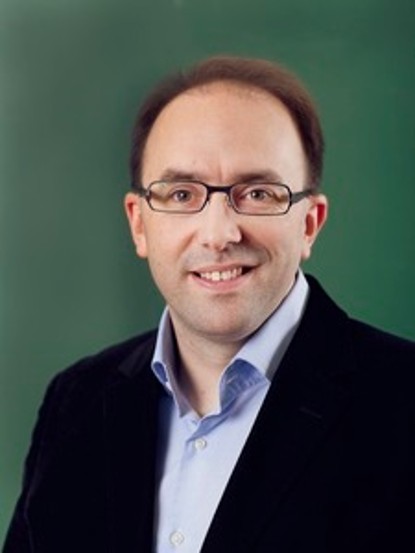
Rohollah Ghasemi is a Senior Lecturer in Mechanical Engineering at the School of Engineering Science , University of Skövde. His research focuses on materials science , manufacturing processes , and tribology , with particular emphasis on compacted/graphite iron microstructure analysis and laser welding optimization . His recent publications (2022–2025) explore advanced manufacturing techniques, including deep learning applications for welding quality prediction and multi-physics simulations for recoil force validation. Earlier works (2014–2019) investigate abrasion resistance , scratch mechanisms , and austempering variables in cast iron systems. Key Research Trends : Process-induced stress modeling, laser welding of dissimilar materials, microstructural engineering of CGI, tribological behavior under load, meta-model optimization Collaborations : Kent Salomonsson, Tobias J. Andersson, Anders E.W. Jarfors, Attila Dioszegi
Achim Schwenk is a Professor at Technische Universität Darmstadt specializing in theoretical nuclear physics, strongly-interacting many-body systems, ultracold quantum gases, and nuclear astrophysics. His research bridges fundamental nuclear interactions with astrophysical phenomena like neutron stars. His work focuses on ab initio calculations, effective field theory, and dense matter properties. Recent publications highlight applications to neutron star equations of state, neutrinoless double beta decay, and nuclear structure uncertainties. Scientific awards and honors are not explicitly mentioned in the provided text. His research group at TU Darmstadt utilizes advanced theoretical frameworks like chiral effective field theory and many-body perturbation theory.
Giovanni Squillero is a Full Professor in the Department of Control and Computer Engineering (DAUIN) at Politecnico di Torino, Italy. He leads the CAD group (Electronic CAD & Reliability) and serves on Politecnico's Joint Committee for Teaching and Ph.D. Steering Committee (Pure and Applied Mathematics).
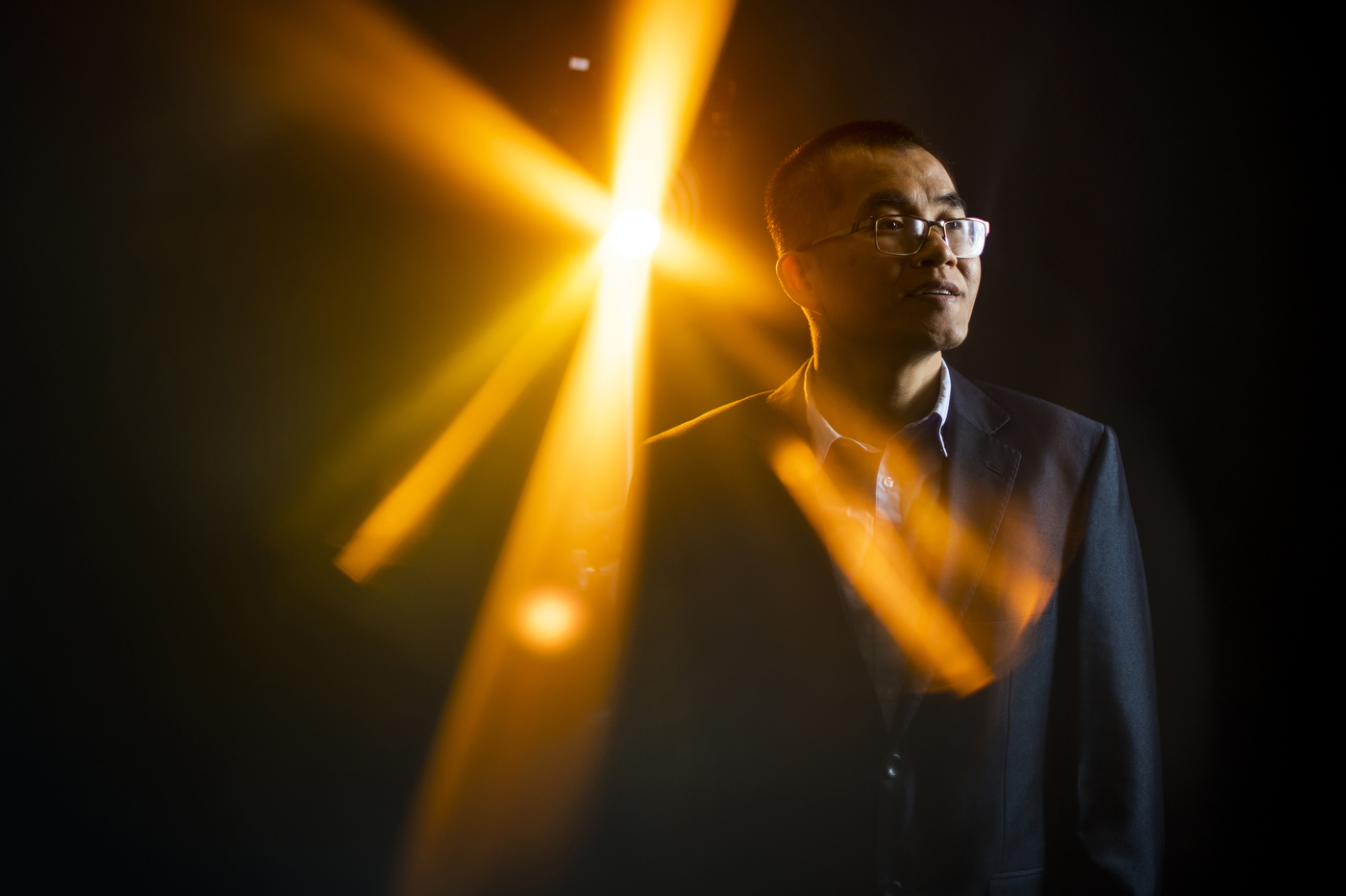
Dacheng Lin is a Research Professor in the Department of Physics at Northeastern University (NU), where he has held this position since December 2020. Previously, he served as a Research Scientist at the University of New Hampshire (UNH) from 2014 to 2017, later becoming a Research Assistant Professor with a joint appointment in the Department of Physics and the Space Science Center within the Institute for the Study of Earth, Oceans, and Space. His academic journey includes a PhD in Physics from the Massachusetts Institute of Technology (2009) and an undergraduate degree from the University of Science and Technology of China. Dr. Lin specializes in high-energy astrophysics, focusing on black hole candidates, neutron star accretion processes, tidal disruption events, and X-ray astronomy. His research leverages multiwavelength observations and advanced spectroscopic techniques to study phenomena such as ultraluminous X-ray sources, magnetar-powered transients, and stellar disruption dynamics. Notable contributions include identifying intermediate-mass black hole candidates in dwarf galaxies and analyzing prolonged tidal disruption events. His work integrates cutting-edge telescopes like Chandra and XMM-Newton, emphasizing transient event detection and source classification. While no formal awards are listed, his research has garnered attention, including a feature in Northeastern’s news for discovering high-energy signals from billions of light years away. Dr. Lin’s advising and grant activities remain unspecified in the provided texts, though his prior roles at UNH suggest involvement in collaborative research teams and observational projects. Dr. Lin’s affiliations and research reflect a deep engagement with extragalactic phenomena and compact object astrophysics, contributing to our understanding of accretion physics and high-energy transients in the universe.
Jorge Pullin is a Professor and Horace C. Hearne, Jr. Chair of Theoretical Physics at Louisiana State University (LSU), affiliated with the Department of Physics & Astronomy within the College of Science. He holds a Ph.D. from the Instituto Balseiro, Argentina (1988). His research focuses on quantum gravity and general relativity, particularly canonical quantization methods and loop quantum gravity. Collaborating with Rodolfo Gambini since 1990, Pullin has co-authored influential works like the book Loops, knots, gauge theories and quantum gravity (1996). He challenges mainstream string theory by advocating for quantization of general relativity itself. His work also explores black hole collisions, leveraging LSU's access to the world's fastest university-controlled supercomputer for numerical relativity simulations, and contributes to gravitational wave detection via LIGO collaborations. Recent articles highlight interdisciplinary efforts in quantum foundations, including interpretations of quantum mechanics and consciousness theories, alongside advancements in dark matter searches and scalar field interactions with quantum black holes. Pullin's group has pioneered the Lazarus Project and developed novel lattice-based quantum gravity approaches. Awards: Hearne Chair of Theoretical Physics His advising and grants activities reflect no listed students but significant collaborative efforts. Research is anchored at the Hearne Institute of Theoretical Physics, where he leads investigations into quantum gravity's implications for spacetime and black hole physics.
David Williams-Baldwin is an e-MERLIN Operations Support Scientist at the University of Manchester's School of Physics and Astronomy, where he has worked since 2020. He is a member of the Astronomy and Astrophysics Theory Group and contributes to major radio astronomy surveys including LeMMINGs and ThunderKAT. His educational background includes: Undergraduate studies at University of Southampton (2010-2014) PhD at University of Southampton (2014-2018) Hintze Fellow in Radio Transients (2018-2020) As a dedicated radio astronomer, Williams-Baldwin focuses on black holes (both supermassive and Galactic), the physics of astrophysical jets, and variable/transient radio phenomena. His research investigates accretion processes onto compact objects and their resulting outflows. He utilizes the e-MERLIN array for high-resolution studies that remove contamination from non-accretion-related activities while providing dynamic response for rapidly varying transient sources. His work contributes to understanding fundamental astrophysical processes across multiple scales. Williams-Baldwin's publication record shows consistent contributions to black hole and transient astronomy, with particular focus on observational studies of X-ray binaries and active galactic nuclei. His research often involves multi-wavelength approaches and leverages advanced radio telescope capabilities to study accretion physics and related phenomena. His notable recognition includes: Hintze Fellow in Radio Transients (2018-2020) As an e-MERLIN Operations Support Scientist, Williams-Baldwin plays a key role in supporting observational programs while conducting his own research. He is heavily involved in the Legacy e-MERLIN survey (LeMMINGs) which provides a statistically-complete census of accretion and star formation in nearby galaxies, and is a member of ThunderKAT, a survey program with MeerKAT studying explosive and transient radio phenomena. His work contributes to UN Sustainable Development Goals related to scientific advancement and understanding of our universe. He works within the e-MERLIN Science Support Group at Jodrell Bank Centre for Astrophysics, collaborating with international teams on major surveys that advance our understanding of compact objects and transient phenomena in the universe.
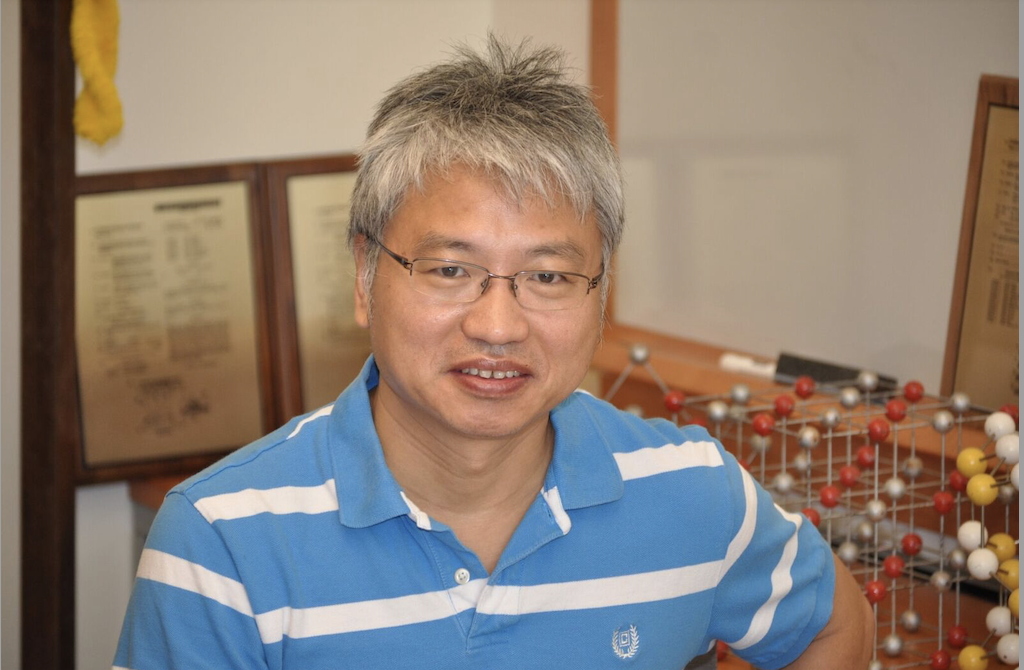
Samir D. Mathur is a Professor in the Department of Physics at Ohio State University. His research focuses on high energy theory, string theory, and black hole physics, particularly addressing the black hole information paradox through the fuzzball paradigm. He has taught advanced courses such as String Theory (Physics 880) and contributed to resolving foundational questions in quantum gravity and black hole thermodynamics. Education: Ph.D. Physics, University of Bombay, 1987 M.S. Physics, IIT Kanpur, 1981 Research Interests: Mathur's work centers on resolving the black hole information paradox via the fuzzball framework, which replaces traditional black holes with horizon-scale structures in string theory. His contributions include exploring microstate geometries, holography, and the implications of string theory on black hole thermodynamics. He challenges classical black hole concepts by proposing fuzzballs as non-singular objects that preserve information without requiring firewalls or remnants. Publications & Trends: His recent work emphasizes fuzzball thermodynamics, the universality of black hole properties, and contrasting fuzzball models with wormholes. Key topics include gravitational wave echoes, vacuum elasticity, and CFT analysis in the D1-D5 system. Awards: Alumni Award for Distinguished Teaching, Ohio State University, 2003 Advising & Grants: No explicitly listed advisees, but he teaches graduate courses and contributes to research groups exploring string theory and black hole microstates. Labs/Teams: Leads a research group focused on string theory applications to black holes and quantum gravity at Ohio State University's Physics Research Building.
Professor Jianping Lu is a leading academic at the University of North Carolina at Chapel Hill, affiliated with the Department of Physics and Astronomy within the College of Arts and Sciences. His work focuses on advancing medical imaging technologies, particularly in X-ray and computed tomography (CT) systems, with a strong emphasis on carbon nanotube (CNT) X-ray sources. He holds a Ph.D. in Physics from the City University of New York (1988). Education: Ph.D. in Physics, City University of New York, 1988 Research Interests: Development of novel imaging systems, including stationary tomosynthesis and multisource CBCT Optimization of X-ray technology for clinical applications (e.g., oncology, cardiology, dentistry) Integration of artificial intelligence (AI) for diagnostic accuracy and automated analysis Portable and low-cost medical imaging solutions Recent Work Trends: His 2025 publications highlight advancements in AI-driven diagnostics for pancreatic cancer, improved contrast in adaptive radiation therapy, and stationary chest tomosynthesis systems. Key innovations include low-cost dual-energy CBCT and carbon nanotube-based X-ray arrays, which enhance image quality while reducing radiation exposure. His 2024 studies further explore cardiac imaging, dental tomosynthesis, and system optimizations for clinical adoption. Awards: None explicitly listed in the provided text. Advising & Grants: While student advisees are not listed, his research is likely supported by grants focusing on medical imaging innovation. Collaborations span physics, engineering, and clinical departments to bridge technical and clinical challenges. Labs/Teams: Likely affiliated with UNC’s imaging research groups, particularly those developing CNT X-ray technologies and clinical imaging systems for cancer and cardiovascular applications.
Samuel Patrone is a Researcher in the Department of Physics at the California Institute of Technology (Caltech), part of the Division of Physics, Mathematics and Astronomy. His work focuses on gravitational wave astronomy, particle physics, and cosmology, with active involvement in the LIGO-Virgo collaboration. He specializes in analyzing gravitational wave data from compact binary coalescences, dark matter constraints, and multi-messenger astrophysics. Patrone's research includes contributions to the GWTC-2.1 catalog of gravitational wave events, studies on dark photon dark matter, and searches for gravitational wave signals associated with fast radio bursts and gamma-ray bursts. His theoretical work explores quark-lepton unification and regularization schemes in cosmological models. He collaborates with major observatories including LIGO, Virgo, CHIME/FRB, Fermi, and Swift. Though not explicitly mentioned in the provided texts, his work likely contributes to Caltech's initiatives in the Institute for Quantum Information and Matter (IQIM) and the Infrared Processing and Analysis Center (IPAC).
Graham Wynn is a Professor and Pro Vice-Chancellor at Northumbria University. He holds a PhD in Astrophysics (1993) and specializes in high-energy astrophysical phenomena, including black hole accretion processes, magnetars, and compact object dynamics. His research employs advanced statistical methods like Bayesian analysis to study astrophysical systems such as X-ray binaries and gamma-ray bursts. Wynn’s work bridges theoretical modeling with observational data interpretation, focusing on topics like magnetic propeller effects and black hole spin measurements. His academic contributions include peer-reviewed publications in prestigious journals like Monthly Notices of the Royal Astronomical Society , with notable citations in his field. Collaborations span international research networks, reflecting his expertise in stellar evolution and relativistic astrophysics. While no specific awards are listed, his research outputs demonstrate significant engagement with cutting-edge astrophysical problems. Wynn’s administrative role as Pro Vice-Chancellor complements his academic leadership in advancing research and educational initiatives at Northumbria University. No formal advisee records are provided, though his research collaborations suggest active involvement in mentoring early-career researchers.
David Morrissey is a Research Scientist at TRIUMF and an Adjunct Professor at the University of Victoria's Department of Physics and Astronomy. His research focuses on particle physics beyond the Standard Model, including dark matter, baryogenesis, and electroweak symmetry breaking. He explores mechanisms for generating cosmic asymmetries and testing them through particle colliders and astrophysical observations. His affiliations include TRIUMF's Theory Group and ATLAS Group. He has taught advanced courses on particle physics at institutions like the University of British Columbia and the Perimeter Institute, covering topics such as Beyond the Standard Model physics, quantum electrodynamics, and dark matter. Key research themes include: Dark Matter detection strategies and theoretical models Collider signatures of new physics Electroweak baryogenesis mechanisms Cosmological implications of ultraviolet operators He collaborates on projects like the SHiP experiment and contributes to workshops on dark matter direct detection. His work bridges theoretical models with experimental validation through gravitational wave studies, neutrino detectors, and cosmic observations.
Ilaria Caiazzo is an Assistant Professor of Astrophysics at the Institute of Science and Technology Austria . Her research focuses on stellar evolution, compact objects (white dwarfs, neutron stars, black holes), and X-ray polarization studies. She leads observational campaigns using missions like JWST, IXPE, and Gaia, and collaborates on theoretical models for magnetar emission and accreting X-ray pulsars. Her work includes the discovery of an ultramassive white dwarf (ZTF J1901+1458) and breakthroughs in magnetar polarization measurements. She is also a key contributor to the Colibrì X-ray telescope mission proposal as Project Scientist. Research Interests: Stellar Evolution in Star Clusters X-ray Polarization of Compact Objects White Dwarf Formation and Structure Accretion Processes in Neutron Stars QED Effects in Strong Magnetic Fields Her recent work includes the first IXPE observations of magnetars (Science, 2022) and contributions to JWST Cycle 1 observing programs targeting ancient stellar systems like 47 Tucanae. She has also produced influential publications in Nature and Astrophysical Journal , advancing our understanding of stellar remnants and their extreme physical conditions. Awards: While no explicit honors are listed, her high-impact publications and leadership in major missions highlight her scholarly contributions. Grants and Collaborations: Approved HST (Cycle 29) and JWST (Cycle 1) programs, IXPE collaboration member, and Colibrì mission team leader. Her work integrates large surveys (ZTF, Gaia) with cutting-edge instrumentation. Labs/Teams: Active in the Colibrì mission consortium and IXPE science working groups, focusing on X-ray polarimetry and compact object studies.
Evan Patrick O'Connor is an Associate Professor in the Department of Astronomy at Stockholm University. His research focuses on computational astrophysics, particularly core-collapse supernovae, neutrino physics, and black hole formation. He leads research in the Computational Astrophysics group at the Department of Astronomy, where development of computational tools spans research areas from solar physics to cosmology. Dr. O'Connor received his Ph.D. from Caltech in the TAPIR group, following a bachelor's degree in Science (Physics, Honours, Co-op) from the University of Prince Edward Island. He was a postdoctoral fellow at the Canadian Institute of Astrophysics from 2012-2014 and a Hubble Fellow at North Carolina State University from 2014-2017 before joining Stockholm University. His research interests span computational astrophysics with a focus on core-collapse supernovae mechanisms, black hole formation, neutrino physics, gravitational waves, and the nuclear equation of state. He develops and utilizes sophisticated computational models to study the dynamics of compact objects and their connection to detailed microphysics. His work often involves multimessenger approaches, connecting theoretical models with potential observational signatures across neutrino, electromagnetic, and gravitational wave channels. Dr. O'Connor has made significant contributions to open-source scientific software development, creating tools like NuLib, GR1D, and various equation of state resources that have become valuable community resources. Analysis of his recent publications reveals a strong focus on understanding the complex interplay between stellar structure, nuclear physics, and explosion mechanisms in core-collapse supernovae. His research increasingly incorporates multi-dimensional effects, phase transitions in dense matter, and their observational consequences across multiple messenger channels. Recent work shows growing attention to data-driven approaches for connecting simulations with potential observations. Dr. O'Connor has received notable recognition including: Hubble Fellowship (2014-2017) He has developed and maintains several open-source tools including NuLib (neutrino interaction library), GR1D (spherically-symmetric general-relativistic hydrodynamics code), and various equation of state resources. His research group collaborates extensively with international teams studying supernova mechanisms and related phenomena, contributing to projects like SNEWS (Supernova Early Warning System). Dr. O'Connor leads the Computational Astrophysics group at Stockholm University's Department of Astronomy, which develops computational tools spanning research areas from solar physics to cosmology. The group maintains strong connections with international supernova research communities and contributes to global efforts in multi-messenger astronomy.
Jocelyn Read serves as Professor of Physics at California State University Fullerton, where she bridges nuclear physics and astrophysics through gravitational-wave observations. From 2016 to 2022, she co-led the Extreme Matter team within the LIGO-Virgo-Kagra Collaboration, directing efforts to extract neutron-star equation-of-state constraints from gravitational-wave data. She currently contributes to Cosmic Explorer, a next-generation gravitational-wave observatory project designed to achieve unprecedented sensitivity for probing dense matter physics. Her research program centers on connecting theoretical nuclear physics with observational gravitational-wave astronomy, specifically investigating how neutron-star mergers reveal properties of matter at supranuclear densities. By analyzing signals from events like GW170817 and GW190425, her work constrains the equation of state governing neutron-star interiors and examines tidal effects in binary systems. This research directly impacts fundamental questions about phase transitions in dense matter and the maximum mass of neutron stars. Analysis of her 15 most recent publications (2019-2023) reveals three dominant research thrusts: gravitational-wave data analysis of compact binary mergers (particularly using LIGO-Virgo-Kagra catalogs), equation-of-state modeling for neutron-star matter, and science-case development for future detectors like Cosmic Explorer. Her work consistently integrates multi-messenger astronomy approaches and advances waveform modeling techniques to extract maximum physical insight from gravitational-wave observations. Her scientific recognition includes: Fellow of the American Physical Society While specific student advisement details are not publicly documented, her leadership roles in major collaborations indicate significant mentoring contributions within the gravitational-wave community. Her grant activities remain unreported in available sources, though her Cosmic Explorer involvement suggests participation in large-scale instrumentation projects. She maintains active roles in the LIGO-Virgo-Kagra Collaboration's scientific working groups and is a key contributor to the Cosmic Explorer project, which aims to deploy a 40-km arm-length detector by the 2030s. Her work within the Nicholas and Lee Begovich Center for Gravitational-Wave Physics and Astronomy at CSU Fullerton positions her at the forefront of next-generation gravitational-wave science development.
Dr. Michael Williams is a Research Fellow at the Institute of Cosmology & Gravitation under the Faculty of Technology , University of Portsmouth. His work focuses on gravitational wave physics, neutron star dynamics, and black hole binaries through collaborations with LIGO, Virgo, and KAGRA detector networks. Active in gravitational wave detection and multi-messenger astronomy Developing AI algorithms for telescope targeting and signal processing Recipient of the IOP Trusted Reviewer status (2025) His recent research includes premerger characterization of black hole binaries , continuous wave searches from pulsars , and gravitational wave-FRB counterpart detection . He contributes to open-source tools like nessai and bayesbeat , with 25 datasets released. Williams participates in conferences like the European AI for Fundamental Physics Conference and workshops on milli-hertz gravitational wave astrophysics. Key collaborations: LIGO, Virgo, KAGRA, GEO600 Technical expertise: matched filtering , Bayesian inference , normalizing flows