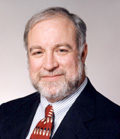
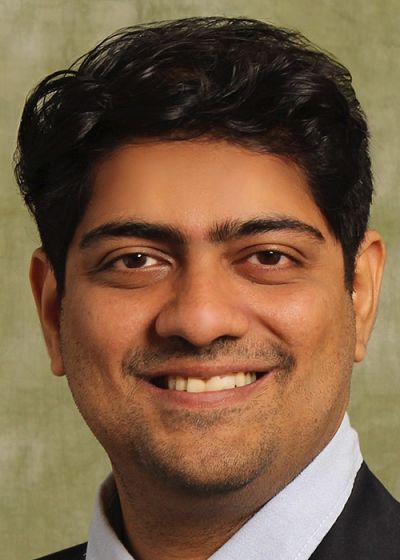
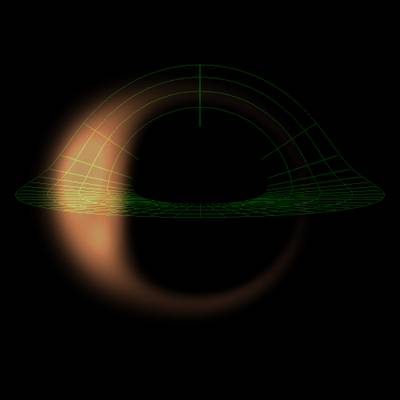
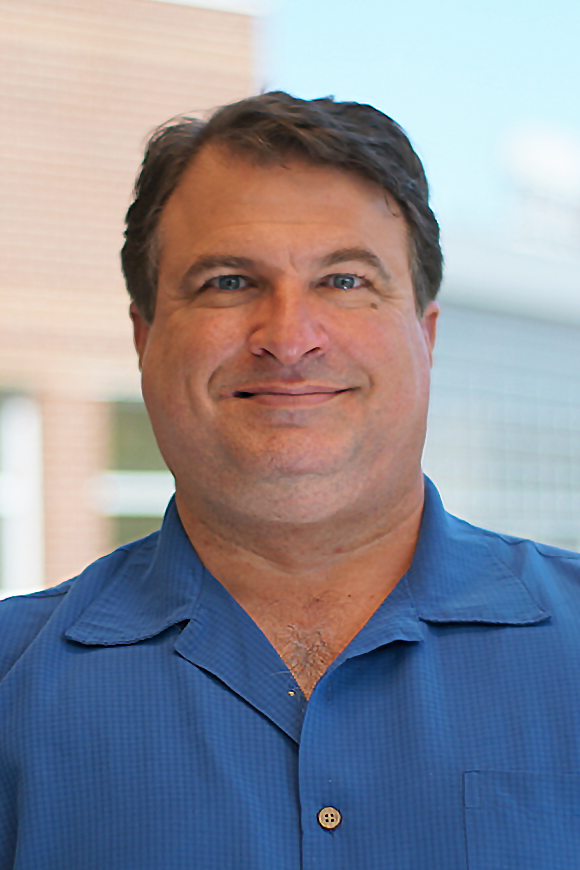
Gianfranco Bertone is a Professor at the Faculty of Science, University of Amsterdam, specializing in astrophysics and theoretical physics with a focus on dark matter, black holes, and gravitational waves. His work bridges cosmology and particle physics through multi-messenger approaches. Research Interests: Dark matter detection via gravitational wave signatures Black hole binary dynamics in dark matter environments Relativistic simulations of extreme mass ratio inspirals Multi-messenger astronomy and fundamental physics Cosmological simulations for dark matter distribution Publication Trends: Recent works emphasize gravitational wave astronomy's role in dark matter studies, including waveform distortions from dark matter spikes, boson cloud effects in black hole binaries, and simulation-based inference for astrophysical observations. His research spans theoretical modeling, computational astrophysics, and observational constraints.
Miroslaw Bober is Professor of Video Processing at the University of Surrey, where he joined in 2011. He leads the Visual Media Analysis team within the Centre for Vision, Speech and Signal Processing (CVSSP) in the School of Computer Science and Electronic Engineering. His extensive industry experience includes 15 years as General Manager of the Mitsubishi Electric R&D Centre Europe and Head of Research for its Visual & Sensing Division. BSc and MSc in Electrical Engineering from AGH University of Science and Technology, Krakow, Poland (1990) MSc in Machine Intelligence with distinction from Surrey University (1991) PhD in Computer Vision from Surrey University (1995) Professor Bober's research focuses on novel techniques in signal processing, computer vision and machine learning with applications in industry, healthcare, big-data and security. His expertise particularly lies in image and video analysis and retrieval, including visual search, object recognition, and analysis of motion, shape and texture. His algorithms for shape analysis, image/video fingerprinting, and visual search are considered world-leading and have been selected for ISO International standards within MPEG, with applications used by organizations like the Metropolitan Police. His recent publication trends show a strong focus on hybrid network architectures, scene graph generation, medical imaging applications, and augmented reality publishing systems. His work spans both theoretical advancements in computer vision and practical implementations addressing real-world challenges in media, healthcare, and security domains. The research demonstrates a consistent pattern of bridging academic innovation with industrial applications, particularly in visual search technology and media analysis. Presidential Award for strengthening the TV business in Japan via innovative 'Visual Navigation' content access technology (2010) Mitsubishi Best Invention Award for Image Signature Technology (2008) Professor Bober serves as Programme Director for the MSc in Multimedia Signal Processing and Communications and holds various teaching and mentoring roles. He has secured over 30 research and industrial grants totaling more than £16M, including the BRIDGET FP-7 project (5.28 M€) as coordinator and PI, and the CODAM project (£1.05 M) as PI. His work with the BBC, Huawei, and other industry partners demonstrates strong industry-academia collaboration. As chair of MPEG technical work on Compact Descriptors for Visual Search (CDVS) and Compact Descriptors for Video Analysis (CDVA), Professor Bober leads international standardization efforts. His Visual Media Analysis team develops cutting-edge visual search and media analysis algorithms with applications across broadcast, security, and healthcare domains.
Prof. Adam Deller is a Professor at Swinburne University of Technology, affiliated with the School of Science, Computing and Emerging Technologies. His academic journey includes a BSc, BE (1st class honours), and PhD in Astrophysics from Swinburne. He specializes in radio interferometry, neutron star physics, fast radio bursts (FRBs), and space domain awareness. His research focuses on compact objects like pulsars and black holes, using radio telescopes for high-resolution imaging. He co-founded Fourier Space Pty Ltd, developing signal processing solutions for radio astronomy and space industries. **Research Interests**: Radio interferometry instrumentation, neutron star magnetospheres, FRB localization and cosmological applications, and space domain awareness through radio observations. **Awards**: Includes the Pawsey Medal (2020), Newcombe Cleveland Prize (2022), and multiple grants from ARC and industry partners. His grants focus on SKA pulsar timing, FRB studies, and gravitational wave astronomy collaborations. **Teaching**: Teaches Computational Astrophysics, emphasizing numerical simulations for astrophysical problems. **Grants & Collaborations**: Key roles in ARC Centre of Excellence for Gravitational Wave Discovery, SKA pulsar timing projects, and international telescope collaborations like ASKAP and VLBI networks.
Steven O. Kimbrough is a Professor of Operations, Information and Decisions at the Wharton School, University of Pennsylvania. His research spans artificial intelligence, computational rationality, and strategic optimization with applications to political science, economics, and service innovation. He teaches courses like Agents, Games, and Evolution and Thinking With Models , focusing on experimental approaches to bounded rationality and uncertainty in decision-making. Primary Email: kimbrough@wharton.upenn.edu Office: 3730 Walnut Street, 565 Jon M. Huntsman Hall, Philadelphia, PA 19104 His research interests include: Artificial intelligence and metaheuristics for constrained optimization Evolutionary computation in electoral redistricting Agent-based modeling of market dynamics Logic modeling for normative reasoning Text mining applications in event analysis Publications demonstrate expertise in computational economics, political modeling, and service analytics. Recent work focuses on: Empirical validation of electoral compactness Strategic learning in oligopolies Multi-objective matching algorithms Feasible-infeasible solution spaces Service network optimization Teaching emphasizes: Game-theoretic approaches to strategic behavior Modeling life-cycle for energy sustainability Computational experiments in social science
Juno Chan is a Research Fellow at the Niels Bohr Institute , University of Copenhagen , specializing in Theoretical High Energy, Astroparticle and Gravitational Physics . Holding a permanent position since 2025, Chan contributes to advanced research in gravitational wave astronomy and neutron star dynamics. Role: PhD Fellow (converted to Research Fellow) Location: Blegdamsvej 17, Copenhagen Ø Contact: chun.lung.chan@nbi.ku.dk , +45 35 32 87 21 Chan's research focuses on gravitational wave detection , neutron star magnetohydrodynamics , and gravitational lensing in astrophysical contexts. Key contributions include: Developing gravitational wave detection algorithms in lensed systems Modeling magnetized rotating neutron stars with relativistic MHD simulations Curating the LensCAT catalog for known gravitational lenses Multi-messenger lensing studies through LIGO-Virgo-KAGRA collaborations Publications and Research Trends Chan's 15 most recent publications (2023-2025) demonstrate expertise in gravitational wave astronomy , neutron star physics , and computational astrophysics . The work involves: Waveform analysis for lensed events MHD simulations of compact objects Multi-messenger lensing frameworks Signal processing for detector networks Cosmological implications of lensing Collaborations span international institutions in gravitational wave networks, with frequent contributions to Physical Review D and Monthly Notices of the Royal Astronomical Society . No formal awards or student mentorship details are publicly available.
Prof. Dr. Haris Gačanin is a faculty member at RWTH Aachen University, affiliated with the Institute for Distributed Signal Processing under the College of Electrical Engineering. His research focuses on integrating machine learning with wireless communication systems, particularly in industrial IoT, edge computing, and network optimization. Current academic rank: Professor Contact: harisg@dsp.rwth-aachen.de Research Interests: Wireless systems, machine learning, signal processing, and network optimization. Key contributions include: Adaptive resource allocation in IIoT and vehicular networks AI-driven channel estimation and feedback mechanisms Security-oriented emitter identification via metric learning Federated/transfer learning for edge environments Hardware-efficient deep learning models for mmWave and THz communications Methodological Focus: Combines reinforcement learning, attention mechanisms, and robust neural architectures with practical implementations on FPGA and vehicular systems.
Srikanth Rangarajan is an Assistant Professor at Binghamton University's School of Systems Science and Industrial Engineering. He holds a PhD and MS from the Indian Institute of Technology Madras (2017) and a BE from Anna University Chennai (2011). His research focuses on energy storage systems, thermal management of electronics, battery optimization, and digital twinning. He previously served as an Associate Research Professor in Mechanical Engineering at Binghamton under Bahgat Sammakia. Rangarajan authored the book Phase Change Material Heat Sinks: A multi-objective Perspective and holds a patent for a rotatable heat sink design. His teaching includes optimization techniques, thermal modeling, and neural networks. Recent work explores virus spread modeling via genetic algorithms, with a preprint under review in Journal of Healthcare Informatics . He has received multiple awards including an Institute Post-Doctoral Fellowship and Research Assistantships from the Indian government. His research bridges thermal engineering with advanced manufacturing and sustainability, addressing challenges in high-power electronics and data center cooling. Education: BE in Mechanical Engineering, Anna University (2011) MS in Thermal Engineering, IIT Madras (2017) PhD in Heat Transfer, IIT Madras (2017) Research Interests: Digital twin systems for battery optimization Thermal energy storage design Advanced electronics packaging Data center cooling innovations Phase change material composites His recent articles highlight cooling solutions for high-density electronics, battery recycling challenges, and predictive models for epidemiological patterns using computational methods. Ongoing work includes embedded cooling technologies for heterogeneous integrated circuits and sustainable thermal management strategies. Awards: Patent: Rotatable Heat Sink (Government of India) Institute Post-Doctoral Fellowship (IIT Madras, 2017) Research Associate, Divecha Centre (IISc, 2017) Half-Time Research Assistantship (MHRD, 2012-2013) Advising & Grants: While no formal advisees are listed, his prior roles indicate involvement in mentorship. His research has been supported by institutional grants including those from the Indian Ministry of Human Resource Development. Labs/Teams: Active in Binghamton's Systems Science and Industrial Engineering lab, collaborating on thermal management and additive manufacturing projects.
Dr. Sarah Burke-Spolaor is an Associate Professor in the Department of Physics and Astronomy at West Virginia University and a member of the Center for Gravitational Waves and Cosmology (GWAC) . Her research focuses on dynamic astrophysical phenomena , including binary supermass of mass black holes , pulsar timing arrays for gravitational wave detection , and Fast Radio Bursts (FRBs) . Key Research Areas : Gravitational wave detection via pulsar timing Observational studies of binary supermassive black holes Fast Radio Burst detection and classification Galaxy formation and merger dynamics Dr. Burke-Spolaor mentors a team of students and postdocs including Gregory Walsh, Jessica Sydnor, Reshma Thomas , and Kshitij Aggarwal , whose work includes projects like the BHBinary/Galaxy Evolution Survey and The Petabyte Project for Radio Transients . Her awards include the Alfred P. Sloan Fellowship and recognition as a CIFAR Azrieli Global Scholar . Selected Article Trends : Leading gravitational wave research through NANOGrav's 15-year data set Multi-messenger astronomy targeting binary black hole systems FRB host galaxy characterization across telescopes Exploring unconventional astrophysical transients in the Galactic bulge Advancing pulsar timing array methodologies Developing next-generation radio interferometry techniques Scientific Awards : Alfred P. Sloan Fellow CIFAR Azrieli Global Scholar
Dr. Sepideh Ghodrat is an Assistant Professor of Shape Morphing Design at TU Delft's Faculty of Industrial Design Engineering. She bridges materials science and design, focusing on stimuli-responsive materials for dynamic, interactive products. Her research emphasizes 4D printing, smart materials, and sustainable applications. Research Projects include 4D Printing Magnetically Activated Shape Morphing Objects and SereniSleeve (wearables for anxiety modulation). Courses taught: Materials and Manufacturing (2023-2024). Research Interests : Shape Morphing Design (SMD) Stimuli-Responsive Materials (e.g., shape memory alloys, polymers) 4D Printing and Magnetic Soft Materials Applications in healthcare, automotive, and sustainability Key Contributions : Developed modular self-folding hinges (Mimosa Kit). Explored haptic wearables for visually impaired users. Advocates for adaptive, environment-responsive products. Labs/Teams : Involved in multiple interdisciplinary research teams at TU Delft, focusing on smart materials and sustainable design engineering.
Avery E. Broderick is an Associate Professor in the Department of Physics & Astronomy at the University of Waterloo and an Associate Faculty Member at the Perimeter Institute for Theoretical Physics. His research focuses on theoretical astrophysics, particularly studying compact objects like black holes and testing general relativity through astronomical observations. He is a key member of the Event Horizon Telescope (EHT) collaboration, which produced the first direct images of black hole horizons in M87* and Sagittarius A*. Broderick’s work emphasizes relativistic astrophysical phenomena such as accretion flows, jet formation, and polarization signatures. He collaborates extensively with observational astronomers and computational physicists to model black hole environments using general relativistic magnetohydrodynamic simulations. His recent research includes analyzing EHT data to constrain black hole spin, test spacetime metrics, and study photon ring dynamics. He also explores next-generation EHT (ngEHT) capabilities for higher-resolution imaging and multi-wavelength studies. Broderick has delivered invited lectures globally, including at Harvard-Smithsonian CfA, MIT, and the Aspen Center for Physics, reflecting his leadership in the field. Broderick’s contributions span over 135 refereed publications and conference proceedings, with a focus on black hole astrophysics, VLBI techniques, and relativistic plasma physics. His work bridges theoretical predictions with observational data, advancing our understanding of extreme gravitational regimes in the universe.
Herbert Shea is a Professor at École polytechnique fédérale de Lausanne (EPFL), where he leads the Microsystems for Space Technologies Laboratory (LMTS) within the School of Engineering and Institute of Microengineering. His research spans soft robotics, electrostatic actuation, and haptic interfaces with significant contributions to wearable technologies and microfabrication techniques. Shea's research focuses on developing novel actuation mechanisms for soft robotics, particularly zipping electrostatic actuators, electroadhesion technology, and dielectric elastomer systems. His work emphasizes miniaturization, energy efficiency, and practical implementation in wearable haptic interfaces for virtual and augmented reality applications. Recent research explores wafer-level microfabrication techniques, stretchable electronics, and novel approaches to fluid manipulation through electrowetting. Analysis of his recent publications reveals a strong trend toward creating more efficient, compact, and versatile soft robotic systems. His research group has made significant advances in reducing actuation voltages while maintaining performance, developing novel fabrication methods for liquid-encapsulated actuators, and creating reliable sensing systems for robotic manipulation. The interdisciplinary nature of his work bridges materials science, electrical engineering, and mechanical design to solve practical challenges in human-robot interaction. Shea collaborates extensively with researchers across multiple institutions, particularly with Samuel Rosset, Vito Cacucciolo, and Florian Hartmann. His research is supported by organizations including the Swiss National Science Foundation and the European Union, reflecting the significance and potential impact of his work in soft robotics and wearable technologies.
Carl Fields is an Assistant Professor at the Department of Astronomy, University of Arizona, and an Assistant Astronomer at Steward Observatory. His research focuses on computational and nuclear astrophysics, particularly the evolution and explosions of massive stars, their gravitational wave signatures, and multi-messenger signals. He previously held a Distinguished Postdoctoral Fellowship at Los Alamos National Laboratory in the Computational Physics and Methods (CCS-2) and Eulerian Codes (XCP-2) Divisions. He is actively involved in developing MESA-Web , a widely used educational tool for stellar evolution modeling. Extreme Astrophysics & Gravity Stars and Stellar Astrophysics Theoretical and Computational Astrophysics Transient and Time Domain Astronomy Scientific recognition includes being named to Forbes' 30 Under 30 in Science and receiving the RPF Distinguished Postdoctoral Fellowship. His work bridges theoretical astrophysics with advanced computational methods for modeling supernovae and compact object formation. Carl Fields leads the Theory, Data and Computation Group at Steward Observatory, contributing to cutting-edge research in gravitational collapse and stellar evolution. He maintains collaborative ties with Los Alamos National Laboratory and the stellar astrophysics community at UW-Madison through his work on MESA-Web .
Gregory R. Sivakoff serves as an Associate Professor in the Department of Physics at the University of Alberta, focusing on multi-wavelength observations of compact objects including white dwarfs, neutron stars, and black holes. His research specializes in X-ray binaries where neutron stars or black holes accrete material from donor stars. His work spans the entire electromagnetic spectrum beyond X-ray emissions, investigating accretion dynamics in binary systems. Dr. Sivakoff also maintains active commitments to Education and Public Outreach initiatives within the astronomical community. Contact details: email sivakoff@ualberta.ca , phone (780) 492-7992, and office CCIS 2-113 at the University of Alberta campus in Edmonton.
Farooq Azam is a Research Fellow at the Department of Mechanical Engineering , University College London , focusing on Modelling and Optimisation of Sustainable and Smart Technical Textiles . He works in the Roberts Engineering Building, London, United Kingdom (WC1E 7JE). Research Interests: Architected materials, Metamaterials, Additive manufacturing, Structural Imaging, Structural optimisation, AI/Machine Learning, Applied Mechanics, Mechanics of Materials Email: farooq.azam.20@ucl.ac.uk Recent Research Trends : His work spans additive manufacturing applications in biomedical components, structural optimization of architected materials, turbulence modeling in engines, and machine learning-driven metamaterial design. Key areas include Ti6Al4V scaffolds, hexagonal honeycomb configurations, and carbon microlattices. Scientific Awards : FHEA (Fellowship of the Higher Education Academy), 2024 Teaching : He has taught modules such as Group Manufacturing Challenges (MECH0099) , Micro/Nano Architected Composite Materials (MECH0096) , and Elasticity and Plasticity (MECH0026) at UCL.
Stephen Eikenberry is a Professor of Optics & Photonics Physics at CREOL, The College of Optics and Photonics, University of Central Florida. His academic journey includes a Ph.D. in Astronomy from Harvard University (1997), a Sherman Fairchild Postdoctoral Prize Fellowship at Caltech, and prior tenured roles at Cornell University and the University of Florida. His research focuses on black holes, neutron stars, gravitational waves, and astronomical instrumentation, with applications in biomedical imaging and spectroscopy. Key professional milestones include the 2016 Breakthrough Prize in Fundamental Physics (as part of the LIGO Science Consortium), the NSF CAREER Award (2000), and multiple University of Florida Research Foundation Professorships. He has designed advanced optical instruments and contributed to LIGO's gravitational wave discoveries. Eikenberry's research group explores astrophotonics, dark energy, and extrasolar planets. His recent work includes analyzing gravitational wave data from LIGO/Virgo and developing lunar occultation missions. He advises multiple graduate students and collaborates on international projects like the PolyOculus Array (OPA!). Education: Ph.D. in Astronomy, Harvard University (1997) Postdoctoral Fellowship at Caltech (Sherman Fairchild Prize) Awards: Breakthrough Prize in Fundamental Physics (2016) Gruber Prize for Cosmology (2016) UK Royal Astronomical Society Team Achievement Award (2016) His publications emphasize gravitational wave astronomy, cosmology, and instrument design. He has pioneered methods to constrain cosmic expansion using gravitational wave 'standard sirens' and studies correlations between fast radio bursts and gravitational wave events.