Professor Andre Luiten is the Chair of Experimental Physics and IPAS Chief Innovator at the University of Adelaide. He holds dual fellowships from the Australian Institute of Physics and the Australian Academy of Technology and Engineering. His research focuses on precision measurement, photonics, and quantum technologies, with applications in defense, environmental monitoring, and fundamental physics. Luiten has authored over 140 journal papers, secured $50M+ in grants, and co-founded QuantX Labs, a defense technology company valued at $7.5M annually. Education: PhD in Physics (UWA, 1997), Bragg Medal recipient Research interests include optical clocks, frequency combs, and ultra-sensitive sensors. His work has led to commercial innovations such as compact atomic magnetometers and portable optical clocks. Notable awards include the 2018 Eureka Prize and 2022 South Australian Innovator of the Year. Grants and funding: Over $170M raised for the Institute for Photonics and Advanced Sensing (IPAS), tripling its annual income during his leadership. QuantX Labs, his venture, employs 32 researchers and engineers.
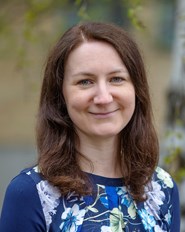
Dr. Yifan Zhou serves as a Lecturer in Structural Engineering within the Department of Civil, Environmental and Mining Engineering at The University of Western Australia's School of Engineering. Her academic appointment integrates teaching responsibilities with active research in advanced structural systems. Education PhD in Structural Engineering, University of Sydney (dissertation focused on stainless steel–concrete composite structures) Her research program centers on the performance and design of steel/composite structural systems, with growing emphasis on interdisciplinary applications. Key research thrusts include: (1) Mechanical behavior of stainless steel composite elements under extreme loads; (2) Integration of machine learning for structural health monitoring; (3) Sensor technology applications in predictive maintenance; (4) Development of data-informed design methodologies. This work directly contributes to UN Sustainable Development Goals related to sustainable infrastructure. Recent publications (2021-2025) demonstrate consistent focus on stainless steel composite structures, evolving from fundamental beam/column mechanics toward machine learning applications in marine environments. The research trajectory shows increasing interdisciplinary collaboration while maintaining core structural engineering rigor. Dr. Zhou actively supervises HDR candidates as indicated by her acceptance of PhD students through UWA's research portal. Her teaching portfolio includes coordinating CIVL3404/4404 Structural Steel and CIVL5552 Civil Structural Design Project, featuring industry-integrated pedagogies and authentic assessments. Professional engagement includes membership on Standards Australia Committee panel for AS/NZS 2327 revision, translating research into national design standards. This positions her work at the critical interface between academic research and engineering practice.
Renaud Toussaint is a Professor at the University of Oslo , affiliated with the Department of Physics within the Faculty of Mathematics and Natural Sciences . He leads research in the Porous Media Laboratory SFF , focusing on granular flows, geophysical phenomena, and fluid dynamics in disordered systems. His research interests include: Granular flow dynamics and seismic signal generation Porous media drainage and multiphase flow instabilities Earthquake mechanics and soil liquefaction Interstellar object modeling (e.g., 'Oumuamua) Fracture mechanics and thermal dissipation in materials Recent work emphasizes experimental and computational studies of granular media, with key contributions on drainage dynamics, seismic proxies for flow behavior, and interfacial fracture mechanics. Collaborations with institutions like the University of Oslo and international researchers highlight his interdisciplinary approach. Publications span Physical Review Letters , Nature Communications , and Journal of Geophysical Research , reflecting his impact in physics and geophysics. No awards or advisory roles are explicitly listed in the provided text.
Camilla Martha Ihlebæk is a Professor and Head of the Department of Public Health Sciences at the Norwegian University of Life Sciences (NMBU), Ås, Norway. She also holds a part-time professorship at Østfold University College. Her work focuses on public health at local and regional levels, with significant contributions to health promotion, social sustainability, and community development across Europe. She is actively involved in international collaborations, including with WHO Europe. Research Interests: Her research spans social capital, psychosocial work environments, vocational rehabilitation, health technology, and the built environment's impact on health. She emphasizes salutogenesis and co-creation in public health interventions. Her work often explores equity, inclusion, and wellbeing in diverse populations, including immigrants, cancer survivors, and people with dementia. The recent publications reflect a strong trend in qualitative and scoping research on urban environments (e.g., shopping centers as 'third places'), digital violence, care farms, and innovative health technologies like robotic seals (Paro). Her work bridges public health, urban planning, and social policy, emphasizing participatory and sustainable community development. Scientific Recognition: Member, Steering Committee, WHO Europe's Regions for Health Network (since 2019) Member, Expert Council for Social Inequalities in Health, Viken County, Norway Editorial Board Member, Nordic Journal of Wellbeing and Sustainable Welfare Development Advising and Grants: She teaches and supervises master’s students in public health sciences. She leads and contributes to multiple research projects focused on co-creation, rehabilitation, and health promotion, often in partnership with regional and municipal governments. Her leadership in projects like 'Co-creation of active meeting places' highlights her commitment to applied, community-based research. Labs and Teams: While no formal lab is mentioned, she collaborates extensively with interdisciplinary teams, including researchers from psychology, occupational therapy, urban planning, and social work. Her work is centered on real-world implementation through partnerships with public institutions and care farms.
Robert Douglas is a Lecturer in the Department of Mathematics at Aberystwyth University since February 2000. His research focuses on applied mathematical analysis, particularly in optimal mass transfer, weather front formation, and relaxation spectrum recovery. He holds a PhD in applied mathematical analysis from Bath University, specializing in nonlinear analysis of vortices in ideal fluid flow. His career includes positions as a Research Fellow at the Universities of Cambridge and Reading, and a Visiting Scientist at the UK Meteorological Office. Key research interests include proving rigorous results using measure theory and convex analysis, with notable contributions to the Cullen-Norbury-Purser conjecture and polar factorization theory. Collaborations include work with H.R. Whittle Gruffudd on relaxation spectra and G.R. Burton on uniqueness conditions for polar factorizations. His work spans 1994–2019 with 9 peer-reviewed articles, addressing topics like semigeostrophic equations, viscoelastic fluid dynamics, and inverse problems. His research contributes to UN Sustainable Development Goals through advancements in mathematical modeling of environmental systems. Dr. Douglas actively participates in the Analysis cluster of the Wales Institute for Mathematical and Computational Sciences. His expertise combines theoretical rigor with applications in geophysical fluid dynamics and materials science.
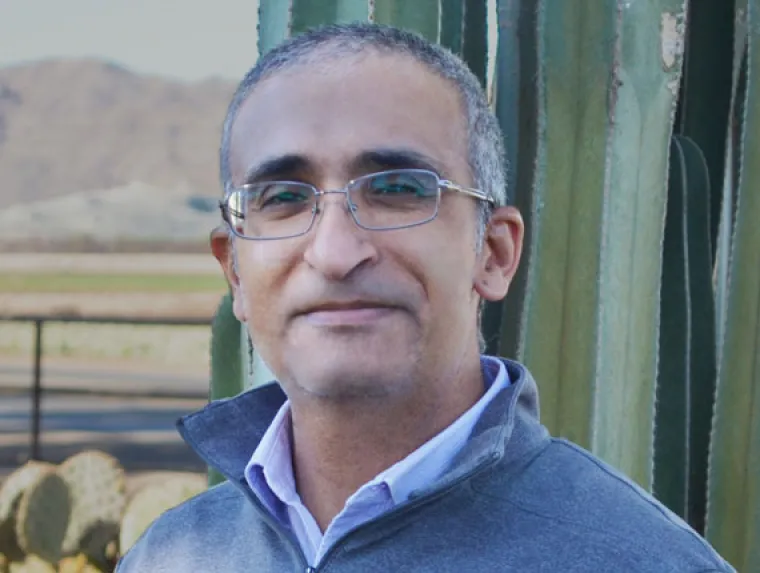
Mazin Saber holds the position of Postdoctoral Research Associate at the Sanchez Lab, Yuma Agricultural Center, affiliated with the University of Arizona. His work focuses on applying remote sensing and satellite technologies to improve agricultural water management, particularly in arid environments like Yuma, Arizona. He specializes in evapotranspiration modeling, irrigation scheduling, and crop water stress indices using multisource satellite data (Sentinel, Planet, ECOSTRESS) and ground-based measurements like eddy covariance systems. Research interests include precision agriculture, water resource optimization in desert farming, and development of decision support tools for crop water management. His work integrates remote sensing with hydrological modeling to address challenges in irrigated agriculture, including real-time irrigation detection, energy balance models for crop monitoring, and validation of FAO-56 methodologies in arid zones. Recent studies highlight advancements in crop water stress indices, fusion of radar and optical satellite data, and application of machine learning techniques for precision irrigation. His research has been applied across multiple crops including lettuce, durum wheat, and winter vegetables, with a focus on the Lower Colorado River Basin and Yuma agricultural regions. While no formal awards are listed, his contributions have advanced remote sensing applications in arid agriculture. Currently involved in the Sanchez Lab's projects at the Yuma Agricultural Center, focusing on automation of water management practices and development of scalable solutions for desert farming systems.
Aleksandra Foltynowicz Matyba is a Professor in the Department of Physics at Umeå University, leading the Optical Frequency Comb Spectroscopy Group. Her research focuses on developing and applying optical frequency comb techniques for precision measurements, molecular spectroscopy, and atmospheric analysis. She holds a PhD from Umeå University (2009) and conducted postdoctoral research at JILA, University of Colorado Boulder (2009–2011). Key research areas include optical frequency comb spectroscopy, high-resolution molecular line list generation, and applications in exoplanet atmosphere studies. She leads the ongoing research project Double-Resonance Spectroscopy of Small Molecules Using an Optical Frequency Comb (2021–2026). Notable achievements include being elected an Optica Fellow (2025) and pioneering sub-Doppler resolution techniques in cavity-enhanced spectroscopy. Publications emphasize advancements in methane spectroscopy, formaldehyde analysis, and novel instrumentation using antiresonant hollow-core fibers. Her work bridges fundamental physics with practical applications in environmental monitoring and space missions.
E. Todd Eisworth is a Professor in the Department of Mathematics at Ohio University, within the College of Arts and Sciences. He is based in Morton Hall 315E and can be reached at eisworth@ohio.edu or by phone at 740-593-1262. He has been a faculty member at Ohio University since 2003, progressing from Assistant to Associate to full Professor in 2023. Prior to this, he held assistant professor and visiting positions at the University of Northern Iowa and Ohio University. Ph.D., University of Michigan B.S., Louisiana State University Dr. Eisworth's research lies at the intersection of mathematical logic and topology, with a strong emphasis on set theory and set-theoretic topology. His work explores deep combinatorial and structural aspects of infinite sets, particularly through iterated forcing, PCF theory, pseudopowers, and cardinal arithmetic. He investigates how set-theoretic methods influence topological spaces, especially compacta and convergence properties. His recent publications demonstrate a sustained focus on pseudopowers, the Revised GCH, and combinatorial principles related to singular cardinals. These works appear in leading journals such as the Journal of Symbolic Logic , Topology and its Applications , and Archive for Mathematical Logic . The recurring themes include PCF theory, covering numbers, and forcing techniques, indicating a cohesive research program in advanced set theory. His scientific contributions have been recognized with several awards: 2023–2024 Presidential Research Scholar, Ohio University 2019–2020 MAC-ALDP Fellow 2007–2008 Grasselli Faculty Teaching Award 2004 University Book and Supply Outstanding Teaching Award 1994 Sumner Myers Prize Dr. Eisworth has successfully advised five doctoral students, including Laura Dolph-Bosley, Douglas Hoffman, Frank Ballone, Michael Perron, and Shehzad Ahmed, whose dissertations reflect his expertise in elementary submodels, coloring theorems, selection principles, and combinatorial ideals. His research has been supported by external funding, including an NSF grant on homogeneous compacta and a US-Israel BSF grant on forcing for set theory of the reals. He is also an active participant in the international set theory community, regularly presenting at major conferences and seminars. He has been involved in collaborative research and has contributed chapters to authoritative volumes such as the Handbook of Set Theory and Open Problems in Topology II . His academic service includes leadership as Chair of the Department of Mathematics from 2013 to 2020.
Lect. dr. Elena-Andreea Florea is a Lecturer at the Faculty of Mathematics, Alexandru Ioan Cuza University of Iași. She holds a PhD in Mathematics (2017) and has held roles including Teaching Assistant (2018-2022) and Research Assistant (2017-2018). Her research focuses on variational analysis, scalar/vector optimization, and set-valued mappings. Education: PhD: "Contributions to the study of some vector optimization problems with variable order structure" (2014-2017) Master's: Mathematics Research (2012-2014) Bachelor's: Mathematics and Computer Science (2009-2012) Research Interests: Optimization theory with variable order structures Set-valued optimization and subdifferential calculus Topological properties in variational analysis Teaching: Mathematical Analysis (Faculty of Physics) Optimization Theory (Faculty of Mathematics) Algorithms and Complexity (Faculty of Mathematics) Grants: Principal Investigator in multiple grants focusing on variational analysis and vector optimization (2013–present) Conferences: Presentations at international conferences on set optimization and variational analysis (2016–2024)
Professor Marcus White is a distinguished academic and practitioner in architecture and urban design at Swinburne University of Technology, where he serves as Professor in the School of Design and Architecture. He co-directs the architectural firm Harrison and White Pty Ltd and leads the Spatio-Temporal Research Urban Design and Architecture Lab (STRUDAL) at Swinburne. His work bridges academia and professional practice, focusing on sustainable urban development, digital design, and healthcare environments. Education: PhD in Spatial Information Architecture, RMIT University (2009) Professor White’s research centers on innovative urban design solutions using computational methods such as parametric modeling, agent-based systems, virtual and augmented reality, and machine learning. His work addresses critical urban challenges including walkability, noise pollution, aging populations, and equitable access to public space. He also pioneers patient-centered design in stroke rehabilitation, integrating clinical insights with architectural innovation through Living Lab frameworks and VR-based co-design. His recent publications span topics such as pedestrian safety in metro stations, traffic noise annoyance mapping, AI-based SDG classification, and age-friendly urban design. These works reflect a consistent trend toward interdisciplinary, human-centered, and data-driven approaches to shaping healthier, more sustainable cities. Scientific Awards: National Citation for Outstanding Contributions to Student Learning Venice Biennale selection (2010, 2025) Victorian Architecture Medal (2018) Australian Institute of Architects Urban Design and Jackson Educational Awards (2018) European Healthcare Design Award (2022) RAIA Haddon Travelling Scholarship (2002) AIA National Emerging Architect Award Professor White actively supervises PhD students and has secured major grants from the Australian Research Council (ARC), The Florey Institute, and iMOVE Australia. His leadership in projects like NOVELL (Neuroscience Optimised Virtual Environments Living Lab) demonstrates a strong commitment to translating research into real-world impact. He collaborates extensively with clinicians, urban planners, and technologists to advance evidence-based design across sectors. Labs and Teams: Spatio-Temporal Research Urban Design and Architecture Lab (STRUDAL) NOVELL (Neuroscience Optimised Virtual Environments Living Lab) Collaborations with The Florey Institute of Neuroscience and Mental Health ARC Training Centre for Next-Gen Architectural Manufacturing
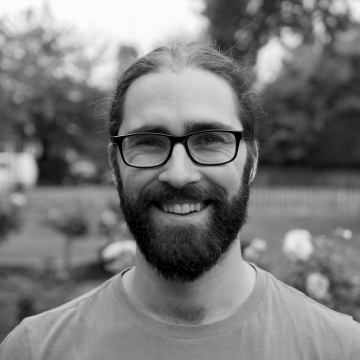
Ewan Davies is an Assistant Professor in the Department of Computer Science at Colorado State University, where he conducts research at the intersection of combinatorics, theoretical computer science, and statistical physics. He has previously held positions as a Postdoctoral Researcher at CU Boulder, a Research Fellow at the Simons Institute, and a Postdoc at the University of Amsterdam. His educational background includes a Ph.D. in Mathematics from the London School of Economics and Political Science (2013–2017), an M.Math from the University of Cambridge (2012–2013), and a B.A. (Hons) in Mathematics from the University of Cambridge (2009–2012). Davies’s research focuses on probabilistic and extremal combinatorics, particularly in graph coloring, independent sets, partition functions, and spin models such as the hard-core and Potts models. He employs techniques from statistical physics, entropy compression, and the Lovász local lemma to develop algorithmic frameworks for coloring and counting problems. His work often bridges theoretical insights with practical algorithmic implications, especially in the context of approximate counting and sampling. The trends in his recent publications reveal a sustained focus on algorithmic graph theory, with major contributions to list packing, local graph degeneracy, and computational thresholds in spin systems. His work frequently appears in top-tier venues such as FOCS, STOC, ICALP, and journals like Random Structures & Algorithms and SIAM Journal on Computing . He has co-authored numerous papers with leading researchers in the field, including Ross J. Kang, Will Perkins, and Alexandra Kolla. Sampling and Optimization under Global Constraints, NSF Grant #2309707 PhD Prize for Outstanding Academic Performance, London School of Economics Mathematics Department New Teacher Prize, London School of Economics Foundation Scholarship and R.A. Watchman Prize, Jesus College, Cambridge Foundation Scholarship and Sir Harold Spencer Jones Prize, Jesus College, Cambridge Foundation Scholarship and Ware Prize, Jesus College, Cambridge Foundation Exhibition and Bronowski Prize, Jesus College, Cambridge Davies actively mentors students, having supervised multiple undergraduate and graduate research projects in areas such as redistricting and graph coloring. He is also involved in organizing academic workshops, including the upcoming Rocky Mountain Summer Workshop on Algorithms, Probability, and Combinatorics. His research is supported by the National Science Foundation, and he continues to contribute to both theoretical advances and interdisciplinary applications in computer science and mathematics. He leads research on graph structure via local occupancy, regularity inheritance in hypergraphs, and the algorithmic analysis of phase transitions in statistical mechanical models. His work on the occupancy fraction and fractional coloring has provided new insights into longstanding conjectures in graph theory.
Kevin Gurney is a Professor in the School of Informatics, Computing, and Cyber Systems at Northern Arizona University. His work focuses on high-resolution carbon dioxide emissions modeling, urban emissions, and climate informatics. He is widely recognized for leading the Hestia project and contributing to global emission datasets. University: Northern Arizona University School: School of Informatics, Computing, and Cyber Systems Academic Rank: Professor His research interests span carbon dioxide emissions, fossil fuel and biofuel emissions, urban emissions modeling, high-resolution emission mapping, climate informatics, and environmental policy. His work integrates atmospheric science, data science, and urban planning to develop detailed carbon inventories and support climate mitigation strategies. He employs advanced techniques such as AI, machine learning, and geospatial analysis to model emissions at fine spatial and temporal scales. Recent publications (2024–2025) highlight his focus on AI-driven emission assessments, urban form impacts on CO₂, Scope 2 electricity emissions, and global fossil and biofuel inventories. His work demonstrates a strong trend toward integrating artificial intelligence with environmental monitoring and policy-relevant emission accounting at granular levels. Kevin Gurney has received extensive recognition, with over 11,969 citations and an h-index of 53. His research outputs, including 158 scholarly works and 67 datasets, are widely used and cited. His work has been featured in news outlets and social media, reflecting its societal relevance. He actively advises students and researchers in environmental informatics and carbon science, though specific names are not listed. His projects often involve interdisciplinary collaboration and external funding, supporting large-scale data generation and modeling efforts. He leads research teams focused on urban carbon systems and emission inventories. Kevin Gurney is associated with major research initiatives such as the Hestia project and CoCO2-MOSAIC, which produce high-resolution emission datasets. His lab and research teams work on integrating observational data, modeling, and policy analysis to advance urban and global carbon science.
Cheol Lee is a Professor in the Department of Industrial and Manufacturing Systems Engineering at the University of Michigan-Dearborn's College of Engineering and Computer Science. His research focuses on cyber-physical manufacturing, reduced-order modeling, and battery technology for sustainable energy systems. Education PhD, Mechanical Engineering, Purdue University (2000) MS, Precision Engineering and Mechatronics, KAIST (1994) BS, Precision Engineering and Mechatronics, KAIST (1992) Dr. Lee's work bridges reduced-order modeling with smart thermal processing and optimal battery design . He develops cyber-physical systems for real-time control in manufacturing and energy sectors, including digital twins for battery aging tracking and thermal management solutions for electric vehicles. The 15 most recent publications demonstrate his expertise in battery separator degradation , thermal modeling , and optimization techniques applied across energy systems and manufacturing. These works appear in journals like Batteries , Physics of Fluids , and Applied Thermal Engineering . Scientific Recognition Featured Article in Physics of Fluids (2023) Scilight Highlight (2023) Best Technical Presentation at SAE Thermal Management Symposium (2021) He has advised PhD candidates Mustapha Makki (battery separator modeling, 2023) and Linyan Xiang (reduced-order modeling, 2022). His lab collaborates with institutions like Michigan State University and industry partners including Ford, General Motors, and MathWorks.
Christoph Rosinger is a researcher at the Institute of Agronomy (iPBAU) within the University of Natural Resources and Life Sciences, Vienna (BOKU). His work focuses on soil microbiology, conservation farming, and carbon-nutrient dynamics in agricultural and forest soils. Research Themes: Soil organic carbon stabilization, microbial community responses to amendments, and agricultural pollution mitigation using struvite/zeolites Methodologies: On-farm studies, multi-model simulations, and biogeochemical stoichiometry analysis Publication Trends emphasize microbial pathways in carbon sequestration, amendment effects on nutrient cycling, and seasonal soil processes. Recent work explores AI vs. process-based modeling for SOC prediction and volcanic ash pedogenesis. Earlier studies address subtropical soil nutrient limitations and post-disturbance fungal dynamics.
Sreejith Nadakkal Appukuttan is a Researcher III in the Computational Science Center at the National Renewable Energy Laboratory (NREL). He specializes in numerical methods for high-performance computation of reacting and non-reacting fluid flows. Education: PhD in Energy and Transfer from Institute National Polytechnique de Toulouse Master of Aerospace Engineering from Indian Institute of Technology Kanpur Bachelor of Mechanical Engineering from National Institute of Technology Warangal His research focuses on computational fluid dynamics, aerodynamics, propulsion, and combustion, with applications to energy systems, sustainable technologies, and exascale computing. He has developed solvers for reacting flows using advanced techniques like adaptive mesh refinement (AMR) and material point method (MPM). Scientific Awards: None explicitly mentioned. Professional Experience: Lead Engineer at General Electric India Technology Center (2011–2017) Engineer at BrahMos Aerospace (2007–2009) Collaborations: Active in computational science networks, focusing on material point method, reacting flows, and exascale computing.