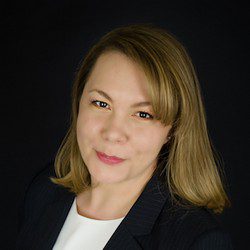
Jean Galbraith is a Professor at the University of Pennsylvania Carey Law School . Her scholarship focuses on the intersection of international law , foreign relations law , constitutional law , and human rights . Key areas include treaty design, separation of powers, administrative law, and domestic implementation of international obligations.
Prof. Dr.-Ing. Jörg Knieling (HafenCity University Hamburg) specializes in Urban Planning and Regional Development , focusing on sustainable metropolitan governance, climate resilience, and land use policy. As co-chair of Hamburg's Senate Climate Advisory Board , he drives policy recommendations on net-zero land consumption , climate action plans , and spatial governance reform . Co-chair, Hamburg Climate Advisory Board (2021–present) Member, Advisory Council for Spatial Development, German Federal Ministry Co-leader, DFG Research Training Group 'City Science Lab' Coordinator, EU projects 'SMARTilience', 'RESCUE', 'Area21' His research explores climate-resilient urban governance through comparative studies of cities like Halle (Saale) and Mannheim , emphasizing collaborative planning and smart city technologies . Recent work addresses heat action planning , spatial equity , and digital policy tools for sustainable development. Key publication trends include land consumption reduction (30 ha/day target), urban-rural partnerships , and AI in spatial planning . His Urban Governance Toolbox project (2023) exemplifies solutions for municipal climate resilience. Students under his supervision include: Leon Thümer (B.Sc., 2020 - 'Co-Creation in Real Estate') Laura-Darleen Klein (M.Sc., 2023 - 'Age-Friendly Cities') Charlotte Muhl (M.Sc., 2018 - 'Urban Commons') He leads the Urban Planning and Regional Development department, mentoring 12+ research associates and coordinating interdisciplinary projects with institutions like Goldsmiths University , Leuphana University , and Georgia Tech .
Dr. Chenhao Chu is a Professor at ETH Zürich, holding the Professur für Elektronik (Professorship for Electronics). He specializes in RF/mm-Wave circuits, AI-driven design methods, and advanced power amplification technologies. His research focuses on energy-efficient, wideband systems, antenna-in-package solutions, and GaN-based applications for 6G and beyond. Education: Ph.D. in Electronic Engineering, University College Dublin (2022) M.Sc. in Electronic Information Engineering, City University of Hong Kong (2017) Research Interests: His work bridges AI and hardware design, emphasizing reconfigurable circuits , high-linearity power amplifiers , and mm-Wave phased arrays . Key areas include: AI-assisted rapid design synthesis III-V/Si co-design for mm-Wave Efficient antenna integration Dynamic load modulation techniques Awards: Award-winning researcher with distinctions including the First Place Best Student Paper Award (2022 Royal Irish Academy Colloquium) and multiple HEPA-SDC Competition Awards (2021-2022). Recognized for innovations in PA efficiency and design automation. Advising & Grants: Leading projects on 6G PA architectures and AI-driven RF design. Active in IEEE with contributions to conferences like IMS and ARFTG. No explicitly stated grants mentioned but widely cited in industry-academia collaborations. Labs & Teams: Associated with ETH Zürich's Electronics Laboratory, focusing on next-generation wireless systems. Collaborates internationally on 5G/6G infrastructure and mm-Wave innovations.
Ulla Mörtberg is a Professor and Docent at KTH Royal Institute of Technology's Digital Futures Faculty, specializing in Sustainable Development, Environmental Science and Engineering. She holds academic roles in the Department of Sustainable Development, Environmental Science and Engineering and is actively involved in interdisciplinary projects such as the EO-AI4GlobalChange initiative and the Embedding AI in geospatial policy tools for clean cooking adoption. Her work bridges geospatial technologies, environmental policy, and sustainable urban planning. Key research focuses include renewable energy planning (wind farms, bioenergy), urban ecosystem services, biodiversity conservation, and geodesign applications. She leads projects addressing climate solutions in Stockholm, such as integrating nature-based solutions into urban compaction strategies and evaluating green infrastructure impacts on urban heat. Her methods emphasize GIS-based decision support systems and multi-criteria analysis for balancing environmental, social, and economic objectives. Recent publications highlight advancements in ecosystem services assessment frameworks, wind energy sustainability, and urban biodiversity dynamics. Notable contributions include spatial optimization models for forest management and policy assessments of Brazil's Forest Code. Her work often involves global case studies but emphasizes regional applications in Sweden and the Stockholm region. Mörtberg collaborates extensively with municipal planners and policymakers, contributing to sustainable development goals through actionable research. Her projects often involve international partnerships and address global challenges such as deforestation in the Amazon and energy transition pathways in Europe.
Professor Vlad Mykhnenko is Professor of Geography and Political Economy in the University of Oxford Department for Continuing Education, and a Research Fellow in Sustainable Urban Development at St. Peter's College, Oxford. He serves as Academic Director for Social Sciences at Oxford Lifelong Learning and has been with the Department since January 2017, initially taking up an Associate Professorship in Sustainable Urban Development. His academic career spans multiple institutions including the University of Birmingham, Al-Farabi Kazakh National University, the University of Nottingham, the University of Glasgow, and the Central European University. Professor Mykhnenko's educational background includes: PhD in Political Economy from Darwin College, the University of Cambridge (2005) MA in International Relations and European Studies from the Central European University (1999) MA (1998) and BA (1996) in International Relations from Taras Shevchenko National University of Kyiv As an economic geographer specializing in geographical political economy, Professor Mykhnenko challenges conventional wisdom about urban and regional development. His research initially focused on transition economies of Eastern Europe (particularly Polish Upper Silesia and the Ukrainian Donbas) before expanding to cities and regions worldwide. He has produced over 140 research outputs and secured £16 million in external research funding, with £2 million as Principal Investigator. His current research initiatives focus on green steel - rebuilding Ukraine's iron and steel sector post-war without fossil fuels - and sustainable urban development in Kazakhstan. His publication record demonstrates significant scholarly impact across diverse areas including urban shrinkage, post-war reconstruction, geopolitical analysis, and future trends in technology and governance. The breadth of his research interests spans from analyzing spatial economic patterns in African cities to examining the implications of the metaverse for future business practices. Professor Mykhnenko has substantial policy impact, with research quoted in at least 79 policy documents by 49 organizations across 21 countries. His work contributes to UN Sustainable Development Goals, with 30% directly attributed to SDG11: Sustainable Cities and Communities. He has advised governments, intergovernmental organizations, and multinational enterprises, including serving on a UN expert group to shape the New Urban Agenda and providing expert evidence to the UK House of Commons on Ukraine's recovery. In early 2025, he was appointed a commissioner for the Lancet Commission on Ukraine. Professor Mykhnenko has taught over 3,100 students across various institutions and currently contributes to Oxford's MSc in Sustainable Urban Development program. He has supervised numerous doctoral students and received recognition for his teaching excellence, including Fellow of the Higher Education Academy status and a Postgraduate Certificate in Academic Practice. His commitment to research-led teaching has resulted in innovative pedagogical approaches documented in peer-reviewed academic publications.
Stephen W. Hoag is a Professor in the Department of Pharmaceutical Sciences at the University of Maryland School of Pharmacy. His research spans pharmaceutical formulation, process development, and analytical technologies, with a strong emphasis on solid oral dosage forms and controlled release systems. University: University of Maryland School: School of Pharmacy Department: Department of Pharmaceutical Sciences Email: shoag@umaryland.edu Phone: (410) 706-6865 Fax: (410) 706-0346 Address: 20 North Pine Street, Baltimore, MD 21201 Education: B.S. in Biochemistry, University of Wisconsin–Madison, 1982 Ph.D. in Pharmaceutics, University of Minnesota, Twin Cities, 1990 Dr. Hoag's research is centered on two primary areas: (1) the development of systematic methods for formulating immediate and controlled release tablets, utilizing instrumented tablet presses, shear cell analysis, and process analytical technology (PAT) such as Near-Infrared (NIR) and Raman spectroscopy; and (2) the application of mathematical models to understand mass transport in hydrogels, including calcium alginate and silk-elastinlike protein polymers. His work on folic acid supplementation and prenatal vitamins has important public health implications due to the role of folic acid in preventing neural tube defects. Although no recent publications are listed in the provided text, his research output is evident through his co-editorship of the widely used reference work Pharmaceutical Dosage Forms: Tablets (3rd edition, 2008), and his leadership in developing best practices for PAT in pharmaceutical manufacturing. Scientific Awards: No specific awards mentioned in the provided text. Dr. Hoag has actively mentored a large number of graduate students, postdoctoral fellows, and visiting scientists, contributing significantly to pharmaceutical education and workforce development. His laboratory is equipped with state-of-the-art instrumentation for preformulation, formulation, tableting, coating, dissolution testing, and analytical characterization. The lab supports both non-clinical and GMP-level manufacturing research, enabling translational development of dosage forms. He also leads a hands-on short course on tablets and capsules, further extending his educational impact. Research Facilities: Thermal analysis (DSC, MDSC) Solubility and viscosity measurement Moisture analysis (Karl Fisher, LOD) Mechanical testing (Instron) Flow characterization (shear cell, angle of repose) Particle size analysis (laser diffraction, SEM, sieve) Tablet presses (Stoke’s B2, Manesty Beta, fully instrumented) Coating systems (fluid bed, pan coaters) UV/Vis, HPLC, GC, MS instrumentation Environmental stability chambers Granulation, milling, blending equipment Dissolution testing with autosampler
Federico Demaria is a Researcher at the Environmental Science and Technology Institute, Universitat Autònoma de Barcelona. He focuses on ecological economics, political ecology, and environmental justice, advocating for socio-ecological transformation beyond economic growth. As a founding member of Research & Degrowth and a board member of the European Society for Ecological Economics, he bridges academic research with activism. His current role includes deputy coordination of the ERC-funded EnvJustice project, studying global environmental justice movements. Research emphasizes waste management conflicts, informal recyclers' roles, and degrowth alternatives. Key publications include Decrecimiento: Vocabulario para una nueva era and Pluriverse: A Post-Development Dictionary , translated into multiple languages. Research interests coalesce around dismantling growth-based paradigms, centering marginalized groups in environmental struggles, and redefining sustainability beyond capitalist modernity. His work critiques extractive systems while proposing pluriversal alternatives grounded in indigenous and communal knowledge. Key Projects: EnvJustice (ERC), Degrowth initiative Key Themes: Waste politics, environmental conflicts, post-development, degrowth economics
Alberto Macii is a Full Professor in the Department of Control and Computer Science (DAUIN) at Polytechnic University of Turin. He is also a member of the Interdepartmental Center IAM@PoliTo - Integrated Additive Manufacturing and serves on two colleges: College of Computer, Film and Mechatronics Engineering and College of Mechanical, Aerospace and Automotive Engineering. His research interests include: Digital circuits and systems Electronic systems, modeling, and simulation Energy-efficient circuits and systems Energy management and battery systems Embedded systems and cyber-physical systems Low energy building technologies His work aligns with several Sustainable Development Goals including affordable and clean energy (Goal 7), industry innovation and infrastructure (Goal 9), and sustainable cities and communities (Goal 11). His publication record shows a consistent focus on energy efficiency in electronic systems spanning over two decades, with particular emphasis on battery modeling and power management. Recent work has expanded into environmental applications with transformer neural networks for flood forecasting, demonstrating the evolution of his research into new application domains while maintaining core expertise in energy optimization. His scientific awards include: Best paper award ACM/IEEE Great Lakes Symposium on VLSI (2008) IEEE Fellow (2007-) Senior Member IEEE He has served as Editor-in-Chief for the Journal of Embedded Computing (2005) and as Program Chair for EUC2005: Embedded & Ubiquitous Computing. Professor Macii has advised PhD students including Alberto Bocca (2019-2023) whose thesis focused on compact modeling techniques for energy analysis and optimization of complex systems. He has led numerous research projects including CANP (2018-2020), R3-PowerUP (2017-2021), SERENA (2017-2020), AMable (2017-2021), and STAMP (2016-2019), demonstrating sustained research leadership across multiple funding mechanisms. He is active in the EDA - Electronic Design Automation research group and LAB 4 research laboratory at DAUIN, with research spanning VLSI-CAD, Smart City technologies, and Industry 4.0 applications. His work bridges theoretical computer engineering with practical applications in energy conservation across multiple domains.
Nik Luka is an Associate Professor at the School of Architecture, McGill University, with a joint appointment in Urban Planning. He holds a Ph.D. from the University of Toronto, an M.Arch. from Laval University, and a B.A.A. from Toronto Metropolitan University. His roles include Associate Director of the Centre for Interdisciplinary Research on Montréal and associate memberships in the Department of Equity, Ethics, and Policy and the Bieler School of Environment. Ph.D. (Toronto) M.Arch. (Laval) B.A.A. (Toronto Met.) Luka specializes in ethnography, landscape studies, and critical design/planning research, focusing on REURBANISM—the transformation of (sub)urban landscapes through collaborative design and participatory governance. His work bridges natural processes and human culture, emphasizing narrative, discourse, and policy-led urbanism. His recent publications highlight trends in recreational mobilities, densification, transit-oriented development, and periurban landscape dynamics. Themes span urban walkability, public space design, and transdisciplinary approaches to sustainability. SSHRC Partnership Grant with Canada Mortgage and Housing Corporation Collaborative projects in Sweden and continental Europe Champ des Possibles partnership in Montreal Luka engages with community organizations such as the Montreal Urban Ecology Centre, Convercité, and Suspicious Fish, blending academic research with civic practice. His affiliations include the Trottier Institute for Sustainability in Engineering and Design and international collaborations on landscape connectivity.
Vikram Iyer is an Assistant Professor at the Paul G. Allen School of Computer Science and Engineering and holds an Adjunct Appointment in Mechanical Engineering at the University of Washington. He co-directs the CS for Environment Initiative , focusing on interdisciplinary solutions that bridge computing, biology, and physical systems for environmental sustainability. Education : Ph.D. in Electrical & Computer Engineering (University of Washington), B.S. in Electrical Engineering and Computer Sciences (UC Berkeley) Research Interests revolve around bio-inspired wireless systems , environmentally sustainable electronics , and miniaturized autonomous robotics . His work includes: Biodegradable circuit boards Battery-free wireless sensors Insect-scale vision systems Wind-dispersed environmental monitors AI tools for sustainable design Article Trends highlight contributions to green hardware , energy-autonomous robotics , and environmental sensing networks , often integrating machine learning with physical world interaction . Awards include: NSF CAREER Award SIGMOBILE Dissertation Award Marconi Society Paul Baran Young Scholar Best Paper Awards (SIGCOMM 2016, Sensys 2018) Google/Amazon Research Awards Students advised include Kyle Johnson (NSF Fellow), Vicente Arroyos (GEM Fellow), and Qiuyue Xue (co-advised with Shwetak Patel). His lab collaborates with the Networks & Mobile Systems Lab and Urban Innovation Initiative .
Professor Yngve Karl Frøyen works at the Department of Architecture and Planning, Faculty of Architecture and Design, Norwegian University of Science and Technology (NTNU). With expertise in sustainable transport solutions, urban spatial modeling, and GIS applications for planning, he has taught and supervised urban and regional planning topics since 2010. His work spans multiple master programs and involves improving transport modeling tools for walking, transit, and bicycling modes. Research Focus: Sustainable urban transport (walking, bicycling, public transit), urban density, GIS methods, land use-transport interactions, and urban logistics. Teaching: Courses in GIS methods, land use-transport integration, regional planning, and master thesis supervision. Publications: 15+ works on transport modeling, urban density impacts, bicycle infrastructure, and planning methodology. Outreach: Regularly presents at conferences and seminars on topics like urban logistics, walking modeling, and transport policy. His academic career spans from 1981 civil engineer graduation to current professorship, with prior roles at Norwegian Institute of Urban and Regional Research (NIBR) and SINTEF. He combines technical GIS proficiency with policy-oriented planning expertise.
Pavlina Ittelson serves as Executive Director of Diplo US and a regular lecturer in Diplo’s postgraduate and professional courses. Her expertise focuses on legal aspects of internet governance, science diplomacy, and tech diplomacy, with research emphasizing comparative digital policy analysis and diplomatic practices. She holds a Law degree from Comenius University (Bratislava) and an LLM in International Business Law from Central European University (Budapest). Prior roles include legal practice and project management in international business, science, and technology sectors. Her research interests include: Tech diplomacy actors and global digital governance Strategic engagement of civil society in internet governance Comparative analysis of national digital policies Cybersecurity negotiations and frameworks Recent publications explore tech diplomacy trends in hubs like the San Francisco Bay Area, digital policy integration with foreign strategies, and environmental synergies with digital technologies. She frequently contributes to expert dialogues on AI governance, multilateral tech negotiations, and inclusive internet access initiatives. Key professional activities include organizing expert-led dialogues on digital governance, launching Diplo’s AI Campus initiative, and advising on science diplomacy frameworks for sustainable development goals.
Professor Kenneth T. V. Grattan serves as the Royal Academy of Engineering/George Daniels Professor of Scientific Instrumentation at the School of Engineering, City, University of London. He has held this prestigious position since October 1, 1983, demonstrating a long-standing commitment to advancing scientific instrumentation and sensor technologies. Professor Grattan's research spans multiple domains within optical sensing and instrumentation. His primary research interests include: Optical fibre sensors for various physical and chemical parameter measurements Laser-based sensing systems and photonics technologies Instrumentation design for industrial and biomedical applications Advanced signal processing techniques for sensor data interpretation Novel materials integration in sensor development His recent publication record demonstrates a strong focus on developing sophisticated optical sensor systems with practical applications. Professor Grattan's work shows consistent innovation in fiber Bragg grating technology, interferometric sensing approaches, and microfluidic integration. His research group has made significant contributions to dual-parameter sensing systems, environmental monitoring solutions, and biomedical sensing applications. The trend in his recent publications indicates increasing interdisciplinary collaboration, particularly with biomedical researchers and industrial partners to translate laboratory innovations into practical measurement systems. As the George Daniels Professor of Scientific Instrumentation, Professor Grattan holds one of the most prestigious named chairs in the field, supported by the Royal Academy of Engineering. This position recognizes his significant contributions to advancing measurement science and instrumentation technology. Professor Grattan has supervised numerous PhD students and research associates throughout his career, though specific names are not detailed in the available information. His research has been supported by various funding bodies and industrial partnerships, enabling the development of cutting-edge sensor technologies with real-world applications. His laboratory at City, University of London focuses on developing next-generation optical sensor systems, with particular emphasis on making measurements in challenging environments. The research group maintains strong connections with industry partners to ensure practical relevance of their developments.
Mari Kaarina Vaattovaara is Professor of Urban Geography at the University of Helsinki, where she serves as Director of both the Helsinki Institute of Urban and Regional Studies (Urbaria) and the Helsinki Institute of Sustainability Science (HELSUS). Affiliated with the Department of Geosciences and Geography within the Faculty of Science, she supervises doctoral students in two doctoral programs: the Doctoral Programme in Political, Societal and Regional Change and the Doctoral Programme in Social Sciences. Professor Vaattovaara's research spans social and economic geography, urban studies, and sustainability science, with particular focus on neighborhood dynamics, housing policy, and urban development patterns. Her work examines how physical environments interact with social structures to shape community outcomes, with special attention to vulnerable populations and sustainable urban transitions. She frequently investigates the relationship between urban density, service accessibility, and quality of life in metropolitan contexts. Her recent publications reveal a consistent trajectory examining sustainable urban development through multiple lenses, including neighborhood sustainability indicators, housing policy challenges, and the impacts of urban form on social outcomes. While deeply rooted in the Finnish context, her research connects to broader European and global urban debates, with increasing attention to post-pandemic urban challenges and the implications of tourism for sustainable city development. Among her notable recognitions are: J.V. Snellman Prize (2013) Knight, First Class, of the White Rose of Finland (2016) Helsinki Medal for distinguished service to the city (2015) Ragnar Hult Medal (2014) Election to the Finnish Academy of Science (2016) Professor Vaattovaara leads multiple significant research initiatives including the MSCA-DN SUNSET project (2024-2028) funded by the European Commission, The Future of Diverse and Disadvantaged project (2022-2026) funded by Svenska Litteratursällskapet i Finland, and the Urban Academy initiative connecting academic research with practical urban development challenges. Her work bridges academic research with policy impact through external positions including External Research Fellow at University College London (since 2014), Member of the Supervisory Board at Hypoteekkiyhdistys (since 2014), and Auntosäätiö Board Member (since 2012). As Director of Urbaria and HELSUS, Professor Vaattovaara oversees interdisciplinary research hubs that bring together scholars from across the university to address complex urban and sustainability challenges. These institutes facilitate collaboration between academic researchers, municipal authorities, and community organizations to develop evidence-based approaches to urban development and sustainability transitions.
Teresa Marat-Mendes is a Full Professor in the Department of Architecture and Urban Planning at ISCTE - University Institute of Lisbon, where she is also an Integrated Researcher at DINÂMIA'CET-Iscte - Center for Studies on Socioeconomic Change and Territory. Her work bridges academia and policy, focusing on sustainable urban transitions, urban metabolism, and spatial planning reform. Full Professor, Department of Architecture and Urban Planning, ISCTE-IUL Integrated Researcher, DINÂMIA'CET-Iscte Coordinator of major research projects: MEMO, SPLACH, HAT Member of ISUF and former President of the Portuguese-language Network on Urban Morphology (PNUM) Teresa's research centers on urban sustainability, with a strong emphasis on urban form, ecological urbanism, food systems, and the 15-minute city concept. She investigates how urban morphology influences material flows, energy use, and social equity, advocating for evidence-based, transformative planning policies that respond to climate change and urban sprawl. Her recent publications and projects reflect a clear trajectory toward integrating urban agriculture, transit-oriented development, and proximity-based urban models. The HAT project (2025–2028) exemplifies this trend, aiming to reduce automobile dependence and food imports through green Proximity-Oriented Development (PODs). Earlier work like the MEMO project analyzed historical urban metabolism in Lisbon, providing sustainable lessons from the past. Scientific recognition includes: Women in Science 2019 Award in Architecture (Ciência Viva) Author of Atlas of the Food System. Challenges for a Sustainable transition of the Lisbon Region (Springer) Strong citation metrics: H-index 14 (Google Scholar), 7 (Scopus) Teresa has supervised numerous research initiatives and collaborated with institutions across Europe. She has served as ERASMUS Coordinator (2002–2016) and Vice Director of her department (2013–2016), contributing to academic governance at ISCTE. Her work connects academic research with business and policy sectors to catalyze urban transitions. She has been involved in key research centers and networks: DINÂMIA'CET-Iscte (research leadership) CITTA and GOVCOPP collaborations Portuguese-language Network on Urban Morphology (PNUM), which she co-founded and led (2015–2018)