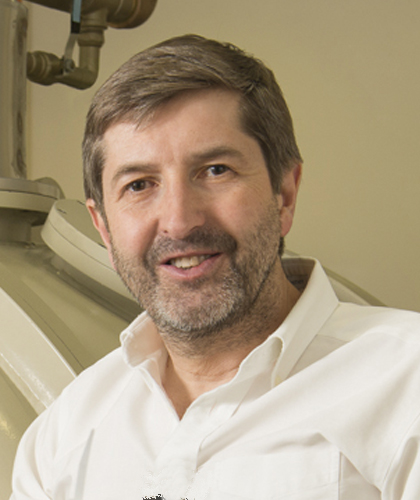
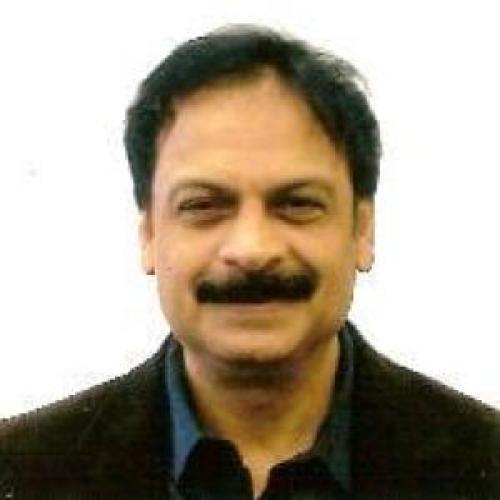
Ronald Walsworth is the Minta Martin Professor of Physics and Founding Director of the University of Maryland's Quantum Technology Center. His interdisciplinary research focuses on precision measurement tools, quantum sensing, and their applications in physical and life sciences. He holds affiliations with the Department of Physics, Electrical and Computer Engineering, Institute for Research in Electronics & Applied Physics, and the Joint Quantum Institute. Education: Ph.D. in Physics from Harvard University (1991), B.S. in Physics from Duke University (1984). Awards include the Francis Pipkin Award (2005), APS Fellow (2001), and Smithsonian Exceptional Service Award (1993). Research interests span quantum sensing, NMR/MRI, bioimaging, and astrophysics. Recent work includes diamond-based quantum microscopy, ultralow-mass NMR, and applications in dark matter detection. His lab has spun out multiple startups. Key grants and projects include MURI collaborations and development of quantum diamond microscopes. Advises graduate students like Andrew Beling. Active in NASA quantum sensing assessments and cosmic frontier research (e.g., dark matter, pulsar timing). Labs/Teams: Quantum Technology Center, Walsworth Lab Group, collaborations with aerospace and biomedical institutions. Current projects focus on machine learning-enhanced sensing, quantum diamond microscopes for bioimaging, and directional dark matter detection systems.
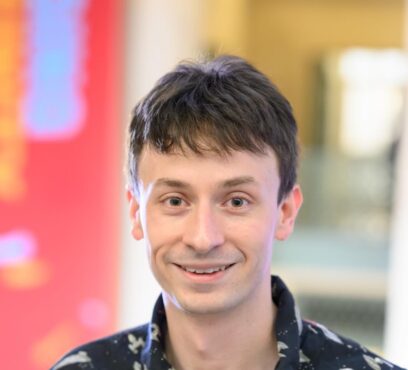
Steve Liebling is a Professor in the Department of Math/Physics within the College of Liberal Arts and Sciences at Long Island University (LIU). He has been affiliated with both LIU Southampton and LIU Post, where he established a computational cluster using NSF funding. His research focuses on theoretical and computational astrophysics, particularly in numerical relativity and black hole dynamics. Research Interests: His primary expertise lies in Numerical Relativity , Black Hole Critical Behavior , and High-Performance Computing . He investigates binary compact object mergers, cosmic bubble collisions, and gravitational wave signal generation through large-scale simulations. His work bridges general relativity with modern computational techniques to model extreme astrophysical environments. Publication Trends: His recent publications center on simulating neutron star and boson star systems, with emphasis on gravitational wave emission and cosmological implications. The works reflect a strong integration of numerical methods in general relativity, targeting observables for LIGO and cosmological surveys. Scientific Awards: Buchalter Cosmology Prize (2014) Abraham Krasnoff Memorial Award (2014) APS Fellow (2013) Outstanding Referee, Physical Review (2010) ITP Scholar, KITP/UCSB (2002) Advising and Grants: He has mentored multiple undergraduates and postdoctoral researchers. His research has been supported by grants from the National Science Foundation (NSF) and currently includes funding from NASA. He has served on NSF review panels and the Nominating Committee of the APS Topical Group on Gravitation. Labs and Research Groups: He maintains a research group focused on computational relativity, operating a computational cluster at LIU. His team develops and runs simulations of relativistic systems, with public research summaries available at relativity.liu.edu .
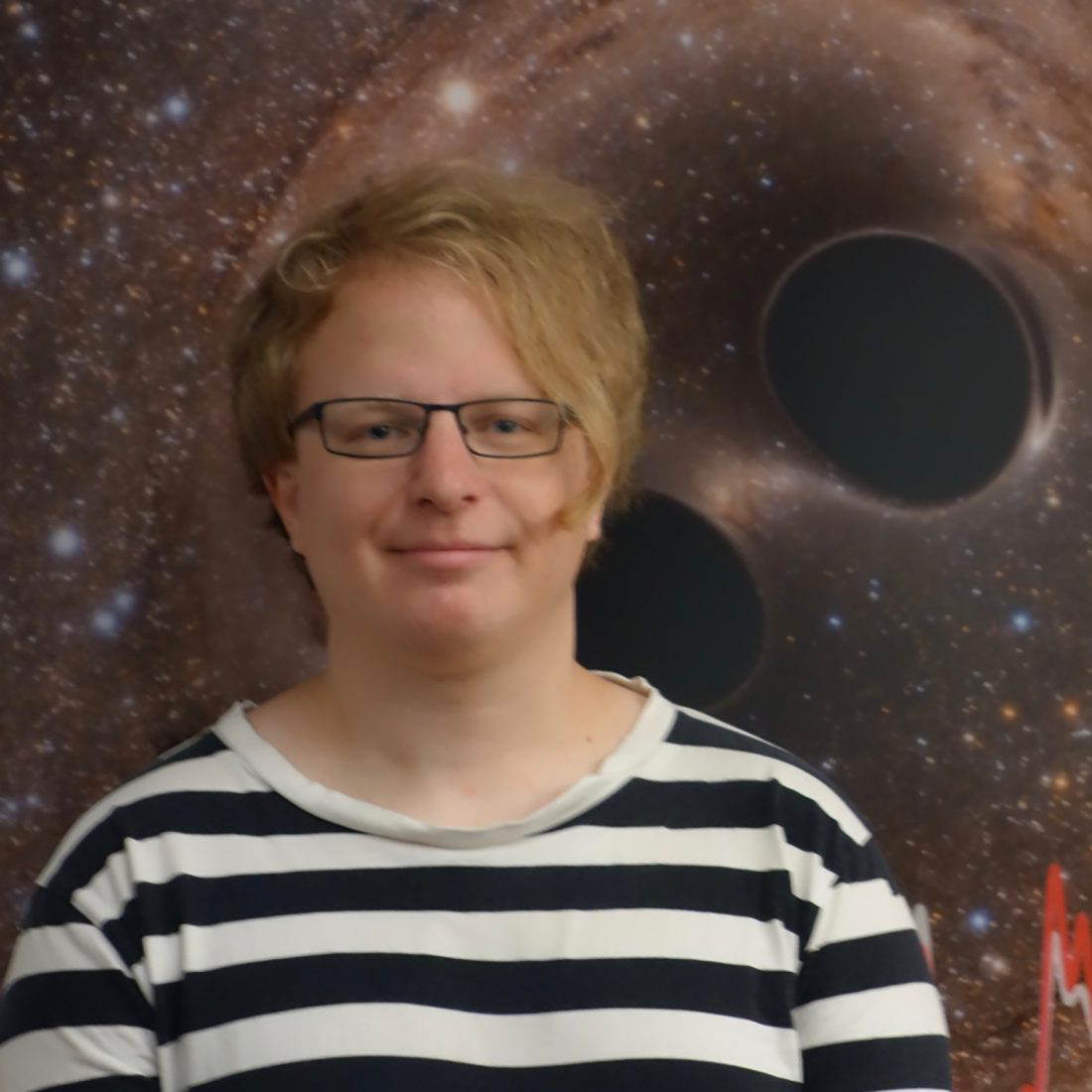
Kevin Burdge is an Assistant Professor of Physics at the Massachusetts Institute of Technology (MIT), affiliated with the MIT Binary Star Astrophysics Group and the Kavli Institute for Astrophysics and Space Research (MKI). He conducts observational astrophysics research focused on compact binary systems, including white dwarfs, neutron stars, and black holes, using time-domain and multi-messenger techniques. His research spans: Discovery and characterization of compact binaries Gravitational-wave and electromagnetic multi-messenger astrophysics Development of high-speed astronomical instrumentation Stellar evolution and accretion processes Observations with LISA, Rubin Observatory, JWST, and AXIS Burdge's recent work emphasizes identifying rare and exotic binary systems, such as the first known black hole in a triple-star system, and expanding the population of LISA-detectable sources. His group develops GPU-based algorithms for rapid data analysis and operates the 'Lightspeed' camera on the Magellan telescopes for high-speed photometry. The publication trends reflect a strong focus on ultra-compact binaries, orbital dynamics, gravitational-wave emission, and multi-wavelength follow-up. His research combines theoretical modeling with cutting-edge observational tools across optical, X-ray, and gravitational-wave domains. Scientific honors include: Pappalardo Fellowship, MIT (2021) Burdge advises students through his research group and has secured support through major collaborations like LISA and AXIS. He has been instrumental in designing the proposed Galactic-plane survey for AXIS, expected to uncover over a million new X-ray sources. His grants and research are supported by MIT, NASA, and NSF-level initiatives. He leads the MIT Binary Star Astrophysics Group, which focuses on discovery-driven astrophysics using next-generation observatories. The team integrates instrumentation development, data science, and theoretical astrophysics to explore binary evolution and compact object physics.
Professor Lixin Dai is an Associate Professor in the Department of Physics at the University of Hong Kong, specializing in theoretical and computational high energy astrophysics. She received her BSc in Physics and Mathematics from HKUST (2005) and PhD in Physics from Stanford University (2012). Prior to her current role, she served as an Assistant Professor at the Niels Bohr Institute (University of Copenhagen) and holds the Sophie and Tycho Brahe Visiting Professorship there. Her research focuses on transient phenomena around astrophysical black holes, including tidal disruption events, accretion disks, jets, and gravitational wave counterparts. Education: B.Sc. HKUST (2005); M.Sc., Ph.D. Stanford University (2012) Her work spans multiple observational missions, co-chairing the Einstein Probe mission's Science Topic Panel and contributing to X-ray astronomy and relativistic simulations. She has secured significant grants from NSFC/RGC and HKU's General Research Fund, supporting studies on ultraluminous X-ray sources and super-Eddington accretion flows. Recent publications analyze magnetized accretion disks, wind dynamics, and gravitational lensing applications in tidal disruption events. Scientific awards include the Aspen Center of Physics Block Award (2018) and NSFC Excellent Young Scientist Fund (2021). She mentors PhD and MPhil students in astrophysics, teaches core courses like Astrophysics and Basic Research Methods, and participates in knowledge exchange activities such as public lectures on black holes and panel discussions at international festivals.
Terrence Pierre Jacques is a Research Fellow at the West Virginia University in the Department of Astronomy & Astrophysics . His research focuses on modeling the magnetospheres of compact objects and their interactions within binary systems using General Relativistic Force Free Electrodynamics (GRFFE), which describes environments dominated by magnetic fields, such as tenuous plasmas. He is also developing a code to simulate binary neutron star mergers . Research Interests include theoretical and computational approaches to astrophysical phenomena, with emphasis on high-energy processes, gravitational wave sources, and magnetic field dynamics in extreme cosmic environments. His work bridges plasma physics , relativistic astrophysics , and numerical simulations . Contact: Email: tp0052@mix.wvu.edu
Michael Pürrer serves as an Adjunct Assistant Professor in the Department of Physics and Computational Scientist at the Center for Research Computing, University of Rhode Island. A member of the NSF-funded LIGO Scientific Collaboration since 2013, he contributes to gravitational-wave astronomy through advanced data analysis and source modeling. Education: Ph.D. in Theoretical Physics, University of Vienna, Austria, 2007 Diploma in Theoretical Physics, University of Vienna, Austria, 2003 Dr. Pürrer specializes in gravitational-wave signal modeling for binary black hole and neutron star mergers, employing Bayesian inference and deep learning techniques for simulation-based conditional density estimation. His work integrates high-performance computing with statistical learning to enhance gravitational-wave detection and parameter estimation accuracy, directly supporting LIGO-Virgo-KAGRA observational campaigns. Current research emphasizes neural network applications for rapid inference in next-generation detector networks. His publication record reveals a decisive shift toward machine learning integration in gravitational-wave astronomy since 2020, with deep learning methods now central to waveform modeling and inference pipelines. Key focus areas include noise adaptation, surrogate modeling for precessing binaries, and accuracy requirements for future detectors like Cosmic Explorer and Einstein Telescope. Scientific Awards: 2016 Special Breakthrough Prize in Fundamental Physics (LSC) 2016 Gruber Cosmology Prize (LSC) Premio Princesa de Asturias de Investigación 2017 (LSC) 2017 RAS Group Achievement Award ‘A’ (LSC) As a lead contributor to the GWTC-1 catalog paper and developer of critical waveform models, Dr. Pürrer’s work underpins major gravitational-wave discoveries. His research is sustained through LIGO Scientific Collaboration funding, with significant publications in Physical Review Letters and Astrophysical Journal. Though student advising details are unspecified, his leadership in LVK working groups demonstrates mentorship within the collaboration framework. Dr. Pürrer actively participates in the LIGO Scientific Collaboration’s Compact Binary Coalescence group and contributes to the Science Book for future gravitational-wave observatories, positioning him at the forefront of next-generation detector development and multi-messenger astronomy initiatives.
Kostas Tassis serves as Professor in the Department of Physics at the University of Crete, Greece, having joined in 2012 as Assistant Professor, promoted to Associate Professor in 2018, and to full Professor in 2023. He leads the PASIPHAE project (Polar-Areas Stellar-Imaging in Polarization High-Accuracy Experiment), an ERC Consolidator Grant awarded in 2018, and maintains active affiliations with Skinakas Observatory and the Institute of Theoretical and Computational Physics. His academic background includes: BSc in Physics from the University of Thessaloniki (1999) PhD in Theoretical Astrophysics from the University of Illinois at Urbana Champaign (2005) His research centers on star formation processes, interstellar medium physics, and magnetohydrodynamic simulations, with particular emphasis on cosmic magnetic fields and their role in astrophysical systems. He employs both theoretical modeling and observational polarimetry to investigate phenomena ranging from molecular cloud dynamics to cosmological-scale magnetic field effects. Analysis of his recent publications reveals dominant focus on LiteBIRD mission simulations, interstellar dust polarization, and magnetic field strength estimation techniques. Key thematic clusters include cosmic microwave background polarization analysis, blazar variability studies, and computational approaches to non-ideal magnetohydrodynamics in star-forming regions, demonstrating strong integration of observational data with theoretical modeling. Notable recognitions include: ERC Consolidator Grant for PASIPHAE project (2018) His research program involves extensive international collaboration, particularly through the PASIPHAE survey and LiteBIRD mission consortia. Current work emphasizes polarimetric instrumentation development and large-scale cosmic magnetometry, with significant contributions to understanding magnetic field roles in galaxy evolution and star formation processes. He maintains active involvement with multiple University of Crete research units including the Crete Center for Theoretical Physics (CCTP) and Skinakas Observatory, where observational components of his PASIPHAE work are conducted.
Zachariah Etienne is an Associate Professor in the Department of Physics at the University of Idaho , where he conducts cutting-edge research in Numerical Relativity and Gravitational Wave Astronomy . He holds a PhD in Physics from the University of Illinois (2009) and dual BS degrees in Mathematics and Physics from Indiana University (2003) . Etienne is actively involved in developing computational tools like NRPy+ and GRoovy to enhance simulations of compact binary systems and relativistic astrophysics phenomena. Education PhD, Physics, University of Illinois (2009) BS, Mathematics, Indiana University (2003) BS, Physics, Indiana University (2003) His research spans Numerical Relativity , General Relativity , and High-Performance Computing , with a focus on gravitational wave sources such as binary black holes , neutron star mergers , and direct collapse black holes . Etienne has contributed to the Einstein Toolkit ecosystem and projects like BlackHoles@Home , which aim to democratize access to numerical relativity simulations through open-source frameworks and consumer-grade hardware. Etienne’s work emphasizes code development, algorithmic efficiency, and collaborative research in numerical relativity. Projects like NRPyElliptic and superB highlight his efforts in solving elliptic equations and simulating high mass ratio black hole binaries, while his studies on debris disks and bar-mode instabilities explore astrophysical phenomena through computational models.
Carl-Johan Haster is an Assistant Professor of Astrophysics in the Department of Physics & Astronomy and the Nevada Center for Astrophysics (NCfA) at University of Nevada, Las Vegas. His academic journey includes a Postdoctoral Associate position at the LIGO Laboratory and the Kavli Institute for Astrophysics and Space Research at MIT, a CITA Postdoctoral Fellowship at the Canadian Institute for Theoretical Astrophysics, a PhD from the University of Birmingham, and an MPhys from the University of Manchester. Dr. Haster's research focuses on gravitational wave astronomy and the extreme physics of our universe. His work primarily involves analyzing data from gravitational wave detectors like LIGO to study compact objects such as black holes and neutron stars. He has made significant contributions to understanding the formation and evolution of these objects, exploring matter under extreme conditions as found in neutron star binaries, and developing advanced inference methods for gravitational wave signal analysis. His research also extends to precision tests of General Relativity using gravitational wave observations, ensuring that potential deviations from Einstein's theory are not confused with analysis inaccuracies. Analysis of Dr. Haster's recent publications reveals a strong emphasis on gravitational wave catalog development (GWTC series), waveform modeling accuracy, population studies of compact binaries, and multi-messenger astronomy approaches. His work increasingly addresses systematic uncertainties in gravitational wave measurements, cosmological applications of gravitational wave data, and the development of more robust analysis frameworks for current and future detectors like Cosmic Explorer. As an active member of the LIGO Scientific Collaboration and Virgo Collaboration, Dr. Haster contributes to major gravitational wave discovery efforts. His GitHub profile shows active participation in gravitational wave data analysis software development, including contributions to projects like lalsuite, gwin, and gwpopulation, which are critical tools for the gravitational wave community.
Jason H. Steffen is an Associate Professor of Physics at the University of Nevada, Las Vegas, where he leads a research group focused on exoplanetary science and astrophysics. His work spans multiple domains, including planetary formation and properties, gravitation, particle astrophysics, dark matter, dark energy, and airplane boarding optimization. Research Areas Exoplanet formation and system architecture Planetary interior structure modeling Impact of stellar chemical abundances on planet composition Collisional dynamics in planetary systems Transit timing and radial velocity analysis Airplane boarding process optimization Recent publications highlight his expertise in computational methods through tools like REBOUND and MAGRATHEA for simulating planetary dynamics and interior structures. His work addresses both fundamental astrophysical questions and practical applications in transportation efficiency.
Dr. Yuexin Zhang is a researcher at the Kapteyn Astronomical Institute , part of the Faculty of Science and Engineering at the University of Groningen . Contact details include +31 50 36 34073 and yuexin.zhang@rug.nl. Their work focuses on high-energy astrophysical phenomena, particularly black holes, X-ray binaries, and the dynamics of accretion disks and coronae. Research Interests: Black hole accretion processes, quasi-periodic oscillations, Comptonization mechanisms, X-ray polarization, disk winds, and spectral timing analysis. Publications: Recent studies examine the geometry of Comptonization regions in MAXI J1348−630, spectral transitions in 4U 1630-47, and the evolution of coronae in black hole binaries like MAXI J1820+070 and GRS 1915+105. Their work often utilizes instruments such as NICER and Insight-HXMT. Collaborations: Collaborative efforts span institutions globally, with co-authors from universities in the Netherlands, China, United States, and Italy.
Dr. Simon Stevenson is an OzGrav Senior Research Fellow at Swinburne University of Technology's School of Science, Computing and Emerging Technologies. His research focuses on gravitational wave formation channels, binary star evolution, and neutron star mass function constraints through both dynamical and isolated formation models. Key research areas: Gravitational Wave Detection, Binary Star Evolution, Compact Object Formation Professional roles: Committee Member at Astronomy Australia, Chair of OzGrav Population Modelling Program His work has resulted in significant discoveries regarding neutron star birth masses and exceptional gravitational wave events like GW190521. He employs advanced computational techniques (COMPAS, METISSE) and Bayesian inference frameworks to study binary black hole populations across cosmic history. Scientific Recognition: Special Breakthrough Prize in Fundamental Physics (2016) Vice-Chancellor's Research Excellence award (2020) FSET ECR Award (2020) As an active PhD supervisor, he's guided projects on pulsar modeling, globular cluster dynamics, and gravitational wave source characterization. His recent publications in Nature Astronomy and Physical Review X have significantly advanced understanding of compact binary populations.
Dr. Marc van der Sluys van der Sluijs is a researcher at Utrecht University's Department of Gravitational and Subatomic Physics (GRASP) and the Dutch National Institute for Nuclear and High Energy Physics (Nikhef) in Amsterdam. His academic focus spans gravitational-wave detection, binary evolution, and computational astrophysics, with active roles in the Virgo, LIGO, and Einstein Telescope collaborations. Research Interests: His work centers on gravitational-wave data analysis, neutron star and black hole coalescences, common-envelope evolution, and multi-messenger astronomy. He employs heavy computing and Bayesian statistics for empirical modeling of astrophysical phenomena. Teaching: He teaches Introduction to Astrophysics and Stellar Evolution in Utrecht University's physics bachelor program. Publications: His recent articles (2019–2025) predominantly explore gravitational-wave detection methodologies, dark matter searches, and solar position algorithms. Key themes include machine learning applications in astrophysics, multi-instrument data analysis, and open-source software development for scientific computation. Ancillary Activities: He founded hemel.waarnemen.com , a popular Dutch astronomy website with 1–2 million annual visits, providing observational guides for celestial phenomena in Belgium and the Netherlands.
Prabhakar Misra is Professor of Physics and Director of the Laser Spectroscopy Laboratory in the Department of Physics & Astronomy, College of Arts & Sciences, Howard University, Washington, DC. He concurrently serves as visiting scientist at NASA Goddard Space Flight Center (2010–present) and research affiliate at the START Center of Excellence, University of Maryland, College Park (2014–present). Education & Academic Foundation Ph.D. in Physics, The Ohio State University, 1986 M.S. in Physics, Carnegie Mellon University, 1981 M.Sc. in Physics, University of Calcutta, 1978 B.Sc. (Physics Honors), University of Calcutta, 1975 Research Interests Prof. Misra’s experimental program centers on laser spectroscopy of nanomaterials . Using advanced Raman spectroscopy, optogalvanic spectroscopy and molecular-dynamics simulations, his group probes the structural, vibrational and electronic properties of graphene, carbon nanotubes, metal oxides and other low-dimensional materials for applications in gas sensing, optoelectronics, energy storage and planetary exploration instrumentation . A second major thrust involves the development of stand-off Raman optical systems for robotic lunar rover/lander missions, enabling remote mineralogical and volatile analysis of the lunar regolith. Publication Trends Over the last three years his >40 peer-reviewed articles focus on two synergistic themes: (1) astrophysical spectroscopy and stellar magnetic activity using LAMOST, TESS and other large surveys to characterize exoplanet host stars and flare phenomena, and (2) instrumentation and spectroscopy for planetary exploration , including compact Raman telescopes, Monte Carlo modeling of lunar volatile cycles, and Mars regolith studies relevant to extant life. Scientific Honors & Awards Fellow, American Physical Society (2015) Fellow, American Society for Laser Medicine & Surgery Senior Member, Optical Society of America Fulbright Scholar & Visiting Professor, Tata Institute of Fundamental Research, Mumbai (2004–2005) NASA Administrator’s Fellowship (1999–2001) Alfred P. Sloan Foundation Certificate of Appreciation (2008) Excellence in Research Productivity Award, Howard University College of Arts & Sciences (2016) 2018 Robert H. Goddard Team Award for Excellence in Science (DREAM2 team) Nominee, Presidential Award for Excellence in Science, Mathematics and Engineering Mentoring (2016) Grants & Mentoring Leadership Principal Investigator, NSF REU Site in Physics at Howard University (PHY-1358727, PHY-1659224) – $597 310 total Principal Investigator, NASA Early Opportunities Program for Under-represented Minorities (NNX16AC90A) – $499 771 Co-Investigator, DREAM2 Dynamic Response of Environments at Asteroids, the Moon, and moons of Mars (NNX14AG20A) – $52 000 Co-Investigator, Remote Observations of the Lunar Sodium Corona (NNX17AJ48G) – $67 897 Prof. Misra has mentored 40 undergraduate students, 12 Ph.D. students and 6 post-doctoral associates in his laboratory and serves as faculty advisor to the Howard University chapter of the Society of Physics Students (SPS). Laboratory & Team The Laser Spectroscopy Laboratory at Howard University houses pulsed and CW laser systems, high-resolution Raman spectrometers, cryostats and custom-built stand-off Raman telescopes. Current graduate researchers include Hawazin Alghamdi (SiO₂ gas sensors), Olasunbo Farinre (temperature-dependent graphene Raman studies), and undergraduate team members Iman Ahmed, Paras Pokharel and Sandesh Rimal working on SEM/Raman characterization and multiphysics modeling of nanomaterials.
Jerome Chenevez is an Associate Professor at the Department of Space Research and Technology , Technical University of Denmark. His research specializes in X-ray astrophysics , particularly observational and theoretical studies of thermonuclear X-ray bursts from accreting neutron stars in low-mass X-ray binaries. He supervises projects like the three-dimensional geometry of transients related to gravitational waves and leads the Long X-ray burst monitoring with INTEGRAL program. Principal Investigator for the JEM-X instrument onboard ESA’s INTEGRAL satellite Co-Investigator for the NICER and NuSTAR Science Teams Danish representative for the EU COST action PHAROS and former deputy for NewCOMPSTAR Education includes a PhD in Geophysics (1996) and an MSc in Astrophysics (1993), both from Montpellier University, France. His research interests span high-energy astrophysics , numerical modelling , scientific data analysis , and cross-disciplinary work in meteorology (air pollution) and geophysics (plate tectonics). Recent publications focus on neutron star X-ray bursts , magnetar flares , and accretion disk interactions , with datasets like the MINBAR archive and unusually long X-ray burst catalogues . He teaches courses including Astrophysical Data Analyses and Observational X-ray Astrophysics , and contributes to public outreach on cosmic phenomena , including lectures like “A Journey Through Stars” (2024). Collaborations include institutions across France, Italy, and the U.S., with ongoing leadership in INTEGRAL follow-up of gravitational wave events since 2014.