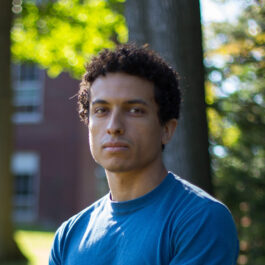
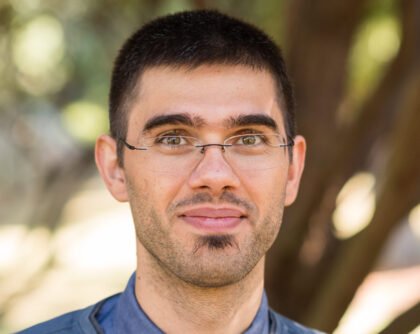
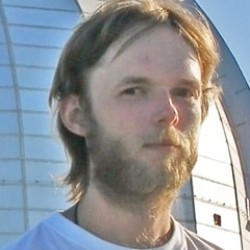
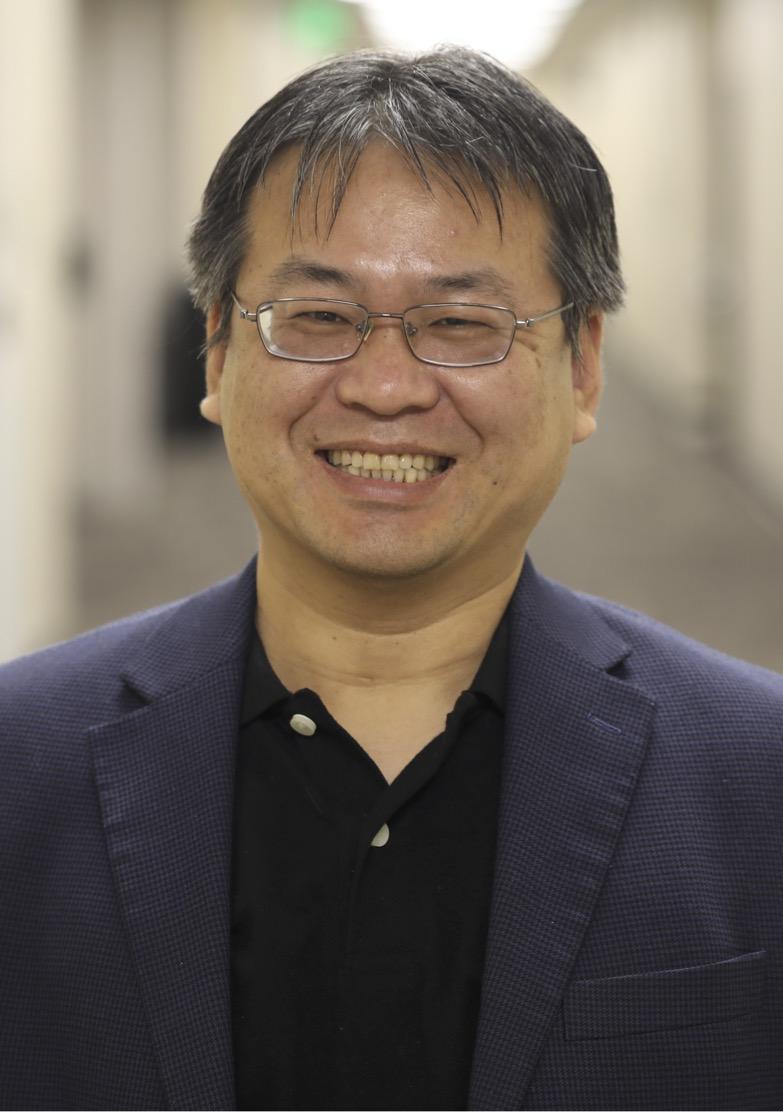
Michael Eracleous is a Professor in the Department of Astronomy and Astrophysics at Pennsylvania State University. His affiliations include the Institute for Gravitation and the Cosmos, Center for Multimessenger Astrophysics, and Center for Theoretical and Observational Cosmology. His research focuses on accretion power mechanisms in quasars, compact objects in binary systems, galaxy evolution processes, and sources of gravitational waves. Education details are not explicitly stated in the provided text. His research interests emphasize observational and theoretical astrophysics with a focus on high-energy phenomena and cosmological structures. Despite no specific article list provided, his work likely intersects disciplines like astrophysics, cosmology, and gravitational wave astronomy. No scientific awards or grants/advising details are mentioned here. He is affiliated with multiple interdisciplinary centers at PSU, suggesting involvement in collaborative astrophysics initiatives.
Seth Gossage is a Research Associate at the Center for Interdisciplinary Exploration and Research in Astrophysics (CIERA) at Northwestern University, where he was promoted from CIERA postdoc in 2024 after three years (2021-2024). He collaborates extensively with Professor Vicky Kalogera on stellar evolution modeling and population synthesis. His research focuses on stellar evolution , particularly through computational modeling using MESA and development of the POSYDON population synthesis code. Key interests include: Effects of stellar rotation on observational signatures Binary star evolution pathways Convective dynamics in low-mass stars Progenitor systems for supernovae and gravitational wave sources Analysis of his 15 most recent publications (2023-2025) reveals a strong emphasis on binary interactions across metallicity ranges, with significant contributions to understanding stripped-envelope supernovae, double neutron star formation, and gamma-ray burst progenitors. His work bridges theoretical modeling with observational constraints from HST and spectroscopic surveys. Notable scientific contributions include: First-author paper on convective turnover times in low-mass stars (ApJ 2025) Key role in POSYDON v2 development for cosmological metallicity ranges Analysis of Be star-black hole binaries using LAMOST data Gossage mentors through CIERA's REU program (evidenced by student presentations at AAS meetings) and contributes to outreach initiatives. His current work involves developing grids of 1D stellar models to replicate population data while investigating rotational effects.
Yue Zhao is a Research Fellow at the University of Southampton, specializing in astrophysics and gravitational wave astronomy. His work focuses on dark matter detection, compact object binaries, and early-universe physics phenomena. Current research interests include: Dark photon dark matter Low-frequency gravitational wave detection Natal kicks in black hole X-ray binaries Compact object populations in globular clusters Recent publications demonstrate expertise in multi-messenger astronomy using data from Gaia-like astrometry missions, Chandra X-ray Observatory, and Very Large Array (VLA). Key collaborations span institutions like Royal Astronomical Society and NASA facilities. Yue Zhao's work addresses fundamental questions about the universe's structure through astrophysical observations and theoretical modeling, particularly in gravitational wave signatures and dark matter interactions.
E. S. Sterl Phinney is a renowned Professor of Theoretical Astrophysics at the California Institute of Technology (Caltech). With a PhD from Cambridge University (1983) and a BS from Caltech (1980), he has made significant contributions to high-energy relativistic astrophysics and low-energy Newtonian astrophysics. His work often explores the role of antimatter in astrophysical systems.
Paul Callanan is a Professor of Physics at University College Cork, specializing in multiwavelength studies of compact objects. His research examines black hole and neutron star binaries using X-ray, optical, and IR observations to measure masses, accretion dynamics, and galactic distributions. He has served on NASA/ESA review committees and conducts observations at international facilities like the Keck Observatory. Callanan restored the historic Crawford Observatory at UCC and chairs the Royal Irish Academy's Astronomy Committee. His research addresses fundamental questions about black hole signatures, accretion disk evolution, and compact object populations in the Milky Way.
Dr. Mark Kennedy is a Research Fellow in the School of Physics at University College Cork (UCC), specializing in astrophysics with a focus on magnetic white dwarfs, neutron stars, and black holes. His research integrates observational astronomy, computational modeling, and machine learning to study accretion processes in compact binaries and gravitational-wave astronomy. Kennedy holds a PhD from UCC and the University of Notre Dame (2017), supported by a Naughton Fellowship. He completed a Newton International Fellowship (2017–2019) at the University of Manchester and currently leads the 'Invisible Monsters' project funded by a Government of Ireland Fellowship (2021–present). His academic career includes ERC-funded work on neutron star mass measurements and contributions to the Gravitational-wave Optical Transient Observer (GOTO) project. Kennedy serves as Communications Officer and Postdoctoral Researcher Representative for the Astronomical Society of Ireland. He teaches PY3109 (Introduction to Observational Astrophysics) and PY2106 (Introduction to Astrophysics and Special Relativity) at UCC. Key research areas include transitional millisecond pulsars, black widow/red back systems, and machine learning applications for detecting hidden black holes using all-sky surveys. Awards include the Naughton, Newton, and Government of Ireland Postdoctoral Fellowships. His work has been published in high-impact journals and presented at international conferences, with a focus on multi-messenger astronomy and compact object dynamics.
Lucy Thomas is a Researcher in Physics at the California Institute of Technology (Caltech), affiliated with the Division of Physics, Mathematics, and Astronomy and the LIGO Lab. She holds a PhD in Gravitational Wave Astronomy from the University of Birmingham (2023), an MSc in Physics from King's College London, and a BSc in Mathematics and Natural Sciences from the University of Cambridge, all in the UK. Her research focuses on gravitational wave waveform models for compact binary coalescences, emphasizing machine learning acceleration and precession dynamics. She investigates how spin misalignment impacts orbital precession and gravitational wave signals, contributing to tests of general relativity and insights into binary formation mechanisms. Lucy is a key member of the LIGO-Virgo-Kagra (LVK) collaboration, analyzing real data to refine theoretical models and explore extreme astrophysical phenomena like high-mass black hole mergers and neutron star-black hole systems. Lucy has not listed any scientific awards. Her work on population studies and merger rate estimates has advanced understanding of compact object dynamics. She advises no current students and does not mention grants. She is based at Caltech's LIGO Lab, collaborating with the High-Energy Astrophysics group and the Walter Burke Institute for Theoretical Physics (WBITP). Lucy's contributions include developing novel methods to interpret gravitational wave data, such as the effective precession spin vector and generalized χp parameter. Her recent publications address waveform calibration challenges, systematic errors in precession measurements, and the implications of asymmetric mass ratios in observed binaries. She also explores constraints on Lorentz violation and the mass of the graviton through gravitational-wave dispersion effects.
James Fuller is a Professor of Theoretical Astrophysics at the California Institute of Technology (Caltech), within the Division of Physics, Mathematics, and Astronomy. His research focuses on fluid dynamics within stars and planets, using analytical and numerical methods to address observational puzzles. He collaborates with the TAPIR research group and actively mentors undergraduate and graduate students in global projects. Education: B.A., Whitman College (2008); M.S., Cornell University (2011); Ph.D., Unspecified Institution (2014). Before his current role, he was a Visiting Associate at Caltech (2017) and Assistant Professor (2017-2023). Research interests include the mass transfer in binary systems, pre-supernova outbursts in massive stars, Saturn's interior via ring seismology, and tidal migration of moons/exoplanets. He studies magnetic fields in red giants, neutron star/black hole spin dynamics, and asteroseismology as tools to probe stellar interiors. His work bridges theory with observations, such as using Cassini data for planetary seismology and gravitational wave sources from merging white dwarfs. Advising and grants: Fuller advises graduate students like Nicholas Rui (asteroseismology), Peter Scherbak (binary white dwarfs), Xiaoshan Huang (radiation hydrodynamics), and Daichi Tsuna (supernova simulations). Former students Samantha Wu and Linhao Ma have moved to postdoctoral fellowships. Collaborations include work with Kevin Burdge and Tom Prince on ZTF discoveries of white dwarf binaries. Labs/teams: He is part of the TAPIR group at Caltech and collaborates with the Encelade Team for exoplanet migration studies. His research also intersects with projects on differential stellar rotation and magnetic field evolution in stars.
Józef Smak is a Full Professor at the University of Warsaw's Department of Astronomy and a prominent member of the Polish Academy of Sciences. Elected to the Academy of Europe in 1990, he specializes in stellar evolution, tight binary systems, and variable stars. His career includes leadership roles such as Director of the Department of Astronomy at the Polish Academy of Sciences (1974–1998) and academic positions spanning from 1958. Education & Career: 1981: Appointed Full Professor at University of Warsaw 1971–1981: Held professorial roles at Polish Academy of Sciences 1958–1971: Advanced from Assistant to Associate Professor at University of Warsaw Research Interests: Józef Smak's work focuses on astrophysical phenomena, particularly: Stellar evolution mechanisms in binary star systems Variable star dynamics and observational analysis Gravitational interactions in compact binary systems His studies contribute to understanding stellar structure and cosmic evolution. Awards & Recognition: Polish Academy of Sciences membership (correspondent 1986, full 1998) National honors: Gold Cross of Merit (1973), Knight's (1990), and Officer's Crosses (2002) of Polonia Restituta Early recognition via Polish Astronomical Society Youth Awards (1961, 1965) Grants & Advising: No specific grants or student advising details are documented in the provided materials. His leadership roles suggest involvement in institutional research funding and mentorship, but explicit records are unavailable.
Salvatore Vitale is an Associate Professor of Physics at the Massachusetts Institute of Technology (MIT), affiliated with the MIT LIGO Lab and the MIT Kavli Institute for Astrophysics and Space Research. His research focuses on gravitational wave data analysis, particularly using LIGO instruments to study compact objects like binary black holes and neutron stars. He has contributed to foundational work on parameter estimation, tests of general relativity, and next-generation observatory design like Cosmic Explorer. Education: BSc/MSc in Physics from University of Bologna, PhD from Pierre et Marie Curie University (Paris). Postdoctoral roles at Nikhef Amsterdam and MIT LIGO Lab before faculty appointment in 2017. Research emphasizes gravitational wave signal analysis, including unmodeled searches, compact object population studies, and calibration effects. Key publications address measuring the Hubble constant, binary black hole formation channels, and spin dynamics. Awards include the 2021 NSF CAREER Award and 2016 Gruber Cosmology Prize (LIGO Team). Lab affiliations: MIT LIGO Group and Advanced LIGO at MIT. Current group includes students (e.g., Cailin Plunkett) and postdocs (e.g., Matthew Mould). Active in open-source data releases and collaborations like the LIGO Scientific Collaboration.
Dr. Eugene Vasiliev is an STFC Ernest Rutherford Fellow at the School of Mathematics and Physics, University of Surrey, UK. He specializes in galactic and stellar dynamics, focusing on supermassive black holes, Milky Way modeling, and the use of Gaia astrometric data. He develops advanced computational tools such as AGAMA, Forstand, and SMILE for dynamical modeling and action-based analysis. His research spans: Dynamical modeling of galaxies using the Schwarzschild method Action-based modeling of the Milky Way and dark matter halos Interactions between the Milky Way and the Large Magellanic Cloud Tidal disruption events and black hole feeding rates Structure and evolution of globular clusters and nuclear star clusters His recent publications (2022–2024) show a strong focus on refining Milky Way models using Gaia data, exploring phase-space substructures from past mergers, and improving black hole mass measurements in nearby galaxies. He frequently collaborates with leading researchers like James Binney, Vasily Belokurov, and Monica Valluri. His work is instrumental in advancing our understanding of galactic formation and evolution in the era of large-scale surveys. He has developed key software tools widely used in the astrophysics community. STFC Ernest Rutherford Fellowship Dr. Vasiliev actively mentors and collaborates on projects involving dynamical modeling, data analysis, and software development. He has delivered numerous talks and outreach lectures on black holes, galactic dynamics, and Gaia science. He leads research efforts that integrate observational data with theoretical modeling to probe the structure and history of the Milky Way.
Ronald L Walsworth is a Professor of Physics and Electrical and Computer Engineering at the University of Maryland (UMD), holding the Minta Martin endowed professorship. He is the Founding Director of UMD's Quantum Technology Center (QTC), which focuses on advancing quantum science for translational applications and workforce education. His research develops precision measurement tools and quantum sensors applied to physical and life sciences, including quantum diamond magnetometry, NMR/MRI, and bioimaging. Education details are not explicitly stated in the provided texts. His work combines experimental and theoretical approaches, leveraging quantum defects in diamond and boron nitride for ultra-sensitive measurements. Notable contributions include quantum diamond microscopes, all-optical magnetometers, and applications in astrophysics, biomedical imaging, and dark matter detection. Recent research themes emphasize solid-state spin ensembles for high-resolution magnetic spectroscopy, machine learning for data analysis, and interdisciplinary collaborations. He advises graduate students like Andrew Beling (2025 Boron Nitride Workshop presenter) and has pioneered sensor systems with industrial and academic partners. Grants and collaborations include NASA-funded quantum sensing assessments and DOE initiatives. Labs/Teams: Director of Quantum Technology Center (QTC), leading teams in quantum microscopy, sensor development, and quantum workforce training programs at UMD.
Dr. Anuradha Gupta is an Assistant Professor in the Department of Physics and Astronomy at the University of Mississippi, affiliated with the College of Liberal Arts. She is an active researcher in gravitational wave physics and astrophysics, and a member of major international collaborations including the LIGO Scientific Collaboration and the LISA Consortium. Education: B.S. in Science, Dr. Ram Manohar Lohiya Avadh University, India (2007) M.Sc. in Physics, Banaras Hindu University, India (2009) Ph.D. in Physics, Tata Institute of Fundamental Research, India (2014) Her primary research interests lie in gravitational wave physics, astrophysics, and cosmology, particularly focusing on neutron stars, black holes, and tests of general relativity. She contributes to the detection and parameter estimation of gravitational wave signals from compact binary systems. Her work bridges theoretical modeling with observational data from advanced detectors. Dr. Gupta has been recognized with several prestigious scientific awards, including the Gruber Cosmology Prize (2016), the Buchalter Cosmology Prize (Second Prize, 2019), and the Excellence in Community Engagement Award from the University of Mississippi (2024). She has also received recognition for her presentations and research excellence during her postdoctoral tenure. She has mentored students through teaching core physics courses such as Physics for Science & Engineering I and II, Mechanics, and Optics. Her professional memberships include the American Physical Society, International Astronomical Union, LISA Consortium, and the Indian Association of General Relativity and Gravitation. She previously held postdoctoral fellowships at the Inter-University Centre for Astronomy and Astrophysics (2014–2017) and Pennsylvania State University (2017–2020). Dr. Gupta is actively involved in large-scale scientific collaborations, particularly through the LIGO Scientific Collaboration and LISA Consortium, contributing to the global effort in gravitational wave astronomy and future space-based detection missions.
Stuart Ryder is an Adjunct Fellow at the School of Mathematical and Physical Sciences, Macquarie University, and a member of the Astrophysics and Space Technologies Research Centre. He also serves part-time as a Program Manager with Astronomy Australia Limited at Macquarie University, where he oversees Australia’s strategic partnerships with the European Southern Observatory and the Rubin Observatory’s Legacy Survey of Space and Time. Previously, he led the International Telescopes Support Office at the Australian Astronomical Observatory. PhD in Astronomy & Astrophysics, Australian National University (1989–1993) B.Sc. (First Class Honours) in Astronomy, University of Canterbury (1985–1988) Dr. Ryder's research focuses on astronomical transients, particularly core-collapse supernovae and Fast Radio Bursts (FRBs). He co-leads the SUNBIRD collaboration, which uses advanced infrared adaptive optics on 8–10 metre class telescopes (Gemini, Keck, Subaru, VLT) to uncover obscured supernovae. He has flown eight missions on NASA’s SOFIA observatory. His work with the CRAFT collaboration on FRB localization led to the 2021 AAAS Newcomb Cleveland Prize for the most impactful paper in Science in 2019/20. In 2023, his team discovered the most distant FRB to date, originating from a compact galaxy group nearly 8 billion years ago. The recent publications of Dr. Ryder reflect a strong trend in high-energy transient astrophysics, particularly in the optical and radio follow-up of FRBs and supernovae. His work integrates multi-wavelength observations and international collaborations to probe cosmic phenomena such as baryonic matter distribution, host galaxy properties, and the origins of explosive transients. Key journals include Science , Nature , and Monthly Notices of the Royal Astronomical Society , indicating high-impact contributions to astrophysics and cosmology. AAAS Newcomb Cleveland Prize (2021) – for the most impactful paper in Science (2019/20) Allison-Levick Lecturer (2023) Dr. Ryder has supervised several research students, including Erik Kool (PhD, Macquarie), Igor Andreoni (PhD, Swinburne), Lachlan Marnoch (MRes and PhD, Macquarie), and Srivardini Ayyappann (MRes, Macquarie). He is involved in major collaborative projects such as the MQAAAstro research centre at Macquarie University. His external role as Program Manager with Astronomy Australia Ltd involves strategic engagement with international observatories, facilitating Australian access to cutting-edge facilities. Future research will likely continue to explore FRB origins, supernova populations, and cosmological applications of transients. Dr. Ryder is a key member of the CRAFT and SUNBIRD collaborations, leading optical follow-up campaigns for FRBs and infrared studies of supernovae. His work involves close coordination with international teams using the Very Large Telescope, SOFIA, and radio arrays like ASKAP. These teams are at the forefront of transient astronomy, combining data from multiple observatories to achieve precise localizations and physical characterizations of cosmic explosions.
Dr. Henry Han is a Professor and holds the McCollum Family Chair in Data Science at Baylor University’s Hankamer School of Business, Department of Data Science. His interdisciplinary research spans data science, fintech, artificial intelligence, bioinformatics, health informatics, cybersecurity, and quantum computing. PhD, Applied Mathematical & Computational Sciences, University of Iowa (2004) MS, Computer Science, University of Iowa (2001) MS, Applied Mathematics, University of Iowa (2001) Dr. Han’s research integrates advanced machine learning, optimization, and data analytics techniques to solve complex problems in finance, healthcare, and cybersecurity. His work emphasizes manifold learning , deep neural networks , evolutionary computation , and graph-based learning for real-world applications such as high-frequency trading, automobile damage classification, and single-cell genomics. He applies these methods across domains including financial modeling, biomedical data analysis, and sports forecasting. His recent publications demonstrate a strong trend toward interdisciplinary machine learning , with applications in computational finance, bioinformatics, and intelligent systems. Many of his works utilize optimization-based deep learning and unsupervised representation learning to extract meaningful patterns from high-dimensional data. Dr. Han has received recognition through prestigious appointments: McCollum Family Chair in Data Science He actively collaborates on research projects and has secured funding for advanced data science initiatives, though specific grant details are not listed. His work supports both academic advancement and practical innovation in data-driven decision-making. He advises graduate students and contributes to the development of next-generation data science methodologies. Dr. Han is a key member of the data science research team at the Hankamer School of Business, contributing to interdisciplinary labs and research groups focused on fintech, AI, and health informatics.