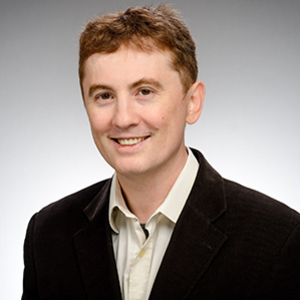
Zsolt Patakfalvi is an Associate Professor at École Polytechnique Fédérale de Lausanne (EPFL), holding positions in the School of Basic Sciences (SB) within the Department of Mathematics (MATH). He is affiliated with the Chair of Algebraic Geometry (CAG) and the Section of Mathematics for Engineers (SMA-ENS). Additionally, he serves as Director of SMA-GE and holds roles in academic governance bodies like the Conference of Section Directors (CDS) and SB Faculty Management. His research focuses on Algebraic Geometry, particularly in birational geometry, positive characteristic methods, moduli theory, and mixed characteristic algebra. He explores topics such as Hodge theory, singularities, and applications to arithmetic geometry. Notable contributions include work on the minimal model program, test ideals, and counterexamples to classical conjectures in positive characteristics. He supervises doctoral students in areas like algebraic geometry and commutative algebra, including Jefferson Baudin, Léo Navarro Chafloque, and Linus Rösler. His past advisees include Emelie Arvidsson and Quentin Posva. Patakfalvi’s publications frequently address foundational questions in geometry, with recent work extending into perfectoid spaces and globally-regular varieties. He coordinates courses such as 'Algebra III - Rings and Fields' and 'Perfectoid spaces' at EPFL, reflecting his commitment to both research and education. His academic service includes managing educational programs within SB-SMA and contributing to institutional decision-making through CDS membership.
Laurens Lootens is a Researcher in the Department of Applied Mathematics and Theoretical Physics (DAMTP) at the University of Cambridge. His work focuses on theoretical physics, particularly in quantum lattice models, topological phases of matter, and mathematical structures underlying quantum systems. He is affiliated with the High Energy Physics research group within DAMTP. His research interests include dualities in quantum systems, matrix product operator symmetries, conformal field theories, and tensor network methods. Lootens explores topics such as entanglement in many-body systems, symmetry-protected topological phases, and the interplay between algebraic structures and physical phenomena. Publications highlight his contributions to understanding lattice representations of dualities, topological sectors in quantum models, and critical lattice models for conformal field theories. His work bridges theoretical frameworks with computational methods, advancing both fundamental physics and quantum information science.
Maxim Kontsevich is a permanent professor at the Institut des Hautes Études Scientifiques (IHÉS), holding the AXA Chair for Mathematics since 1995 and a visiting chair at Rutgers University (one month annually since 1997). Born in 1964 in Khimki, USSR, he earned his PhD from Bonn University in 1992. His career includes visiting positions at Harvard, the Institute for Advanced Study, and Berkeley, where he was a professor from 1993 to 1995. His research spans mathematical physics, algebraic geometry, and non-commutative geometry. Notable contributions include deformation quantization, mirror symmetry, and motivic integration. His work bridges algebraic structures with geometric and physical concepts, influencing areas like topological field theories, string theory, and integrable systems. Awardees of Fields Medal (1998), Crafoord Prize (2008), and Breakthrough Prize (2014), he also holds editorial roles at Compositio Mathematica and Publications Mathématiques IHÉS. His over 50 publications explore advanced topics such as quantum cohomology, Hodge theory, and categorical structures in geometry.
Gijs Heuts is an Associate Professor in the Fundamental Mathematics group at the Mathematical Institute of Utrecht University, part of the Faculty of Science. His research focuses on advanced topics in algebraic topology and higher category theory, with particular expertise in Goodwillie calculus, chromatic homotopy theory, and operads. He is affiliated with the Utrecht Geometry Center, which includes prominent mathematicians Ieke Moerdijk and Lennart Meier. His work is currently funded by prestigious grants including an ERC Starting Grant titled "Chromatic homotopy theory of spaces" and an NWO Vidi grant "Hopf algebras and periodic homotopy theory". Starting September 2025, he will also serve as one of the Principal Investigators on the NWO XL consortium "Symmetry on the interface of topology and higher algebra". Dr. Heuts' research centers around homotopy theory and derived algebraic geometry, with a focus on generalizations of classical algebraic concepts (such as Lie algebras, commutative rings, and Hopf algebras) to homotopy theory. His work has significant applications to chromatic homotopy theory, with Goodwillie calculus and operads serving as central methodological tools. His publication record demonstrates consistent high-impact contributions to the field, with papers appearing in top journals such as Annals of Mathematics and Proceedings of the American Mathematical Society. His research spans theoretical foundations of higher category theory to specific applications in unstable homotopy theory, particularly focusing on connections between spectral Lie algebras and vn-periodic phenomena. ERC Starting Grant "Chromatic homotopy theory of spaces" NWO Vidi grant "Hopf algebras and periodic homotopy theory" PI on NWO XL consortium "Symmetry on the interface of topology and higher algebra" (starting Sept 2025) Dr. Heuts completed his PhD under Jacob Lurie at Harvard University and was previously a postdoc at the University of Copenhagen. He has held research positions at the Isaac Newton Institute and Hausdorff Research Institute. He was an organizer of the MIT Talbot Workshop (2012-2015) and currently organizes the European Autumn School in Topology (EAST).
Chenyang Xu is a Professor at Princeton University's Department of Mathematics, specializing in Higher Dimensional Geometry with a focus on K-stability, Fano varieties, and moduli spaces. His research bridges algebraic geometry and complex geometry, contributing to foundational questions in birational geometry and geometric invariant theory. Position: Professor at Princeton University Research Interests: Algebraic Geometry, K-stability, Fano varieties, Moduli spaces, Birational Geometry He leads the Simons Collaboration on Moduli of Varieties, advancing understanding of geometric structures and their applications. Notable achievements include resolving key conjectures in K-stability and establishing foundational results on the birational geometry of Fano varieties. Recipient of the 2019 New Horizons in Mathematics Prize for his contributions to algebraic geometry. Active in academic service, he contributes to conferences and editorial roles, including co-editing volumes on higher-dimensional algebraic geometry.
Benjamin Steinberg is a Professor in the Mathematics Department at the City College of New York (CCNY) and the CUNY Graduate Center. He holds a Ph.D. from the University of California, Berkeley (1998) under John Rhodes and has held positions at the University of Porto (Portugal) and Carleton University (Canada). His research focuses on algebra, including semigroups, geometric group theory, algebraic combinatorics, representation theory, and automata theory, with notable work on etale groupoids, inverse semigroups, and ring theory. He is the author of several books, including *The q-theory of Finite Semigroups* and *Representation Theory of Finite Monoids*. Steinberg serves as Managing Editor of the *International Journal of Algebra and Computation* and has organized conferences such as the International Conference on Semigroups and Groups in Honor of John Rhodes. Research interests include the interplay between algebraic structures and their applications, such as in automata theory and Markov chains. His work bridges pure mathematics with combinatorial and geometric approaches, often involving categorical and topological methods. Recent articles explore topics like Nekrashevych algebras, twisted Steinberg algebras, and Lyndon's identity theorem for monoids. He has contributed to the study of profinite groups and their connections to symbolic dynamics. Steinberg’s editorial roles and conference organization reflect his leadership in the mathematical community. Despite his defunct blog, his academic contributions remain prolific, with ongoing editorial work and research in algebraic combinatorics and representation theory.
Sheldon Katz is a Professor of Mathematics at the University of Illinois at Urbana-Champaign (UIUC), with a joint appointment in the Department of Physics. He holds a Ph.D. in Mathematics from Princeton University (1980) and a B.S. from MIT (1976). Previously, he was a Regents Professor of Mathematics at Oklahoma State University before joining UIUC in 2001. Katz's research focuses on algebraic geometry and mathematical physics, particularly string theory and supersymmetric quantum field theories. His work bridges geometry and physics, exploring topics like Gromov-Witten theory, toric varieties, and F-theory. He co-authored the influential book Mirror Symmetry and Algebraic Geometry (1999), a cornerstone in the field. His recent research includes studies on BPS invariants, Calabi-Yau manifolds, and topological string theory. Key contributions include analyses of F-theory, mirror symmetry, and geometric dualities in string compactifications. He teaches advanced courses in algebraic geometry and mathematical physics at UIUC. While no explicit awards are listed, his extensive publication record and academic leadership reflect significant contributions to the field. Katz’s work continues to explore the interplay between algebraic geometry and fundamental physics.
Andrei Jorza is an Associate Professor of the Practice in the Department of Mathematics at the University of Notre Dame. His research focuses on the interplay between number theory and algebraic geometry, including topics such as modular forms, Galois representations, p-adic Hodge theory, and arithmetic geometry. He holds an A.B. from Harvard University (2005) and a Ph.D. from Princeton University (2010), advised by Andrew Wiles. Prior to his current position, he was a Taussky-Todd Instructor at Caltech and a member of the Institute for Advanced Study (IAS). Dr. Jorza has taught advanced courses on p-adic Hodge theory, global class field theory applications, algebraic number theory, and graduate algebra. His work includes significant contributions to computational verification of the Birch and Swinnerton-Dyer conjecture and studies on Galois representations for Siegel modular forms. His research also extends to topics like Lagrangian hyperplanes in holomorphic symplectic varieties and eigenvarieties in automorphic forms. He is affiliated with Notre Dame's Department of Mathematics, located in 275 Hurley Hall, and actively participates in seminars on algebraic geometry and commutative algebra. His lecture notes and courses reflect a deep engagement with foundational topics in number theory and algebra, emphasizing adelic methods and applications of class field theory.
David E Speyer is a Professor in the Department of Mathematics at the University of Michigan . His research focuses on algebraic problems with combinatorial flavors , particularly in tropical geometry , cluster algebras , and geometry of Lie groups . He has supervised multiple PhD students, including Shelby Cox, Will Dana, and John Wiltshire-Gordon, and collaborated on projects with undergraduates like Grant Barkley and Benjamin Branman. Education: PhD in Mathematics from UC Berkeley under Bernd Sturmfels; undergraduate at Harvard. Research: Key areas include tropical geometry , cluster algebras , and flag manifolds . His work often bridges combinatorics, algebraic geometry, and representation theory. Publications: Over 40 papers, including breakthroughs in cluster algebras , affine weak order , and braid variety cluster structures . Awards: Clay Research Fellow (2005-2010). Teaching: Coordinates courses like Math 593 (graduate algebra) and Math 214 , with a focus on inquiry-based learning .
Avi Wigderson is the Herbert H. Maass Professor in the School of Mathematics at the Institute for Advanced Study, Princeton. He is a leading authority in theoretical computer science, particularly computational complexity theory. Wigderson organizes the Computer Science and Discrete Mathematics (CSDM) program at the Institute, fostering interdisciplinary research at the intersection of mathematics and computer science. Wigderson earned his Ph.D. (1983), M.A. (1982), and M.S.E. (1981) from Princeton University. Prior to his current position, he held appointments at The Hebrew University of Jerusalem (1986-2003), Princeton University (1990-1992), Mathematical Sciences Research Institute, Berkeley (1985-1986), IBM Research (1984-1985), and University of California, Berkeley (1983-1984). Wigderson's research spans computational complexity theory, randomness and computation, algorithms and optimization, circuit complexity, proof complexity, quantum computation and communication, and cryptography. His work explores fundamental questions like whether mathematical creativity can be automated (P vs NP problem), the security of electronic commerce, the role of randomness in computation, and the potential of quantum mechanics to enhance computation. He has made significant contributions to understanding the power and limitations of efficient computation. Analysis of Wigderson's recent publications reveals a strong focus on optimization, complexity theory, and their mathematical foundations. His work connects diverse areas including non-commutative algebra, geometric complexity, graph theory, and quantum computing. A recurring theme is exploring whether fundamental computational problems like P vs NP can be addressed through optimization techniques such as gradient descent. His research shows increasing interdisciplinary connections between theoretical computer science, mathematics, and physics. ACM A.M. Turing Award (2023) Abel Prize (2021) Donald E. Knuth Prize (2019) Gödel Prize (2009) American Mathematical Society's Levi L. Conant Prize (2008) Rolf Nevanlinna Prize (1994) Yoram Ben-Porat Presidential Prize for Outstanding Researcher (1994) Bergman Fellowship (1989) Member, American Academy of Arts and Sciences Member, National Academy of Sciences While specific details about Wigderson's students are not provided in the source material, his extensive lecture series, workshops, and program organization suggest significant mentorship activities. His book "Mathematics and Computation" published by Princeton University Press serves as an educational resource for students and researchers. Wigderson has organized major programs at the Institute for Advanced Study including "Lower Bounds in Computational Complexity" (2018) and "Pseudorandomness" (2017), creating research opportunities for numerous scholars. Wigderson leads the Computer Science and Discrete Mathematics (CSDM) program at the Institute for Advanced Study, which brings together researchers from mathematics and computer science to explore fundamental questions in computation. His work with collaborators across multiple institutions has established connections between theoretical computer science and diverse fields including quantum information theory, algebraic geometry, and optimization. Recent projects focus on non-commutative optimization and its applications to computational complexity problems.
Abdellah Sebbar is a Full Professor in the Department of Mathematics and Statistics at the University of Ottawa. He holds a PhD from Stony Brook University (1993-1997) and prior degrees from Rabat and Strasbourg. His research focuses on number theory, algebraic geometry, and modular forms, with specialties in elliptic curves, moonshine theory, and quantum groups. He has authored over 40 publications, including works on Schwarzian equations and equivariant functions. His career includes roles as CRM-ISM Postdoctoral Fellow (1997-1999), CMS Instructor (1999-2001), and Associate Professor (2004-2013) before attaining his current rank. He advises graduate students and collaborates on projects involving modular subgroups and automorphic forms. Education: 1992: BSc in Pure Mathematics, Rabat 1992-1993: DEA (Master's), Strasbourg 1993-1997: PhD in Mathematics, Stony Brook (Fulbright Scholar) Research Interests: Modular forms and functions Elliptic curves and surfaces Discrete groups and moonshine Quantum groups and mathematical physics Schwarzian differential equations Professional Timeline: 2013–Present: Full Professor, UOttawa 2004–2013: Associate Professor, UOttawa 2001–2004: Assistant Professor, UOttawa His recent work emphasizes applications of Schwarzian equations to modular forms and automorphic differential equations. Collaborative efforts with Hicham Saber and others explore equivariant functions and vector-valued modular forms. He has supervised multiple PhD/MSc students, including co-supervision with Damien Roy.
Uri Onn is a Professor at the Mathematical Sciences Institute of the Australian National University (ANU). His research focuses on advanced algebraic structures, including zeta functions, arithmetic groups, and representation theory. He contributes to the understanding of nilpotent groups, valuation rings, and Lie algebras through rigorous mathematical frameworks. Research Interests: Dr. Onn’s work spans number theory, group theory, and algebraic geometry, with a particular emphasis on zeta functions, arithmetic groups, and representation growth. His studies explore the interplay between algebraic structures and their applications in modern mathematics. Key Research Trends: His articles address topics like zeta functions in nilpotent groups, representation theory over finite rings, and the behavior of arithmetic groups under base change. These contributions advance foundational knowledge in abstract algebra and number theory. Grants and Projects: He leads projects such as the Geometry of Character Varieties (2025–2028) and Representations of Arithmetic Groups (2017–2023), focusing on algebraic and geometric representations.
N. Christopher Phillips is a Professor in the Department of Mathematics at the University of Oregon. He specializes in operator algebras, with a focus on C*-algebras, crossed products, and their applications to dynamical systems. His research explores topics such as strict comparison, classification of C*-algebras under group actions, and K-theory. He has organized conferences such as the West Coast Operator Algebra Seminars (WCOAS) and delivered lectures at institutions like the Research Institute for Mathematical Sciences (RIMS), Kyoto University, and the Centre de Recerca Matemàtica in Barcelona. Phillips is also known for maintaining resources for operator algebraists, including an email directory and a comprehensive list of operator algebra research links. His teaching includes advanced courses like Math 685 (Functional Analysis) and Math 618 (Advanced Topics in Mathematics). Phillips actively advocates against predatory academic practices, maintaining a list of predatory journals and promoting the use of plain text email to combat spam.
Michael Anshelevich is a Professor of Mathematics at Texas A&M University, affiliated with the College of Arts & Sciences. His research focuses on Functional Analysis, Operator Theory, and Free Probability, with contributions to non-commutative stochastic processes, orthogonal polynomials, and operator-valued distributions. He holds a Ph.D. from the University of California, Berkeley (2000) and a B.S. from the California Institute of Technology (1994). His work bridges combinatorial methods with advanced probability theory, addressing topics like free Lévy processes and free convolution powers. Research interests span non-commutative probability frameworks, including free stochastic measures, Fock space representations, and applications of combinatorial structures to stochastic calculus. Recent articles explore exponential products in operator algebras, Hermite polynomials in Brownian motion contexts, and depth-two actions in Fock spaces. His contributions to free probability include extending classical limit theorems to non-commutative settings and analyzing multiplicative free convolutions. Publications highlight interdisciplinary connections between functional analysis and stochastic processes, with a focus on operator-valued distributions and Jacobi parameters. While no specific awards are listed, his extensive bibliography reflects sustained impact in mathematical physics and operator theory. Advising and grants sections remain unspecified, though his research often involves collaborative projects in stochastic analysis and free probability.
Prof. Gert-Martin Greuel is a distinguished mathematician and Emeritus Professor at RPTU Kaiserslautern, where he previously held a Professorship in the Department of Mathematics. His career includes roles as Director of the Mathematisches Forschungsinstitut Oberwolfach (2002-2013) and as editor of major journals like Zentralblatt MATH. He co-founded the Singular computer algebra system and led the Center for Computer Algebra at Kaiserslautern. Research Interests: His work focuses on singularity theory, algebraic geometry, and computational algebra. Key contributions include foundational studies on hypersurface singularities, equisingularity, and the development of mathematical software tools like Singular and swMATH. Awards: Greuel received the Richard D. Jenks Prize (2004) for Singular, an honorary doctorate from Leibniz University Hannover (2009), and the German Mathematical Society's Media Prize (2013). He pioneered public math exhibitions through the IMAGINARY project. Leadership & Outreach: He served as Chair of European Research Centres on Mathematics (2010-2013) and championed open-access initiatives for mathematical software and publications. His editorial roles span Oberwolfach Reports, Revista Matemática Complutense, and Ergebnisse series. Education: PhD (1973) and Habilitation (1980) from University of Göttingen and Bonn, respectively. His academic journey includes professorships in Osnabrück and Kaiserslautern, and supervision of over 20 PhD students in algebraic geometry and computational mathematics.



.jpg)