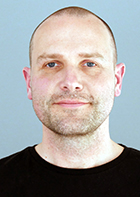
Maxim Kontsevich is a permanent professor at the Institut des Hautes Études Scientifiques (IHÉS), holding the AXA Chair for Mathematics since 1995 and a visiting chair at Rutgers University (one month annually since 1997). Born in 1964 in Khimki, USSR, he earned his PhD from Bonn University in 1992. His career includes visiting positions at Harvard, the Institute for Advanced Study, and Berkeley, where he was a professor from 1993 to 1995. His research spans mathematical physics, algebraic geometry, and non-commutative geometry. Notable contributions include deformation quantization, mirror symmetry, and motivic integration. His work bridges algebraic structures with geometric and physical concepts, influencing areas like topological field theories, string theory, and integrable systems. Awardees of Fields Medal (1998), Crafoord Prize (2008), and Breakthrough Prize (2014), he also holds editorial roles at Compositio Mathematica and Publications Mathématiques IHÉS. His over 50 publications explore advanced topics such as quantum cohomology, Hodge theory, and categorical structures in geometry.
Henrik Granau Holm is a Professor in the Department of Mathematical Sciences at the University of Copenhagen. His research focuses on advanced algebraic structures within category theory and commutative algebra, with significant contributions to derived categories and quiver representations. His primary research areas include Algebra, Category Theory, Commutative Algebra, Derived Categories, Quiver Representations, and Homological Algebra. His work explores the structural properties of derived categories, particularly Q-shaped derived categories, and their applications in representation theory. Recent research investigates compact and perfect objects in ring-derived categories, tensor embeddings in Grothendieck cosmos, and vanishing properties of Tor functors. Holm's publication record shows consistent output in top mathematics journals, with multiple 2024 publications including a book on derived category methods in commutative algebra. His research demonstrates strong international collaboration, particularly with researchers in representation theory and category theory. Holm has supervised PhD students and postdoctoral researchers as indicated by departmental records. His activities include editorial work for Mathematical Reviews and Zentralblatt MATH, along with numerous lecture presentations on cohomology and AC rings dating back to 2007.
Shachar Carmeli is a researcher in the Department of Mathematics at the Weizmann Institute of Science. He previously held a postdoctoral position at the University of Copenhagen's Department of Mathematical Sciences, working with the Copenhagen Centre for Geometry and Topology. Carmeli earned his PhD from the Weizmann Institute under the supervision of Professor Dmitry Gourevitch, focusing on advanced topics in algebraic topology and representation theory. His research interests span homotopy theory, chromatic homotopy theory, algebraic geometry, and representation theory, with a current emphasis on higher semiadditivity in chromatic homotopy theory and its connections to algebraic K-theory. He also explores Nash stacks and geometric representation-theoretic frameworks. Notable collaborations include work with Tomer M. Schlank, Lior Yanovski, and Allen Yuan on cyclotomic extensions, redshift phenomena, and categorified trace constructions. Carmeli's recent publications highlight contributions to topics like chromatic Fourier transforms, descent in algebraic K-theory, and the topology of crystalline materials. His work bridges abstract algebraic structures with geometric and topological applications, often leveraging tools from higher category theory and spectral algebraic geometry.
Magdalena E. Musat is a Professor at the Department of Mathematical Sciences, University of Copenhagen, within the Faculty of Science. She holds a Ph.D. from the University of Illinois at Urbana-Champaign (2002) and has extensive teaching experience across institutions including the University of Copenhagen, University of Southern Denmark, and UC San Diego. Her research focuses on Functional Analysis, Operator Algebras, and their intersections with noncommutative probability, quantum information theory, and group theory. She has organized major conferences like the Harald Bohr Lectures and the ICM Satellite conference on Operator Algebras. Her academic contributions include over 15 publications in top journals such as Inventiones Mathematicae and Communications in Mathematical Physics. She has supervised numerous Ph.D. and Master’s students, including current advisee Rasmus Kløvgaard Stavenuiter. Her work explores topics like quantum channel factorization, Connes embedding problem, and non-commutative L_p-spaces. Musat serves as Head of Studies for the Master’s Program in Mathematics and co-organizes the Department Colloquium. Her teaching spans advanced courses on Functional Analysis, Operator Algebras, and Measure Theory. Professional activities include organizing masterclasses on Sofic Groups and Approximation Properties for Operator Algebras.
Kevin Aguyar Brix is a mathematician at the University of Southern Denmark (Odense, Denmark), where he holds a Reintegration Fellowship from the Carlsberg Foundation (CF23-1328). Previously, he worked as a postdoc at Lund University (Sweden), the University of Glasgow (Scotland), and the University of Wollongong (Australia), funded by grants from the Swedish Research Council, the Independent Research Fund Denmark, and the Carlsberg Foundation. PhD in Mathematics (2019) from University of Copenhagen, Denmark Member of the Centre for Symmetry and Deformation Supervised by Søren Eilers Kevin's research focuses on the intersection of pure mathematics, particularly exploring the connections between topological dynamical systems, operator algebras, and group theory. He specializes in symbolic dynamical systems and their encoding into C*-algebras, investigating how much dynamical structure is preserved or lost in this process. His work often employs operator algebraic tools to derive properties of the original dynamical systems, with specific emphasis on shift equivalence, covers of dynamical systems, and ideal structures of C*-algebras. Kevin's publications reveal a consistent focus on the interplay between dynamical systems and operator algebras. His work spans symbolic dynamics, groupoids, C*-algebras, and their ideal structures. Recent papers explore unital shift equivalence, Hausdorff covers for non-Hausdorff groupoids, and maximal ideals of reduced group C*-algebras. His research often involves collaborations with leading mathematicians worldwide, addressing fundamental questions about the relationship between algebraic structures and dynamical properties. Carlsberg Foundation Reintegration Fellowship (CF23-1328) Swedish Research Council Starting Grant (2024-2028) for "Dynamics, Groups, and C*-algebras: from one to many dimensions" Swedish Research Council Starting Grant (previous) Independent Research Fund Denmark International postdoctoral grant Carlsberg Foundation Internationalisation Fellowship Though specific details about Kevin's advisees are not provided in the available information, his extensive publication record suggests active mentorship of junior researchers. His research is supported by prestigious grants including the Carlsberg Foundation Reintegration Fellowship and a Swedish Research Council Starting Grant. These grants fund his work on "Dynamics, Groups, and C*-algebras: from one to many dimensions," indicating significant recognition of his research potential and contributions to the field. Kevin's collaborative approach is evident in his numerous co-authored papers with established and emerging researchers in operator algebras and dynamical systems. Kevin is actively involved in the international mathematical community, participating in workshops and collaborations across Europe and Australia. He co-organized the Glasgow Late August Symbolic dynamics, Groups, and Operators Workshop in 2022, which aimed to include young mathematicians in the interactions between group theory, dynamical systems, and operator algebras. His research network includes prominent mathematicians from institutions worldwide, reflecting his position within a vibrant interdisciplinary research community. He has presented his work at numerous conferences including IWOTA in Kent, seminars in Florianopolis, and workshops in Oberwolfach, demonstrating his active engagement with the global mathematics community.
Marcel Bökstedt is a Professor in the Department of Mathematics at Aarhus University, Denmark. His email is marcel@math.au.dk , and he can be reached at +4587155768. He is based at the university's main campus located at Ny Munkegade 118, 8000 Aarhus C. Marcel Bökstedt holds a strong academic background, though specific details about his education and training are not provided in the text. Research Interests His research interests are concentrated in the following areas: Algebraic Topology Geometry Homotopy Theory K-Theory He investigates advanced mathematical concepts including cohomologies, homotopy types, configuration spaces, and cobordism obstructions. His work often integrates spectral sequences and functorial approaches, exploring connections between algebraic structures and geometric applications. Notable topics include divisor braids and geometric interpretations of homotopy groups within cobordism categories, demonstrating a commitment to interdisciplinary research. Recent research outputs (2014–2019) highlight contributions to graph cohomologies, cyclic homology, and cobordism-related problems. These articles reflect a focus on combining algebraic techniques with geometric insights, particularly in understanding topological spaces and their properties through homological methods. In terms of academic service, Marcel has been actively involved in evaluation panels at multiple institutions: Member of evaluation panel, University of Copenhagen (11 January 2017) Member of evaluation panel, University of Copenhagen (14 October 2016) Member of evaluation panel, Norwegian University of Science and Technology (March–April 2016) Research stay: Oslo University (September 2007 to July 2008) No formal advisees or grants are listed in his profile. There are no specific details provided about laboratories or research teams he is part of.
Pieter Spaas is a Researcher employed as a postdoc in the Analysis & Quantum Section at the Department of Mathematical Sciences, University of Copenhagen since 1 September 2022. He holds a PhD in Mathematics from UC San Diego (2019), supervised by Professor Adrian Ioana, following Bachelor's and Master's degrees from Hasselt University (Belgium) and KU Leuven (Belgium), respectively. Previously, he served as an Assistant Adjunct Professor at UCLA. His research focuses on operator algebras, ergodic theory, and adjacent areas including group theory and descriptive set theory. Key interests include the structure of Cartan subalgebras, central sequence algebras, and group stability—a concept with applications across mathematics, physics, and computer science. Recently, he has explored non-commutative ergodic theory and lifting properties of C*-algebras. Currently based in office 04.2.09 at the Department of Mathematical Sciences, Pieter aims to collaborate with new colleagues at the University of Copenhagen to advance his research in these fields.
Hans Plesner Jakobsen is an Adjunct Professor at the University of Copenhagen , affiliated with the Department of Mathematical Sciences . His research spans quantum algebra, representation theory, and mathematical physics. Research Focus : Quantum groups, noncommutative geometry, Lie algebras/superalgebras, and their applications in theoretical physics. Recent Work : Explores quantized differential operators, canonical commutation relations, and SU(2,2) representations for fermion modeling. Contact : Email jakobsen@math.ku.dk | Phone +4535320689 | Address: University Park 5, 2100 Copenhagen Ø.
Erik Skibsted is an Associate Professor at the Department of Mathematics, Aarhus University. His primary research focuses on mathematical physics , particularly in the spectral and scattering theory of Schrödinger operators and related partial differential equations. Research interests include: Analysis of long-range potentials Stark operators in quantum mechanics N-body Schrödinger systems Spectral theory on manifolds Commutator techniques for quantum systems Recent publications in journals such as Communications in Mathematical Physics and Annales Henri Poincare highlight his work on stationary scattering, resonance phenomena, and spectral analysis. Collaborations with researchers like Kenichi Ito and T. Adachi are central to his contributions. Contact: skibsted@math.au.dk | Office: Aarhus University, Aarhus C, 1530-422
Magdalena Elena Musat is a full professor at the Department of Mathematical Sciences of the University of Copenhagen , holding a permanent faculty position. Her research spans Quantum Information Theory , Operator Algebras , and Mathematical Physics , with a focus on quantum channels, factorizable maps, and non-commutative structures. Her work includes collaborations with prominent researchers like Uffe Haagerup and Mikael Rørdam, addressing foundational problems in quantum mathematics and functional analysis . Publications highlight her contributions to the Connes Embedding Problem and classification of operator algebras. She serves as Head of Studies at the department, with affiliations to research groups QA (Analysis & Quantum), SPT (Statistics and Probability Theory), and QMATH (Center for Quantum Mathematics).
Niels Lauritzen is an Associate Professor at the Department of Mathematics, Aarhus University. His research spans algebraic geometry, representation theory, and computational algebra, with particular focus on Weyl algebras and their endomorphisms. Research Interests Algebraic geometry Representation theory Non-commutative algebra Computational algebra Recent research involves studying Weyl algebra endomorphisms, integer matrix algorithms, and geometric properties of Kempf varieties. He has contributed to understanding bimodule structures and automorphism properties in non-commutative settings. Notable collaborative works include studies on Frobenius splittings and algorithmic applications in algebraic structures. Publications appear in venues like the Bulletin of the London Mathematical Society and the Journal of Algebra.
Henrik Holm is a Professor of Mathematics at the University of Copenhagen, affiliated with the Department of Mathematical Sciences within the Faculty of Science. His research focuses on homological algebra and its applications, including representation theory, ring theory, and category theory. Holm holds a PhD in Mathematics (2004) and prior academic roles include Associate Professor (2011–2025) and Assistant Professor positions at the University of Copenhagen and Aarhus University. He has received grants from institutions like the Carlsberg Foundation and the Villum Kann Rasmussen Foundation, and has been actively involved in academic service, including roles as an examiner and committee member. Education: PhD in Mathematics, University of Copenhagen (2004) M.Sc. in Mathematics, University of Copenhagen (2000) B.Sc. in Mathematics/Physics, University of Copenhagen (1997) Research Interests: Homological algebra with applications to representation theory and ring theory Category theory and its structural implications Algebraic methods in commutative and non-commutative settings Grants and Professional Service: Recipient of grants from Carlsberg Foundation, Villum Foundation, and others Organizer of academic workshops and research collaborations Member of study boards and external examiner roles at Danish universities Labs/Teams: Actively contributes to the algebraic research community at the University of Copenhagen, collaborating with international institutions and hosting visiting scholars.
Michele Coscia is an Associate Professor in the Department of Computer Science at the IT University of Copenhagen (ITU), where he conducts research at the intersection of network science, digital humanities, and data analytics. He leads the NERDS research group and supervises PhD students and postdoctoral researchers working on financial crime detection, archaeological networks, and work environment modeling. PhD in Computer Science, University of Pisa (2012) Former researcher at the Center for International Development (CID), Harvard University (6 years) Visiting researcher at Barabási Lab, Northeastern University His research focuses on developing and applying network science methodologies such as noise-corrected backboning , node attribute analysis , and network variance to study complex systems. His work spans diverse domains including: Archaeology : Inferring social and biological relationships from material culture at Neolithic sites like Çatalhöyük. Cultural Analytics : Mapping Italian music networks, analyzing Wikipedia’s gender bias, and studying ideological polarization on social media. Social Media Dynamics : Investigating meritocracy vs. topocracy, intolerance feedback loops, and information virality on platforms like Reddit and Twitter. Sports Analytics : Analyzing predictability trends in team sports and the impact of economic systems on league competitiveness. His publications appear in high-impact journals such as Science Advances , EPJ Data Science , and Applied Network Science . He is the author of The Atlas for the Aspiring Network Scientist , a comprehensive open-access textbook now in its second edition, which covers graph theory, machine learning on graphs, and statistical foundations of network analysis. Recent trends in his work show a growing emphasis on interdisciplinary applications of network science, particularly in archaeology and cultural studies, often in collaboration with institutions such as Aarhus University and the National Research Center for Work Environment. His research consistently promotes open science, with datasets and code publicly shared. Co-PI on a Villum Synergy project applying network analysis to Roman Empire archaeological data Active contributor to the CUDAN (Cultural Data Analytics) community Developing methods for uncertain and incomplete network data Michele Coscia’s work demonstrates a strong commitment to methodological innovation and real-world impact across the humanities, social sciences, and computational domains.
Thomas Hjortgaard Danielsen is a Teaching Professor at the Department of Mathematical Sciences , University of Copenhagen. He is affiliated with the Faculty of Science and specializes in harmonic analysis and geometric structures. His research focuses on decomposition theorems and triple spaces within Lie group representations. He holds a Ph.D. in Mathematics from the University of Copenhagen (2013), where his dissertation explored harmonic analysis on triple spaces. His work has been published in peer-reviewed journals such as Geometriae Dedicata . He is reachable via email and located at Universitetsparken 5, 2100 Copenhagen Ø.
Nutan Limaye is a Professor at the Department of Theoretical Computer Science , IT University of Copenhagen , specializing in Algorithms , Computational Complexity , and Algebraic Circuits . She actively contributes to research on polynomial complexity, quantum computation, and lower bound techniques. Key Research Areas : Algebraic Circuit Complexity, Polynomial Computation, Graph Isomorphism, Boolean Satisfiability Current Projects : FLows : Formula complexity and lower bounds (2024-2026) DIREC: OnlineAlgo : Digital research initiatives (2022-2025) BARC2 : Basic Algorithms Research Copenhagen (2024-2029) Scientific Recognition includes the FOCS Best Paper Award (2022) . Her work frequently appears in top conferences like CCC , FSTTCS , and SIGACT News , with recent collaborations in Denmark and international institutions. She contributes to public understanding through media appearances on topics like basic computer science research and BARC's initiatives .

.jpg)