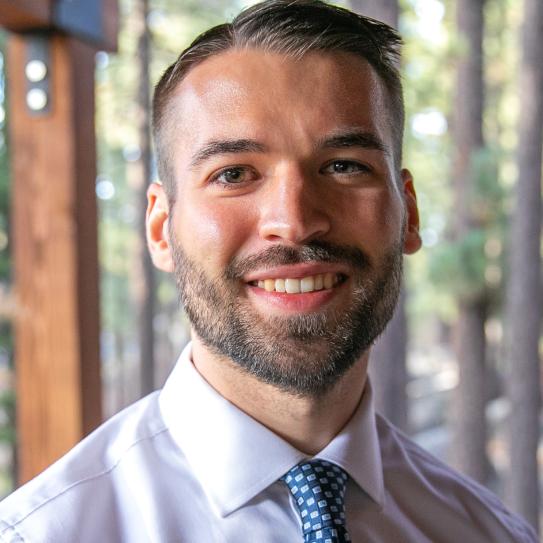
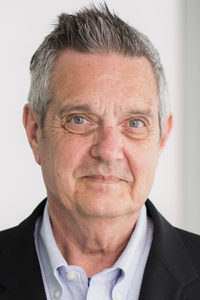
Nicholas Mattei is an Associate Professor of Computer Science at Tulane University and Co-Director of the Tulane Center for Community Engaged AI. He holds a Ph.D. from the University of Kentucky (2012) and researches artificial intelligence, machine learning, and decision-making systems. His work combines theory, data, and experiments to develop algorithms supporting individual and group decision-making. Dr. Mattei's research spans AI ethics, fairness in algorithms, computational social choice, and preference learning. He has published over 100 academic articles and received multiple grants from organizations including Google, IBM, and the National Science Foundation, including a 2024 NSF CAREER Award. He co-authored 'Computing and Technology Ethics: Engaging Through Science Fiction' from MIT Press. Prior to joining Tulane, he held research positions at IBM Research, Data61/CSIRO, and NASA Ames Research Center. His teaching portfolio includes courses on Discrete Mathematics, Data Science, Artificial Intelligence, and Multi-agent Systems.
Dr. J.Z. Bennett serves as an Assistant Professor in the School of Criminal Justice at the University of Cincinnati, specializing in juvenile justice reform and criminological theory. His academic foundation includes B.A., M.A., and Ph.D. degrees in Criminal Justice from Temple University, followed by a postdoctoral fellowship at the University of Pittsburgh's Center for Urban Education. Research focuses on juvenile life without parole policies, developmental pathways in criminal behavior, and educational interventions for at-risk youth. His work bridges academic theory with community action through prison education initiatives and youth leadership development programs. Dr. Bennett co-founded the Urban Youth Leadership Academy and actively participates in The Inside-Out Prison Exchange Program® and Graterford Think Tank. Major funded research includes: Arnold Ventures Grant ($861,692) : National outcomes study on decarceration for juvenile lifers (Co-PI, 2022-2025) Department of Education Grant ($987,871) : Transitioning gang-impacted youth to higher education (Collaborator, 2023-2026) Key recognition includes the Ronald E. McNair Scholar fellowship that launched his research career. His community-university partnerships emphasize practical applications of criminological research to reduce recidivism and support educational access for marginalized populations.
Julia Kurz is a Researcher at TU Dortmund University's Department of Sociology of Science and Technology, Faculty of Social Sciences. She leads the 'Visually Integrated Clinical Collaboration' project within the Collaborative Research Center (SFB) Media of Cooperation. Her work spans healthcare informatics, educational research, and disability studies. Education: M.A. in Sociology from the University of Siegen (2011), with prior studies at Philipps-University Marburg. Professional experience includes research roles at the University of Siegen (2012–2023) and support work with disabled populations (since 2001). Research focuses on information workflows in hospitals, collaborative data practices, and participatory technology design. Recent talks address topics like disempowerment in participation frameworks and challenges in transdisciplinary research. Her publications explore medical visualization tools, mentoring impacts, and role-playing pedagogy. Award recognition details are not explicitly listed, but her grants include SFB funding for the Media of Cooperation project. Advising activity is not documented here. She contributes to seminars on competence, knowledge theory, and educational innovation.
Kylie King is a Senior Lecturer at the School of Psychological Sciences at Monash University and affiliated with the Turner Institute for Brain and Mental Health. She joined Monash University in November 2019 as an Impact Fellow and transitioned to her current Senior Lecturer role in February 2023, where she focuses on fostering research connections with industry, community, and people with lived experience. Her educational background includes a Doctor of Psychology from Deakin University (2001) and a PhD completed in early 2020 focusing on suicide prevention. Prior to joining Monash, she worked as a psychologist specializing in addictions and spent ten years (2009-2019) as a Research Fellow at the Melbourne School of Population and Global Health at the University of Melbourne. Dr. King's research primarily centers on suicide prevention, with particular emphasis on males and communities experiencing disproportionate suicide rates. Her work integrates program evaluation methodologies to develop targeted interventions and suicide prevention education. She leads research teams focused on creating evidence-based approaches to address mental health challenges in vulnerable populations. Her research aligns with UN Sustainable Development Goals related to health and wellbeing. Analysis of her recent publications reveals a strong focus on gender-specific suicide prevention, particularly for men and older males, as well as attention to culturally specific approaches for Indigenous communities. Her work bridges clinical psychology with public health interventions, examining how societal factors, occupational environments, and cultural contexts influence mental health outcomes and suicide risk. Associate Editor, Australian Psychologist Journal (2020-present) Associate Editor, Australian Psychologist Journal (2021-present) Guest Editor, Frontiers in Public Health (2020) Dr. King is actively involved in peer review responsibilities and currently leads significant research projects including "Preventing suicide in boys and men" (2020-2026), "Formative evaluation of suicide prevention gatekeeper training for aged care workers" (2023-2025), and "Zest – A personalised, digital intervention for sleep and wellbeing in Australian shift workers" (2023-2026). She is accepting PhD students for research supervision through Monash University's Supervisor Connect platform. Her research team operates at the intersection of clinical psychology and public health, developing evidence-based interventions for vulnerable populations with strong emphasis on community-centered approaches and collaboration with individuals with lived experience of mental health challenges.
Elham Kazemi is a Professor of Mathematics Education at the University of Washington’s College of Education, holding the Geda and Phil Condit Endowed Chair. She specializes in elementary teacher education, instructional leadership, and equity-focused mathematics pedagogy. Her research emphasizes professional learning communities, student-centered classroom practices, and disrupting inequities in education. Education: PhD in Mathematics Education, UCLA (1999) MA in Educational Psychology, UCLA (1997) BS in Psychology (Elementary Teaching Certificate), Duke University (1992) Research Interests: Kazemi’s work focuses on equitable mathematics instruction, teacher learning, and leadership development. She designs school-wide professional development models (e.g., Math Labs) and studies classroom discourse, student disciplinary identities, and organizational learning. Key projects include the Labs Project (funded by JSMF) and RMLL (NSF-funded leader learning). Publications & Grants: Over 40 peer-reviewed articles, including work in American Educational Research Journal and Journal of Teacher Education . Co-authored influential books like Choral Counting and Counting Collections and Intentional Talk . Recipient of $5.4M+ in grants from NSF, McDonnell Foundation, and others for projects on teacher leadership and equitable instruction. Awards: 2022 AERA Open Article of the Year 2019 Outstanding Faculty Award for Educational Equity 2015 Geda & Phil Condit Professorship Advising & Leadership: Kazemi co-leads initiatives like the Leading Towards Racially Just Mathematics Instruction partnership. She has supervised numerous graduate students and collaborates with schools to implement equity-driven practices. Labs & Teams: Her work includes the Labs Project (designing Learning Labs for mathematics/literacy discussions) and the Mathematics Education Project (MEP), fostering statewide collaboration among educators.
Austin Rovinski is an Assistant Professor in the Department of Electrical and Computer Engineering at New York University’s Tandon School of Engineering. He specializes in chip design, electronic design automation (EDA), and open-source hardware methodologies. His research focuses on VLSI design, domain-specific accelerators, and chiplet-based systems. Prior to NYU, he held a postdoctoral position at Cornell University and earned all his degrees (Ph.D., M.S., and B.S.) from the University of Michigan. Education: Ph.D., Electrical Engineering, University of Michigan - Ann Arbor Master’s, Electrical Engineering, University of Michigan - Ann Arbor Bachelor’s, Electrical Engineering, University of Michigan - Ann Arbor Research Focus: Developing open-source EDA frameworks like OpenROAD Optoelectronic interconnect systems for 2.5D packaging Agile hardware design methodologies Reconfigurable sparse matrix accelerators RISC-V-based manycore processors (e.g., Celerity project) Key Contributions: Austin led the development of the OpenROAD RTL-to-GDS flow and contributed to the Sirius and Celerity projects. His work emphasizes reproducibility, democratizing chip design through open-source tools. Awards: IEEE Micro Top Picks (2015) Michigan EECS Outstanding Research Award (2016) NSF Graduate Research Fellowship Honorable Mention (2017, 2018) Advising & Grants: Actively mentors graduate students in chip design and EDA. His research is supported by NYU’s Tandon School of Engineering and collaborations with industry partners. Labs & Teams: Core contributor to the OpenROAD project, part of NYU’s hardware design and EDA initiatives, and collaborator on the Celerity manycore processor project.
Rachel B. Baker is an Associate Professor in the Policy, Organizations, Leadership, and Systems Division at the University of Pennsylvania's Graduate School of Education. Her research focuses on enhancing access and success in higher education for underserved groups, particularly in community colleges. She leads a National Science Foundation-funded study on cross-enrollment programs and collaborates on projects measuring curricular complexity and online education effectiveness. Key Affiliations: Wheelhouse Center for Community College Leadership, Editorial Boards of Research in Higher Education and Journal of Research on Educational Effectiveness Funding Sources: NSF, Institute of Education Sciences, Spencer Foundation, College Futures Foundation Her work addresses three core themes: policy impacts on student decisions, enrollment equity across race/socio-economic status, and interventions to improve self-regulatory skills via online data. Recent studies include analyzing cross-enrollment effects on transfer success and instructor professional development in online settings. Awards: 2019 NAEd/Spencer Postdoctoral Fellowship, 2016 IES Outstanding Fellow, Jack Kent Cooke Dissertation Fellowship Grants: NSF 5-year cross-enrollment study, IES training programs, Spencer Foundation initiatives Baker’s team develops metrics for curricular complexity and explores how course requirements influence student outcomes. She advocates replacing the 'pipeline' metaphor with 'pathway' to emphasize inclusive educational trajectories.
Dr. Nikki Hayfield is an Associate Director in Psychology at the University of the West of England (UWE Bristol), affiliated with the Health and Social Sciences department. She holds a Psychology PhD and BSc. Her research spans peri/menopause, women's reproductive lives, bisexual/pansexual/ace spectrum identities, qualitative methods, critical psychology, and feminist psychology. She co-authored Essentials of Thematic Analysis (2021) and Bisexual and Pansexual Identities (2020). She serves on editorial boards for Sex Roles , Feminism & Psychology , and Women's Reproductive Health . Her recent publications focus on LGBTQ+ inclusion in motorsport, mixed-sex civil partnerships, and intersectional challenges in reproductive health. She supervises qualitative research projects and emphasizes methodological innovation.
Michael Warner is the Seymour H. Knox Professor in the Department of English at Yale University, where he holds a prominent position in literary and cultural studies. His work bridges scholarship, theory, and public intellectual engagement across disciplines such as early American literature, queer theory, and the sociology of secularism. His research focuses on the interplay between media, reading practices, and the formation of social worlds. Warner explores how publics and counterpublics emerge through print culture and communication, with significant contributions to understanding the evangelical public sphere and the cultural roots of secularism in America. His interdisciplinary interests extend to new media, intellectual property, and political discourse. The recent articles reflect a strong trend in cultural and literary theory, with deep attention to public discourse, identity formation, and interpretive practices. Warner's work consistently engages with philosophical and historical dimensions of literature, often challenging normative frameworks in reading and social belonging. Co-editor, Varieties of Secularism in a Secular Age (Harvard University Press, 2010) Author, The Evangelical Public Sphere in Eighteenth-Century America (forthcoming, University of Pennsylvania Press) Author, Publics and Counterpublics (Zone Books, 2002) Author, The Trouble with Normal (Harvard University Press, 2000) Editor, The Portable Walt Whitman (Penguin, 2003) Warner has advised numerous graduate students and has been involved in major scholarly collaborations, though specific names are not listed. He has received support for his research through academic lectureships, including the Rosenbach Lectures (2009), and editorial projects with leading university presses. His work continues to influence both literary studies and social theory. He is associated with advanced research in secular culture and public discourse, particularly through his current book projects and lecture series. His intellectual leadership positions him at the center of debates on religion, modernity, and democratic public life.
Dr. Lauren Hammond serves as Lecturer in Teacher Education at the Institute for Education, Teaching and Leadership within the Moray House School of Education and Sport at the University of Edinburgh, a position she assumed in August 2022 after eight years at IOE, UCL's Faculty of Education and Society. Her academic career bridges secondary school teaching in London and Singapore with higher education expertise in geography teacher education, curriculum development, and doctoral supervision. Her educational background includes a PhD in Geography Education from University College London (2020), an MA in Geography Education from the Institute of Education (2009), a PGCE in Secondary Geography from the University of Bristol (2006), and a BA (Hons) in Geography from King's College London (2004). This foundation supports her interdisciplinary research at the intersection of children's geographies, geography education, and geographies of education. Dr. Hammond's research centers on children's rights, urban educational spaces (particularly London), and empowering young people through geography. She employs participatory methods including storytelling and mapping with youth, investigating how educational spaces reproduce social injustices and how geographical concepts illuminate educational processes. Her work critically examines geography's construction in schools and universities while exploring teacher education for complex socio-political contexts. Her recent publications reveal strong thematic continuity in children's geographies and geography education, with growing emphasis on race, climate change, and pandemic research ethics. Key trends include participatory methodologies, urban justice frameworks, and critical analyses of teacher development in volatile educational landscapes. Dr. Hammond holds significant professional recognition including: Fellow of the Royal Geographical Society (FRGS) Senior Fellow of the Higher Education Academy (SFHEA) She actively supervises postgraduate students and has secured competitive research funding including UCL's Centre for Teachers and Teaching Research grant (£3,500) for race and educational spaces (2023), an IOE Early Career Impact Fellowship (£1,000) on children's urban rights (2021), and seed funding for PGCE mentoring evaluation (£8,317.50, 2017). Her collaborative approach extends to organizing major conferences and leading cross-institutional networks. As deputy secretary of the RGS's Geography and Education Research Group and membership officer of the Geographies of Children, Youth and Families Research Group, she actively shapes research communities. Her leadership extends to the Geography Education Research Collective and Geographical Association's special interest groups, fostering national and international scholarly collaboration.
Venkatesan Guruswami is a Chancellor's Professor in the Department of EECS and a Senior Scientist at the Simons Institute for the Theory of Computing at UC Berkeley . He also holds a Professor position in the Department of Mathematics . His academic journey began with a B.Tech in Computer Science from the Indian Institute of Technology, Madras (1997) , followed by a Ph.D. in Computer Science from the Massachusetts Institute of Technology (2001) . After a Miller Research Fellowship at UC Berkeley (2001–02), he held faculty roles at the University of Washington and Carnegie Mellon University before returning to UC Berkeley in January 2022. Education : B.Tech, IIT Madras (1997) Ph.D., MIT (2001) Professional Affiliations : Chancellor's Professor, UC Berkeley (EECS) Senior Scientist & Interim Director, Simons Institute Professor, UC Berkeley (Mathematics) Guruswami's research spans multiple domains within Theoretical Computer Science , focusing on Error-Correcting Codes , Approximation Algorithms , Randomness in Computing , Probabilistically Checkable Proofs , and Computational Complexity . His groundbreaking work in List Decoding has enabled codes with minimal redundancy for correcting worst-case errors, while recent advancements include Polar Codes , Deletion-Correcting Codes , and Constraint Satisfaction Problems . He has also contributed to Quantum Coding Theory , Locally Recoverable Codes , and Approximation Hardness in various computational contexts. His publications reflect a deep engagement with interdisciplinary topics. Key trends include: Quantum Information Theory : Quantum LDPC codes, transversal gates, and quantum storage. Algebraic Coding : Reed-Solomon codes, AG codes, and polynomial-based constructions. Computational Complexity : Hardness of approximation, CSPs, and parameterized intractability. Data Transmission : Polar codes, deletion channels, and feedback mechanisms. Algorithmic Techniques : Spectral methods, semirandom models, and Lasserre hierarchy applications. Guruswami has received numerous accolades, including the Simons Investigator Award , Presburger Award , Packard Fellowship , Sloan Research Fellowship , ACM Doctoral Dissertation Award , and the IEEE Information Theory Society Paper Award . He is an ACM Fellow (2017) and IEEE Fellow (2019) , with recent honors like the Guggenheim Fellowship (2023) and AMS Fellow (2023) . As an advisor, he has mentored over 25 PhD and postdoctoral researchers , including Atri Rudra , Prasad Raghavendra , and Peter Manohar , whose work has won awards like the Edmund M. Clarke Doctoral Dissertation Award and CRA Outstanding Undergraduate Researcher Award . His research is supported by grants from the National Science Foundation , Packard Foundation , and Sloan Foundation . He also serves as Editor-in-Chief of the Journal of the ACM and holds leadership roles in IEEE and arXiv moderation. Guruswami is actively involved in Simons Institute programs and co-organized workshops on Coded Computation and Information Theory . His work bridges theoretical advancements with practical applications in Cloud Storage , Quantum Computing , and Group Testing , including pandemic-era contributions like AC-DC: Amplification Curve Diagnostics for SARS-CoV-2 .
Olof Bälter is a Professor in Computer Science at KTH Royal Institute of Technology, affiliated with the Division of Media Technology and Interaction Design within the School of Electrical Engineering and Computer Science. He is the founder of the Technology-Enhanced Learning research group and holds a focus on learning engineering and human-computer interaction. His research interests center on technology-enhanced learning , question-based learning , learning analytics , AI in education , and inclusive pedagogy . A consistent theme in his work is improving efficiency in education and daily life through digital tools. He developed the Pure Question-Based Learning (Pure QBL) methodology, a digital Socratic approach that enhances student engagement and learning outcomes. His work extends to wellness in education through initiatives like walking seminars, and he investigates digital interventions for mental health, such as online Cognitive Behavioral Therapy (CBT) courses. His recent publications highlight trends in AI-generated educational content , learning efficiency , digital pedagogy , and inclusive course design , with applications in computer science education, language instruction, and global development. His research often employs experimental and data-driven methods, including randomized controlled trials and learning analytics. Teacher of the Year at the Surveying program KTH's Pedagogical Prize Higher Education Hero STINT Excellence in Teaching Scholarship (2008 and 2013) Olof Bälter has supervised numerous courses in programming, computer science, media technology, and learning engineering. He has collaborated with institutions such as Stanford University, Williams College, Region Stockholm, Stockholm University, and organizations like Promobilia and Begripsam. His projects aim to scale effective learning methods globally and make education more accessible and efficient. He leads research on the effectiveness of Pure QBL for students with ADHD and is involved in developing digital tools for health literacy and professional development in Ethiopia and Rwanda. His work bridges theory and practice, aiming to transform educational delivery through innovation and evidence-based design.
William B Gartner serves as the Bertarelli Foundation Distinguished Professor of Family Entrepreneurship at Babson College's F.W. Olin Graduate School of Business, where he also directs research at the Bertarelli Institute for Family Entrepreneurship. Having joined Babson's faculty in 2017, Gartner brings over 40 years of experience studying entrepreneurial phenomena, with particular expertise in family entrepreneurship dynamics. He previously held distinguished chairs at the University of Southern California and Clemson University, establishing himself as a leading scholar in the field. Gartner earned his PhD, MBA, and BBA from the University of Washington, forming the foundation for his extensive research career. His academic journey began during entrepreneurship's early days in the late 1970s when he took one of the first entrepreneurship courses as an MBA student at the University of Washington, when only six students initially enrolled in the class. Gartner's research primarily explores how families act entrepreneurially, examining topics including entrepreneurial legacy, intergenerational knowledge transfer, and the transformation of family businesses across generations. His work bridges entrepreneurship theory with practical applications, particularly focusing on how entrepreneurial legacies can drive innovation in family businesses. He is particularly interested in the linguistic innovations entrepreneurs employ and how storytelling shapes entrepreneurial identity and practice. His scholarship has evolved to incorporate humanities perspectives, recognizing that literature, philosophy, and history provide valuable insights into entrepreneurial thinking and behavior. Analysis of Gartner's recent publications reveals a strong emphasis on family entrepreneurship as an ongoing process rather than a static state, with increasing attention to methodological innovation in entrepreneurship research. His work demonstrates growing interest in the role of narrative, visual methods, and qualitative approaches to understand complex entrepreneurial phenomena. The research shows consistent focus on family business succession as transformation rather than simple transfer, with increasing attention to adolescent entrepreneurial development and the influence of parenting styles. 2025 — Top 1% of Scholars in all subjects, Stanford/Elsevier's Top 2% Scientist Rankings 2024 — The FamCap25 – The Top FamilyEnterprise Academics, FAMILY CAPITAL MAGAZINE 2022 — Justin G. Longnecker Fellow, United States Association of Small Business and Entrepreneurship 2016 — Dedication to Entrepreneurship Award, Entrepreneurship Division, Academy of Management 2013 — Foundational Paper Award, Entrepreneurship Division, Academy of Management 2005 — International Award for Entrepreneurship and Small Business Research Gartner actively mentors doctoral students and early-career researchers, frequently collaborating on publications addressing complex family business dynamics. His editorial roles as Special Issue Editor for Entrepreneurship and Regional Development and Academy of Management Perspectives demonstrate his influence in shaping research agendas. He has secured significant research funding supporting studies on entrepreneurial legacy, family business succession, and adolescent entrepreneurial development, though specific grant amounts aren't detailed in the available materials. As Director of Research at the Bertarelli Institute for Family Entrepreneurship, Gartner leads initiatives connecting academic research with practical applications for family businesses. His work emphasizes the transformative potential of entrepreneurship within family contexts, challenging traditional notions of family business succession as mere transfer of ownership. Through workshops and seminars, he helps families explore how entrepreneurial legacies can lead to new innovations while preserving core values across generations.
William Reno is Professor and Chair of the Department of Political Science at Northwestern University's Weinberg College of Arts and Sciences. With a PhD from the University of Wisconsin (1992), he has established himself as a leading scholar in African politics, conflict studies, and international relations. His career spans over three decades of research on state collapse, insurgency, and security assistance in fragile states, with particular expertise in West Africa and the Horn of Africa. His educational background includes a B.A. from Haverford College (1984), M.A. from the University of Chicago (1985), and Ph.D. from the University of Wisconsin (1992). Reno has held significant administrative roles including Director of the Program of African Studies (2012-2018) and currently serves as Department Chair since 2019. He previously served as non-resident Fellow at the Modern War Institute of the US Military Academy and has extensive experience as the department's graduate director. Reno's research focuses on the comparative politics of Africa, politics of violent conflict, political effects of foreign military assistance, and asymmetrical warfare. His work examines how patronage-based regimes operate in weak states, the evolution of insurgency in Africa, and security assistance strategies in fragile contexts. He has conducted extensive field research in Sierra Leone, Liberia, Nigeria, and Congo, with particular attention to how state collapse reshapes political authority and armed group behavior. His scholarship reveals critical insights about why contemporary African insurgencies differ from earlier anti-colonial movements in their organizational capacity and political programs. Reno has supervised numerous doctoral students who have gone on to prominent positions in academia, government, and military institutions. His advisees include scholars examining topics ranging from minority communities in conflict zones to military effectiveness in African states. Many of his students have military backgrounds or policy experience, reflecting Reno's own engagement with practical security challenges. He has secured significant research funding including Fulbright-Hays Fellowships, Boren Fellowships, and support from organizations like the Social Science Research Council. Reno maintains active research collaborations with scholars globally, particularly through his work with the Program of African Studies. His current projects focus on the politics of security force assistance, political economy of jihadism, and armed groups in contexts of state collapse. His scholarly approach combines deep area expertise with theoretical innovation, often challenging conventional wisdom about conflict dynamics in fragile states.
Catherine Polling is an NIHR Clinical Lecturer in General Psychiatry at King’s College London (KCL), affiliated with the Institute of Psychiatry, Psychology & Neuroscience (IoPPN) and the Health Inequalities Research Group . Her work focuses on mental health inequities, self-harm epidemiology, and mixed-methods research, particularly in urban and marginalized communities. Education: MBBS from University College London, MSc in Epidemiology from the London School of Hygiene and Tropical Medicine, PhD from KCL's Department of Psychological Medicine Research Interests: Catherine investigates health disparities in mental health services using advanced statistical methods (multi-level modeling, Bayesian disease mapping) and GIS-based data visualization. Her clinical work with the South London and Maudsley NHS Foundation Trust complements her academic focus on systemic racism and mental health outcomes. Teaching & Engagement: She lectures on urban mental health for KCL’s Urban Informatics MSc and co-leads training on racism in mental health services. She also facilitates reflective practice groups accredited by the Balint Society and contributes to curriculum reform via the Maudsley Cultural Psychiatry Group. Scientific Awards: NIHR Clinical Lecturer Fellowship Wellcome Training Fellowship Research Trends: Her publications emphasize self-harm risk factors, pandemic impacts on healthcare workers, ethnic disparities in mental health services, and the intersection of urban environments with mental health outcomes. She integrates large-scale clinical datasets, qualitative interviews, and spatial analysis to address systemic inequities.