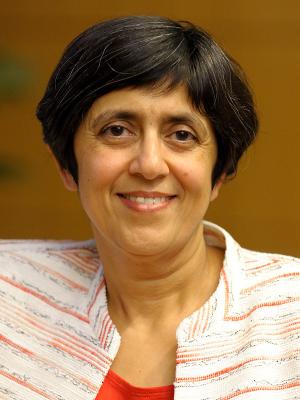
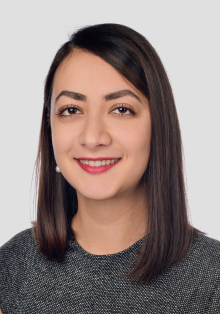
Byron Yu is a Professor in Electrical & Computer Engineering and Biomedical Engineering at Carnegie Mellon University, with affiliations to the Neuroscience Institute and Robotics Institute. He is a core faculty member of the Center for the Neural Basis of Cognition. Research focuses on computational neuroscience , neural dynamics , and brain-machine interfaces . Key contributions include dimensionality reduction techniques and neural population activity analysis. Recent publications explore topics such as neural dynamics during motor imagery, BCI optimization, and attentional processing. His work has appeared in Nature Neuroscience , Neuron , and eLife , often as cover articles. Awardees include the Gerard G. Elia Career Development Professorship and AIMBE Fellowship . His lab has mentored numerous PhD and postdoctoral researchers, many now in academic and industry leadership roles.
Anna Morcom is Professor and Mohindar Brar Sambhi Chair of Indian Music in the Department of Ethnomusicology at UCLA's Herb Alpert School of Music. She previously held a professorship at Royal Holloway, University of London, and earned her Ph.D. from SOAS (School of Oriental and African Studies) in 2002, where she also completed her undergraduate studies in Ethnomusicology and Hindi (1993-1996). Her research spans music and dance in India and Tibet, employing ethnographic and oral historical methods to examine the intersections of musical culture with politics, nationalism, identity, gender, inequality, economic development, and media. Morcom's scholarship is notable for its interdisciplinary approach that bridges traditional and popular musics with contemporary theoretical frameworks. Her work demonstrates significant trends toward examining music within economic frameworks, particularly through her founding of SEM's Special Interest Group on Economic Ethnomusicology. Recent publications increasingly focus on cultural economies, performance labor, and the relationship between artistic practice and economic systems in South Asia. Society of Ethnomusicology's Allan Merriam prize (2014) Marcia Herndon prize of SEM's Gender and Sexualities section (2014) Morcom's research has been supported by multiple grants from the Leverhulme Trust and the British Academy. She has been interviewed by prominent media outlets including BBC Radio 4's Thinking Allowed, The Hindu, Tehelka, and Scroll regarding her influential work on Indian dance cultures. As founder of SEM's Special Interest Group on Economic Ethnomusicology, she has shaped scholarly discourse on the economic dimensions of musical practice. Her current projects include the monograph on Hindustani music and co-editing two significant volumes: Creative Economies of Culture in South Asia: Craftspeople Performers (Routledge) and the Oxford Handbook of Economic Ethnomusicology (OUP).
Brendan Russo serves as an Associate Professor in the Department of Civil Engineering, Construction Management, and Environmental Engineering at Northern Arizona University, where he conducts influential research in transportation safety and traffic engineering. His work focuses on improving safety outcomes for vulnerable road users through rigorous analysis of crash data, traffic operations, and emerging mobility technologies, with significant contributions to Arizona-specific transportation challenges and national safety practices. Russo's research program centers on bicycle and pedestrian safety, crash severity analysis, and the integration of autonomous systems into transportation networks. He employs advanced methodologies including spatial analysis, statistical modeling (e.g., random parameters bivariate probit models), and observational studies to investigate traffic stress levels, intersection safety, and the impacts of infrastructure treatments. His work consistently bridges theoretical transportation engineering with practical applications for safer community design. Analysis of Russo's recent publications reveals a strong emphasis on emerging transportation technologies and their safety implications, particularly regarding autonomous delivery robots and vehicle-pedestrian interactions, while maintaining core focus on traditional safety concerns like bicycle crash frequency and severity. His research demonstrates increasing integration of spatiotemporal analysis and scenario-based testing methodologies, with a clear geographic concentration on Arizona metropolitan regions that provides valuable localized insights applicable to broader transportation contexts. No scientific awards were mentioned in the provided text. No specific information about advising responsibilities or grant funding was provided in the text, though his extensive publication record and dataset contributions indicate active research leadership. Russo collaborates within a robust research network centered on transportation safety, frequently partnering with colleagues including Gehrke, Smaglik, and Holliday on projects involving field data collection, bicycle infrastructure evaluation, and safety performance metrics. His work leverages both observational studies and simulation approaches to develop data-driven guidance for transportation practitioners, with particular attention to Arizona's unique transportation environment and metropolitan planning challenges.
Emma Trentman is an Associate Professor of Arabic at the University of New Mexico (UNM) and Director of the Language Learning Center. Her research focuses on Applied Linguistics, particularly on language learning during study abroad programs, virtual exchange, and the impact of language ideologies on multilingual approaches. Research Interests: Multilingualism, Language Ideologies, Study Abroad Programs, Intercultural Communication, Arabic Language Education, and Curriculum Development. Key Publications: Co-editor of Language Learning in Study Abroad: The Multilingual Turn (2021), with works featured in The Modern Language Journal , Foreign Language Annals , and Critical Multilingualism Studies . Teaching: Offers Arabic language courses and the Languages Capstone class, integrating critical perspectives into language pedagogy. Editorial Work: Co-editor for Critical Multilingualism Studies Journal , advocating for plurilingual practices in education. Publications: Explores topics such as translanguaging, sociolinguistic competence, and decolonizing language learning frameworks across diverse contexts (Egypt, Tanzania, China). Advocacy: Engages in critical discussions on equity, identity, and sociocultural dimensions in language education.
David Stillwell serves as Professor of Computational Social Science at Cambridge Judge Business School and Academic Director of The Psychometrics Centre, University of Cambridge. His research leverages big data to understand human psychology and behavior, with significant contributions in personality prediction from digital footprints and personalized advertising applications. His educational background includes: BSc in Psychology from the University of Nottingham (2007) MSc in Research Methods from the University of Nottingham (2008) PhD in Decision Making from the University of Nottingham (2012) Dr. Stillwell's research centers on computational social science and psychometrics, pioneering the myPersonality Facebook application that collected data from over 6 million users. His work demonstrates computers can predict personality as accurately as spouses, reveals psychological targeting's advertising effectiveness, and establishes links between personality-matched spending and life satisfaction. He also explores linguistic honesty markers through profanity analysis and personality-based dating patterns. His recent publications (2019-2025) reveal a strong trajectory toward AI evaluation using psychometric frameworks, particularly in medical and general-purpose AI assessment. Key themes include fairness metrics in language models, crisis emotional responses through social media, and computational personality recognition - demonstrating consistent innovation at the psychology-technology intersection. He has received significant recognition: Top 10 most influential papers of 2013 by Altmetric Nieman Journalism Lab highlight of 2013 Named in 'top 30 thinkers under 30' by Pacific Standard Magazine Dr. Stillwell maintains active industry engagement through consultancy with Barclays, Hilton, and Ubisoft on projects spanning computer-adaptive testing systems to interactive experiences like Predictive World for Watch Dogs 2. His policy impact is substantial, with citations by the European Data Protection Supervisor, World Bank, and multiple national governments, leading to speaking engagements at the European Parliament and Bank of England. As Academic Director of The Psychometrics Centre, he leads a global hub for advancing psychological assessment through innovative methods including Concerto open-source software, collaborating with organizations ranging from the European Commission to major corporations on psychometric applications in people analytics and digital behavior.
Bernard (Ben) Arps is Professor of Indonesian and Javanese Language and Culture at Leiden University's Institute for Area Studies within the Faculty of Humanities. His research focuses on the interface of humanities and humanistic social sciences, particularly examining how language, performance, texts, and media contribute to 'worldmaking' - the processes through which people and institutions shape realities for themselves and others. Geographically centered on Southeast Asia with a core focus on Indonesia and the Malay world, Arps specializes in Java and its diasporas. His scholarly interests include religious encounters (particularly between Islam and local vernacular traditions), philological theory as applied to performance and new media, narrativity in song and audio media, and the theoretical foundations of area studies. Arps has conducted extensive fieldwork in Indonesia since 1979, totaling over four years, primarily in Central and Eastern Java regions including Surakarta, Yogyakarta, Banyuwangi, and Cilacap. His current book projects explore the Quest narrative pattern across religious traditions (focusing on Dewa Ruci), the sociopolitical formation of languages through media and performance (using Osing in Banyuwangi as a case study), and the Asian Muslim epic of Amir Hamza. Arps teaches primarily in Leiden's BA programme in South and Southeast Asian Studies, BA in International Studies, and MA programme in Asian Studies. Former chair of the Department of Languages and Cultures of Southeast Asia and Oceania (1995, 1999/2000, 2003-2006, 2008) Previously taught at School of Oriental and African Studies, University of London (1988-1993) Held visiting positions at NIAS (2001/02), ANU (2005), University of Michigan (2006/07), NUS/ARI (2011/12), UNS (2017), and IIAS (2018/19) Arps has supervised doctoral, Master's, and Bachelor's dissertations across Indonesian, Malay, Singapore, Cambodian, and Thai studies, with particular expertise in Javanese, Sundanese, Betawi, Balinese, Sasak, Mentawai, and Minangkabau cultures and languages. His work spans religion, performance, media, literature, sociolinguistics, lexicography, and education.
Sarita V Adve is the Richard T. Cheng Professor of Computer Science at the University of Illinois at Urbana-Champaign, where she conducts research spanning hardware, programming languages, operating systems, and applications with a focus on domain-specific systems. Her work bridges theoretical foundations and practical implementations, particularly in extended reality and heterogeneous computing. Her educational background includes a Ph.D. and M.S. in Computer Science from the University of Wisconsin-Madison (1993, 1989) and a B.Tech in Electrical Engineering from the Indian Institute of Technology Bombay (1987). Prior to joining Illinois, she served on the faculty at Rice University from 1993 to 1999. Adve's research centers on generalizable and scalable specialization for domain-specific systems, with current emphasis on extended reality (XR) systems including virtual, augmented, and mixed reality. She chairs the ILLIXR consortium to democratize XR research and developed the first fully open-source XR system (ILLIXR). Her foundational contributions include memory consistency models for C++ and Java programming languages, the Spandex coherence framework for heterogeneous systems, and software-driven approaches for hardware reliability. Her work spans hardware reliability (SWAT and RAMP projects), power management (GRACE system), and instruction-level parallelism. Recent publications reveal a strong focus on energy-efficient XR systems, hardware-software co-design for AI workloads, and resilience analysis. Her team explores rendering offload, visual-inertial odometry optimization, and compositional error injection frameworks, often targeting tradeoffs between energy, latency, and accuracy in mobile and edge environments. Fellow of the American Academy of Arts and Sciences Fellow of the ACM and IEEE ACM/IEEE-CS Ken Kennedy Award Anita Borg Institute Woman of Vision in Innovation Award ACM SIGARCH Maurice Wilkes Award Alfred P. Sloan Research Fellowship UIUC University Scholar University of Illinois Campus Award for Excellence in Graduate Student Mentoring Adve actively mentors students and has received multiple teaching awards. She co-founded the CARES movement to address discrimination in CS research events and chairs CS@Illinois CARES. Her service includes leadership roles in ACM SIGARCH (2015-2019), DARPA/ISAT study group, ACM Council, and Computing Research Association. She has secured significant funding including DARPA initiatives and Google Faculty Research Awards. She leads the ILLIXR consortium and has established collaborative research programs such as the $8.3M DARPA Joint University Microelectronics Program. Her lab focuses on open-source XR development, heterogeneous system architectures, and reliability-aware designs, with strong industry and government partnerships.
David Welsh is a Professor in the Department of Management and Entrepreneurship at Arizona State University's W. P. Carey School of Business, specializing in workplace ethics, unethical behavior, and organizational dynamics. His research has been published in top-tier journals and featured in mainstream media. Ph.D. in Management (University of Arizona, 2014) J.D. (University of Utah, 2010) B.S. in Management (Southern Utah University, 2007) His research focuses on behavioral ethics , ethical decision-making , and self-regulation , examining how performance goals, leadership styles, and social influences affect workplace morality. Recent work explores prosocial behaviors like voice and organizational citizenship alongside unethical transgressions. Welsh's articles reveal trends linking ethical leadership to dual outcomes of organizational effectiveness and unintended deviance, goal-setting to depletion and unethicality, and social dynamics to peer-driven moral behavior. His studies often employ field experiments and experience sampling methodology. Ascendant Scholar award (Western Academy of Management, 2019) W. P. Carey Dean's Mid-Career Research award (2022) Outstanding Practical Implications for Management Paper award (2021) Professional MBA Faculty Excellence award (2022) At ASU, Welsh mentors doctoral students, serves on PhD committees, and manages the Management Department Behavioral Lab. He is an Associate Editor at Personnel Psychology and teaches graduate courses on research, ethics, and dissertation advising.
Maria Gorlatova is an Associate Professor of Electrical and Computer Engineering at Duke University's Pratt School of Engineering, where she leads the Intelligent Interactive Internet of Things (I3T) Lab. She also holds a secondary affiliation as Faculty Network Member of the Duke Institute for Brain Sciences and has previously served as Assistant Professor of Computer Science. Dr. Gorlatova earned her Ph.D. in Electrical Engineering from Columbia University (2013), following M.Sc. and B.Sc. (Summa Cum Laude) degrees in Electrical Engineering from University of Ottawa, Canada. Prior to joining Duke, she was an Associate Research Scholar in the Electrical Engineering Department and Associate Director of the Princeton EDGE Lab at Princeton University (2016-2018). She also has industry experience with Telcordia Technologies, IBM, and D. E. Shaw Research. Her research focuses on advancing intelligent behavior in Internet of Things systems and applications, particularly in mobile pervasive systems and the Internet of Things. Her work crosses traditional discipline boundaries, requiring thinking across multiple layers of system and protocol stacks. Current research themes include breaking barriers for technologies that enable fundamentally new deployments and experiences, such as energy harvesting, artificial intelligence adapted to IoT constraints, and augmented reality. Her lab specifically develops edge- and IoT-enabled intelligent augmented reality platforms, with applications in healthcare and human-robot collaboration. Analyzing her recent publications reveals a strong focus on augmented reality systems, particularly for medical applications. Her work spans computer vision for AR, spatial tracking, SLAM systems, vision-language models for AR security, and VR/AR applications in neurosurgery and rehabilitation. A significant portion of her recent work addresses challenges in mixed reality for medical procedures, demonstrating the translational impact of her research. Google Anita Borg USA Fellowship Canadian Graduate Scholar CGS NSERC Fellowships Columbia University Presidential Fellowship Columbia University Jury Award for Outstanding Achievement in Communications ACM SenSys Best Student Demonstration Award IEEE Communications Society Young Author Best Paper Award IEEE Communications Society Award for Advances in Communications Best Research Artifact Award, IEEE IPSN (2020) N2 Women Rising Star, Networking Networking Women (N2Women) (2019) Dr. Gorlatova's research has been supported by various funding sources that enable her work on edge computing for augmented reality, IoT systems, and medical applications. She actively mentors graduate students who frequently appear as first authors on her publications, indicating strong student involvement in her research. Her I3T Lab at Duke focuses on creating human-facing pervasive mobile computing platforms that enable transformative applications, with recent emphasis on creating advanced augmented reality platforms that integrate edge computing and IoT technologies. The I3T Lab is developing next-generation AR systems with capabilities in edge AI, collaborative spatial awareness, AR user cognitive context sensing, and AR QoS/QoE evaluation. Current projects include applications in healthcare (particularly neurosurgery guidance and rehabilitation) and human-robot collaboration scenarios, demonstrating the lab's focus on real-world impact of pervasive computing technologies.
Miriam van Mersbergen, Ph.D., is an Associate Professor in the School of Communication Sciences and Disorders at the University of Memphis. She directs the Voice, Emotion, and Cognition Laboratory (VECL) and serves as an affiliate of the Institute for Intelligent Systems. Her clinical expertise focuses on performing voice users. University of Memphis Institute for Intelligent Systems Her research examines how emotional and cognitive factors influence vocalization and communication. Key projects include establishing vocal measures of affect modulation, studying individual differences in responses to vocal mistakes, and developing clinical tools like measures of voice effort for use in voice clinics. She employs psychometric, behavioral, and psychophysiological methods to analyze the interplay between inner experiences and vocal expression. Dr. van Mersbergen’s academic journey began with studies in music and communication arts at Calvin College, followed by speech-language pathology and vocology at the University of Iowa and doctoral work in speech-language hearing sciences and psychology at the University of Minnesota.
Christopher Potts is Professor and Chair of Linguistics at Stanford University, with a courtesy appointment as Professor of Computer Science. He serves as Director Emeritus of the Stanford Center for the Study of Language and Information (CSLI) and leads the Pragmatic Enrichment & Contextual Interface Lab. His work bridges theoretical linguistics and computational approaches to language understanding. Education: B.A. in Linguistics from New York University (1999) Ph.D. in Linguistics from University of California, Santa Cruz (2003) Potts' research focuses on how computational methods can illuminate linguistic phenomena, particularly in the areas of semantics, pragmatics, and sentiment analysis. His work explores how emotion is expressed in language and how linguistic production and interpretation are influenced by context. He has made significant contributions to understanding conventional implicatures, sentiment analysis frameworks, and the application of neural networks to linguistic problems. His recent work has increasingly focused on the interpretability of large language models and the development of frameworks like DSPy for building reliable AI systems. An analysis of Potts' recent publications reveals a strong trend toward the intersection of linguistic theory and practical AI applications. His work spans theoretical linguistics (e.g., compositionality, preposing constructions), neural network interpretability, and practical NLP systems (e.g., ColBERT, DSPy). The research demonstrates consistent focus on making language models more transparent, controllable, and linguistically informed, with particular attention to how context shapes meaning. Scientific Awards: Best Paper Award at 2024 ACL for 'Mission: Impossible Language Models' Outstanding Paper Award at 2024 ACL for 'CausalGym' ACL Test of Time Award 2023 Dean's Award for Distinguished Teaching (2015-2016) Best New Data Set or Resource Award at 2015 EMNLP Potts has secured numerous research grants as PI or Co-PI from major organizations including Google, Amazon, NSF, Office of Naval Research, and Stanford's HAI institute. His current projects focus on evaluation of retrieval-augmented generation systems, LLM-mediated communication in organizations, interpretability techniques for language models, and frameworks like DSPy for building next-generation AI systems. He has mentored numerous researchers who have gone on to make significant contributions in NLP and computational linguistics. As Director of CSLI (2013-2020) and current Chair of Linguistics at Stanford, Potts has played a key leadership role in shaping interdisciplinary research at the intersection of language, computation, and cognition. His Pragmatic Enrichment & Contextual Interface Lab continues to be a hub for innovative research combining formal linguistic theory with cutting-edge computational methods.
Ian Goldberg is a Professor at the Cheriton School of Computer Science , University of Waterloo, Canada. He holds the Canada Research Chair in Privacy Enhancing Technologies and leads the Cryptography, Security, and Privacy (CrySP) group . He is affiliated with the Cybersecurity and Privacy Institute and the Institute for Quantum Computing . Research Focus: Security, privacy, and privacy-enhancing technologies (PETs) for the Internet, including Off-the-Record (OTR) Messaging , censorship resistance , private information retrieval , and zero-knowledge proofs . Recent Publications: His work addresses metadata protection , deniable authentication , and secure multi-party computation , with applications to anonymous communication and censorship resistance. Scientific Awards: Canada Research Chair in Privacy Enhancing Technologies Students: He advises current and former PhD/Master’s students in projects like Lox , PRSONA , Walkie-Talkie , and SkypeMorph . Notable advisees include Sajin Sasy (Privacy-Preserving Communications), Justin Tracey (PETs Development), and Tao Wang (Website Fingerprinting Defenses). Labs & Teams: Goldberg is a core member of the CrySP group and contributes to the Tor Project and Off-the-Record Messaging open-source initiatives. His research bridges theoretical and applied cryptography, with deployments in real-world systems like Tor and PIR protocols.
Christoph Koch is a Full Professor in the School of Computer and Communication Sciences at EPFL (Ecole Polytechnique Federale de Lausanne) , Switzerland. He has held academic positions at Cornell University (2007-2010, 2006), Saarland University (2005-2007), and TU Vienna (2001-2005). His research focuses on database systems, logic, programming languages, and data management.
Elaine Chun is an Associate Professor in the Department of English Language and Literature at the McCausland College of Arts and Sciences, University of South Carolina. She holds a Ph.D. in Linguistics from the University of Texas at Austin (2007) and an A.B. in Linguistics from Stanford University (1995). Education: Ph.D. in Linguistics, University of Texas at Austin (2007); A.B. in Linguistics, Stanford University (1995). Research Interests Dr. Chun specializes in sociolinguistics and linguistic anthropology, with a focus on language, race, gender, and sexuality. Her work examines how language practices traverse racial and national boundaries, particularly in contexts like Asian American YouTube commentary, K-pop fandom, and U.S. public spaces. She investigates ideologies of race and gender, collaborative interpretation in social media, and anti-racist strategies. Publication Trends Her recent publications emphasize language in digital media, racial ideologies, and sociocultural identity. Topics include racism in public discourse, transnational social media analysis, racial parody, and the intersection of language with race and gender. Her work spans journals like American Speech , Language in Society , and Discourse & Society .
Bahar Asgari is an Assistant Professor in the Department of Computer Science at the University of Maryland, College Park. She holds appointments in CS, UMIACS, and ECE, and directs the Computer Architecture and Systems Lab (CASL). Her research focuses on domain-specific architecture design, near memory processing, and reconfigurable computing. Before joining UMD, she worked at Google, contributing to system optimization and memory utilization strategies. Education: Ph.D., Georgia Institute of Technology, 2021. Research Interests: Developing energy-efficient architectures for sparse problems, scientific computing acceleration, FPGA optimizations, and reconfigurable hardware systems. Her work addresses challenges in memory efficiency, parallelization, and hardware-software co-design across domains like machine learning and IoT. Key Awards: 2024 UMD Excellence in Teaching Award 2023 DOE Early Career Award Advising & Grants: Supervises 9 graduate students and leads projects sponsored by NSF, DOE, and industry partnerships. Her lab explores systolic arrays, near-data processing, and fault-tolerant computing. Labs/Teams: Directs CASL, which builds next-generation computing systems through hardware innovation and algorithm-architecture co-design.