Otto Maduro is a Venezuelan-born Professor of World Christianity & Latin American Christianity at Drew University (Madison, New Jersey) since 1992. He chairs the Division of Church & Society in the Theological School and co-leads the Hispanic Institute of Theology and Hispanic D.Min. Program. Married to Dr. Nancy Noguera, they share a passion for social justice, music, and intercultural dialogue. His research focuses on liberation theology, social justice, and the intersection of religion with marginalized communities. Education: PhD (1977), MA (1975), and MA (1973) in Philosophy/Sociology of Religion from the Université Catholique de Louvain (Belgium), all summa cum laude. Licentiate in Philosophy from Universidad Central de Venezuela (1968). Research Interests: Liberation theology, social justice, ecological ethics, epistemological critiques, religious resistance, and LGBTQ+ rights. His work emphasizes global South perspectives, particularly Latin America’s socio-religious dynamics. Grants & Awards: Henry Luce III Fellowship (2006), Ford Foundation grants (2000–2002), Will Herberg Award (1997), and international recognition for his book Marxismo y Religión (1977). Professional Contributions: Associate editor of Concilium , Journal of Hispanic/Latino Theology , and others. Served on editorial boards of leading journals and as council member of PARAL, SSSR, and ACHTUS. Current Projects: Researching Pentecostal congregations among Latina/o immigrants in Newark and directing the Hispanic Summer Program in Religion & Theology.
Casey Reas is a Professor of Design Media Arts at the University of California, Los Angeles (UCLA), within the UCLA School of the Arts and Architecture. Previously, he served as an Associate Professor at Interaction Design Institute Ivrea (2001–2003). His academic background includes a BSc in Design from the University of Cincinnati (1996) and an MSc in Media Arts and Sciences from MIT (2001). Reas co-created the open-source programming language Processing with Ben Fry, revolutionizing visual arts and education globally. He is renowned for blending art and technology, creating generative works exhibited in institutions like the Centre Georges Pompidou and the Whitney Museum of American Art. His research focuses on computational aesthetics, algorithmic art, and digital media's intersection with music and design. Education: Bachelor of Science in Design, University of Cincinnati, 1996 Master of Science in Media Arts and Sciences, MIT, 2001 Research Interests: Reas explores the synergy between code and creativity, emphasizing generative systems, real-time visualization, and interactive installations. His work often addresses themes of randomness, pattern formation, and human-computer interaction. Notable projects include Processing language development, music video collaborations with The National, and immersive installations like Sketch Machine and Warm Up . Recent Collaborations: Music videos for The National’s Sleep Well Beast (2017), blending algorithmic visuals with Grammy-winning music. Interactive installations such as Impure Functions (2017) and Warm Up (2017), co-created with UCLA’s Conditional Studio. Public commissions like Sketch Machine (2018), an open-source drawing tool for GIPHY. Awards: Contributor to The National’s Grammy Award for Best Alternative Music Album ( Sleep Well Beast , 2018). Labs/Teams: Reas leads the Reas Studio and collaborates with UCLA’s Arts Conditional Studio, focusing on experimental software, generative art, and interdisciplinary projects.
Anna Choromanska is an Associate Professor in the Department of Electrical and Computer Engineering at NYU Tandon School of Engineering, with affiliations to NYU Center for Data Science (CDS), NYU Center for Urban Science and Progress (CUSP), NYU Center for Advanced Technology in Communications (CATT), and the C2SMART Center. Her research focuses on deep learning optimization, generalization, and applications in autonomous driving and large-scale data analysis. She holds an Alfred P. Sloan Fellowship and NSF CAREER Award, and her work impacts industries like NVIDIA and Facebook. She directs the Learning Systems Laboratory (LSL), emphasizing interdisciplinary experimental/theoretical work. Research Interests: Machine Learning fundamentals, DL optimization, continual learning, autonomous vehicle systems, large data analysis. Her lab explores DNN learning dynamics, training architecture design, and scalable algorithms. Professional Impact: Over 50 invited talks, workshop organization for top ML conferences, and contributions to open-source projects like Vowpal Wabbit. Her algorithms are deployed in production systems at Facebook and Baidu. Awards: NSF CAREER Award Alfred P. Sloan Fellowship IBM Global University Program Academic Award (2x) Columbia University Presidential Fellowship Advising & Labs: Leads LSL, supervising interdisciplinary projects in optimization and autonomy. Actively involved in NYU's Modern AI seminar series and industry partnerships through CATT. Personal Interests: Accomplished pianist, salsa dancer, and fashion design enthusiast with notable performances and certifications in dance and music.
James Wilson is the Executive Officer of the Theatre and Performance program at The Graduate Center, CUNY, and holds a Professorship in both Theatre and Africana Studies. He also teaches English at LaGuardia Community College, CUNY, and is an affiliate faculty member in the Africana Studies Certificate Program. His research focuses on African American theatre, gender/sexuality studies, musical theatre history, and applied theatre pedagogy. Wilson earned his Ph.D. in Theatre from The Graduate Center, CUNY. His notable works include Failure, Fascism, and Teachers in American Theatre (2023) and Bulldaggers, Pansies, and Chocolate Babies (2010), which explore teacher representations and Harlem Renaissance performances respectively. His recent essays analyze queer performance in musical theatre, historical teacher portrayals in drama, and the intersections of race/gender in early 20th-century performance. He co-edits the Journal of American Drama and Theatre and is a Drama Desk voting member. Current projects include studying representations of teachers in performance and examining queer pedagogical frameworks in theatre history.
Richard Ashley is an Associate Professor at Northwestern University's Bienen School of Music, specializing in Music Theory and Cognition. He also contributes to the university's cognitive science program. Education: Doctor of Musical Arts (DMA) from University of Illinois at Urbana-Champaign His research focuses on music cognition , particularly in expressive performance , musical communication , and long-term memory for music . He has secured significant funding from Fulbright grants, the National Endowment for the Humanities, the Netherlands Science Foundation, and the U.S. Department of Education. Scientific Awards: Bienen School of Music Exemplar in Teaching Award As a founding member of the Society for Music Theory and former President of the Society for Music Perception and Cognition, Ashley has shaped academic discourse in his field. His work bridges musical theory with cognitive science.
Professor Peter F. Driessen is a faculty member in the Department of Electrical and Computer Engineering at the University of Victoria, with a cross-appointment in the School of Music. He holds a BSc and PhD from the University of Victoria and is a Professional Engineer (PEng). His research focuses on communication systems, signal processing, control, and interdisciplinary projects in computer music and wireless technologies. Key areas include audio/video signal processing, radio propagation, sound recording, and multimedia systems. He leads the University of Victoria Propagation Laboratory, which explores radio wave propagation and Amateur radio integration with engineering education. His work spans theoretical research and applied projects like ECOSat satellite systems, software-defined radio (SDR), and innovative musical instruments such as the Radio Drum. He supervises undergraduate and graduate projects in these domains through ELEC 499 courses. Notable contributions include the APEGBC Editorial Board Award for Best Paper (2002) and patents in wireless networking and signal processing. His teaching includes courses in signal analysis and electromagnetics, and he collaborates on interdisciplinary programs like the Music/Computer Science degree. Education: BSc in Electrical Engineering, University of Victoria PhD in Electrical Engineering, University of Victoria Research Interests: Audio and video signal processing for music and media Software-defined radio and Amateur radio technologies Satellite communication and ground station development Gesture-based interfaces and musical instrument design Error mitigation in streaming audio/video Optical and microwave-photonic systems Labs & Collaborations: Propagation Laboratory (radio wave research) UVic Experimental Radio Group (Amateur radio club) UVic Satellite Design Team (ECOSat projects) UVic Centre for Aerospace Research Grants & Awards: APEGBC Editorial Board Award (2002) Multiple US patents in wireless systems and signal processing
David Bawden is a Professor in the Department of Library and Information Science (CityLIS) at City, University of London. With a publication record spanning over two decades, he has established himself as a leading scholar in information science, particularly known for his work on the philosophical foundations of information, knowledge organization, and information behavior. His research frequently intersects with Luciano Floridi's Philosophy of Information, which he has applied to library and information science theory and practice. Bawden's research interests focus on the theoretical underpinnings of information science, including information behavior, information literacy, knowledge organization, and the philosophical dimensions of information. His work often explores the conceptual frameworks that shape how we understand information in both physical and digital environments. He has made significant contributions to understanding information privacy through a philosophical lens and has examined temporal aspects of information in contemporary society. His recent publications demonstrate a continued focus on theoretical developments in information science, with particular attention to the implications of Floridi's work for library and information practice. Bawden's scholarship shows a consistent trajectory from examining historical aspects of information to contemporary challenges in the digital age, maintaining a strong theoretical orientation throughout. As a frequent collaborator with Lyn Robinson (also at City, University of London), Bawden has co-authored numerous papers exploring transitions between concepts of information across different domains, information overload, and the philosophical foundations of information science. His work has appeared in leading journals including the Journal of Documentation, Journal of the Association for Information Science and Technology, and Information Research. Bawden has been actively involved in the CityLIS program, contributing to innovative approaches to information science education including the development of curricula addressing data librarianship and the 'onlife' nature of contemporary information experience. His scholarship reflects a deep commitment to advancing the theoretical foundations of the field while maintaining relevance to practical information challenges.
Dr. Simon A. Morrison is a Senior Lecturer in the Division of Communication, Screen & Performance within the Faculty of Arts, Humanities and Social Sciences at the University of Chester. He serves as Programme Leader for the Music Journalism degree, which he helped design, build and deliver from its first cohort in 2014. With 25 years of experience as a writer, broadcaster, and academic, Morrison brings extensive industry knowledge to his teaching and research, having worked as a music journalist reporting from locations worldwide including Beijing, Brazil, Moscow, and Marrakech. Dr. Morrison holds a PhD from the University of Leeds (completed 2018), an MA from the University of Manchester (1995-1997), and a BA Hons from the University of Manchester (1989-1992). Prior to his position at Chester, he worked as an Associate Lecturer at Manchester Metropolitan University (2012-2014) and as a Visiting Lecturer at Leeds University (2011-2013). His academic journey follows a substantial career in media where he presented TV for Rapture TV, hosted radio shows in Ibiza, produced and presented for Kiss Radio, and appeared on BBC Breakfast and BBC 5 Live. Dr. Morrison's research centers on the intersection of words and music , with particular focus on Popular Music , Musico-Literary Intermediality , and Electronic Dance Music Culture . His work explores how music subcultures, particularly rave and dance music scenes, are represented in literature and journalism. He examines the connections between different countercultural movements, notably drawing parallels between the Beat Generation writers and contemporary 'Chemical Generation' authors who write about club culture. His research also investigates the relationship between music journalism and subcultural movements across different historical periods. His recent publications reveal a clear trajectory connecting historical dance music developments across continents and eras. Morrison's work traces the evolution of electronic dance music from its American roots in Chicago and Detroit through its transatlantic journey to Europe and back again, examining how cultural exchange shaped musical innovation. His analyses of Pink Floyd demonstrate how rock bands interact with media landscapes, while his investigations of music journalism document the changing nature of music criticism in digital eras. The recurring theme across his scholarship is the examination of how subcultural experiences are translated into written form, whether through journalism, fiction, or academic analysis. Dr. Morrison actively supervises undergraduate dissertation projects and Negotiated Study production projects across all three years of undergraduate study. He has successfully supervised an MRes project to completion and examined PhDs (including one internal and two external, one being an Australian PhD by Artefact & Exegesis). He has served as an External Examiner for Music Journalism programs at Southampton Solent University (2016-2019) and BIMM London, Birmingham and Manchester (2016-2020). His teaching spans modules including Introduction to Journalism, Live Journalism, Dancing About Architecture: Popular Music Media, Histories and Technologies, The Cultural Politics of Music Journalism, The Politics of Social Media, Magazine Publishing and Music PR and Promotional Writing.
Kirsten Yri is an Associate Professor of Musicology at Wilfrid Laurier University, serving as Chair of Music Promotions and Appointments, and Coordinator for Music History, Theory, and Critical Analysis. She also oversees the Master of Music: Collaboration, Curation, and Creative Performance program. Her research focuses on medievalism in contemporary music and popular culture, the early music revival of the 20th century, and representations of gender in opera and music within colonial/postcolonial contexts. Yri’s research interests include analyzing how medieval themes are reinterpreted in modern contexts (e.g., film, heavy metal, and stage productions), examining the ideological underpinnings of early music revival movements, and exploring the intersection of music with gender, nationalism, and global cultural politics. Her work often critiques Western-centric narratives and highlights marginalized voices in music history. Her publications span articles in journals and edited volumes, with a focus on composers like Carl Orff and Hildegard of Bingen, as well as groups like Corvus Corax and Anonymous 4. She has contributed to interdisciplinary projects such as The Oxford Handbook of Music and Medievalism (2020). While no scientific awards are cited, her work is widely recognized in musicology and cultural studies. Yri’s teaching and research emphasize collaborative, interdisciplinary approaches to music history, blending academic rigor with creative curation. She speaks English, Swedish, and German, enhancing her ability to engage with international scholarly resources and communities.
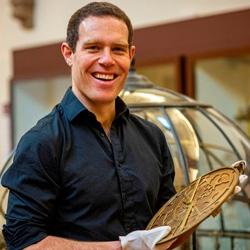
Seb Falk is a College Fellow and Research Fellow at Girton College, University of Cambridge, and a Senior Admissions Tutor. He holds academic roles including Praelector and Director of Studies for the Cambridge Foundation Year. His research focuses on medieval mathematical sciences, particularly astronomy, navigation, and the history of scientific instruments and texts. Falk earned a BA in History and Spanish from Oxford University, followed by an MPhil and PhD in History and Philosophy of Science from Cambridge. His research explores the interplay between religion, literature, and science in the Middle Ages, challenging the 'Dark Ages' narrative. Key projects include studies on late medieval astronomical tables and instruments, and a global comparative analysis of natural sciences around the year 1000. Falk has published widely, including the acclaimed book The Light Ages (2020), which was shortlisted for the Hughes Prize and awarded the Osterbrock Prize in 2025. His articles span topics like medieval astronomical practices, manuscript studies, and the cultural history of science. Falk is also a sought-after media contributor, appearing on BBC programs and podcasts, and has engaged in public outreach through lectures and museum collaborations.
Bart Wallet is Professor of Jewish Studies specializing in Early Modern and Modern Jewish History at the University of Amsterdam's Faculty of Humanities, where he is affiliated with the Department of Semitic Languages and Cultures. His academic work focuses on the intricate relationship between Jewish communities and Dutch society throughout history, with particular emphasis on the connections between the Dutch Royal House and Jewish communities. Wallet's research interests span Dutch Jewish history from the early modern period to the contemporary era, with special attention to Yiddish studies, religious history, cultural integration, and the development of Jewish identity in the Netherlands. His scholarly output reveals a consistent focus on how Jewish communities navigated their position as a religious minority within Dutch society, particularly examining the complex dynamics between Jewish citizens and the Dutch state and monarchy. His work often explores the tension between religious tradition and modernization, and how Jewish communities maintained their identity while integrating into broader Dutch society. Analysis of his recent publications shows a strong thematic concentration on Orange-Jewish relations throughout Dutch history, Jewish military service, religious education, and the material culture of Jewish communities. His scholarship demonstrates a methodological approach that combines cultural history with religious studies, often revealing how seemingly mundane aspects of daily life reflect broader societal patterns of integration and identity formation. The geographic focus remains predominantly on the Netherlands, though with comparative perspectives on Jewish communities in other European contexts. Professor Wallet has been active in public scholarship through media appearances, radio programs, and contributions to encyclopedias. His work has appeared in both academic journals and public-facing media outlets, demonstrating his commitment to making Jewish history accessible to broader audiences. He has contributed to numerous radio programs on Jewish history for Dutch Jewish radio stations and has written for newspapers including the Reformatorisch Dagblad. His academic contributions include extensive work on Dutch-Jewish relations, particularly focusing on the relationship between Jewish communities and the Dutch Royal House throughout history. He has also produced significant scholarship on Jewish integration in Dutch society, religious education, and the development of Jewish identity in the Netherlands from the early modern period to the present day. His work often examines how Jewish communities maintained religious traditions while adapting to changing social and political contexts.
Nancy Mock is an Associate Professor in the Department of Global Health Systems and Development at Tulane University's School of Public Health & Tropical Medicine. She holds affiliated faculty status at the Stone Center for Latin American Studies. Her academic journey includes a B.S. in Biology from Yale University (1976), an M.P.H. in International Health from Tulane (1979), and a Dr.P.H. in International Health from Tulane (1985). Dr. Mock's research focuses on global health systems, evaluation methodologies, complex emergencies, and health systems in Latin America and Africa. Notable areas include Haiti's public health challenges and Rwanda's educational health programs. She has directed key institutions like the Center for International Resource Development and contributed to the Famine Early Warning System (FEWS). Her work is supported by major grants, including the Robert Wood Johnson Foundation Grant (2007), USAID's Regional Public Health Leadership Initiative (2006-2007), and Rwanda-focused projects (2000-2004). She has consulted for organizations such as the World Food Program, UNICEF, and the Pan American Health Organization. Fluent in French and Spanish, her overseas experience spans Honduras and extensive fieldwork in Africa and Asia.
N. Rich Nguyen is an Assistant Professor in the Department of Computer Science at the University of Virginia (UVA), where he joined in August 2018. He's part of the School of Engineering and Applied Science and is on a teaching track , focusing on making machine learning accessible and engaging for all students. Research and Innovation: Rich Nguyen's research interests include biomedical image analysis , machine learning , and computer science education . He aims to reinvent instructional activities to make them adaptive and engaging by incorporating art and music elements to help everyone learn coding. Notable research contributions include: Floodwatch : A system for flood monitoring using crowdsourced images TuneScope : A digital music creation tool combining SoundScope and Snaps! technology CAD Library : Open-source design tools for educators AI for early sepsis detection : Highlighted in UVA Today Teaching Accomplishments: Before UVA, Rich taught computer science courses at UNC Charlotte for four years to a total of 1,458 students. At UVA, he teaches several courses including: CS 4774: Machine Learning (multiple semesters) CS 2501: Machine Learning for All (launched in Fall 2021) SYS 6016 / SDS 6050: Deep Learning CS 2150: Data and Program Representation (multiple semesters) CS 6316: Machine Learning (Graduate Level) CS 2910: CS Education Practicum (for Teaching Assistants) He previously taught at UNC Charlotte: ITCS 1600: Computing Professionals ITCS 2600: Computing Professionals for Transfer Students ITCS 4156: Introduction to Machine Learning ITCS 2215: Design and Analysis of Algorithms Academic Achievements: Rich Nguyen has received several notable awards and grants: Google Faculty Award for Machine Learning Education with TensorFlow (2019) Best Paper Award at IEEE BigDataSE (2022) Best Poster Award at SITE Conference (2022) CCI Faculty Innovation Award (2018) NSF grants for Smart and Connected Communities (2022) and Computational Thinking (2021) 3 Cavaliers Grant on Coding and Music (2021) Student Mentorship: Rich has mentored numerous students and teaching assistants who have achieved recognition. Notable students include: Joy Qiu - Published in Clinical Infectious Diseases Louisa Edwards and Zach Boner - Invited to Ken Ono Podcast Mike Ferguson - Winner of CS Louis T. Rader Undergraduate Teaching Award He has also served as faculty advisor for HooHacks (UVA's hackathon) and co-founded CharlotteHack at UNC Charlotte. Labs and Collaborations: Rich Nguyen leads the ML4VA (Machine Learning for Virginia) initiative, engaging students in project-based learning to apply machine learning to real-world problems affecting Virginia communities. He collaborates with institutions for symposiums on smart cities, particularly with ASEAN universities, and has partnered with Premier Healthcare for hackathons and with Glen Bull on educational technology projects.
Nichole Denise Pinkard is the Alice Hamilton Professor of Learning Sciences and Faculty Director of the Office of Community Education Partnerships at Northwestern University's School of Education and Social Policy. She founded the Digital Youth Network (DYN) and developed L3, a social learning platform connecting youth's learning across multiple environments. Education: PhD, Learning Sciences, Northwestern University, 1998 MS, Computer Science, Northwestern University BS, Computer Science, Stanford University Research Focus: Designs socio-technical systems to support ecological models of learning, emphasizing community-level learning ecosystems and pedagogical-based social networks. Her work bridges technology and urban education contexts to reimagine learning documentation and opportunities. Awards: 2010 Common Sense Media Award 2004 Jan Hawkins Award 2000 NSF Early Career Fellowship Projects & Initiatives: Leads Chicago City of Learning and Digital Youth Divas programs, advancing digital equity and youth empowerment through technology. Collaborates with city agencies to create existence proofs for innovative urban learning models.
Joshua B. Guild is an Associate Professor in the Department of African American Studies at Princeton University. He is also an Associated Faculty member in the Program in Urban Studies and has been involved with the Center for Digital Humanities. His scholarly work bridges historical research with public engagement and digital innovation. His education includes a PhD in History and African American Studies from Yale University and an undergraduate degree from Wesleyan University, where he was a Mellon Mays Undergraduate Fellow. Professor Guild's research centers on 20th- and 21st-century African American social and cultural history, urban history, and the modern African diaspora. His interests include migration, black internationalism, black popular music, and the black radical tradition. He is deeply engaged in the digital humanities and public scholarship, organizing seminars and contributing to podcasts and public exhibitions. The recent publications and projects reflect a strong focus on urban Black communities, transnational migration, and cultural politics. Themes include the Great Migration, postwar New York and London, New Orleans after Katrina, and the Black 1980s. His work combines historical analysis with cultural critique and social justice advocacy. Scientific Awards and Fellowships: Mellon Mays Undergraduate Fellowship Andrew W. Mellon Foundation Fellowship Ford Foundation Fellowship Woodrow Wilson National Fellowship Foundation Award Charles Warren Center Fellowship (Harvard University) W.E.B. Du Bois Institute Fellow (Harvard University) Professor Guild has advised graduate students through seminars and collaborative projects, though no individual students are named. He has led initiatives supported by institutional grants, particularly in digital humanities and public engagement. His leadership in the 'Black Studies in the Digital Age' seminar and editorial work on the 'Black 1980s' special issue demonstrates his commitment to advancing the field through interdisciplinary collaboration. He is affiliated with the Program in Urban Studies and the Center for Digital Humanities at Princeton, where he contributes to shaping curricula and research directions in African American Studies and digital scholarship.