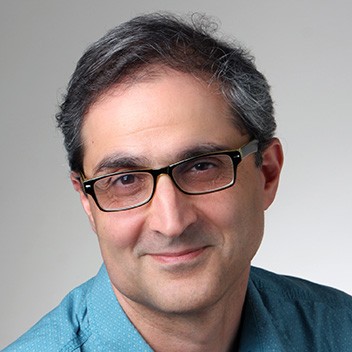
Dr. Ali Arya is an Associate Professor at the School of Information Technology , Carleton University, Canada. His work bridges Human-Computer Interaction , Educational Technologies , and Virtual/Augmented Reality systems. Funded by NSERC, SSHRC, and OCE, he has designed graduate programs in Digital Media and organized the Global Game Jam since 2009. Education: B.Eng. Electrical Engineering, Tehran Polytechnic Ph.D. Computer Engineering, University of British Columbia Research Interests: Immersive VR/AR for education and health Affective and social computing Personalized learning systems Wearable interaction technologies Game design and development 3D virtual environments Research Trends: Recent publications focus on inclusive VR design, educational applications of immersive environments, anxiety-reduction technologies, and culturally responsive systems. His work combines machine learning, multimodal interaction, and pedagogical innovation across STEM and social contexts. Scientific Awards: OCUFA Teaching Award (2023) Carleton Provost's Fellowship (2020) Faculty Teaching Excellence Award (2019) Graduate Mentorship Award (2019) Professional Service: Associate Dean (2018-2022), Program Chair FDG (2021), IEEE/ACM conference committees. He maintains the Interactive Media Group (iMG) research lab and contributes to open-access educational resources including his "Anyone Can Code" book series.
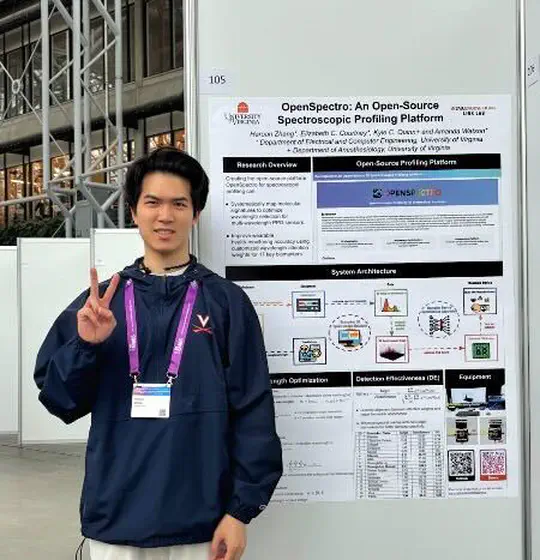
Amanda Watson is an Assistant Professor in Electrical and Computer Engineering at the University of Virginia, with joint appointments in Computer Science. She leads the Watson Research Lab within the UVA Link Lab, a multidisciplinary center for Cyber-Physical Systems (CPS) and Internet of Medical Things (IoMT) research. Her work bridges wearable technology with healthcare and athletic performance applications, focusing on noninvasive monitoring, physiological signal analysis, and safety-critical medical devices. She is also the cofounder and CEO of Luminosity Wearables, commercializing a noninvasive continuous glucose monitor. Education: PhD in Computer Science (2020) - College of William & Mary MSc in Computer Science (2016) - College of William & Mary Bachelors in Computer Science and Mathematics (2014) - Drury University Her research spans multiple domains including: Wearable spectroscopy for nutrition and skin health Machine learning for drug overdose and fall risk detection Biomechanical monitoring in sports medicine Wearable support for visual and neurological impairments IoMT device integration and analytics Recent publications (2024-2025) show strong emphasis on calibration-free physiological monitoring systems, with technical contributions in spectral analysis , multi-wavelength sensing , and rapid prototyping for healthcare wearables. Applications range from maternal health to gerontological social isolation detection. Lab and Team: The Watson Research Lab at UVA develops wearable solutions for clinical and athletic contexts, with ongoing collaborations in the PRECISE Center at University of Pennsylvania and LENS lab at William & Mary alumni network. She works with multidisciplinary teams including engineers, clinicians, and data scientists.
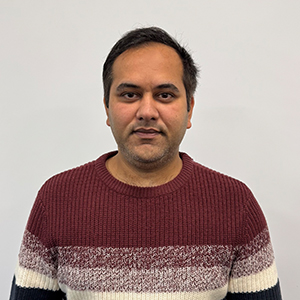
Farhad Javanmardi is a Researcher at Aalto University within the Department of Information and Communications Engineering. His work focuses on applying advanced computational methods to speech and biomedical signal analysis. Research Interests: Speech processing, voice disorders, machine learning, deep learning, biomedical signal processing, computational linguistics, and health informatics. His recent research trends emphasize the use of transformer-based models and wav2vec2 for robust detection of heart failure and voice pathologies in telephony environments. He investigates database-independent approaches, severity classification, and data augmentation techniques to improve model generalizability. Publications appear in journals like Speech Communication and Computer Speech and Language , as well as conferences including ICASSP and INTERSPEECH .
Juan Wachs is the James H. and Barbara H. Greene Professor at the Edwardson School of Industrial Engineering, Purdue University. He holds a courtesy appointment in Biomedical Engineering and is an Adjunct Professor of Surgery at the IU School of Medicine. His research focuses on the intersection of robotics, human-AI interaction, and healthcare systems, with a particular emphasis on surgical robotics, assistive technologies, and telemedicine. Education: PhD in Industrial Engineering (Intelligent Systems), Ben-Gurion University of the Negev MSc in Industrial Engineering (Information Systems), Ben-Gurion University of the Negev BEdTech in Electrical Education, ORT Academic College in Jerusalem Research interests include surgical telementoring via augmented reality, gesture-based interfaces for sterile environments, and semi-autonomous robotic systems for healthcare. His ISAT Lab develops solutions like the STAR telementoring system and robotic assistants like Gesturenurse and FIST-D for explosive ordnance disposal. Recent work emphasizes AI-driven medical decision support (Trauma THOMPSON), burn wound characterization, and robotic ultrasound automation. Key contributions include over 100 publications in robotics, medical AI, and human factors. Scientific Awards: James H. and Barbara H. Greene Professorship Purdue University Faculty Scholar Advising & Labs: Guides over 10 PhD/Master’s students in robotics and healthcare tech ISAT Lab fosters interdisciplinary projects in surgical robotics, human-robot interaction, and accessibility
Mehmet Eren Ahsen is an Assistant Professor at the University of Illinois at Urbana-Champaign, holding dual appointments in Business Administration and Biomedical and Translational Sciences . He is also the Deloitte Scholar in Accountancy and an affiliate at the Carl R. Woese Institute for Genomic Biology. His research bridges artificial intelligence, healthcare analytics, and biomedical informatics, focusing on applications in medical decision-making, disease diagnosis, and drug development. Key research interests include: AI-driven healthcare workflows, particularly in mammography screening and radiology Machine learning for biomarker discovery and genomic analysis Economics of AI adoption in clinical settings Unsupervised ensemble learning for biomedical problems His work has been recognized by the CHITA Young Researcher Award (2024) . Notable collaborations involve interdisciplinary teams addressing challenges in cancer genomics, supply chain resilience, and pandemic response. Recent studies highlight: Economic impact of AI-human task sharing in mammography Optimizing screening mammography recall strategies Analysis of social media's role in pandemic information dissemination Development of ensemble models for disease prediction Dr. Ahsen's research also explores: Extracellular vesicle RNA signatures for early cancer detection Correlated drug action models for combination therapies Algorithmic fairness in healthcare AI systems His lab integrates computational methods with clinical and genomic data to advance precision medicine and healthcare efficiency.
Ben Collier is an Assistant Teaching Professor of Business Analytics at the Tepper School of Business , Carnegie Mellon University. He holds a PhD in Information Systems and Organizational Behavior from Carnegie Mellon and has extensive experience in data science leadership roles in industry. PhD, Information Systems and Organizational Behavior (2012), Carnegie Mellon University MS, Information Systems and Organizational Behavior (2009), Carnegie Mellon University MBA, Information Systems (2007), University of Wisconsin-Madison BBA, Management Computer Systems and Mathematics (2004), University of Wisconsin-Whitewater His research focuses on data mining for business , data visualization , and large-scale experimental design , with applications in healthcare analytics, online community dynamics, and gender equity in technology. His recent work includes monetization data science for Duolingo's $6.5 billion IPO and developing UPMC's CognitiveRx analytics engine. Ben's publications span topics including gender gaps in Wikipedia , leadership in open collaboration communities , and conflict resolution in crowdsourced platforms . He has served on CMU committees for curriculum review and summer summit planning, and actively advises MSBA capstone projects.
Joseph W Hogan is the Carole and Lawrence Sirovich Professor of Public Health and Professor of Biostatistics at Brown University, where he also chairs the Biostatistics Department. His research focuses on statistical methods for missing data, causal inference, and sensitivity analysis , with critical applications in HIV/AIDS in sub-Saharan Africa and global health challenges. He co-directs the Biostatistics Program for AMPATH and the Biostatistics Core for the Providence-Boston Center for AIDS Research, supported by NIH and NSF grants . His work integrates Development of statistical frameworks for observational studies Optimizing HIV treatment monitoring under resource constraints Modeling untestable assumptions in clinical trials and spans collaborations with institutions in the US, Canada, and Kenya. He teaches advanced biostatistics courses and supervises PhD/masters students, while leading international training programs in biostatistics at Moi University, Kenya. Recent publications highlight methodological innovations in viral sequence clustering , seroprevalence studies , and health equity , particularly in low-resource settings. His interdisciplinary grants address HIV-comorbidity care , cardiovascular risk , and alcohol-HIV interactions , emphasizing real-world data applications.
Dr. Ram Bajpai is a Lecturer in Epidemiology/Applied Statistics at Keele University's School of Medicine. He joined in 2019 as part of the Research Institute for Primary Care and Health Sciences, combining active research and teaching roles. Previously, he worked at the Lee Kong Chian School of Medicine (Nanyang Technological University, Singapore) and the Army College of Medical Sciences (India). Education: BSc in Statistics/Mathematics (University of Lucknow), MSc Health Statistics (Banaras Hindu University), PhD in Medical Statistics (Guru Gobind Singh Indraprastha University). Research focuses on cross-domain applications of statistical/epidemiological methods, including survival analysis, Bayesian methods, risk prediction modelling, and evidence synthesis. Teaching experience includes biostatistics modules for medical students at multiple institutions. Current research interests span prognostic studies, meta-analysis, complex data analysis, and design of epidemiological studies. Key contributions include systematic reviews on gout prophylaxis safety, dementia prognostic factors, and long-term outcomes of pediatric COVID-19. Active in collaborative projects on aging populations, musculoskeletal health, and public health interventions.
Seth Kaplan is a Professor in the Department of Psychology at George Mason University. His research focuses on employee well-being, team effectiveness, virtual work, and occupational health through projects like NSF-funded emotion regulation interventions and Army Research Institute collaborations on affective forecasting. He directs the KA-Lab, studying team resilience, metaperceptions, and statistical methodologies. Recent publications analyze job boredom, cognitive reappraisal interventions, and personality measurement innovations. His book Crisis-Ready Teams (2024) synthesizes data from high-risk environments. Courses taught include Occupational Health, Organizational Change, Psychometrics, and Multivariate Statistics. Grants: National Science Foundation (Co-PI): Just-in-Time Adaptive Interventions for Emotion Regulation Army Research Institute (PI): Affective Forecasting Errors Recent Presentations: Personality and generative AI use at work (SIOP 2025) Work situation identification via NLP (SIOP 2025) Helicopter helping in teams (SIOP 2025)
Dr. John Robert Bautista is Assistant Professor at University of Missouri's School of Nursing, employing socio-technical approaches to examine technology impacts on health professionals and consumers. Research spans blockchain applications, AI ethics, and health misinformation. Education includes: PhD in Health Informatics and Health Communication, Nanyang Technological University Postdoctoral Fellowship, UT Austin iSchool MPH, University of the Philippines - Manila BSN, Trinity University of Asia Current research develops ethical AI frameworks for clinical decision support and blockchain-based identity management systems. Publications appear in Computers in Human Behavior, International Journal of Medical Informatics, and JMIR journals. Projects examine clinical adoption of emerging technologies, focusing on implementation challenges and ethical considerations for AI systems in healthcare settings.
Dr Matthew Shardlow is a Reader in the Department of Computing and Mathematics at Manchester Metropolitan University . His career spans teaching and research, with a focus on Natural Language Processing (NLP) and its applications in Text Mining across disciplines like Neuroscience , Chemistry , Finance , and Journalism . He leads the Natural Language Processing Lab , which explores the use of Large Language Models (LLMs) in text-based applications. Key research areas include: Text Simplification : Developing methods to make complex texts accessible. Emoji Analysis : Understanding emoji usage in language and machine interpretation. Text Mining : Applying NLP to diverse fields like healthcare and education. Matthew’s recent publications highlight advancements in LLMs , lexical simplification , biomedical text processing , and AI ethics . He actively mentors BSc , Master’s , and PhD students aligned with his interests and maintains collaborations through the OpenMinTeD project and National Centre for Text Mining . Contact: m.shardlow@mmu.ac.uk .
Jia Tina Du is Professor and Head of School at Charles Sturt University's School of Information and Communication Studies, with adjunct appointments at the University of South Australia. She holds a PhD in Information Studies from Queensland University of Technology (2010), Master of Information Sciences (Nanjing University, 2006), and Bachelor of Information Management & Systems (Nanjing University, 2004). Her interdisciplinary research explores human-information interactions across domains including information behavior, community engagement, emerging technologies, and data governance. Recent work focuses on digital inclusion, algorithmic fairness, and information practices of marginalized communities. Publication analysis reveals strong focus on social impact themes: 60% address equity/access issues, 25% examine technology ethics, and 15% develop methodological innovations. Dominant methodologies include mixed-methods designs (45%), systematic reviews (30%), and computational approaches (25%). Australian Research Council DECRA Fellowship ASIS&T Distinguished Member (2023) National Field Leader in Library & Information Science (2020) 6 Best Paper Awards Winnovation Award Leads the Information and Innovation Lab supervising 22 PhD completions and 8 current candidates. Research has attracted AUD$1.9M+ in competitive funding. Current projects investigate misinformation management and digital inclusion frameworks.
Shafaq Khan is an Assistant Professor in the School of Computer Science at the University of Windsor. She holds a PhD in Computer Science from the University of Salford (2017). Her research spans machine learning, deep learning, data analytics, and database systems with applications in healthcare informatics, agricultural technology, educational systems, and blockchain. Recent work focuses on AI-driven healthcare transformation, privacy-preserving data methods, federated learning for disease prediction, and computer vision applications in agriculture. Additional interests include educational technology for addressing disparities, blockchain implementations in government services, and open-source search engine development. Her work demonstrates consistent integration of cutting-edge computing techniques with practical domain applications.
Paul Cohen is a Professor of Computer Science at the University of Pittsburgh's School of Computing and Information (SCI), where he also directs the Modeling and Managing Complicated Systems Institute (MOMACS). Previously, he served as the founding Dean of SCI from 2017 to 2020. Before joining Pitt, he was a Program Manager at DARPA (2013–2017), leading initiatives like Big Mechanism and Communicating with Computers. Earlier roles include founding director of the University of Arizona’s School of Information: Science, Technology and Arts (SISTA), and professor at the University of Southern California’s Information Sciences Institute and the University of Massachusetts. Education: PhD in Computer Science and Psychology (Stanford University), MS in Psychology (UCLA), BS in Psychology (UC San Diego). Research Interests: Focuses on artificial intelligence, machine learning, natural language processing, and modeling complex systems like cell signaling pathways and socio-environmental interactions. His work emphasizes explainable AI, human-computer communication, and interdisciplinary problem-solving. Key Contributions: Authored Empirical Methods for Artificial Intelligence and over 200 peer-reviewed articles. His research spans robotics, education technology (e.g., the AnimalWatch tutoring system), and collaborative analysis tools like COLAB. He has won a Telly Award for his video on systemic challenges and a Best Paper award for spatial language learning frameworks. Awards & Recognition: Elected Fellow of the AAAI, recipient of the Telly Award, and winner of the Best Paper Award at the IEEE Conference on Development and Learning. Leadership & Outreach: Advocates for polymathy in education to address global challenges. His work includes developing curricula for complex systems thinking and promoting diversity in STEM through initiatives like AnimalWatch.
Dr. Michele Kennerly is an Associate Professor at Pennsylvania State University, holding joint appointments in the Department of Communication Arts and Sciences and the Department of Classics and Ancient Mediterranean Studies. She is affiliated with the College of the Liberal Arts. In addition to her teaching and research, she has held significant leadership roles, including President of the American Society for the History of Rhetoric (2019–2021) and Secretary General of the International Society for the History of Rhetoric (2020–2025). She is also a member of the Leadership Board for the Colloquium for Ancient Rhetoric and the Advisory Board of Brill's book series International Studies in the History of Rhetoric . Alongside Damien Smith Pfister and Casey Boyle, she co-founded and co-edits the University of Alabama Press series Rhetoric + Digitality . Her work bridges classical rhetoric with contemporary digital and media studies. Education: Michele Kennerly received her B.A. from Austin College in 2004, followed by an M.A. and Ph.D. from the University of Pittsburgh in 2006 and 2010, respectively. Her academic journey reflects a deep engagement with classical and rhetorical studies, culminating in her current interdisciplinary research. Research Interests: Dr. Kennerly’s research focuses on rhetorical theory and its historical reception, particularly in the ancient Mediterranean world and their modern resistive interpretations. She explores how classical texts and concepts influence contemporary discourse, including their roles in automation discussions, queer film adaptations, and medieval rhetorical practices. Her current projects include analyzing invocations of ancient Athens in automation discourse and examining the rhetorical strategies in Jane Campion’s film adaptation of The Power of the Dog and 13th-century Italian notary Brunetto Latini’s works. She emphasizes interdisciplinary approaches, integrating rhetoric with poetics, informatics, and media studies. Her scholarly contributions span classical rhetoric, digital humanities, and media studies. Recent work highlights the intersection of ancient rhetorical theories with modern technologies and cultural phenomena, such as automation, digital networks, and film. She critically examines how historical concepts are reinterpreted in contemporary contexts, reflecting her commitment to linking past and present rhetorical practices. Outstanding Teaching Award for Tenure-Track Faculty (2021) At Penn State, she directed the graduation-required communication course for six years and the undergraduate program in Communication Arts and Sciences (CAS) for three years. She mentors students in collaborative and independent research on the history of rhetoric. Her grants and leadership roles underscore her pedagogical and scholarly impact. Labs/Teams: She contributes to projects like Ancient Rhetoric + Digital Networks and collaborates on the Rhetoric + Digitality book series. She actively engages with academic societies and editorial boards to advance interdisciplinary rhetoric studies.