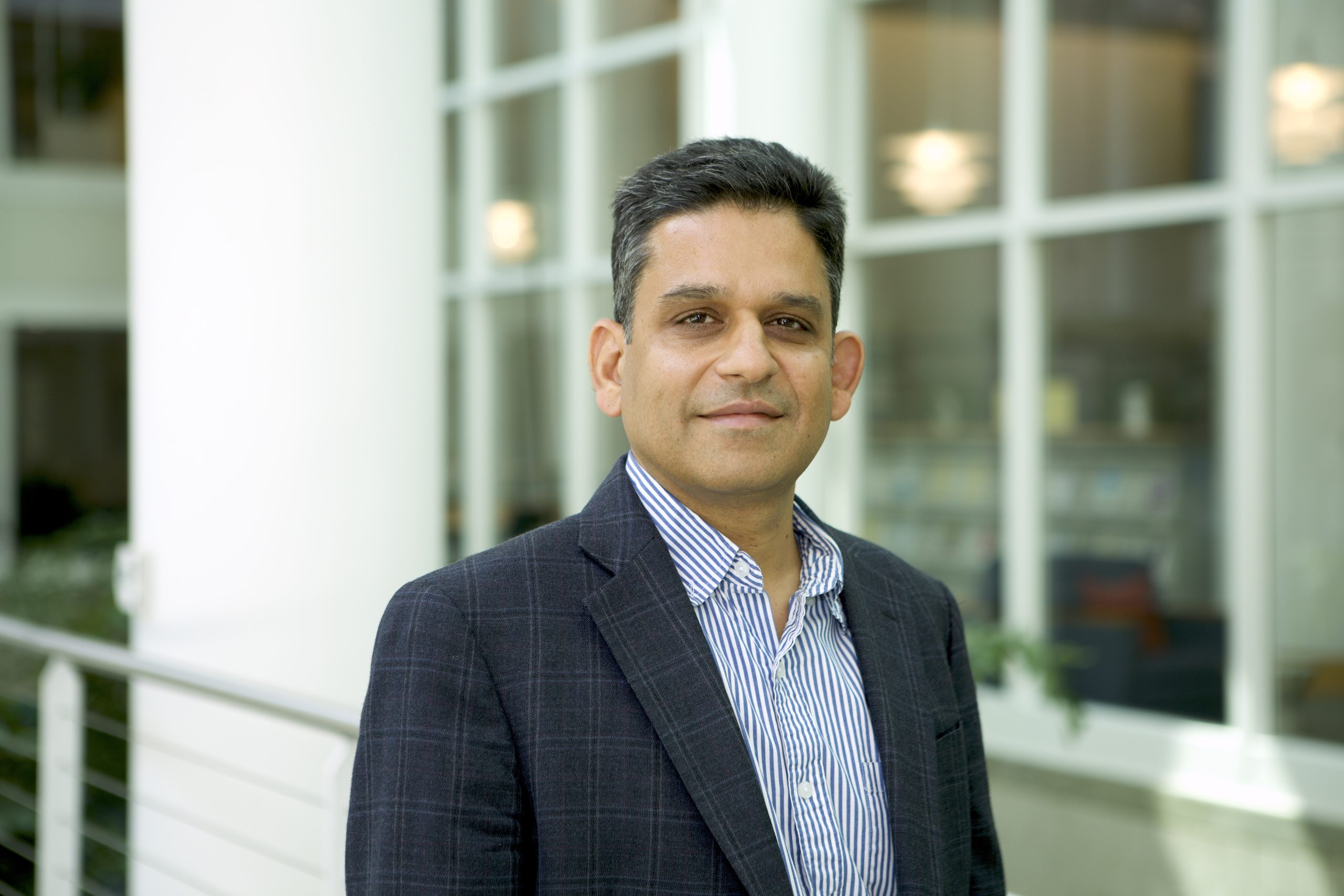
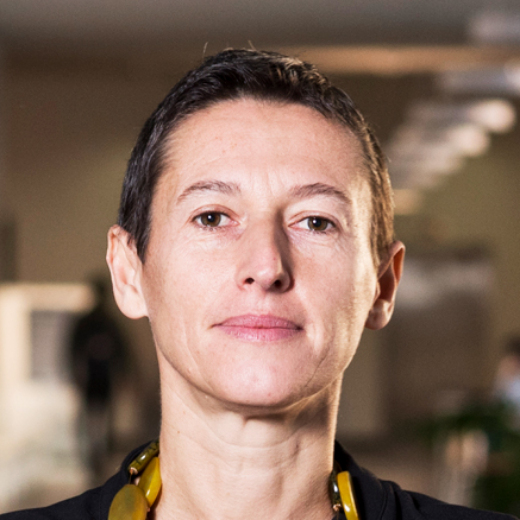
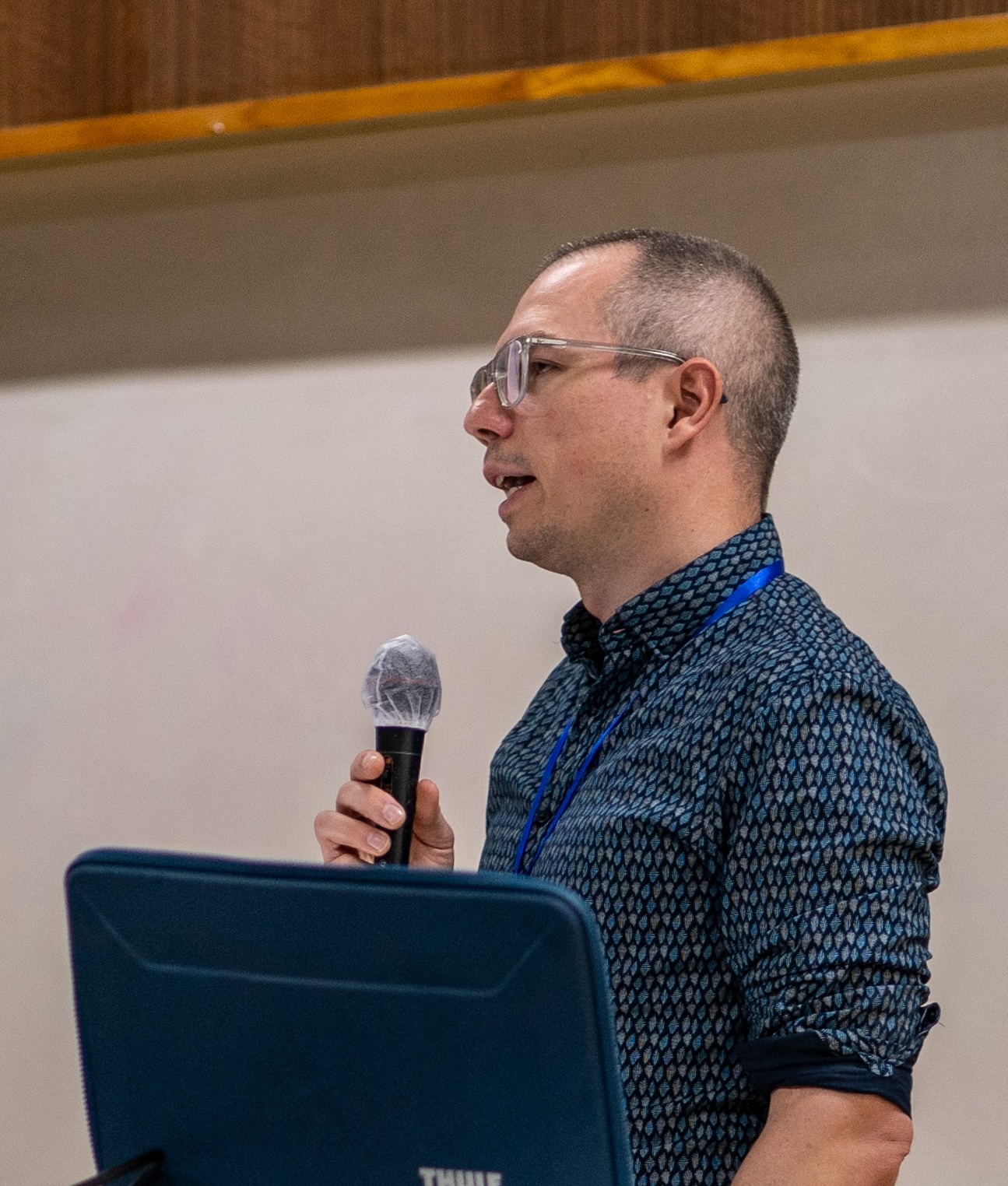
Professor Jes Sammut is a faculty member at the University of New South Wales (UNSW) in the School of Biological, Earth & Environmental Sciences . He serves as Deputy Dean for External Engagement and leads the UNSW Aquaculture Research Group , while also holding the position of Deputy Director (International) at the Centre for Marine Science & Innovation. Additionally, he is an Honorary Research Fellow at ANSTO , where he uses nuclear tools to study seafood provenance. His research spans biological, physical, and social sciences, focusing on aquaculture solutions across Australia, Vietnam, Papua New Guinea, Indonesia, India, Thailand, and the Philippines.
Professor David Nichols is a faculty member in the Melbourne School of Design at The University of Melbourne, holding the position of Professor in Urban Planning. His research focuses on urban planning history, theory, and socio-cultural planning with particular attention to 20th century Australian contexts. He has authored/co-authored significant works including Urban Australia and Post-Punk: Exploring Dogs in Space and The Alert Grey Twinkling Eyes of C. J. DeGaris . His research interests span urban and cultural heritage, architectural history, and the socio-cultural dimensions of urban development. Notable projects include the 'PastPort' mobile app for citizen heritage engagement and studies on community activism in public space conservation. Nichols teaches courses on urban planning history and has contributed to debates on postwar planning education and regional development strategies. His academic output reflects interdisciplinary engagement with topics ranging from suburban morphology to audiovisual technology in education. Current work includes exploring the legacy of Walter Burley Griffin’s urban designs and reinterpreting Australian country town dynamics. He maintains active collaborations in cultural heritage preservation and community-driven urban initiatives.
Charu Gupta Kumar is a Research Professor in the Department of Bioengineering at the University of Illinois Urbana-Champaign, affiliated with the Neuroscience program. Her research focuses on systems and computational biology, integrating computational genomics, bioinformatics, and systems biology approaches to study microbiome/pathogen dynamics, neurological diseases, and evolutionary processes. She leads the Systems and Computational Biology Group, emphasizing interdisciplinary methodologies to address complex biological questions. Her academic roles include a zero-time appointment in the Department of Neuroscience (2013–present) and service as an admission reviewer for the Carle Illinois College of Medicine (2020–2022). She advises a diverse cohort of undergraduate and graduate students engaged in bioengineering and computational biology projects. Her work bridges environmental microbiology with human health, exploring astrocyte roles in neurological disorders like glioblastoma and autism, and investigating evolutionary mechanisms of metabolic networks across species. Publications highlight contributions to bovine genomics, microbial community analysis in subsurface environments, and computational tools for genomic data management. Her research trends emphasize translational applications of computational biology to environmental and clinical challenges, with recent focus on microbiome-disease interactions and astrocyte signaling pathways. Advising spans mentoring over 18 students across bioengineering and computer science disciplines, with notable alumni advancing to institutions like MIT and Johns Hopkins. She collaborates with跨学科 teams in bioengineering and neuroscience, contributing to the broader Grainger College of Engineering research ecosystem.
Thomas Richter is a leading academic and Professor at the German Institute for Global and Area Studies (GIGA) , where he serves as Lead Research Fellow and Head of the Research Programme "Accountability and Participation" . His work focuses on the institutional and material determinants of authoritarian rule , executive personalization , and global political economy , particularly in the Middle East and North Africa region. Education: PhD in Political Science (summa cum laude) at the University of Bremen (2008); studies at Eberhard-Karls University Tuebingen and University of Michigan, Ann Arbor. His research explores the interplay of rentier statehood and economic reforms , civil society under authoritarian regimes , and shrinking civic spaces . Recent projects include the Merian Center for Advanced Studies in the Maghreb (MECAM) and the Monitoring System and Transfer Platform Radicalisation (MOTRA) , funded by BMBF and DFG. Richter has published extensively on topics such as anti-Semitism , executive power dynamics , and public opinion on military service in Germany. He has received notable awards, including the Lijphart/Przeworski/Verba Data Set Award (2017) and the Gero Erdmann-Preis für vergleichende Area-Forschung (2022) . His collaborative work spans institutions like the WZB Berlin and Université de Tunis . Richter is also a co-editor of the Perspectives on the Maghreb series with Amsterdam University Press.
David Prytherch is a Professor in the Department of Geography at Miami University, specializing in urban planning, sustainability, and the intersection of law with urban spaces. He holds degrees from Pennsylvania State University and the University of Arizona. His research focuses on urbanization dynamics, spatial justice, and the politics of planning landscapes. He has authored/co-authored numerous publications on topics like mobility justice, right-of-way law, and regional planning in Spain and the U.S. Education: B.S. Geography, Pennsylvania State University (1992) M.A. Geography, University of Arizona (1999) Ph.D. Geography, University of Arizona (2003) Research Interests: Dr. Prytherch explores how urban landscapes reflect socio-political tensions and how planning can create equitable cities. Key themes include mobility justice, land use law, and the role of sustainability frameworks. He has studied urbanization in diverse locations like Valencia, Spain, and Pittsburgh, Pennsylvania, emphasizing how planning navigates between development and place preservation. Teaching & Advising: He teaches courses in urban geography, planning, and sustainability, emphasizing hands-on projects with local communities. He advises M.A. students on topics like regionalism and land use, collaborating on peer-reviewed publications. Notable collaborations include work with graduate students L. DePriest-Hricko and M. Zabik. Awards: 2008 Miami University Associated Student Government Professor of the Year Community Engagement: As Miami’s Sustainability Coordinator and Chair of the City of Oxford Planning Commission, he connects academic work to real-world challenges like trail systems and urban design. His projects include Safe Routes to School initiatives and the Oxford Area Trail System. Labs/Teams: Engaged in interdisciplinary urban planning projects, often involving students in community-based research. His work bridges academic research with local policymaking, fostering collaborative problem-solving.
Rahul Vashishtha is a Professor of Accounting at Duke University's Fuqua School of Business, where he has served since earning his PhD in Accounting from the University of Pennsylvania in 2012. His research focuses on the determinants of corporate and banking sector disclosure, emphasizing economic consequences such as investment behavior, financial stability, and transparency's impact on institutions. Key areas include how mandated reporting frequency influences managerial myopia, banking sector fragility, and the interplay between mutual fund transparency and corporate decision-making. Dr. Vashishtha's work explores topics like loan covenant violations, bank mergers' effects on disclosure, and the role of analyst recommendations in stock price bubbles. He teaches Financial Statement Analysis in Duke's Daytime MBA program, blending academic rigor with practical business insights. His research has been published in top-tier journals such as the Journal of Financial Economics , Journal of Accounting Research , and Review of Financial Studies . Notable contributions include demonstrating how quarterly financial reporting pressures lead to short-term investment biases and analyzing bank transparency's role in deposit flows. His findings have been widely cited in media outlets like the Wall Street Journal , Financial Times , and Forbes . While no formal awards are listed, his extensive publication record and media engagement highlight his influence in accounting and finance research. Advising roles and grants are not explicitly detailed in available materials. He is actively involved in ongoing research on liquidity transformation in banking and voluntary disclosure strategies during financial crises.
Lars-Olof Johansson is a Senior Lecturer at Halmstad University's School of Information Technology, specializing in Informatics. His research focuses on digital service innovation from a learning perspective, emphasizing collaboration between diverse stakeholders and knowledge exchange in innovation processes. He is actively involved in the LeaDS research program (Learning in a Digitalized Society) and teaches in the bachelor's program 'Digital Business Development' and the master's program 'Digital Learning'. His work bridges educational methodologies and technological innovation, particularly in fostering environments where interdisciplinary learning drives successful digital service creation. Notably recognized as an 'Excellent Teacher in Informatics,' he integrates practical experience with academic rigor, contributing to both scholarly discourse and pedagogical advancements. Key projects include SESMA (2019-2021), exploring sustainable mobility solutions, and ongoing collaborations in boundary practices for ICT innovation. His publications span topics like knowledgeability in digital service innovation, ethics in autonomous systems, and collaborative learning frameworks. His awards highlight his pedagogical impact, while his research addresses systemic challenges in innovation through interdisciplinary approaches.
Rosella Gennari is an Associate Professor in Computer Science at the Faculty of Engineering, Free University of Bozen-Bolzano, where she conducts research and teaches in Human-Computer Interaction (HCI). Her work is centered on designing interactive technologies for children, focusing on physical-digital (phygital) artefacts, Technology-Enhanced Learning (TEL), and inclusive design. She leads the Research Unit Human-Centred Intelligent Systems and is actively involved in institutional leadership, including serving on the Third-Mission Board. Ph.D. : Computer Science, Amsterdam University (2002) Postdoctoral Experience : CWI, Amsterdam (ERCIM Alain Bensoussan Fellow); FBK-irst, Trento Leadership : Scientific & Technological Coordinator of the FP7-EU TERENCE project Her research explores how children interact with and design smart technologies, including IoT and AI, through playful and tangible interfaces. She investigates socio-emotional learning, digital well-being, and responsible design, often employing participatory and action research methods. Her work bridges computer science, education, and social impact, aiming to empower young learners as co-creators of technology. The analysis of her recent publications reveals a strong trend in developing and evaluating toolkits and frameworks for children and pre-teens to engage in designing smart things, IoT systems, and sustainable cities. Her work consistently emphasizes inclusivity, reflection, and responsible design, often in collaboration with teachers and learners. The publications span top HCI venues and journals, demonstrating a focus on practical applications in educational settings and the impact of technology on young users. Scientific Awards and Recognition ERCIM Alain Bensoussan Fellowship for talented young researchers Editorial Board Member, Journal of Child Computer Interaction (Elsevier, Q1) Regular reviewer for top HCI conferences and journals Advising and Grants : While specific advisees are not listed, her leadership role in the FP7-EU TERENCE project and numerous other research initiatives indicates extensive experience in securing and managing competitive grants. She mentors students through her research group and teaching, fostering the next generation of HCI researchers. Her collaborative network is extensive, with frequent co-authorship with researchers such as Alessandra Melonio, Maristella Matera, and Mehdi Rizvi. Labs and Teams : She leads the Human-Centred Intelligent Systems research unit, which serves as her primary lab and team. This group focuses on placing humans at the center of computer science and information engineering research. She is also a core member of the organizing committee for the MIS4TEL international conference series, highlighting her role in building and sustaining a global research community in Technology-Enhanced Learning.
John Joseph is a Professor of Strategy and Entrepreneurship at the Paul Merage School of Business, University of California, Irvine. His research and teaching focus on organizational design, strategic decision-making, innovation, and the integration of artificial intelligence in business strategy. He is actively involved in editorial leadership as Senior Editor at Organization Science and former editor of the Journal of Organization Design . PhD, Kellogg School of Management, Northwestern University MBA, Wharton School, University of Pennsylvania John Joseph's research centers on how organizations can be designed to enhance innovation, strategic planning, and decision-making. His work explores the role of attention, feedback mechanisms, and AI in shaping strategic outcomes. He investigates organizational structures in technology and healthcare sectors, with a focus on platform ecosystems and community-driven innovation. His recent publications and research projects examine AI-enabled organizational transformation, mobile industry innovation, and healthcare system design. The body of work shows a strong trend toward behavioral strategy, integrating cognitive and structural perspectives to understand how firms adapt and grow. 2017 Ralph Gomory Award, Industry Studies Association John Joseph has advised numerous organizations including General Electric, Samsung Electronics, Molina Healthcare, and UC Irvine. He has received multiple teaching awards and has taught in full-time, part-time, and executive education programs at Kellogg, Duke, and UC Irvine. He serves as Chair of the Behavioral Strategy Interest Group of the Strategic Management Society. His research is supported by engagements with centers such as the Center for Health Care Management and Policy and the Beall Center for Innovation and Entrepreneurship at UCI.
Autumn M. Womack is an Associate Professor in the Department of African American Studies and the Department of English at Princeton University. Her work bridges literary scholarship, archival research, and curatorial practice, with a focus on 19th- and 20th-century African American literary culture. She teaches courses on African American literature, race and media, and Toni Morrison’s creative process, often incorporating the Toni Morrison Papers housed at Princeton University Library. Her research centers on the intersections of literature, visual technologies, and archival practice. She is particularly interested in how material evidence—such as photographs, letters, and manuscript drafts—reveals new dimensions of black life and aesthetic production. Her pedagogy emphasizes critical engagement with primary sources, encouraging students to let archival objects guide their inquiry rather than imposing preconceived theses. Womack’s recent publications and projects reflect a strong focus on African American literary history, data and racial representation, and the creative process of major writers like Toni Morrison and Charles Chesnutt. Her work spans archival exhibitions, scholarly monographs, critical editions, and public-facing essays in venues like The Paris Review , Los Angeles Review of Books , and The Times Literary Supplement . Modern Language Association’s William Sanders Scarborough Prize (2022) Shortlisted for the Modernist Studies Association’s First Book Prize She has advised numerous students through her courses and research supervision, though specific names are not listed. Her curatorial leadership of the exhibition Toni Morrison: Sites of Memory exemplifies her commitment to public scholarship and interdisciplinary collaboration. She is currently working on a book titled The Wanderer , exploring Morrison’s creative process, and co-editing a volume on Morrison and Black archival practice with Kinohi Nishikawa. Womack’s lab or research team includes graduate students and collaborators engaged in archival research, literary analysis, and curatorial projects centered on the Toni Morrison Papers. Her future work continues to expand the understanding of black literary life through material culture and narrative innovation.
Ariel Rubinstein is a prominent Israeli economist and Professor of Economics at Tel Aviv University's School of Economics and the Department of Economics at New York University. Born on April 13, 1951, he has established himself as a leading figure in game theory and economic theory over his decades-long career. His research spans Game Theory, Bounded Rationality, Economic Theory, and Experimental Economics. Rubinstein is particularly renowned for developing the Rubinstein bargaining model, published in 1982, which describes two-person bargaining as an extensive game with perfect information. He also co-authored the highly influential A Course in Game Theory (1994) with Martin J. Osborne, which has been cited over 4,000 times. His recent scholarly output shows continued productivity across multiple subfields of economic theory, with a focus on behavioral aspects of decision-making, implementation theory, and the philosophical foundations of economic modeling. His work often challenges conventional approaches in economics while maintaining rigorous theoretical foundations. Honorary Fellow recognition Author of highly cited textbooks and scholarly articles Creator of educational resources including game theory experiments website Rubinstein maintains an active teaching role at NYU, where he has taught PhD microeconomics courses through 2024. His work extends beyond traditional academic boundaries through his 'Rubinstein's Atlas of Cafes where one can think,' his political commentary, and his engagement with public discourse on economic methodology and social issues. He has created protest materials and written extensively on contemporary political matters, particularly regarding the Israeli-Palestinian conflict. His laboratory focuses on Economic Theory, Bounded Rationality, Game Theory, and Experimental Economics, reflecting his interdisciplinary approach to understanding human decision-making within economic frameworks.
Stuart Reeves is an Associate Professor at the School of Computer Science, University of Nottingham, UK. He is a member of the Mixed Reality Lab, Horizon research institute, Centre for Doctoral Training (CDT), and Social Interaction and Technology (SIT) Special Interest Group. Reeves serves as an elected member of the University of Nottingham Senate with his term extending until 2026. His academic career spans over two decades with significant contributions to human-computer interaction, particularly focusing on social and collaborative technologies in real-world contexts. Reeves' research interests primarily focus on human-computer interaction, collaborative computing, design research, and the application of ethnomethodology and conversation analysis (EMCA) to technology studies. His work examines how people interact with diverse interactive devices and systems in real-world situations and places, with particular attention to public spaces, video gaming contexts, and collaborative work environments. Reeves has developed significant expertise in understanding spectatorship within interactive spaces and the 'work' involved in technological engagements. His publication record demonstrates consistent high-impact contributions to the field, with recent research focusing on robots and AI technologies in action, particularly examining how autonomous robots interact with humans in public streets. Reeves has received multiple prestigious awards including the HRI 2024 Best Paper Award for his work on public robot encounters and previous Best Paper Awards at CHI 2005 and CHI 2008. HRI 2024 Best Paper Award for 'Encountering autonomous robots on public streets' CHI 2015 Honourable Mention Award CHI 2008 Best Paper Award CHI 2005 Best Paper Award CHI 2012 Honourable Mention Award CHI 2020 Best Paper Award Reeves has secured substantial research funding including an EPSRC Early Career Fellowship, multiple EPSRC grants, and international collaborations. His teaching responsibilities include undergraduate and postgraduate supervision across various computer science modules, with a focus on sensor-based systems and software design principles. He maintains an active presence in the research community through publications, conference participation, and his Medium page where he shares insights on research methodology and practice.
Nicholas Epley is the John Templeton Keller Professor of Behavioral Science and Director of the Roman Family Center for Decision Research at the University of Chicago Booth School of Business. His work focuses on understanding social cognition and human connections through rigorous experimental research. Epley's research explores how people think about other people's minds, with particular emphasis on perspective taking, intuitive human judgment, and social connection. His work reveals systematic miscalibrations in social cognition that lead people to misunderstand others, avoid social interactions with strangers, and underestimate the positive impact of prosocial behaviors like expressing gratitude or giving compliments. He argues that humans possess a 'sixth sense' for understanding others but often overestimate their accuracy in doing so. His publications consistently examine barriers to social connection, showing how people routinely underestimate how positively others will respond to social overtures. This pattern appears across multiple contexts - from talking to strangers on public transportation to expressing gratitude to friends and colleagues. His research has identified what he terms 'undersociality' - the tendency for people to engage in fewer social interactions than would maximize their well-being. 2008 Theoretical Innovation Award from the Society for Personality and Social Psychology 2011 Distinguished Scientific Award for Early Career Contribution to Psychology from the American Psychological Association 2015 Book Prize for the Promotion of Social and Personality Science 2018 Career Trajectory Award from the Society for Experimental Social Psychology Named 'professor to watch' by the Financial Times One of the 'World's Best 40 under 40 Business School Professors' by Poets and Quants One of the 100 Most Influential in Business Ethics in 2015 by Ethisphere Epley has secured significant research funding from the National Science Foundation and the Templeton Foundation to support his investigations into social cognition. His teaching includes the popular MBA course 'Designing a Good Life,' which focuses on ethics and wellbeing. His research has been featured extensively in major media outlets including the New York Times, Wall Street Journal, CNN, Wired, and National Public Radio. As Faculty Director of the Roman Family Center for Decision Research, Epley oversees one of Booth's premier research centers dedicated to understanding human decision-making processes through interdisciplinary research that combines insights from psychology, economics, and neuroscience.
Dr Mark Hammond is a Senior Lecturer and Deputy Research Lead at the Manchester School of Architecture , affiliated with Manchester Metropolitan University . His research investigates the intersections between architecture and urban ageing, focusing on housing inequality, spatial justice, and participatory design methodologies. Hammond collaborates extensively with local government and communities, including a two-year secondment at the Greater Manchester Combined Authority (2018-2021) and ongoing projects like Co-creating Age-Friendly Social Housing (2022-2025). Current Research : Urban Ageing, Spatial Justice, Participatory Design Publications : Author of A Design for Life: Urban Practices for an Age-Friendly City (2021), co-editor of Reimagining Age-Friendly Cities (2024) Awards : Fellow of the Higher Education Academy Academic Affiliation : Manchester Metropolitan University Email: m.hammond@mmu.ac.uk
Secil Ugur Yavuz is a Professor at the Faculty of Design and Arts, Department of Design, at Free University of Bozen-Bolzano. Her academic work spans eco-social design, research through design, and tangible human-technology interactions, with a particular focus on sustainable materials and collective making practices. She teaches courses including Design 3 for the Master in Eco-social Design and doctoral programs in Experimental Research through Design, Art and Technologies. Professor Yavuz's research explores the intersection of analog and digital through tangible human-technology interactions, with significant contributions to sustainable material systems. Her FERAL WOOL project investigates ecological and cultural dimensions of wool, while her work with biomaterials like microbial cellulose and open-source bioreactors addresses circular production systems. She employs embodied and speculative approaches to examine microplastic emissions, children's nature engagement through tools like TREESENSE, and social play with interactive toys. Her recent publications reveal a strong thematic focus on material culture, sustainability, and human-centered design across multiple scales. The research demonstrates consistent exploration of how digital and physical realms interact to create meaningful user experiences while addressing ecological challenges. Key trends include the use of embodied interaction methods, speculative design for cultural critique, and co-creative processes that bridge technological innovation with social and environmental responsibility. Yavuz leads the Design Friction Lab, which investigates the philosophical foundations of design through customizable interfaces and DIY approaches. Her work with doctoral students in Experimental Research through Design emphasizes reshaping technologies through collective making processes. The FERAL WOOL research project represents a significant current initiative exploring sustainable textile futures through both ecological and cultural lenses.