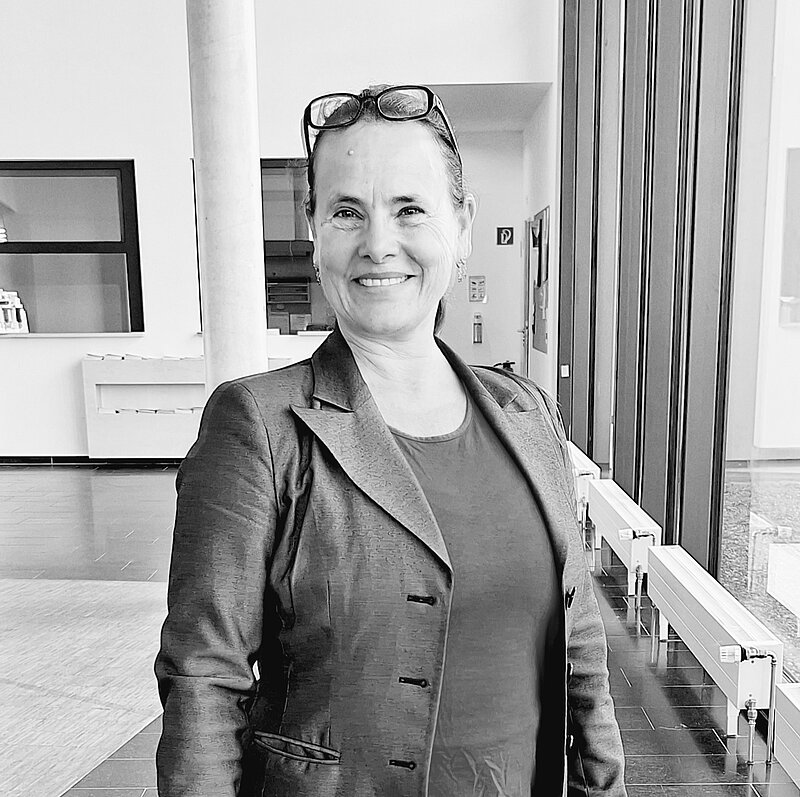
Paige L. Sweet is an Associate Professor of Sociology at the University of Michigan, affiliated with the College of Literature, Science, and the Arts (LSA). Her research focuses on gender and sexuality, knowledge governance, gender-based violence, health/illness, and state institutions. She holds a PhD in Sociology from the University of Illinois Chicago. Recent work explores how survivors of domestic violence navigate penal-welfare systems and the intersection of mental health weaponization in intimate relationships. Her book The Politics of Surviving: How Women Navigate Domestic Violence and its Aftermath (2021) examines trauma discourses and coerced therapy in state programs. Current projects include a book on gaslighting with Princeton University Press. Sweet teaches courses on gender-based violence, embodiment, and sociological theory. Education: PhD in Sociology, University of Illinois Chicago (2018) Key Research Themes: Domestic violence survivorship, coercive control, medicalization of abuse, gaslighting as social control, intersectional vulnerabilities Her work appears in top journals like American Sociological Review , American Journal of Sociology , and Gender & Society . She analyzes how state programs and medical categories shape gendered identities, particularly in contexts of violence and crisis. Recent studies highlight how marginalized survivors face compounded vulnerabilities during crises like the pandemic.
Gillian Hayes is the Vice Provost for Academic Personnel and a Chancellor’s Professor at the University of California, Irvine (UCI). She holds joint appointments in the Department of Informatics (Donald Bren School of Information and Computer Sciences), School of Education, and School of Medicine. Her research focuses on human-computer interaction, assistive technologies, and digital health interventions for children with ADHD and autism. She leads the STAR Group, which designs technologies to address real-world challenges in healthcare and education. Education: PhD in Computing from Georgia Tech, and degrees from Vanderbilt University. Professional roles include Vice Provost for Graduate Education, Dean of the Graduate Division, and faculty director of multiple programs, including the Master of Human Computer Interaction and Design. Research interests include child development, health informatics, and ethical technology deployment. Notable projects include the CERES initiative and work on smartwatch interventions for ADHD. Over 100 peer-reviewed publications and 6 books/chapters highlight her contributions. Scientific awards include NSF CAREER Award, ACM SIGCHI Academy, and recognition for teaching and innovation in accessibility. Advises graduate students in informatics, computer science, and education. Active in leadership roles at UCI and the Computing Research Association (CRA Board member). Labs/Teams: STAR Group, Intel Science and Technology Center (ISTC) collaborator, and co-founder of AVIAA and Tiwahe Technology. Focuses on interdisciplinary research with global collaborators.
Maithilee Kunda is an Associate Professor in the Department of Computer Science and Computer Engineering at Vanderbilt University's School of Engineering. She leads the Laboratory for Artificial Intelligence and Visual Analogical Systems and co-leads the Vanderbilt Initiative for Autism, Innovation, and the Workforce. Her research focuses on AI-driven cognitive systems, particularly visual reasoning and technology applications for neurodiverse populations, including autism spectrum disorder. Dr. Kunda holds a B.S. in Mathematics with Computer Science from MIT (2007) and a Ph.D. in Computer Science from Georgia Tech (2013). She was honored as an MIT Technology Review Innovator Under 35 in 2016 for her groundbreaking work. Her research bridges computational models of visual thinking and real-world impact, emphasizing neurodiverse cognition. Notable projects include developing AI systems for autism-related social skills interventions, designing visual analogy problem-solving frameworks, and advancing nonverbal communication understanding in AI. Her work addresses challenges in abstract reasoning tasks (e.g., Raven's Matrices), visual imagery-based learning, and ethical AI integration. She advocates for inclusive technology design, leveraging both generative AI and cognitive principles to create human-centered solutions. Key awards: MIT Technology Review Innovator Under 35 (2016) Her labs focus on practical AI applications for education, healthcare, and workforce development, emphasizing interdisciplinary collaboration between engineering, psychology, and neuroscience.
Sarah Annunziato is an Associate Professor of Italian and Director of both the Undergraduate Program in Italian and the Italian Language Program (1000-2000 level courses) at the University of Virginia. She holds a Ph.D. from Johns Hopkins University and a B.A. from Smith College. Her research focuses on children’s literature, media, and trauma representation, with a particular emphasis on Italian and U.S. texts. She also investigates language pedagogy, including game-based learning and the role of streaming media in language acquisition. Her teaching spans graduate courses like Dante’s Inferno on Film and undergraduate courses such as Elementary Italian and Small Screen Italy . She has advised MA theses on topics ranging from Italian literature to comparative cinema. Annunziato has received multiple grants, including funding for a tutoring clinic and curriculum development for healthcare-focused Italian courses. Her publications include Clic! L’italiano col telecomando (2024) and articles on topics like colonialism in Emilio Salgari’s works and Dante’s influence on American TV. She actively serves as an editor for La Vendemmia and contributes to initiatives like the Moons and Bonfires archive of Italian-American history.
Yoon Ju Kang is an Associate Professor of Accounting at the Isenberg School of Management, University of Massachusetts Amherst. She holds a PhD in Accountancy from the University of Illinois at Urbana-Champaign (2012), an MS in Accountancy (2006), and a BS in Mass Communication & Journalism with a double major in Business Administration from Ewha Womans University (2003). Her research focuses on auditing, corporate governance, and professional skepticism, with notable contributions to understanding audit committee dynamics and audit quality improvement. She is a Certified Public Accountant (Illinois) and has held academic roles at UMass Amherst (2014–present) and Lehigh University (2012–2014). Research & Awards : Kang has received prestigious recognitions including the KPMG Academic Research Program Grant (2021) and multiple teaching awards such as the College Outstanding Teaching Award (2020). Her work explores audit judgment rules, investor perspectives in auditing, and knowledge transfer in audit firm consultations. Recent studies include analyses of critical audit matters (CAMs) communication and audit committee oversight effectiveness. Teaching : She teaches Auditing and Financial Accounting courses, emphasizing practical application of theoretical frameworks. Her research and teaching intersect in areas like auditor skepticism and audit quality metrics. She has collaborated with institutions like the Center for Audit Quality and contributed to policy discussions on audit innovation.
Brendan Dolan-Gavitt is an Associate Professor in the Computer Science and Engineering Department at NYU Tandon School of Engineering and part of the NYU Center for Cybersecurity (CCS). He holds a Ph.D. in Computer Science from Georgia Tech (2014) and a BA in Math and Computer Science from Wesleyan University (2006). His research spans cybersecurity, program analysis, virtualization security, memory forensics, and embedded/cyber-physical systems, focusing on automating the understanding of large software systems to develop novel defenses. Research interests include developing techniques for static and dynamic analyses of real-world software to reveal hidden design assumptions. His work has been presented at top security conferences like USENIX Security, ACM CCS, and IEEE Security & Privacy. He led the development of the open-source PANDA platform for dynamic analysis. His publications primarily focus on AI-driven security solutions, vulnerability discovery, and automated testing tools. Recent work explores LLMs in offensive security, fuzzing enhancements, and secure code generation, emphasizing practical applications in cybersecurity. Scientific Awards: NSF CAREER Award for improving software vulnerability testing and education He leads the OSIRIS Lab, a student-run cybersecurity group, and collaborates on interdisciplinary projects addressing emerging security challenges through grants and industry partnerships.
Dr. Julia Morley is an Associate Professor (Education) and MSc Programme Director in the Department of Accounting at the London School of Economics and Political Science (LSE). She specializes in social impact measurement, financial reporting regulation, and organizational decision-making. Her research explores biases in group decision-making and the emergence of norms in performance measurement, particularly in social sector organizations. She holds a PhD from LSE and previously worked in finance, media, and consulting before transitioning to academia. Education includes a degree in Economics from Pembroke College, Cambridge, an MSc in Philosophy of the Social Sciences from LSE, and a PhD in Accounting. Her work bridges sociology, social psychology, and philosophy, analyzing issues such as fair value accounting, social impact bonds, and regulatory outcomes in standard-setting bodies like the IASB. Dr. Morley has published extensively on topics including subgroup influence on boards, elite networks in social investment, and the ethical implications of social impact measurement. She has contributed to policy through roles like Commissioner on the Alternative Commission on Social Investment and governance positions with Capella House School and the Valence Mary Trust. Teaching spans undergraduate and postgraduate courses, including Accounting for Managerial Decision-Making and Corporate Responsibility and Sustainability. She leads MSc programs in Accounting and Finance, and Accounting, Organisations and Institutions.
Panteleimon Ekkekakis is a Professor and Chair of the Department of Kinesiology at Michigan State University’s College of Education. His research focuses on affective responses to exercise, including their psychobiological mechanisms and implications for exercise behavior. He holds a Ph.D. from the University of Illinois, Urbana-Champaign. Ekkekakis’ work explores the pleasure and displeasure associated with exercise, emphasizing their role in predicting long-term adherence. His research spans topics like high-intensity interval training (HIIT), obesity, mental health interventions, and physical education practices. Notably, he critiques methodological flaws in HIIT studies and advocates for evidence-based exercise guidelines. His recent articles highlight critical analyses of HIIT efficacy, the role of affective valence in exercise adherence, and the need for paradigm shifts in obesity treatment. He emphasizes the importance of personalized exercise programs that prioritize subjective enjoyment to enhance public health outcomes. While no specific awards are listed, his contributions to exercise psychology and policy advocacy are significant. His research has informed debates on fitness testing in schools and the integration of exercise into clinical depression treatment.
Ning Ai is an Associate Professor at the University of Illinois Chicago (UIC), holding a joint appointment in the Department of Urban Planning and Policy and the Institute for Environmental Science and Policy. Her expertise lies in urban sustainability, material/waste management, and urban metabolism. She joined UIC in 2011 with a Ph.D. from Georgia Tech, an MIT Master's, and dual bachelor's degrees from Tsinghua University and Renmin University of China. Her research integrates life cycle perspectives and data-driven approaches to environmental planning, emphasizing sustainable transportation and waste management. Notable projects include studies on food recovery programs, electric vehicle battery recycling, and neighborhood-level traffic impact analysis in Chicago. She has served on the ACSP Committee on Diversity and led the Air & Waste Management Association’s Sustainability Division (2020-2022). Teaching spans courses like Environmental Planning and Policy, Urban Economics, and System Methods for Environmental Policy. Her work bridges academia and practice, collaborating with entities like the World Bank and Georgia’s Department of Natural Resources. She leads a team advancing eco-friendly product adoption through projects like PFAS-free food service initiatives. Publications focus on sustainable urban systems, waste management frameworks, and policy design. Her research addresses both broad sustainability challenges and localized solutions, emphasizing interdisciplinary collaboration and community engagement.
Larry Heck is a Professor at the Georgia Institute of Technology with joint appointments in the School of Electrical and Computer Engineering and the School of Interactive Computing. He holds the Rhesa S. Farmer Advanced Computing Concepts Chair and is a Georgia Research Alliance Eminent Scholar. His research focuses on machine learning, deep learning, natural language processing, conversational systems, and speech/speaker recognition. He directs the AI Virtual Assistant (AVA) Lab, advancing next-generation AI assistants. Dr. Heck has held leadership roles in industry, including at Microsoft, Google, Samsung, and Viv Labs, and has over 50 U.S. patents. Education: BSEE from Texas Tech University (1986) MSEE and PhD in Electrical Engineering from Georgia Tech (1991) Research Interests: Dr. Heck’s work bridges machine learning and human-centric AI, with emphasis on conversational systems, multimodal interaction, and real-world applications. His AVA Lab develops AI assistants that integrate visual, auditory, and contextual cues for natural interaction. Recent projects include multimodal sensor integration, dialogue systems for caregiving networks, and embodied AI for avatar animation. Awards: IEEE Fellow (2020) Academy of Distinguished Engineering Alumni, Georgia Tech (2017) Distinguished Engineer Award, Texas Tech University (2017) Advising & Grants: While primarily focused on industry collaboration, Dr. Heck mentors students through Georgia Tech’s interdisciplinary programs. His research is funded by government agencies and corporate partnerships, including the NSA and DARPA. Labs & Teams: The AVA Lab collaborates with academia and industry to create AI systems that understand context, gestures, and environment. Current initiatives include multimodal dialogue datasets (e.g., OKCV, SensorQA) and reinforcement learning frameworks for real-time systems.
Holger Straßheim is Professor of Political Sociology at Bielefeld University, affiliated with the Faculty of Sociology, Department 4 – Politics and Society. He also holds leadership roles as co-director of the Institute for Interdisciplinary Studies of Science (ISOS) and the Institute for World Society Studies, and is an elected member of the university’s Senate. He coordinates the MA program in Political Communication and serves on multiple examination and ethics committees. University: Bielefeld University School: Faculty of Sociology Department: Department 4 – Politics and Society Research Institutes: ISOS, Institute for World Society Studies Administrative Roles: Program Coordinator MA Political Communication, Member of BA/MA Examination Boards, Habilitation Committee His research centers on the interplay between science and politics, particularly the role of expertise and evidence in public policy. Key areas include behavioral public policy, climate and consumer policy, Arctic geopolitics, and the temporal dimensions of governance. He investigates how knowledge is produced, legitimized, and used in policy-making across transnational contexts. The most recent publications reflect a strong focus on evidence cultures, ethical expertise in crises, and the global spread of behavioral governance. These works analyze how expert advice functions under uncertainty, the paradoxes of evidence-based policy, and the institutionalization of ethical guidance during emergencies like the COVID-19 pandemic. The research often employs comparative and interdisciplinary methods, engaging with science and technology studies, political sociology, and policy analysis. Best Dissertation Award, University of Tübingen (2011) Visiting Fellow, Harvard Kennedy School (2014) Visiting Research Fellow, Collège d’études mondiales, Paris (2018) Visiting Research Fellow, University of Bologna (2022) Straßheim has supervised and advised in various research projects and PhD initiatives, particularly through his leadership in DFG and ESRC-funded programs. He has secured significant third-party funding, including projects on Arctic knowledge co-production and ethics in crisis governance. He is actively involved in academic service, reviewing for major journals and research councils, and shaping policy discourse through editorial roles in Critical Policy Studies and the Advances in Critical Policy Analysis book series. He leads the Straßheim Research Group, fostering interdisciplinary collaboration on science-policy interfaces. He is a key figure in research networks such as the Science and Democracy Network (Harvard) and the International Arctic Science Committee. His work bridges academic inquiry with real-world policy challenges, emphasizing democratic accountability, epistemic pluralism, and the ethical dimensions of expertise.
Dr. Rishita Nandagiri is a feminist researcher and academic currently serving as a Lecturer (Assistant Professor) in the Department of Global Health & Social Medicine at King's College London. She previously held research and teaching positions at the London School of Economics (LSE), including an ESRC Postdoctoral Fellowship and an LSE Fellow in Health and International Development. Her work is deeply rooted in reproductive justice, gender, and global health, with a focus on the Global South. PhD in Social Policy, London School of Economics (2019) ESRC Postdoctoral Fellow, LSE Department of Methodology (2020-2021) LSE Fellow in Health and International Development (2019-2020) Research Assistant, LSE Department of Media and Communications (2018-2019) Dr. Nandagiri’s research centers on reproductive (in)justices, interrogating how power and politics shape abortion access, self-managed abortion, care trajectories, and reproductive governance. Her work is interdisciplinary, drawing on feminist theory, qualitative and participatory methods, policy analysis, and co-production with communities and organizations. She has extended her research to examine the impact of the COVID-19 pandemic on abortion and the role of lay health providers in care delivery. Her methodological interests include multi-method designs that integrate interviews, archival research, and community engagement. The 15 most recent articles reflect a strong trajectory in reproductive justice, with increasing engagement with feminist economics, carceral systems, and global policy. Themes include structural violence, legal pluralism, care ethics, and transnational advocacy. Her publications span high-impact journals in public health, social policy, gender studies, and media, indicating a broad interdisciplinary reach. Scientific awards and recognitions include: ESRC Postdoctoral Fellowship (2020-2021) LSE Class Teacher Award (2020) LSE Research Investment and Infrastructure Funds (2020) Best PhD Poster Prize, British Society for Population Studies (2018) LSE PhD Studentship (2015-2019) Dr. Nandagiri has advised on and contributed to numerous research grants, particularly those related to reproductive health, digital privacy, and pandemic response. She has collaborated with major institutions such as UNFPA, the Women’s Global Network for Reproductive Rights, and FRIDA. She co-founded the Abortion Book Club and serves on editorial and advisory boards, including BMJ Sexual & Reproductive Health and the International Union for the Scientific Study of Population’s Abortion Research panel. She also co-convenes the Development Studies Association’s Women and Development Study Group, demonstrating strong leadership in academic and advocacy networks. She is actively involved in public engagement, contributing to LSE blogs, media outlets like Women's Health Magazine UK, and platforms such as the Oxford Human Rights Hub and Harvard’s Bill of Health. Her lab and team affiliations are not explicitly named, but her collaborative projects suggest strong ties to interdisciplinary research groups focused on global health, reproductive justice, and digital rights.
Truong Q. Nguyen is a Professor in the Electrical and Computer Engineering (ECE) Department at the University of California San Diego (UCSD), affiliated with the Jacobs School of Engineering. He holds positions at the Center for Wireless Communications and the California Institute for Telecommunications and Information Technology. His research focuses on image/video processing, wavelets, 3D video technology, and applications in healthcare and robotics. He has authored influential textbooks like Wavelets & Filter Banks and pioneered low-power video processing algorithms for mobile devices. Nguyen earned his B.S., M.S., and Ph.D. in Electrical Engineering from the California Institute of Technology (1985–1989). He held roles at MIT Lincoln Laboratory and Boston University before joining UCSD in 1998. His honors include the IEEE Signal Processing Paper Award (1992), NSF Career Award (1995), IEEE Fellow (2005), and UCSD’s Distinguished Teaching Award (2019). His research interests span 3D video processing, machine learning for health monitoring, and biomedical imaging. Notable contributions include wavelet-based compression techniques and AI-driven medical image analysis. He leads the UCSD Video Processing Lab, exploring computer vision, robotics, and generative AI applications. Nguyen is committed to educational innovation, co-creating programs like the Hands-on Curriculum, Summer Research Internship Program (SRIP), and Project-in-a-Box (PIB) for K-12 students. Nguyen’s work bridges academia and industry, with patents in wavelet design and signal analysis. Recent projects include NSF-funded initiatives to develop inclusive engineering curricula and collaborate on graduate pathways programs through the Inclusive Engineering Consortium (IEC).
Prof. Dr. Sabine C. Koch is a Professor of Dance and Movement Therapy at Alanus Hochschule Alfter and Head of the Research Institute for Creative Arts Therapies (RIArT). She holds a habilitation and multiple professorships, including at SRH Hochschule Heidelberg (2012–present) and has led the Alanus Research Institute since 2015. Her work focuses on embodiment theory, applying it to creative arts therapies such as dance, theater, and art to address mental and physical health challenges. Her education includes a Diplom in Psychology from Heidelberg University (1999) and a PhD (2003) and Habilitation (2009) from Heidelberg. She has led major projects like the BMBF-funded 'Körpersprache' (2009–2011), the EU TESIS project (2011–2015), and the Heidelberg Center for Motion Research (2016–2022). Awards include ADTA Research Awards (2007, 2013, 2014, 2023) and a Fulbright Scholarship (1996). Research interests span embodiment theory, enaction, systems theory, and their application in therapies. Her work emphasizes the role of movement in mental health, including studies on autism, schizophrenia, oncology, and refugee trauma. She collaborates internationally, including with institutions in Chile, Slovenia, and France. Her recent articles explore drama therapy for flood-affected children, dance therapy for dementia patients, and embodied approaches to experience studies. Grants and networks include the DFG-funded EmbodiNet (2024–2026) and a PhD program in Creative Arts Therapies with Witten/Herdecke University. Koch’s labs and teams focus on interdisciplinary motion research and clinical applications of movement therapies. She has advised numerous studies on therapeutic efficacy and co-authored over 200 peer-reviewed articles and books, including 'The Routledge International Handbook of Embodied Perspectives in Psychotherapy' (2019).
Daniel Webster is Bloomberg Professor of American Health in the Department of Health Policy and Management at the Johns Hopkins Bloomberg School of Public Health. He is also affiliated with the Urban Health Institute, the Johns Hopkins Center for Gun Violence Solutions, the Johns Hopkins Center for Injury Research and Policy, and the Center for Mental Health and Addiction Policy Research. Dr. Webster is one of the nation’s leading experts on firearm policy and the prevention of gun violence. His research interests include violence and violence prevention, firearm injuries, gun policy, policy evaluation, domestic violence, youth violence, and opioid abuse. He has led extensive research on the effects of firearm and alcohol policies, policing strategies, street outreach, conflict mediation, and school-based curricula. His recent publications focus on public health approaches to gun violence, the impact of purchaser licensing and background check laws, firearm injury hospitalizations, police shootings, and the deregulation of civilian gun carrying. These works reveal a strong trend in evaluating state-level firearm policies using longitudinal data and mixed-methods designs to inform public health and criminal justice policy. Inaugural Bloomberg Professor of American Health, 2018 Johns Hopkins University Distinguished Alumni Award, 2017 Baltimore City Health Equity Leadership Award, 2016 David Rall Award for Science-Based Advocacy, American Public Health Association, 2015 Finalist, Marylander of the Year, The Baltimore Sun, 2013 Delta Omega Honorary Society in Public Health – Alpha Chapter, Faculty induction, 2005 Educator of the Year, Maryland Network Against Domestic Violence, 2004 Dr. Webster has led numerous federally and foundation-funded research projects, including evaluations of city-level gun violence prevention initiatives, the Lethality Assessment Program, California’s domestic violence firearm intervention, and Baltimore policing strategies. He has advised on national and state-level policy and is a sought-after expert in public health advocacy. He teaches Understanding and Preventing Violence and Crafting Effective Solutions to Gun Violence: A Problem-Solving Seminar. He is a Distinguished Scholar at the Johns Hopkins Center for Gun Violence Solutions, where he continues to lead research and policy engagement efforts. His work is supported by interdisciplinary teams and collaborations across public health, criminology, law, and social work.