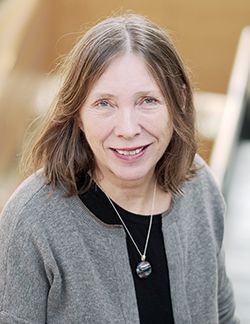
Oleksandr Kapranov is an Associate Professor of English at NLA University College's Teacher Education program. His work intersects discourse analysis, climate change communication, and English language teaching (ELT), with a focus on sustainable development education and intercultural communication. Research areas include political speeches (e.g., Keir Starmer, Rishi Sunak), corporate disclosures (Bank of England, Vedanta Resources), and media framing (Greenpeace branches, King Charles III). Key pedagogical interests: digital competence, beginner EFL training, and discourse markers in academic writing. His recent publications analyze climate change discourse through syntactic structures, metonymy, modality, and evidentiality, emphasizing institutional and political narratives. While no formal awards are listed, his work spans interdisciplinary collaborations with NGOs, governments, and universities.
Roswitha Skare is a Professor of Documentation Science at the Department of Language and Culture, UiT The Arctic University of Norway, within the Faculty of Humanities, Social Sciences and Teacher Education. She is actively engaged in research and teaching, focusing on documentation studies, public libraries, archives, museums (LAM sector), digitalization, and film history. Her research interests include: Documentation and document theory Paratext and digital documents Public libraries and their role in society Libraries and social media Migration and refugee services in libraries Film history, especially silent films and early documentaries Cultural memory and Sámi cultural resilience Institutional convergence in cultural policy Her recent publications (2019–2025) reveal a strong focus on public libraries during and after the Covid-19 pandemic, the role of libraries in supporting immigrants and refugees, theoretical developments in document studies, and historical film analysis—particularly Robert Flaherty’s Nanook of the North . She frequently collaborates with scholars such as Andreas Vårheim, Noah Lenstra, and Sigrid Stokstad. Her work appears in journals like Journal of Documentation , Library & Information Science Research , and Proceedings from the Document Academy . Roswitha Skare teaches courses such as: MDV-1001: Multimediale dokumenter: Historie, teori og analyse MDV-1203: Bibliotek og formidling MDV-1207: Dokumentinstitusjoner og digitalisering MDV-1206: Prosjektoppgave i bibliotek- og dokumentasjonsvitenskap She supervises bachelor’s, project, and master’s students in library and documentation science. She is a member of the research group Engaging Conflicts in a Digital Era (ENCODE) and participates in projects such as LAMCOM – Libraries, archives, and museums in the community and SAMCOM - Sámi cultural centers as community and cultural resilience infrastructure , which explore the societal roles of cultural institutions and Indigenous resilience. No scientific awards are listed in the provided text.
Maj Schian Nielsen is a Senior Research Librarian at the University Library of the University of Agder. Her work focuses on multilingualism, crosslinguistic awareness, and German language pedagogy. She is affiliated with the research groups 'Media and Communication Studies' and 'Multilingualism in Society and Education (MUSE).' University of Agder Research Groups: Media and Communication Studies, MUSE Her research explores how multilingual awareness can enhance grammar instruction in German third-language (L3) teacher education programs across Denmark and Norway. Recent publications analyze curriculum structures, educational materials, and the integration of generative AI tools like ChatGPT in multilingual education contexts. Scientific output trends reveal a focus on: Cross-linguistic pedagogy L3 German acquisition Grammar teaching methodologies AI applications in language learning Teacher training for multilingual classrooms Systemic Functional Linguistics (SFL) frameworks She has not been publicly recognized with scientific awards listed in the available data.
Britt Kramvig is a Professor at the School of Business and Economics , part of the Faculty of Biosciences, Fisheries and Economics (BFE) at UiT The Arctic University of Norway. Her research intersects decolonization , Indigenous (Sámi) studies, and creative industries , with a focus on storytelling, archive decolonization, and Arctic land-seascapes. She coordinates PhD studies in Tourism and Northern Studies and teaches courses on qualitative methods, climate change impacts on tourism, and knowledge co-production. Research Interests: Kramvig explores the decolonial potential of Indigenous archives , creative industries as decolonial praxis , and Arctic environmental humanities . Her work emphasizes ontology over epistemology , art-science collaborations (e.g., Dark Ecology, BAT), and indigenous survivance in tourism and cultural policy. She actively disrupts appropriation processes in Arctic landscapes through pluriversal storytelling. Key Collaborations: Kramvig contributes to international projects like Surviving the Unthinkable and The New Sámi Renaissance , advocating for indigenous data sovereignty and decolonial research ethics . She leads interdisciplinary efforts to integrate Sámi epistemologies into environmental science and policymaking. Recent Publications: Her 2023-2025 works address Arctic decolonization , indigenous archival practices , and co-creation in tourism , often published in journals like Environmental Research Letters and GeoHumanities . Notable topics include counter-mapping , indigenous survivance , and collaborative listening in Arctic soundscapes. Academic Affiliations: Member of the Norwegian Scientific Academy for Polar Research and the Indigenous Voices research group at UiT. She participates in the OKTA - Sami Art and Friction-Filled Communities on Festivals project.
Georgios Neokleous is a Professor of English in the Department of Teacher Education at the Norwegian University of Science and Technology (NTNU), within the Faculty of Social and Educational Sciences. He holds a PhD in Education from Saint Louis University (2014), focusing on home language use in EAL classrooms. His career began as an EFL/ESL teacher, with extensive experience across Europe and the U.S., and he has developed specialized courses for diverse learner groups. Neokleous’ research emphasizes multilingualism, translanguaging pedagogy, and inclusive literacy practices in linguistically diverse classrooms. Education: PhD in Education, Saint Louis University, 2014 Masters and Bachelor’s degrees (implied, not explicitly stated) Research Interests: Neokleous explores the integration of students’ home languages in EAL settings, translanguaging as a pedagogical tool, and assessment strategies in multilingual environments. His work bridges theory and practice, addressing challenges in teacher education and classroom diversity. Recent trends in his publications highlight cross-national comparisons (e.g., Norway-Cyprus studies), innovative teaching methodologies, and the role of technology in modern classrooms. Advising & Grants: Supervises students at BA, MA, and PhD levels. Collaborates with international researchers like Anna Krulatz and Sviatlana Karpava. Active in organizing academic events, including TESOL International and ECER conferences. Labs/Teams: Engaged in collaborative research groups focused on multilingual education, such as the ‘Learning and Teaching English in the Multilingual Classroom’ initiative. His work often intersects with institutions like the University of Cyprus and Multilingual Matters publishing.
Emilia Andersson-Bakken is an Associate Professor at Oslo Metropolitan University, affiliated with the Faculty of Education and International Studies and the Department of Primary and Secondary Teacher Education. She teaches and supervises student teachers at bachelor’s, master’s, and PhD levels, contributing significantly to initial teacher education. Her academic work is deeply rooted in classroom research, with a focus on critical thinking, creativity, and classroom discourse in primary education. Her research interests include classroom research , initial teacher education , critical thinking , creativity , and classroom discourse . These themes are reflected in her ongoing involvement in key research projects such as KriT (Critical Thinking in Primary Education), Beyond access: improving quality of early years reading instructions in Ethiopia , and Classroom activities for the six-year-olds – 20 years on (Klassprax_20) . These projects emphasize pedagogical innovation, teacher facilitation, and literacy development in early schooling. The trends in her recent publications reveal a strong commitment to advancing critical thinking through children’s literature, dialogic teaching, and teacher-led inquiry. Her work spans both theoretical and practical dimensions, with a recurring emphasis on how teachers can foster student agency and reflective thinking in primary classrooms. She frequently publishes in educational journals and contributes to edited volumes focused on pedagogy and literacy. She has received no explicitly mentioned scientific awards in the provided text. Emilia supervises students at multiple levels and is actively involved in research funding and dissemination efforts through national and international conferences. Her work is supported by collaborative research teams and institutional frameworks at OsloMet. While no specific grants are named, her participation in multi-year, interdisciplinary projects indicates substantial research support and academic leadership. She is part of the research group Classroom Research and contributes to Research and Development Work on the Lower Primary Level With a Focus on Initial Education . These groups focus on observational studies, curriculum evaluation, and teacher development in early education contexts.
Elise Kleivane is an Associate Professor in Written Culture at the Department of Norse and Celtic Philology, Faculty of Humanities, University of Oslo. She has served as Head of Teaching at ILN (Institute of Language and Literature) from 2021 to 2024 and maintains an active research and teaching profile in Norse philology and related fields. Dr. Kleivane earned her PhD in Norse Philology from the University of Oslo in autumn 2011, following a Master of Arts in Norse Philology completed in spring 2003. Her academic journey has positioned her as a leading scholar in medieval Scandinavian writing culture. Her research focuses on epigraphy, runology, and medieval literacy, with particular emphasis on the intersection of written and material culture in medieval Norway. Kleivane examines how writing functioned in both public and private spheres, analyzing inscriptions in runes and Roman script as evidence of medieval communication practices. Her work bridges philology, archaeology, and cultural history to reconstruct literacy patterns in pre-modern Scandinavia. Recent projects have explored religious texts, biblical translations, and the role of writing in ecclesiastical contexts. Analysis of her publication record reveals a consistent trajectory through medieval epigraphy and literacy studies. Her work demonstrates increasing sophistication in connecting material evidence with textual analysis, moving from specific inscription studies to broader questions about writing culture. The pattern shows strong engagement with interdisciplinary approaches, combining philological expertise with archaeological and historical methodologies. Her research increasingly addresses questions of religious practice, vernacular literacy, and the transmission of knowledge in medieval Scandinavia. Among her significant appointments, she has been appointed to the Language Council's expert council for standardization and language observation (2023-2026) and to the Sources Commission (2023-2026), serving on the editorial board for the National Archives' scientific publication channels. Dr. Kleivane has secured substantial research funding, most notably leading the Norwegian Research Council-funded project 'Letters between runes and manuscripts' (2017-2021) and participating in the NORDCORP-funded 'Retracing the Reformation' project (2013-2017). She currently contributes to the Riksbanken Jubileumsfond-funded research program 'Modes of Modification' (2018-2025) as a member of its steering committee, where her research focuses on 'Texts in the Open and Out of Sight: Public and Private Communication in Epigraphy.' She teaches across multiple institutions including the University of Oslo and Stockholm University, covering subjects ranging from Norse literature and mythology to runology and medieval manuscript culture. Her teaching reflects her research interests in written culture across the medieval Scandinavian world.
Crina Damsa is a Professor at the Department of Education, University of Oslo. Her research focuses on collaborative learning, interdisciplinary learning, and the role of digital technologies (including AI) in knowledge work and education. She leads projects like Unpacking collaboration: Multimodal analysis and combined method designs and Learning Ecologies in Higher Education , and is involved in research groups such as HEDWORK and LIDA. PhD in Educational Research, University of Oslo (2013) MSc in Learning Design and Technology, Utrecht University (Netherlands) BA in Language and Literature, Babes-Bolyai University (Romania) Her work examines sociocultural and sociomaterial aspects of learning, with a focus on student-centered environments, design-based research, and multimodal learning analysis. She supervises PhD students and contributes to methodological advancements in learning sciences. Editorial roles: Area Editor for Learning in Context , member of editorial boards for journals like Journal of the Learning Sciences and Frontline Learning Research Projects: Academic Hospitality in Interdisciplinary Education (AHIE) , Digital Integration of Video Assessment (DIVA) , Digital Tracing of Collaborative Learning (DigiT) , Global Teacher Education (GatherED)
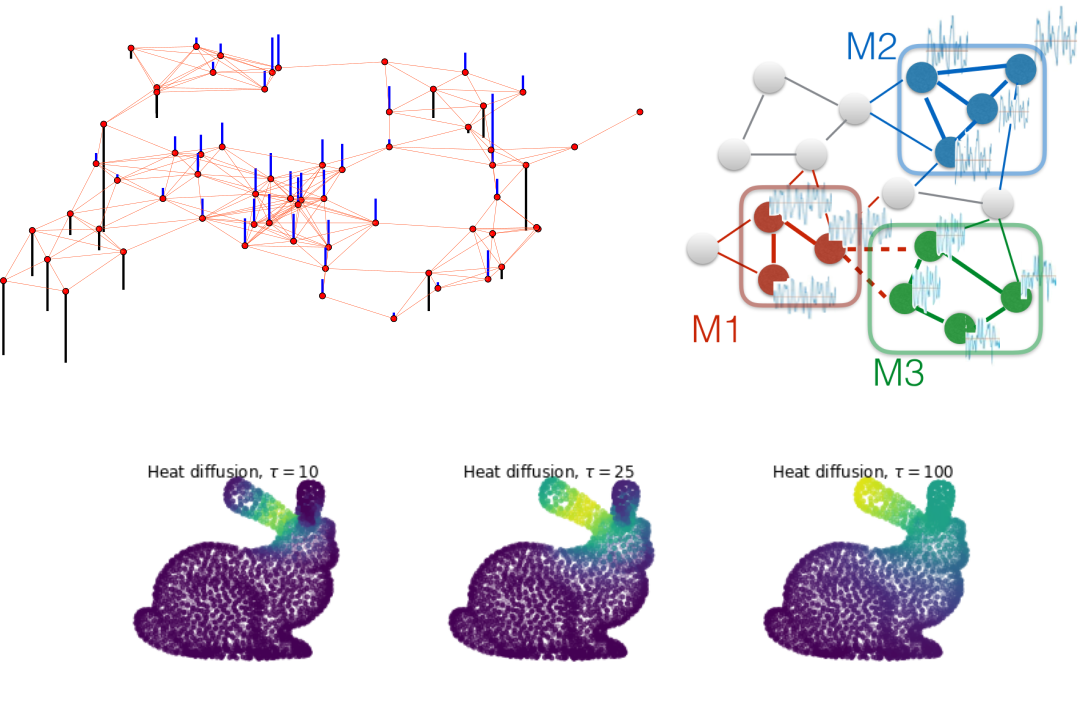
Benjamin Ricaud is an Associate Professor and Group Leader in Machine Learning at UiT The Arctic University of Norway's Department of Physics and Technology. His core affiliations include membership in the Machine Learning Group, Visual Intelligence center, and co-directorship of the Digital Technology Innovation Lab focused on Arctic-region tech startups. He also co-chairs the annual Northern Light Deep Learning conference. Ricaud's research spans: Fundamental ML : Graph signal processing, explainable AI, and generative models Applications : Microfossil classification, medical diagnostics (retinal aging), drug analysis, and climate data interpretation Emerging domains : Self-supervised learning and biological data analysis using Raman spectroscopy His recent publications (2020-2025) cluster in three domains: Graph ML methodologies (35%) Biomedical/biological applications (40%) Geoscience/climate informatics (25%) with consistent focus on interpretability and real-world data challenges. Teaching includes Image Processing (FYS-2010), Pattern Recognition (FYS-3012), and Machine Learning (FYS-2021). He leads outreach initiatives developing AI exhibits for Tromsø Science Centre.
Haley De Korne is a Professor at the University of Oslo's Institute for Literature, Area Studies and European Languages within the Faculty of Humanities. Her academic work spans the intersections of linguistics, education, and anthropology, focusing on multilingual education contexts with particular attention to minoritized and indigenous languages. Dr. De Korne holds a PhD in Educational Linguistics from the University of Pennsylvania, an MA in Applied Linguistics from the University of Victoria, and a BA (Hons) in Combined Social Sciences from Durham University. Her academic journey reflects a strong foundation across multiple disciplines that inform her interdisciplinary approach to language research. PhD Educational Linguistics, University of Pennsylvania, USA MA Applied Linguistics, University of Victoria, Canada BA Hons Combined Social Sciences, Durham University, UK Her research interests focus on critical language awareness among teachers, social change imaginaries in multilingual regions, and pedagogies for language reclamation. She specializes in minoritized languages in education, multilingual education policy and pedagogy, language politics, indigenous language reclamation & revitalization, and language ideologies, with specific expertise in Isthmus Zapotec (Mexico) and Anishinaabemowin (US & Canada). Her methodological approach combines ethnography and interactional sociolinguistics within linguistic anthropology. Analysis of Dr. De Korne's recent publications reveals a consistent focus on language revitalization, particularly examining how educational contexts can support or hinder minoritized language maintenance. Her work increasingly addresses global North-South perspectives on language education, with attention to place-based pedagogy and critical language awareness. A significant thread throughout her research examines translanguaging practices and how they challenge traditional monolingual approaches to language education. Her scholarship demonstrates strong community engagement, particularly with Zapotec-speaking communities in Mexico. Dr. De Korne serves on the editorial board of Multilingua - Journal of Cross-cultural and Interlanguage Communication (2023-2025) and is an active member of the Norwegian Academy for Young Researchers (2021-2025). She also chairs the American Association of Applied Linguistics Committee for Online Education and Outreach Webinar subcommittee. Member, Norwegian Academy for Young Researchers (2021-2025) Editorial board member, Multilingua Journal (2023-2025) Chair, AAAL Committee for Online Education and Outreach (2023) Partner, Multilingualism in Transitions Research Project (2021-2025) Affiliated researcher, MultiNor Research Group At the University of Oslo, Dr. De Korne teaches courses including MULTI 4150 Project-based research in multilingualism, NOAS 4102 Additional language learning in socio-cognitive and sociocultural perspectives, and several linguistics courses on language acquisition, multilingualism, and research methods. She also leads PhD courses on communication in multilingual workplaces and revitalization of indigenous and minority languages. Her current research projects include FOSTERLANG (Indigenous language resilience), Language and culture maintenance in Wilamowice, and Linguistics and Sustainability.
Dr. Saeed Karimi Aghdam Ordaklou is an Associate Professor of English Language and Didactics at the Faculty of Education and Arts, Nord University, Norway. His academic career is rooted in applied linguistics, with a focus on second language acquisition, educational psychology, and dynamic systems theory. PhD in Applied Linguistics (Second Language Acquisition), University of Jyväskylä, Finland MA in English Language Teaching, Azarbaijan Shahid Madani University, Iran B.A. in English Language & Literature, University of Tabriz, Iran Professional Teacher Education, JAMK University of Applied Sciences, Finland His research synthesizes Vygotsky’s cultural-historical psychology, dynamic systems theory, and dialectical frameworks to explore second language development in sociocultural contexts. Key themes include L2 writing, complexity-accuracy-fluency dynamics, and interdisciplinary theoretical integration. Recent publications emphasize dynamic systems theory applications, digital mediation in multilingual writing, and the sociocultural dimensions of language learning. He has also guest-edited special issues addressing theoretical dialogues in applied linguistics. Dr. Karimi Aghdam has taught in Iran, Finland, and Norway, and holds teaching qualifications from the UK, Finland, and Norway. He actively collaborates with international scholars and has held visiting researcher roles at UC San Diego, Penn State, and the University of Southern Denmark.
Mark Brown is a Professor at the Department of Communication and Culture at BI Norwegian Business School. He holds a PhD from the University of Oslo (2008) and has extensive experience in academia since 1998, transitioning from business roles in sales and IT. His research focuses on the intersection of language, business, and environmental discourse, emphasizing sustainability communication, corporate social responsibility, and ethical stakeholder dialogue. He has published widely on topics such as corporate environmental rhetoric, Wendell Berry’s ecological philosophy, and the application of John Rawls’ political theory to business ethics. Education Background: PhD in Humanities (2008), University of Oslo MPhil in English (1997), University of Oslo Bachelor of Arts (1995), University of Oslo MSc in Chemical Engineering (1982), Imperial College London Research Interests: Combines linguistic analysis with environmental and business ethics, exploring how corporations construct discourses around sustainability and nature. Key themes include corporate greenwashing, stakeholder communication dynamics, and the rhetorical framing of ecological issues. Teaching: Specializes in intercultural communication at the undergraduate level, including courses on business cultures, ethical dilemmas, negotiation strategies, and presentation skills. His pedagogical work integrates digital learning tools and higher-level cognitive development in students. Grants/Advising: No explicit grants listed, but his research has been supported through institutional affiliations and academic collaborations. He has advised on educational initiatives like the Learning Lab Pilot Programme (2014–2015). Labs/Teams: Active in interdisciplinary research groups focusing on communication studies, sustainability, and ethics. Collaborates frequently with colleagues in humanities and business schools.
Ingvild Folkvord is a Professor at NTNU's Department of Language and Literature within the Faculty of Humanities. She leads the NTNU-based research group 'Literature as a Social Resource' and serves on the supervisory board of the International Research Training Group 'Baltic Peripeties'. Her research focuses on modern literary theory, intersections between literature and law, hermeneutical listening approaches, and translation studies. She has authored/co-edited influential works such as Stemmene etter 22. juli (2020) and Ernst Cassirer on Form and Technology (2012). Her work prominently engages with post-2011 Norwegian trauma narratives, analyzing how literature constructs collective memory around events like the July 22 attacks. She explores legal and literary symbolic forms in terrorism response, and has written extensively on authors like Ingeborg Bachmann, Bertolt Brecht, and Kamel Daoud. Her pedagogical research includes studies on academic writing processes and supervisory practices in PhD education. Recent publications analyze ambiguous temporalities in Kathrin Röggla's NSU-trial narratives, migration themes in Jenny Erpenbeck's fiction, and the power of voice in Cassirer/Brechtian theory. She regularly contributes essays to platforms like Prosa and Klassekampen , discussing contemporary literary responses to crises such as the Ukraine war. Folkvord's interdisciplinary approach connects literary analysis with legal discourse, cultural memory, and migration studies. Her research emphasizes how narrative forms mediate collective trauma and societal transformation, particularly through Germanic/Nordic literary traditions.
Ann-Kathrin Bretfeld-Wolf serves as an Associate Professor in the Department of Language, Art and Culture at Diakonova University College, where she is a core member of the Research Group for Religion, Beliefs and Ethics (RLE). Her primary responsibilities include teaching Religion, Worldview and Ethics (RLE) across multiple bachelor's programs, with specific course-responsibility for BMSRL1023 and BMSRL2023 during the 2024-2025 academic year while also instructing BKNSRL2023, BHSRL2023, and BDBUL1002. She further contributes to the BA program in Early Childhood Teacher Education with an Emphasis on Multicultural Understanding as the coordinator for Society, Religion, Worldview and Ethics (SRLE) courses. Educational Background: PhD in Religious Studies, NTNU Trondheim, 2023 MA in Religious Studies, Ruhr University Bochum, 2012 BA in Religious Studies and German Language & Literature, Ruhr University Bochum, 2010 Research Focus: Bretfeld-Wolf's scholarship critically examines South Asian religious history through narrative analysis and postcolonial frameworks, with concentrated expertise in Buddhist textual traditions. Her work investigates how religious stories—particularly Buddha Gotama's life narrative—undergo cross-cultural adaptation in Norwegian kindergarten settings and children's literature, highlighting power dynamics in multicultural education. She also explores historical intersections between religion and print culture in colonial Sri Lanka and contemporary civil society roles of Thai-Buddhist centers. Publication Trends: Her scholarly output reveals a cohesive trajectory across Buddhist studies in South/Southeast Asia, emphasizing narrative adaptation as a lens for understanding religious agency. Key themes include decolonizing religious historiography (evident in her Pāli textual research), resistance to missionary influence through print media, and Buddhist contributions to civil society. The recurring focus on Norway's multicultural educational landscape demonstrates applied relevance of historical/religious analysis to modern pedagogical challenges. Scientific Awards: No awards, fellowships, or medals are documented in the source materials. Advising and Grants: While actively teaching undergraduate courses, no evidence of graduate student supervision (PhD/Master's) or externally funded research grants appears in the provided texts. Her dissemination activities include academic lectures on Buddhist narrative adaptation in early childhood education, suggesting knowledge mobilization priorities. Research Infrastructure: She operates within Diakonova's Research Group for Religion, Beliefs and Ethics (RLE), which provides the organizational context for her investigations into religious ethics, worldview pluralism, and multicultural pedagogy in Norwegian educational institutions.
Vibeke Grøver is a Professor at the Department of Pedagogical Research, University of Oslo. Her work focuses on language and reading comprehension development for language minority children, with a emphasis on bilingual education, shared book reading interventions, and sociolinguistic factors influencing literacy. Education: Dr.polit., University of Oslo (1992) Master in Educational Psychology, University of Oslo (1982) Elementary School Teacher, University of Oslo (1977) Research Interests include second-language acquisition, early literacy for dual-language learners, home literacy environments, and teacher talk features in preschool settings. She leads projects like Teaching for text comprehension and has contributed to the DEAL (Development, Equality, and Literacy in Learning Contexts) research group. Article Trends show longitudinal studies on bilingual profiles, shared reading interventions, code-switching dynamics, and neighborhood demographic impacts on vocabulary. Key themes include scaffolding language minority students, cross-cultural comparisons (e.g., Chinese-Norwegian families), and teacher-student interaction patterns in multilingual preschools. Leadership Roles include Dean of the Faculty of Educational Sciences (2009–2012) and advisory positions for the Peder Sather Center at UC Berkeley (2012–2014). Research visits span Harvard, UC Berkeley, NYU, and East China Normal University.