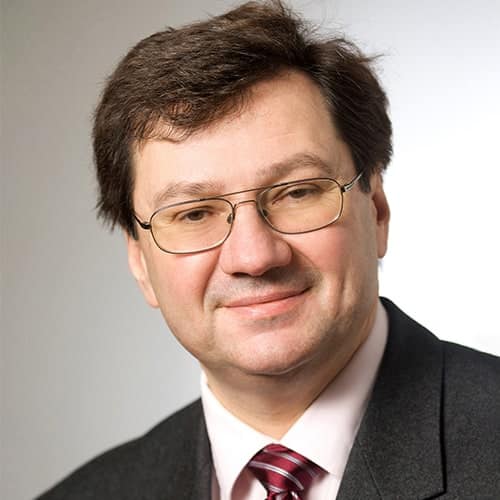
Anders Søgaard is a Professor at the University of Copenhagen , affiliated with both the Department of Computer Science and the Department of Communication. His research bridges Natural Language Processing and Machine Learning with a focus on AI ethics , explainability , and human-AI interaction . Primary Affiliation: Department of Computer Science, University of Copenhagen Secondary Affiliation: Department of Communication, University of Copenhagen Email: soegaard@di.ku.dk, soegaard@hum.ku.dk Research Interests His work spans Natural Language Processing , Machine Learning , and AI ethics , with recent studies addressing: Trustworthiness in AI systems Explainable AI (XAI) frameworks Multilingual model fairness and alignment Human-AI collaboration in reasoning tasks Ethical implications of social robots Mental health analytics using ML Recent Publications His 2025 output highlights trends in: AI ethics (e.g., fairness metrics, trustworthy systems) Multilingual model analysis (knowledge retention, cross-lingual transfer) Human-centric AI (gaze data, cultural considerations) Applications in healthcare and social good
Jan Madsen is a Professor at DTU Compute, Technical University of Denmark, and Head of the Embedded Systems Engineering section. His research focuses on system-level modeling and design of embedded computing systems, particularly cyber-physical systems, microfluidic biochips, and synthetic biology applications. Develops design automation tools and methodologies for embedded systems Supervises numerous PhD students and leads major research projects Research Interests Key areas include: Embedded systems-on-a-chip Cyber-Physical Systems (Internet-of-Things) Microfluidic Lab-on-Chip devices Synthetic biology with molecular computing Design, modeling, and optimization of complex systems Scientific Awards DATE Fellow (2019) IEEE CEDA Outstanding Recognition (2019) DTU Scientific Advise Award (2013) Best Paper Awards at MECO (2013) and CASES (2009) Jorck’s Foundation Research Award (1995) Publications His 14+ journal papers and 115+ conference papers demonstrate expertise in: SystemC-based modeling frameworks Energy-aware sensor networks Self-healing eDNA architectures Microfluidic biochip synthesis RTOS modeling and MPSoC exploration
Alena Thiel is an Associate Professor at the Centre of African Studies within the Faculty of Social Sciences at the University of Copenhagen. Her research examines digital technologies' impact on state formation and knowledge systems across Africa, with primary field sites in Ghana, Senegal, Botswana, and Kenya. Her core research areas include: State knowledge systems (biometric ID, census histories, DHIS2 health records) Digital governance (addressing systems, payment solutions, disaster risk datafication) African/feminist AI development and implementation Anthropology of the state through Science and Technology Studies (STS) frameworks Recent publications (2024-2025) reveal concentrated analysis of health data infrastructures in Ghana, trust dynamics in Africa's global networks, and critical sociological examinations of digital identification. Her work consistently bridges anthropological theory with practical governance challenges in African contexts. As an active member of the Centre of African Studies, she maintains interdisciplinary collaborations across multiple African countries and European institutions, with particular emphasis on Ghanaian research partnerships and editorial leadership for Africa Spectrum journal.
Mikael B. Skov is a Vice Dean and Professor at the Technical Faculty of IT and Design of Aalborg University , Denmark. His research spans human-AI interaction, robotics, and user experience, with a focus on trust signaling in clinical AI, swarm robotics, and sound zones for domestic environments. Role: Vice Dean for Research Department: Computer Science Research Interests: Skov investigates how humans interact with AI and robots in healthcare and domestic settings, emphasizing trust calibration, alert design, and acoustic comfort. His work includes developing frameworks for UX maturity in robotics organizations and studying long-term adoption of sound zone systems. Recent Projects: As principal/co-investigator, he leads the HERD project on human-AI collaboration in robot swarms (2021–2025) and supervises Data og Bæredygtig Mad (2020–2023), an HCI perspective on sustainable food systems. Publications: His 2024 work includes studies on AI explanations in clinical training, music applications with intermittent interactions, and multi-robot supervision. Earlier projects (2001–2020) focused on mobile device usability, UX practices, and context-aware computing.
Desmond Elliott is an Associate Professor in the Natural Language Processing section at the Department of Computer Science, University of Copenhagen (UCPH). His research focuses on multimodal and multilingual models with specific emphasis on vision-language integration and tokenization-free NLP approaches. He teaches Bachelor and Master's level courses including Advanced Topics in Natural Language Processing (since 2019), Grundlæggende Data Science (since 2023), and previously Data Science (2021-2023). His research interests center on building and understanding multimodal and multilingual models , particularly exploring vision and language interactions through billion-parameter systems. Current work investigates cultural representation disparities in vision-language models, parameter-efficient captioning, and multimodal distributional semantics across diverse domains including food culture and medical imaging. His methodology emphasizes real-world applicability in non-English contexts and ethical considerations in multimodal systems. Elliott's recent publications (2025) demonstrate leadership in multimodal NLP, with significant contributions to vision-language pretraining, multilingual evaluation frameworks, and clinical NLP applications. His work spans theoretical advancements in model architectures and practical implementations addressing challenges in low-resource languages and domain adaptation. Best Long Paper Award at EMNLP 2021 Best Poster Award at COLING 2019 As an active educator, Elliott contributes to courses on Fair and Transparent Machine Learning and previously taught Information Retrieval. His research collaborations span international institutions with particular focus on European and non-English language contexts, reflecting UCPH's recognition as Europe's #1 institution for HCI research over the past decade.
Sara Green is an Associate Professor at the Department of Science Education, University of Copenhagen, specializing in the Section for History and Philosophy of Science . Her work bridges philosophy, biology, and biomedical ethics, focusing on the epistemic and social implications of datafication in healthcare and the ethical challenges of precision medicine and consumer health technologies. Green holds a PhD in Science Studies from Aarhus University and was a postdoctoral fellow at the University of Pittsburgh’s Center for Philosophy of Science. She leads the PROMISE and COPE projects and contributes to EU-funded initiatives like DataSpace , TRANSCEND , and REDESIGN . Research Themes: Philosophy of precision medicine and data-driven healthcare Ethics of patient-derived organoids and organ-on-chip technologies Epistemic standards in consumer medicine Interdisciplinary integration in systems biology Article Trends: Recent publications explore organoid ethics , datafication in medicine , and philosophical frameworks for emerging health technologies . Key sub-fields include biobanking, cross-border data governance, and temporal dimensions of personalized medicine. Scientific Recognition: DFF Research Project 1 (2020) Semper Ardens Accellerate Grant (2023) Silver Medal, Royal Danish Society of Science and Letters (2024) Werner Callebaut Prize (2015) EU SwafS-Horizon stipend (2020) Teaching & Supervision: She teaches philosophy of science to students in biology, chemistry, and sports science, supervising projects on philosophy of biology and medicine and co-supervising science communication research. Collaborative Networks: Green collaborates across Denmark, the EU, and the U.S., particularly on cross-border health data infrastructure and reduction of animal models through organoid technologies.
Søren Lundbye-Christensen is an Associate Professor and Biostatistician affiliated with the Clinical Institute at the Faculty of Health Sciences, Aalborg University, and Aalborg University Hospital in Denmark. He specializes in biostatistical support for medical research, with a strong emphasis on cardiovascular and epidemiological studies. His research interests include biostatistics, survival analysis, cohort studies, clinical epidemiology, and statistical modeling in public health. He has contributed to a wide array of healthcare research, particularly in cardiovascular diseases, cancer, maternal health, and infectious diseases. His methodological expertise spans time-to-event analysis, registry-based research, and interval-censored data modeling. The recent publications highlight a strong trend in applying advanced statistical methods to large-scale clinical and population-based datasets. His work often involves collaboration with medical researchers to derive prognostic models, validate clinical databases, and assess public health outcomes. Key themes include cardiovascular risk, fertility, cancer biomarkers, and implementation of medical training programs. Scientific Contributions and Recognition: Published over 320 research articles and datasets. Active contributor to methodological advancements in biostatistics. Regular peer reviewer, including for journals like the R Journal. Public engagement through media appearances on statistics and health. Academic Advising and Grants: Søren has supervised 31 student theses, formally serving as PhD supervisor for 14 theses and as a biostatistical advisor for 19 others, primarily in mathematics and statistics. He has participated in numerous research projects funded through institutional and national grants, including studies on seasonal disease trends, postoperative complications, and metabolic disease prediction. His work often involves interdisciplinary collaboration across medicine, public health, and data science. Labs and Research Teams: He is embedded in collaborative research networks at Aalborg University Hospital and Aalborg University, contributing statistical expertise to clinical research groups. He is involved in projects utilizing Danish national health registries and has contributed to the development and validation of clinical databases. His work supports both hypothesis-driven medical research and methodological innovation in biostatistics.
Alfred Taudes is a Full Professor at the Department of Information Systems and Operations, Institute for Production Management, Vienna University of Economics and Business (WU Vienna). He holds a doctoral degree and a Habilitation from WU Vienna in Business Administration and Management Information Systems, and a Magister degree from Vienna University. He has held assistant professorships at WU and visiting professorships at Augsburg, Münster, Essen, and Tsukuba University, Japan. He joined WU permanently in 1993 and served as head of the Department of Information Systems and Operations from 2010 to 2016. His research spans Operations and Supply Chain Management , Marketing Engineering , Knowledge Management , and the impact of Big Data and Blockchain on production systems. Using Complexity Science and Cryptoeconomics , he investigates digital production, integrated value chains, and market designs. He teaches undergraduate and graduate courses including Operations Strategy, Data Science, and IT seminars in WU’s International Supply Chain Master program, and has also taught at Japanese universities. His recent publications focus on blockchain privacy (e.g., CoinJoin analysis), CBDCs, MiCAR regulation, decentralized federated learning, and digital custody, reflecting a strong trend toward cryptoeconomics and blockchain-based systems in operations and finance. These works appear in top journals and conferences in information systems, security, and operations research. Cooperation Officer of the Year 2013/14 Distinguished Paper Award WI 2009 VHB Best Paper Award Nomination VHB Best Paper Award Dr. Wolfgang Houska - Recognition Award Alfred Taudes has coordinated major research projects such as the WWTF-project “Integrated Demand and Supply Chain Management” and the Special Research Area Adaptive Models in Economics and Management Science. He currently leads the research group on Cryptoeconomics at WU and chairs the scientific board of the Austrian Internet Offensive . His leadership extends to project management in initiatives like the Austrian Blockchain Center and research on decentralized finance and digital assets. He is actively involved in academic service, including organizing conferences like DEXA 2022, serving on editorial boards, and advising on research policy. His lab and research group focus on blockchain applications, digital transformation in operations, and the societal implications of big data.
Teresa Hirzle is a Tenure Track Assistant Professor at the Department of Computer Science , University of Copenhagen , specializing in Human-Centred Computing . Her research focuses on Human-Computer Interaction (HCI) , Virtual Reality (VR) , Extended Reality (XR) , and Gaze-Based Interaction . Research Interests: Designing interaction techniques for immersive environments Eye movement analysis for educational applications Addressing digital eye strain in interactive systems Evaluating user experience in VR/AR Recent Research Trends: Her recent publications examine AI representation in VR co-creation, VR sickness in locomotion, eye strain in gaze-driven systems, and hybrid applications of comics/AR. She also explores pedagogical implications of eye tracking in remote learning. Contact: Email: tehi@di.ku.dk Office: Sigurdsgade 41, 2200 København N.
Pernille Bjørn is a Professor in Computer Supported Cooperative Work (CSCW) at the Department of Computer Science , University of Copenhagen (DIKU), where she has been since May 2015. Her research investigates collaborative work practices to design cooperative technologies, focusing on domains like healthcare, global software development, startup companies, and digital fabrication. Faculty of Science, University of Copenhagen Human-Centred Computing Section Research Interests : Bjørn’s work spans CSCW , Human-Computer Interaction , and Digital Fabrication , with applications in healthcare systems, cross-cultural software development, and inclusive technology design. She explores collaborative virtual reality training, FemTech, and crisis computing. ACM Distinguished Member (2024) Publications : Published in top venues like ACM Transactions on Computer-Human Interaction , CSCW , and CHI , her recent work examines hybrid work asymmetry, neurodiverse accessibility, and art-driven collaborative research.
Rob Gleasure is a Professor in the Department of Digitalization at Copenhagen Business School (CBS), Denmark. His research focuses on the intersection of information systems, digital technologies, and human behavior, with particular expertise in blockchain technology, crowdfunding, AI applications, and technology adaptation. Based at Solbjerg Square 3 in Frederiksberg, he contributes to CBS's mission of advancing knowledge in business and society through digital transformation. Professor Gleasure's research spans several key areas within information systems and digital innovation: Digital finance and blockchain technologies, including cryptocurrency and financial applications Crowdfunding platforms and digital fundraising mechanisms Artificial intelligence applications in various domains including healthcare and banking Human-computer interaction and the psychological aspects of technology adoption Digital collaboration and the affective dimensions of online work Quantum computing infrastructure and emerging technologies His recent publications reveal an evolving research trajectory that increasingly addresses the societal implications of digital technologies. Gleasure has moved from foundational work on crowdfunding and blockchain to more complex examinations of AI ethics, gender bias in technological systems, and the psychological impacts of digital media. His research demonstrates growing attention to sustainable development goals, particularly those related to responsible consumption and production, reduced inequalities, and climate action. The interdisciplinary nature of his work bridges business, technology, and social sciences, often employing both qualitative and experimental methodologies. Professor Gleasure has served as a supervisor for numerous students (21 supervisor tasks mentioned) and has been active in academic service including co-chairing the ACM Collective Intelligence Conference in 2021. His research has attracted media attention, with contributions to discussions on cryptocurrency, carbon offsetting in aviation, and AI applications.
Kohei Nakajima is an Associate Professor at the Department of Intelligent Mechano-Informatics, Graduate School of Information Science and Technology, The University of Tokyo. He holds concurrent positions at the Department of Creative Informatics and the Next Generation Artificial Intelligence Research Center (AI Center). As an Endowed Chair in Advanced Artificial Intelligence Education, he leads the Physical Intelligence Lab, which focuses on the intersection of soft robotics, nonlinear dynamics, and physical computing. His research interests center on Physical Reservoir Computing (PRC), a paradigm that exploits the natural dynamics of physical systems for computation, with applications in soft robotics, spintronics, and quantum machine learning. Nakajima's work demonstrates how physical systems can inherently process information without traditional digital computation, leveraging phenomena like chaos, bifurcations, and embodied intelligence. Nakajima's publications reveal a strong focus on understanding how physical systems can perform computational tasks. His recent work spans from biological applications (jellyfish cyborgs, ostrich-inspired robotics) to fundamental theoretical advances in reservoir computing. The research demonstrates how physical phenomena can be harnessed for information processing, with implications for energy-efficient computing and novel robotic control paradigms. As the organizer of the Reservoir Computing Seminar, Nakajima has built a vibrant research community exploring the nature of information processing across disciplines. His lab actively recruits graduate students and postdocs, indicating strong research momentum and institutional support for his work in physical intelligence.
Raghavendra Selvan, an Assistant Professor (Tenure Track) at the University of Copenhagen, holds joint appointments in the Machine Learning Section (Department of Computer Science), Kiehn Lab (Department of Neuroscience), and the Data Science Laboratory. His academic journey includes a PhD in Medical Image Analysis (2018), MSc in Communication Engineering (2015), and BSc in Electronics and Communication Engineering (2009). PhD - Medical Image Analysis, University of Copenhagen (2018) MSc - Communication Engineering, Chalmers University (2015) BSc - Electronics and Communication Engineering, BMS Institute of Technology, India (2009) His research focuses on Bayesian Machine Learning with emphasis on Medical Image Analysis, Graph-based Learning, Tensor Networks, Approximate Inference, and Multi-Object Tracking Theory. Recent publications highlight his contributions to environmentally sustainable AI practices, efficient deep learning in medical imaging, and novel applications of tensor networks. Key research areas: Green AI and Environmental Sustainability Medical Image Analysis Graph Neural Networks Crystal Structure Prediction Model Compression Materials Science Applications
Jacob Gorm Davidsen is an Associate Professor at Aalborg University's Department of Communication and Psychology, affiliated with The Faculty of Social Sciences and Humanities. He leads the Collaboratory for Human-Centered Immersive Problem-Solving Spaces (CHIPS) and co-founded initiatives like VILA and AVA360VR. His research focuses on leveraging digital technologies, particularly Virtual Reality (VR), to enhance learning, collaboration, and problem-solving in immersive environments. He holds a PhD in Human Centered Communication and Informatics. Key projects include 'En bedre start' (funded by Independent Research Fund Denmark) exploring VR for teacher training and the 360mash project addressing GPU cloud and software anonymization. His work bridges computer science, education, and human-centered design. Main research interests include immersive VR applications, collaborative learning environments, and digital infrastructure for social sciences. His contributions span 105+ publications, with recent emphasis on activity-based VR frameworks and near-future educational technologies. He serves on editorial boards (e.g., European Journal of Engineering Education) and actively reviews manuscripts. Notable software tools developed include DOTE and AVA360VR for qualitative analysis and video collaboration.
Michael Wimmer is an Associate Professor at the Institute of Computer Graphics and Algorithms, Faculty of Informatics, Technical University of Vienna (TU Wien), where he leads the Rendering and Modeling Group. His work bridges real-time graphics, visualization, and urban modeling applications. Research Interests: His primary research lies in real-time rendering, procedural and shape modeling, point-based rendering, and real-time visualization of urban environments, with applications in computer games and interactive systems. He has coauthored over 100 papers and the notable book Real-Time Shadows . The available publication indicates a trend toward integrating domain knowledge into dynamic financial data visualization, expanding his expertise from core graphics into data-intensive applications. Associate Editor: Computers & Graphics, IEEE Transactions on Visualization and Computer Graphics (TVCG), Computer Graphics Forum (CGF) Program Committees: ACM SIGGRAPH, SIGGRAPH Asia, Eurographics, Eurographics Symposium on Rendering, ACM I3D Papers Co-Chair: EGSR 2008, Pacific Graphics 2012, Eurographics 2015 Michael Wimmer has supervised research students and leads the Rendering and Modeling Group at TU Wien, fostering innovation in graphics and visualization. While specific grants are not listed, his extensive publication record and editorial roles suggest sustained research funding and academic leadership. The group focuses on advancing real-time graphics techniques, with applications in urban simulation, gaming, and data visualization, maintaining strong ties to both academic and industrial partners in the computer graphics community.