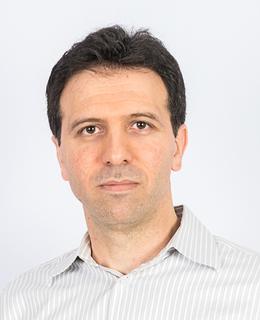
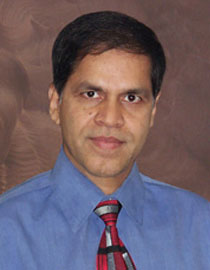
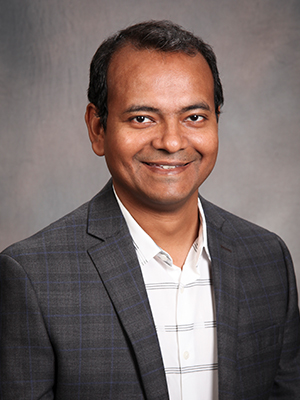
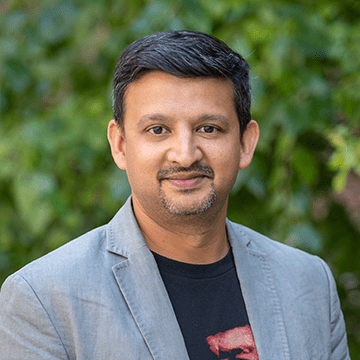
Eleonora Vacca is a PhD student and Research Fellow in the Department of Automatic Control and Computer Science (DAUIN) at the Polytechnic University of Turin. She holds a B.S. in Electronic Engineering from the University of Palermo (2018) and an M.S. in Electronic Engineering-Embedded Systems from Politecnico di Torino (2021). Her research focuses on digital hardware design, reliability engineering, reconfigurable devices, and AI applications in aerospace and safety-critical systems. She is a member of the Aerospace and Safety Computing Lab and the CAD - Electronic CAD & Reliability Group (DAUIN). Her work addresses challenges such as radiation effects mitigation in space missions, fault-tolerant AI accelerators, and real-time anomaly detection in satellite telemetry. She has contributed to projects like the RAMSES CubeSat-1 Development (2025-2026), funded by commercial contracts. In 2024, she won the Best Student Paper Award at the NEWCAS Conference for her research on radiation effects in space missions. Vacca collaborates on teaching, including assisting in the course 'Electronic Calculators' for Computer Engineering students. Her recent publications explore AI resilience in RISC-V ecosystems, radiation environment analysis for space missions, and gesture recognition systems for smart cities. She actively contributes to conferences such as the ACM International Conference on Computing Frontiers and the IEEE International Smart Cities Conference.
Ankit Bhardwaj is an Adjunct Professor of Environmental Studies at New York University (NYU) and concurrently a PhD student in Sociology at NYU. His research focuses on the politics of expertise related to carbon emissions reduction, with particular attention to India's urban climate change policies and global South contexts. Previously, he worked at the Centre for Policy Research in New Delhi and contributed to the United Nations Environment Programme’s Emissions Gap Report (2019). Education: MSc in City Design and Social Science (London School of Economics, 2015); BASc in Civil Engineering (University of Toronto, 2014). Research interests include environmental politics, sociology of expertise, climate change mitigation in urban settings, energy infrastructure transitions, and social theory applied to global environmental challenges. His work emphasizes interdisciplinary approaches to understanding how bureaucratic systems, local communities, and global frameworks interact in addressing climate change. Recent publications analyze Indian city bureaucracies' climate responses, energy demand transitions in low-income households, and decarbonization strategies in 'smart cities.' He critiques policy frameworks that fail to reconcile multiple development, energy, and climate objectives. His writing extends to climate justice, racialization theory (e.g., WEB Du Bois), and urbanization dynamics in the Global South. Awards and grants not explicitly listed, but his contributions to major reports like the UNEP Emissions Gap Report highlight his impactful policy engagement. He actively tweets @ankitbhardy and collaborates on projects bridging academic research with actionable policy solutions.
Shakirah Hudani is an Assistant Professor in the Department of City and Regional Planning at the University of North Carolina, with an affiliation in the Department of African, African American, & Diaspora Studies. She holds a PhD in City and Regional Planning from UC Berkeley. Her work centers on African urbanism, post-conflict urban change, and spatial politics in East Africa. Key research focuses include Rwanda's post-genocide urban reconstruction, Nairobi's peripheral development, and Luanda's oil-driven transformations. Her research examines how urban spaces reflect and reshape social dynamics, particularly around memory, identity, and governance. Recent projects analyze commemoration practices in Rwanda, land disputes in Nairobi, and carceral architectures. She critiques master planning processes and explores grassroots urban agency in marginalized communities. Publications span urban studies, critical geography, and postcolonial theory, with a focus on decolonizing urban narratives. Her work bridges academic analysis with practical urban policy debates, emphasizing equity and participatory planning in transitional societies.
Majid Ghaderi is a Professor in the Department of Computer Science at the University of Calgary, Faculty of Science. His expertise spans network algorithms, secure communication, and machine learning applications in network control. He holds a Ph.D. in Computer Science from the University of Waterloo (2006), and M.Sc. and B.Sc. degrees in Software Engineering from Sharif University of Technology (2001 and 1999). Education: Ph.D. Computer Science, University of Waterloo, 2006 M.Sc. Software Engineering, Sharif University of Technology, 2001 B.Sc. Software Engineering, Sharif University of Technology, 1999 Research Interests: Dr. Ghaderi focuses on optimizing network algorithms, securing communication in distributed systems, and leveraging machine learning for network control. His work addresses challenges such as secure wireless protocols, SDN-based network management, and efficient resource allocation in data centers. He explores proactive traffic scheduling and anomaly detection in critical infrastructures like industrial control systems and vehicular networks. Publications Trends: His recent work emphasizes covert communication in heterogeneous networks, adaptive federated learning in edge environments, and low-overhead diagnostic systems for cloud networks. He also investigates cybersecurity defenses against hardware vulnerabilities and dynamic threat landscapes. Awards: Best in-session Presentation Award, IEEE INFOCOM 2018 Municipal Excellence Award, Government of Alberta 2018 Faculty of Science Excellence in Teaching Award 2012 Advising & Grants: While no specific advisees are listed, his research has been supported by grants focusing on network security, edge computing, and IoT applications. He teaches CPSC 441 (Computer Networks) and maintains an active lab focused on network systems and cybersecurity. Labs & Teams: His research group collaborates on projects involving software-defined networks, vehicular communication, and industrial IoT security. The team develops open-source tools for network monitoring and anomaly detection.
Ning Ai is an Associate Professor at the University of Illinois Chicago (UIC), holding a joint appointment in the Department of Urban Planning and Policy and the Institute for Environmental Science and Policy. Her expertise lies in urban sustainability, material/waste management, and urban metabolism. She joined UIC in 2011 with a Ph.D. from Georgia Tech, an MIT Master's, and dual bachelor's degrees from Tsinghua University and Renmin University of China. Her research integrates life cycle perspectives and data-driven approaches to environmental planning, emphasizing sustainable transportation and waste management. Notable projects include studies on food recovery programs, electric vehicle battery recycling, and neighborhood-level traffic impact analysis in Chicago. She has served on the ACSP Committee on Diversity and led the Air & Waste Management Association’s Sustainability Division (2020-2022). Teaching spans courses like Environmental Planning and Policy, Urban Economics, and System Methods for Environmental Policy. Her work bridges academia and practice, collaborating with entities like the World Bank and Georgia’s Department of Natural Resources. She leads a team advancing eco-friendly product adoption through projects like PFAS-free food service initiatives. Publications focus on sustainable urban systems, waste management frameworks, and policy design. Her research addresses both broad sustainability challenges and localized solutions, emphasizing interdisciplinary collaboration and community engagement.
Rabi N. Mahapatra is a Professor in the Department of Computer Science & Engineering at Texas A&M University, within the College of Engineering. His research focuses on embedded systems, reconfigurable architectures, real-time systems, and semantic networks. He holds a Ph.D. in Computer Engineering from the Indian Institute of Technology (1992), an M.S. in Electrical Engineering (Sambalpur University, 1984), and a B.S. in Electronics & Communication (Sambalpur University, 1979). His research interests include Network-on-Chip (NoC), data analytic co-design, IoT protocols, and temperature-aware energy management. His work emphasizes hardware-software co-design for complex systems, with applications in many-core processors, semantic search engines, and real-time embedded systems. Key publications highlight contributions to collaborative filtering on many-core architectures, low-jitter clock distribution circuits, and energy-efficient scheduling. He has been recognized as an IEEE Computer Society Distinguished Visitor (2005–2007) and received the BOYS-CAST Indo-US Young Scientist Award. He leads the Codesign Embedded Systems group at Texas A&M, exploring cutting-edge topics such as photonics NoC, reservoir computing, and IoT security. His research bridges theory and practice, addressing challenges in scalable systems and embedded applications.
Abdullah Muzahid is an Associate Professor in the Department of Computer Science and Engineering at Texas A&M University (since August 2024), previously serving as an Assistant Professor there since August 2018. Prior, he held an Assistant Professor role at the University of Texas at San Antonio (2012-2018). He earned his Ph.D. from the University of Illinois at Urbana-Champaign (2012), focusing on architectural support for debugging concurrency bugs under Prof. Josep Torrellas. Education: Ph.D., Computer Science, University of Illinois at Urbana-Champaign (2012) M.S., Computer Science, University of Illinois at Urbana-Champaign (2009) B.S., Computer Science and Engineering, Bangladesh University of Engineering and Technology (2005) Research Interests: His work spans Computer Architecture , Systems , and Artificial Intelligence , with focus on multiprocessor architecture, parallel programming, debugging, and applying machine learning to system optimization. Recent projects include cache indexing via entropy estimation, DNN training acceleration, and hardware-software co-design for security. Awards: NSF CAREER Award (2017) Excellence in Research Award (UTSA, 2015 & 2017) W. J. Poppelbaum Award (UIUC, 2012) Intel Ph.D. Fellowship (2011) Grants & Advising: He leads NSF-funded projects on robust deep learning and stream processing systems. Advised 5 PhD graduates and currently mentors 4 PhD students. Served on program committees for ISCA, HPCA, MICRO, and as NSF panelist. Labs/Teams: Active in Texas A&M’s Computer Architecture group, collaborating on machine programming, hardware security, and AI-driven systems optimization.
Aswin Punathambekar is a Professor of Communication at the Annenberg School for Communication, University of Pennsylvania, and Director of the Center for Advanced Research in Global Communication (CARGC). His work focuses on media and cultural change in postcolonial and diasporic contexts, particularly in South Asia and its global diasporas. He has held previous academic positions at the University of Michigan, University of Virginia, and a British Academy Global Professorship at Loughborough University (U.K.). Education includes a B.Tech from University of Allahabad (1995), M.A. from University of Georgia (2001), M.S. from MIT (2003), and Ph.D. from University of Wisconsin-Madison (2007). His research integrates media industries, cultural politics, and technological histories, with emphasis on how digital platforms reshape identity, citizenship, and cultural expression. Major publications include From Bombay to Bollywood (2013), Global Digital Cultures (2019), and Media Industry Studies (2020). Current projects explore digital media in India, South Asian diasporic media histories, and global media industries. He serves on editorial boards for journals like Media, Culture & Society and is a Peabody Awards juror. Awards include the Katherine Singer Kovacs Award (2013) and ICA's Outstanding Young Scholar Award (2015). His teaching covers global digital cultures, media theory, and methods in cultural studies, with courses like 'India on Screen' and 'Global Media Industries.' His work bridges academic rigor with public engagement, addressing intersections between media, technology, and societal transformation in transnational contexts.
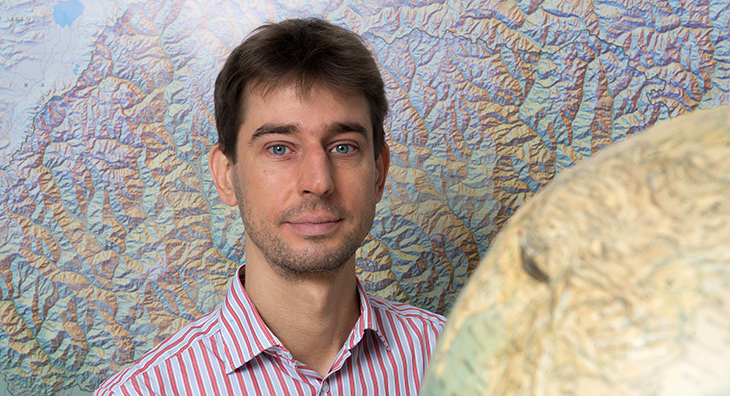
György Hetényi is an Associate Professor at the Institute of Earth Sciences, University of Lausanne, specializing in large-scale geophysics. His research focuses on mountain-building processes, earthquake dynamics, and tectonic deformation of the Himalayas and Alps. He leads the AlpArray project, deploying the largest academic seismic network in Europe. Since 2015, he has held an SNSF Assistant Professorship, advancing to his current role in 2020. Education: Bachelor's in Geophysics at Eötvös University (Budapest) Master's and PhD at École Normale Supérieure (Paris), studying Himalayan deformation Research Interests: Combining seismic and gravity data to model crustal structures, numerical modeling of orogenic processes, and educational seismology initiatives in Nepal. Active in field campaigns across Bhutan, Nepal, and the Ivrea-Verbano Zone. Publications: Over 48 peer-reviewed articles since 2007, emphasizing crustal imaging, seismic tomography, and Himalayan tectonics. Recent work includes participatory gravity modeling challenges and pan-Alpine gravity database development. Awards: Prize of the Chancellery of the Universities of Paris (2007) for doctoral research on Himalayan deformation. Teaching & Outreach: Developed the 'Geophysics Across Scales for Geologists' module in the UNIL-UNIGE program. Co-leads the Nepal School Seismology Network, integrating low-cost seismic education tools. Grants & Projects: AlpArray, DIVE (scientific drilling in Ivrea Zone), and seismic hazard assessments in Bhutan. Collaborates with international networks like ICDP and European seismic consortia. Labs/Teams: Part of the Institute of Earth Sciences (UNIL) and leads the OROG3NY project on mountain-building dynamics.
Dr. Rishita Nandagiri is a feminist researcher and academic currently serving as a Lecturer (Assistant Professor) in the Department of Global Health & Social Medicine at King's College London. She previously held research and teaching positions at the London School of Economics (LSE), including an ESRC Postdoctoral Fellowship and an LSE Fellow in Health and International Development. Her work is deeply rooted in reproductive justice, gender, and global health, with a focus on the Global South. PhD in Social Policy, London School of Economics (2019) ESRC Postdoctoral Fellow, LSE Department of Methodology (2020-2021) LSE Fellow in Health and International Development (2019-2020) Research Assistant, LSE Department of Media and Communications (2018-2019) Dr. Nandagiri’s research centers on reproductive (in)justices, interrogating how power and politics shape abortion access, self-managed abortion, care trajectories, and reproductive governance. Her work is interdisciplinary, drawing on feminist theory, qualitative and participatory methods, policy analysis, and co-production with communities and organizations. She has extended her research to examine the impact of the COVID-19 pandemic on abortion and the role of lay health providers in care delivery. Her methodological interests include multi-method designs that integrate interviews, archival research, and community engagement. The 15 most recent articles reflect a strong trajectory in reproductive justice, with increasing engagement with feminist economics, carceral systems, and global policy. Themes include structural violence, legal pluralism, care ethics, and transnational advocacy. Her publications span high-impact journals in public health, social policy, gender studies, and media, indicating a broad interdisciplinary reach. Scientific awards and recognitions include: ESRC Postdoctoral Fellowship (2020-2021) LSE Class Teacher Award (2020) LSE Research Investment and Infrastructure Funds (2020) Best PhD Poster Prize, British Society for Population Studies (2018) LSE PhD Studentship (2015-2019) Dr. Nandagiri has advised on and contributed to numerous research grants, particularly those related to reproductive health, digital privacy, and pandemic response. She has collaborated with major institutions such as UNFPA, the Women’s Global Network for Reproductive Rights, and FRIDA. She co-founded the Abortion Book Club and serves on editorial and advisory boards, including BMJ Sexual & Reproductive Health and the International Union for the Scientific Study of Population’s Abortion Research panel. She also co-convenes the Development Studies Association’s Women and Development Study Group, demonstrating strong leadership in academic and advocacy networks. She is actively involved in public engagement, contributing to LSE blogs, media outlets like Women's Health Magazine UK, and platforms such as the Oxford Human Rights Hub and Harvard’s Bill of Health. Her lab and team affiliations are not explicitly named, but her collaborative projects suggest strong ties to interdisciplinary research groups focused on global health, reproductive justice, and digital rights.
Professor Stephen Taylor is a leading historian specializing in early modern British history, particularly the religious and political history of seventeenth- and eighteenth-century England. He is affiliated with the Department of History at Durham University, where he holds the rank of Professor in Early Modern British History. His scholarly work spans topics such as Anglicanism, court culture, party politics, and the relationship between church and state. Professor (Early Modern British History), Department of History, Durham University Co-Director, The Clergy of the Church of England Database 1540–1835 Co-Founder, Durham University IMEMS Press His research interests include the identity of Anglicanism, religious conformity during the English Revolution, the Hanoverian monarchy and court culture (especially Queen Caroline of Ansbach), the Church of England from the 16th to 19th centuries, the Revolution of 1688, and news culture in the later seventeenth century. He has also studied figures such as John, Lord Hervey, and Edmund Gibson. Professor Taylor’s recent publications reflect a consistent focus on ecclesiastical history, political theology, and archival scholarship. His work often analyzes religious identity, state formation, and the interplay between monarchy and church. He has contributed to major scholarly editions and databases, demonstrating a commitment to both interpretive and infrastructural academic work. His editorial roles in volumes like The Nature of the English Revolution Revisited and National Prayers underscore his leadership in the field. His scholarly recognition includes multiple visiting fellowships at prestigious institutions such as the Huntington Library, Folger Shakespeare Library, and the Harry Ransom Center. These awards reflect the high esteem in which his work is held internationally. 2024: Visiting Fellow, The Huntington Library, California 2012: Woodward and Bernstein Endowment Fellow, Harry Ransom Humanities Research Center 2011: Visiting Fellow, Peterhouse, Cambridge 2009: Visiting Fellow, Folger Shakespeare Library 2007: Pforzheimer Fellow, Harry Ransom Humanities Research Center 2007: Visiting Fellow, Folger Shakespeare Library Professor Taylor actively supervises postgraduate research, with students working on topics such as the Earl of Danby, the transmission of taste, John Pearson, obedience and subversion under the late Stuarts, and William Laud’s economic thought. He has been involved in significant grant-funded projects, including the AHRC-supported Cultural Heritage 360 report and the long-term Clergy of the Church of England Database . His editorial and collaborative work indicates strong leadership in shaping future directions in arts and humanities research. He is a key figure in the Institute of Medieval and Early Modern Studies (IMEMS) and has helped establish Durham University IMEMS Press, further cementing his role in advancing scholarship in medieval and early modern studies.
Pieter Ballon is a Full Professor at Vrije Universiteit Brussel (VUB) and Director of imec-SMIT, part of the Studies in Media, Innovation and Technology (SMIT) research group. He holds dual affiliations in Communication Sciences and SMIT. His roles include leadership in interdisciplinary research projects and academic administration. Research expertise focuses on Smart Cities, Digital Platforms, and ICT business models. Key interests include platform urbanism, data ecosystems, and algorithmic systems' societal impacts. He has supervised 122 academic works, including 8 master’s theses listed here. Notable awards include the 1st Brussels Smart City Ambassador (2016-2017) and multiple Best Paper Awards. His work spans over 300 publications and 75 research projects, with active grants like SHALGO (2024-2028) and AMAI 5 (2025-2026). He frequently engages in public debates, academic conferences, and media discussions on topics like algorithmic governance and smart city technologies.
Paul Grubbs is an Assistant Professor in the Department of Electrical Engineering and Computer Science at the University of Michigan. His research focuses on applied cryptography, security, and systems, particularly at the intersection of cryptographic protocols and real-world deployments. Education: PhD in Computer Science (Cornell University), BS in Mathematics and Computer Science (Indiana University) His work explores vulnerabilities in cryptographic systems, the design of secure key-value stores, and the societal implications of information security. Recent publications highlight advancements in zero-knowledge proofs, post-quantum cryptography, and encrypted database analysis. Key trends in his publications include: 1) Zero-Knowledge Proofs and Post-Quantum Security; 2) Privacy in Encrypted Systems; 3) Cryptographic Protocol Vulnerabilities; 4) Interdisciplinary approaches at the intersection of technology and societal impact. Scientific awards: IEEE Symposium on Security and Privacy 2023 Distinguished Paper Award USENIX Security 2020 Distinguished Paper Award Cornell Computer Science Dissertation Award Students include current advisees like Jiwon Kim, Anna Pui Yung Woo, and Chad Sharp (co-advised with Chris Peikert), plus former students Yang Du (MSc 2024), Quang Dao (MMath 2022), and Pengxiang Wang (BSE 2023). Grants include DARPA SIEVE (2021), Meta Privacy-Enhancing Technologies (2022), and NSF CAREER (2023). He has served on program committees for CRYPTO, IEEE S&P, and other leading conferences.
Prof. Maryline Laurent is a Professor at Telecom SudParis, affiliated with the SAMOVAR research laboratory. Her work focuses on cybersecurity, privacy-preserving technologies, blockchain applications, and IoT security. She has contributed to numerous high-impact publications and conferences, addressing challenges in secure healthcare systems, decentralized identity management, and privacy in distributed systems. Her research spans cryptographic protocols, access control mechanisms, and compliance with EU data protection regulations. Key areas of expertise include secure communication protocols for IoT, blockchain-based solutions for healthcare, and privacy-enhancing technologies. She has collaborated on projects such as self-sovereign identity frameworks, anonymized data aggregation, and privacy-preserving smart grid systems. Her work emphasizes practical methodologies for assessing re-identification risks in anonymized datasets and designing secure systems compliant with evolving regulations. Prof. Laurent’s contributions extend to book chapters and edited volumes on digital identity management and wireless network security. She actively participates in international conferences and initiatives, advocating for privacy-by-design principles in intelligent infrastructures.
Chris H. Wiggins serves as Associate Professor of Applied Mathematics at Columbia Engineering and Chief Data Scientist at The New York Times. He is a founding member of Columbia's Data Science Institute executive committee and Department of Systems Biology, with additional affiliations in Statistics, Foundations of Data Science, Health Analytics, Computational Social Science, and Education. His educational background includes: PhD in Theoretical Physics from Princeton University (1993-1998) Courant Instructor position at NYU (1998-2001) Wiggins' research bridges data science ethics , systems biology , and applied mathematics , focusing on societal implications of technology. His work examines disinformation ecosystems, ethical product design frameworks, and algorithmic accountability through interdisciplinary lenses combining computational methods with social science perspectives. His publications reveal a consistent emphasis on ethical infrastructure in data science, particularly how social media platforms can implement Tukey-inspired principles through measurable objectives. This reflects his broader mission to operationalize ethics in technology development. Award highlights: Fellow of the American Physical Society Columbia’s Avanessians Diversity Award Wiggins co-founded hackNY (2010), establishing semesterly student hackathons and the Fellows Program connecting students with NYC startups. His advisory work focuses on creating structured pathways for academic-industry collaboration in data science education. He leads Columbia's Computational Social Science initiatives and hackNY's educational infrastructure, fostering communities where students develop real-world data science solutions while engaging with ethical challenges.