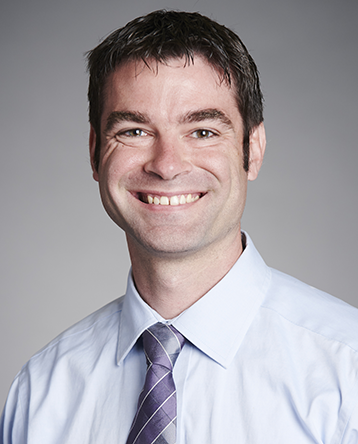
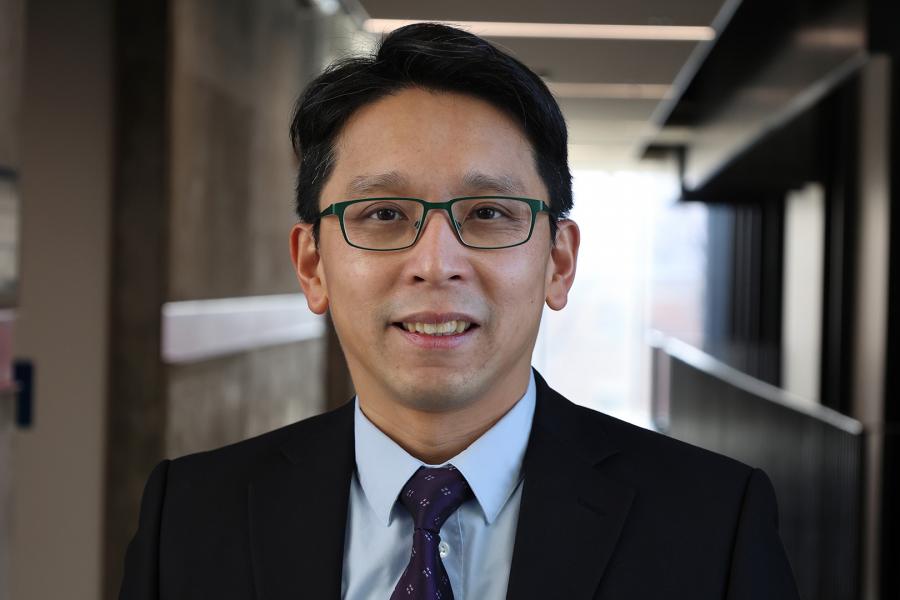
Tivon Rice is an Assistant Professor in DXARTS (Digital Arts and Experimental Media) at the University of Washington. His work critically examines digital culture's impact on representation, communication, and environmental systems. Rice holds a PhD from UW (2016) and an MFA in Sculpture (2006), with a BFA in Sculpture & Electronic Media (2000). He is a Fulbright Scholar (Korea, 2012) and collaborated with Google's Artists + Machine Intelligence program. Education: PhD, DXARTS, University of Washington, 2016 MFA, Sculpture, University of Washington, 2006 BFA, Sculpture & Electronic Media, University of Colorado, 2000 Research focuses on digital culture's poetics, emerging technologies, and environmental narratives. Projects use AI, 3D scanning, and experimental film to explore how new technologies shape visual communication and social systems. Recent exhibitions include venues in New York, Seoul, Berlin, and São Paulo. Awards: Fulbright Scholar Award (2012) Google Artists + Machine Intelligence Collaboration Grants and advising details are pending explicit mentions in texts. Affiliated with UW eScience Institute, exploring computational methods in artistic research.
Professor Vincent Sokalski is a faculty member in the Department of Materials Science and Engineering at Carnegie Mellon University (CMU), specializing in nanoscale magnetic and spintronic materials. He holds a B.S. from the University of Pittsburgh and advanced degrees (M.S., Ph.D.) from CMU. His research focuses on emerging phenomena in magnetic thin films for energy-efficient computing, particularly leveraging skyrmions and the Dzyaloshinskii-Moriya interaction. He chairs the Pittsburgh IEEE Magnetics Society and directs CMU's MSE Department's community and inclusion initiatives. Sokalski also leads outreach efforts through the College of Engineering. Education: Ph.D., Materials Science & Engineering, CMU (2011) M.S., Materials Science & Engineering, CMU (2009) B.S., Materials Science & Engineering, University of Pittsburgh (2007) Research emphasizes low-power memory solutions via spintronic materials, with a focus on stabilizing skyrmions for next-generation computing. His group employs combinatorial material design and advanced imaging techniques like Lorentz transmission electron microscopy. Recent work explores asymmetrical superlattices and DMI-driven phenomena. Publications highlight advancements in domain wall dynamics, skyrmion stabilization, and magnetic symmetry breaking. Awards include the 2021 Provost’s Inclusive Teaching Fellowship. Sokalski advises students like Nisrit Pandey and Maxwell Li, who have won national poster competitions. He co-leads the AMPED Consortium grant for advanced magnetic technologies and oversees MSE’s materials characterization facilities.
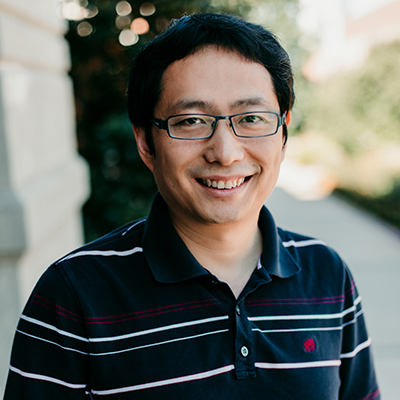
Xinhao Xu is an Associate Professor at the School of Information Science & Learning Technologies within the College of Education & Human Development at the University of Missouri. He specializes in technology-enhanced learning environments, with a focus on mixed reality, embodied interactions, and game-based learning for STEM education. His research explores how immersive technologies like VR and AR can improve educational outcomes and engagement. Dr. Xu holds a Ph.D. in Instructional Systems and Learning Technologies from Florida State University, alongside a B.Sc. in Electronic Instrumentation and Measurement and an M.Sc. in Digital Communication Systems and Technology from institutions in China and Sweden. His work integrates quantitative and qualitative methods to study learning processes in technology-rich settings. His research interests include the design of immersive virtual learning environments, the role of embodied interactions in cognition, and the application of novel technologies (e.g., generative AI, CAVE systems) in education. He is affiliated with the Technology to Enhance Learning Lab (TELL) and has received funding from the Mizzou Alumni Association Faculty Incentive Grants. Xinhao Xu’s publications emphasize trends in VR/AR adoption, collaborative learning in immersive spaces, and the psychological impacts of technology on learners. His work highlights the potential of mixed reality to bridge theoretical and practical learning gaps, particularly in STEM disciplines.
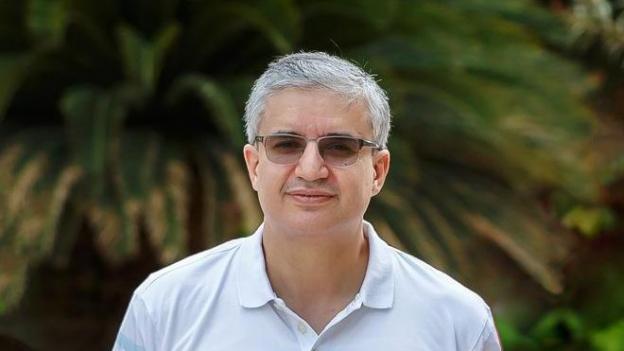
Dr. Jose Manuel Sánchez Peña is a Full Professor at Universidad Carlos III de Madrid (UC3M), affiliated with the Grupo Universitario de Tecnologías de Identificación (GUTI). His research focuses on precision agriculture technologies, optoelectronics, and neuroscientific interfaces. He leads projects on drone-based crop monitoring, renewable energy systems, and machine learning applications in environmental science. Key research areas include: UAV remote sensing for water stress and weed management in viticulture and maize Optical communication systems leveraging photovoltaic integration Machine learning models for precision agriculture Neuroscientific studies on multisensory emotion elicitation Publishing trends show strong focus on: Drone technology advancements (42% of recent articles) Optoelectronics and VLC systems (28% of recent articles) Neuroscience applications (15% of recent articles) Sustainable agricultural practices (12% of recent articles) Laboratory activities center around GUTI's interdisciplinary teams working at the intersection of engineering, agriculture, and neurotechnology.
Mohamed-Slim Alouini is a Professor of Electrical Engineering and Associate Dean of the Computer, Electrical and Mathematical Science and Engineering (CEMSE) Division at King Abdullah University of Science and Technology (KAUST) in Saudi Arabia. He also serves as the Associate Vice President for Research and holds the UNESCO Chair in Education to Connect the Unconnected. With over 500 journal publications and more than 46,000 citations, he is a world-renowned expert in wireless communications who was elected IEEE Fellow in 2009 at the age of 39. Education: PhD in Electrical Engineering, California Institute of Technology (Caltech), 1998 MS in Electrical Engineering, Georgia Institute of Technology (Georgia Tech), 1995 Diplôme d'Etudes Approfondies (DEA) in Electronics, Université Pierre & Marie Curie (Sorbonne University), 1993 Diplôme d'Ingénieur, École Nationale Supérieure des Télécommunications (Télécom Paris Tech), 1993 Habilitation, Université Pierre & Marie Curie (Sorbonne University), 2003 Dr. Alouini is a world-renowned expert in wireless communication and networking with research interests spanning diversity combining techniques, MIMO systems, multi-hop/cooperative communications, optical wireless systems, cognitive radio, UAV communications, and advanced modulation schemes. His current focus addresses the technical challenges of uneven information and communication technology distribution, particularly targeting rural, low-income, disaster-prone, and hard-to-reach areas through integrated ground-airborne-space networks. His work bridges theoretical foundations with practical implementations to solve real-world connectivity problems. His recent publications (2020-2024) demonstrate a clear research trajectory toward integrated communication networks combining terrestrial, aerial, and space components. There's growing emphasis on UAV communications, satellite systems, optical wireless technologies, and rural connectivity solutions, with increasing integration of machine learning techniques for network optimization. His work shows consistent focus on addressing the digital divide, with several publications specifically targeting 6G challenges for connecting underserved populations and recycling existing infrastructure for enhanced rural connectivity. Scientific Awards: Member of the European Academy of Sciences and Arts (2019) Fellow of the African Academy of Sciences (2018) IEEE Fellow (2009) Abdul Hameed Shoman Award for Arab Researchers (2016) OIC Science & Technology Achievement Award (2017) Multiple recognitions as Highly Cited Researcher NSF CAREER Award (1999) Dr. Alouini has mentored numerous successful students and post-doctoral fellows who have secured positions at top institutions worldwide including Harvard, Caltech, Imperial College, and faculty positions at Korea University, Hanyang University, and universities across the Middle East. His December 2018 PhD graduate Qurrat-Ul-Ain Nadeem received the prestigious Marconi Society Paul Baran Young Scholars award, while post-doctoral fellows have won IEEE ComSoc Young Professionals Best Innovation Award and attended the Lindau Nobel Meeting. His Communication Theory Lab at KAUST drives significant research in wireless communications with funding supporting extensive publication output and innovative projects. Dr. Alouini leads the Communication Theory Lab at KAUST and holds the UNESCO Chair in Education to Connect the Unconnected, focusing specifically on technical solutions for connecting underserved communities. His lab works on integrated ground-airborne-space networks to bridge the digital divide, with particular emphasis on rural, low-income, and hard-to-reach areas. The team develops practical solutions using UAVs, satellite communications, and recycled infrastructure to provide cost-effective connectivity where traditional approaches fail.
Kasra Sardashti is an Assistant Professor of Physics at the University of Maryland and Principal Investigator at the Laboratory for Physical Sciences. He holds a Ph.D. in Materials Science and Engineering from UC San Diego (2016), and previously served as Assistant Professor of Physics & ECE at Clemson University. His research focuses on hybrid superconductor-semiconductor systems for quantum information processing, sensing, and communication through the Laboratory for Band Engineering of Quantum Systems (LaBEQs). Key research areas include band engineering at superconductor-normal material interfaces, advanced materials growth, nanofabrication, and low-temperature physics. His work is supported by NSF, DOE, AFOSR, and DARPA. He has pioneered voltage-tunable superconducting devices and hybrid quantum systems, with applications in classical-quantum processors and sensors. Notable contributions include studies on niobium-germanium interfaces and epitaxial superconducting heterostructures. Education: Ph.D. in Materials Science & Engineering, UC San Diego (2016) Previous Roles: Research Scientist, Center for Quantum Phenomena, NYU He received the 2021 ORAU Powe Junior Faculty Enhancement Award. His lab actively recruits postdocs, graduate students (Physics/Chemistry/Engineering), and undergraduates. Recent milestones include the 2024 Summer Internship Program and graduating an M.S. student. LaBEQs emphasizes interdisciplinary collaboration, integrating materials science, quantum engineering, and cryogenics. Ongoing projects explore low-loss materials for superconducting electronics and piezo-acoustic quantum transduction in complex oxide heterostructures.
Matthew Heins is an Associate Professor of Instruction in Electrical Engineering at The University of Texas at Dallas, affiliated with the Erik Jonsson School of Engineering and Computer Science. He holds an office in ECSN 4.608 and can be reached via email at Matthew.Heins@utdallas.edu or phone at +1 (972) 883-3846. His research interests focus on high-speed electronics, semiconductor device applications, and advanced amplifier design for optical and microwave systems. Key areas include transimpedance amplifiers, GaAs-based HEMT technologies, and millimeter-wave systems. Matthew has contributed to the development of high-performance integrated circuits for fiber-optic communications, coherent optical receivers, and low-noise amplifiers operating at Ka-band and beyond. His publications highlight advancements in SiGe BiCMOS technology for optical receivers (2017), quad-channel transimpedance amplifiers (2016), and X-band GaAs mHEMT LNAs (2004). Earlier work includes pioneering contributions to metamorphic HEMT applications (2003), 40-Gb/s optical driver amplifiers (2002), and W-band HBT frequency sources (1999). Matthew’s research emphasizes practical implementations of semiconductor devices in high-frequency systems, blending theoretical analysis with hands-on circuit design. No awards or grants are explicitly mentioned in the text, though his extensive publication record reflects sustained contributions to the field.
Erik Luijten is the Associate Dean for Research and Doctoral Education at the McCormick School of Engineering, Northwestern University, where he also holds a Professorship in Materials Science and Engineering (with courtesy appointments in Engineering Sciences and Applied Mathematics, Physics and Astronomy, and Chemistry). His leadership includes overseeing research administration, doctoral programs, and global initiatives. He previously chaired the Department of Materials Science and Engineering. Educated at Utrecht University (M.Sc. Physics) and Delft University of Technology (Ph.D. Physics), Luijten specializes in computational materials science , focusing on soft matter systems like complex fluids, colloids, and active matter. His research combines advanced simulations (e.g., Monte Carlo methods) with theoretical frameworks to study self-assembly, electrokinetic phenomena, and dielectric effects. Notable contributions include accelerating simulation techniques for systems with long-range interactions and designing programmable materials. His work emphasizes practical applications , such as drug delivery via nanoparticle self-assembly, sustainable catalytic processes for plastic recycling, and dynamic hydrogel networks. Recent publications highlight innovations in active matter dynamics, nanoparticle crystal growth, and mesoporous catalytic architectures. Luijten’s awards include the NSF CAREER Award (2004) and Fellowship of the American Physical Society (2013) . He leads the Computational Soft Matter Lab , fostering interdisciplinary collaborations across engineering, physics, and chemistry. His academic service roles include the Racheff Assistant Professorship (2001–2003).
Prof. Nan Yang is a Professor at the Australian National University's ANU College of Engineering, Computing and Cybernetics, leading the Information and Signal Processing Cluster and the Emerging Communications Laboratory. He holds a PhD in Electronic Engineering from Beijing Institute of Technology (2011) and has held postdoctoral roles at CSIRO and UNSW before joining ANU in 2014. His research focuses on terahertz communications, ultra-reliable low-latency systems, and cyber-physical security, with notable contributions to molecular communications and massive MIMO systems. Education: B.S. in Electronics, China Agricultural University (2005) M.S. in Electronic Engineering, Beijing Institute of Technology (2007) Ph.D. in Electronic Engineering, Beijing Institute of Technology (2011) Key Roles: Associate Dean for Higher Degree Research (2019–2021) Editorial Board Member of IEEE Transactions on Molecular, Biological, and Multi-Scale Communications, IEEE Communications Letters, and others Organizer of workshops at IEEE ICC, GlobeCOM, and ACM MobiCOM His research interests span terahertz communication systems, cyber-physical security, and intelligent communications. Recent work emphasizes secure beamforming, UAV-assisted networks, and molecular communication protocols. He has authored over 180 publications and secured grants totaling millions in funding for projects like the Ultra-Fast and Secure Terahertz Communications for 6G Wireless Systems (2023–2026). Awards & Recognition: IEEE ComSoc Distinguished Lecturer (2023–2024) Best Paper Awards at IEEE ICC 2024, GlobeCOM 2022, and VTC Spring 2013 Exemplary Editor/Reviewer Awards from IEEE Transactions Grants & Projects: iLAuNCH: SWIFT-iLAuNCH Project A (SC-9) (2024–2026) Ultra-Fast and Secure Terahertz Communications for 6G (2023–2026) Facility for Energy Security and Resilience Research (2022) His lab, the Emerging Communications Laboratory, develops cutting-edge solutions for 6G networks, including hybrid beamforming for terahertz systems and secure short-packet protocols. Collaborations span global institutions, emphasizing interdisciplinary research in communications and signal processing.
Rafael M. Di Tella is the William Ziegler Professor of Business Administration at Harvard Business School (HBS), where he has been faculty since 1997. He teaches courses on business history, the business environment, and institutions/macroeconomics. His research focuses on political economy, crime and corruption, happiness studies, and welfare state design. He holds a D.Phil in Economics from Oxford University (1996) and a first degree in Economics from the Universidad de Buenos Aires (1990). Affiliations: Harvard Business School, Business, Government and the International Economy department Teaching: Business History, Macroeconomic Policy, Institutions Research interests span political economy mechanisms shaping institutional development, happiness economics (linking subjective well-being to policy design), and the economic roots of crime and corruption. Notable contributions include analysis of Latin American political economies, fiscal responses to crises, and the role of beliefs in economic behavior. Key projects: Impact of electronic monitoring on recidivism, media bias effects on corruption, happiness adaptation to income Recent work includes studies on strategic political platforms during U.S./French elections (2023), pandemic drug diffusion (2023), and social media's role in polarization (2021). He has published over 100 peer-reviewed articles and authored/co-authored books like The Economics of Crime (2010). His research frequently bridges theory with real-world policy challenges in developing economies. Receives frequent media attention for insights on populism, fiscal policy, and macroeconomic governance. Serves on editorial boards of top journals including the American Economic Review and Journal of Comparative Economics.
Yew San Hor is an Associate Professor in the Department of Physics at Missouri University of Science and Technology and a Senior Investigator at the Materials Research Center. His research focuses on experimental condensed matter physics, particularly the synthesis and study of quantum materials with potential technological applications. Ph.D. in Physics, Rutgers University (2004) M.Sc. in Physics, Utah State University (1998) Dr. Hor's work centers on crystal growth and characterization of novel materials such as three-dimensional topological insulators, topological superconductors, correlated electron systems, and nanostructured thermoelectric materials. His research bridges fundamental scientific understanding and applied technological innovation. Career Award, National Science Foundation (2012) Missouri S&T Faculty Research Award (2014) Highly Cited Researcher (Clarivate Web of Science, 2014-2020) Top 2% Researcher in Physics (Stanford Database, 2021-2022) As a Senior Investigator at the Materials Research Center, he leads interdisciplinary efforts in quantum materials development. His scientific productivity and impact are evidenced by sustained citations and recognition in physics research communities.
Sedat Nizamoğlu is an Associate Professor at the Department of Electrical and Electronics Engineering , Koç University , Istanbul. His research focuses on bioelectronics, optoelectronics, and nanotechnology with applications in neuroengineering and implantable devices. Education : PhD (2011), MSc (2007), BS (2005) from Bilkent University Research Interests include: Bio/Nano/Molecular/Quantum Communications Optical Control of Brain Functions Micro/Nanofabrication for Biomedical Devices Scientific Awards : ERC Starting Grant ERC Consolidator Grant First Science Diplomacy Award by YÖK Aziz Sancar Incentive Award He has contributed to developments in transient optoelectronics and optofluidic systems , with funding from European Research Council grants. His work bridges nanotechnology, photonics, and biomedical engineering.
Dr. Carl Ho (Ngai Man) is a Full Professor and Canada Research Chair in Efficient Utilization of Electric Power at the University of Manitoba's Price Faculty of Engineering, Department of Electrical and Computer Engineering. Appointed Associate Head (Electrical Engineering) in July 2021, he leads the Renewable-energy Interface and Grid Automation (RIGA) Lab established with CFI funding in 2014. His educational background includes: PhD in Electronic Engineering (2007), City University of Hong Kong MEng in Electronic Engineering (2002), City University of Hong Kong BEng in Electronic Engineering (2002), City University of Hong Kong Dr. Ho's research focuses on power electronics applications for sustainable energy systems, with particular expertise in power conversion technologies for electric vehicles, renewable integration, and smart grid infrastructure. His work bridges industrial application and academic innovation, evidenced by over 40 IEEE journal publications, 80 conference papers, and 20+ patents. Current research emphasizes wide-bandgap semiconductor applications, power hardware-in-loop validation, and DC microgrid architectures for remote communities. Analysis of his recent publications reveals a strong trend toward practical implementation of power electronics solutions, with increasing focus on GaN/SiC devices, grid-forming converters, and modular architectures for microgrids. His work consistently addresses real-world challenges in efficiency, reliability, and cost-effectiveness across renewable integration, electric transportation, and power quality domains. Notable awards include: Second Place Winner for 2018 IEEE Transactions on Power Electronics Prize Paper Multiple IEEE JESTPE Star Associate Editor Awards (2022-2023) IEEE TPEL AE Excellence Award (2023) Best Student Team Regional Award in IEEE Empower a Billion Lives 2019 As an active mentor, Dr. Ho supervises numerous graduate students across multiple cohorts and leads significant research initiatives including NSERC Discovery Grants, MITACS collaborations with Power Integrations Inc., Research Manitoba Innovation Proof-of-Concept Grants, and Natural Resources Canada projects on zero-emission heavy vehicles. His RIGA Lab serves as a hub for industry-academic collaboration with Manitoba Hydro and transportation sector partners. The RIGA Lab, completed in 2016 and renovated in 2019, houses specialized equipment for power electronics prototyping, real-time simulation, and hardware-in-loop testing. Current projects include advanced wireless EV charging, GaN-based controller development, and DC microgrid solutions for remote communities, with recent recognition including a visit from Prime Minister Justin Trudeau in April 2023.
Graham St John is a cultural anthropologist and Research Fellow in Music and Music Technology at the University of Huddersfield's School of Arts and Humanities. His work focuses on transformational events like Burning Man, psytrance culture, and the intersection of psychedelics with electronic music. As founding Executive Editor of Dancecult , he shapes discourse on EDM culture while pursuing biographical research on figures like Terence McKenna. Marie Curie Senior Research Fellow Specializes in liminal spaces and technocultural countercultures Active in festival studies and psychedelic historiography Research Trends : Recent publications examine Terence McKenna's influence on rave culture, Dadaist elements in Burning Man, and global psytrance networks. His work merges ethnography with cultural theory, emphasizing altered consciousness, tribalism, and performative spirituality. Scientific Contributions : Books : 10 titles including Strange Attractor (MIT Press, 2024) Awards : Marie Curie Fellowship, h-index metrics Media : Featured in Burning Man Live podcast discussing playa pataphysics
Craig A. Chin is an Associate Professor in the Department of Electrical Engineering at Kennesaw State University. He holds a Ph.D. and M.S. in Electrical Engineering from Florida International University (2006, 2001) and a B.S. in Electrical and Computer Engineering from the University of the West Indies (1995). Research Interests: Digital Signal Processing for Biomedical Applications Machine Learning in Biomedical Signal/Image Analysis Wireless Body Area Networks (WBANs) for Healthcare Network Security in Resource-Constrained Environments Biometric Authentication for Wireless Sensor Networks Innovations in Engineering Education (Cooperative/Active Learning, Humanities Integration) Article Trends: His publications (2001–2019) focus on Biomedical Signal Processing (EMG/Eye-Gaze Integration, Stress Detection), WBANs for mHealth , and Engineering Education Pedagogy . Recent work (2013–2019) emphasizes Cooperative Learning Strategies and Wireshark-based Network Security Labs . Academic Contributions: Craig has taught courses such as Biometrics, Data Communications, Biomedical Instrumentation, and Medical Electronics. He actively explores future research on biometric-driven security for Body Area Sensor Networks and active learning strategies in online education.