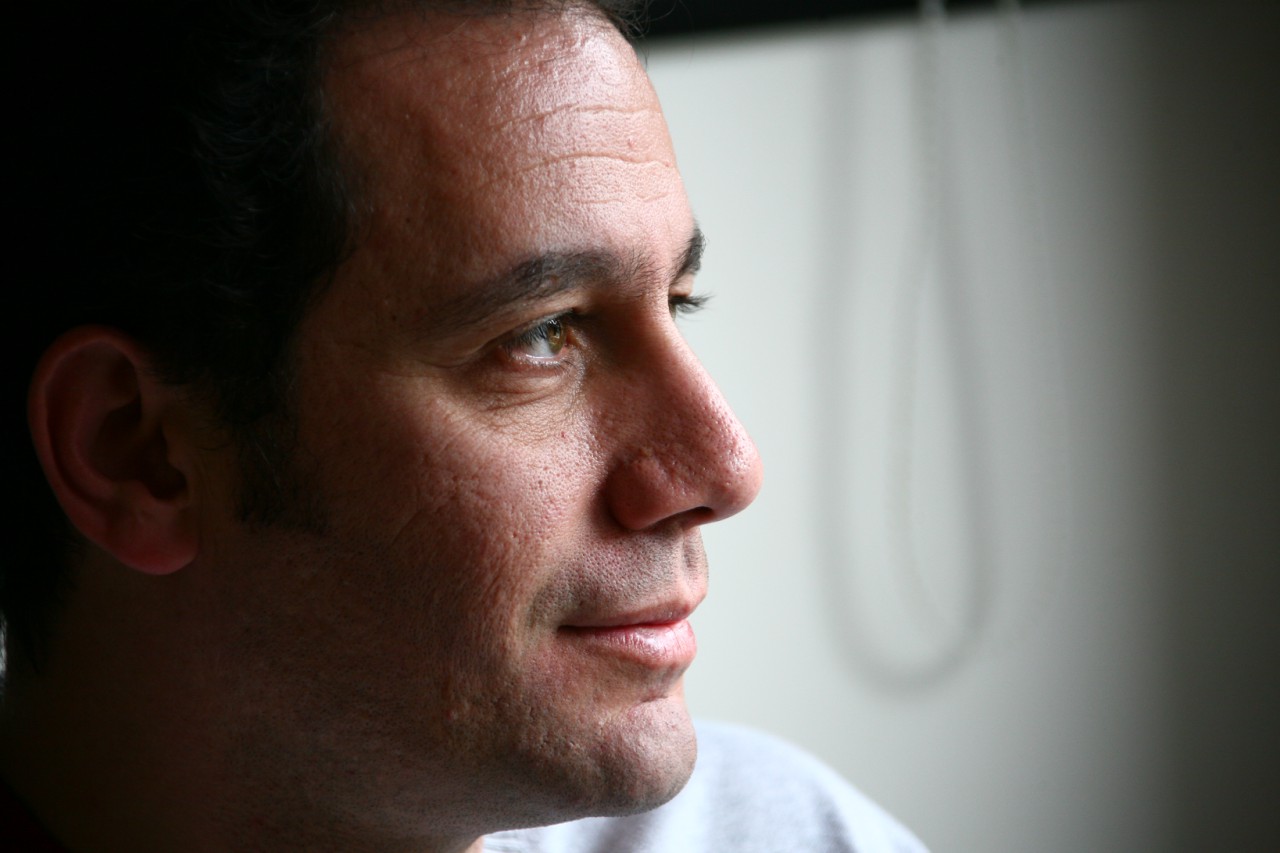
Prof. Maryline Laurent is a Professor at Telecom SudParis, affiliated with the SAMOVAR research laboratory. Her work focuses on cybersecurity, privacy-preserving technologies, blockchain applications, and IoT security. She has contributed to numerous high-impact publications and conferences, addressing challenges in secure healthcare systems, decentralized identity management, and privacy in distributed systems. Her research spans cryptographic protocols, access control mechanisms, and compliance with EU data protection regulations. Key areas of expertise include secure communication protocols for IoT, blockchain-based solutions for healthcare, and privacy-enhancing technologies. She has collaborated on projects such as self-sovereign identity frameworks, anonymized data aggregation, and privacy-preserving smart grid systems. Her work emphasizes practical methodologies for assessing re-identification risks in anonymized datasets and designing secure systems compliant with evolving regulations. Prof. Laurent’s contributions extend to book chapters and edited volumes on digital identity management and wireless network security. She actively participates in international conferences and initiatives, advocating for privacy-by-design principles in intelligent infrastructures.
Andrea Lanzini is a Full Professor in the Department of Energy (DENERG) at the Polytechnic University of Turin, where he is also a member of the Interdepartmental Center Ec-L - Energy Center Lab. He serves as Scientific Advisor for the Partnership Agreement with Edison and Electricité de France (EDF). His academic and research leadership spans energy system integration, hydrogen technologies, fuel cells, renewable energy communities, and industrial decarbonization. His research interests focus on fuel cell and hydrogen technology , energy system integration and modeling , industrial decarbonization , and renewable energy communities . He leads the M3ES research group and is deeply involved in both fundamental and applied research, with a strong emphasis on sustainable urban energy systems and clean energy transitions. The analysis of his recent publications reveals a consistent focus on hydrogen production and storage, fuel cell durability and performance, biogas and biomethane technologies, and the optimization of hybrid renewable energy systems. His work often combines experimental investigation with techno-economic and environmental assessment, particularly in off-grid and community-scale energy applications. Scientific Awards: Fulbright Grant awarded by United States Department of State - Bureau of Educational and Cultural Affairs/The US-Italy Fulbright Commission, United States (2010) Prof. Lanzini actively supervises numerous PhD students and leads a wide array of research projects, including major EU-funded initiatives such as HYWAY, NoMaH, TIPS4PED, and EDUPED, as well as numerous commercial research contracts with industry and municipalities. He is a key contributor to national and international efforts in energy transition, particularly through his work on Positive Energy Districts and renewable energy communities. His research has significant implications for energy policy, urban planning, and industrial sustainability. He is involved in several research groups and collaborative agreements, including the M3ES Research Group (DENERG) and partnerships with RSE SpA, Edison, EDF, and various public administrations. His work is central to the activities of the Energy Center Lab at Politecnico di Torino.
Peter Alvaro is an Assistant Professor in the Department of Computer Science and Engineering at the Baskin School of Engineering, University of California, Santa Cruz. He joined the faculty in 2015 after earning his PhD from UC Berkeley under Professor Joe Hellerstein. His research lies at the intersection of databases, distributed systems, and programming languages , with a strong emphasis on data-centric approaches to building robust, scalable, and predictable distributed systems. He is the creator of the Dedalus language and co-creator of the Bloom language, both designed to simplify reasoning about distributed computation. Peter's recent work focuses on non-volatile memory (NVM) , computational storage , and data-centric operating systems , as seen in the Twizzler OS project. His publications span top venues such as USENIX ATC, HotNets, and Communications of the ACM, showing trends toward system resilience, efficient data management, and novel abstractions for modern hardware. Best Presentation award at USENIX ATC 2020 Peter advises graduate students, including Daniel Bittman, and is a key contributor to the Storage Systems Research Center (SSRC), now succeeded by the Center for Research in Storage Systems (CRSS). His work is supported by ongoing collaborations with researchers at UC Santa Cruz and beyond, particularly in the areas of storage, operating systems, and distributed computing.
Amir Shaikhha is an Associate Professor (Reader) in the School of Informatics at the University of Edinburgh. He was previously an Assistant Professor (Lecturer) at the same institution from 2020 to 2024 and a Departmental Lecturer at the University of Oxford until August 2020. He is also a Junior Research Fellow at University College, Oxford. His academic journey began with a Ph.D. from EPFL in 2018, where he was awarded the Google Ph.D. Fellowship in structured data analysis and a Ph.D. thesis distinction. His research centers on the design and implementation of data-analytics systems, drawing upon techniques from databases, programming languages, compilers, and machine learning. He develops high-performance systems such as SDQL.py, StructTensor, and VecHT, focusing on the compilation of data science workloads and optimization of tensor operations. His work bridges the gap between high-level abstractions and efficient execution, particularly in sparse and probabilistic computing domains. The recent publications highlight a strong trend in compiler-driven optimizations for data-intensive applications, including automatic differentiation, loop fusion, probabilistic programming, and domain-specific language (DSL) restaging. His research integrates machine learning for systems decisions and emphasizes reproducibility and performance. He has published consistently in top venues like PLDI, OOPSLA, SIGMOD, and CGO, reflecting sustained impact in programming languages and database systems. Dahl-Nygaard Junior Prize, 2025 Google Research Scholar Award, 2025 Most Influential Paper Award, GPCE 2024 Best Paper Award, GPCE 2017 Most Reproducible Paper Award, SIGMOD 2017 Google Ph.D. Fellowship, 2017 Amir Shaikhha has advised PhD students including Hesam Shahrokhi and has been nominated for Best Supervisor of the Year at the University of Edinburgh. He leads research projects that have received recognition and support through awards and grants, including the Google Research Scholar Award. He actively serves the community through program committees (e.g., GPCE, DBPL, DRAGSTERS), editorial roles, and peer review for premier journals. His leadership in organizing workshops and conferences underscores his role as a central figure in the programming languages and databases research communities. He leads a research group focused on compiler and database systems, with recent open-source releases such as StructTensor and VecHT. His team collaborates with researchers from institutions like MIT, EPFL, and TU Berlin, and he co-chairs workshops like Sparse@PLDI and DRAGSTERS. His lab emphasizes innovation in how data-intensive programs are compiled and executed efficiently across modern hardware.
Professor Vedran Dunjko is a faculty member at the Leiden Institute of Advanced Computer Science (LIACS), Leiden University, with affiliations to the Leiden Institute of Physics (LION). He leads the Applied Quantum Algorithms group and co-founded the Quantum@LIACS initiative, focusing on the intersection of quantum computing, machine learning, and artificial intelligence. His research interests include quantum machine learning, quantum-enhanced reinforcement learning, quantum heuristics, and the application of AI to quantum computing challenges. Dunjko's work bridges theoretical foundations with experimental implementations on near-term quantum devices, exploring both quantum advantages in learning and the use of classical AI for quantum system design. The recent publications show a strong trend toward proving quantum advantages in learning tasks, optimization, and topological data analysis, with publications in Nature , Nature Communications , and NeurIPS . Key themes include quantum policy gradients, quantum TDA, and reinforcement learning for quantum circuit optimization. ERC Consolidator Grant (2024) PNAS Cozzarelli Prize (2018) Editor’s Suggestion in Physical Review Letters (2014, 2018) Featured in Physics (American Physical Society) (2014, 2018) Dunjko advises several PhD candidates and postdocs, including Rahul Bandyopadhyay, Sofiene Jerbi, and Lea Trenkwalder. He has received competitive grants, most notably the ERC Consolidator Grant in 2024. His group fosters international collaborations with institutions across Europe and industry partners. The Applied Quantum Algorithms group and the Quantum@LIACS team combine theoretical investigations with practical implementations on quantum hardware, focusing on scalable quantum algorithms and AI-driven quantum discovery.
Vatsal Sharan is an Assistant Professor in the Thomas Lord Department of Computer Science at the University of Southern California's Viterbi School of Engineering. He maintains affiliations with the Theory Group, Machine Learning Center, and the Center for AI in Society at USC. Education: Ph.D. in Computer Science from Stanford University, advised by Greg Valiant Postdoctoral research at MIT, hosted by Ankur Moitra Vatsal Sharan's research centers on the theoretical foundations of machine learning, positioned at the intersection of machine learning, theoretical computer science, and statistics. His work investigates fundamental limits for solving learning and estimation tasks under computational and information-theoretic constraints, with the goal of developing practical algorithms that are efficient, fair, and robust. His research spans memory-efficient learning, algorithmic fairness, robustness in deep learning, and the theoretical underpinnings of transformers and large language models. A significant portion of his work explores how memory constraints affect learning algorithms and whether memory can serve as a distinguishing factor between 'efficient' and 'expensive' techniques in machine learning. His recent publications demonstrate a strong focus on multicalibration, transformer interpretability, and trustworthy AI systems. Scientific Awards: Amazon Research Award (2021 and 2023) SoCal NLP Symposium 2023 Best Paper Award COLT 2022 Best Paper Award Vatsal Sharan advises a diverse group of Ph.D. students including Siddartha Devic, Bhavya Vasudeva, Julian Asilis, Deqing Fu, Devansh Gupta, Spandan Senapati, and Tianyi Zhou. His research is supported by multiple prestigious grants from the NSF, Amazon Research, Google Research, and the Okawa Foundation. He is an active participant in the Learning Theory Alliance (LeT-All), a community-building and mentorship initiative for the learning theory community. His teaching portfolio includes advanced courses on machine learning theory and trustworthy machine learning at USC, where he shapes the next generation of researchers in theoretical aspects of artificial intelligence.
Abhinav Shrivastava is an Associate Professor in the Department of Computer Science at University of Maryland, College Park, with a joint appointment in the Institute of Advanced Computer Studies (UMIACS). Previously, he served as an Assistant Professor at the same institution from August 2018 to June 2024, and spent one year as a Visiting Research Scientist at Google Research from September 2017 to August 2018. His educational background includes: PhD in Robotics and Artificial Intelligence from Carnegie Mellon University (2017), advised by Abhinav Gupta, with thesis titled 'Discovering and Leveraging Visual Structure for Large-scale Recognition' MS in Artificial Intelligence from Carnegie Mellon University (2011), supervised by Alyosha Efros and Martial Hebert BTech in Computer Science and Engineering from Jaypee Institute of Information Technology (2010) Professor Shrivastava's research focuses on computer vision and machine learning, with particular expertise in object detection, image recognition, and neural representations. His work bridges theoretical advances with practical applications, exploring how visual systems can discover and leverage structure in large-scale recognition problems. He has made significant contributions to understanding the role of supervision in vision transformers, developing novel approaches for object-state composition recognition, and creating efficient neural representations for videos and 3D scenes. His research often addresses fundamental challenges in visual recognition, including handling novelty in open-world environments and improving the efficiency of visual systems. An analysis of his recent publications reveals a strong emphasis on neural representations, particularly for dynamic content like videos and 3D scenes. His work demonstrates increasing sophistication in handling open-world vision problems, with research spanning object discovery, localization, and representation learning. The publications show a clear progression toward more efficient and scalable models, with recent work focusing on model compression, sparse representations, and addressing the challenges of working with limited annotations. His scientific contributions have been recognized with several prestigious awards: Best Paper Award (Applications) at IEEE Winter Conference on Applications of Computer Vision (2020) Microsoft Research PhD Fellowship (2014-2016) Best Student Paper Award at IEEE Winter Conference on Applications of Computer Vision (2014) Outstanding Reviewer Award at IEEE CVPR (2015) Professor Shrivastava has successfully mentored numerous graduate students, many of whom have become prominent researchers in computer vision. His Amazon Research Awards (2020 and 2023) have supported innovative projects including 'The pursuit of knowledge: discovering and localizing new concepts using dual memory' and 'Audio-conditioned Diffusion Models for Generating Lip-synchronized Videos.' He has served as Area Chair for major conferences including ICCV, CVPR, and AAAI, demonstrating his leadership in the computer vision community. His research has attracted significant funding from both academic and industry sources, supporting his exploration of fundamental questions in visual recognition and representation learning.
Rachee Singh is an Assistant Professor of Computer Science at Cornell University, leading the sysphotonics research group. She concurrently serves as an Amazon Scholar within the SageMaker Hyperpod teams, specializing in large-scale machine learning infrastructure development for cloud environments. Her research focuses on photonic interconnect systems for server-scale, rack-scale, and long-haul communication networks, targeting performance optimization for distributed machine learning and planet-scale cloud workloads. Key specialties include optical network design, fault-tolerant WAN architectures, and energy-efficient datacenter interconnects, with strong emphasis on practical deployment in real-world systems. Her group bridges theoretical networking principles with applied AI infrastructure challenges. Recent publications demonstrate concentrated innovation in photonic network optimization for ML workloads, particularly in wavelength management, collective communication algorithms, and chip-to-chip photonic fabrics. This work spans optical physics, distributed systems, and machine learning, revealing a trajectory toward sustainable, high-performance AI infrastructure. Scientific recognition includes: Amazon Research Award (2023) Cisco Research Award Dr. Singh actively mentors graduate researchers including Jonathan Aimuyo, Byungsoo Oh, and Arjun Devraj, whose co-authored publications form the core of her group's output. Research funding is secured through competitive grants from the NSF (including a $1M award for chip-to-chip photonic fabrics), SRC/DARPA JUMP 2.0 program, Cisco, and Cornell's Atkinson Center for Sustainability. The sysphotonics group operates as Cornell's hub for photonic network systems research, developing programmable integrated photonics solutions and collaborating with Amazon on SageMaker Hyperpod for next-generation ML infrastructure.
Gianfranco Chicco is a Full Professor at the Politecnico di Torino , Italy, within the Department of Energy (DENERG). He serves as Scientific Director of the Electrical Power Systems research group and the Turin unit of the ENSIEL Consortium. A Fellow of IEEE (since 2018), he has held editorial leadership roles as Editor-in-Chief of Sustainable Energy, Grids and Networks and Subject Editor of Energy , while chairing major conferences like IEEE ISGT Europe 2017 and UPEC 2020. Education : Laurea (cum laude) in Electrical Engineering (1987), Ph.D. in Electrical Engineering (1992), Doctor Honoris Causa (2017, Polytechnic University of Bucharest; 2018, Technical University 'Gheorghe Asachi' of Iasi). Research Interests : Focus on power transmission and distribution systems , distributed energy resources , and multi-energy smart grids , with applications in artificial intelligence , load management , and power quality . His work addresses technical, economic, and environmental aspects of distributed generation and smart grid sustainability . Publications Trends : Recent articles emphasize photovoltaic power optimization , dynamic grid modeling , and multi-energy system coordination , reflecting expertise in renewable integration , clustering algorithms , and adaptive control . Key subfields include voltage stability , load forecasting , and blockchain for energy trading . Awards : IEEE Fellow (2018-) Best Paper Awards at SEST (2018, 2020) Doctor Honoris Causa (2017, 2018) 'Giancarlo Vallauri' Degree Prize (1988) Advising and Grants : Supervises PhD students in power converters , renewable integration , and high-voltage measurement methodologies . Leads European projects like H2020 MIGRATE and OSMOSE, focusing on grid resilience , clustering-based network planning , and multi-energy sustainability .
Dr. Ludovic Rapp is a Senior Research Fellow at the Research School of Physics , Australian National University (ANU) , and leads the High-Power Laser group at the Laser Physics Centre (LPC) . His expertise spans ultrafast laser interaction with matter , beam shaping , and laser-induced microexplosions for synthesizing super-dense material phases , including novel silicon allotropes. He is also the Laser Safety Officer for the Research School of Physics.
Professor Marios C. Angelides is a full-time faculty member at Brunel University London , serving as Professor of Computing and Divisional Lead within the College of Engineering, Design and Physical Sciences . He leads the Creative Computing Research Group under the Institute of Digital Futures and contributes to the Digital Media department at Brunel Design School. BSc (First Class Honours) and PhD in Computing from the London School of Economics (LSE) Chartered Engineer (CEng) and Chartered Fellow of the British Computer Society (FBCS CITP) His research focuses on Creative Computing , specifically applying Machine Learning , Serious Gaming , and Cognitive Modeling to develop Smart IoT Applications . His work spans autonomous drone fleets for environmental monitoring, cybersecurity middleware for Android systems, wearable technology for lifestyle recommendations, and historical analysis of Alan Turing’s legacy in modern AI. Recent publications highlight trends in deploying Machine Learning for: IoT systems optimization Autonomous aerial/underwater vehicle coordination Deepfake detection using Turing’s Imitation Game Energy allocation in CubeSats via gaming mechanics Scientific recognition includes being Deputy Editor of The Computer Journal and runner-up for the 2016 Oxford University Press Wilkes Award . He has supervised PhD students in topics like Smart Android Middleware for Cybersecurity and Wearable Recommendation Systems , with active involvement in editorial boards and international conferences.
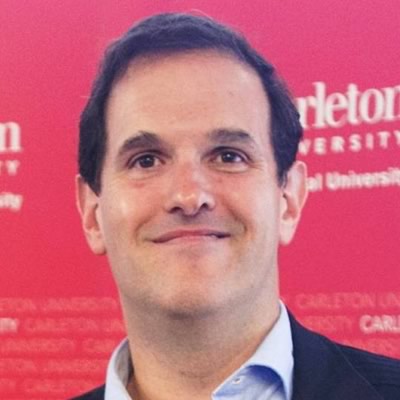
Dr. Gabriel Wainer is a Professor in the Department of Systems and Computer Engineering at Carleton University's Faculty of Engineering and Design. He leads the Advanced Real-Time Simulation Lab and specializes in modeling and simulation methodologies, particularly focusing on discrete event systems, real-time modeling, cellular automata, and DEVS formalism. Research Interests: Discrete event systems, DEVS formalism, cellular automata, real-time simulation, IoT applications, and parallel/distributed simulation Affiliation: Carleton University Recent publications highlight his work in advanced simulation frameworks, energy-efficient 5G systems using deep reinforcement learning, and pandemic modeling with cellular automata. His lab develops tools like PROMETHEUS and Devsmap for standardized DEVS model representation, while also exploring applications in wireless communication, building energy systems, and behavioral epidemiology.
Sara Green is an Associate Professor at the Department of Science Education, University of Copenhagen, specializing in the Section for History and Philosophy of Science . Her work bridges philosophy, biology, and biomedical ethics, focusing on the epistemic and social implications of datafication in healthcare and the ethical challenges of precision medicine and consumer health technologies. Green holds a PhD in Science Studies from Aarhus University and was a postdoctoral fellow at the University of Pittsburgh’s Center for Philosophy of Science. She leads the PROMISE and COPE projects and contributes to EU-funded initiatives like DataSpace , TRANSCEND , and REDESIGN . Research Themes: Philosophy of precision medicine and data-driven healthcare Ethics of patient-derived organoids and organ-on-chip technologies Epistemic standards in consumer medicine Interdisciplinary integration in systems biology Article Trends: Recent publications explore organoid ethics , datafication in medicine , and philosophical frameworks for emerging health technologies . Key sub-fields include biobanking, cross-border data governance, and temporal dimensions of personalized medicine. Scientific Recognition: DFF Research Project 1 (2020) Semper Ardens Accellerate Grant (2023) Silver Medal, Royal Danish Society of Science and Letters (2024) Werner Callebaut Prize (2015) EU SwafS-Horizon stipend (2020) Teaching & Supervision: She teaches philosophy of science to students in biology, chemistry, and sports science, supervising projects on philosophy of biology and medicine and co-supervising science communication research. Collaborative Networks: Green collaborates across Denmark, the EU, and the U.S., particularly on cross-border health data infrastructure and reduction of animal models through organoid technologies.
Jossy Sayir is an Affiliated Lecturer and Senior Research Associate in the Department of Engineering at the University of Cambridge . Holding a Dipl. El.-Ing. ETH and Dr. Techn.-Wiss. from ETH Zurich, Sayir’s work bridges Information Theory and Bioinformatics , focusing on DNA-based data storage and error correction systems. They serve as Director of Studies in Engineering at Newnham College and coordinate Engineering Admissions. Interdisciplinary collaboration with the European Bioinformatics Institute Research on DNA data storage efficiency and cost reduction Expertise in channel coding, source coding, and 5G algorithms Teaching spans mathematics and information engineering modules in Part I Engineering Tripos, with Part II contributions on information theory, error control coding, and cryptography. Sayir also oversees data compression labs and serves as Wine Committee Chair, reflecting diverse interests in food, coffee, wine, music , and jazz . Best Lecturer Award, 2017-18 Research Fellowships in coding theory Key research trends include DNA storage encoding , LDPC decoders , polar code optimization , and Sudoku-inspired constraint coding . Sayir’s work addresses both theoretical and practical challenges in high-density data storage and next-generation communication protocols .
Dr. Ugur Turhan is a Senior Lecturer in aviation at UNSW Canberra with over two decades of experience in academic and professional settings. His expertise spans Air Traffic Management, Airport Operations, Aviation Safety, and Human Factors in Aviation. Previously, he served as Assistant Professor at Eskisehir Technical University and Anadolu University, and held a visiting professorship at Embry Riddle Aviation Academy. Dr. Turhan earned his Ph.D. in Civil Aviation Management from Anadolu University. His academic journey includes significant contributions to aviation education and research across multiple institutions in Turkey and internationally. Dr. Turhan's research focuses on critical aspects of aviation safety and efficiency. His work explores human factors in air traffic control, aircraft maintenance procedures, and emergency management in aviation contexts. He has developed innovative approaches to training air traffic controllers using 3D simulation technology and has investigated the relationship between safety culture and operational performance in aviation organizations. His research bridges theoretical frameworks with practical applications to enhance aviation safety standards globally. Analysis of Dr. Turhan's recent publications reveals a strong emphasis on human factors across aviation domains. His work consistently addresses safety management systems, cognitive workload assessment, and maintenance procedures. A notable trend is the integration of neurophysiological measurements with operational data to assess air traffic controller performance. His research also demonstrates growing interest in the application of advanced technologies for improving maintenance documentation and technician performance. Dr. Turhan has secured significant research funding through multiple international projects. His leadership roles include: Researcher and Eskisehir Technical University Coordinator for the FACT project under European Commission HORIZON2020 SESAR call (2020-present) Researcher and Eskisehir Technical University Coordinator for the Skill-UP project under Erasmus+ (2020-present) Researcher and Anadolu University Coordinator for the STRESS Project under HORIZON 2020-SESAR-2015-1 (2016-2018) Researcher and Anadolu University Coordinator for the IMPACT Project under HORIZON 2020-DRS-2014 (2015-2018) Researcher and Anadolu University Coordinator for SECONOMICS project under European Commission FP7 (2012-2015) Researcher for Boeing-sponsored International Project on Aviation Educational Software (2014-2016) Dr. Turhan has supervised multiple doctoral and master's students in aviation-related fields. His doctoral students include Birsen Acikel (2016) who researched flight training airspace complexity and Tarık Güneş (2021) who assessed aircraft maintenance technician competency. His master's students have investigated topics ranging from Turkish airspace flexibility to aircraft maintenance documentation. Dr. Turhan also serves as a valuable resource for prospective PhD students interested in human factors and safety in aviation and air traffic management.