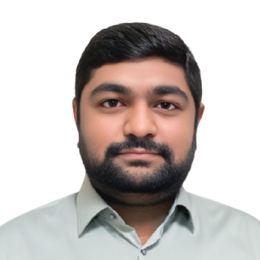
Sebastian Dalleiger is an Assistant Professor at the Division of Theoretical Computer Science, Kungliga Tekniska Högskolan (KTH Royal Institute of Technology). His research focuses on theoretical foundations of machine learning, data mining, and graph theory, with particular expertise in matrix factorization, pattern discovery, and hypergraph analysis. Current affiliation: KTH Royal Institute of Technology Department: Theoretical Computer Science Email: sdall@kth.se His recent work explores federated learning architectures, non-negative matrix factorization, and structural analysis of stochastic block models across multiple graphs. He develops algorithms combining proximal optimization with privacy-preserving techniques, addressing challenges in distributed data analysis. Publications demonstrate interdisciplinary applications in network science, information theory, and computational geometry. Key contributions include novel frameworks for Ollivier-Ricci curvature in hypergraphs and sequential false discovery control for pattern mining.
Yifei Jin is a WASP Industrial PhD student at KTH Royal Institute of Technology's School of Electrical Engineering and Computer Science, specifically within the Division of Theoretical Computer Science. They are supervised by Professor Aristides Gionis and Associate Professor Sarunas Girdzijauskas at KTH, and also serve as an Experienced Researcher at Ericsson Research and a Visiting Researcher at Yale University under Rex Ying and Leandros Tassiulas. Yifei's research focuses on graph mining , network analysis , and graph representation learning , particularly applied to crowdsourcing data and wireless communication systems. Their work intersects telecommunications network optimization machine learning for graph-structured data AI-driven wireless resource management edge computing and distributed AI as evidenced by their publications spanning 2017–2025. Their academic contributions include 15 recent papers exploring topics such as neural surrogates for voltage drop estimation, wireless ray-tracing models, scalable distributed AI deployment, and vehicle platooning coordination. These publications demonstrate expertise in network traffic reduction KPI conflict analysis graph convolutional networks hyperbolic embeddings for ontologies real-time network diagnostics .
Gunnar Karlsson is a Professor at KTH Royal Institute of Technology, specializing in teletraffic systems and network engineering. He has served as Head of the Department of Network and Systems Engineering until 2017 and currently engages in continuous education initiatives through Cybercampus Sweden and KTH Center for Total Defence. His academic background includes a PhD from Columbia University (1989) and MSc from Chalmers University of Technology (1983), with visiting professorships at EPFL and ETH Zurich. Research Interests: Mobile communication, Internet QoS, opportunistic networks, cybersecurity, and higher education pedagogy. Public Engagement: Active contributor to debates on university roles, technology's societal impact, and automation's consequences for work. Teaching: Involved in courses including Computer Networks , Data Communications , and Security Engineering , with focus on ethics and societal implications. Awards: Recipient of the KTH Pedagogic Prize (2015) for innovative teaching approaches. Leadership: Editor for IEEE Journal on Selected Areas of Communication; advocates for engineering's role in societal progress.
Praveen Kumar Donta is an Associate Professor (Docent) and Senior Lecturer at the Department of Computer and Systems Sciences, Stockholm University, Sweden. His research focuses on distributed computing continuum systems, learning-driven approaches for IoT and edge computing, and intelligent data protocols. He leads the Distributed Immersive Participation research group which investigates how humans and things can be more connected and exchange information in real and virtual societies. Education: Ph.D. in Computer Science & Engineering from Indian Institute of Technology (Indian School of Mines), Dhanbad (2021) Visiting Ph.D. Fellow at Mobile&Cloud Lab, University of Tartu, Estonia (2019-2020) Master in Technology from JNTUA, Ananthapur (2014) Bachelor in Technology from JNTUA, Ananthapur (2012) Dr. Donta's research centers on distributed computing continuum systems that integrate cloud, edge, and IoT devices to deliver scalable and low-latency computing resources. His work explores learning techniques in IoT, AI/ML for computing systems, cognition and causality in computing systems, and cyber-physical continuum applications. He investigates how human body analogies can inform the design of more resilient and efficient distributed systems, as well as developing frameworks for privacy enforcement, equilibrium in computing continuum systems, and energy-efficient user interactions with smart environments. His research has significant applications in smart city management, satellite services, and intelligent transportation systems. Dr. Donta's publication record demonstrates a strong focus on the intersection of distributed systems, machine learning, and privacy-preserving technologies. His recent work shows an increasing emphasis on human-inspired approaches to distributed computing, with particular attention to making these systems more interpretable, efficient, and adaptable. His research spans theoretical foundations of computing continuum systems to practical implementations in areas like satellite services, smart environments, and anomaly detection. Scientific Awards and Recognition: IEEE Senior Member ACM Professional Member Dr. Donta serves as an editorial board member for several prestigious journals including IEEE Internet of Things Journal, Computing (Springer), Transactions on Emerging Telecommunications Technologies (Wiley), Measurement, and Computer Communications (Elsevier). He actively mentors the next generation of researchers, currently supervising PhD student Alfreds Lapkovskis and co-supervising Shubham Vaishnav. His research is supported by projects such as the Heterogeneous Computing Continuum for a Sustainable Smart City Management (HCSCM), which aims to develop scalable, secure solutions for urban environments by integrating IoT, edge, and cloud computing. As part of the Distributed Immersive Participation research group, Dr. Donta collaborates with researchers across disciplines to explore how technological advances enable humans and things to be more connected. The group focuses on application areas such as culture, transport, intelligent vehicles and e-health, developing solutions that enhance participation in both real and virtual societies.
Håkan Grahn is a Professor of Computer Engineering at the Department of Computer Science, School of Computing, Blekinge Institute of Technology (BTH) in Sweden. He has been a faculty member since 1996, becoming a full professor in 2007. His academic leadership includes serving as Head of Department (1999-2002) and Dean of Research (2011-2013) at BTH. He leads multiple significant research projects including GPAI (General Purpose AI Computing) and Green Clouds, with funding from ELLIIT, the Knowledge Foundation, and Vinnova. His educational background includes: M.Sc. in Computer Science and Engineering (1990) from Lund University Ph.D. in Computer Engineering (1995) from Lund University Håkan's research spans several interconnected domains in computer science and engineering, with a strong emphasis on practical applications. His work in computer architecture focuses on optimizing system performance through innovative cache coherence protocols and memory management techniques. In the realm of parallel computing , he investigates multicore systems, GPU computing, and thread-level speculation to enhance computational efficiency. His research in AI and machine learning addresses energy efficiency, data stream mining, and practical applications in areas like district heating systems and airborne networks. The integration of image processing with machine learning forms another significant strand of his work, particularly in historical document analysis and medical imaging applications. These research areas converge in his leadership of major initiatives like BigData@BTH and GPAI, where he bridges theoretical advances with real-world implementation challenges. Analysis of Håkan's recent publications reveals a clear trajectory toward increasingly applied research with strong industry connections. While maintaining foundational work in computer architecture, his output increasingly focuses on practical AI applications, energy efficiency in computing, and domain-specific implementations in sectors like telecommunications, energy systems, and defense. The interdisciplinary nature of his work is evident in collaborations spanning computer science, engineering, and domain-specific applications, with a growing emphasis on sustainability and resource optimization in computing systems. Håkan has successfully supervised numerous doctoral students, with ten graduates and six current Ph.D. candidates. His research has been supported by substantial funding from: The Knowledge Foundation (BigData@BTH, HINTS, Green Clouds) ELLIIT (GPAI project) Vinnova (FANET-MCA, Directed COM & EW) Industry partners including Ericsson, Saab, Telenor, and Fortnox He is actively involved in multiple research groups including DISL (Distributed and Intelligent Systems Lab), CCS-Lab (Communication and Computer Systems Research Lab), and previously PAARTS (Parallel Architectures and Applications for Real-Time Systems). His leadership extends to organizing academic events like the Nordic workshop on Multi-Core Computing and the Swedish Artificial Intelligence Society workshop.
Karin Skill is a Senior Lecturer at the Department of Technology and Social Change within the Faculty of Culture and Society at Linköping University. Her work focuses on the critical intersection of digitalization, sustainable development, and civic participation. She actively researches how municipalities and libraries can reduce digital exclusion while integrating digital inclusion efforts with sustainable development goals. Her expertise spans sociotechnical systems, municipal governance, and the social aspects of technology implementation in public services, with particular attention to how at least half a million digitally excluded Swedes impact the achievement of global sustainability goals. Education: Doctor of Philosophy, Department of Technology and Social Change, Linköping University (2008) Licentiate of Philosophy, Department of Technology and Social Change, Linköping University (2006) Master's degree, Stockholm University (2003) Karin Skill's research centers on digital inclusion as a prerequisite for sustainable development. She investigates how digital competence is essential for equal participation in society as citizens and employees, examining municipal and library efforts to reduce digital exclusion through cross-level political collaboration. Her work addresses social and environmental aspects like gender equality and equitable resource distribution, with a focus on the sociotechnical context of technology in both urban and rural settings. She employs innovative methodologies, including multilingual face-to-face interviews that achieved a 65% response rate in traditionally hard-to-reach suburban communities. Her publication portfolio reveals a strong interdisciplinary trajectory, moving from early work on household environmental practices to current research at the digital-sustainability nexus. Recent work examines digital platforms for circular economies, educational approaches for climate literacy, and innovative welfare technology implementation. She consistently addresses the tension between technological opportunities for efficiency and the risks of exclusion, particularly highlighting how digital participation affects access to healthcare, political communication, and trust in public institutions. Scientific Recognition: Nominated for Best Poster at ICEGOV 2021 for research on 'Uber for Public School Buses and Limits to Sharing?' Karin Skill leads multiple research initiatives funded by Familjen Kamprads stiftelse, Formas, and Linköping University. Her current projects include the DigidelCenter in Motala (bridging digital divides), 'A Sustainable Digital Society for All' (municipal development for digital inclusion), and investigations into occupational health risks in circular glass flows. She collaborates extensively with municipal authorities, libraries, and networks like Välfärdsbiblioteket.se to translate research into practical applications for welfare technology and inclusive digital society development. Her research team employs innovative approaches to reach marginalized populations, as demonstrated by the 'Förorten svarar' (The Suburb Responds) project in Skäggetorp. This work examines technology access, digital healthcare usage, political communication, and privacy concerns in suburban communities, revealing how digital exclusion impacts multiple dimensions of civic participation and sustainable development goal achievement.
Valeriy Vyatkin serves as a Visiting Professor and Chaired Professor at Luleå University of Technology, specializing in Dependable Communication and Computation Systems within the Department of Computer Science, Electrical and Space Engineering. His research focuses on industrial automation technologies with particular emphasis on the IEC 61499 standard. Professor Vyatkin's research spans dependable communication systems, distributed automation architectures, and the integration of emerging technologies like large language models in industrial contexts. His work bridges theoretical computer science with practical industrial implementation, addressing challenges in virtual commissioning, performance analysis, and control systems optimization. Recent publications demonstrate his innovative approach to applying advanced computational methods to traditional industrial automation problems. His research demonstrates a clear trend toward integrating cutting-edge computational paradigms with established industrial automation standards. This includes pioneering work on physics-informed machine learning for industrial processes and decentralized control systems for applications like vertical farming. His publications in IEEE venues highlight the significance and relevance of his contributions to the field. Professor Vyatkin maintains active collaborations with researchers from institutions including Aalto University in Finland, as evidenced by his co-authored publications. His work has practical implications for improving efficiency, reliability, and adaptability of industrial automation systems across multiple sectors including manufacturing, agriculture, and energy-intensive industries.