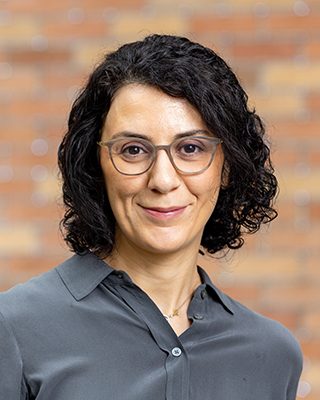
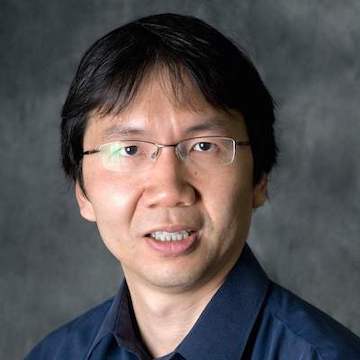
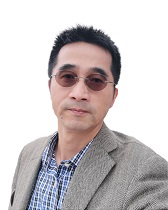
Bhuwan Dhingra is an Assistant Professor of Computer Science at Duke University's Trinity College of Arts & Sciences. He focuses on Natural Language Processing (NLP) , machine learning , and knowledge representation , with specific interests in question answering , robustness to adversarial inputs , and model calibration . 2020 : Ph.D. in Language Technologies from Carnegie Mellon University 2013 : Master's Thesis on Local Quadrature Reconstruction on Smooth Manifolds at IIT Kanpur His research includes temporal language models , adversarial robustness , and combating misinformation . He leads the ALTER-Math NSF-funded project (2024-2027) and collaborates on CC* Integration-Large (2025-2027) for distributed GPU systems. His 2025 work on adversarial perturbations and 2024 studies on table understanding in materials science highlight his focus on LLM reliability and structured data integration . Notable awards include the Amazon Research Award (2022), NSF Medium Grant (2022), and Google Research Gift (2021). He advises PhD students like Rich Stureborg and undergraduates such as Angikar Ghosal (now at Stanford PhD). Teaching graduate courses like Introduction to NLP and Advanced NLP , he emphasizes long-form QA and collaborative writing in NLP.
Arkaitz Zubiaga is a Senior Lecturer (Associate Professor) at Queen Mary University of London, where he co-leads the Social Data Science lab and serves as Director of Graduate Studies. He is also part of the leadership team of the Centre for Human-Centred Computing. His research sits at the intersection of Computational Social Science and Natural Language Processing, focusing on developing NLP and LLM methods for processing social media and Web data to tackle societal harms. Zubiaga's research interests concentrate on addressing problematic issues with damaging societal effects, including hate speech, misinformation, inequality, biases, and other forms of online harm. He investigates how LLMs can be misused for malicious purposes such as spreading misinformation, generating abusive content, or exacerbating societal biases. His work emphasizes detecting and addressing irresponsible AI use where content is falsely claimed to be human-generated. His publication record shows a clear trend toward addressing bias in detection systems, particularly in cyberbullying detection where swearing bias has been identified as a critical issue. His recent work explores zero-shot and few-shot learning approaches for cross-lingual applications, stance detection, and claim verification. The research spans multiple disciplines including computational linguistics, social computing, and AI ethics, with a growing focus on multimodal approaches and longitudinal model evaluation. 2024 OSNEM best survey award for work on session-based cyberbullying detection Zubiaga actively mentors PhD students, with Peiling Yi recently passing her viva (April 2025) and welcoming new PhD students Alaa Bazaid and Ali Khairallah. He serves as senior area chair for ACL 2025 and leads the HYBRIDS MSCA Doctoral Network. His work demonstrates a strong commitment to developing responsible AI systems that can detect and mitigate online harms while addressing critical issues of bias and fairness in computational approaches.
Hannaneh Hajishirzi is an Associate Professor at the Paul G. Allen School of Computer Science & Engineering at the University of Washington, with adjunct appointments in the Departments of Electrical & Computer Engineering and Linguistics. She leads the H2Lab and serves as Senior Research Director at the Allen Institute for AI (AI2). Her research focuses on advancing large language models through projects like OLMo, retrieval-based language modeling, and post-training optimization. Ph.D. in Computer Science from University of Illinois at Urbana-Champaign (2011) Postdoctoral associate at Disney Research and Carnegie Mellon University (2011-2012) Her work spans NLP, AI, and machine learning, with over 140 publications in top-tier venues (ACL, EMNLP, NeurIPS, ICLR). Key contributions include BiDAF, SciREX, and MedICaT datasets. Recent publications emphasize language modeling , in-context learning , and efficient architectures . Papers explore knowledge representation , multimodal reasoning , and scientific claim verification . 2020 Alfred Sloan Fellowship 2021 NSF CAREER award 2019 Intel Rising Star Faculty Award 2018 Allen Distinguished Investigator Award 2023 Academic Achievement UIUC Alumni Award 2024 Innovator of the Year finalist (GeekWire) She has mentored numerous students and received industry research awards from Amazon, Google, and other tech companies. Her lab's work appears in major media outlets (New York Times, Forbes, MIT Technology Review).
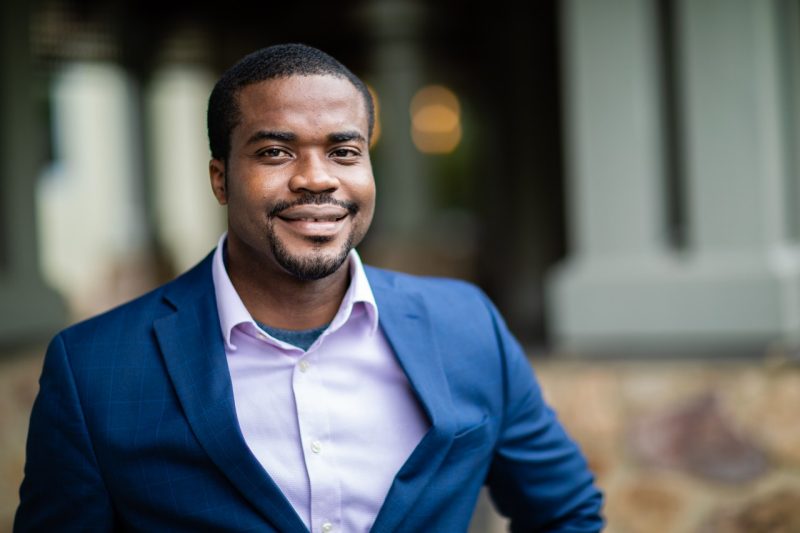
Onyeka Emebo is a Collegiate Assistant Professor at the Department of Computer Science, Virginia Tech. His primary affiliations are with the College of Engineering. He holds a Ph.D., M.S., and B.S. in Computer Science from Covenant University, Nigeria. His research focuses on data analytics, machine learning, natural language processing, and digital education. Notable projects include facial emotion recognition systems, predictive modeling for urban development, and healthcare-related machine learning applications. Emebo also explores requirement engineering methodologies and has contributed to frameworks bridging education policy and disruptive technologies. Recent work emphasizes interdisciplinary applications like climate change modeling in Africa and disease detection systems using Raspberry Pi devices. His publications span 2010–2025, reflecting sustained contributions to software engineering, AI, and computational solutions for societal challenges.
Douglas Downey is a Professor of Computer Science at Northwestern University, affiliated with the Department of Computer Science. He is currently on leave to direct the Semantic Scholar research group at the Allen Institute for AI, focusing on NLP and HCI tools for scientific literature discovery. Education: Ph.D. Computer Science and Engineering, University of Washington, Seattle, WA M.S. Computer Science and Engineering, University of Washington, Seattle, WA B.S./M.S. Computer Science, Case Western Reserve University, Cleveland, OH Research Interests: His work centers on natural language processing and machine learning, specifically the automatic construction of knowledge bases from web text to advance web search capabilities. He develops methods to optimize human input in ML systems via active learning (strategic data selection) and semi-supervised learning (leveraging unlabeled data). Publication Trends: Recent work (2022-2024) emphasizes NLP efficiency, explainable AI, and scientific literature tools. Themes include model optimization (embedding recycling), ethical AI (bias mitigation), and human-AI collaboration (interactive systems like LIMEADE and CiteSee). Publications frequently appear in premier venues like ACL and ACM. Advising: Actively mentors PhD students at Northwestern. Current advisees include Chris Coleman and Mike D'Arcy. Alumni hold positions at Google, Meta, HKUST, and other institutions. Labs/Teams: Leads the Semantic Scholar research team at Allen Institute for AI, building tools to help scholars discover and synthesize scientific literature. Collaborates with Northwestern faculty David Demeter and Larry Birnbaum.
Andrew Fano is a Clinical Professor of Computer Science at Northwestern University and serves as the McCormick Director of the Kellogg-McCormick MBAi Program. He previously spent 25 years at Accenture Labs as Global Managing Director for AI Research, leading global teams in applied AI projects across industries like healthcare, retail, and pharma. His research focuses on combining emerging AI technologies with human capabilities to solve industry-specific challenges, with notable contributions in causality detection, quantum computing, and responsible AI deployment. Fano is a top patent holder at Accenture, emphasizing practical AI applications and ethics. He also led the Accenture Labs University program, fostering academic-industry collaborations. Education: PhD in Computer Science, Northwestern University AB in Cognitive Science, Vassar College His research interests span causal reasoning in NLP, AI ethics, and cross-industry AI integration. Recent work includes analyzing diabetes-related social media for causal insights and developing quantum optimization systems. He prioritizes real-world applicability, ensuring technologies address practical business and societal needs responsibly. Awards: None explicitly listed, though recognized as a top patent holder at Accenture. Advising & Grants: Advised on multiple AI projects across industries, coordinated research sponsorships with 20+ universities through Accenture Labs. At Northwestern, leads the MBAi Program to bridge academic and corporate AI expertise. Labs/Teams: Oversees the MBAi Program’s interdisciplinary initiatives and previously managed global AI research teams at Accenture Labs, collaborating with partners in the US, Ireland, India, China, and France.
Cynthia Van Hee is a Senior Researcher and lecturer at Ghent University's LT3 (Language and Translation Technology Team), where she conducts cutting-edge research in computational linguistics and natural language processing. Her work focuses on developing advanced systems for irony detection, sentiment analysis, and cyberbullying detection, with applications across multiple languages and social media platforms. Dr. Van Hee's primary research interests span several interconnected domains within computational linguistics: Sentiment analysis (including implicit sentiment, emotion detection and aspect-based sentiment analysis) Irony and sarcasm detection in social media Cyberbullying detection and classification Multilingual natural language processing Machine learning applications for social media analysis Her recent publications demonstrate a strong focus on irony detection across multiple languages, with particular attention to confidence scoring, explanation generation, and multilingual capabilities. She has also expanded her research into ethical AI considerations, exploring the social implications of language technologies and developing frameworks for virtuous data management. Her work bridges theoretical advances in NLP with practical applications in social media monitoring, news diversity, and healthcare contexts. Dr. Van Hee is actively involved in several major research projects: SentEMO : Developing a multilingual adaptive platform for aspect-based sentiment and emotion analysis NewsDNA : Exploring diversity in news through algorithmization AMiCA : Automatic Monitoring for Cyberspace Applications, focusing on cyberbullying detection As an educator, she teaches several courses including Audiovisual Language Techniques, Natural Language Processing, Project Management, and Desktop Publishing, helping to train the next generation of language technology specialists. Her commitment to knowledge dissemination is further evidenced by her contributions to educational publications explaining language technology fundamentals to broader audiences.
Ho-fung Leung is a Professor at the Department of Computer Science and Engineering, Faculty of Engineering, Chinese University of Hong Kong. With a prolific publication record spanning over three decades, his research has significantly contributed to the fields of artificial intelligence, multi-agent systems, and natural language processing. His educational background, though not explicitly stated in the provided text, likely includes advanced degrees in computer science or a related field, given his extensive research contributions and faculty position at a prestigious university. Professor Leung's research interests span multiple areas within artificial intelligence, with a particular focus on multi-agent systems, reinforcement learning, natural language processing, and human-computer interaction. His work often explores the intersection of theoretical foundations and practical applications, developing novel algorithms and frameworks that address real-world challenges in AI systems. He has made significant contributions to constraint satisfaction problems, trust and reputation systems in multi-agent environments, and more recently to deep learning applications in NLP and human activity recognition. His recent publications demonstrate a strong trend toward applying advanced machine learning techniques to complex problems in natural language understanding, knowledge representation, and human activity recognition. Many of his papers focus on improving the efficiency, robustness, and interpretability of AI systems through innovative architectural designs and learning paradigms. Key research themes include few-shot learning, knowledge-enhanced models, and theoretical analysis of reinforcement learning dynamics. Professor Leung has received recognition for his work through numerous publications in top-tier conferences and journals, though specific awards are not detailed in the provided information. He has supervised numerous students throughout his career, with many of his publications featuring junior researchers in first-author positions. His research group appears to focus on cutting-edge problems in AI, with current projects spanning reinforcement learning theory, knowledge graph applications, and multimodal learning systems. Collaborators include researchers from across CUHK and international institutions. Professor Leung is actively involved in multiple research projects, with recent work focusing on human activity recognition using wearable sensors, knowledge-enhanced language models, and theoretical aspects of reinforcement learning. His research continues to evolve while maintaining strong connections to foundational AI principles, demonstrating remarkable adaptability in a rapidly changing field.
Alessandro Sebastian Russo is a PhD student in Computer and Systems Engineering at Politecnico di Torino , with a focus on scalable architectures for neurosymbolic AI in scene interpretation and generation. He is affiliated with the Department of Control and Computer Science (DAUIN) and part of the GRAINS group (Graphics and Intelligent Systems). His academic role includes Lecturer responsibilities as an external teaching assistant. His educational background includes a Master's degree in Data Science (2021) from Politecnico di Torino, with thesis work on Machine Learning and Transformer Neural Networks. Prior to his PhD, he completed a one-year research fellowship in medical machine learning. Russo's research bridges neural and symbolic AI through Logic Tensor Networks (LTNs) , aiming to enhance scene understanding for autonomous driving applications. Current work explores integration of Large Language Models (LLMs) and Commonsense Knowledge Bases to improve logical consistency. His teaching experience includes collaborations on courses in Mobile Application Development and Innovation Management . Key publications span medical imaging ( Medical Image Analysis ), neurosymbolic learning (NeSy workshops), and computer vision (IJCNN, ISVC). He is also an inventor on the national patent Deep Neural Networks for Multi-View Mammography Classification . No scientific awards are currently listed in the available information.
Dr. Aparna Varde is a tenured Associate Professor in the School of Computing at Montclair State University (MSU), NJ. She also serves as Associate Director of the Clean Energy and Sustainability Analytics Research Center (CESAC) and previously held roles as Inaugural Associate Director for Graduate Studies and Research in SoC. She has conducted research visits at the Max Planck Institute for Informatics in Germany and holds degrees from the University of Bombay (BE), Worcester Polytechnic Institute (MS/PhD). Her research focuses on AI, Machine Learning, Data Mining, Environmental Computing, and Robotics. Notable projects include GreenDSS (green data center decision support), CSK-based robotics (e.g., CSK-Detector and Robo-CSK-Organizer), and offshore wind energy analysis. She has secured over $2M in grants from PSE&G, NSF, NOAA, and NJEDA. Dr. Varde advises PhD students (e.g., Xu Du, Michael Pawlish) and serves on editorial/review boards for IEEE/ACM journals. She has received 9 best paper awards at IEEE conferences and is recognized as an outstanding researcher by USCIS. Education: BE (University of Bombay), MS/PhD (Worcester Polytechnic Institute) Awards: 9 best paper awards at IEEE conferences, NSF/NOAA grants, Fulbright mentorship Key Projects: Smart Cities policy analysis, autonomous vehicle CSK integration, drone-based environmental monitoring Her work spans 150+ publications in IEEE/ACM venues and addresses UN Sustainable Development Goals through smart living apps (e.g., food donation platforms, hydro-climate tools). Collaborations include MPII Germany, IBM Research, and Queensland University of Technology.
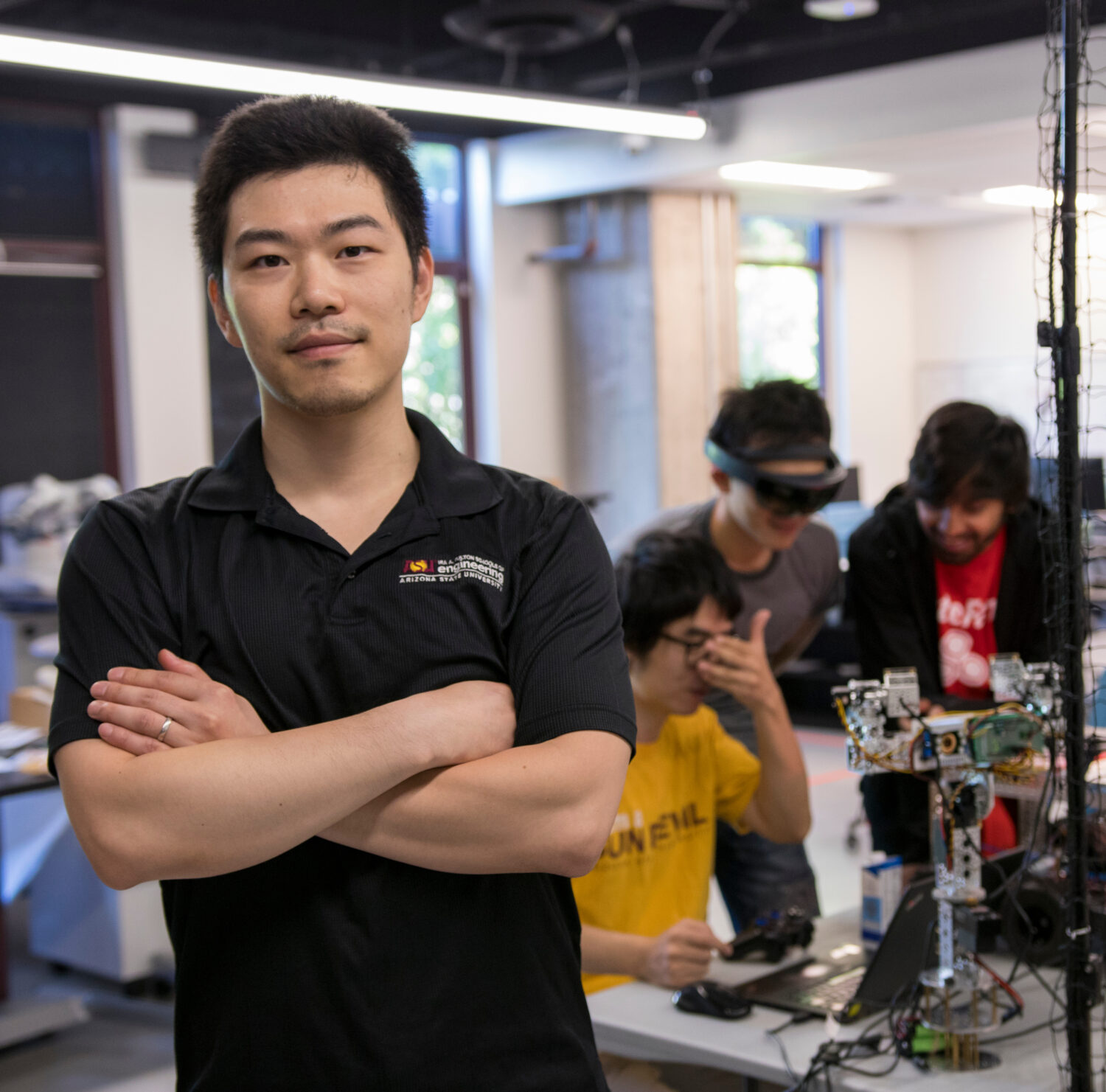
Dr. Yezhou (YZ) Yang is a tenured Associate Professor in the School of Computing and Augmented Intelligence (SCAI) at Arizona State University (ASU). He leads the ASU Active Perception Group , focusing on Cognitive Robotics, Computer Vision, and Generative AI . His work integrates vision, deep learning, and AI to interpret human actions and environmental geometry. Education: Ph.D. Computer Science, University of Maryland, College Park (2016) M.S. Computer Science, University of Maryland, College Park (2013) B.E. Computer Science and Engineering, Zhejiang University, China (2010) Research Interests: Dr. Yang’s research emphasizes Visual Recognition with Knowledge (VR-K) , Autonomous Vehicles , and Multimodal Learning . Key projects include: - Developing Secure and Decentralized Generative Models (NSF SaTC Grant) - Enhancing Robustness in Vision-Language Tasks (NSF Robust Intelligence Grant) - Traffic Safety Assessment via Infrastructure Cameras (Institute of Automated Mobility) Publications: Recent work spans Text-to-Image Generation (e.g., RefEdit), Event-based Vision (e.g., SEVD Dataset), and Connected Autonomous Vehicles (e.g., CAROM). His team’s contributions to benchmarks like VL-GLUE and ConceptBed advance multimodal reasoning and model evaluation. Awards & Recognition: NSF CAREER Award (2020) Amazon AWS ML Research Award (2019) Co-founder of ARGOS Vision Inc. Lab & Teams: The ASU Active Perception Group collaborates with industry (e.g., Arizona DOT) and academic partners. Ongoing projects include Robust Multimodal Foundational Models and Socially-Adept Autonomous Vehicles .
Dr. Marcin Rządeczka is an Assistant Professor at the Institute of Philosophy, Faculty of Philosophy and Sociology, University of Maria Curie-Skłodowska (UMCS), and leads the Laboratory for Multimodal Studies (MultiLab). He holds a PhD in interdisciplinary philosophy (biology/medicine/philosophy) from UMCS (2014) and has held roles such as Deputy Director of the Institute of Philosophy (2019–present) and Erasmus+ Coordinator (2015–present). His research bridges philosophy of science, computational psychiatry, and evolutionary psychology, focusing on cognitive biases, neurodiversity, and AI ethics in mental health. Postdoctoral Fellow, IDEAS NCBR (Warsaw, 2023–2024) Researcher, Human-Centred Data Analytics Group, CWI Amsterdam (2024) His academic work explores the intersection of evolutionary theory, bioinformatics, and computational modeling in understanding mental disorders. Recent publications analyze neurodiversity through adaptive cognitive strategies, chatbot ethics, and stress responses in refugee populations. He has secured grants like the NCN MINIATURA 7 (2023) for bias detection in therapeutic chatbots. Scientific awards include multiple Rector’s Awards from UMCS (2022–2024) and the Homo Didacticus Award (2021/2022). He has promoted 17 bachelor’s theses and reviewed 18 bachelor’s and 3 master’s theses, focusing on neurodiversity, evolutionary psychiatry, and digital health. Collaborations span institutions like IDEAS NCBR, CWI Amsterdam, and the Polish Philosophical Society.
Associate Professor Raymond Wong is a faculty member in the School of Computer Science & Engineering at UNSW Sydney, where he also serves as Director of Online Education. He holds a PhD from Hong Kong University of Science & Technology, and has extensive expertise in database systems, data science, information extraction, and cloud computing. With over 220 conference papers, 56 journal articles, and two US patents, his research spans data mining, machine learning, and big data analytics. He has received 8 best paper awards and 4 industry/professional recognitions. His advisory roles include stints at Data61/CSIRO and Stats Central, and he has co-founded technology startups. Key projects include the Singapore NTU SPIRIT Smart Nation Research Centre's Intelligent Case Retrieval System (ICRS) and collaborations across Asia-Pacific regions. His research interests focus on database optimization, data analytics, NLP, and cloud infrastructure. He has supervised 25 PhD students and 65 honors students, six of whom earned University Medals. Notable grants include projects on ovarian cancer detection ($135k), cardiovascular disease analysis ($100k), and social media analytics ($250k). Awards include the 2016 ARC UNSW Supervisor Award and multiple IEEE best paper honors. His work bridges academia and industry, addressing challenges in healthcare, cybersecurity, and data-driven innovation.
Peter West is an incoming Assistant Professor at the University of British Columbia (UBC) Computer Science Department, specializing in Natural Language Processing (NLP) and AI. His research focuses on understanding the capabilities and limitations of large language models (LLMs) and generative AI systems, emphasizing their divergence from human intuition and alignment challenges. He holds a PhD from the University of Washington (2024), supervised by Yejin Choi, and a BSc (Honours Computer Science) from UBC (2017). His work has been recognized with awards including Best Method Paper at NAACL 2022 and Outstanding Paper awards at ACL 2023 and EMNLP 2023. He conducted internships at the Allen Institute for AI and Microsoft Research’s NLP group. Research interests include analyzing LLM behavior through a natural sciences lens, exploring model capabilities versus human expectations, and developing decoding algorithms to infuse models with algorithmic logic. His recent publications address generative AI paradoxes, constrained text generation, and symbolic knowledge distillation. He serves on panels for NeurIPS workshops and is beginning a postdoc at Stanford with Chris Potts. His research group at UBC seeks students interested in generative AI’s analytical frontiers.
Ji-Ping Wang is a Professor of Statistics and Data Science and Department Chair at Northwestern University. He also holds an adjunct appointment in Molecular Biosciences. He earned his Ph.D. in Statistics from Pennsylvania State University in 2003. His research focuses on statistical and computational methods for genomics, including nucleosome positioning, DNA cyclizability prediction, CRISPR-Cas9 efficiency modeling, and RNA-seq normalization. His lab has developed widely used tools such as SPECIES , NuPoP , DegNorm , RiboDiPA , DNAcycP , and BoostMEC . Recent work emphasizes deep learning applications in DNA structure analysis and genomic data interpretation, with publications in top journals like Nucleic Acids Research , Cell , and Nature . Collaborations span computational biology, epigenetics, and translational medicine. He oversees the Statistics and Data Science department, advancing academic programs and interdisciplinary research initiatives.