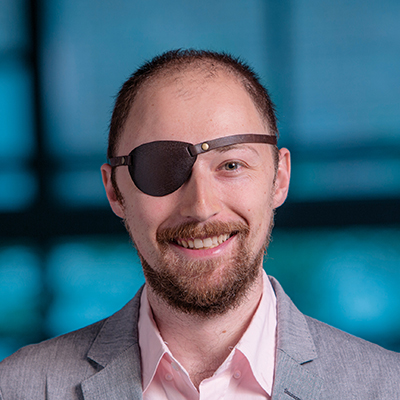
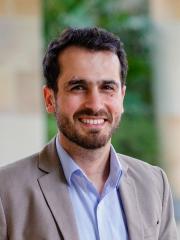
Gert Cauwenberghs is a Professor of Bioengineering at the University of California San Diego (UCSD), affiliated with the Jacobs School of Engineering. He co-directs the Institute for Neural Computation and holds a visiting professorship at MIT. His research focuses on neuromorphic engineering, energy-efficient neural interfaces, and wearable biosensors. Key contributions include silicon-based adaptive neural circuits, implantable neural recording systems, and in-ear biosensing devices. Education: M.Eng. in Applied Physics (University of Brussels, 1988), M.S. and Ph.D. in Electrical Engineering (Caltech, 1989–1994). Prior roles include Professorships at Johns Hopkins University and Visiting Professor at MIT. Research Interests: Biomedical integrated circuits, neuromorphic computing, brain-machine interfaces, and energy-efficient neural systems. His work bridges neuroengineering and clinical applications, emphasizing adaptive intelligence and low-power designs. Recent Work: Development of femtojoule-efficient neural chips, high-density neural interfaces, and closed-loop wearable systems. Projects include neurobench benchmarking frameworks and RRAM-based neuromorphic hardware. Awards: NSF Career Award (1997), ONR Young Investigator (1999), PECASE (2000), IEEE Distinguished Lecturer (2003–2004). Grants & Labs: Active in NIH and DoD-funded projects, co-directs the UCSD Institute for Neural Computation. Collaborates with industry on neural interface technologies. Labs/Teams: Cauwenberghs Lab at UCSD focuses on integrated neuroengineering systems, including neural recording systems and neuromorphic computing architectures.
Dr. Sungjin Kim is an Assistant Professor in the Department of Chemical and Biological Engineering at The University of New Mexico (UNM). He earned his Ph.D. in Materials Science and Engineering from MIT (2020) as a Samsung Scholarship Fellow, with prior degrees from KAIST (M.S. 2011, B.S. 2009) and exchange experience at Georgia Tech (2008). His research focuses on bioinspired, energy-efficient materials design for sustainability and healthcare. Education: Ph.D., MIT (2020) M.S. and B.S., KAIST (2011, 2009) Exchange Student, Georgia Tech (2008) Research Interests: Dynamic crosslinking in polymers, bioinspired mineralization for CO2 utilization and hard-tissue engineering, vitrimers for recyclable composites, and sustainable additive manufacturing. His work bridges fundamental chemistry (e.g., metal-coordinate bonds) and applied engineering (e.g., 3D printing). Notable Publications (2025-2022): Explore polyisocyanurate foams, dynamic vitrimer composites, and bioinspired mineralization strategies. Common themes include sustainable materials, dynamic bonding, and hybrid organic-inorganic systems. Awards: Samsung Scholarship Fellow (2014-2019) Government Scholarship (Korea, 2009-2011) Research Report of the Year Award (2012, SKC Co., Ltd.) Outstanding New Researcher Award (2011, SKC Co., Ltd.) Students: Advisees include graduate students Leila Shahriari and Michael Nelwood, and undergraduates Tyrus Antonson and Jacqueline Buenviaje. Former members include Catherine Biju (M.S. candidate) and Lillian Elam (undergraduate).
Professor Mette Eilstrup-Sangiovanni serves as Senior Lecturer in International Studies within the Department of Politics and International Studies (POLIS) at the University of Cambridge and holds a Fellowship in International Relations at Sidney Sussex College. Her teaching portfolio encompasses International Organization, International Relations Theory, International Security, History and Theory of European Integration, and Research Design and Methodology, reflecting her dual institutional commitments. Her research program centers on International Security, International Organizations, and European Integration with specialized expertise in Global Governance and Transnational Networks. She investigates how formal and informal institutions shape security governance frameworks, weapons proliferation regimes, and European defense architectures through rigorous application of network theory. This analytical lens reveals critical insights into cooperation dynamics and institutional evolution within international security contexts. Publication analysis shows consistent thematic development from foundational work on balance-of-power theory (2008-2009) toward contemporary examinations of multipolarity's institutional impacts (2013-2014). Her scholarship demonstrates methodological continuity in applying network analysis to diverse security challenges, from terrorist organizations to EU defense policy, while maintaining focus on institutional interplay in global governance structures.
Charles D. Sprenger is a Professor of Economics at the California Institute of Technology (Caltech), where he has served since 2020 and held the position of Executive Officer from 2022 to 2025. He is affiliated with Caltech's Division of the Humanities and Social Sciences (HSS) and holds key roles at the Ronald and Maxine Linde Institute of Economic and Management Sciences and the Center for Theoretical and Experimental Social Sciences (CTESS). His external appointments include Board of Editors for the American Economic Review and Associate Editor roles for the Journal of the European Economic Association and Quantitative Economics . His educational background includes a B.A. from Stanford University (2002), an M.Sc. from University College London (2005), and a Ph.D. from the University of California, San Diego (2011). These credentials established his foundation in economic theory and experimental methodology. Sprenger is a leading behavioral and experimental economist specializing in intertemporal decision making and choices under uncertainty. His research designs innovative experiments across diverse contexts—from food deserts in the United States to polio vaccination drives in Pakistan—to test the validity of standard economic models. His work consistently reveals significant deviations from rational choice theory, particularly regarding time inconsistency, risk preferences, and reference-dependent behaviors. He has pioneered methods for measuring time preferences and testing cumulative prospect theory, with implications for public policy and behavioral interventions. Analysis of his 15 most recent publications (2015-2024) shows a cohesive research program centered on behavioral anomalies in decision making. His work bridges laboratory precision with real-world field applications, demonstrating how psychological factors like procrastination and loss aversion manifest in high-stakes environments. Key trends include the development of tailored incentive structures, validation of rank-dependent utility models, and exploration of dynamic inconsistency across domains including health, finance, and public policy. His notable recognition includes: Sloan Foundation Fellowship (2016-2018) Sprenger actively contributes to the academic community through editorial leadership and collaborative research. His work has been featured in Caltech news for projects like "Reducing Procrastination with Tailored Incentives" (2023) and the graduate summer program "Experimental Economics in Theory and Practice" (2023). Though specific advisees aren't listed, his teaching of advanced courses like Experimental Economics (SS 212 abc) indicates mentorship of graduate researchers. He secures significant research funding through fellowships and institutional support, enabling large-scale field experiments. As a core member of CTESS, Sprenger leads a multidisciplinary team conducting cutting-edge experimental economics research. His lab integrates theoretical modeling with empirical validation, focusing on how behavioral insights can improve policy design in areas like tax compliance, vaccination programs, and financial decision making. Current work emphasizes scalable interventions for procrastination and preference-based incentive customization.
Célia Challet is a Lecturer in law at the School of International Affairs (ESPOL) within the Catholic University of Lille, appointed in September 2024. Her educational background includes: PhD in Law from Ghent University (2025) LL.M. in European Law from the College of Europe Master's degree in European Business Law from University of Paris Panthéon-Assas (2018) Dr. Challet specializes in European Union legal frameworks, with research concentrated on institutional law and external relations. Her work critically examines EU sanctions under the Common Foreign and Security Policy and their judicial review mechanisms by the Court of Justice of the European Union. She actively contributes to the Multidisciplinary International Network on Sanctions (MINOS), advancing interdisciplinary analysis of international sanctions regimes. Prior to joining ESPOL, she served at the College of Europe in Bruges from 2019 to 2024 as Academic Assistant in European Law and later as Assistant to the Director of European Legal Studies.
Dr Olga Petri is an Assistant Professor in Human Geography at the Department of Geography, University of Cambridge. She is a Bye-Fellow and Director of Studies in Geography (Part II) at Jesus College, and a Leverhulme/Newton Trust Early Career Research Fellow. Her research bridges cultural and historical geography, queer studies, and more-than-human geographies, with a focus on urban modernity in non-Western contexts. Born in St Petersburg, Olga holds a BA and MA in Geography from Saint-Petersburg State University, an MSc in Urban Studies from University College London (merit), and a PhD in Geography from the University of Cambridge. Olga's research explores four key areas: Queer Geographies in authoritarian urban spaces, More-than-Human Geographies analyzing human-animal relationships, Russian Arctic Studies examining environmental and geopolitical transformations, and Migration Urbanism studying cities as hubs for political refugees. Her work on Beastly St Petersburg and Winged Worlds reconfigures urban history through animal and queer lenses. Scientific awards include the Leverhulme/Newton Trust Early Career Research Fellowship and a 2020 shortlisting for Student-Led Teaching Award . She is a Junior Research Fellow at Wolfson College since 2018. Olga leads postdoctoral research on human-animal dynamics in imperial Russia. She supervises graduate students in cultural/historical geography and urban studies. Her work features in Vital Geographies research group at Cambridge.
Benjamin Brooks is a Professor in the Department of Economics and the College at the University of Chicago, serving as Director of Graduate Studies. He holds a Ph.D. from Princeton University (2014), an M.A. from Princeton (2010), and a B.A. in Mathematics and Quantitative Economics from Tufts University (2008). His research focuses on microeconomic theory, mechanism design, auction theory, repeated games, and computational game theory. Brooks has published extensively in top journals such as the American Economic Review, Econometrica, and the Journal of Political Economy. His work often explores informationally robust mechanisms and strategic behavior in auctions and stochastic games. Brooks has received grants from the National Science Foundation for projects on mechanism design and stochastic game algorithms. He is an Associate Editor of the American Economic Review: Insights, Theoretical Economics, and Economic Theory. His teaching spans game theory, price theory, and advanced topics in economic theory at both undergraduate and graduate levels. Brooks has also contributed to software tools like BCESolve and SGSolve for analyzing Bayesian correlated equilibria and stochastic games. Research Highlights: Contributions to auction design under incomplete information, robust mechanism design, and algorithmic solutions for stochastic games. Awards: Excellence in Refereeing Award (2017), NSF grants (2015-2025), and Fellow of the Society for the Advancement of Economic Theory (2024).
Jacky Bourgeois is an Assistant Professor of Data-Centric Design at Delft University of Technology's Faculty of Industrial Design Engineering (IDE), leading the Data-Centric Delft Design Lab. His work bridges Human-Computer Interaction, Data Science, and Participatory Design, focusing on methods like data donation to empower collaborative data exploration. He holds a computer science background, previously researching ubiquitous technologies for domestic energy practices of 'energy farmers' (solar households). Key projects include the PROMISE study on patient-led oncological care and the Data Donation initiative promoting ethical data practices. Education: Background in Computer Science; academic focus on sustainable design engineering and IoT. Teaching includes courses like 'Data-Centric Design for...' (2024) and 'Digital Product Development' (2023). Research Interests: Data as subjective inquiry material, data intimacy, data commons, and human-data interaction in home contexts. Notable contributions include PAIRcolator for collaborative data reflection and Tangi for 360° video insights. Awards include Best Paper at CHI 2025 and DIS '24 Best Paper. Grants & Collaborations: NWO-funded research on hospital sounds (2024), IoT Rapid Proto Labs for industry-academia partnerships, and ancillary role as a scientific employee at The Open University (2025–2027). Labs & Teams: Director of the Data-Centric Delft Design Lab; collaborates with the HCI Data & Design SIG. Current projects address ethical frameworks for data donation and patient-centered healthcare systems.
Dr. Xinan Zhang is an Associate Professor in the School of Engineering at The University of Western Australia (UWA), specializing in Electrical, Electronic, and Computer Engineering. He holds a BEng from Fudan University (2008) and a PhD from Nanyang Technological University (2014). Before joining UWA in 2019, he held roles as a Lecturer and Research Fellow in Singapore and Australia. His research focuses on power electronics, electrical machine drives, and renewable energy, with over 60 top-tier publications. He is the Portfolio Lead for Industry Engagement in UWA's School of Engineering and co-leads the Power and Clean Energy (PACE) research group. Education: BEng in Electrical Engineering, Fudan University (2004–2008) PhD in Electrical Engineering, Nanyang Technological University (2010–2014) Research Interests: Dr. Zhang’s work spans power electronics, renewable energy systems, energy storage, and smart grid technologies. He emphasizes practical applications, such as battery management systems for vanadium redox flow batteries and adaptive control strategies for microgrids. His contributions address challenges in energy efficiency, grid stability, and sustainable power solutions. Articles & Trends: Recent publications focus on advanced control algorithms for inverters, battery modeling, and renewable energy integration. His work combines data-driven methods with traditional control theory to enhance system efficiency and reliability. Notable areas include DC microgrid control, vanadium redox flow battery optimization, and model predictive control for power electronics. Awards: Listed in Stanford University’s Top 2% Scientists (2020–2022) Grants & Collaborations: He leads or co-leads projects funded by the Australian government and industry partners, including the GenX Betavoltaic Battery Pilot Manufacturing Process and Mine Electrification . These projects aim to advance clean energy technologies and industrial applications. Labs & Teams: As co-lead of the PACE group, he fosters interdisciplinary collaboration to tackle global energy challenges, aligning with UN Sustainable Development Goals for affordable and clean energy (SDG 7).
James C. Hoe is Professor of Electrical and Computer Engineering at Carnegie Mellon University (College of Engineering). He is on sabbatical at MangoBoost and directs research in computer architecture, reconfigurable computing, and high-level hardware design. Education Ph.D., Electrical Engineering and Computer Science, MIT (2000) M.S., Electrical Engineering and Computer Science, MIT (1994) B.S., Electrical Engineering and Computer Science, UC Berkeley (1992) Research Interests Professor Hoe’s work spans computer architecture , reconfigurable computing , FPGA architectures , and high-level hardware synthesis . His group created the CoRAM abstraction for virtualized FPGA computing and leads efforts in power-efficient accelerators, in-network computing, and security-oriented FPGA systems. Scientific Awards IEEE Fellow (2013) Intel Outstanding Researcher Award (2021) Research Funding & Projects Intel / VMware Crossroads 3D-FPGA Academic Research Center – co-leading exploration of FPGA roles in future datacenters. DARPA BRASS program ($2.7 M, 4 years) – ensuring long-lived software systems remain robust to resource changes. Pigasus open-source IDS – world’s fastest FPGA-accelerated intrusion-detection system (100 Gb/s on one server). Labs & Teams He heads activities within the Computer Architecture Lab at Carnegie Mellon (CALCM) , supervising graduate researchers on CoRAM++, SPIRAL autotuning, and FPGA overlays for stream processing.
Professor Haijiang Li is a Chair in BIM for Smart Engineering at Cardiff University's School of Engineering. His roles include leading the Computational Mechanics and Engineering AI Research Group, directing the BIM for Smart Engineering Centre, and overseeing the BIM MSc programme. He holds editorial roles for journals like Construction Innovation and Automation in Construction , and chairs the European Group of Intelligent Computing in Engineering (EG-ICE). Research focuses on smart computational engineering platforms integrating BIM, AI, and big data for sustainable infrastructure. Key areas include digital twins, disaster management, and resilient urban systems. He has secured £40M in research funding, including £9M as PI, and led over 70 research staff and students. Prof. Li is a Standards Committee Technical Executive at buildingSMART, driving international BIM standards. His work includes co-authoring a book on BIM standards across China, the US, and the UK. Awards include Fellowships from the British Computer Society (FBCS) and the Higher Education Academy (FHEA). His research outputs span over 250 publications, covering topics like AI-driven bridge maintenance, ontology-based decision-making, and energy-efficient urban systems. Collaborations with industry and global partners emphasize practical applications of BIM and smart technologies.
Mark Yatskar is an Assistant Professor in the Department of Computer and Information Science at the University of Pennsylvania. His research focuses on the intersection of natural language processing, computer vision, and fairness in machine learning. He earned his PhD from the University of Washington under advisors Luke Zettlemoyer and Ali Farhadi, and previously worked as a Young Investigator at the Allen Institute for Artificial Intelligence. Education: PhD in Computer Science, University of Washington (Advisor: Luke Zettlemoyer & Ali Farhadi) Research Interests: Yatskar's work explores how language can structure visual perception and mitigate human biases in machine learning systems. Key themes include: Natural language as a scaffold for visual intelligence Bias characterization and control in machine learning systems His lab currently investigates projects like language-guided bottlenecks, annotator cognitive heuristics, and gender bias amplification. Teaching: CIS 5300: Computational Linguistics (2021-2024) CIS 7000: Language and Vision (2020) CIS 6300: Efficient NLP (2023, 2025) Awards: Best Paper Award at EMNLP (Gender Bias Amplification Research) Advising & Grants: Yatskar advises a team of PhD/Master's students and actively seeks motivated researchers. His group has explored funding in areas like interpretable AI, multimodal reasoning, and dataset bias mitigation. Labs/Teams: Leads the Penn NLP & Vision Lab, focusing on projects like MolMo/PixMo open models, ViUniT visual unit tests, and bias mitigation frameworks.
Richard Jochelson serves as Dean of Law at the Faculty of Law, University of Manitoba (Robson Hall), a position he has held since July 1, 2016. Previously, he taught criminal law for 10 years at the University of Winnipeg. Dr. Jochelson holds a Ph.D. in Law from Osgoode Hall Law School at York University, an LLM from the University of Toronto Faculty of Law, an LL.B. with Gold Medal from the University of Calgary Faculty of Law, and a B.Sc. in Zoology with Distinction from the same institution. He completed his legal training as a clerk at the Alberta Court of Appeal and Court of Queen's Bench before working at a major Canadian law firm. Dr. Jochelson's research program centers on critical issues in criminal justice and constitutional law, with primary interests in police powers jurisprudence, sexual regulation (particularly obscenity and indecency law), jury systems and representativeness, and legal pedagogy. His interdisciplinary approach bridges law with sociology and psychology, bringing empirical and theoretical rigor to legal scholarship. His work consistently addresses social justice concerns, examining how vulnerable populations interact with the justice system and how concepts like risk, precaution, and visibility shape legal decision-making. He has developed a distinctive methodology combining doctrinal analysis with empirical research on judicial behavior and jury decision-making. His recent publications reveal evolving scholarly priorities that respond to contemporary legal challenges. The 2025 article "Morbid Matters" addresses medical assistance in dying within federal corrections, while his 2024 works on youth terrorism cases and agnotology demonstrate expansion into new interdisciplinary territories. His longstanding commitment to police powers scholarship continues with "Ancillary Police Powers in Canada" (2024). The pandemic period saw significant contributions to understanding digital justice, mental health in legal education, and remote court proceedings. His criminal law scholarship maintains focus on jury representativeness, particularly regarding Indigenous inclusion following Bill C-75's elimination of peremptory challenges. Students' Teacher Recognition Award (CATL) - 2018 Dr. Jochelson has secured multiple SSHRC Insight Grants as both Principal and Co-investigator, demonstrating his ability to lead interdisciplinary research teams. His mentorship extends to junior academics and students, with several publications co-authored with emerging scholars. He has built significant research infrastructure, notably assembling nearly 40 interdisciplinary scholars across Canada for Robsoncrim.com, which has elevated the Criminal Law Edition of the Manitoba Law Journal to prominence as one of Canada's preeminent criminal law publications. As Dean of Law, Dr. Jochelson provides leadership in academic governance and legal education innovation. His service includes extensive committee work on academic affairs, workload policy, and hiring/tenure committees. His commitment to universal design principles informs both his teaching approach and administrative leadership, emphasizing accessibility and student-centered pedagogy that allows flexible evaluation methods tailored to individual learning preferences.
Dr. Metin Uyanik is a Senior Lecturer at the School of Economics, The University of Queensland. He holds a PhD from Johns Hopkins University (2016) and previously worked as a Postdoctoral Research Fellow at the University of Rochester's Wallis Institute of Political Economy. His research focuses on Economic Theory, Game Theory, Political Economy, Computational Economics, and Mathematical Economics. His work has been published in top-tier journals such as Economic Theory , Games and Economic Behavior , and Journal of Mathematical Economics . Education: Bachelor of Economics, Bogazici University Masters (Research) of Economics, Koc University Doctor of Philosophy, The Johns Hopkins University Research Interests: Dr. Uyanik's research bridges theoretical and applied economics, emphasizing foundational mathematical approaches. His work explores general equilibrium theory, discontinuous games, topological methods in economics, and welfare economics. Key themes include the analysis of non-convex economies, fixed-point theorems, and the integration of axiomatic frameworks with behavioral assumptions. Teaching: He teaches Advanced Microeconomics, Economics for Commerce, and Introduction to Strategic Thinking at UQ. His pedagogical focus includes mathematical rigor and practical applications of economic theory. Collaborations & Future Work: Collaborations with scholars like M. Ali Khan and Richard P. McLean highlight his engagement with complex theoretical frameworks. Ongoing projects include studies on large production economies, myersonian common knowledge, and computational methods in equilibrium analysis.
Benjamin Arold is a University Assistant Professor at the Faculty of Economics, University of Cambridge. His academic career spans theoretical and applied research in labor economics, education economics, and AI-driven policy analysis. Previously, he held postdoctoral positions at ETH Zurich and visiting roles at Harvard University and Princeton University. Education: Ph.D. in Economics, LMU Munich His research bridges economic theory with empirical applications, focusing on: Long-term impacts of school curricula on student outcomes AI and NLP applications in labor economics Economics of religion and its societal implications Recent Article Trends: His work highlights intersections between education policy and technological innovation, including meta-analyses of private schooling effects, charter school performance evaluations, and computational methods for analyzing educational interventions. Scientific Awards: Prize for Best Dissertation (2021/2022) - German Economic Association Fürther Ludwig Erhard Prize (2023) Teaching: He teaches advanced courses on NLP in economics at Princeton University and Basel University, with a focus on computational methods for non-standard data.