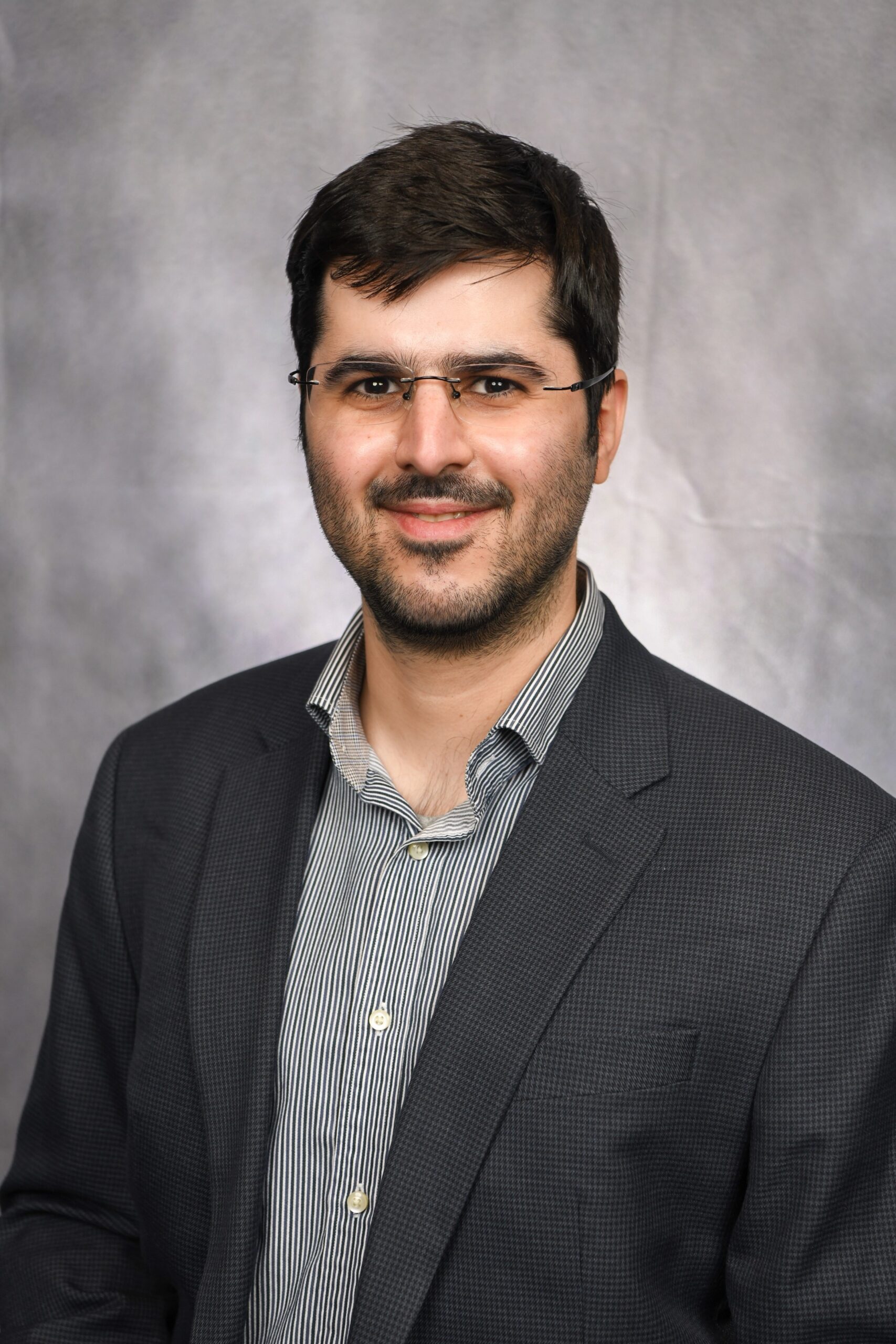
John K. Stranlund is a Professor at the University of Massachusetts Amherst in the Department of Resource Economics . His research focuses on the theory and experimental evaluation of environmental and natural resource management, with particular emphasis on compliance behavior and enforcement of policies, as well as local governance of common pool resources in the developing world. Contact: stranlund@resecon.umass.edu | (413) 545-6328 Location: Stockbridge Hall 222, University of Massachusetts Amherst, MA 01003 Research Interests: Environmental and natural resource policy compliance Enforcement mechanisms in resource management Local governance of common pool resources Experimental economics applied to environmental issues
Andrew Kirkpatrick is an Associate Professor and Chair of the Department of Political Science at Christopher Newport University (CNU). He previously directed CNU's interdisciplinary Environmental Studies program from 2013 to 2022. His academic work spans environmental politics, international organizations, and comparative politics. PhD in Political Science, Emory University MA in International Relations, Baylor University BA in Political Science, Tulane University Dr. Kirkpatrick focuses on international environmental cooperation , compliance with international agreements , and the politics of resource use . His research also examines political parties and institutions in environmental governance , with regional emphasis on the European Union and Northern Ireland. His publications analyze judicial activism in environmental treaties, institutional impacts on common pool resources (e.g., EU fisheries policy), and intergroup threat dynamics in Northern Ireland. Key themes include environmental governance , political behavior , and institutional reform .
Dr. Dorothea Herreiner is an Associate Professor of Economics at Loyola Marymount University (LMU), affiliated with the Bellarmine College of Liberal Arts. She specializes in microeconomics, game theory, and experimental economics, with a focus on fairness, cooperation, and STEM education. Her research explores topics such as fair division, policy analysis, and interdisciplinary collaboration in education. She holds a Ph.D. from the European University Institute and a Master’s from the London School of Economics and Political Science. Her teaching philosophy emphasizes analytical rigor and practical problem-solving, reflected in courses like Environmental Economics , Game Theory , and Mathematical Economics . She has been recognized with LMU’s Economics Department Teacher of the Year Award for her dedication to student mentorship. Her recent work includes studies on concealed carry weapon laws and STEM education equity, as well as experimental investigations into fairness and cooperation in resource allocation. She has contributed to policy discussions through her research on economic decision-making and fairness criteria. Dr. Herreiner has led initiatives such as LMU’s Academic Honesty Policy development and served as Director of the Center for Teaching Excellence. She advocates for close student-faculty collaboration and encourages undergraduates to engage in challenging coursework and utilize office hours.
Géraldine Pflieger is a Full Professor of Urban and Environmental Policies at the University of Geneva, affiliated with the Department of Political Science and International Relations within the Faculty of Social Sciences. Since 2017, she has directed the Institute of Environmental Sciences and co-directed the UNESCO Chair in Hydropolitics since 2015 with Christian Bréthaut. She serves as a science representative in Swiss climate negotiations at COP since 2020. Research Interests include climate policies, water governance, urban governance under environmental challenges, and infrastructure sustainability. Her work bridges international climate frameworks with localized implementation, focusing on transboundary water management and the socio-political dimensions of urban policy. Article Trends reveal a sustained focus on water governance (8/15), climate policy (7/15), and urban systems (6/15). Key methodologies include comparative case studies, historical institutional analysis, and stakeholder engagement frameworks across semi-arid regions, European cities, and transboundary basins. Awards : Water International Best Paper 2022 Award Doctoral Mentorship encompasses current advisees like Gaélane Wolff (2024) and Laura Turley (2023), plus former students including Kari de Pryck (2018), Emilie Dupuits (2017), and Sébastien Lambelet (2019). She leads research projects GOUVRHÔNE (Rhône transboundary governance), InfraGouv (urban water infrastructure), and POWURB (power dynamics in Swiss cities).
Stephanie J. Rickard is a Professor of Political Science in the Department of Government at the London School of Economics (LSE). Her research and teaching focus on international political economy, particularly the interplay between political institutions and economic policies. She has made significant contributions to understanding trade politics, industrial policy, and the political consequences of globalization. Her research interests include: International Trade Politics Redistribution and Welfare Globalization and Voter Behavior Electoral Institutions Industrial Subsidies and Government Procurement Economic Geography and Policy Design Stephanie’s recent publications explore the political dynamics of tariffs and subsidies, the electoral consequences of offshoring, and how governments target economic benefits. Her work consistently emphasizes how domestic political institutions interact with economic geography to shape policy outcomes. She has published in top journals such as International Organization , The Journal of Politics , and Comparative Political Studies . Her award-winning book, Spending to Win (Cambridge University Press, 2018), investigates how electoral incentives and regional economic structures influence government subsidies. She has contributed to policy discussions, including the design of the UK’s subsidy control framework. Chair, Board of International Organization Member, UK Trade and Agriculture Commission Independent Member, Parliamentary and Political Service Honours Committee She frequently engages with media outlets such as the BBC and Bloomberg, offering expert commentary on global economic developments. Her research has been supported by various academic and policy institutions, and she advises on governance of international economic policy. Stephanie Rickard leads no formal lab but directs major editorial and policy boards, shaping discourse in political economy. Her work continues to influence both academic and policy debates on industrial strategy, trade, and democratic accountability.
Dr. Mahesh Poudyal is a Lecturer in Conservation Social Science at the University of Kent's School of Anthropology and Conservation, and a member of the Durrell Institute of Conservation and Ecology (DICE). His research focuses on socio-economic and institutional aspects of biodiversity conservation, natural resource governance, environmental justice, and the poverty-environment nexus. He has conducted fieldwork in Nepal, Madagascar, Ghana, Sweden, and other regions, examining topics such as conservation impacts on communities, customary land tenure systems, and climate change policies. Dr. Poudyal holds a PhD in Environment and Politics from the University of York (2010), with field research in Northern Ghana. Before joining Kent, he held postdoctoral positions at King’s College London (2019-2021), the ESPA Programme Directorate (2017-2018), Bangor University (2013-2017), and the Swedish University of Agricultural Sciences (2011-2013). He is affiliated with ForestAction Nepal as a Research Fellow. His teaching includes modules on conservation and community development, ecotourism, biodiversity economics, and environmental sustainability. Current PhD supervision topics include human-snake conflict mitigation in India, equity in conservation measures, and biosphere reserve governance in Chile. Dr. Poudyal’s work emphasizes interdisciplinary approaches, integrating qualitative and quantitative methods. His recent projects include analyzing ecosystem services data through the Nature4SDGs initiative and investigating the socio-economic dimensions of conservation policies in tropical regions.
Muserref Yetim is a Clinical Associate Professor in the Program in International Relations at New York University’s College of Arts & Science. Her academic journey includes a BA in Economics and International Relations from Istanbul University, an MA in Politics and International Relations from Bogaziçi University, and a PhD in Government from the University of Texas at Austin. She specializes in International Political Economy, Comparative Politics, Middle Eastern Politics, Latin America, Resource Scarcity, and Numismatics. Her research focuses on international water rights conflicts, domestic institutions, and resource scarcity’s impact on conflict. She has been affiliated with organizations like the American Political Science Association and the Middle East Studies Association. Her awards include the MacDonald Dissertation Fellowship and the Turkish Higher Education Council Grant. Current research projects include studies on the IMF, EU, and Turkey’s AKP party, USD reserve concentrations, federal financial interventions, and AI’s role in global cooperation. She teaches courses on Inequality & Conflict, Political Economy of Institutions, and Natural Resource Conflict. Her work bridges economic and political analysis, emphasizing institutional frameworks and their global implications. She actively contributes to numismatic studies through her membership in the New York Numismatic Club.
Margaret A. McKean is a Research Professor of Environmental Policy at Duke University's Nicholas School of the Environment and Professor Emerita of Political Science. Her research examines political institutions, property rights, and cooperative management of common-pool environmental resources, with specialized work on Japanese electoral systems and traditional commons governance. She co-founded the International Association for the Study of Common Property (IASCP) in 1989 and served as its president (1995–1996). Her current research includes three book manuscripts: Cooperation on the Japanese Commons , The Common Good in Uncommonly Bad Times: Japan's Experience with Collective Choice under Scarcity , and Property Rights for a Small Planet . She also leads collaborative projects analyzing legal innovations for commons management in post-industrial economies and historical Japanese common-property disputes. Key affiliations include: Member of the National Academy of Sciences Panel on Common Property (1982–1987) Organizer of the inaugural IASCP global conference (Duke, 1990) and the IASC conference (Japan, 2013)
Antonio Putini is an Associate Professor in the Department of Political Science at Sapienza University of Rome, where he teaches courses such as Sociology of Political Phenomena and Sociology of Political and Communicative Processes . His academic work is deeply rooted in political sociology, with a focus on urban governance, collective action, and civic participation. His research interests include: Urban Commons and Shared City Resources Active Citizenship and Civic Engagement Social Movements and Collective Action Political Parties and Participatory Democracy Digital Politics and Web 2.0 in Civil Society Theoretical Contributions from Gramsci and Marcuse His recent publications reflect a strong engagement with contemporary sociopolitical dynamics in Italy, particularly in urban contexts. Themes such as informality, common goods, and democratic innovation are recurrent across his work, often analyzing case studies from Rome and central Italy. His scholarship bridges theoretical rigor with practical policy implications, especially in municipal governance and citizen-led urban regeneration. Notable trends in his research include: A focus on participatory democracy and grassroots initiatives Critical analysis of electoral platforms and political communication Exploration of the intersection between culture, ideology, and political behavior Interdisciplinary approaches combining sociology, political science, and urban studies While no specific scientific awards or fellowships are listed in the provided text, his consistent publication in peer-reviewed journals and edited volumes indicates scholarly recognition. His work contributes significantly to debates on urban commons, civic stewardship, and new forms of political participation. Antonio Putini advises students and supervises academic work, though no specific names of advisees are listed. He has not mentioned any research grants in the provided material. He maintains regular office hours every Wednesday from 9:00 to 13:00, available both in person and via Google Meet, demonstrating active engagement with students and colleagues. He is involved in institutional academic platforms such as Classroom (with provided codes for student access), indicating integration into digital teaching environments. While no formal lab or research team is mentioned, his thematic focus suggests possible involvement in urban studies or political sociology research groups at Sapienza University.
David Yu serves as Assistant Professor of Civil Engineering at Purdue University's College of Engineering with a joint appointment in Political Science, joining the faculty in 2015. His interdisciplinary work bridges engineering and social sciences to address sustainability challenges in complex human-environment systems. His academic background includes: B.ASc. in Engineering Science from Simon Fraser University M.P.P. from Lee Kuan Yew School of Public Policy, National University of Singapore Ph.D. in Sustainability from Arizona State University's School of Sustainability Dr. Yu's research centers on resilience of social-ecological-technological systems facing emergent shocks, examining how biophysical contexts and institutional arrangements interact to shape sustainable community development across scales. He integrates systems thinking, collective action theory, and human behavior analysis through mathematical modeling, case studies, and behavioral experiments. His work particularly focuses on water governance, infrastructure resilience, and climate adaptation. Analysis of his 15 most recent publications reveals dominant themes in socio-hydrology and coupled human-water systems, with increasing integration of AI methodologies like large language models for infrastructure management. His research spans theoretical modeling to field experiments, consistently addressing institutional design challenges in water resource systems while emphasizing interdisciplinary approaches to sustainability. No scientific awards were specified in the source materials. While specific advisees aren't listed, his experimental methodologies suggest active graduate student mentorship. His publication record indicates substantial grant-funded research in resilience engineering and socio-hydrology, though specific grants aren't documented. Research infrastructure details are unspecified, though his methodological diversity implies collaboration across engineering and social science laboratories.
George Frisvold is a Professor in the Department of Agricultural and Resource Economics at the University of Arizona. He has held visiting roles at India's National Institute of Rural Development and Johns Hopkins University, along with leadership positions like Chief economist at USDA's Economic Research Service and Senior staff at the President's Council of Economic Advisers (1995-96). His research focuses on climate change economics, water management, and agricultural technology adoption. Key projects: Community-Based Climate Water Challenges , Improved Understanding of Climate Variability , and Colorado River Shortage Declaration ; Research areas: Water footprint metrics , Drought resilience , Wildfire risk economics , and Herbicide resistance management ; Recent publications analyze wildfire risk tracking, agricultural water productivity, drought impacts on recreation, and integrated pest management; Collaborates with researchers like Dari Duval and Bonnie Colby; Co-edited volumes on climate adaptation and agricultural economics.
Francesco Bogliacino is an Associate Professor at the Catholic University of the Sacred Heart in the Department of Economic Policy, Milan. Previously, he held research and academic positions at institutions including EAFIT (Research Fellow), Universidad Nacional de Colombia (Associate Fellow), and the University of Bergamo (RTDb). He earned his PhD in Economics from the University of Pavia. Education: PhD in Economics, University of Pavia His research focuses on Behavioral Economics , Experimental Economics , Microeconomics , and Development Economics , with methodological emphasis on experimental design and norm elicitation. Recent publications analyze topics such as social desirability bias, property rights restitution, prosocial behavior in conflict zones, and labor market shocks during the pandemic, appearing in journals like Journal of Economic Behavior and Organization , World Development , and Food Policy . He served as director of the Development Research Center (2018–2021) and contributes to policy-focused studies in environmental governance, consumer behavior, and post-conflict economics. Bogliacino also acts as an Associate Editor for Ecomia Politica and Structural Change and Economic Dynamics , with consulting experience for national and international institutions.
Brett van Poorten is an Assistant Professor in the School of Resource & Environmental Management at Simon Fraser University. He holds a BSc in Biology from the University of Guelph, an MSc in Fish Ecology from the University of Calgary, and a PhD in Fisheries from the University of British Columbia. His research focuses on fisheries management decisions, integrating recreational/commercial fisheries with human dimensions and management science. Prior to SFU, he was Senior Aquatic Scientist at the BC Ministry of Environment, addressing fisheries and aquatic system challenges such as social-ecological system management, invasive species, and hydroelectric impacts. His research interests include decision analysis, structured decision-making, novel fishing effort monitoring techniques, and social-ecological systems modeling. He leads the Fisheries Management Lab ( www.fisheriesmanagementlab.ca ), emphasizing applied solutions for sustainable resource management. Brett teaches REM 412 (Environmental Modeling) and REM 612 (Simulation Modelling in Natural Resource Management). His work bridges ecological and human dimensions, with a focus on creating actionable frameworks for complex management challenges.
Dr. Jill Weiss is an Assistant Professor in the Department of Environmental Studies at SUNY College of Environmental Science & Forestry (ESF). She is also affiliated with the Graduate Program in Environmental Science and the ESF Adirondack Ecological Center. Her lab, the Weiss Lab, focuses on interdisciplinary environmental research and can be found at https://esfweisslab.weebly.com/ . She collaborates on the ASANE Project, studying alpine stewardship, accessible at https://asaneproject.weebly.com/ . Education: PhD in Environmental Studies, Antioch University New England (2009–2016) MA in Environmental Conservation Education, New York University (2001–2003) BFA in Communications Design, Pratt Institute (1992) Research Interests: Weiss specializes in the intersection of social science and conservation, emphasizing recreationist behavior, stewardship practices, and communication strategies. Her work addresses challenges in managing wilderness areas like the Adirondacks, focusing on governance of public open spaces, socio-ecological dynamics, and psychological aspects of environmental education. She employs methods from landscape ecology, assessment frameworks, and institutional analysis to inform policy and management decisions. Articles Trends: Her recent work highlights empirical studies on visitor demographics and management strategies in high-use wilderness areas. She explores how adaptive frameworks like Limits of Acceptable Change (LAC) and collaborative practices (e.g., community of practice models) can mitigate ecological pressures while balancing recreational access. Earlier publications delve into urban waterway restoration and conservation partnerships in New England, underscoring themes of equity and multi-stakeholder collaboration. Advising & Grants: Current advisees include Elysia Palmieri (PhD) and Alexsa Torres (MS). Active grants include USDA NIFA McIntire Stennis Program funding for trail user behavior studies and an NYS DEC-sponsored project on recreational intent. Pending grants focus on knowledge sharing among trail maintainers and podcast-based marine conservation education. Labs & Teams: The Weiss Lab collaborates with the Adirondack Council, Adirondack Mountain Club, and Cary Institute for Ecosystem Studies. The lab’s activities include trail monitoring, ecological impact assessments, and conservation communication initiatives. The ASANE Project unites stewardship programs across the Northeast to study alpine management practices.
Rouhi Rad is an Assistant Professor at Texas A&M University's College of Agriculture and Life Sciences, specializing in Environmental and Natural Resource Economics with a focus on Water Resources Economics. Their work addresses agricultural sustainability, climate policy, and water governance. They hold a PhD from the University of Illinois Urbana-Champaign (2017), an MS from New Mexico State University (2012), and an undergraduate degree in Civil Engineering from Sharif University of Technology (2010). Research interests include groundwater management, climate adaptation strategies, and policy evaluations for agricultural systems. Key areas of inquiry involve the intersection of environmental economics with real-world challenges like wildfire impacts, salinity management, and stakeholder-driven water planning. Publications emphasize integrated modeling approaches to quantify economic and environmental outcomes of water policies. Recent studies explore stakeholder-driven governance frameworks, the economic impacts of climatic shocks on rural electricity, and the role of subsidies in groundwater conservation. Collaborative work with institutions like Colorado State University highlights interdisciplinary approaches to sustainable resource management. No scientific awards are explicitly listed in the provided materials.