
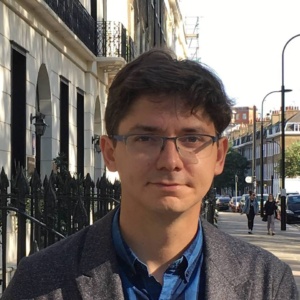
Paul B. Kreitman is an Associate Professor at Columbia University's Department of East Asian Languages and Cultures. He specializes in 20th Century Japanese History, Environmental History, and the History of Science and Technology. 20th Century Japanese History Environmental History Commodity History Global Sovereignty Studies His research explores intersections between nature and sovereignty , with a focus on Japan's borderlands and trans-Pacific interactions. His 2018 article on Tokyo's wartime sanitation politics won the Leopold-Hidy Prize , and his 2023 monograph Japan's Ocean Borderlands redefines environmental sovereignty narratives. He teaches courses on Asian Mobilities , Indo-Pacific Geopolitics , and graduate seminars about Borderland Japan . Previously held positions include Junior Research Fellow at University of London's Institute of Historical Research and Senior Teaching Fellow at SOAS. Publications: Environmental History (2018), Cambridge University Press monograph (2023) Media Appearances: The Financial Times, The Japan Times, The New Statesman Current projects examine trans-Pacific border controls with emphasis on Japan-Hawaii connections. His work integrates environmental, technological, and geopolitical perspectives to reshape historical understanding of sovereignty dynamics.
جستجوی استاد راهنمای دانشگاهی
برای مسیر پژوهشیتان، استاد راهنما، استاد دانشگاه و پژوهشگر مناسب را پیدا کنید و با آنها ارتباط بگیرید.
نمایش ۱-۱۵ از ۱٬۶۱۹ استاد راهنما
اطلاعات پروفایلها از صفحات عمومی دانشگاهها گرفته شده و ممکن است بهروز نباشد.

Rizwan Ahmedمشاهده پروفایل
مدرس ارشد
- Sustainable Finance
- Green Finance
- FinTech
- +۵ مورد دیگر
Rizwan Ahmed is a Senior Lecturer in Accounting and Finance at the University of Kent 's Kent Business School . He serves as Director of Studies for the Department for Accounting and Finance, with prior experience as an Assistant Professor at institutions like the University of Birmingham, Cardiff Business School, and Birkbeck University of London. His research focuses on Sustainable Finance , FinTech , and Corporate Governance , with funding from the Economic and Social Research Council (ESRC) for collaborative projects. Fellowship of Higher Education Academy (HEA-UK) Associate Fellow Member, Chartered Institute of Securities and Investment (CISI-UK) His publications in journals like Energy Economics and International Journal of Finance and Economics examine intersections between climate risk, financial markets, and regulatory frameworks. He supervises PhD research in areas including Sustainable Finance, Climate Finance, and Corporate Governance in the financial sector. Research Trends Recent articles analyze climate change impacts , energy market spillovers , and ESG performance under sanctions, utilizing empirical methods and data from the UK, China, and emerging economies. Methodological innovations include cross-quantilogram analysis and portfolio optimization frameworks. Scientific Awards Fellowship of Higher Education Academy (HEA-UK) Associate Fellow Member, Chartered Institute of Securities and Investment (CISI-UK) Rizwan also acts as a peer reviewer for journals including International Review of Financial Analysis and Technological Forecasting & Social Change .

Athanasios TRIANTAFYLLOU is an Associate Professor of Finance at IÉSEG School of Management in France. He holds a Ph.D. in Economics from the University of Athens (2017) and has held academic positions including Visiting Professor at Cornell University (2019), Lecturer at the University of Essex (2017–2022), and General Equilibrium Modeler at the National Technical University of Athens (2015). His research focuses on commodity markets, volatility forecasting, risk management, and monetary economics. Key contributions include analyzing commodity price uncertainty's impact on economic activity and financial markets. He has published extensively in journals like Journal of Futures Markets , Economics Letters , and International Journal of Finance and Economics . Education includes a BSc in Mathematics (2008), MSc in Accounting and Finance (2010), and M.Phil. in Economics (2013), all from Greek institutions. Professional experience includes risk management consulting at Ernst & Young (2016–2017). His teaching covers financial derivatives, multinational finance, and commodity markets. Research highlights include exploring the role of commodity price uncertainty in global economic dynamics and the predictive power of market information in corporate defaults. His work often bridges theoretical econometrics with practical policy implications, addressing issues like inflation dynamics driven by oil market risks and the tourism-led growth hypothesis in the Eurozone. TRIANTAFYLLOU’s publications emphasize volatility modeling, commodity market linkages, and the interplay between economic uncertainty and financial stability.

David A. Hsieh is the Bank of America Professor of Finance at the Fuqua School of Business, Duke University, where he has been a faculty member since 1993. Previously, he served as Associate Professor and Assistant Professor at the University of Chicago's Graduate School of Business from 1981-1989. His extensive research has significantly contributed to the understanding of hedge funds, financial risk management, and nonlinear dynamics in financial markets. Massachusetts Institute of Technology, Ph.D. in Economics, 1981 Yale University, B.S. in Economics and Mathematics, 1976 (Summa Cum Laude, Phi Beta Kappa) Phillips Academy, Andover, 1972 (Cum Laude) Dr. Hsieh's research primarily focuses on the dynamics of asset prices and their implications for financial risk management. He has made significant contributions to understanding risk and return characteristics in hedge funds and commodity funds, pioneering work on nonlinear dynamics applications to financial markets. His research has evolved from early work on exchange rates and volatility modeling to more recent comprehensive analyses of hedge fund strategies, performance measurement, and industry structure. Hsieh's publication history reveals a clear progression from foundational work on nonlinear dynamics in financial markets to increasingly sophisticated analyses of hedge fund strategies and risk characteristics. His recent work, often in collaboration with William Fung and other prominent finance researchers, has focused on mega hedge fund firms, franchise value in the industry, and the evolution of hedge fund strategies toward more index-like products. The research consistently combines rigorous theoretical frameworks with robust empirical analyses across diverse market conditions. CAIA Award for Excellence in Alternative Investment Research (2015) CFA Institute Graham and Dodd Award of Excellence (2004) Bank of America Faculty Award (2002) Duke Cross-Continent Executive MBA Teaching Excellence Award (2002) Fischer Black Memorial Foundation Robert J. Schwartz Memorial Prize (1999) Smith Breeden First Prize (1990) Yale Science and Engineering Association High Scholarship Award (1976) Russell Henry Chittenden Prize (1976) Dr. Hsieh has served as a consultant for the International Monetary Fund (2007-2016) and the Bank for International Settlements (1998), and as a Visiting Scholar at both the International Monetary Fund and the Board of Governors of the Federal Reserve System. His editorial service includes Finance Editor for Management Science (2003-2009) and Associate Editor roles for several leading finance journals. He has developed extensive research resources including a Hedge Fund Data Library that has become widely used in academic and industry research.

- Asset Pricing
- Econometrics
- Household Finance
- +۱ مورد دیگر
Nikolai Roussanov is the Moise Y. Safra Associate Professor of Finance at the Wharton School, University of Pennsylvania, and a Faculty Research Fellow at the National Bureau of Economic Research. His research spans asset pricing, econometrics, household finance, and macroeconomics, with a focus on market dynamics and behavioral economic factors. His research interests include: Asset pricing anomalies and risk factor modeling Household financial decision-making under uncertainty Macroeconomic impacts on commodity and currency markets Behavioral finance and mental accounting mechanisms Recent publications analyze inflation risks across asset classes, corporate bond valuation, behavioral retirement strategies, and the role of leisure economics in declining work hours. His work frequently integrates empirical finance and econometric methodologies. Scientific contributions include: Faculty Research Fellow, National Bureau of Economic Research His scholarship bridges technical financial modeling with real-world economic phenomena, covering topics like oil price shocks, mortgage liquidity, and systemic market failures.
Zhi Daمشاهده پروفایل
استاد
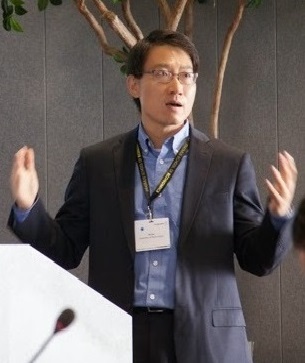
Zhi Da is the Howard J. and Geraldine F. Korth Chair in Finance and Professor of Finance at the University of Notre Dame , Mendoza College of Business, Department of Finance. He completed his Ph.D. in Finance at Northwestern University’s Kellogg School of Management (2006), preceded by an M.Sc. in Financial Engineering from the National University of Singapore (2001) and a B.B.A. with First-Class Honors (1999) from the same institution. Holding editorial roles at Journal of Finance , Management Science , Review of Financial Studies and several other top journals, he is a leading voice in empirical finance research. Education Ph.D. in Finance, 2006 – Kellogg School of Management, Northwestern University M.Sc. in Financial Engineering, 2001 – National University of Singapore B.B.A. (1st Class Honors), 1999 – National University of Singapore Research Interests Zhi Da’s scholarship sits at the intersection of asset pricing , behavioral finance , and market microstructure . He investigates how investor attention, institutional trading, liquidity frictions, and information flows jointly determine the cross-section of expected returns. His work delves into retail margin trading, the role of pension-fund flows in exchange-rate dynamics, the informational content of SEC filings, and the efficiency of short-selling mechanisms. By combining large-scale data analytics, textual analysis, and structural modeling, he uncovers novel predictors of returns ranging from presidential approval ratings to real-time attention measures. Recent projects explore fractional trading ’s impact on price efficiency, hedging demand as a driver of intraday momentum, and the hidden effort problem in delegated portfolio management. These themes collectively advance our understanding of limits to arbitrage and the formation of extrapolative beliefs. Publication Landscape Spanning 2025 back to 2009, his 15 most recent articles in Journal of Finance , Review of Financial Studies , Management Science , Journal of Financial Economics , and Journal of Financial and Quantitative Analysis converge on three broad motifs: (1) micro-level trading frictions—liquidity costs, margin requirements, and short-selling constraints; (2) macro-finance linkages—exchange rates, fiscal policy, and global capital flows; and (3) information economics—attention allocation, media analytics, and regulatory disclosures. The collective evidence demonstrates that seemingly small trading or informational frictions aggregate into large, persistent cross-sectional return predictability. Honors and Awards 2017 William F. Sharpe Award for Best Paper, Journal of Financial and Quantitative Analysis Lead-article distinctions in Journal of Finance , Review of Financial Studies , and Management Science Featured coverage in SmartMoney and CNBC Teaching & Mentorship At Notre Dame’s Mendoza College, Professor Da teaches Investments (undergraduate and MBA) and Fixed Income Securities , integrating cutting-edge research insights into the curriculum. While specific advisees are not listed, his extensive co-author network (22+ recurring collaborators) attests to a vibrant mentoring environment. Laboratory & Data Resources He publicly distributes the NAT (Net Arbitrage Trading) dataset, a stock-quarter panel of arbitrage positions used in Chen, Da & Huang (2019). This resource has become a standard tool for researchers studying arbitrage capital movements.

Chad E. Hart is a Professor in the Department of Economics at Iowa State University (ISU), specializing in agricultural economics and international trade policy. His research focuses on WTO agricultural commitments, crop insurance, biofuel policy, and commodity market dynamics. Hart holds a Ph.D. (1999) and B.S. (1991) in economics from ISU and Southwest Missouri State University, respectively. He has served in roles at ISU’s Center for Agricultural and Rural Development (CARD) and the Food and Agricultural Policy Research Institute (FAPRI), examining trade policies and energy-agriculture intersections. Hart has received notable awards, including the CALS Dean’s Citation (2020) and Exemplary Faculty Mentor Award (2016). His work bridges academic research and practical extension, addressing issues like trade disputes, commodity pricing, and agricultural sustainability. Hart’s insights frequently inform USDA outlook reports and policy analyses, with a focus on Iowa’s agricultural economy. Labs/Teams: Active in CARD and FAPRI, contributing to interdisciplinary research on agricultural policy and market dynamics.
Wei Xiong is the Hugh Leander and Mary Trumbull Adams Professor in Finance and Professor of Economics at Princeton University, affiliated with the Department of Economics and Bendheim Center for Finance. His research centers on behavioral finance and capital market imperfections with a focus on China's financial system and commodity markets. His educational background includes: Ph.D. in Finance from Duke University (2001) B.S. in Physics from University of Science and Technology of China (1993) Research Interests: Professor Xiong's work fundamentally explores behavioral finance and capital market imperfections , pioneering studies on speculative bubbles , heterogeneous beliefs in asset pricing , and financing frictions . His recent scholarship critically examines the financialization of commodity markets , belief distortions during financial crises , and the unique institutional dynamics of China's hybrid economy , where state and market forces interact. Publication Trends: Xiong's 48 publications in top-tier journals reveal an evolving trajectory from classical behavioral finance (2001-2013) toward contemporary China-focused systemic analysis (2017-2025). Recent works integrate cryptocurrency economics, real estate risk management, and policy design in emerging markets, demonstrating methodological rigor through structural modeling and empirical analysis of large-scale financial datasets. Scientific Awards: 2012 Smith Breeden Award (first prize) for the best non-corporate finance paper published in Journal of Finance 2013 NASDAQ OMX Award for the best asset pricing paper presented in Western Finance Association Meetings Professional Activities: As NBER research associate and former Management Science finance editor (2009-2011), Xiong bridges academia and policy. He co-founded VoxChina.org to foster China-world economic dialogue and co-edited The Handbook of China’s Financial System (Princeton University Press). His keynote addresses at major conferences—including the 2024 Chinese Economists Society meeting on “Information Discovery in a Hybrid Economy”—demonstrate sustained policy influence. Labs and Initiatives: Xiong leads Princeton's Bendheim Center for Finance research initiatives and directs VoxChina.org, which produces influential policy analyses on China's economy. His recent work includes the NBER-commissioned study on commodity market risks and ongoing projects examining big tech lending models and data privacy impacts on digital finance.

Professor Sarah Hall serves as the 1931 Professor of Geography and a Fellow at St John’s College, University of Cambridge. She is a Senior Fellow and Deputy Director at UK in a Changing Europe , where she examines UK-EU relations and the economic geography of post-Brexit financial services. Her research integrates cultural economy and political economy frameworks to analyze the spatial impacts of global financial shifts on cities, particularly focusing on London’s role as a financial hub and its evolving ties with China and the EU. Education: MA, PhD Her work, funded by the ESRC, British Academy, Leverhulme Trust, and Nuffield Foundation, explores how macroeconomic transitions—such as Brexit, China’s financial rise, and finance-led capitalism—reshape regional economies. She employs geographically sensitive approaches to bridge academic, public, and policy debates. Research Trends across her 2023–2015 publications emphasize: Post-Brexit financial services job displacement and regulatory divergence State capitalism’s role in Chinese banking expansion into London Interlocking corporate-policy networks between EU financial centres Offshore RMB market dynamics in the UK Marketization of higher education and elite recruitment Scientific Recognition : British Academy Mid-Career Fellowship (2016–17) Fellow of the Academy of Social Sciences (2020) She contributes to Geoforum as Co-Editor-in-Chief and mentors prospective PhD students in economic geography and financial geopolitics.

- Finance
- Quantitative Finance
- Volatility Modelling
- +۵ مورد دیگر
John Cotter is a Full Professor of Finance and Chair in Quantitative Finance at University College Dublin's Smurfit School of Business. He holds a PhD from Queen's University Belfast and prior academic roles include Associate Professor (2006-2012) and Senior Lecturer (2004-2006). His research focuses on volatility modeling, risk management, and asset pricing with applications in equity, real estate, and derivative markets. Cotter directs the Centre for Financial Markets and the Financial Mathematics Computation Cluster (FMC2), a multi-university research initiative funded by Science Foundation Ireland. Education: BComm and MEconSc from University College Cork, PhD in Finance from Queen's University Belfast. Research interests span asset pricing, volatility modeling, risk management, and financial market integration. His work has been published in top journals like Journal of Banking and Finance and Journal of International Money and Finance . He has secured grants including the ADAPT Phase 2 project (2021-2026). Cotter advises the European Securities Markets Authority (ESMA) and has consulted for numerous organizations globally. Notable awards include the UCD Outstanding Educator Teaching Award and UCD School of Business Research Contribution Award. He serves as Associate Editor for three journals and has supervised numerous PhD students through FMC2.

Hakan Berument is a Professor in the Department of Economics at Bilkent University, Ankara, Turkey, where he has been teaching since 1995. His academic career spans over 25 years with progressive appointments from Assistant Professor to full Professor. He has also served as Director of the Bilkent Energy Policy Research Center (2018-2019) and Advisor/Director of Energy Studies at the Center for Middle Eastern Studies (2020-2022). Berument received his PhD in Economics from the University of North Carolina at Chapel Hill in 1994, following an M.S. in Economics from the University of Kentucky (1989) and a B.S. in Economics from Middle East Technical University (1987). His research focuses on Monetary Economics, Macroeconomics, Time Series Analysis, and Econometrics, with particular emphasis on energy economics, oil price dynamics, and monetary policy effectiveness. Berument has made significant contributions to understanding the relationships between oil prices, exchange rates, and economic performance, especially in emerging markets and Turkey. His work frequently examines asymmetric price effects, market structures, and policy impacts across various energy sectors. Berument's recent publications reveal a strong focus on energy economics, particularly oil and electricity markets. His research employs advanced econometric techniques to analyze time series data, with growing attention to cross-border energy trade, price transmission mechanisms, and the interplay between financial markets and energy commodities. The breadth of his work spans from micro-level consumer behavior to macroeconomic policy implications. Ranked #1 among Turkish academic economists on supervising PhD dissertations (1990-2011) Ranked #4 among Turkish academic economists based on international publications (1999-2003) Parlar Foundation Young Investigator Award (2003) Turkish Social Sciences Association Young Social Scientist Promotion Award (2002) Research Fellow to Economic Research Forum (2005-Present) Vice-president, Econometric Research Association (2005-Present) Berument has supervised numerous graduate students, including over 15 Master's theses and several PhD dissertations. His research has been supported by various funding agencies including TUBITAK and the Economic Research Forum. He has served on editorial boards of multiple economics journals and contributed to policy discussions through his work with the Central Bank of the Republic of Turkey and other institutions. He has advised on energy policy through his directorship roles and frequent participation in policy discussions. While not explicitly mentioned as leading a specific research lab, Berument has been instrumental in establishing academic initiatives including Pazar11 meetings among economists. His contributions to energy policy research through the Bilkent Energy Policy Research Center have shaped discussions on Turkish energy markets and policy frameworks.
-726x726.jpg)
Isik Akinمشاهده پروفایل
مدرس ارشد
- Behavioral Finance
- FinTech
- Credit Risk Management
- +۵ مورد دیگر
Dr Isik Akin is a Senior Lecturer in Accounting and Finance at Bath Spa University and leads the Accounting Pathway. He teaches undergraduate and postgraduate modules including Financial Accounting, Management Accounting, Corporate Financial Management, and Quantitative Research Methods. Education: PhD in Accounting and Finance (Bath Spa University), PhD in Economics and Finance (Istanbul Gelisim University), MSc in Finance (University of the West of England), BSc in Mathematics (Trakya University) Professional Qualifications: Fellowship in Higher Education Academy, Chartered Institute for Securities & Investment (CISI) His research focuses on Behavioral Finance , FinTech , Credit Risk Management , and Sustainable Finance . Recent publications analyze: Enterprise valuation dynamics (FTSE 100) Metaverse asset valuation frameworks Interconnected financial markets (stocks, commodities, crypto) Green investments in real estate He has secured significant international funding including the Connect4Innovation UK-Turkey partnership grant (2021-2022, £50,000) and coordinated EU projects like the Life-Long Learning Programme (2016-2017). Scientific Awards & Roles: Chartered Institute for Securities & Investment (CISI) certified Fellow of the Higher Education Academy Advisory Board Member: Izlek Academic Journal, Metropolitan Business Review Editorial Board Member: International Journal of Economics and Financial Research His career spans multiple institutions including Worcester University and University of Arts London, with expertise in international finance, quantitative methods, and financial globalization.

Dimitrios P. Tsomocos is a Professor of Financial Economics at Saïd Business School and a Fellow in Management at St Edmund Hall, University of Oxford. He holds a BA, MA, MPhil, and PhD from Yale University and previously worked at the Bank of England. He serves on editorial boards including Annals of Finance and Economic Theory, and is a Senior Research Associate at the Financial Markets Group at the London School of Economics. His educational background includes: University of Oxford: M.A. by resolution, 2002 Yale University: Ph.D. in economics, 1996 Yale University: M.Phil. in economics, 1992 Yale University: M.A. in economics, 1990 Yale University: B.A. in economics, 1989 Professor Tsomocos is a mathematical economist specializing in Central Banking, Banking and regulation, Incomplete asset markets, Systemic risk, Financial instability, and Issues of new financial architecture. His research focuses on contagion, financial fragility, interbank linkages, and the impact of the Basel Accord using General Equilibrium models with incomplete asset markets, money, and endogenous default. He is working toward designing a new paradigm of monetary policy, financial stability analysis, and macroprudential regulation. His recent publications show a consistent focus on financial stability, banking regulation, and the interaction between monetary policy and financial stability. The research spans theoretical modeling of bankruptcy and default in general equilibrium frameworks, practical applications to bank regulation, analysis of commodity cycles in emerging economies, and policy responses to crises like the COVID-19 pandemic. His work frequently employs quantitative methods and general equilibrium modeling to address pressing issues in financial economics. His scientific achievements include: 2004 Bank Sabatell prize for the best work on the economics of banking (for "Book vs. Fair Value Accounting in Banking and Intertemporal Smoothing") Co-development of the Goodhart-Tsomocos model of financial fragility (2003) Testimony to House of Lords for the Economic and Financial Affairs and International Trade Sub Committee's report (2011) Appointment to Research Advisory Board, Central Bank of Russian Federation (2018) Professor Tsomocos has advised numerous PhD students and collaborated extensively with central banks worldwide. He has served as an economic advisor to a major political party in Greece and regularly provides commentary on the Greek economy. His research has had substantial policy impact, with the Goodhart-Tsomocos model implemented by more than ten central banks including the Bank of Bulgaria, Bank of Colombia, Bank of England, and Bank of Korea. He continues to collaborate with researchers from the ECB, Central Bank of the Russian Federation, and Bank of Chile on updated versions of his financial fragility model. He co-developed the Goodhart-Tsomocos model of financial fragility while working at the Bank of England, which has been implemented at various central banks globally. His research group at Oxford continues to refine this model and apply it to contemporary financial stability challenges.
Espen Storli is a Professor at the Department of Modern History and Society, Norwegian University of Science and Technology (NTNU). His work bridges business history, political economy, and resource governance, focusing on international business development in the 20th century. He holds a PhD from NTNU (2010) and has held prestigious positions like the Harvard-Newcomen Fellowship in Business History (2011-2012). His research includes projects such as "The hidden companies of the global economy: the development of international commodity traders, 1945-2015" , funded by the Norwegian Research Council. He co-founded the History and Strategic Raw Materials Initiative , a network examining raw material politics. Research Interests : Business-political intersections Commodity trading history Strategic resource governance State-corporate dynamics Globalization processes Scientific Awards : Harvard-Newcomen Fellow in Business History (2011-2012) Teaching : Courses include environmental history, modern European history, and global political economy of resources. He has contributed to academic outreach through lectures at institutions like Harvard Business School and the World Economic History Congress.
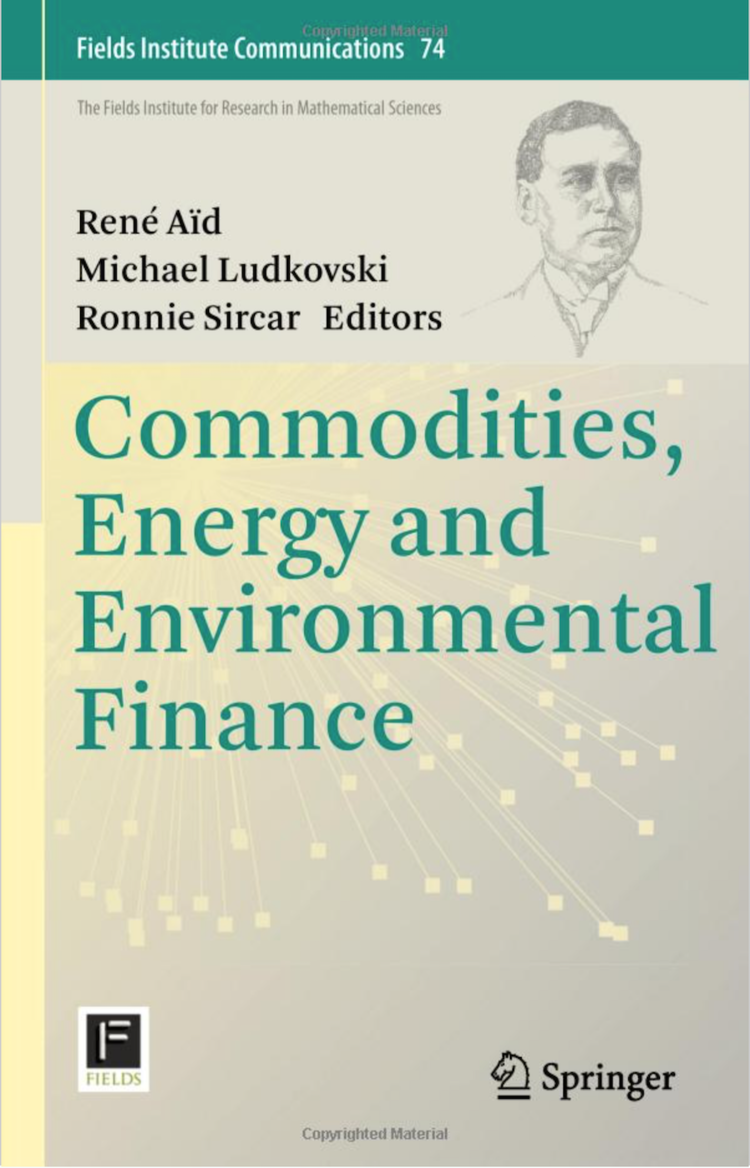
Ronnie Sircar is the Eugene Higgins Professor of Operations Research and Financial Engineering at Princeton University , where he contributes to the Department of Operations Research and Financial Engineering (ORFE). His work spans financial mathematics, stochastic modeling, and applied probability, with a focus on market volatility, optimal investment strategies, and dynamic game theory. Email: sircar@princeton.edu Office: Sherrerd Hall, Room 208, Princeton, NJ 08544 His research interests include: Stochastic Volatility: Asymptotic analysis, calibration, and impact on option pricing and portfolio optimization. Mean Field Games: Applications to cryptocurrency mining, energy markets, and interbank network formation. Portfolio Theory: Forward performance processes, drawdown constraints, and risk-averse strategies. Credit Risk: Multi-name credit derivatives, CDO valuation, and risk measures. Energy Systems: Renewable reliability, unit commitment, and electricity market design. Recent publications emphasize mean field games in energy and blockchain, stochastic volatility in portfolio optimization, and machine learning applications for financial engineering. He has advised graduate students such as Giulia Crippa, Nicolas Garcia, and Burak Aydin, often collaborating with researchers including M. Soner, P. Chan, and A.M. Reppen.
نمایش نتایج تا ۷۵۰ مورد اول. برای یافتن نتایج دقیقتر، جستجوی خود را با فیلترها محدود کنید.