Chad E. Hart is a Professor in the Department of Economics at Iowa State University (ISU), specializing in agricultural economics and international trade policy. His research focuses on WTO agricultural commitments, crop insurance, biofuel policy, and commodity market dynamics. Hart holds a Ph.D. (1999) and B.S. (1991) in economics from ISU and Southwest Missouri State University, respectively. He has served in roles at ISU’s Center for Agricultural and Rural Development (CARD) and the Food and Agricultural Policy Research Institute (FAPRI), examining trade policies and energy-agriculture intersections. Hart has received notable awards, including the CALS Dean’s Citation (2020) and Exemplary Faculty Mentor Award (2016). His work bridges academic research and practical extension, addressing issues like trade disputes, commodity pricing, and agricultural sustainability. Hart’s insights frequently inform USDA outlook reports and policy analyses, with a focus on Iowa’s agricultural economy. Labs/Teams: Active in CARD and FAPRI, contributing to interdisciplinary research on agricultural policy and market dynamics.
Dermot J Hayes is the Charles F. Curtiss Distinguished Professor in Agriculture and Life Sciences and holds the Pioneer Hi-Bred International Chair in Agribusiness at Iowa State University's Department of Economics and Ivy School of Business. His expertise spans agricultural economics, financial economics, and international trade policy with a focus on commodity markets, farm policy, and China's agricultural impacts. Education: Ph.D. and M.S. in Agricultural Economics from the University of California, Berkeley (1986 and 1982). Research Interests: Includes U.S. farm policy, international trade dynamics, agribusiness strategies, crop insurance, financial derivatives, and China's role in global commodity markets. His work emphasizes policy analysis, market resilience, and emerging challenges like disease outbreaks (e.g., African Swine Fever). Awards: AAEA Fellow (2007), AAEA Enduring Quality Award (2006), and J.H. Ellis Teaching Award (2005). His research on food safety auctions remains influential. Consulting: Since 1995, he has advised the National Pork Producers Association on trade economics. His work informs policy debates on tariffs, trade deals, and market disruptions. Labs & Collaborations: Engaged with Iowa State's interdisciplinary initiatives on agriculture-environmental nexus and bioenergy systems.
Dr. Richard Culas is an Associate Professor in Agricultural Economics/Agribusiness at Charles Sturt University's School of Agricultural, Environmental and Veterinary Sciences. He holds degrees from the University of Peradeniya (BScAgr), Norwegian University of Life Sciences (MScAgEcon), Norwegian School of Economics (MEcon), and the University of Sydney (PhD). His expertise spans teaching, research, and advisory roles, including external PhD examining and peer-reviewing for 20+ journals. Dr. Culas' research focuses on agricultural economics, environmental economics, development economics, and agribusiness management. He has led and contributed to projects funded by ACIAR, Hort Innovation Australia, and the Soil CRC, totaling ~A$7.5m. Key projects include assessing organic fertilizer benefits and regenerative agriculture's socioeconomic impacts. His work addresses global challenges such as water resource management, climate-smart agriculture, and sustainable farming practices. He has published extensively in journals like Agricultural Systems , Australian Journal of Agricultural and Resource Economics , and Sustainability . Notable achievements include the Emerald Literati Award for Outstanding Reviewer (2018) and a team award for Research Excellence (2016). He has also contributed to curriculum development for Charles Sturt's Master of Agriculture program. His research and advisory roles include leadership in soil health projects, groundwater management in Pakistan, and value chain analyses in Bangladesh and Nepal. Dr. Culas collaborates internationally on climate adaptation strategies, trade policies, and food security initiatives, reflecting his commitment to bridging academic research with real-world agricultural challenges.
Dr. Derek G. Brewin is a Professor and Head of the Department of Agribusiness and Agricultural Economics at the University of Manitoba, within the Faculty of Agricultural and Food Sciences. He holds a PhD in Agricultural, Environmental and Regional Economics from Pennsylvania State University. Education: PhD, Agricultural, Environmental and Regional Economics, Pennsylvania State University, USA MSc, Agricultural Economics, University of Saskatchewan, Canada BSc, Agricultural Economics, University of Alberta, Canada Dr. Brewin's research focuses on spatial grain and oilseed markets, innovation in food processing and plant breeding, farm finance, and red meat supply chains. With 14 years of industry experience prior to his academic career, including roles as a lender and analyst in the agriculture sector, his work bridges practical industry knowledge with academic rigor. His current research projects examine the economics of crop rotations, grain transportation policy, plant location for oilseed processing, and the economics of perennial grains and forages with beef integration. His scholarly work shows a consistent focus on agricultural markets, transportation economics, and innovation policy, with a particular emphasis on Canadian agricultural systems. Recent publications analyze the impact of trade disruptions, pandemic effects on grain markets, and innovation policy in crop breeding. Scientific Awards and Recognition: Award-winning teacher of agricultural finance, marketing and risk management Past President of the Canadian Agricultural Economics Society Member and on Editorial Board of Northeast Agricultural and Resource Economics Association (NAREA) Member of the Structure and Performance of Agriculture and Agri-products Network Member of the Canadian Agricultural Innovation and Regulation Network Dr. Brewin has supervised numerous graduate students, with current students working on topics related to winter forage options, crop rotation profit impacts, and processing location impacts on farm prices. His professional service includes serving as a Senator at the University of Manitoba and as a director of Farm Management Canada and the Manitoba Rural Adaptation Council. Prior to his academic career, Dr. Brewin worked as a Corporate Advisor for the Canadian Wheat Board, a Policy Economist for Agriculture and Agri-Food Canada, and a farm lender. He was raised on a mixed irrigation farm in Purple Springs, Alberta, providing him with firsthand agricultural experience that informs his research and teaching.
Mark S. Hoddle is a Professor of Entomology and Biological Control Specialist at the University of California, Riverside (UCR), where he has headed research in his laboratory since 1997. He serves as the Director of the Center for Invasive Species Research and is a Principal Investigator focusing on biological control of invasive pests. His work bridges academic research with practical applications for California agriculture. Education: D.Sc. Zoology (2018), University of Auckland, New Zealand Ph.D. Entomology (1996), University of Massachusetts, Amherst M.S. Zoology (1991), University of Auckland, New Zealand B.S. Zoology (1988), University of Auckland, New Zealand Dr. Hoddle specializes in biological control, the intentional use of host-specific natural enemies to suppress pest populations. His research focuses on identifying pest problems amenable to biological control, locating and releasing natural enemies, and evaluating their impact on pest population growth. He works extensively with invasive species affecting California agriculture, particularly pests of citrus, avocado, palm trees, and other crops. His approach combines field evaluations with laboratory studies of pest and natural enemy biology and behavior. Analysis of Dr. Hoddle's recent publications reveals a strong focus on invasive species threatening California agriculture, particularly the Asian citrus psyllid, red palm weevil, and brown marmorated stink bug. His research integrates field and laboratory approaches, with emphasis on phenology modeling, natural enemy evaluation, and innovative control methods. Much of his work addresses the economic and ecological impacts of invasive pests on specialty crops. Scientific Awards: Entomological Society of America, Pacific Branch Entomology Team Leader Award (2023) UC-ANR Distinguished Service Award for Outstanding Research (2022) Fellow, Entomological Society of America (2018) California Department of Pesticide Regulations IPM Achievement Award for Asian Citrus Psyllid Biocontrol (2018) IOBC Distinguished Scientist of the Year (2015) Multiple awards from the Entomological Society of America (2007, 2012, 2013, 2014) Dr. Hoddle has mentored numerous students and researchers throughout his career, including postdoctoral scholars and specialists who contribute to his laboratory's work on invasive species. His research has been supported by various granting agencies, private institutions, and commodity boards, enabling extensive international projects focused on identifying and implementing biological control solutions for invasive pests. He has facilitated the Harry Scott Smith Scholarship Fund to support graduate students in biological control. Dr. Hoddle directs the Center for Invasive Species Research at UCR and leads a productive laboratory team that includes postdoctoral scholars, specialists, and students. The lab conducts research on multiple invasive species threatening California agriculture and natural ecosystems, with particular emphasis on citrus, avocado, and palm tree pests. Current projects include proactive biological control of the spotted lanternfly and research on invasive palm weevils, avocado pests, and other emerging threats.
Prof. Douglas Sheil is a Chairholder in Forest Ecology and Forest Management at Wageningen University & Research. He holds a MA in Natural Sciences from Cambridge and an MSc in Forestry from Oxford. His career includes roles at the University of Oxford, CIFOR (Indonesia), the Institute for Tropical Forest Conservation in Uganda, and the Norwegian University of Life Sciences (NMBU). His research focuses on tropical forest ecology, biodiversity conservation, and human-forest interactions, with over 200 publications. He co-authored the influential textbook Tropical Rain Forests: Ecology, Diversity, and Conservation (2010). Awards include the Biotropica Prize (2004) and the Queen’s Award for Forestry (2015). Education: MA (Natural Sciences, Cambridge), MSc (Forestry, Oxford) Key Roles: Director of Institute for Tropical Forest Conservation (2008–2012), Professor at NMBU (2013–2020) Research Interests: Tropical forest dynamics, climate change impacts, conservation strategies, and the socio-ecological dimensions of forest management. His work spans field studies in Africa, Southeast Asia, and Oceania, emphasizing interdisciplinary approaches to address deforestation, biodiversity loss, and sustainable land use. Recent Trends in Articles: Focus on mycorrhizal networks, oil palm impacts, lightning disturbance, and mammal population responses to human activity. He explores mechanisms linking forest structure to ecosystem services, such as carbon sequestration and water regulation, often integrating remote sensing and global datasets. Awards: Biotropica Prize, Queen’s Award for Forestry Grants/Projects: Studies on lightning effects in African forests, camera trap mammal surveys, and policy analyses for vegetable oil sustainability. Labs/Teams: Leads interdisciplinary groups at Wageningen, collaborating with CIFOR and international networks. Active in IUCN committees to translate science into conservation policy.
Eunchun Park serves as an Assistant Professor in the Department of Agricultural Economics and Agribusiness at the University of Arkansas, concurrently holding the position of Director of the Experiment Station (DREX). A specialist in Bayesian spatial statistics and econometrics, his research focuses on agricultural risk analysis with particular emphasis on crop insurance mechanisms and financial commodity markets. His methodological expertise addresses critical data scarcity challenges in federal crop insurance premium calculations through advanced spatial modeling techniques. Dr. Park's academic foundation includes: Ph.D. in Agricultural Economics from Oklahoma State University (2017) M.S. in Food and Resource Economics from Korea University (2013) B.S. in Food and Resource Economics from Korea University (2010) His research program centers on extreme price and yield risk quantification in agricultural commodities, employing sophisticated Bayesian modeling frameworks to overcome data limitations in spatial risk assessment. Current work develops innovative approaches for measuring catastrophic risks in crop production systems and refining insurance rating structures through spatial smoothing of yield densities. This research bridges theoretical econometric advances with practical applications for risk management tools used by farmers and policymakers. Analysis of Dr. Park's recent publications reveals a consistent trajectory in spatial risk modeling for agricultural insurance systems, with increasing focus on prevented planting coverage factors, commodity market volatility around information releases, and climate-related production risks. His work demonstrates methodological progression from theoretical Bayesian frameworks toward actionable risk assessment tools, particularly through the application of kriging techniques to non-normal yield distributions and extreme event modeling. Dr. Park's scholarly contributions have been recognized through: Outstanding Contribution to Applied Risk Analysis Award (2020) from the Agricultural and Applied Economics Association Outstanding Graduate Student Paper Award (2018) from the Agricultural and Applied Economics Association Outstanding Doctoral Dissertation Award (2018) from the Southern Agricultural Economics Association While specific details of current advisees and grant funding are not provided in available materials, his active publication record in top agricultural economics journals suggests an ongoing mentorship role for graduate students and potential involvement in externally funded research initiatives related to agricultural risk management. His work on spatial smoothing techniques and extreme risk modeling likely informs collaborative projects with agricultural extension services and federal risk management agencies. No specific laboratory facilities or dedicated research teams are mentioned in the available documentation, though his methodological expertise suggests collaboration with spatial statistics and agricultural risk modeling groups within the university's research infrastructure.
Stephen Devadoss serves as Professor and Emabeth Thompson Endowed Professor in the Department of Agricultural and Applied Economics at Texas Tech University's College of Agricultural Sciences & Natural Resources, where he has established himself as a leading scholar in agricultural trade policy and international economics. He earned his PhD from Iowa State University and has developed an extensive research program examining global agricultural markets, trade barriers, and technological adoption in specialty crop production. His research primarily investigates international trade dynamics, with emphasis on tariff/non-tariff barrier impacts, mergers and acquisitions in agri-food sectors, and labor economics in fruit and vegetable production. His methodological approach frequently employs advanced econometric frameworks to address policy-relevant questions in agricultural economics. Recent publications (2023-2025) reveal concentrated focus on US-Mexico trade disputes (particularly regarding GM corn), economic viability of robotic harvesting technologies, and trade war repercussions across global commodity markets, demonstrating consistent responsiveness to emerging agricultural policy challenges. Scientific recognition includes: Lifetime Achievement Award from Southern Agricultural Economics Association Fellow of Western Agricultural Economics Association He has additionally received 16 research awards, 20 teaching awards (including AAEA Graduate/Undergraduate Teaching Awards), and 33 graduate mentoring awards. As an advisor, Dr. Devadoss has mentored students to publish over 85 journal articles and secure 61 awards, including 12 top dissertation and thesis awards from AAEA and WAEA, reflecting his exceptional commitment to graduate education.
Sandy Dall'Erba is a Professor in the Department of Agricultural and Consumer Economics at the University of Illinois at Urbana-Champaign. He holds additional affiliations with the European Union Center, Center for Latin American and Caribbean Studies, Lemann Center for Brazilian Studies, and the Center for Digital Agriculture at NCSA. His research spans regional economic analysis, spatial econometrics, and climate change impacts on agriculture. PhD in Economics, University of Pau (2004) MSc in Economics, University of Pau (2000) Postdoctoral, Spatial Economics at Free University of Amsterdam (2005-2006) Postdoctoral, REAL at UIUC (2004-2005) Dall'Erba specializes in spatial econometric modeling to analyze regional growth, innovation systems, and climate change effects. His work integrates interregional input-output frameworks and structural gravity models to quantify economic spillovers. Recent studies address agricultural vulnerability to climate shocks, plastic waste embedded in trade, and tax revenue disruptions from natural disasters. His publications focus on regional economics, environmental accounts, and climate resilience, with applications in the U.S., Latin America, and China. Key trends include spatial heterogeneity in climate impacts, supply chain vulnerabilities, and policy design for disaster mitigation. RSPP Best Paper Award Regional Studies Association Best Paper Award Tiebout Prize Epainos Prize Dall'Erba has co-authored works with graduate students and secured grants from NSF, NASA, and USDA. He directs the Regional Economics Applications Laboratory (REAL) and co-founded the Center for Climate, Regional, Environmental and Trade Economics (CREATE) , advancing system-wide approaches to climate and trade challenges.
Wayne A Fuller is a Research Professor at Iowa State University , specializing in survey methodology and sampling statistics. His work focuses on advanced techniques for handling missing data, small area estimation, and measurement error models, with applications to agricultural surveys and public health research. Education: PhD in Statistics from Iowa State University Research Interests: Fuller's work bridges theoretical and applied statistics through: Development of fractional hot deck imputation methods Bootstrap techniques for variance estimation Small area prediction under constrained models Measurement error correction in health and agricultural data Time series analysis with autoregressive components Integration of administrative data with survey samples Publication Trends: His recent work emphasizes computational approaches to small area estimation (2016-2025), including bootstrap prediction intervals and benchmarking techniques, alongside methodological advancements in imputation and measurement error correction (2004-2015). Contact: Email: waf@iastate.edu Phone: 515-294-5830 Location: Ames, Iowa
Annuska Derks is an Associate Professor in Social Anthropology at the University of Zurich, where she holds the Chair of Social Transformation Processes. She earned her M.A. in Social-Cultural Anthropology and Development Studies, followed by a Ph.D. from Radboud University Nijmegen, Netherlands. Education: M.A. in Social-Cultural Anthropology and Development Studies, Ph.D. in Anthropology Her research focuses on social change, mobility, and inequality in Southeast Asia, particularly Cambodia, Vietnam, and Thailand. She explores development through material culture and commodity chains, examining how everyday objects like spices and coal briquettes reflect and shape societal transformations. Current projects include Aspirations for Change 4.0 (renewable energy in Vietnam) and Spice Chains (global markets for Vietnamese star anise and cinnamon). She collaborates with institutions in Switzerland, Vietnam, and Canada, funded by the Swiss National Science Foundation. Derks has supervised doctoral researchers across multiple universities and co-led transnational projects on migration, gender, and commodity chains. Her team includes postdoctoral and doctoral researchers specializing in Southeast Asia and transnational entanglements.
Sevda Yalçın serves as a full-time Lecturer at Kafkas University's Kağızman Vocational School within the Department of Therapy and Rehabilitation. With continuous academic service since 1997, she maintains an active teaching schedule covering quality management, statistics, and customer relationship management courses at the associate degree level. Her educational background includes a BSc in Statistics from Anadolu University (1993-1997) and an MSc in Business Administration (without thesis) from Atatürk University's Institute of Social Sciences (2006-2008). Yalçın's research focuses on economic analysis of regional development with particular emphasis on South Caucasus countries, African economies, and Turkish agricultural sectors. Her work frequently employs global indices like Legatum Prosperity Index and World Bank's Doing Business indicators to evaluate economic performance and sustainable development potential. She maintains a strong regional focus on Kağızman district in eastern Turkey, analyzing local development challenges through community participation and rural tourism potential. Her publication record shows consistent output since 2012 with 39 total publications including 16 articles, 21 conference presentations, and 2 books. The research demonstrates evolving focus from broader Balkan and post-Soviet economic analysis toward increasingly specialized regional studies of South Caucasus and Turkey's agricultural sector. As a dedicated academic collaborator, she maintains a longstanding research partnership with Alper Yalçın (39 joint publications), with additional collaborations including Kubilay Aras, Coşkun Alıcı, and Kerem Karabulut. Her work demonstrates strong alignment with UN Sustainable Development Goals through sustainable local development research.
Dr. Rico Ihle is an Associate Professor at Wageningen University's Agricultural Economics and Rural Policy Group, affiliated with the Wageningen School of Social Sciences (WASS). He holds a PhD from Georg-August-Universität Göttingen and is also an Adjunct Professor at Universitas Padjadjaran in Indonesia. His research focuses on achieving SDG2 (Zero Hunger), food system sustainability, and resilience in regions like the EU, Indonesia, and the Middle East. He teaches courses on econometrics, agricultural policy, and EU food systems, and has organized study tours to Slovakia, Morocco, Hungary, and Munich. He supervises 5 PhD students and advises numerous BSc/MSc students. Education & Career: PhD in Agricultural Economics, Georg-August-Universität Göttingen (Germany) Adjunct Professor at Universitas Padjadjaran (Indonesia) Elected Secretary General of the International Network for MBA Agribusiness and Commerce (AgriMBA) in 2024 Research Interests: Economic analysis of agricultural markets and food prices Effects of political conflict on food systems EU agricultural policy and sustainability transitions Food security and resilience in developing regions Quantitative methods including time-series econometrics Recent Work: His 2025 publications explore food waste reduction in school canteens and household resilience in West Africa. He also leads projects like ClimAgri4Ukraine for post-war agricultural recovery. He has co-authored over 100 conference contributions and serves as an associate editor for Food Security . Grants & Networks: Principal investigator for the Genetically Modified Food in Dutch Grocery Shelves project (COGEM) Member of the International Agricultural Trade Research Consortium (IATRC) Co-organizer of webinars on global food markets and Ukraine's agrarian policies Labs/Teams: Leads Work Package 4 of the e-AgriMBA project and collaborates with institutions like the Kyiv School of Economics and OECD.
Modhurima Dey Amin is an Assistant Professor at Texas Tech University's Department of Agricultural and Applied Economics within the College of Agricultural Sciences & Natural Resources. Her work bridges econometric methodologies with contemporary issues in food and agricultural markets, emphasizing precision agriculture, energy economics, and industrial organization. PhD in Economics (Econometrics & Quantitative Economics) – Washington State University MSc in Statistics – Washington State University MSc in Applied Financial Economics – Illinois State University BSc in Economics – University of Dhaka, Bangladesh Dr. Amin's research explores: Food safety in retail environments and equitable access to nutritious food Market structures of specialty crops, particularly apple varieties Structural change detection in high-dimensional datasets using statistical methods Machine learning applications in agricultural and environmental economics Key trends in her publications include: Machine learning for causal inference and predictive modeling in agricultural economics Food retail dynamics, including store closures and consumer behavior Environmental economics and sustainable agricultural practices Precision agriculture and technology-driven farm management Her teaching focuses on: Econometrics Agribusiness Finance Corporate Finance Economic theory and policy analysis Contact: modhurima.amin@ttu.edu | Personal Website
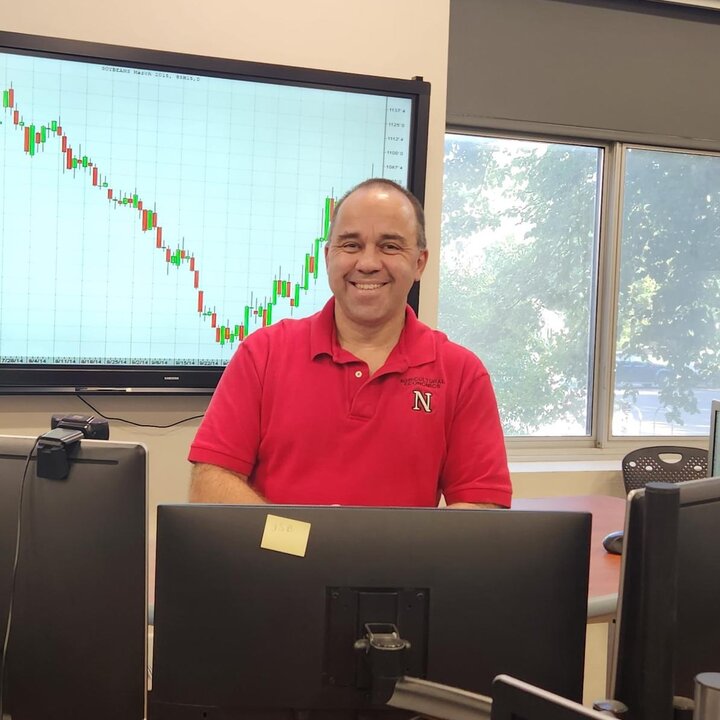
Fabio Mattos serves as an Associate Professor in the Department of Agricultural Economics at the University of Nebraska-Lincoln's College of Agricultural Sciences and Natural Resources, maintaining an office at the Food Industry Center (FYH 303A) in Lincoln, NE, with contact details including phone 402-472-1796 and email fmattos@unl.edu. His research centers on commodity price analysis, risk management, and futures market dynamics, with specific expertise in ethanol-agricultural price linkages, crop report impacts, and decision-making under uncertainty. Recent work examines infrastructure evolution in Brazilian soybean trade, mini-futures contracts, and volatility transmission between ethanol and agricultural markets, reflecting strong methodological rigor in time-series analysis and market microstructure. Analysis of his 2020-2025 publications reveals consistent focus on market interconnectedness—particularly Brazil-US agricultural-ethanol systems—and innovations in futures design addressing real-world trading challenges. His scholarship bridges academic theory with practical applications for producers, traders, and policymakers, while educational contributions like Commodity Marketing for High School Students (2022) demonstrate outreach commitment. No scientific awards were documented in the provided materials. Regarding advising and professional engagement, the absence of student listings or grant details suggests primary focus on individual research output, though his active publication record indicates ongoing scholarly contributions. No information about research labs or collaborative teams was available.