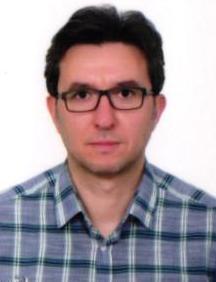
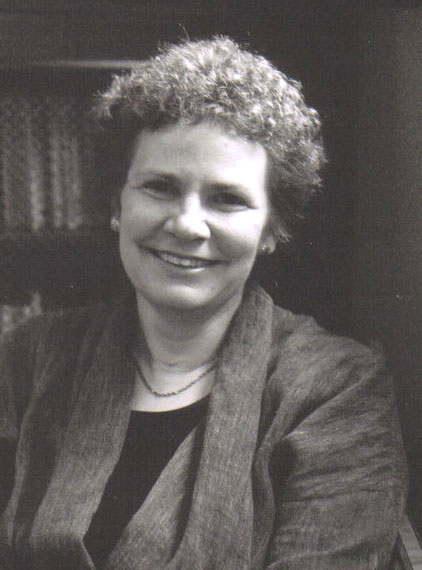
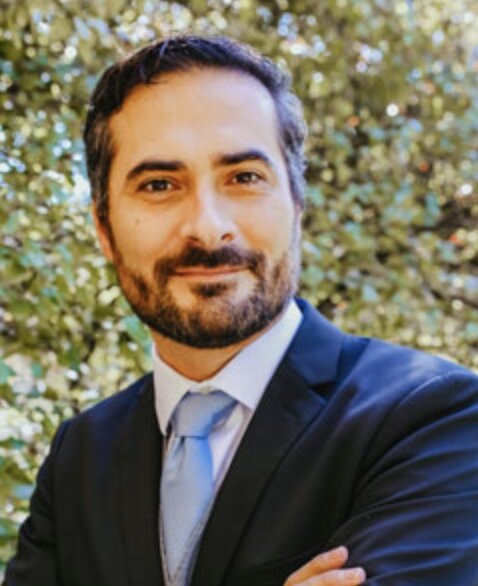
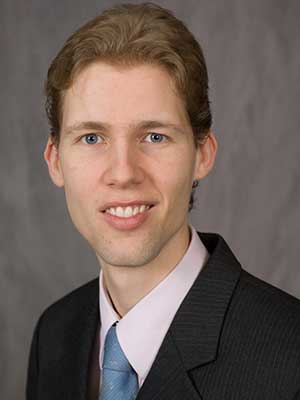
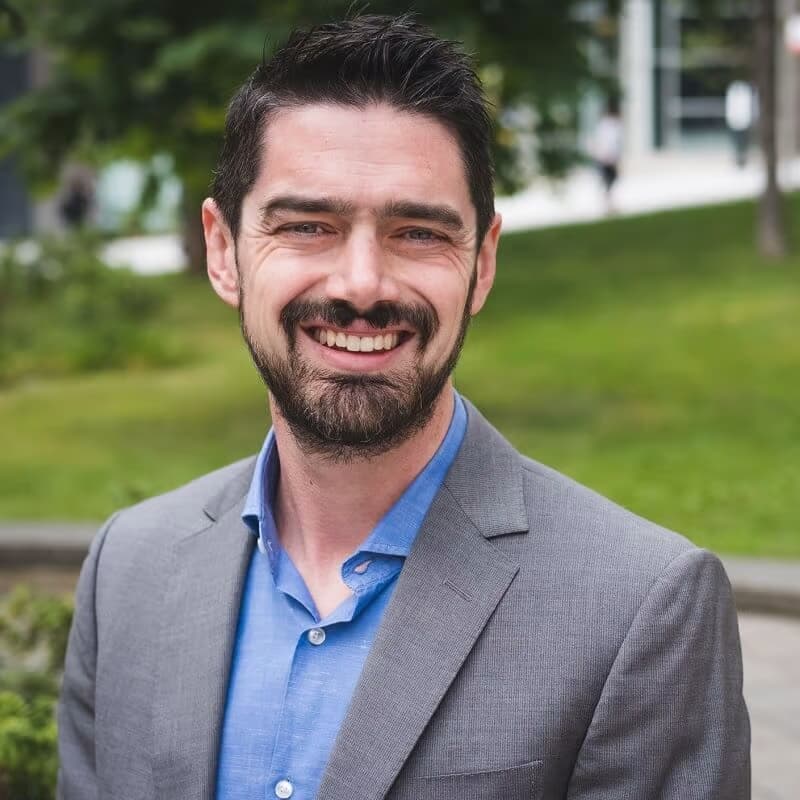
Armando Lara-Millan is an Associate Professor in the Department of Sociology at the University of California, Berkeley. He earned his PhD from Northwestern University and holds affiliations with the Berkeley Economy and Society Initiative and Stanford's Center for Advanced Study in the Behavioral Sciences. His research bridges political economy, historical sociology, and ethnography to analyze institutional transformations. PhD in Sociology, Northwestern University Current Chair-Elect, Sociology of Law Section, ASA 2022 Distinguished Scholarly Book Award (ASA) His work examines: Political Economy of Institutions : How public hospitals and county jails use caseloads to generate revenue, challenging conventional cost-benefit analyses Global Economic Shifts : Reassessing neoliberal theories through the lens of investment firms, corporate reporting, and the end of low-cost labor Urban Digital Platforms : Investigating Nextdoor and Citizen's impact on neighborhood governance and social control Recent publications span American Sociological Review , Criminology , and Social Problems , with a focus on: Administrative disappearing mechanisms Healthcare spending dynamics Medical debt data collection Urban order reconstruction Awards include the 2022 ASA Distinguished Scholarly Book Award. His email is armando@berkeley.edu and blog posts explore contemporary economic challenges.
Prof. Dr. İbrahim Halil Ekşi is a faculty member at Gaziantep University’s Faculty of Economics and Administrative Sciences, Department of Business Administration. He has served as Professor (2020-present), Associate Professor (2014-2020), and Assistant Professor (2008-2014) at Gaziantep and Kilis 7 Aralık Universities. His research focuses on finance, financial markets, risk management, and corporate governance, with 57 academic publications. He has advised 9 PhD and 19 Master’s students, and received awards such as the 2024 Mesleki Dernekler Lisansüstü Gayrimenkul Tez Ödülleri Yarışması and 2017 Uludağ University Bilim-Sanat Ödülü. His education includes a PhD in Business Administration (2007, Süleyman Demirel University), Master’s in Business Administration (2003, Gaziantep University), and BSc in Business Administration (1998, Uludağ University). He has led projects like TÜBİTAK 1001’s 'Finansman ve Halka Açılma Tutumları (ISO 1000 Uygulaması)' and EU-funded studies on refugee financial inclusion. His editorial roles span journals like Journal of Economics and Business Issues and Financial Inclusion Across Asia . Active in professional associations (MUFAD, Finans Bilim Platformu), he teaches courses in International Finance, Financial Management, and Investment Analysis. Hakemli makaleleri, kitap bölümleri ve uluslararası konferans bildirileri Türkiye, Balkan ülkeleri ve BRICS-T ekonomileri üzerine bankacılık düzenlemeleri, küresel çatışmaların finansal piyasalara etkisi, ve yapay zekâ uygulamaları gibi temalarda yoğunlaşmıştır. 57 makale ve 8 kitap yayımlarında finansal piyasalar, kurumsal yönetim, ve risk yönetimi gibi disiplinlerde katkı sağlamıştır. 2024 yılında Finance Research Letters dergisinde 'Climate Uncertainty and Green Betas' başlıklı makale ile 2023 yılında Energies ’de 'Geothermal Energy and FDI' gibi çalışmalarıyla güncel finansal gelişmelere katkıda bulunmuştur. 2018 Nobel Yayınevi’nden yayınlanan Yatırımların Temelleri kitabında portföy yönetimi ve vergi stratejisi bölümleri kaleme almıştır. Ödülleri: 2024: Mesleki Dernekler Lisansüstü Gayrimenkul Tez Ödülleri Yarışması (GYODER ve İktisadi Araştırmalar Vakfı Proje Ödülü) 2017: Uludağ Üniversitesi Bilim-Sanat Ödülü Önemli projeleri: 2022-2024: Avrupa Birliği fonu ile 'Suriyeli Mültecilerin Finansmana Erişimi' 2021-2022: TÜBİTAK 1001 destekli 'Türkiye’de Reel Sektör Firmalarının Finansmanı' 2018-2019: Gaziantep Üniversitesi destekli 'Kalkınma Ajansı Finansal Desteklerinin Firmalara Etkisi'
Benjamin Goldstein is an Assistant Professor at the University of Michigan School for Environment and Sustainability, where he leads the Sustainable Urban-Rural Futures (SURF) lab. His work bridges quantitative methods (life cycle assessment, input-output analysis, geospatial data science) with social science theory to explore urban sustainability, distributive justice, and global supply chains. His research spans urban food systems, agri-commodities, residual resource engineering, and energy systems. Recent trends in his publications focus on urban agriculture's environmental trade-offs, supply chain transparency, and carbon-negative construction materials. He applies data science to map sustainability challenges across urban and rural landscapes while critically analyzing power asymmetries in global industries like beef production and cannabis cultivation. His work emphasizes actionable tools for policymakers and corporations to address environmental justice and resource efficiency.
Professor Maxine Berg is a distinguished historian at the University of Warwick, where she has served as Professor of History since 1998. She is the Founding Director of both the Global History and Culture Centre (2006-2010) and the Warwick Eighteenth Century Centre (1998-2007), and directed the Luxury Project from 1998-2002. Her academic journey began in the Department of Economics at Warwick (1978-1993) before moving to the Department of History. Her educational background includes: BA Hons, Simon Fraser University, Canada (1967-71) MA, University of Sussex (1971-72) DPhil, Oxford (1972-76) Professor Berg specializes in global and world history, economic and social history, and historiography. Her research has significantly shaped our understanding of global trade networks, the development of consumer culture in the eighteenth century, and the connections between luxury goods, economic development, and cultural exchange. She has pioneered interdisciplinary approaches that connect economic history with cultural studies, examining how material culture and consumption patterns have shaped historical developments across national boundaries. Her work on the 'Cultures of Consumption' has been particularly influential in reframing historical narratives around economic development. Her scholarly output demonstrates a clear trajectory from examining British economic history toward increasingly global perspectives, culminating in her leadership of the Global History and Culture Centre. The publications reveal a consistent focus on how material culture, particularly luxury goods, served as conduits for cultural exchange and economic development across national boundaries during the eighteenth century. Her contributions to the field have been recognized through prestigious awards including: ERC Advanced Researcher Fellowship Honorary Fellow of Balliol College, Oxford (2007-present) Fellow of the British Academy (2004-present) Guggenheim Fellowship (2003-2004) Professor Berg has supervised 12 postdoctoral fellows, including one Marie Curie Fellow, and 10 PhD students (3 completed in 2010), and currently supervises 3 postdoctoral fellows, a Museum fellow, and 4 PhD students. She has been instrumental in organizing international scholarly exchange through 15 international conferences and workshops funded by the Leverhulme Research Interchange and the AHRC Global Arts Research Network (2002-2009), and 5 international conferences on Luxury and Consumption (1998-2003). She served on the Standing Committee and Grants Board of the British Academy, where she played a key role in shaping research funding priorities in historical studies. Her leadership extends to directing major research centers, serving on editorial boards, and participating in professorial appointments committees for universities across the UK, US, and France. She was instrumental in framing and setting up the ESRC Cultures of Consumption Programme and has served on funding panels of major research councils including the ESRC and AHRC.
Sandy Dall'Erba is a Professor in the Department of Agricultural and Consumer Economics at the University of Illinois at Urbana-Champaign. He holds additional affiliations with the European Union Center, Center for Latin American and Caribbean Studies, Lemann Center for Brazilian Studies, and the Center for Digital Agriculture at NCSA. His research spans regional economic analysis, spatial econometrics, and climate change impacts on agriculture. PhD in Economics, University of Pau (2004) MSc in Economics, University of Pau (2000) Postdoctoral, Spatial Economics at Free University of Amsterdam (2005-2006) Postdoctoral, REAL at UIUC (2004-2005) Dall'Erba specializes in spatial econometric modeling to analyze regional growth, innovation systems, and climate change effects. His work integrates interregional input-output frameworks and structural gravity models to quantify economic spillovers. Recent studies address agricultural vulnerability to climate shocks, plastic waste embedded in trade, and tax revenue disruptions from natural disasters. His publications focus on regional economics, environmental accounts, and climate resilience, with applications in the U.S., Latin America, and China. Key trends include spatial heterogeneity in climate impacts, supply chain vulnerabilities, and policy design for disaster mitigation. RSPP Best Paper Award Regional Studies Association Best Paper Award Tiebout Prize Epainos Prize Dall'Erba has co-authored works with graduate students and secured grants from NSF, NASA, and USDA. He directs the Regional Economics Applications Laboratory (REAL) and co-founded the Center for Climate, Regional, Environmental and Trade Economics (CREATE) , advancing system-wide approaches to climate and trade challenges.
Jonas Monié-Nordin is an Associate Professor at Stockholm University's Department of Archaeology and Classical Studies , specializing in Sámi archaeology , global historical archaeology , and critical cultural heritage studies . His research spans from the High Middle Ages to contemporary societal issues, with particular focus on resource colonialism in Sápmi and Scandinavia's role in early modern globalization. Academic Credentials: PhD in Archaeology (2005, Stockholm University), Docent in Historical Archaeology Ongoing Project: Shared Spaces – Separated Past? (Swedish Science Board funded) investigating Sámi history in Central Scandinavia His interdisciplinary methodology combines material culture analysis, landscape archaeology, and historical source criticism. Recent fieldwork includes excavations of Sámi settlements in Dalarna, Hälsingland, and Uppland. He co-edited Scandinavian Colonialism and the Rise of Modernity (Springer 2013) and authored The Scandinavian Early Modern World (Routledge 2020). Beyond academia, he serves on the Truth Commission for the Sámi People (KU2021.02) and contributes to public debates through media outlets like Dagens Nyheter and Svenska Dagbladet . His work demonstrates how archaeology bridges historical injustice and contemporary reconciliation processes.
Susanna Hecht is a Professor of Urban Planning at the UCLA School of Public Affairs, specializing in tropical development, political ecology, and Amazonian studies. She holds a Ph.D. in Geography and has advised graduate students including Mariana Fajardo-Arboleda and Sebastián Solarte-Caicedo. Her research integrates historical ecology, remote sensing, and socio-political analysis to address deforestation, forest resurgence, and alternative development pathways in Latin America. Key areas of focus include the socio-environmental impacts of corporate agriculture (soy, oil palm), indigenous land management practices (e.g., Amazonian Dark Earths), and the role of migration/remittances in reshaping rural land use. She has pioneered work on forest transition theory and critiques of Malthusian explanations for deforestation. Awarded the David Livingstone Medal and Carl O. Sauer Award, Hecht's influential books include *The Fate of the Forest* and *The Scramble for the Amazon*. Her work has shaped policies for extractive reserves, climate finance mechanisms, and global environmental governance. She collaborates with international agencies like NSF, NASA, and the MacArthur Foundation, and serves at Princeton's Institute for Advanced Study. Recent projects explore globalization's impact on soy frontiers, carbon dynamics in pre-Columbian landscapes, and the socio-ecological implications of forest resurgence. Hecht advocates for integrating indigenous knowledge into modern conservation strategies and critiques neo-extractivist development models.
Damon McCoy is a Professor of Computer Science and Engineering at NYU Tandon School of Engineering and Co-Director of the NYU Center for Cybersecurity (CCS). He holds a Ph.D. in Computer Science from the University of Colorado, Boulder (2009) and a B.S. in the same field (1999). His research focuses on empirically measuring the security and privacy of technology systems, with a current emphasis on online payment systems, cybercrime economics, automotive security, privacy-enhancing technologies, and censorship resistance. He co-directs Cybersecurity for Democracy , a multi-university initiative addressing online threats to democratic processes. His research has examined topics such as the monetization of YouTube conspiracy content, toxic online discourse targeting election officials, and vulnerabilities in automotive systems. He has collaborated with institutions like the International Computer Science Institute and led studies on social media platforms' content moderation practices, including Facebook's handling of political ads and YouTube's ecosystem of deceptive advertising. McCoy's work often bridges cybersecurity with societal impacts, analyzing how technology intersects with democracy, misinformation, and economic exploitation. His contributions include developing frameworks for securing automotive software updates (Uptane) and methodologies to combat cybercrime supply chains. He has received funding from the National Science Foundation and other agencies to pursue projects addressing emerging cyber threats. Key affiliations include the NYU Center for Cybersecurity and the Center for Automotive Embedded Systems Security (CAESS), where he contributed to early automotive security analysis. He advises on cybersecurity policy and has published extensively in top-tier journals and conferences, focusing on real-world applications of security research.
Ton Dieker is an Associate Professor in the Department of Industrial Engineering and Operations Research at Columbia University's School of Engineering and Applied Science. He is a DSI Member and affiliated with the Center for Financial and Business Analytics. His research focuses on stochastic models, simulation techniques, and high-dimensional stochastic analysis. Dieker holds a Master’s in Operations Research from Vrije Universiteit Amsterdam (2002) and a PhD in Mathematics from the University of Amsterdam (2006). Dieker’s research explores stochastic processes, queueing theory, and rare-event simulation. He has contributed to methodologies like QPLEX for stochastic systems and advanced techniques in sequential analysis and exact simulation. His work bridges theoretical foundations with computational applications, addressing challenges in large-scale networks and high-dimensional problems. Education: PhD in Mathematics, University of Amsterdam, 2006 Master’s in Operations Research, Vrije Universiteit Amsterdam, 2002 Dieker’s articles emphasize computational modeling, stochastic calculus, and optimization, reflecting his focus on bridging theory and practice. His work often addresses efficiency in simulation, exactness in algorithms, and scalability in complex systems. Awards: Goldstine Fellowship (IBM Research) NSF CAREER Award Erlang Prize (INFORMS) Fouts Family Early Career Professorship (Georgia Tech) He serves on editorial boards for Operations Research and Mathematics of Operations Research . His research also addresses capacity management in stochastic networks and applications in cloud computing and commodity sourcing.
Victoria C. Ramenzoni is an Assistant Professor in Marine Policy and Social Science at Rutgers University, leading the Coastal Communities Adaptation Lab. Her research focuses on socioecological systems, adaptation strategies, and environmental policy, with fieldwork in the U.S., Cuba, and Indonesia. She investigates how households adapt to environmental and socioeconomic uncertainty, emphasizing resource governance and nutritional health. Ramenzoni has secured grants from the NSF and NOAA, including a 2021 Coast and People grant studying climate adaptation in Northeast U.S. marginalized communities. She previously served as Executive Secretary of the Interagency Working Group on Ocean Social Sciences (IOSSWG) and contributed to NOAA’s socioeconomic indicator frameworks. Her work bridges anthropology, ecology, and policy to address climate change impacts on coastal livelihoods. Her research spans multiple regions: in the Northeast U.S., she examines commercial fishing adaptations during the pandemic and urban development pressures. In Cuba, she collaborates with Universidad de La Habana on dietary health and hurricane resilience in Yaguajay. In Indonesia, her studies in Flores and Kalimantan explore overfishing, peatland degradation, and traditional ecological knowledge. She employs ethnographic methods, nutritional assessments, and institutional analyses to evaluate long-term adaptation pathways. Ramenzoni’s grants include a National Academies-funded study on offshore extractive activities’ impacts in the Gulf of Mexico and a Texas Commission-backed project on socioecological indicators. She advocates for co-governance models and has published extensively on adaptation frameworks, socioecological monitoring, and the paradoxes of development in oil-dependent regions.
Atanu Chaudhuri is a Professor of Technology & Operations Management at Durham University Business School. He holds affiliations as an Associate Fellow at the Institute of Advanced Study and Fellow of the Wolfson Research Institute for Health and Wellbeing. With 9 years of industry experience in automotive manufacturing and consulting, and over 9 years of academic experience across IIM Lucknow and Aalborg University, his expertise bridges academia and industry. His research focuses on digital manufacturing (especially additive manufacturing), supply chain risk management, and supply chain integration. Key industries of application include automotive, aerospace, food processing, and healthcare. He has secured grants from UK-India Education and Research Initiative, Danish agencies, and TUBITAK. Dr. Chaudhuri’s work emphasizes practical industrial problems, such as part selection for additive manufacturing, supply chain resilience, and digital technologies in cold chains. He leads the Digital Supply Chain working group of Mobility goes additive, a network advancing 3D printing in mobility sectors. His recent publications explore telemedicine adoption in emerging economies, blockchain applications in supply chains, and circular economy frameworks. He has advised over four doctoral students and serves as a Senior Associate Editor of the International Journal of Logistics Management.
Tara M. Sinclair is Professor of Economics and International Affairs and Chair of the Department of Economics at the George Washington University. She is also affiliated with the Elliott School of International Affairs through the Institute for International Economic Policy and the Institute for European, Russian, and Eurasian Studies. Additional affiliations include the GW Institute of Public Policy Research, the Regulatory Studies Center, and GW-CIBER. Sinclair has held influential public sector roles, including Deputy Assistant Secretary for Macroeconomics at the U.S. Department of the Treasury (2022–2024) and founding Chief Economist at Indeed Hiring Lab. PhD in Economics, Washington University in St. Louis (2005) AM in Economics, Washington University in St. Louis (2001) BA in Foreign Languages, Wheaton College (1996) Her research centers on macroeconomic fluctuations, labor market dynamics, forecasting, and the application of big data to economic analysis. She employs econometric and time series methods to model business cycles, evaluate forecast accuracy, and assess policy impacts. Her work connects academic research with real-world decision-making, particularly in labor markets and monetary policy. Sinclair frequently uses online job posting data to generate timely insights into employment trends. Her recent publications focus on post-pandemic labor market transformations, remote work persistence, forecast evaluation, and regulatory economics. She has published in top journals such as Labour Economics , Journal of Applied Econometrics , Oxford Bulletin of Economics and Statistics , and International Journal of Forecasting . Her research leverages real-time data to analyze topics like unemployment insurance claims, job mismatch, and global hiring trends. Scientific recognition includes membership in the Conference on Research in Income and Wealth (CRIW), the Federal Forecasters Consortium Governing Board, and authorship at VoxEU. She has served as a Special Government Employee on the Bureau of Labor Statistics Technical Advisory Committee. She advises and collaborates with numerous researchers and institutions. Her leadership roles include directing the GW Center for Economic Research (former) and leading research initiatives at Indeed Hiring Lab. She teaches graduate and undergraduate courses in macroeconomics and econometrics, and is frequently cited in major media outlets including the New York Times , Wall Street Journal , and Financial Times , and appears on networks such as CNN, NPR, and Bloomberg. Her research team includes collaborators from Federal Reserve Banks, international organizations, and academic institutions. She leads projects funded by GW-CIBER and contributes to policy reports for the U.S. Treasury and Indeed Hiring Lab.
Christopher Cramer is a Professor in the Department of Development Studies at SOAS University of London. He joined SOAS part-time in 1993 and full-time in 1996 after teaching in Cambridge and Maputo, Mozambique. He has served as Head of the Department of Development Studies and is currently Co-Director of the Development Leadership Dialogue (DLD) at SOAS. He designed and launched the MSc Violence, Conflict and Development, which marked its 25th year in 2025. Cramer earned his PhD in Economics from the University of Cambridge in 1994 with a thesis titled The Political Economy of War in Angola and Mozambique . Before joining SOAS, he worked for the Economist Intelligence Unit (EIU) and the Macroeconomic Research Group (MERG) in South Africa during its democratic transition. Professor Cramer's research focuses on structural change, high value agriculture, industrial policy, development strategy, extreme deprivation, war to peace transitions, and labor in value chains. His work primarily draws on field research in Southern Africa and Ethiopia, with additional projects in Colombia and Brazil. He has made significant contributions to understanding the political economy of violence and conflict in developing countries, challenging conventional wisdoms about economic performance in African contexts. His recent work has increasingly focused on high-value agricultural exports as pathways to structural transformation, particularly examining how classification systems affect production processes. His recent publications show a strong emphasis on African economic development, with particular attention to labor conditions in global value chains and innovative approaches to measuring extreme deprivation. Cramer's work often challenges mainstream development economics frameworks, especially through his critiques of the Lewis Model, while developing practical tools like the Extreme Deprivation Index for poverty measurement in rural contexts. Editorial Board Member, Journal of Southern African Studies (1996-present) Fellow of the Academy of Social Sciences (2016) Visiting Professor at University of Johannesburg (2020) Professor Cramer has supervised numerous PhD students working on diverse topics including coffee policy in Ethiopia, non-state security actors in Nigeria, rural labor regimes in Sudan, and labor retention in Ethiopia's apparel industry. He designed and launched the pioneering MSc Violence, Conflict and Development program at SOAS, which celebrated its 25th anniversary in 2025. In 2025, he also started the innovative module Structural Change and Economic Development in Africa (SCEDA), co-designed with the Mandela School of Public Governance in South Africa, taught synchronously to cohorts at both institutions. As Co-Director of the Development Leadership Dialogue (DLD), Cramer leads an institute focused on understanding the political economy of development. He has served on various committees including the Royal African Society (as former Vice Chair), the University of London's Centre of African Studies (as former Chair), and SOAS committees including the Honorary Degrees Committee and the project board for the Paul Webley Wing construction project.
Hamish van der Ven is an Assistant Professor of Sustainable Business Management of Natural Resources at the University of British Columbia (UBC) within the Department of Wood Science and Faculty of Forestry. He leads the Business, Sustainability and Technology Lab and maintains affiliations with the Environmental Governance Lab at the University of Toronto, the Earth System Governance Project, and the United Nations Forum on Sustainability Standards. PhD in Political Science from University of Toronto Previous roles at McGill University and Yale University Research focuses on sustainable supply chain governance, eco-labeling, transnational environmental governance, corporate social responsibility, and digital technology impacts His recent work analyzes indirect climate impacts of generative AI and social media, transparency mechanisms in fast fashion, stakeholder influence on sustainability standards, and governance dynamics in buyer-driven supply chains. His 2019 book Beyond Greenwash? Explaining Credibility in Transnational Eco-Labeling (Oxford University Press) critiques eco-labeling efficacy. Van der Ven's research has been funded by grants including SSHRC Insight Grant (2025-2030), SSHRC Explore Grant (2023), SSHRC IDG Grant (2021-2023), FRQSC Collaborative Grant (2018-2021), and SSHRC Postdoctoral Fellowship (2016-2017). He examines both broad trends in global environmental governance and specific case studies across agriculture, aquaculture, and retail sectors.
Jennifer P. Mathews is a Professor of Anthropology in the Sociology and Anthropology Department at Trinity University, where she teaches courses in archaeology and biological anthropology. Her academic career is deeply rooted in Maya studies, with particular expertise in ancient and historical Maya archaeology, as well as issues of sustainability and tourism. She has received significant recognition for her teaching excellence, including the prestigious Dr. and Mrs. Z.T. Scott Faculty Fellowship (2019-20), the state-wide Piper Professor award (2020), and the Murchison Term Professorship (2023-2026). Dr. Mathews earned her Ph.D. and M.A. in anthropology, with a specialization in Maya archaeology, from the University of California at Riverside, and her undergraduate degree in anthropology from San Diego State University (1991). Since 1993, she has conducted extensive fieldwork and archival research in Mexico, establishing herself as a leading expert in Maya archaeology. Her research has evolved from focusing on ancient Maya studies—particularly roads, architecture, and site layouts—to examining the post-Colonial period of the Yucatan Peninsula (1850–1950), with particular attention to commodity extraction including sugarcane, chicle (the base for chewing gum), rum production, and avocados. Her scholarly output includes numerous journal articles, book chapters, and several edited books such as Quintana Roo Archaeology , Lifeways in the Northern Maya Lowlands , The Value of Things: Prehistoric to Contemporary Commodities in the Maya Region , and Construction of Maya Space: Causeways, Walls, and Open Areas from Ancient to Modern Times . She has also co-authored significant works like Chicle: The Chewing Gum of the Americas: From the Ancient Maya to William Wrigley and Bittersweet History: Sugarcane, Rum, Labor and Life on the Yucatán Peninsula . Currently, she is working on a book about the deep history of the avocado, tracing its journey from Mesoamerican origins to California in the nineteenth century. Her recent publications reveal a strong focus on historical archaeology of the Yucatan Peninsula, particularly examining how 19th century practices relate to contemporary issues. She explores topics ranging from chicle gum's role in popular culture to the preservation challenges facing archaeological sites amid modern development pressures. Her work consistently bridges ancient and modern contexts, demonstrating how historical practices inform current sustainability challenges. Dr. and Mrs. Z.T. Scott Faculty Fellowship (2019-20) Piper Professor award (2020) - a state-wide teaching award for superior teaching at the college level Murchison Term Professorship (2023-2026) Dr. Mathews actively engages with the community through collaborations with local institutions like the San Antonio Museum of Art (SAMA), where she teaches docents about ancient Mesoamerican cultures. Her students contribute research papers to museum collections and help develop e-Museum descriptions. She incorporates service learning into her courses, organizing projects that support causes like the San Antonio Food Bank, the San Antonio Zoo's primate conservation efforts, and Maya women artisans in Mesoamerica. Additionally, she has curated two significant exhibits: 'The Modern Maya: The Photographs of Macduff Everton' and 'Crafting Maya Identity.' Her academic affiliations span multiple interdisciplinary programs including Environmental Studies, Global Latinx Studies, Museum Studies, and the MAS: Mexico, the Americas, and Spain program.