Anastassios Karistinos, M.D., is an Assistant Professor in the Department of Orthopedic Surgery at Baylor College of Medicine. He holds clinical roles at Ben Taub Hospital, Baylor Clinic, and the Michael E. DeBakey VA Medical Center in Houston, Texas. Dr. Karistinos completed his medical degree (MD) at Aristotle University of Thessaloniki (1993), followed by residency at Louisiana State University Health Sciences Center (2005) and a fellowship in Advanced Orthopaedics and Sports Medicine (2005). His professional interests focus on complex musculoskeletal conditions including multi-ligament knee injuries, meniscal transplantation, cartilage restoration techniques (OATS, ACI), knee osteotomies, shoulder instability, rotator cuff injuries, and shoulder arthroplasty. He emphasizes patient safety and critical evaluation of emerging medical technologies, prioritizing evidence-based treatments. Dr. Karistinos is certified by the American Board of Orthopaedic Surgery in both Orthopaedic Surgery and Orthopaedic Sports Medicine. He is a Fellow of the American Academy of Orthopaedic Surgeons and specializes in sports medicine, arthroscopic surgery, and trauma care. His research integrates anatomical insights with clinical outcomes to improve surgical techniques and patient recovery processes.
Professor Itai Einav is a renowned academic in civil engineering and geomechanics at The University of Sydney. He serves as Director of SciGEM (Science of Granular and Multiphase Energy Materials) and holds an honorary professorship at University College London. His research focuses on granular materials, particulate systems, and geomechanics, with particular emphasis on breakage mechanics and applications in mining, heat transfer, and fault dynamics. He advises PhD students on topics like robotic navigation inspired by earthworms and soil mechanics. Einav's work bridges fundamental physics and engineering applications, leveraging advanced imaging techniques (e.g., X-ray tomography) and computational models. He is affiliated with The Net Zero Institute and collaborates globally on projects like granular flow dynamics and porous media behavior. Notable contributions include the 2007 development of breakage mechanics theory and innovations in granular rheology and fault modeling.
Bergakademie Freiberg University of TechnologyGermany
apl. Prof. Dr. habil. Thomas Seifert is an extraordinary professor in the Professorship for Mineral Deposits and Petrology at the Faculty of Geosciences, Geotechnics and Mining of Technische Universität Bergakademie Freiberg. His academic career spans over three decades with significant contributions to economic geology and mineral deposit research. Since 2011, he has served as an apl. Professor for Geology and Metallogeny of mineral resource deposits, and since 2012 has been in charge of the Professorship for Lagerstättenlehre (mineral deposit science) and Petrology at TUBAF. Seifert's research focuses on metallogeny of Sn-W-Mo-Li-In polymetallic deposits, hydrothermal Au and Ag polymetallic mineralization, Archaean Lithium-Cesium-Tantalum pegmatites, petrology of lamprophyres and related rocks, and Large Igneous Provinces. His work bridges theoretical understanding with practical mineral exploration, particularly for critical raw materials essential for modern technology. His extensive field experience includes research in Germany, Australia, Zimbabwe, Russia, China, Canada, and the United States. His recent publications demonstrate a strong emphasis on critical metal exploration, particularly tin, lithium, indium, and other strategic elements. His research combines detailed mineralogical, geochemical, and geochronological studies to understand the formation processes of economically important deposits. The articles reveal his expertise in both European Variscan deposits and Archaean cratonic settings, with particular attention to the Erzgebirge region of Germany and comparable deposits worldwide. Seifert has received the Julius-Weisbach-Preis in 2009, recognizing his contributions to geoscience. He maintains active memberships in key professional societies including the Society of Economic Geologists (since 1996), International Association for the Genesis of Ore Deposits (since 1993), and Deutsche Gesellschaft für Geowissenschaften (since 2002). His collaborative research extends across international boundaries, working with institutions in Australia, Zimbabwe, Czech Republic, Sweden, and other countries. His work on iron oxide-apatite deposits, critical metal enrichment in skarn systems, and Ni-Cu-PGE sulfide mineralization demonstrates the breadth of his research interests and their relevance to modern mineral exploration challenges.
Matthew J. Cracknell is a Senior Lecturer in Geodata Analytics at the University of Tasmania's School of Natural Sciences, specializing in Earth Sciences. He holds a PhD in Computational Geophysics (2014) and BSc (Hons) in Geophysics (2009), both from the University of Tasmania. His research integrates geoscience with machine learning to address challenges in mineral exploration, environmental remediation, and sustainable resource management. Key focuses include automated detection of geological features in drillcore imagery, decarbonization of energy systems via ore deposit discovery, and legacy mine waste characterization. Cracknell leads the CODES Research Program 6 (Geophysics and Computational Geosciences) and Module 2 of the AMIRA P1249 project. He has secured significant industry and government funding, including projects with Boliden AB, Anglo American, and the Tasmanian Government. His work emphasizes collaboration with mining partners and agencies like Geoscience Australia and Mineral Resources Tasmania. Teaching roles include developing courses on the mining value chain, climate resilience, and geodata analytics. As Graduate Research Coordinator, he promotes HDR student well-being and supervises over 20 doctoral and masters students. Awards include the 2019 Oz Minerals Explorer Challenge Prize. Key affiliations include the International Association for Mathematical Geosciences, Australian Society of Exploration Geophysicists (Tasmanian Branch Secretary), and Geological Society of Australia.
Dr. Raimon Tolosana Delgado is a Research Fellow at the Helmholtz-Zentrum Dresden-Rossendorf (HZDR), affiliated with the Helmholtz Institute Freiberg for Resource Technology. He leads research in predictive geometallurgy and statistical analysis of mineral resources, focusing on translating geological data into processing insights. His research integrates geostatistics , compositional data analysis (CoDa) , and machine learning to model ore behavior and resource potential. Key areas include: Predictive geometallurgy for forecasting ore/waste behavior Bayesian statistics for parameter estimation and uncertainty analysis Development of R-based tools (e.g., compositions and gmGeostats packages) for mineral data analysis Particle-based process modelling for mineral separation optimization Recent publications emphasize machine learning integration (e.g., neural networks for geophysical tensor fields), tailings reprocessing (3D geostatistical assessment of resource potential), and advanced statistical methods for compositional data. A consistent trend involves enhancing predictive accuracy in mineral processing through multi-source data fusion. Dr. Tolosana Delgado coordinates the development of technology platforms for geometallurgical data analysis, including databases and interfaces for industrial applications. His work bridges ore geology, mineral processing, and metallurgy to optimize resource efficiency.
Bern Klein is a Professor at the University of British Columbia's Faculty of Applied Science, specifically within the Norman B. Keevil Institute of Mining Engineering. His career spans over three decades, beginning with extensive industry experience from 1990 to 1998, followed by his academic role at UBC since 1997. He has held leadership positions including Graduate Advisor (1999-2008) and Department Head (2008-2014), and has been instrumental in establishing research centers like the Centre for Industrial Minerals Innovations and the Canadian International Resources and Development Institute. Education: PhD in Mineral Process Engineering, University of British Columbia (1992) BASc in Mining and Mineral Process Engineering, University of British Columbia (1985) Research Interests: Professor Klein's research is centered on mineral processing technologies , with a strong emphasis on energy efficiency and environmental sustainability in mining operations. His work encompasses: Comminution processes and energy optimization Rheology of mineral suspensions Sensor-based ore sorting technologies Water and energy conservation in mining Development of innovative mineral processing flowsheets His research has led to the creation of Mine Sense Technologies Ltd , a startup company that has developed novel sensor-based sorting systems for the mining industry. Scientific Awards: Institute of Mining and Metallurgy Transactions Best Paper Award (2008) Canadian Institute of Mining Distinguished Lecturer Award (2011) CEEC Medal for Best Paper (2013, 2016) CEEC Honorable Mention for Best Paper (2022) Mitacs Award for Exceptional Leadership for a Professor (2023) Teaching and Supervision: Professor Klein teaches courses including MINE 201 Mineral Resources Engineering II , MINE 434/524 Processing of Precious Metal Ores , MINE 508 Integrated Mining and Processing Systems , and MINE 579 Rheology of Mineral Suspensions . He has supervised numerous graduate students, with Uuganbadrakh Oyunkhishig being one of his Master's students. Research Teams and Labs: His research involves interdisciplinary collaboration, particularly through the Quantum Matter Institute and the Centre for Industrial Minerals Innovations. He is open to collaborations with undergraduate students and other researchers, fostering a collaborative research environment.
Dr. Nicolas Francois is an Associate Professor in the Department of Materials Physics at Australian National University (ANU), specializing in experimental geomaterials physics, soft matter, and fluid hydrodynamics. He leads the X-ray Tomography and Applications Research Group, combining curiosity-driven and applied research in out-of-equilibrium systems. ARC Industry Fellow (2024-2030): Improving Australian iron ore comminution for green steel production ARC DECRA Fellow (2016-2018): Biofilms in two-dimensional turbulent flows His research spans fundamental questions in: Fragmentation of solid materials Autonomous devices powered by chaotic flows Hydrodynamic waves Stochastic thermodynamics Granular matter Polymer rheology and applied areas in: Comminution of geomaterials Mechanics of fractured rocks Wave-energy conversion Environmental fluid mechanics Publications reveal a trajectory focused on X-ray tomography applications, granular dynamics, and turbulence-driven systems. He utilizes advanced imaging techniques to study material failure mechanisms and fluid-structure interactions, contributing to fields ranging from green steel production to biofilm dynamics. Current student projects and grants emphasize sustainable resource processing and fundamental fluid physics.
Dr. Zhen Li is an Assistant Professor in the Department of Mechanical Engineering at Clemson University's College of Engineering, Computing and Applied Sciences. He joined Clemson in August 2019 after serving as a research associate professor at Brown University and a postdoctoral research associate at University of California, Merced. Education: Ph.D. in Fluid Mechanics, Shanghai University, 2012 MS in Fluid Mechanics, Shanghai University, 2008 BS in Engineering Mechanics, Wuhan University, 2005 Dr. Li's research focuses on multiscale modeling of soft matter, complex fluids, biophysics, and collective dynamics using both bottom-up (coarse-grained molecular modeling) and top-down (from continuum descriptions to fluctuating hydrodynamics) approaches, along with high-performance computing. His work spans mathematical theory for coarse-graining and model reduction, statistical methods and machine-learning approaches applied to multiscale modeling, memory effects in complex fluids, and concurrent coupling of heterogeneous solvers for scale-bridging. Analysis of Dr. Li's recent publications reveals a strong trend toward integrating machine learning with traditional computational methods, particularly neural operators for multiscale problems. His work spans diverse applications from bubble dynamics and blood flow to materials science and bioprinting, demonstrating the versatility of his computational approaches across multiple disciplines in engineering and physics. Awards and Recognition: CECAS Dean's Professor Award (2024) Award of Excellence - Junior Faculty (2021-2022) Best Research Poster Award at SC19 (2019) 2nd Place Award of Best Poster Presentation at DOE/EFRC AIM for Composites meeting (2024) Dr. Li actively mentors PhD students including Miles Lu, Ryan Wan, Haizhou Wen, and Ali Mohammadi, who have published significant research in computational mechanics. His research is supported by multiple grants including an NSF Elements grant as PI for 'SciMem: Enabling High Performance Multi-Scale Simulation on Big Memory Platforms', an NSF CDS&E grant as co-PI for 'HAM3R: Heterogeneous Automated Management of Multiscale Methods and Resources', a DOE/EFRC grant as Thrust lead co-PI for 'AIM for Composites', and a NASA EPSCoR grant as Science-PI. Dr. Li leads the MuthComp (Multiscale theory and Computation) research group, which focuses on developing interfaces between Engineering, Applied Mathematics, Physics-based Machine Learning, and High Performance Scientific Computing. The group has active collaborations with institutions including Idaho National Laboratory, University of Tokyo, and Brown University, and has developed open-source software including USERMESO for GPU-accelerated DPD simulations.
Dr. Ömürden Genç is an Associate Professor in the Department of Mining Engineering at Muğla Sıtkı Koçman University's Faculty of Engineering. With a Ph.D. from Hacettepe University (2008), their career focuses on mineral processing and cement production optimization. Education : B.Sc., M.Sc., and Ph.D. in Mining Engineering from Hacettepe University (1995-2008) Their research bridges fundamental mineral processing principles with industrial-scale cement grinding circuit innovations. Key contributions include: Breakage mechanics analysis via drop weight testing Simulation modeling for mill optimization Comparative studies of HPGR vs. conventional milling Grinding media and circuit design improvements Recent publications demonstrate expertise in: Energy-efficient cement production Multi-compartment ball mill performance Advanced modeling techniques (Swebrec function) Industrial process simulation As an active academic, they teach: Mineral Processing Data Analysis in Mineral Processing Ceramics Technology Automation in Mineral Processing Plants They have served as editors for Powder Technology , Minerals Engineering , and other journals, and contributed to international symposia like the International Symposium on Mining and Environment (2017). Their work connects academic research with industrial applications in material processing.
Christian Heiß is a Professor and Director of the Clinic at the Clinic and Polyclinic for Trauma Surgery, University Hospital Giessen and Marburg GmbH, affiliated with Justus Liebig University Giessen. His clinical expertise spans Trauma Surgery, Orthopaedics, Special Trauma Surgery, Sports Medicine, Emergency Medicine, Physical Therapy, and Balneology. He serves as a Specialist in Surgery and Orthopaedics and Trauma Surgery, with additional specialization in Hand Surgery. Professor Heiß's research interests focus on Trauma Surgery, Orthopaedics, Osteoporosis Research, Bone Substitutes, Fracture Healing, Bone Adhesives, and Experimental Trauma Surgery. His work explores the complex relationship between bone metabolism, rheumatoid conditions, and trauma management. His research has significantly contributed to understanding bone healing processes, particularly in osteoporotic conditions, and the development of novel bone substitute materials. Analysis of his recent publications reveals a strong emphasis on clinical applications of bone biomaterials, management of trauma in patients with rheumatoid conditions, and biomechanical aspects of fracture healing. His work bridges fundamental bone biology with practical clinical applications, particularly in challenging cases involving osteoporosis and rheumatoid arthritis. May 2019: Conference President VSOU in Baden-Baden May 2018: Senior AOTrauma Surgeon March 2018: Honorary Member of SRATS (The Romanian Society of Arthroscopy and Sports Trauma) November 2016: Honorary doctorate from the University of Craiova, Romania March 2013: Osteology Research Group Award of the German Academy of Osteological and Rheumatological Sciences in Weimar Professor Heiß has been involved in numerous research collaborations and has served on multiple advisory boards including AO Trauma, Bone Adhesive (Stryker), Fracture Healing in Osteoporosis (Amgen), and Osteoarthritis (Novartis). His leadership extends to the SFB/TRR 79 research consortium, where he has been a member and board member since 2010. His laboratory work in the Laboratory for Experimental Trauma Surgery focuses on translational research connecting basic science discoveries with clinical applications in trauma surgery.
Zdenek Bazant is the McCormick Institute Professor and Walter P. Murphy Professor of Civil and Environmental Engineering at Northwestern University, with courtesy appointments in Mechanical Engineering and Materials Science. He has been at Northwestern since 1969, serving as Director of the Center for Geomaterials (1981–1987) and holding leadership roles in multiple academic organizations. His research focuses on mechanics of materials, fracture, and structural safety, with contributions to probabilistic mechanics, nano-mechanics, and concrete technology. He holds 7 honorary doctorates and prestigious awards including NAS membership, NASAE, and medals from ASME and ASCE. His work includes over 575 refereed articles and 6 books, achieving a Google Scholar H-index of 94 and 39,000 citations. Education: PhD in Prague (1963) Positions: Editor of ASCE Journal of Engineering Mechanics, President of Soc. of Engineering Science, and Founding President of IA-FRAMCOS Research interests span quasibrittle fracture mechanics, size effects, and structural safety. Key contributions include scaling laws for structural strength and microplane models for concrete behavior. His work on hydraulic fracturing and creep in concrete has influenced engineering practices globally. Notable awards include the Timoshenko Medal (ASME), von Karman Medal (ASCE), and Prager Medal (SES). He has been honored with Special Issues of major journals and birthday workshops. Current affiliations include memberships in multiple national academies and editorial roles.
Dr. Ingo Kampen is a researcher and lecturer at the Institute for Particle Technology within the Faculty of Mechanical Engineering at Technische Universität Braunschweig. He serves as Head of Division for "Pharma and Bio Particle Technology" and has been leading the Research Group "Mechanical Biotechnology" since 2006. His academic background includes a doctoral degree (Dr.-Ing.) in 2005 with research on "Einfluss der Zellaufschlussmethode auf die Expanded Bed Chromatographie" (Influence of Cell Disruption Method on Expanded Bed Chromatography). He completed his studies in Biotechnology at TU Braunschweig between 1995 and 2001, following professional education as a chemical-technical assistant from 1992 to 1994. Dr. Kampen's research interests span across particle technology with applications in biotechnology and pharmaceutical engineering. His work focuses on: Mechanical properties of biological particles and cells Particle analysis in micro and nanometer ranges Process engineering for biotechnological applications Pharmaceutical particle technology Cell disruption methods and their effects Biomechanical characterization of microorganisms His publication record demonstrates significant contributions to understanding enzyme crystal mechanics, particle separation techniques, and the impact of mechanical processing on microbial systems. His research shows a strong interdisciplinary approach combining mechanical engineering principles with biotechnology and pharmaceutical sciences, with practical applications in drug formulation, probiotic production, and biocatalyst development. Dr. Kampen teaches several courses including "Grundlagen der Umweltschutztechnik" (Fundamentals of Environmental Protection Technology), "Mechanische Verfahrenstechnik" for biotechnologists, and specialized courses on microscopy and particle analysis in the micron and nanometer range.
Ryan Anderson is an Associate Professor in the Chemical & Biological Engineering Department at Montana State University's College of Engineering. His research focuses on heat transfer and fluid flow applications in clean energy systems. Dr. Anderson's educational background includes a Ph.D. in Chemical and Biological Engineering from the University of British Columbia (2012), a B.S. in Chemical Engineering and B.A. in History from Bucknell University (2007), and post-doctoral research at City College of New York. He also serves as an Affiliate Professor at the Norman B. Keevil Institute of Mining Engineering, University of British Columbia since 2020. His primary research interests span across several key areas of thermal engineering and energy systems: Heat transfer applications including coupled heat transfer/fluid flow in packed beds Supercritical and transcritical phenomena in energy systems Phase change materials for thermal energy storage Transcritical $$\text{CO}_2$$ ore processing for energy-efficient rock fracturing PEM fuel cell engineering with emphasis on water management Engineering education research to make engineering more effective and equitable Dr. Anderson leads the Heat Transfer Lab at Montana State University, which conducts experimental and numerical studies focusing on porous media such as packed beds used in Thermal Energy Storage. His research spans from microscale (pore scale analysis) to macroscale (lab scale analysis). His lab utilizes advanced techniques including magnetic resonance microscopy to non-invasively measure velocity and heat transfer behavior in packed beds. Among his notable research contributions are: Development of radial flow approaches for packed bed thermal energy storage Studies on transcritical $$\text{CO}_2$$ processing for rock fracturing in mining applications Visualization techniques for water management in PEM fuel cells using synchrotron x-ray radiography Analysis of heat transfer in supercritical and near-critical fluids in porous media Dr. Anderson has received significant research funding including NSF Award 1511045 and DOE Award DE-EE0009384 for his work on thermal energy storage and heat transfer systems. His research has strong industry connections, particularly with Rockburst Technologies for transcritical $$\text{CO}_2$$ ore processing. As an educator, Dr. Anderson teaches several core chemical engineering courses including: ECHM 307: Chem Engin Thermodynamics I ECHM 321: Chemical Engineering Fluid Mechanics ECHM 411 & 412: Senior Design I & II ECHM 443: Unit Operations Lab HONR 201: Texts and Critics ECHM 490: Undergraduate Research His engineering education research efforts focus on bringing societal topics into engineering classrooms, peer mentoring, and developing modular experiments for classroom use.
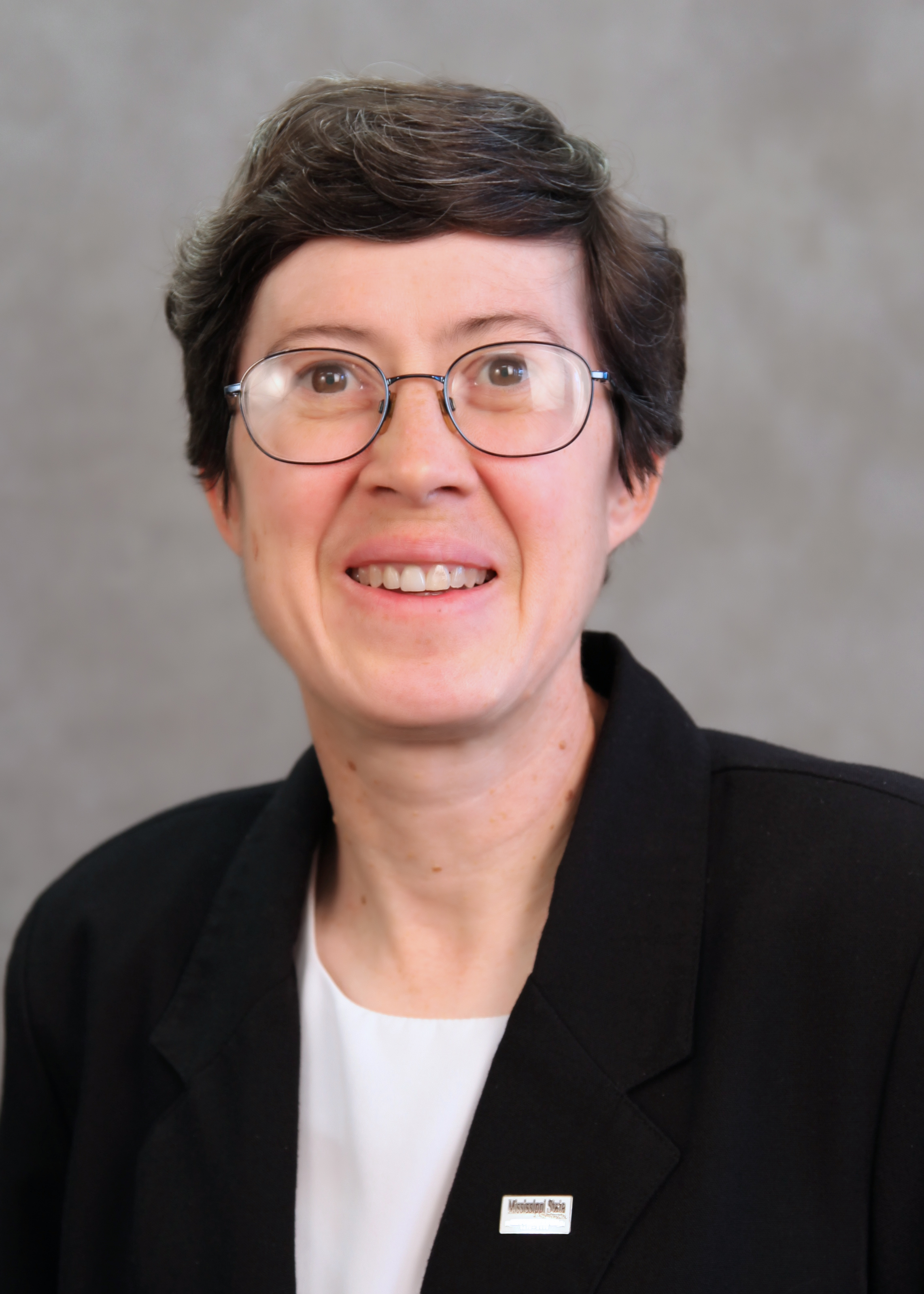
Priscilla J. Hill is a Professor in the Dave C. Swalm School of Chemical Engineering at Mississippi State University's Bagley College of Engineering. She holds a PhD from the University of Massachusetts (1996) and MS/BS degrees from Clemson University. Her research develops particle technology and crystallization processes, with NSF CAREER Award recognition for contributions to particle engineering. Research interests include particle size distribution modeling, crystallization mechanism analysis, breakage/agglomeration processes, and nanotechnology education. Recent educational scholarship focuses on process intensification and nanotechnology integration in chemical engineering curricula. Publications demonstrate sustained contributions to particle process modeling and engineering education reform. Earlier work established numerical methods for population balance equations in solids processing. Awards: National Science Foundation CAREER Award (2005) Educational initiatives include NanoExposed! nanotechnology modules, hybrid separations teaching materials, and K-12 outreach demonstrations. Collaborations advance multidisciplinary nanotechnology education and process intensification curriculum development.
Timothy C. Eisele is an Associate Professor and Chemical Engineering Endowed Faculty Fellow at Michigan Technological University (MTU), serving as Co-Director of Graduate Programs in Chemical Engineering. He earned all three of his degrees (BS, MS, and PhD) in Metallurgical Engineering from MTU. His research focuses on particulate processing, metals extraction, and sustainable raw material production, with emphasis on advancing physical separation techniques and bioleaching technologies to enhance resource recovery and reduce industrial waste. Education: PhD in Metallurgical and Materials Engineering, MTU MS in Metallurgical Engineering, MTU BS in Metallurgical Engineering, MTU Research Highlights: Development of advanced separation techniques (e.g., column flotation, electromagnetic separation) for fine particulate materials Investigation of oxidative and reductive bioleaching for metals recovery using microorganisms Optimization of energy efficiency in comminution processes Utilization of industrial wastes (e.g., fly ash, slags) for sustainable material markets Grants & Projects: Recipient of U.S. DOE grant (FG26-03NT41938) for biohydrometallurgical iron extraction research and holder of U.S. Patent #7,632,330 for environmentally benign iron production methods.