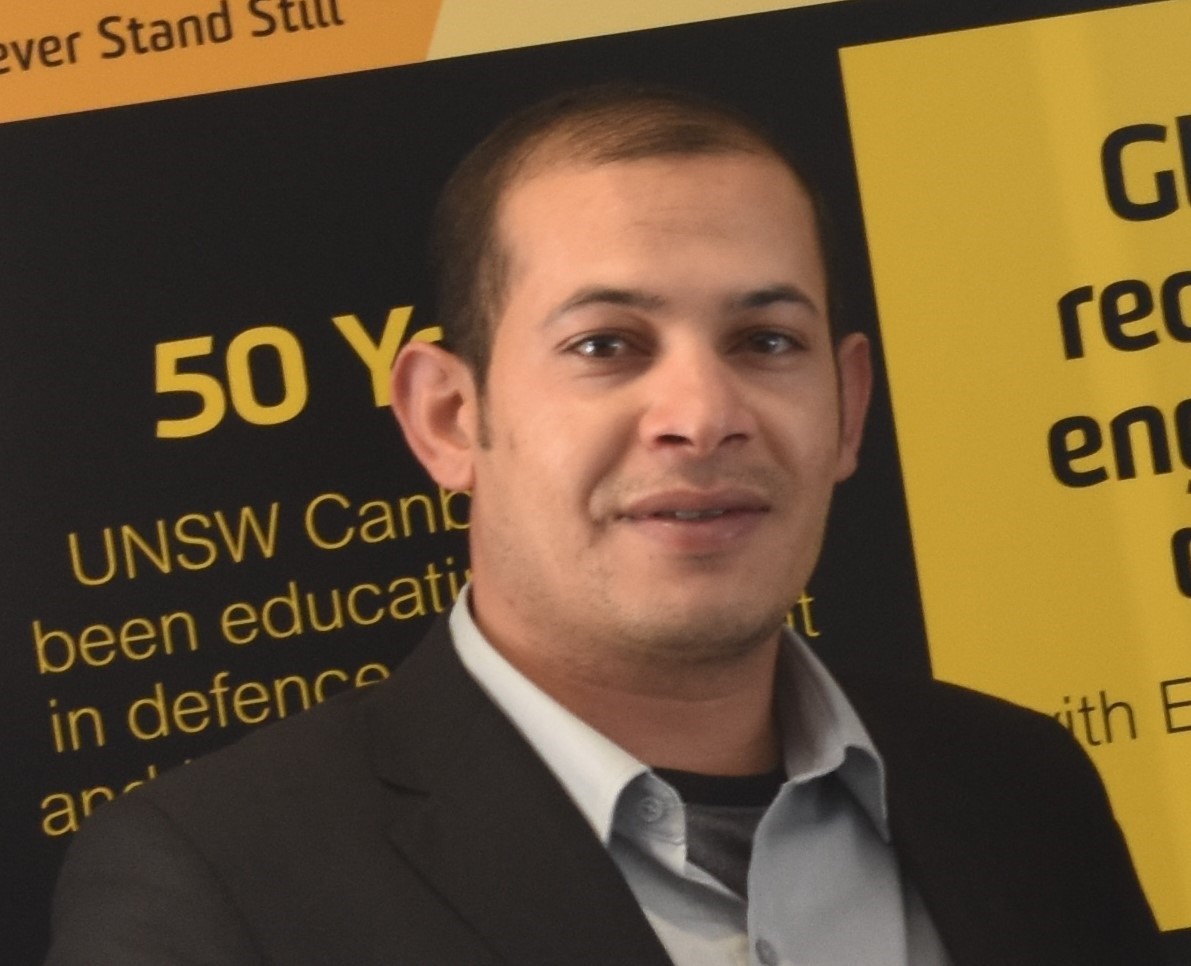
Dr. Nour Moustafa is an Associate Professor and ARC DECRA Fellow at the School of Systems & Computing (SysCom) , University of New South Wales (UNSW) Canberra , Australia. He leads the Intelligent Security Group and focuses on developing AI/ML-driven cybersecurity frameworks for smart systems. Educated at Helwan University (BSc/MSc in Information Systems) and UNSW (PhD in Cybersecurity). Research Interests include intrusion detection, threat intelligence, privacy preservation, digital forensics, and cyber resilience, with methodologies spanning statistical analysis , machine learning , and deep learning applied to IoT , Edge/Cloud , and Industrial IoT environments. His work emphasizes federated learning for privacy preservation, blockchain for secure AI, and digital twins for network self-healing. Notable contributions include the TON-IoT , Bot-IoT , and UNSW-NB15 datasets for cybersecurity evaluation. Scientific Awards : 2020 Spitfire Memorial Defence Fellowship ACM Distinguished Speaker IEEE Senior Member He has served as guest associate editor for IEEE Transactions journals and held leadership roles in conferences like IEEE TrustCom . His research bridges academia and industry, with over 75 publications in top-tier venues.
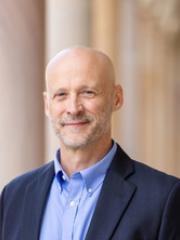
Meighen McCrae is Associate Professor in the Strategic & Defence Studies Centre at Australian National University and Deputy Director (Higher Degree Research) in the Coral Bell School of Asia Pacific Affairs. Her research examines coalition warfare, concepts of victory in military conflicts, and how individuals conceptualize future war during periods of international tension. Professor McCrae's award-winning book 'Coalition Strategy and the End of the First World War' analyzes how Britain, France, Italy and the United States coordinated war planning through the Supreme War Council during 1917-1918. Her current research includes projects on British sea power and naval coalitions during 1914-1919, and the real estate consequences of historical repatriation policies. She teaches courses on defence issues and military history, and has previously lectured at the UK Joint Services Command and Staff College. Professor McCrae is currently writing a monograph on British naval strategy during World War I.
Dr Richard O'Quinn is a Lecturer in Management & Leadership at the School of Business, University of Queensland. He holds qualifications including a PhD from UQ, an MBA, and military degrees from institutions like the US Army Command and General Staff College. With a 23-year career in the US Army Special Operations Forces, his expertise bridges military strategy and academic leadership studies. Research & Teaching: Richard focuses on leadership, strategic decision-making, and organization studies using practice and process perspectives. He teaches in graduate, MBA, and executive education programs, emphasizing practical applications of leadership theory. Recent Research Trends: His work increasingly addresses veterans’ mental health in workplaces, cybersecurity policy, and organizational improvement. Notable projects include seed-funded studies on cybersecurity decision-making and veteran PTSD disclosure challenges. Grants & Collaborations: Funded projects include a 2022-2024 study on veteran mental health disclosure (East Coast Apprenticeships) and a 2021 project developing strategic decision-making simulations (Practera). He also contributes to UQ Cyber initiatives and national cybersecurity strategy submissions. Awards: None explicitly listed, but his work garners attention for bridging military and civilian organizational challenges.
Matt Grant is a Lecturer in Public Relations at the University of Southern Queensland's School of Humanities and Communication. He holds an MPubRel qualification from USQ and has extensive professional experience in crisis communication, military public affairs, and disaster response. His work spans roles in local government, national political campaigns, and international military operations, including deployments to Iraq, Afghanistan, East Timor, and post-tsunami Banda Aceh. Research interests focus on regional communication challenges, social media impacts, and defense-media relations. He teaches courses such as Strategic Communication Planning and Social Media for Organisations. Teaching experience spans 7 years in tertiary education. Awards include the 2005 Chief of Defence Force Commendation for his role in crisis communication during the 2004 Indian Ocean Tsunami. He is a Reservist and guest lecturer at the Australian Defence Force's Command and Staff College. Notable career highlights include coordinating media for Prince William's 2011 visit to Australia, managing communications during Tropical Cyclone Larry (2006) and the 2011 Toowoomba floods, and serving as Senior Public Affairs Officer during Operation Tower in Baghdad.
Professor Douglas Guilfoyle is a Professor at UNSW Canberra within the School of Humanities & Social Sciences, where he joined in 2018. He is a 2022-2025 Australian Research Council Future Fellow working on "Small States' use of law of the sea litigation against greater powers" (FT210100186). He is also a non-resident fellow at the Sea Power Centre - Australia and was a Visiting Legal Fellow at the Department of Foreign Affairs and Trade (2018-2019). Professor Guilfoyle's educational background includes: Doctor of Philosophy (International Law), University of Cambridge, 2007 Master of Laws (International Law), University of Cambridge, 2004 Bachelor of Arts (Hons I) and Bachelor of Laws (Hons I) Australian National University, 2000 Professor Guilfoyle's research focuses on maritime security, the international law of the sea, and international and transnational criminal law. His particular areas of specialism include maritime law-enforcement, the law of naval warfare, international courts and tribunals, and the history of international law. His work examines how small States use UN Convention on the Law of the Sea (UNCLOS) dispute settlement mechanisms to gain political advantages in conflicts with greater powers. His research crosses over from the maritime domain to international criminal law generally, including questions of the effectiveness of international criminal tribunals and the law of superior responsibility. He has made significant contributions to understanding counter-piracy efforts, maritime interdiction operations, and the protection of submarine cables in the context of modern security challenges. Professor Guilfoyle's recent publications demonstrate a clear trend toward examining the intersection of emerging technologies and maritime law, particularly regarding autonomous vessels. His work also shows a deep engagement with the strategic use of international law by small states, maritime security challenges in the Indo-Pacific region, and the evolving role of international courts and tribunals in resolving complex maritime disputes. His scholarship consistently bridges theoretical legal frameworks with practical security concerns. Professor Guilfoyle has received several prestigious awards and fellowships: 2022-2025 Australian Research Council Future Fellow Gates Cambridge Scholar, 2004-2007 British Council Chevening Scholar, 2003-2004 British Academy Mid-Career Fellowship, 2012-2013 Professor Guilfoyle has secured significant research funding including an Australian Research Council Future Fellowship ($948,000, 2022-2025) for his project on "The use of strategic law of the sea litigation by small States against greater powers," and an Australian Research Council Discovery Project ($158,000, 2020-2023) on "Legal Regulation of Marine Autonomous Vehicles." His research is informed by extensive consultancy work with various government and international organizations. Prior to joining UNSW Canberra, he held academic positions at Monash University and University College London, and has practical legal experience as a judicial associate in the Australian Federal Court and as a commercial litigation solicitor in Sydney. Professor Guilfoyle is a frequent contributor to leading international law blogs such as EJIL:talk and Opinio Juris, demonstrating his active engagement with the international legal community and current developments in the field.
Professor Matt Garratt is a faculty member at the University of New South Wales (UNSW Canberra), School of Engineering and IT, serving as AI theme lead for the Defence Trailblazer Universities initiative with over $200 million in funding. His primary research focuses on sensing, guidance, and control for autonomous systems within robotics and unmanned aerial vehicles. Garratt's research spans robotics, swarm intelligence, and autonomous systems with emphasis on bio-inspired navigation techniques and adaptive flight control. His work addresses critical challenges including terrain following using vision systems, landing UAVs on moving platforms, and developing self-organizing swarms. He integrates artificial intelligence, computer vision, and machine learning to advance unmanned systems capabilities in complex environments. Analysis of his recent publications reveals strong trends in bio-inspired UAV navigation (particularly honeybee behavior modeling) and swarm robotics applications. His work increasingly incorporates deep learning for perception tasks while addressing real-world challenges like gas plume detection and adversarial robustness in 3D vision systems. The research demonstrates consistent progression toward practical implementation of autonomous systems in dynamic environments. Professor Garratt has secured over $7.7 million in external research funding as Chief Investigator on 33 grants. He actively mentors graduate students with scholarships available for Masters and PhD research in robotics and AI, focusing on: UAV path planning and adaptive control systems Swarm robotics collective motion optimization Bio-inspired autonomous navigation techniques Computer vision for robotic perception He co-founded the UNSW Canberra AIR (AI and Robotics) Group (AIR Lab), which drives research in trusted autonomy, swarm intelligence, and AI integration for defense applications. The lab develops practical solutions for autonomous systems operating in complex, real-world environments while maintaining ethical AI frameworks.
Ian Worthington is a Professor of Ancient History at Macquarie University's School of Humanities since 2017. Previously, he held the Curators' Distinguished Professorship at the University of Missouri (USA). He earned his B.A. from Hull University, M.A. from Durham University, and Ph.D. from Monash University. His expertise lies in Greek history and oratory, with a focus on Macedonian history, Athenian political discourse, and Hellenistic dynamics. Worthington has authored 10 solo books—including Macedonia under the Argead Kings (2026) and Roxane of Bactria (2027)—and edited over 11 volumes. He leads Brill's New Jacoby , a monumental international project reconstructing ancient historiography. He has secured grants like the $141K ARC Discovery Project (2020-2022) on Athenian war efforts. His research spans Alexander the Great, Philip II, Ptolemy I, and Athenian post-empire history. Notable awards include Fellowships from the Royal Historical Society (2019) and Society of Antiquaries (2020). He actively engages in public scholarship through BBC documentaries, podcasts, and lectures globally, blending academia with cultural commentary. Worthington is affiliated with Macquarie's Centre for Ancient Cultural Heritage and Environment (CACHE) and collaborates internationally. Beyond academia, he is an avid enthusiast of K-pop and Korean culture.
James Bradbury is a Music Lecturer at the Conservatorium of Music, University of Western Australia. He holds a PhD in Music Technology (2021) from the same institution. His research focuses on integrating machine learning into music creation and performance, with expertise in sound art, experimental art, and software development for creative applications. Previously, he served as a Post-Doctoral Research Fellow in Creative Coding at the University of Huddersfield (2021–2022). Education: Doctor of Philosophy in Music Technology, University of Western Australia (2021) Research Interests : Bradbury explores machine learning's role in shaping contemporary music through real-time interactive systems, sound art installations, and experimental music performance. His work emphasizes computational tools for creative processes, including the Fluid Corpus Manipulation (FluCoMa) platform, which enables novel compositional workflows. He investigates how algorithmic approaches can expand artistic expression while maintaining human creativity at the core. Research Trends : Recent works highlight interdisciplinary collaborations between music and computer science, particularly in developing open-source tools like FluCoMa. His performances and publications demonstrate a focus on non-narrative musical forms and real-time algorithmic generation. The 2025 Audible Edge performance exemplifies this through live machine learning-driven sample selection. Awards and Grants : No specific awards or grants mentioned in the provided texts. His contributions are primarily reflected in creative outputs and academic publications. Labs and Teams : Active within the Conservatorium of Music, Bradbury collaborates with institutions like the University of Huddersfield and participates in festivals such as Audible Edge. His work is closely tied to the FluCoMa research collective, emphasizing open-source software development for artistic innovation.
Ian Manock serves as an Adjunct Lecturer at Charles Sturt University's Australian Graduate School of Policing and Security in Bathurst. With extensive professional experience spanning emergency management, policing, and military service, he contributes specialized expertise in disaster response systems and resilience frameworks. Education: Graduate Certificate in Learning & Teaching Higher Education (2015, CSU) Master of Emergency Management (2002, CSU) Bachelor of Social Science (Emergency Management) (1997, CSU) Associate Diploma in Emergency Management (1995, University of Tasmania) His research centers on community resilience in post-disaster recovery, examining how social capital and economic systems interact during emergency management cycles. Current investigations explore digital communication channels in crisis response and interdisciplinary approaches to emergency education. His work demonstrates particular focus on Bangladesh flood case studies and Australian emergency management frameworks. Publications reveal consistent output in disaster management since 2003, with recent emphasis on gender dynamics in recovery processes and standardized education frameworks. His research portfolio shows strong integration of practical emergency response experience with academic rigor. Professional Affiliations: Australian Institute of Emergency Services International Association of Emergency Managers Royal Air Forces Association With prior roles as Regional Emergency Management Officer for Tasmania State Emergency Service and Senior Inspector in the Royal Hong Kong Police Force, Manock brings operational expertise to his academic work. His military background as a Royal Air Force officer further informs his interdisciplinary approach to emergency management education and practice.
Jo Zucco is a Program Director at the University of South Australia's UniSA STEM faculty, affiliated with the School of Information Technology and Mathematical Sciences and the Australian Research Centre for Interactive and Virtual Environments. Their research focuses on augmented reality (AR), mixed reality (MR), and wearable computing technologies, with applications in medical visualization, educational tools, and haptic interaction. Zucco has contributed to over 15 peer-reviewed publications since 1998, including works on X-ray vision in immersive environments, haptic training devices like the Smart Pipette, and collaborative spatial data analysis. Key research interests include improving user experience in AR/MR systems, developing medical visualization techniques for diagnostic support, and enhancing educational technologies for STEM fields. They have collaborated with defense organizations and health sciences departments, receiving grants from the Australian Government and the Defence Science and Technology Group. Zucco's work emphasizes practical applications of cutting-edge technologies in real-world scenarios, such as command and control decision-making, laboratory simulations, and student orientation programs. As a Research Degree Supervisor, Zucco guides students in interdisciplinary projects combining computer science, engineering, and health informatics. Their contributions to the Wearable Computer Laboratory and the Industrial AI Research Centre highlight a commitment to advancing interactive technologies for societal benefit.
Dan Steinberg is a senior research scientist and team leader of the Decisions & Statistical Learning team at CSIRO Data61 in Canberra, Australia. His expertise lies in probabilistic machine learning, variational inference, Bayesian deep learning, causal inference, and their application to domains spanning synthetic biology, geospatial analytics, and algorithmic fairness. Education PhD in Computer Vision / Machine Learning (2013) – University of Sydney, Australian Centre for Field Robotics Bachelor of Engineering (Mechatronics, First-Class Honours) – University of Sydney (2008) Bachelor of Commerce (Finance) – University of Sydney (2008) Research Interests Steinberg’s core research agenda revolves around building scalable probabilistic models that can learn efficiently from limited or noisy data and provide principled uncertainty estimates. Key themes include: Variational Inference & Bayesian Deep Learning: developing lightweight yet powerful algorithms for approximate posterior inference in complex models (e.g., Aboleth, Revrand). Active Learning & Experimental Design: creating methods that decide which experiments or measurements will maximise information gain, with recent focus on in-silico protein engineering via Variational Search Distributions (VSD). Causal Inference: leveraging machine-learning tools to perform robust observational causal studies for evidence-based policy, including work on youth well-being and academic outcomes. Algorithmic Fairness: translating normative notions of equity into quantifiable objectives for regression-based decision systems. Large-scale Spatial Analytics: Landshark—an open-source TensorFlow toolkit for supervised learning on massive geospatial raster datasets. Notable Software & Tools Aboleth: A minimal-overhead TensorFlow framework for Bayesian deep learning. Landshark: Command-line tools for large-scale spatial inference. Revrand: Scalable Bayesian generalised linear models with non-conjugate likelihoods. libcluster: Extensible C++ library for hierarchical Bayesian clustering. Scientific Awards Oral Presentation Award – ICML 2025 Workshop on Scaling up Intervention Models (SIMS) Oral Presentation Award – NeurIPS 2024 Workshop on Bayesian Decision-making and Uncertainty (BDU) Oral Presentation Award – NeurIPS 2023 Workshop on Adaptive Experimental Design and Active Learning Spotlight Paper Award – NeurIPS 2014 (Extended and Unscented Gaussian Processes) Research Team & Collaborations As Team Leader – Decisions & Statistical Learning at CSIRO Data61, Steinberg directs a multi-disciplinary group that partners with government agencies (e.g., Jobs and Skills Australia, Australian Institute of Health and Welfare) and industry to deploy machine-learning solutions at scale. He has previously held roles as Principal Researcher at Gradient Institute (2019-2023), Senior Research Engineer at CSIRO Data61 (2016-2019), Researcher at NICTA (2013-2016), and Research Associate at the University of Sydney (2012-2013).
David Horner is the Official Historian and Professor of Australian Defence History at the Strategic & Defence Studies Centre within the Coral Bell School of Asia Pacific Affairs at the Australian National University. With a distinguished career spanning military service and academia, Professor Horner brings unique perspective to the study of Australian defence and strategic history. Professor Horner's educational background includes: AM DipMilStud from the Royal Military College (RMC) MA (Hons) from the University of New South Wales (UNSW) PhD from the Australian National University (ANU) His research focuses on Australian defence history, particularly strategy, command, intelligence and operations, as well as current defence issues. Professor Horner leads major research projects including the Official History of Australian Peacekeeping and Post-Cold War Operations (a joint ANU-Australian War Memorial project) and the Official History of the Australian Security Intelligence Organisation. His work spans the Cold War era, Australian military engagements, and post-Cold War operations, with particular emphasis on Australian military leadership, intelligence operations, and regional security dynamics. Professor Horner's publications demonstrate consistent scholarly productivity since 1998, with notable output peaks in 2002, 2009, and 2016. His work covers diverse periods from the Boer War through to contemporary operations in Iraq, reflecting comprehensive expertise in Australia's military engagements across the twentieth and twenty-first centuries, with particular focus on leadership, strategic decision-making, and operational history. Professor Horner has received significant recognition for his scholarly contributions: Elected Fellow of the Academy of Social Sciences in Australia (2015) UK Intelligence Book of the Year Prize (2015) Joint winner of the 2015 Prime Minister's Literary Award for Australian History for "The Spy Catchers: The Official History of ASIO, 1949-1963" Professor Horner has supervised numerous significant research projects including the Official History of Peacekeeping (Volumes 1 and 4), Australian Peacekeeping Vol 5, and the Official History of Australian Peacekeeping Vol. 5. His collaborative work extends to the Australian Dictionary of Biography Online projects, demonstrating commitment to preserving and enhancing historical resources for academic and public use. As part of the Strategic & Defence Studies Centre, Professor Horner contributes to one of Australia's premier institutions for research on defence and strategic policy. His work bridges academic scholarship and practical defence policy, informed by his 25 years of service in the Australian Regular Army including active duty in South Vietnam, providing unique insights into the intersection of military practice and historical analysis.
Dr Jess Melvin is an ARC Discovery Early Career Research Award (DECRA) Fellow at the School of Humanities, University of Sydney (2020-2022). Her research focuses on Southeast Asian history and politics, particularly Indonesian military history, political violence, and the legacies of the Cold War. She has held previous positions including Postdoctoral Research Associate at the Sydney Southeast Asia Centre (2018-2019), Postdoctoral Fellow in Genocide Studies at Yale University (2016-2017), and Gilbert Postdoctoral Fellow at the University of Melbourne (2015). She earned her PhD in Asian History from the University of Melbourne in 2015. Her current research explores 'Islamist Militias, the Military and Indonesia’s Authoritarian Turn' funded by an ARC DECRA grant. She co-edited The International People's Tribunal for 1965 and the Indonesian Genocide (2019) and authored The Army and the Indonesian Genocide (2018). Her work bridges historical analysis with legal frameworks, focusing on genocide classification and military accountability. Key Awards: ARC DECRA Fellowship (2020) Grants: International Workshop on the Aceh Truth and Reconciliation Commission (SSAC, 2017) Membership: Sydney Southeast Asia Centre Melvin’s publications analyze Indonesian military strategies, Cold War-era atrocities, and comparative genocide studies. She emphasizes interdisciplinary approaches, integrating archival research with legal and sociopolitical analysis to understand systemic violence in Southeast Asia.
Dr. Robert Sean Pickersgill is a Senior Lecturer in Architecture at the University of South Australia (UniSA), specifically within UniSA Creative at the City West Campus. He serves as a Research Degree Supervisor and has maintained an active research profile since at least 2011, with publications extending through 2025. His academic work bridges theoretical architectural philosophy with practical digital implementation in educational contexts. Dr. Pickersgill's research program centers on digital technologies in architectural education, with particular focus on: Virtual and augmented reality applications for construction education Digital simulation environments for architectural learning The philosophical implications of digital representation in design The concept of 'monstrosity' in digital architectural forms Authenticity in virtual learning environments for construction His publication trajectory reveals an evolution from theoretical explorations of digital representation toward practical implementations in architectural education. The OnSite project represents his most sustained research effort, developing virtual site visit methodologies that address critical gaps in construction education. His recent work increasingly examines the philosophical dimensions of digital twins and their application in architectural pedagogy, showing sophisticated integration of Ihde and Verbeek's intentionality frameworks with practical educational concerns. As a Research Degree Supervisor, Dr. Pickersgill collaborates extensively with colleagues across disciplines, particularly with Damian Madigan, Andrew Lymn-Penning, and Rameez Rameezdeen. His work has been supported by educational grants including those from the Australian Office for Learning and Teaching, and has been presented at major international conferences including ACADIA and CDRF. Dr. Pickersgill is affiliated with UniSA's Natural and Built Environments Research Centre and contributes to architectural discourse through both practical implementations and theoretical explorations that challenge conventional boundaries between physical and digital architectural experiences.
Nathan Wolski serves as Senior Lecturer at Monash University's Australian Centre for Jewish Civilisation, specializing in medieval Kabbalah and Zohar studies. His scholarship combines textual analysis with historical inquiry, focusing on mystical traditions in Jewish literature. Research explores Kabbalistic manuscripts, Yiddish mystical texts, and modern reinterpretations of classical Jewish thought. Publications demonstrate consistent engagement with Zoharic interpretation, particularly through critical translations like The Zohar: Pritzker Edition (Vols. 10 & 12). Recent works analyze linguistic aspects of mystical experience in Yiddish texts, with methodological emphasis on contextualizing esoteric traditions within broader intellectual history. Research projects include 'Esotericism and Exotericism in Early Modern Ashkenaz,' investigating Kabbalistic transmission through 17th-century Yiddish sources. Collaborative grants support initiatives like the Sutskever Poetry Project and Kronhill Program for European Jewish Experience.