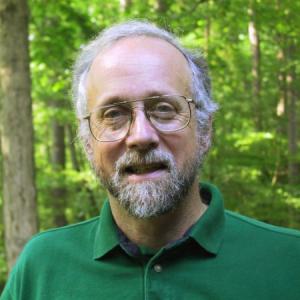
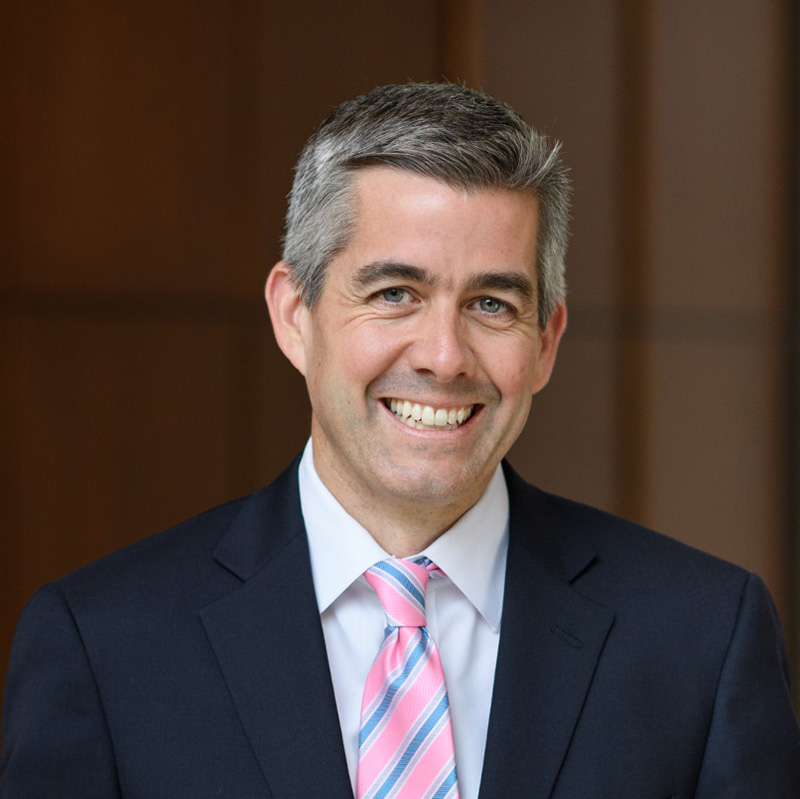
Michael Donald Bailey is a Professor and former Chair of the School of Cybersecurity and Privacy (SCP) at Georgia Institute of Technology, part of the College of Computing. Previously, he served as a Professor at the University of Illinois at Urbana-Champaign (UIUC) and as a Research Associate Professor at the University of Michigan. His research focuses on the security, performance, and availability of distributed systems, with over 90 scholarly publications. He has led initiatives to expand cybersecurity education, including new undergraduate threads and professional master’s programs at Georgia Tech. Bailey’s industry experience includes roles at Arbor Networks, where he managed teams protecting internet traffic from DDoS attacks, and three startups. He is a Senior Member of IEEE and ACM. Roles: Professor, Chair (until 2025), Researcher Affiliations: Georgia Tech (SCP, College of Computing), UIUC (Security and Privacy Research Group) His research interests span network security, distributed systems, and privacy engineering. Notable contributions include work on TLS certificate management, IoT security, and phishing defense mechanisms. Bailey advises students at both UIUC and Michigan, fostering next-generation cybersecurity experts.
Sharad Joshi is a Professor at the Middlebury Institute of International Studies, specializing in terrorism and nuclear security in South and Southeast Asia. He joined the Institute as a postdoctoral fellow at the James Martin Center for Nonproliferation Studies in 2006 and transitioned to full-time faculty in 2011. He also served as a research associate and interim director of the Monterey Terrorism Research and Education Program. Ph.D. in International Affairs, University of Pittsburgh M.A. in Politics, Jawaharlal Nehru University B.A. (Honors) in Economics, University of Rajasthan His research focuses on terrorism, nuclear weapons, and WMD proliferation, with emphasis on South Asian nuclear rivalry, CBRN terrorism, and transnational extremist networks. His courses include Global Politics , Great Power Competition , and specialized seminars on terrorism and nuclear issues. Recent publications analyze U.S.-India relations, China-Pakistan nuclear deals, and WMD security challenges. He leads the International Strategic Crisis Negotiation Exercise (ISCNE) , simulating Central Asian geopolitical crises involving China, India, Russia, and regional states.
Lee Miller is a Professor of Physiology, Physical Medicine & Rehabilitation, and Biomedical Engineering at the University of Chicago. His research focuses on understanding how the brain encodes movement commands through neural signals, with applications in developing brain-machine interfaces (BMIs) to restore motor function in paralyzed patients. His work integrates neuroscience, engineering, and computational methods to study neural networks in motor systems. Key research areas include decoding cortical signals to predict muscle activity, developing closed-loop BMIs, and investigating functional connectivity in neural circuits. Miller collaborates extensively with the Biomedical Engineering Department and the Interdepartmental Neuroscience Program (NUIN). His lab combines experimental approaches (e.g., chronic neural recordings) with computational tools to study neural dynamics and develop therapeutic technologies. Recent work emphasizes restoring hand function via cortically controlled functional electrical stimulation (FES), translating neural signals into muscle activation. His publications span neural decoding algorithms, sensory feedback systems, and the neurobiology of motor control. Miller’s contributions bridge fundamental neuroscience and clinical neuroengineering, with potential impacts on spinal cord injury rehabilitation and prosthetic control systems.
Yale N. Patt serves as Professor of Electrical and Computer Engineering, holding the Ernest Cockrell, Jr. Centennial Chair in Engineering and recognized as a University Distinguished Teaching Professor at The University of Texas at Austin's Cockrell School of Engineering. His academic career spans decades with continuous teaching activity through Fall 2024 and Spring 2025 semesters. Professor Patt's research focuses on computer architecture and high-performance computing systems, specifically targeting innovations five to ten years beyond current industry capabilities. His philosophy emphasizes producing foundational knowledge for future technology development while educating students who will design tomorrow's computing systems. His work spans computer architecture, systems and networking, with particular focus on high performance substrate and microarchitecture design. His research group HPS (High Performance Systems) has made significant contributions to memory systems, branch prediction, and parallel computing architectures. Professor Patt's publications reveal consistent focus on fundamental computer architecture challenges, particularly addressing memory systems, branch prediction mechanisms, and performance optimization techniques that enable future computing systems. His work bridges theoretical innovation with practical application requirements. His exceptional contributions have been recognized with numerous prestigious awards: 2014 - Member, National Academy of Engineering 1996 - IEEE/ACM Eckert-Mauchly Award 2016 - Benjamin Franklin Medal, Franklin Institute 2000 - ACM Karl V. Karlstrom Outstanding Educator Award 1995 - IEEE Emanuel R. Piore Award 2013 - IEEE Harry H. Goode Award 1999 - IEEE Wallace W. McDowell Award 2011 - IEEE B. Ramakrishna Rau Award 2005 - IEEE Charles Babbage Award 2017 - Friar Centennial Teaching Fellowship (the highest teaching award at UT Austin, with recognition as the only Engineering professor to win it in the last 25 years) Professor Patt has mentored numerous PhD students throughout his career and co-authored the influential textbook 'Introduction to Computing Systems: From Bits and Gates to C and Beyond' (3rd edition, 2019). His teaching philosophy emphasizes deep understanding of computing fundamentals, reflected in his 'Ten Commandments for good teaching.' He has developed foundational courses including EE460N (Computer Architecture), EE306, and EE382N.19 (Microarchitecture), with teaching records dating back to at least 2000. He leads the High Performance Systems research group, which continues to advance computer architecture research while training the next generation of computer engineers. Workshops celebrating his 75th birthday in 2014 ('Yale@75') and 80th birthday in 2019 ('Yale:80-in-2019') demonstrate the global respect he has earned in the computer architecture community.
Steve Oney is an Associate Professor at the University of Michigan School of Information and Computer Science and Engineering (by courtesy). His research focuses on enabling and encouraging more people to write and customize computer programs by creating new programming tools and exploring usability issues in programming environments. With a strong background in Human-Computer Interaction, he bridges the gap between theoretical research and practical applications in programming education, accessibility, and developer tool design. Dr. Oney completed his Ph.D in Human-Computer Interaction at Carnegie Mellon University's Human-Computer Interaction Institute under Professor Brad Myers and Dr. Joel Brandt. He also earned an M.Eng in Computer Science and SB degrees in Computer Science and Mathematics from MIT. His research spans multiple interconnected areas with a unifying theme of making programming more accessible and understandable. Key focus areas include programming education tools that help instructors understand student code at scale, web automation systems that simplify repetitive tasks, accessibility research addressing challenges faced by visually impaired programmers, and innovative VR programming environments. His work consistently emphasizes the human aspects of programming, exploring how tools can better support diverse programming needs and contexts. Dr. Oney's research output shows a strong trajectory toward increasingly sophisticated tools that integrate AI capabilities while maintaining a focus on human-centered design principles. Recent publications demonstrate growing emphasis on inclusive design, educational applications, and the integration of generative AI in programming environments. L@S 2024 Best Paper Award for CFlow CHI 2023 Honorable Mention for VizProg UIST 2024 Best Short Paper (EdCode) VL/HCC 2019 Best Short Paper Recognition for Contribution to Diversity and Inclusion (CSCW 2021) UMSI Excellence in Instruction Award (2021) University of Michigan President's Postdoctoral Fellowship (2015) As a mentor, Oney advises multiple Ph.D. students and postdoctoral researchers, with several successful graduates including Dr. Lei Zhang (June 2024). His research has secured over $1 million in funding from the National Science Foundation, Google, and Adobe, supporting projects that address critical challenges in programming education, accessibility, and developer tool design. He leads the Programming Tools Lab at the University of Michigan, where his team develops innovative tools that help programmers work more effectively. Current projects focus on AI-enhanced programming education, web automation, accessibility for diverse user groups, and next-generation programming environments for virtual and augmented reality.
Prof. Dr. Rafaela Kraus is a Professor of Business and Human Resource Management at the Faculty of Business Administration of the Bundeswehr University Munich, where she has been serving since 2006. She currently holds the position of Vice President for Entrepreneurship and the University Sector for Applied Sciences. Prof. Kraus has established significant initiatives including founders@unibw (2019), the entrepreneurship and intrapreneurship center, and SpaceFounders (2021), the European SpaceTech accelerator program. She previously served as Dean of the Faculty of Business Administration (2010-2014) and Vice Dean (2014-2019), where she developed the Human Resources Management degree program. Prof. Kraus's research focuses on business and human resource management with particular emphasis on leadership, organizational psychology, innovation and change management, personal branding, and qualitative social research. Her applied research explores intrapreneurship and entrepreneurship, defense/dual-use innovation, transformation in industries like automotive and defense, leadership and organizational culture in public sector organizations. Her work demonstrates a strong connection between academic research and practical applications in both military and civilian contexts. Her recent publications reveal a clear research trajectory centered on innovation in public sector organizations, particularly defense institutions. The articles show increasing focus on space technology commercialization, digital transformation, and the intersection of military and civilian innovation ecosystems. Her work bridges theoretical frameworks with practical applications, particularly in how leadership principles from military contexts can be translated to civilian business environments. Prof. Kraus has supervised numerous bachelor's and master's theses across topics including leadership, human resource management, digital transformation, and defense innovation. Her students have produced research on empowerment in the Bundeswehr, IT security in HR management, leadership during the pandemic, and various aspects of organizational change. She has mentored award-winning theses recognized by the German Society for Defense Technology and the Friends' Association of the Bundeswehr University Munich. Prof. Kraus leads several significant initiatives including founders@unibw, which promotes startup culture and entrepreneurial skills development, and BASED (Munich Digital Hub Security & Defense), which launched in September 2024. She was project manager of the Innovation Center of the Bundeswehr Center for Digitalization and Technology Research until 2025. Her work connects academic research with practical applications through partnerships with business and public sector organizations.
Regents' Professor Ronald C. Arkin is a leading figure in robotics and AI at the School of Interactive Computing at the Georgia Institute of Technology . He directs the Mobile Robot Laboratory and serves as Associate Dean for Research in the College of Computing. His work bridges autonomy , ethical decision-making , and human-robot interaction . Ph.D. in Computer Science, University of Massachusetts, Amherst (1987) Former STINT Visiting Professor at KTH Stockholm (1997-1998) Sabbatical Chair at Sony Intelligence Dynamics Laboratory (2005) Member of Robotics and Artificial Intelligence Group at LAAS/CNRS (2005-2006) Arkin's research focuses on robot ethics , autonomous agents , and multi-robot coordination . He explores the integration of moral emotions and ethical frameworks in robotic systems, particularly for applications in patient-caregiver mediation and subterranean exploration . His work also addresses deception mechanisms and formal performance guarantees for autonomous missions. Recent publications highlight advancements in heterogeneous robot teams for DARPA challenges, multi-modal control interfaces , and bio-inspired deception . His research spans artificial circadian systems , robotic nudges , and legal mediation in human-robot interactions. Regents' Professor, Georgia Institute of Technology Arkin has advised numerous projects on robot ethics and autonomous systems , contributing to grants like the 2018 EAGER award for Misdirection in Robot Teams . He leads the Mobile Robot Laboratory , developing frameworks for robotic autonomy and ethical governance in diverse environments.
Dr. Holly Snape is a Lecturer in Politics at the University of Glasgow's School of Social and Political Sciences, specializing in Chinese political systems. She holds a PhD from the University of Bristol and has conducted research at Tsinghua University's NGO Research Center and Peking University's Research Center for Chinese Politics. Her work examines the interplay between the Chinese Communist Party (CCP) and state governance, focusing on civil society dynamics, NGO operations, and regulatory frameworks. Snape's research bridges theoretical analysis with empirical studies, particularly on migrant worker rights, HIV/AIDS advocacy, and environmental protection NGOs. Her current project investigates the evolving relationship between the CCP and the government, challenging traditional 'party-state' paradigms. Snape has collaborated with institutions like Peking University and the NGO Research Center, producing insights into social governance, party legal reforms, and cadre management. She contributes to journals such as China Journal and Journal of Chinese Political Science , analyzing topics ranging from party regulations to the Twentieth Party Congress's ideological shifts. Snape's scholarly output includes 15 articles (2012–2024) addressing themes like 'command civil society,' NGO adaptation strategies, and the role of political discourse in authoritarian systems. Her research highlights the CCP's institutional evolution and its impact on state-society interactions. While no formal awards are listed, her work reflects sustained academic engagement with contemporary Chinese governance challenges. As a supervisor, Snape mentors students like Zihui Xie on topics such as pension system reforms. She maintains affiliations with multiple research centers and continues to explore the interconnections between party policies and grassroots civil society, positioning her as a leading scholar in Chinese political studies.
Frédéric JEAN is a Professor and Director of the Unité de Mathématiques Appliquées (UMA) at ENSTA Paris. His expertise lies in nonlinear control theory and geometric control, with applications in neurophysiology modeling. He holds an HDR (Habilitation à Diriger des Recherches) and advises doctoral students across multiple domains. Research Interests: Frédéric’s research focuses on geometric control theory, sub-Riemannian geometry, optimal control, and nonholonomic systems. His work bridges theoretical advancements with practical applications in neurophysiology and aerospace engineering. Recent studies include trajectory planning for planetary landings and robust control strategies under uncertainty. Teaching: He teaches courses on applied differential geometry, dynamical systems analysis, and control systems at ENSTA Paris. Publications: His recent work emphasizes sub-Riemannian geometry, stochastic control, and aerospace applications. Key trends include optimal control in constrained systems and geometric approaches to robotic and biological movement. Students: Co-supervised over 10 doctoral theses, including those by Clara Leparoux (2023), Meryem Kafnemer (2022), and Sofya Maslovskaya (2018). Labs/Teams: Active within the Optimization and Commande team at UMA, contributing to interdisciplinary research in control systems and applied mathematics.
Bruce Sterling is a Professor of New Media and Science Fiction at The European Graduate School (EGS), where he has taught intensive summer seminars since 2003. He also served as "visionary in residence" at the Art Center College of Design in Los Angeles starting in 2005. Sterling is internationally recognized as a science fiction writer, net critic, and cyberspace theorist, with significant influence in the cyberpunk movement. Sterling graduated with a degree in journalism from the University of Texas, Austin, in 1976. His academic journey was followed by a prolific writing career that began with the publication of Involution Ocean in 1977. Sterling's research interests span the intersection of technology, culture, and narrative. He is particularly known for his work on cyberpunk literature, new media theory, and futurism. His concept of "design fiction" has influenced how designers and technologists think about future scenarios. Sterling's Viridian Design Movement promoted environmental awareness through design, while his Dead Media Project documented obsolete communication technologies. His writings consistently explore how technological change reshapes human experience, society, and our understanding of the future. Sterling's recent publications reveal a continued focus on the cultural implications of emerging technologies. His articles examine topics ranging from wearable computing and hyperlocal media to sustainable design and energy transitions. A recurring theme is the relationship between technological progress and environmental sustainability. Sterling frequently employs speculative approaches, using science fiction techniques to explore possible futures and challenge current assumptions about technology's trajectory. Sterling's scientific achievements have been recognized with numerous prestigious awards: Campbell Award (1989) for Islands in the Net Hugo Award (1997) for Bicycle Repairman Hugo Award (1999) for Taklamakan Hayakawa Award (1999) for Taklamakan Clarke Award (2000) for Distraction Sterling has been instrumental in shaping digital culture discourse through his teaching, writing, and activism. As a co-founder of the Electronic Frontier Foundation, he has advocated for digital rights and freedoms. His work bridges academic theory, creative practice, and public engagement, making complex technological issues accessible to diverse audiences. Sterling founded both the Dead Media Project, an archive of obsolete media technologies, and the Viridian Design Movement, an environmental aesthetic initiative. These projects reflect his unique approach to understanding technology through both historical and future-oriented perspectives. His work often explores the lifecycle of technologies, from emergence to obsolescence, and considers how design choices today shape possible futures.
Mark Nevitt is an Associate Professor of Law at Emory University School of Law, specializing in environmental law with a focus on climate change's impact on legal frameworks and national security. He joined Emory Law faculty in summer 2022 after serving as an associate professor at Syracuse University College of Law and as the Distinguished Professor of Leadership and Law at the US Naval Academy in Annapolis, MD. His academic journey includes being a Sharswood Fellow and Lecturer-in-Law at the University of Pennsylvania Law School from 2017-2019, where he taught climate change law and policy, and a seminar on national security law and society. Before entering academia, Nevitt served as both a tactical jet aviator and attorney (JAG) in the United States Navy, achieving the rank of commander and serving as a White House Military Social Aide. Nevitt's research focuses on the intersection of environmental law, climate change, and national security. His work addresses how climate change destabilizes traditional legal frameworks and creates new security challenges, particularly examining legal issues associated with climate adaptation, managed retreat from coastlines, and constitutional dimensions of climate policy. His scholarly work has appeared in top journals including Stanford Law Review, Vanderbilt Law Review, Washington University Law Review, and Harvard Environmental Law Review. As a frequent contributor to NYU Law's Just Security blog, Lawfare, and Penn Law's Regulatory Review, Nevitt provides expert commentary on contemporary legal issues. He is a member of the Truman National Security Project and recently completed grant-funded research via the Kleinman Center at the University of Pennsylvania addressing legal issues associated with climate adaptation. Nevitt's military background informs his legal scholarship, having flown 1,000+ flight hours as a naval aviator and served as an environmental attorney, criminal defense attorney, and ethics attorney in the Navy JAG Corps. Notably, he served as the senior legal advisor for the U.S. investigation into the Iranian detention of U.S. sailors in Farsi Island, Iran. His military awards include the Air Medal and Meritorious Service Medal (four awards). He holds a J.D. and LL.M. (with distinction) from Georgetown University Law Center and a B.S.E. from the Wharton School, University of Pennsylvania. His expertise is frequently sought for commentary on legal issues at the intersection of environment, security, and constitutional law, as evidenced by recent media appearances discussing the Posse Comitatus Act and National Guard deployment issues.
Salvatore Livatino is an Associate Professor in Virtual Reality and Robotics at the University of Hertfordshire, UK. He holds a MSc in Computer Science from the University of Pisa (1993) and a PhD in Computer Science and Engineering from Aalborg University, Denmark (2003). His academic journey includes roles as Research Fellow and Associate Professor at Aalborg University, as well as visiting positions at institutions like INRIA Grenoble and the University of Edinburgh. He leads the Communications and Intelligent Systems research group and directs the Virtual Reality and Robotics Laboratory. His research focuses on immersive technologies (VR/AR/XR), stereoscopic 3D visualization, and teleoperation systems for applications in robotics, healthcare, and command-and-control interfaces. He has contributed to over 30 peer-reviewed publications and secured funding for projects such as the Innovate UK-backed 'iDOC: AI Empowered Document Authoring' (2023–2025) and 'Immersion for Care: Using Extended Reality in Healthcare Training' (2025–2027). Teaching expertise includes problem-based learning, 3D visualization, and immersive game design. His work spans interdisciplinary collaborations in robotics, AI, and healthcare, emphasizing practical applications of virtual environments.
Dr. Haibo He is the Robert Haas Endowed Professor in the Department of Electrical, Computer, and Biomedical Engineering at the University of Rhode Island (URI). As an IEEE Fellow and NSF CAREER awardee, his research focuses on computational intelligence, neural networks, and reinforcement learning with applications to smart grids and microgrid systems. Ph.D. in Electrical Engineering, Ohio University, 2006 M.S. in Electrical Engineering, Huazhong University of Science and Technology, 2002 B.S. in Electrical Engineering, Huazhong University of Science and Technology, 1999 His research interests include: Computational Intelligence Adaptive Dynamic Programming Reinforcement Learning Deep Learning for Power Systems Distributed Control in Microgrids Imbalanced Data Learning Recent research trends from publications (2018-2025) show a focus on: Multi-agent reinforcement learning for energy systems Digital twin frameworks for grid security Event-triggered control mechanisms Finite-time convergence algorithms Cyber-attack resilient control systems Evolutionary computation in power networks Awards: IEEE Fellow (2018) NSF CAREER Award (2017) Dr. He leads the Computational Intelligence and Self-Adaptive Systems (CISA) Laboratory at URI, which conducts fundamental research on computational intelligence methods with applications to power systems, data mining, and neural networks.
Frank G. Klotz is an Adjunct Senior Fellow and Professor of Policy Analysis at the RAND School of Public Policy. A retired U.S. Air Force Lieutenant General, he previously served as Under Secretary of Energy for Nuclear Security and Administrator of the National Nuclear Security Administration (2014–2018). His military career included roles such as Commander of Air Force Global Strike Command and Defense Attaché in Moscow. Education: U.S. Air Force Academy graduate Rhodes Scholar at the University of Oxford (M.Phil. and D.Phil. in international relations/politics) National War College graduate Research Focus : Nuclear deterrence, military strategy, U.S.-Russia relations, and arms control. His work emphasizes reducing nuclear proliferation, maintaining a modernized nuclear triad, and improving defense budgeting processes through comparative organizational studies. Key Contributions: Authored analyses on extending the New START treaty, modernizing nuclear systems, and avoiding space weaponization. His expertise bridges military operations, policy analysis, and international diplomacy.
Isaac Taylor is a Lecturer in the Department of Philosophy at Stockholm University. His research intersects political philosophy, ethics, and emerging technologies, with a focus on AI accountability, counterterrorism ethics, and public goods theory. Research Interests: AI ethics and autonomous systems governance Counterterrorism moral frameworks Public goods and distributive justice Security policy and just war theory Recent Publication Trends: His 2025 work explores AI agency and explainability. Earlier studies analyze collective responsibility for autonomous weapons, algorithmic sentencing limits, and minimalist approaches to conflict resolution.