Lillian Lee is a Professor of Computer Science at Cornell University, affiliated with the College of Computing and Information Science. Her research bridges natural language processing (NLP) and social interaction, focusing on how computational methods can analyze and facilitate socially embedded processes. She co-developed the course “Natural Language Processing and Social Interaction” and leads the Cornell NLP Group. Her work spans sentiment analysis, computational social science, and multimodal interaction, with notable contributions to understanding language features in persuasion, online debate dynamics, and humor comprehension. Key research interests include analyzing digital traces of social interaction, evaluating AI systems through human-centered criteria, and exploring the interplay between language structure and societal influence. Recent projects examine pivotal moments in mental health counseling, cross-cultural historical narratives on Wikipedia, and the role of wording in message propagation. Awards: ACM Fellow, ACL Distinguished Service Award (2021), Test of Time Award, Fellow of the Association for Computational Linguistics Labs/Teams: Member of the Cornell Natural Language Processing Group Advising: Mentored numerous students whose work has driven impactful projects in NLP and computational social science
Barbara Zocal Da Silva is an Assistant Clinical Professor in the Department of Spanish and Portuguese at the University of Maryland. She specializes in translation studies, decolonial feminisms, and Blackness in Latin America. She coordinates curricula and anti-racist initiatives for the Portuguese Minor Program, co-leads the SPAP Center for Translation and Interpreting, and serves on the ARHU Academic Planning Advisory Committee (APAC). Dr. Da Silva holds a Ph.D. in Spanish/Translation Studies from the University of São Paulo (2022), focusing on the reception of Hispanic-American women’s works in Brazil through decolonial lenses. Her research bridges translation, race, gender, and postcolonial theory. Recent projects include translating Capoeira Angola masters’ oral histories and co-editing scholarly works on women authors in translation. She actively participates in professional development initiatives like the ADVANCE Program for Women in Leadership and organizes cultural events such as UMD’s first Carnaval Celebration. Key contributions include translating bell hooks’ Talking Back , Venezuelan poetry collections, and graphic novels from Spain and Peru. Her work emphasizes humanitarian translation practices, anti-racist pedagogy, and fostering inclusive academic spaces for minoritized groups. Education: Ph.D. in Spanish/Translation Studies (University of São Paulo, 2022) Leadership Roles: PTK Symposium Committee member, Deputy Portuguese Director (Spring 2024), and APAC Representative Notable Initiatives: Carnaval Celebration organizer, anti-racist curriculum development, and project coordinator for the Portuguese Minor Program
Dr. Yari Perez Marin is an Associate Professor in the School of Modern Languages and Cultures at Durham University. She holds affiliations with the Institute of Medieval and Early Modern Studies and the Institute for Medical Humanities. Her research focuses on contemporary Latin American cinema and 16th-17th century Hispanic literature, particularly the history of science in transatlantic contexts. She teaches undergraduate modules on colonial gender studies, race in cinema, and postgraduate courses in translation and cultural studies. Her work is supported by grants from the Mellon Foundation and Social Science Research Council. She contributes to Durham's Zurbarán Centre for Spanish and Latin American Art, delivering lectures on colonial medical history and Latin American cultural representation. Education: BA in Romance Languages and Literatures (Harvard), MA and PhD in Hispanic Studies (Brown University). Teaching responsibilities include convening final-year modules on colonial Latin America and co-teaching race/gender in cinema. She supervises three PhD students researching colonial and contemporary cultural topics. Recorded talks include discussions of her book Marvels of Medicine and presentations on colonial medical literature at ARTES and Complutense University of Madrid.
F. K. Clementi (also publishing as F. K. Schoeman) is a Professor of English Language and Literature and Jewish Studies at the University of South Carolina, where she is appointed in the McCausland College of Arts and Sciences . A public intellectual, memoirist, and scholar, she specializes in Holocaust Studies, Jewish literature, and feminist cultural production. Education: PhD, Graduate Center, City University of New York, 2008 MA, Brandeis University, 1998 Laurea Summa Cum Laude, University of Rome La Sapienza, Italy, 1995 Research Interests: Clementi's work spans Holocaust Studies , Jewish literature and film , women’s memoirs , and feminist and psychoanalytical approaches to cultural production . She explores themes of trauma, memory, identity, and transnational Jewish experience, often through the lens of gender and diaspora. Her scholarship also engages with graphic narratives and the intersection of visual culture and Jewish identity . Her courses reflect these interests, including The Holocaust through Literature and Film , Women and Shoah Memory , and Graphic Details: Confessional Comics by Jewish Women , among others. She is deeply committed to interdisciplinary teaching and public scholarship, frequently contributing to mass media and public forums. Publications & Trends: Clementi’s recent work includes a memoir, South of My Dreams (2024), and foundational scholarly books like Holocaust Mothers and Daughters (2013). Her articles traverse Holocaust memory, Jewish women's graphic narratives, and Italian-Jewish women’s writing, reflecting a consistent focus on memory, identity, and gender across cultures. Awards & Honors: 2023 English Department Teaching Award 2022 Women’s & Gender Studies Faculty Teaching Award Curt C. and Else Silberman Fellowship, US Holocaust Memorial Museum (2017) Will Eisner Comic Industry Award for Best Scholarly Academic Work (2015) USC Provost Grant Recipient (2015) Peter and Bonnie McCausland Fellow of English Language and Literature (2014) Florence Howe Award for Feminist Scholarship (2012) National Foundation for Jewish Culture Doctoral Fellowship (2007–2009) Public Engagement & Grants: Clementi is active in public scholarship, contributing op-eds to The State , Daily Kos , and FreeTimes . She has received grants from USC and external bodies like the US Holocaust Memorial Museum, supporting her research and teaching initiatives. She also organizes and participates in public literary events across the U.S. Affiliations: In addition to her departmental role, she is affiliated with the Jewish Studies Program at USC and maintains a personal academic website. Her work bridges academia and public discourse, making her a prominent voice in Jewish cultural studies and feminist scholarship.
Hywel Dix is Professor in English at Bournemouth University, Faculty of Media and Communication, where he teaches across undergraduate and postgraduate programmes including BA English, BA Communication and Media, MA Creative Writing, and supervises doctoral research in English, Creative Writing, and History. He plays a significant leadership role in academic quality assurance as a leading member of the Quality Assurance and Enhancement Group (QAEG), chairing programme reviews across all faculties. He is also the Faculty Lead for TeachBU, supporting staff in achieving Fellowship of AdvanceHE. PhD in English, University of Glamorgan, 2006 MA in Literatures of Conflict, University of York, 2003 BA (Hons) in English, University of Cambridge, 2001 Hywel Dix’s research centers on autofiction, life writing, cultural memory, and the intersection of literature with social and political change . He is a leading international scholar in autofiction, particularly through his edited collection Autofiction in English (2018) and monograph The Late-Career Novelist (2017), which applies Career Construction Theory to literary careers. His recent work explores cultural identity in post-Brexit Britain, as seen in Compatriots or Competitors? (2022) and Autofiction and Cultural Memory (2023). He also investigates the therapeutic potential of creative writing for mental wellbeing. His recent publications (2020–2025) show a strong focus on autofiction, cultural memory, national identity, and narrative theory , with increasing interdisciplinary reach into psychology, education, and political discourse. Articles and books examine Welsh, Scottish, and Northern Irish writing in the context of Brexit, trauma and colonial memory, and the role of narrative in personal and professional development. Raymond Williams Research Fellowship (University of Glamorgan, 2003) Grant from Scientific and Technological Research Council of Türkiye (TUBITAK), 2025 (on Salman Rushdie’s memoirs) Hywel Dix has supervised numerous PhD students and is actively involved in staff development through Action Learning sets and TeachBU. He has secured competitive research grants and leads public engagement projects such as Write Your Future Self and Telling (My) Stories , which explore narrative and wellbeing. His work bridges academic research, pedagogical innovation, and community outreach. He is affiliated with the Centre for Journalism, Culture and Community at Bournemouth University and is a member of professional associations including MeCCSA, the Association for Welsh Writing in English, and the American Comparative Literature Association. He regularly delivers invited lectures and keynotes internationally, including at Goldsmiths, University of London, Bard College Berlin, and UNICAMP, Brazil.
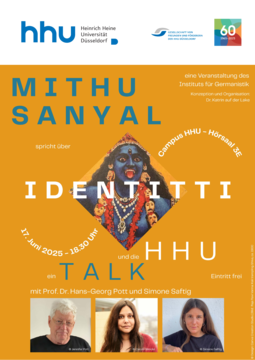
Univ.-Prof. Dr. Ricarda Bauschke-Hartung holds the Chair of Old German Literature and Language at the Heinrich Heine University Düsseldorf since 2008. She previously held professorships at Albert-Ludwigs-University Freiburg and the University of Fribourg, Switzerland, and served as Vice Rector for Academic Quality and Equality (2012-2014). Her research focuses on medieval poetry, narrative texts, and cultural transfer research, particularly exploring Romance-German relations in medieval literature. Key affiliations: Wolfram von Eschenbach Society (President since 2021, Board since 2012), Bavarian Academy of Sciences (Project Advisory Board since 2022), HHU University Council (since 2017) Research Interests : Spanning Middle High German love poetry, Walther von der Vogelweide studies, manuscript mediations, and cultural transfer mechanisms. Her work bridges editorial scholarship with theoretical approaches to intertextuality, narrative structures, and body semantics in medieval texts. She contributes to debates on historical semantics (e.g., concepts of 'arebeit', 'dienest'), poetic models, and institutional supports for young researchers. Publications highlight her expertise in textual editions, narrative theory, and comparative studies, including co-editorship of Wolfram-Studien and leadership in major colloquia series. Current projects include a new translation of Herbort von Fritzlar's Trojaroman and book projects on European medieval poetic networks. Honors : DFG Research Grant (2001-2003) FRIAS Fellowship (2008) Board member of Wolfram von Eschenbach Society (2012-) Academic Leadership : As HHU University Council member, she shapes institutional policies. Her pedagogical work includes digital resources development and supervision of student research projects, supported by a team of academic counselors and research assistants.
Elisa Carandina, HDR lecturer and Associate Professor of Contemporary Hebrew Literature at INALCO's Department of Hebrew and Jewish Studies, is a leading scholar in self-writing, gender studies, and sacrificial motifs in Hebrew literature and Israeli art. She serves as Deputy Director of CERMOM, Gender Equality Officer, and Master's Manager, integrating academic leadership with cultural critique. Education: Habilitation à Diriger des Recherches (HDR) Her research explores body politics in Miriam Oren's poetry, Bracha Seri's pseudonymic practices, and Michal Heiman's art through "horizontal genealogies"—non-linear, community-based self-narration. She pioneers intersections between graphic narratives and Jewish identity, analyzing works like Noga Melzer's There's No Place Called Home and Rutu Modan's Ha-nekes . Recent publications include the 2020 edited volume Maternal Sacrifices and the 2021 monograph La Cura dell'Accidentale , which reframes contemporary Hebrew literature through "horizontal toledot"—genealogies of suppressed stories. Her work spans 22 books , 14 peer-reviewed articles , and 4 translations , with a focus on Israeli comics, gender performativity, and biblical intertextuality. Key Contributions: Mapping female corporeal resistance in Hila Lahav's poetry Deconstructing sabra identity crisis in Yehudit Katzir's fiction Translating modern Hebrew authors (e.g., Nir Baram, Shifra Horn)
Maya Barzilai is Professor of Modern Hebrew and Jewish Culture at the University of Michigan, with primary appointments at the Frankel Center for Judaic Studies and the Department of Middle East Studies. She also maintains affiliations with Comparative Literature and Germanic Languages and Literatures. Her academic career spans teaching and research in multiple disciplines focusing on Jewish cultural production across linguistic boundaries. Her educational background includes a Ph.D. in Comparative Literature from UC Berkeley (2009) and an M.A. in Comparative Literature from Hebrew University of Jerusalem (2002). These foundations have shaped her interdisciplinary approach to studying Jewish cultural production. Barzilai's research centers on twentieth-century Hebrew, German, and Yiddish literature and cinema, with particular emphasis on cultural exchange through translation and adaptation. She explores German-Hebrew translation discourse and practice, demonstrating how literary translators engaged scriptural translation models while negotiating Jewish national culture. Her work extends to Weimar cinema, Israeli visual culture, and post-war poetics, creating a rich tapestry of comparative cultural analysis that bridges linguistic and national boundaries. Analysis of her scholarly publications reveals consistent engagement with themes of translation, cultural memory, and the intersection of Jewish identity with broader European and Middle Eastern contexts. Her work demonstrates particular strength in analyzing how literary and cinematic texts navigate the complex relationships between Hebrew, German, and Yiddish cultural spheres, with special attention to how translation functions as both cultural practice and theoretical concept. Her scholarly recognition includes: 2017 Jordan Schnitzer Book Prize in the category of Jewish Literature and Linguistics for Golem: Modern Wars and Their Monsters Honorable Mention for the Salo Baron AAJR First Book Prize While specific grant information isn't detailed in the provided materials, her award-winning publications suggest successful research funding. Barzilai teaches both undergraduate and graduate courses including 'Screening Jewish Cultures,' 'The Jewish Graphic Novel,' and 'Comics and Conflict: Reframing the Middle East' at the undergraduate level, and 'The Task of the Self-Translator' and 'Sacred Languages, Secular Translations' at the graduate level, demonstrating her commitment to mentoring across academic levels. Though specific laboratory information isn't provided in the materials, her work appears to be conducted within the intellectual communities of the Frankel Center for Judaic Studies and the Department of Middle East Studies, where she contributes to interdisciplinary conversations about Jewish cultural production across linguistic and national boundaries.
Adela Cortijo Talavera is a Professor of French literature and cinema at the University of Valencia, specializing in comics studies with a particular focus on French-language comics, their inter-media relationships with literature and film, and the work of female comics authors from the 1970s to the present. She serves as Director of the University of Valencia's Cultural Service since January 2021 and has been a member of the SM Foundation's Chair of Comic Studies since 2019. Her research interests span comics studies, French literature, graphic novels, gender studies in comics, and the analysis of female comics authors. Cortijo has made significant contributions to understanding the representation of women in comics, autobiographical comics, and the cultural significance of French bande dessinée. She has co-directed a Diploma in Comic Translation and teaches 'Gender and Identity in Comics' in the University of Valencia's Comics and Education Master's program. Cortijo's scholarly work reveals trends across comics studies with particular emphasis on gender representation, autobiographical narratives, and the visual language of comics. Her articles span from analyses of specific authors like Phoebe Gloeckner and Rachel Deville to broader cultural examinations of comics as a medium. The interdisciplinary nature of her work connects comics studies with literary theory, film studies, gender studies, and cultural studies. As an active academic, Cortijo has organized international colloquia, served on scientific committees of numerous international comics conferences, and been a visiting researcher at universities including a residency at the CIBDI in Angoulême. She has directed numerous research projects and theses on comics and has coordinated special journal issues dedicated to comics studies.
Elvira Crois is an Assistant Professor and postdoctoral researcher at the Brussels Research Centre on Innovation in Learning and Diversity (BILD) at Vrije Universiteit Brussel. Her interdisciplinary research focuses on participatory arts, climate education, and worldmaking processes for social change. She coordinates the Erasmus+ project 'Codename Seedling', exploring youth-led climate activism through arts. Her work bridges education, performance studies, and environmental advocacy. Elvira holds a joint PhD from the University of Antwerp (Theatre and Intermedia) and Vrije Universiteit Brussel (Adult Educational Sciences). Her doctoral thesis examined performer training in participatory theatre, using second-person ethnography to analyze audience-performer dynamics. She also leads the 'Worldmaking' community of practice, fostering collaborations between arts educators and social justice practitioners. Her research interests include climate justice pedagogy, participatory methodologies, and the role of creativity in youth activism. She has coordinated EU-funded projects across Belgium, Denmark, the UK, Portugal, and France, emphasizing arts-based advocacy tools and impact-driven strategies. Key Projects: Codename Seedling (Climate Justice), Wave Makers (Youth & Ocean Health) Grants: Erasmus+ KA2, Erasmus+ Youth in Action Professional Roles: Erasmus+ Project Assessor, Apaya Network Member Elvira’s work extends to public engagement through comics (e.g., 'Cave Comic') and innovative educational resources. She advocates for 'slow science' approaches to counter academic pressures, emphasizing collaborative and reflective research practices.
Jonas Bakken is a Professor of Norwegian Didactics at the Department of Teacher Education and School Research, University of Oslo. His work bridges rhetoric, children's literature, and sustainable development education through innovative didactic approaches. As academic director of the Associate Professorship Program, he shapes teacher education and curriculum design. Research Interests: Norwegian language arts, rhetoric integration in education, ecocriticism, multicultural narratives, and bilingual pedagogy. Projects: Evaluation of bilingual education (ETOS), Linking Instruction and Student Experiences (LISE), Scandinavian Narratives of Guilt and Privilege (Scanguilt), Minority Literary Voices in Scandinavia. Publications span textbook analysis, rhetorical strategies in Sámi literature, CLIL education equity, and oral creativity pedagogy. His recent works focus on task culture conflicts and curriculum renewal in Norwegian language arts.
Jeff Mitscherling is a Professor of Philosophy at the University of Guelph, specializing in phenomenology, hermeneutics, ancient philosophy, and aesthetics. His research explores the intersection of realist phenomenology with cognitive science, particularly through the works of Aristotle and early phenomenologists like Ingarden and Reinach. He holds degrees from the University of California, Santa Barbara (B.A.), McMaster University (M.A.), and the University of Guelph (Ph.D.). His research interests include the ontological foundations of Aristotle's philosophy, intentional being, and the historical development of cognitive concepts. He has published extensively on topics such as the nature of art, literary criticism, and Platonic dialogues. Notable works include Aesthetic Genesis (2010) and The Image of a Second Sun (2009), which critically engage with classical and modern philosophical frameworks. His scholarly contributions span hermeneutic theory, ancient philosophy, and the philosophy of art. Though no awards are explicitly listed, his prolific publication record reflects significant academic impact. His teaching and research emphasize interdisciplinary dialogue between historical philosophy and contemporary cognitive inquiry.
Jean-Marc Vercruysse is a Lecturer in Latin language and literature at the University of Artois , specifically within the College of Letters and Arts . He serves as the academic director of the master's program in "Teaching, Education and Training Professions" and as Director of Artois Presses Université since 2019. His research focuses on patristic hermeneutics, Donatism, and biblical intertextuality, with particular interest in figures like Tyconius, Paulinus of Nola, and Leo the Great. He has co-edited and directed the Graphè collection, publishing works such as La Résurrection de Lazare (2017) and Les Tentations du Christ (2021). His scholarly activities include organizing international colloquia and serving as a substitute member of the 8th section (Ancient Languages and Literatures) of the Conseil National des Universités (CNU). Current affiliations include membership in the International Association of Patristic Studies , the Institute for the Study of Religious Facts , and associate membership at HALMA UMR 8164 . He co-directs the Graphè collection and has contributed to the Brill Encyclopedia of Early Christianity with entries on Cresconius and Tyconius.
Dr Alexandra Lloyd is Lecturer in German at the University of Oxford, Fellow by Special Election in German at St Edmund Hall, and Stipendiary Lecturer in German at Magdalen College and University College. She specializes in German language and literature from the mid-eighteenth to the twenty-first century, with a focus on post-1945 literature and film. Education: DPhil, University of Oxford (2012) MSt, University of Oxford PGCE, University of Oxford BA, University of Oxford Research Interests: Her research centers on post-1945 German literature and film, cultural memory, childhood and youth under Nazism, and intersections between literature and visual culture. She explores how contemporary German culture engages with traumatic pasts, particularly through the lens of childhood and memory. Her work also delves into translation studies, especially the relationship between language, music, and performance. Publications Overview: Lloyd has published extensively on German literature, film, and cultural memory. Her recent articles examine themes such as war trauma in graphic novels, cinematic representations of childhood, and the role of museums in shaping narratives of National Socialism. Her work often bridges literary analysis with visual culture and material history. Awards and Recognition: Teaching Excellence Award, Oxford University Humanities Division (2019) Teaching and Mentoring: Lloyd teaches German language and literature across a wide historical range, with particular emphasis on post-1945 works. She has designed courses on post-Wende literature, women's writing, and cultural memory. She is actively involved in mentoring and collaborating with students, including through translation workshops and research projects like the Oxford German Network and the White Rose awards. Collaborations and Outreach: She is a member of the Oxford Bach Soloists and has collaborated on projects such as Music in Monasteries and Leaping from the Edge of the World , a film about German writer Ulrike Draesner. She also contributes to public engagement through University of Oxford podcasts and short films.
Enrique Tellez-Espiga is an Associate Professor in the Department of Languages and Linguistics. He teaches a comprehensive range of Spanish courses, including beginning and intermediate levels (e.g., Spanish Conversation - SPA 301) and specialized upper-division courses such as Spanish Narrative and Film in Democratic Spain (SPA 370) and History on the Big Screen: Spanish History and Culture in Film (SPA 470). Additionally, he serves as an academic advisor for students pursuing minors in Spanish. Education: BA in English - Universidad de Salamanca MA in Spanish Literature - Florida Atlantic University PhD in Romance Studies (Spanish) - University of Miami Research Focus: Dr. Tellez-Espiga's scholarship examines the interplay between urban environments, cultural memory, and narrative forms in contemporary Spain. His interdisciplinary approach bridges literary analysis, film criticism, and spatial theory, with emphasis on: Representations of Madrid as a symbolic space reflecting historical trauma Cinematic and literary engagements with Spain's democratic transition Socio-political dimensions of urban renewal and gentrification Memory construction through metafiction and archival reinterpretations Publications Overview: His research output (2012-2022) demonstrates consistent focus on Spanish historical memory and urban transformation. Dominant themes include cinematic reconstructions of Madrid, ethical examinations of state violence, and innovative narrative strategies in addressing Civil War legacies. Methodologically, his work combines cultural studies frameworks with close analysis of texts by key figures like Almodóvar, Grandes, and Martín Patino. Student Advising: Actively mentors undergraduate students pursuing Spanish minors, providing academic guidance and curriculum planning support.