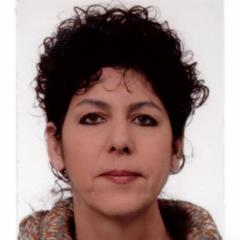
María Isabel Lamas Galdo is a researcher and academic at the Ferrol Polytechnic School of Engineering , University of A Coruña (UDC) , specializing in Thermodynamics and Energy Systems . With over 15 years of experience, she focuses on Computational Fluid Dynamics (CFD) applications for marine energy , refrigeration , and sustainable engineering . Teaching: Thermodynamics, Refrigeration, Heat Transfer Research: Energy sustainability, Offshore systems, CFD modeling Her work spans renewable energy , marine technology , and industrial thermodynamics , with CFD simulations being a core methodology. Recent projects analyze hydrogen charging and biomass conversion for energy systems. Key grants include funding from the Ministry of Science and Innovation (2020-2023), European Union (2017-2023), and Xunta de Galicia (2016-2021). She coordinates the Mixed Engineering Research Group and has supervised multiple Master's and PhD theses on topics like offshore wind turbines and electric propulsion systems.
Timothee Pourpoint is a Professor in the School of Aeronautics and Astronautics at Purdue University. His research focuses on rocket propulsion systems, including hybrid rockets, hypergolic fuels, and combustion instability analysis. He is affiliated with the Purdue Altitude Chamber Facility, contributing to propulsion testing and diagnostics, and collaborates with Purdue's Mechanical Engineering department. Research Interests: Rocket propulsion and hybrid rocket engine design Hypergolic fuel characterization and ignition mechanisms Combustion instability diagnostics Advanced propulsion testing facilities Key Contributions: Development of dual-mode propulsion systems, characterization of mixed oxides of nitrogen, and 3D-printed catalyst bed technologies. Email: timothee@purdue.edu
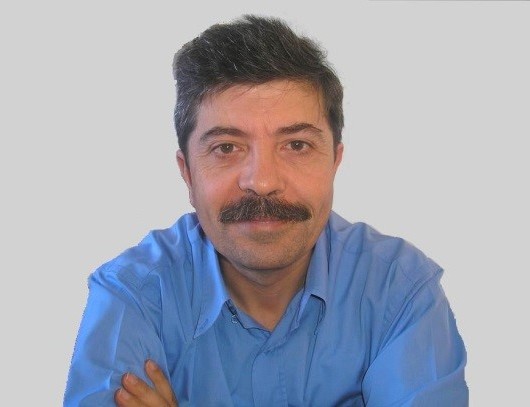
Firat Bolat is an Assistant Professor in the Department of Marine Engineering at Istanbul Technical University, Faculty of Maritime. His research focuses on maritime safety, regulatory compliance, and environmental sustainability in shipping operations. His research interests include Port State Control, Paris Memorandum of Understanding, human error probability in maritime operations, energy efficiency design index (EEDI), CO₂ emission reduction, and risk assessment in maritime transport. These themes are central to improving safety, compliance, and environmental performance in the global shipping industry. The recent publications show a consistent focus on data-driven analysis of maritime regulations, human factors in cargo operations, and environmental performance of ships. His work bridges engineering solutions with policy evaluation, particularly in the context of Turkish-flagged vessels and international maritime standards. Sasakawa Fellowship (2016) Firat Bolat has been involved in advising graduate students, with two theses currently in progress under his supervision. His research is supported by active participation in interdisciplinary projects such as the MAR-LSD initiative, which aims to transform maritime education through innovative learning station design. He has contributed to studies analyzing port state control detentions, cybersecurity in navigation systems, and emission trends in shipping. He is part of a research team working on maritime safety and training innovations, collaborating on projects that integrate engineering analysis with educational transformation and regulatory assessment. His work contributes to both academic knowledge and practical improvements in maritime operations and policy.
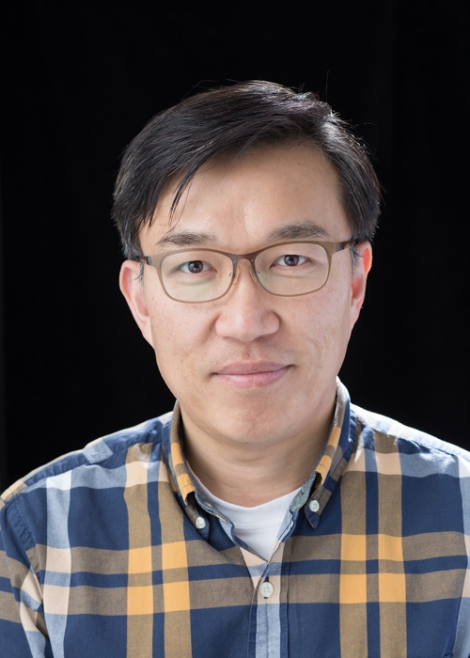
Dr. Ok-Youn Yu is a Professor and current Department Chair of the Department of Sustainable Technology and the Built Environment at Appalachian State University, where he has been a faculty member since 2010. He holds a Ph.D. in Civil Engineering from Texas A&M University and brings both academic excellence and five years of industry experience as a bridge and tunnel engineer to his role. Ph.D., Civil Engineering, Texas A&M University, 2009 M.S., Construction Management, Texas A&M University, 2005 B.S., Civil Engineering, Konkuk University, Seoul, Korea, 1999 Dr. Yu’s research focuses on advancing sustainable technologies in civil infrastructure, particularly through the integration of UAVs (drones) in construction surveying, erosion monitoring, and building energy analysis. His work also spans sustainable energy systems such as biomass heating and landfill gas monitoring, alongside infrastructure sustainability, remote health monitoring, and natural hazard early warning systems. He applies advanced decision-making tools like Bayesian networks, influence diagrams, and life cycle assessment to project risk management and optimal modeling. His recent publications reflect a strong trend toward interdisciplinary innovation, combining remote sensing, data analytics, and sustainable design. These works span applications in construction accuracy, energy-efficient buildings, and resilient infrastructure. The integration of Building Information Modeling (BIM) and 4D CAD into energy performance management is another key theme. Dr. Yu has successfully secured nearly $2 million in research funding from prestigious agencies including the National Science Foundation (NSF), Environmental Protection Agency (EPA), U.S. Department of Agriculture (USDA), North Carolina Department of Transportation (NCDOT), and the North Carolina Department of Agriculture and Consumer Services. He has mentored over 30 graduate students and numerous undergraduates, fostering the next generation of sustainable technology leaders. He leads multiple research initiatives including UAV-based monitoring, sustainable energy systems, and web-based early warning platforms for infrastructure. His lab supports hands-on student research in drone technology, energy modeling, and risk analysis.
Prof. Agostino Gambarotta is a Full Professor at the Faculty of Engineering of the University of Parma, Italy, and Director of the Center for Energy and Environment (CIDEA) since 2024. He holds a PhD in Energetics from Milan Politechnic (1990) and has been affiliated with the University of Parma since 2002. Research Focus: His work spans two core areas: Energy Systems Optimization – developing mathematical models for energy grids, cogeneration, renewable integration, and storage systems to enhance efficiency and reduce environmental impact; Internal Combustion Engines – advancing control strategies, emissions reduction, and real-time simulation methodologies for automotive applications. Professional Engagements: Gambarotta is a member of SAE, ASME, and IFAC, and serves as a reviewer for journals like Applied Energy and Fuel . His teaching includes courses on energy systems and environmental impact across mechanical engineering and environmental resource programs.
Professor Farid Christo is an Adjunct Professor at RMIT University's School of Engineering. His research focuses on combustion engineering, thermal plasma technology, sustainable energy systems, and biomedical applications. He is actively involved in supervising Masters and PhD students. His work spans topics such as hydrogen combustion optimization, environmental-friendly fuel production, and plasmonic nanomaterials for energy conversion. He has contributed to advancements in chemical looping processes, thermal plasma-driven metal recycling, and CO2 utilization.
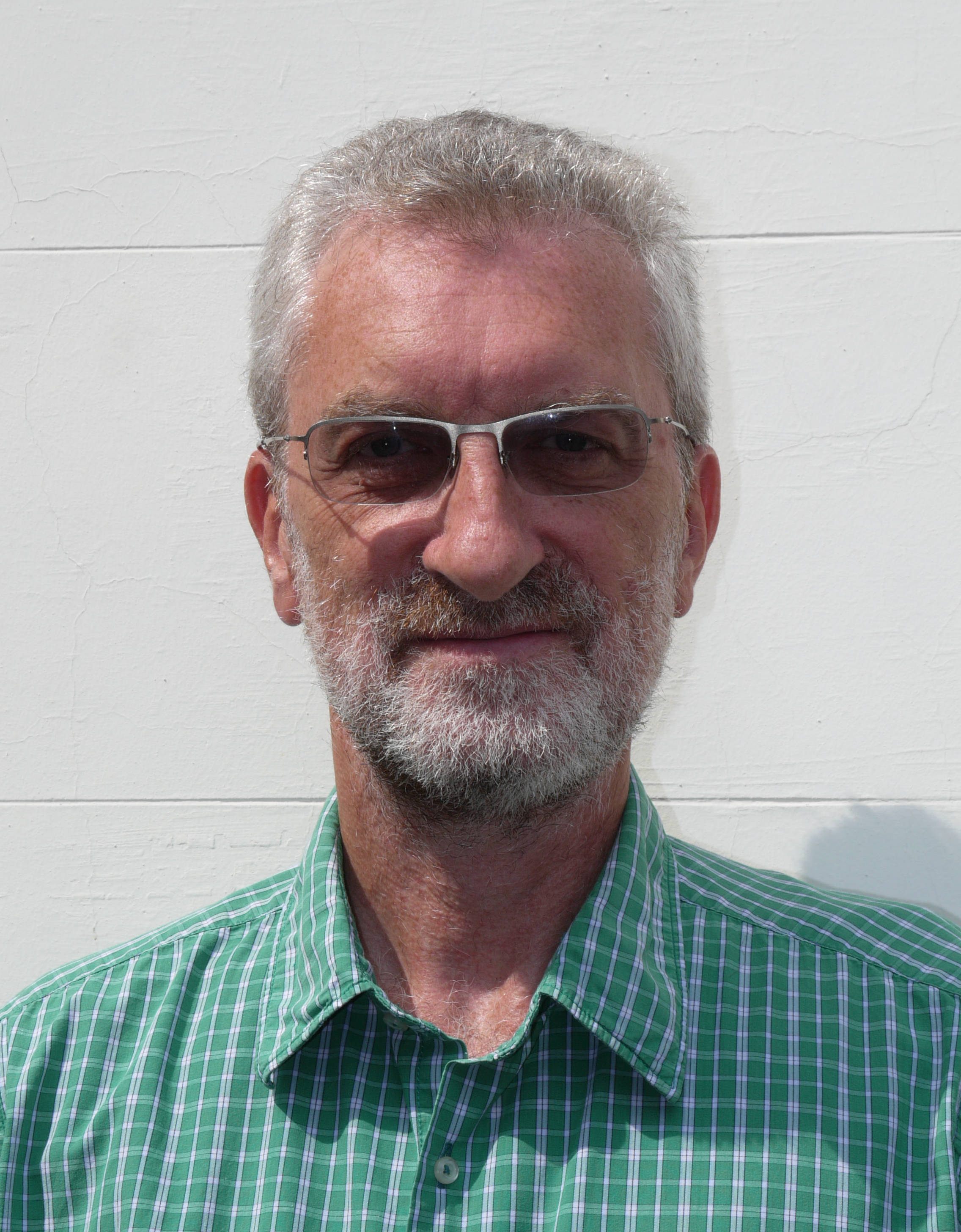
Jacobus B.W. Kok serves as an Associate Professor in the Department of Thermal Engineering within the Faculty of Engineering Technology at the University of Twente. His academic career spans over three decades with significant contributions to combustion engineering and acoustics research. His research focuses on combustion dynamics , thermoacoustic instability , and swirl burner technology , with particular expertise in pressurized combustors, flame transfer functions, and acoustic characterization methods. Current work emphasizes multiscale analysis of combustion systems using advanced computational techniques including Proper Orthogonal Decomposition and Large Eddy Simulation. Recent publications demonstrate strong emphasis on practical industrial applications including hot blast stove optimization, gas turbine combustor design, and droplet combustion analysis. His work bridges fundamental combustion science with engineering solutions for energy systems. Principal investigator for multiple combustion research projects Supervised 19 graduate research projects Active participant in international combustion conferences Collaborator in European research networks (e.g., MAGISTER ITN) Kok maintains active research collaborations across European institutions with recent work involving pressurized combustion systems, acoustic diagnostics, and industrial furnace optimization. His laboratory utilizes advanced computational tools and experimental datasets for combustion analysis.
Masahiro Furutani is a Professor at the Department of Electrical and Mechanical Engineering, Graduate School of Engineering, Nagoya Institute of Technology. His career spans decades in thermal engineering and combustion analysis, focusing on spark ignition systems, lean fuel combustion, and emission control technologies in internal combustion engines. Education: Doctor of Engineering, Nagoya Institute of Technology (1992) Research Focus: Furutani's work addresses advanced combustion mechanisms in engines, particularly analyzing flame propagation, ignition characteristics, and thermal efficiency in homogeneous lean charge and HCCI systems. His studies explore chemical kinetics, multi-point ignition, and NOx reduction strategies. Scientific Awards: 2017 Japan Society of Mechanical Engineers Medal for Outstanding Paper 2018 Japan Marine Engineering Society Award for Papers
Andrea Francesco Cattanei serves as a Full Professor in the Department of Mechanical, Energy, Management and Transport Engineering (DIME) at the Polytechnic School of the University of Genoa. He holds dual administrative roles as a Member of the School Council for the Polytechnic School and Member of the Department Board for DIME, demonstrating significant institutional leadership within the university structure. Professor Cattanei's research expertise centers on fluid dynamics and turbomachinery, with specialized focus on axial fan systems and unsteady flow phenomena. His methodological approach integrates advanced computational fluid dynamics (CFD) simulations with rigorous experimental validation, particularly examining leakage flow characteristics under variable operational conditions. Key research domains include: Leakage flow dynamics in rotating machinery Unsteady aerodynamic phenomena in turbomachinery CFD modeling of low-speed axial fans Experimental characterization of fan performance Rotating shroud effects on flow stability Thermal-fluid interactions in energy systems Analysis of his 2021-2023 publications reveals a concentrated research trajectory investigating leakage flow mechanisms in axial fans through both experimental and computational lenses. His work consistently addresses critical challenges in fan aerodynamics, emphasizing unsteady flow behavior and performance optimization under variable loading conditions, with direct applications to energy-efficient turbomachinery design. No scientific awards or honors are documented in the provided materials. Professor Cattanei teaches core mechanical engineering courses at the graduate level including Machines, Heat Transmission and Machines, Turbomachines, and Internal Combustion Engines and Turbomachines across multiple Master's programs. His teaching portfolio demonstrates deep integration between theoretical principles and practical engineering applications in fluid machinery design. No information regarding research grants or graduate student supervision is available in the current documentation. His academic activities are centered within the Department of Mechanical, Energy, Management and Transport Engineering, where he contributes to both the Design and Production track and the Energy and Aeronautics specialization through his teaching and research initiatives.
Prof. Muammer ÖZKAN serves as Professor and Head of the Department of Mechanical Engineering at Yıldız Technical University's Faculty of Mechanical Engineering. He has held academic positions since 1990, progressing from Research Assistant to his current Professorship since 2015, with additional leadership as Head of Department since 2016. Doctorate in Mechanical Engineering, Yıldız Technical University (1992-1997) Postgraduate in Mechanical Engineering, Yıldız Technical University (1990-1992) Undergraduate in Mechanical Engineering, Yıldız Technical University (1984-1989) Prof. ÖZKAN's research focuses on automotive engineering with specialization in internal combustion engines, particularly diesel engine optimization, emission control, and fuel efficiency. His work extensively covers vehicle dynamics, brake systems, and energy balance analysis, with significant contributions to understanding the effects of multiple injection strategies on engine performance and emissions. He has pioneered research on biodiesel applications and developed advanced modeling techniques for public transportation systems. His publication record shows consistent research output with 15 recent articles (2020-2024) demonstrating strong focus on emission reduction strategies, low-temperature combustion techniques, and optimization of public transportation systems. His work combines experimental investigation with advanced computational modeling, including artificial neural networks and 3D road geometry approaches for fuel consumption modeling. Prof. ÖZKAN has supervised 33 theses (doctoral and postgraduate) and led numerous research projects, including TÜBİTAK-funded initiatives on diesel engine modernization and Euro6 heavy-duty engine development. His work has significant practical applications in urban transportation emissions reduction and sustainable vehicle technologies.
Vamvouka Despina is a Professor at the Laboratory of Solid Fuel Refining and Technology within the Department of Mineral Exploitation at the School of Mineral Resources Engineering , Technical University of Crete. Her academic activities focus on clean energy technologies and solid fuel processing. Undergraduate Courses: Coal Refining (MOP 412), Solid Fuel Utilization Technologies (MOP 517) Postgraduate Courses: Environmental Control in Energy Production (G&P 314), Biomass, Bioenergy and Environment (1601 GE0176) Research Interests center on solid fuel technologies , including: Pyrolysis, combustion, and gasification processes Kinetic studies using TGA/DTG analysis Mathematical modeling of thermal processes Pollutant emission reduction techniques Corrosion/deposition mitigation in boilers Physical and chemical fuel quality upgrading Her recent publications demonstrate expertise in biomass gasification , waste-derived adsorbents , and hydrogen production from organic residues. Research grants include projects focused on clean fuels optimization and climate change mitigation technologies .
Professor Galetakis Michael is affiliated with the Technical University of Crete , specifically the School of Mineral Resources Engineering and the Mining Technology Department . His research focuses on quality control of mineral raw materials, health and safety in mining, geostatistics, neural networks, and environmental risk assessment. Quality control of aggregates, construction materials, and solid fuels Simulation techniques and stochastic analysis for mining systems Environmental remediation and risk management The recent publications highlight applications in mining rehabilitation , CO2 reduction , and machine learning for mineral resource estimation. Projects funded by the European Commission and other institutions include ecological rehabilitation, pit lake stability, and mining efficiency enhancements. Scientific grants include: REECOL (2023-2026): Ecological rehabilitation of post-mining areas RAFF (2019-2022): Risk assessment of flooded pits BEWEXMIN (2015-2018): Bucket wheel excavator optimization MANNFENI (2013-2015): Mathematical models for mining DURECOBEL (2013-2015): Eco-friendly building materials He is involved in the Research Unit Quality Control-Hygiene and Safety in Mining and teaches Mining Research , Health and Safety in Mining , and Quality Control courses.
Stefano Alberto Malan is a Tenured Assistant Professor at the Department of Electronics and Telecommunications (DET) , Politecnico di Torino, and a member of the CARS@PoliTO - Center for Automotive Research and Sustainable Mobility . His academic rank is Assistant Professor in the scientific disciplinary sector IINF-04/A - Systems and Control Engineering (Area 0009 - Industrial and Information Engineering). Educational Background : Laurea in Electrical Engineering (1988) from Politecnico di Torino. Control Engineer at FIAT Research Center (1988-1990). Research Interests : Stefano's work spans Automatic Control , Control Systems Engineering , and Dynamic Modeling , with a focus on model-based and sensor-based algorithms for combustion and emission control in diesel engines and Direct Virtual Sensors . He contributes to Robust Control via uncertainty model sets identification, Building Energy Management (e.g., WiFi4Energy, EcoThermo projects), and Automotive Systems (chassis dynamics, engine controls). His methodologies include Computer-Aided Control System Design using H-infinity and interval arithmetic, and Multi-objective Robustness Analysis . Article Trends : His publications since 2015 emphasize Control Systems (e.g., LiDAR for UAS precision spraying), Diesel Engine Emissions Management , Virtual Sensor Design , and Sustainable Mobility . Recent works integrate Machine Learning (e.g., recurrent neural networks) and Optimization Techniques (e.g., genetic algorithms) into automotive and energy systems. Teaching Contributions : He has taught Automotive Control Systems (2019–2025) and Automation and Planning of Production Systems (2020–2021) at Politecnico di Torino’s Master of Science in Computer Engineering . He is a member of the College of Computer, Film and Mechatronics Engineering . Patents : Co-inventor of two national patents: Gruppo contabilizzatore per impianti termici di riscaldamento o raffrescamento (2013, heating/cooling metering unit). Metering unit for heating or cooling systems (2010, PCT/IB2009/055912). Laboratories and Teams : Active in the Automatica Research Group at DET and the CARS@PoliTO center, Stefano collaborates on projects like WiFi4Energy and EcoThermo to advance sustainable mobility and energy efficiency.
Vejapong Juttijudata is an Associate Professor at the Department of Aerospace Engineering, Kasetsart University, Thailand. He earned his B.Eng. in Mechanical Engineering from Chulalongkorn University (1997), M.Sc. in Computational Fluid Dynamics and Structural Mechanics from Imperial College London (1998), and Ph.D. in Aerospace Engineering from Cornell University (2003). His career includes a postdoctoral research associate role at Princeton University (2004-2005) under Clancy Rowley, focusing on model-based cavity flow control using POD and Galerkin models. B.Eng. (1997) in Mechanical Engineering, Chulalongkorn University M.Sc. (1998) in Computational Fluid Dynamics and Structural Mechanics, Imperial College London Ph.D. (2003) in Aerospace Engineering, Cornell University His research centers on transition and turbulence physics , flow control , applied aerodynamics , CFD , and turbulence simulation . Key projects include Flow Control for Turbulent Drag Reduction , aiming to develop active/passive control techniques via DNS, and Transition and Dynamics of Turbulent Spots , studying transition physics in compressor blades. He also investigates coherent structures in turbulent boundary layers , focusing on energy distribution, roughness effects, and interactions with rotation. His publications (15 most recent) span topics like turbulent drag reduction, cavity flow control, rotating ducts, and geometric uncertainty in pump design. Techniques include DNS, POD, LES, and k-ε modeling. Collaborators include researchers from KMUTT, NECTEC, Chiang Mai University, and international institutions. Royal Thai Government Scholarship for graduate study He advises graduate students and collaborates with faculty members. Teaching areas include Fluid Mechanics , Aerodynamics , Viscous Aerodynamics , Turbulent Flows , Gas Dynamics , Computational Fluid Dynamics , and Numerical Methods .
Heinz Pitsch is a Professor at the Institute for Technical Combustion at RWTH Aachen University. His research focuses on combustion science, particularly in hydrogen flames, NOx formation, and the application of artificial intelligence in fuel design. He is actively involved in computational fluid dynamics (CFD) and reaction kinetics, addressing challenges in renewable fuels and turbulent combustion. Research Trends : His recent publications highlight advancements in modeling turbulent premixed flames, hydrogen combustion under microgravity, and AI-driven fuel optimization. Key themes include thermodiffusive instabilities, soot formation mechanisms, and radiation effects in laminar flames.