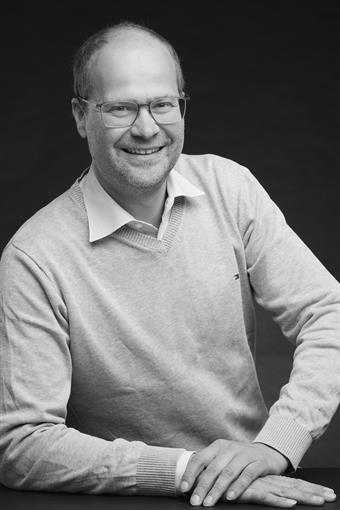
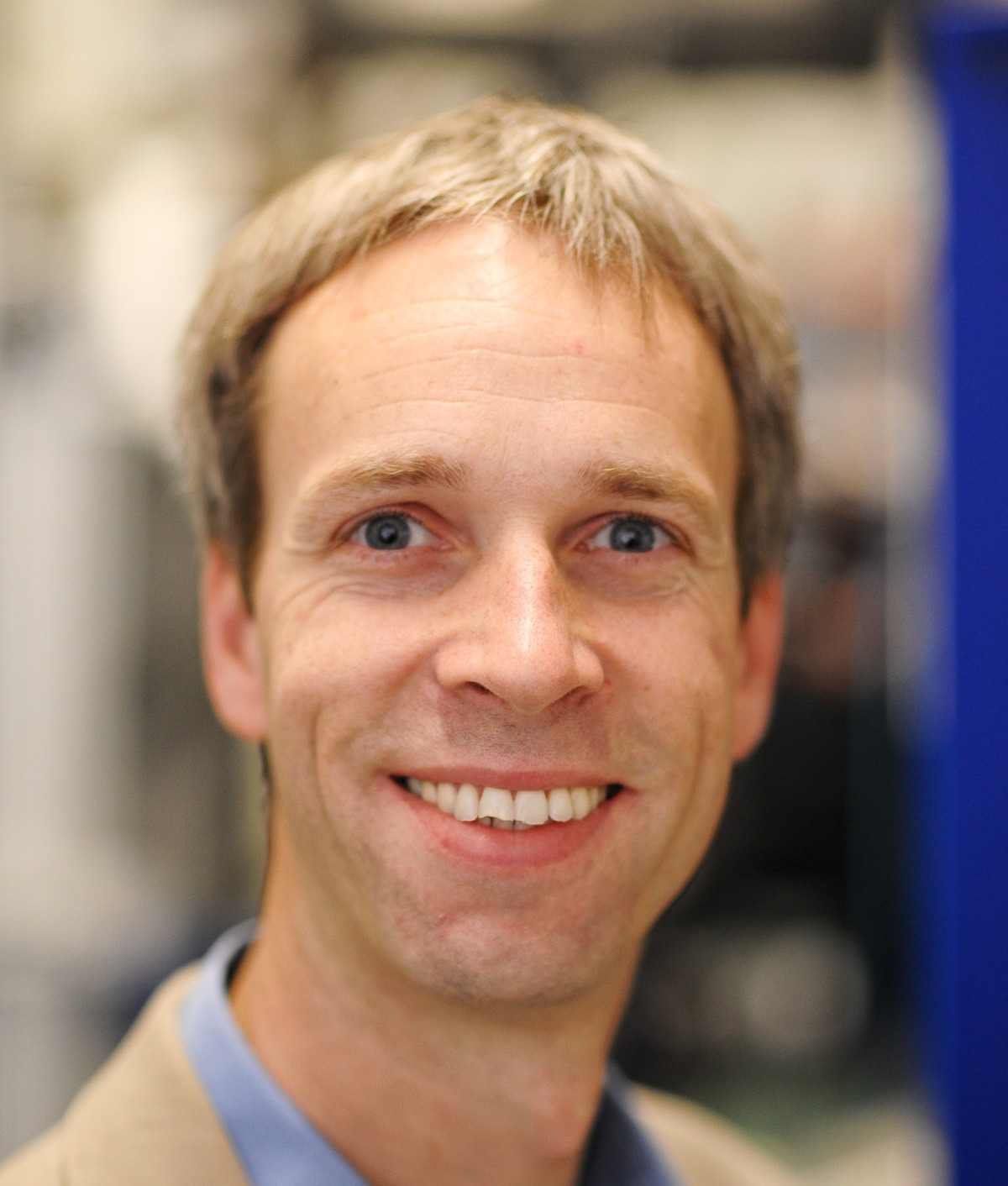
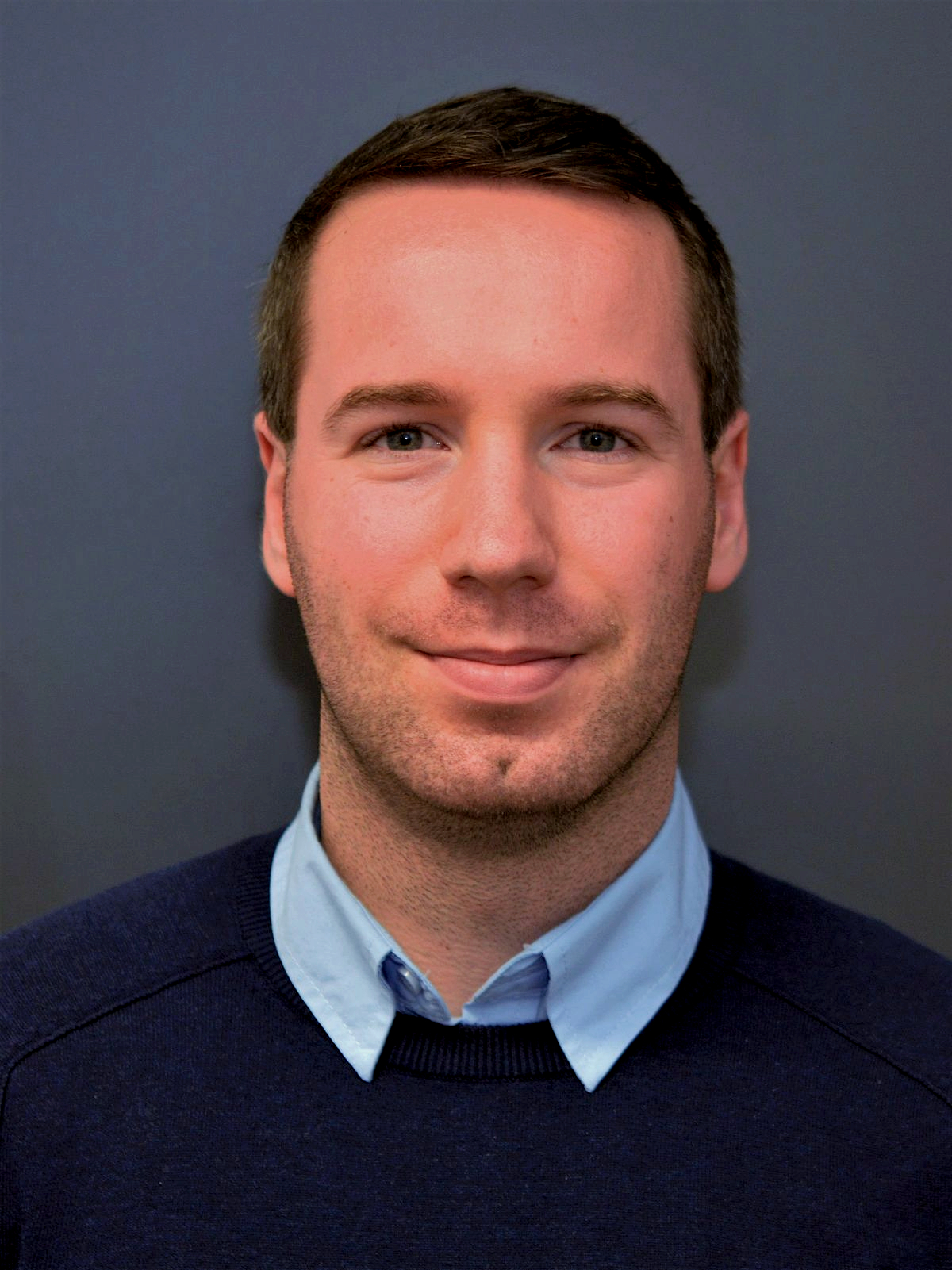
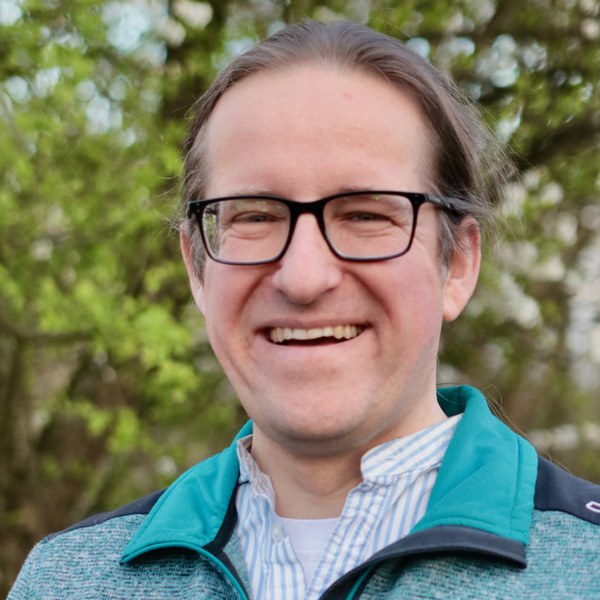
Prof. Waldemar Kolanus leads the Molecular Immunology and Cell Biology department at the University of Bonn's Life & Medical Sciences Institute (LIMES) . His research bridges immunoregulation , stem cell dynamics , and metabolic stress responses in immune cells. Unit 2 member at LIMES Principal investigator in SFB 704 and ImmunoSensation Cluster Leads a multidisciplinary lab with postdocs, PhD students, and technical staff His work focuses on intracellular signaling pathways connecting immune activation to tissue homeostasis, particularly through: Cytohesin proteins in integrin-mediated adhesion and migration TRIM71 in stem cell regulation and congenital hydrocephalus High-salt environments affecting macrophage function Publication trends show expertise in immune cell migration , genetic models , and chemical inhibition , with frequent use of mice and zebrafish for in vivo studies. Key articles explore: TRIM71's dual role in auditory development and germ cell maintenance Cytohesin family's Golgi regulation and insulin signaling Ruxolitinib's off-target migration inhibition of dendritic cells Contact details: Address: LIMES Institute, Carl-Troll-Straße 31, Bonn Email: kolanus.sekretariat@uni-bonn.de Phone: +49 228 73-62788
Dr. Oleksandra Kliuieva - Research Profile Oleksandra Kliuieva is a Ukrainian researcher and PhD candidate at the Chair of Combustion Engines and Drive Technology within the Friedrich List Faculty of Transport and Traffic Sciences at TU Dresden. Her current research focuses on alternative fuels, particularly methanol (M100), and the optimization of three-way catalytic converters for methanol-powered vehicles. She holds a DAAD scholarship extended until September 2025, following a prior DBU grant. Education and Background PhD candidate at TU Dresden (since 2024) Former research at Technical University of Košice (Slovakia) under the Slovak National Scholarship Program Previous research in Ukraine on heat spokes in cars to reduce emissions during cold starts Research Interests Kliuieva’s work addresses sustainable transportation through: Development of methanol as a cost-effective, CO₂-neutral fuel Improving catalytic converter efficiency for alternative fuels Reducing emissions in automotive systems Her findings contribute to EU and global efforts to standardize alternative fuels like methanol, with applications in field trials (e.g., China). Awards and Grants DAAD Scholarship Extension (2024–2025) DBU Scholarship (2023–2024) Advising and Grants Currently pursuing her doctoral studies in Dresden, Kliuieva has transitioned from Ukraine to Slovakia and Germany, supported by academic scholarships. She emphasizes the role of interdisciplinary collaboration in advancing clean energy solutions. Labs and Teams Active within the Chair of Combustion Engines and Drive Technology at TU Dresden, collaborating with experts in automotive engineering and environmental technology.
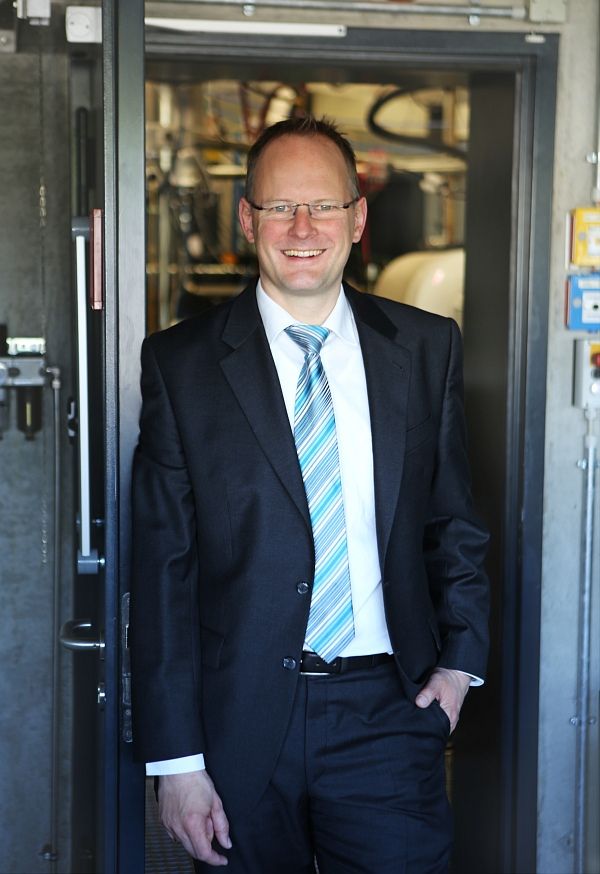
Prof. Dr.-Ing. Ralf Beck serves as Professor for Control and Regulation Technology and Automation Technology at Hochschule Düsseldorf University of Applied Sciences within the Faculty of Electrical Engineering & Information Technology. His academic responsibilities span multiple degree programs including BEng Electrical Engineering, BEng Industrial Engineering, and MSc Electrical Engineering and Information Technology. His educational background includes Mechanical Engineering studies at TU Braunschweig (1998-2004), followed by doctoral research at RWTH Aachen's Institute of Control Engineering where he earned his Dr.-Ing. in 2010 with a dissertation on predictive energy management for hybrid vehicles. Prior to his current professorship, he held progressive roles at FEV Europe GmbH from 2009-2018, culminating as Senior Project Manager for Vehicle and Powertrain Electronics. Beck's research focuses on control engineering systems with particular emphasis on automation technology, regulation systems, and model-based development approaches. His work bridges theoretical control methodologies with practical automotive applications, especially in hybrid vehicle energy management, multi-robot systems, and intelligent air path control. The Modellfabrik Fab21 serves as his primary experimental platform for model-based development applications. His publication record since 2005 demonstrates consistent contributions to control engineering, particularly in hybrid vehicle systems, emission control optimization, and calibration methodologies. Recent work shows increasing focus on distributed robotics and intelligent transportation systems, reflecting evolving research directions while maintaining core expertise in control theory applications. As an educator, Beck teaches foundational and advanced courses including Electrical Engineering III, Control and Regulation Technology, Model-Based Development, Technical Mechanics, and Advanced Control Engineering at the Master's level. His teaching integrates theoretical concepts with practical laboratory applications through the university's Moodle platform, emphasizing hands-on implementation of control algorithms and system modeling techniques.
Kai Leonhard is an Adjunct Professor at the Chair of Technical Thermodynamics , RWTH Aachen University. His research focuses on computational chemistry, thermodynamics, and molecular modeling, particularly in solvent design and reactive chemical processes. Department: Chair of Technical Thermodynamics Email: kai.leonhard@ltt.rwth-aachen.de Prof. Leonhard's work integrates quantum chemistry with computer-aided molecular and process design (CAMD/CAPD), emphasizing solvation thermodynamics, reaction kinetics, and machine learning applications. His projects span biofuel combustion, microgel synthesis, and sustainable solvent development. Recent publications highlight advancements in COSMO-RS-based solvent screening, reaction network exploration via ChemTraYzer-TAD, and multi-fidelity modeling for partition coefficients. He employs machine learning to enhance predictive thermodynamic models and optimize chemical processes.
Jens von Wolfersdorf is a Professor at the University of Stuttgart's Faculty of Engineering, Department of Mechanical Engineering. His research focuses on advanced thermal management systems for high-speed aerospace applications, particularly in the areas of heat transfer, fluid dynamics, and combustion. He specializes in experimental and numerical methods for analyzing complex flows in rotating and stationary cooling channels, transpiration cooling for rocket engines, and turbulence modeling. His work integrates cutting-edge techniques such as thermochromic liquid crystal (TLC) measurements, particle image velocimetry (PIV), and computational fluid dynamics (CFD) to validate novel cooling configurations. Key projects include the COOREFLEX-Turbo initiative and contributions to the European ATLLAS-II program for high-speed vehicle materials. Recent studies emphasize rotational heat transfer effects in two-pass cooling channels, additive manufacturing of ribbed cooling structures, and validation of coupled FEM-CFD frameworks. His research addresses challenges in aerospace thermal protection, turbine blade cooling, and scramjet combustor efficiency. Publications span over 15 years, with a focus on transient heat transfer, flow visualization, and material characterization for transpiration-cooled systems. Collaborations involve experimental facilities for high-speed flows and advanced thermal measurement systems.
Thomas Koch is a Professor at the Karlsruhe Institute of Technology (KIT) and heads the Institute for Piston Engines (IFKM). His research focuses on improving the CO2 balance of combustion engines, eliminating emissions, and optimizing system efficiency through interdisciplinary approaches. He emphasizes collaboration between electric and combustion engine technologies, advocating for their complementary roles in sustainable mobility and energy supply. Koch’s work centers on non-fossil fuels (reFuels) such as hydrocarbons, hydrogen, and ammonia, aiming to achieve near emission-neutral combustion. His team employs optical measurement techniques, advanced simulations, and industrial partnerships to enhance engine energy conversion, exhaust aftertreatment, and residual heat utilization. He also contributes to scientific advisory boards and international conferences.
Prof. Dr.-Ing. Matthias Gaderer is a Professor of Renewable Energy Systems at the TUM Campus Straubing, Technical University of Munich. His research focuses on energy systems for heat, electricity, and fuels, with a particular emphasis on biomass, solar, and geothermal energy applications. He leads projects in combustion technologies, low-emission systems, and decentralized energy systems. Gaderer holds a doctorate from TUM and has extensive industry experience in process engineering. His work includes establishing applied biomass research at the Bavarian Center for Applied Energy Research and leading the research group 'Thermal Use of Biomass in High-Temperature Processes.' He is actively involved in committees such as the Scientific Committee of CEBC and Bavarian Science Forums. His teaching includes courses on energy systems and biomass utilization. Key projects include Reverion GmbH, FlexBioNeuro, and H2 real-world laboratory initiatives. Education: Process Engineering from TU Graz and KTH Stockholm. Research interests span thermochemical gasification, combustion technologies, and energy economics. His publications emphasize biomass gasification, hydrogen production, and sustainable energy systems. He collaborates on EU-funded projects like E2Fuels and leads teams in developing innovative energy solutions.
Prof. Sebastian Kaiser is a full professor at the University of Duisburg-Essen's Institute for Combustion and Gas Dynamics, where he leads research on reactive fluid dynamics since 2011. His academic background includes a Bachelor's from Dartmouth College, Diplomingenieur from RWTH Aachen, and PhD from Yale University, followed by postdoctoral work at Sandia National Laboratories. Research Focus: Kaiser specializes in optical diagnostics for reactive systems with emphases on: High-speed imaging of combustion processes Nanoparticle synthesis via spray-flame techniques Tribology and fluid-structure interactions Engine diagnostics using laser-based methods His work bridges experimental techniques and simulation development for energy and propulsion systems. Publication Trends: Recent articles (2023-2025) demonstrate consistent focus on advanced optical diagnostics applied to combustion systems, nanoparticle synthesis, and engine research. Key methodologies include laser-induced fluorescence, high-speed imaging, and machine learning for fluid dynamics analysis. Awards & Honors: Harding-Bliss Prize for Engineering Excellence (Yale, 2005) SAE Excellence in Oral Presentation Award (2008) NRW Returning Scientists Grant (2010) Professional Affiliations: Member of Society of Automotive Engineers (SAE) and The Combustion Institute, with extensive experimental facilities for reactive flow characterization.
Prof. Dr.-Ing. Katharina Schmitz serves as Institute Director and Vice Dean at the Institute for Fluid Power Drives and Systems, RWTH Aachen University. Her leadership within the Production Technology Cluster and extensive contributions to fluid power engineering establish her as a leading authority in mechanical engineering research and education. Her research spans fluid power systems, hydraulic component design, tribology, and physics-informed machine learning applications. She pioneers sustainable propulsion solutions through bio-hybrid fuels research while addressing fundamental challenges in polymer material behavior under hydraulic stresses. Current work focuses on carbon-neutral heavy-duty transportation, physics-based neural networks for lubrication modeling, and advanced control systems for electro-hydraulic actuators. Analysis of her 15 most recent publications reveals a dominant trend toward integrating physics-based modeling with deep learning to solve complex engineering problems. Her team consistently develops novel frameworks for cavitation prediction, flow rate determination, and material compatibility assessment - significantly advancing fluid power system reliability, efficiency, and digitalization. Scientific recognition includes: GfT Förderpreis 2023 for experimental and simulative investigation of partially hydrostatic relieved contacts in variable speed axial piston machines As head of the Institute for Fluid Power Drives and Systems, she leads cutting-edge research in sustainable fluid power technologies. The institute maintains strong industry partnerships while driving innovation in hydraulic component design, digital twins for condition monitoring, and next-generation propulsion systems through its position within RWTH Aachen's Production Technology Cluster.
Dr. Matthias Jäger is a Researcher in the Department of Fiber Photonics at the Leibniz Institute for Photonic Technology (IPHT) . His work focuses on advanced optical fiber development, particularly in doped materials and nonlinear laser dynamics. Core technologies: Thulium/Yb/Ho-doped fibers, periodic shadowing for stray light suppression, nonlinear loss management Instrumentation: High peak power laser systems, fluorescence lifetime analysis, multicore emission profiling Research interests span laser physics, materials science, and optical engineering. Recent publications highlight breakthroughs in: Directional stability control for fiber ring lasers (2021-2024) Hybrid Tm:YAG crystal-derived fiber fabrication (2022) Nanoparticle-doped optical fibers (2024) 2 µm eye-safe laser systems (2024) Pr3+-doped nanocrystal fiber integration (2024) Thulium concentration optimization for laser efficiency (2025) His work demonstrates expertise in fiber fabrication methods including: Modified Chemical Vapor Deposition (MCVD) Powder-sinter technology Molten-core processing REPUSIL fiber drawing
Prof. Dr. Christof Büskens is a Professor of Technomathematics at the University of Bremen, leading the AG Optimierung und Optimale Steuerung (Optimization and Optimal Control Group) within the Faculty of Mathematics and Computer Science . His research focuses on Optimization, Optimal Control, and their applications in industrial and real-time systems. He holds leadership roles in interdisciplinary projects such as BESTVILLE and Safety Control Center for autonomous vehicle systems, and has contributed to maritime navigation, renewable energy management, and agricultural robotics. Büskens has supervised numerous PhD and master's students, advancing topics like autonomous exploration, neural architecture search, and trajectory optimization. His work integrates advanced numerical methods with practical applications, emphasizing real-world problem-solving in dynamic systems. Key affiliations include the ZeTeM (Center for Industrial Mathematics) and collaborations with industry partners. He has led over 20 projects since 2020, addressing challenges in autonomous systems, energy systems, and robotics. His educational contributions include courses on numerical analysis and optimal control, fostering interdisciplinary training for future researchers. Büskens' expertise bridges theoretical optimization and applied engineering, with over 100 publications and contributions to software tools like the WORHP solver.
Dr. Christopher Rüger is a research group leader and habilitation candidate at the Chair of Analytical Chemistry, University of Rostock, within the Interdisciplinary Faculty Life Light & Matter. He leads the 'High-Resolution Mass Spectrometry' group and has been active in research since 2015, following his B.Sc. and M.Sc. in Chemistry from the same university. He completed his doctorate in 2018 and held a postdoctoral position at the University of Rouen, France, before returning to Rostock in 2019. Research Interests: His work focuses on developing and applying advanced mass spectrometry techniques, particularly high-resolution and FT-ICR MS, coupled with thermal analysis and novel ionization methods (photo-, laser-, chemical ionization). He investigates complex materials including petroleum, bitumen, aerosols, polymers, and combustion particulates, with applications in energy, environmental science, and materials chemistry. The trend in his recent publications shows a strong emphasis on molecular-level characterization of complex organic mixtures using hyphenated analytical techniques. His research bridges analytical chemistry with environmental, materials, and astrochemistry, particularly through collaborations on ship emissions, wildfire particulates, Titan’s atmospheric analogs, and polymer degradation. He frequently employs ion mobility spectrometry and innovative data processing to enhance structural elucidation. Scientific Recognition: No formal scientific awards or fellowships are listed in the provided texts. Advising and Grants: While no formal students are listed, Dr. Rüger leads a research group and collaborates widely. He is involved in several funded projects, including the European Network of FT-ICR MS Centers, the AerOrbi Eurostars project on aerosol photoionization, SAARUS (scrubber emissions), TBI (thermolysis reactor development), and a DFG-RFBR German-Russian collaboration on wildfire particulates. These projects reflect his interdisciplinary approach and international collaborations, particularly with the iC2MC Lab in France. Laboratories and Teams: He heads the 'High-Resolution Mass Spectrometry' research group at the University of Rostock and maintains a close collaboration with the iC2MC (International Complex Matrices Molecular Characterization) Lab at CNRS, France. His work is conducted within the Department of Analytical Chemistry, Institute of Chemistry, under the interdisciplinary umbrella of 'Life – Light – Matter,' facilitating cross-domain research.
Dr. Silviya Boycheva is a researcher in the Department of Thermal and Nuclear Power Engineering at the Technical University of Sofia, Bulgaria. Her work bridges energy systems engineering and sustainable materials development, focusing on environmental and energy challenges through innovative technological solutions. Research Interests: Her primary research areas include carbon capture using waste-derived adsorbents, utilization of coal fly ash in catalytic applications, development of 3D-printed catalysts for green chemistry, and optimization of proton exchange membrane fuel cells. She is deeply engaged in transforming industrial byproducts into functional materials for clean energy and environmental remediation. Publication Trends: Recent publications (2024–2025) highlight her focus on sustainable catalytic processes for producing γ-valerolactone—a renewable platform chemical—from levulinic acid using fly ash-based Ni-Cu zeolites. She also investigates advanced flow field designs in hydrogen fuel cells to improve efficiency and performance. These efforts reflect a strong commitment to circular economy principles and low-carbon energy technologies. Scientific Collaborations: She frequently collaborates with researchers such as Margarita Popova, Boian Mladenov, and Daniela Kovacheva, indicating active participation in interdisciplinary research teams. Advising and Grants: While no formal advisees or grant details are mentioned in the provided text, her consistent publication output suggests involvement in funded research projects and potential mentorship roles within her department. Laboratories and Research Groups: Although not explicitly stated, her work implies affiliation with laboratories focused on thermal systems, catalysis, and sustainable energy at the Technical University of Sofia, likely contributing to national and international efforts in clean energy innovation.
Lukas Arnold is a Professor and Head of the Fire Dynamics Division at Forschungszentrum Jülich GmbH, affiliated with the Institute for Advanced Simulation (IAS) and its Civil Safety Research Group (IAS-7). He holds a chair in Computational Civil Engineering at the University of Wuppertal and leads major research initiatives in fire safety science using computational methods. Research Focus: Fire Dynamics Simulation Academic Rank: Professor Key Collaborations: University of Wuppertal, DFG, BMBF His research spans fire dynamics simulation, visibility modeling in smoke environments, and flame spread prediction. He develops advanced numerical methods like CFD-based models and inverse modeling techniques for pyrolysis kinetics, smoke propagation, and material decomposition analysis. His work integrates experimental data from real-scale fires with computational tools to improve evacuation safety and risk assessment. Recent publications highlight his expertise in smoke visibility, PMMA pyrolysis, and GPU-accelerated fire simulations. He supervises PhD students in projects involving TGA experiments, multi-scale modeling, and emergency management systems. Arnold's work has been supported by third-party grants from BMBF, DFG, and State NRW, focusing on AI-driven fire modeling, high-performance computing, and disaster resilience. He organizes bi-annual summer schools on fire modeling and contributes to open-access scientific resources.
Kazuyuki Iwase serves as Associate Professor at Tohoku University's Institute of Multidisciplinary Research for Advanced Materials since April 2025, following progressive appointments as Senior Assistant Professor (2023-2025) and Assistant Professor (2019-2023). His academic journey includes postdoctoral research at Paul Scherrer Institute (Switzerland) and multiple JSPS Research Fellowships. He maintains active collaborations with prominent researchers including Prof. Itaru Honma and Prof. Takaaki Tomai. Dr. Iwase's research focuses on electrocatalysis for sustainable energy conversion, specializing in carbon dioxide reduction reaction (CO2RR) and oxygen evolution reaction (OER) systems. His work spans nanomaterials engineering, electrocatalyst design, and device integration for renewable energy applications. Key methodologies include supercritical hydrothermal processing, mechanical alloying, and machine learning optimization of electrochemical systems. His publication record demonstrates consistent high-impact output with 36 accepted articles through 2025, featuring 11 as corresponding author and 15 as first/equal-first author. Recent work explores manganese nanospinels for OER, Ag-Sn intermetallics for CO2RR, and machine learning approaches for reaction optimization, showing strong interdisciplinary connections between materials science, electrochemistry, and sustainable engineering. The 5th Symposium for The Core Research Clusters for Materials Science and Spintronics Poster Award (2021) Student Presentation Award, Chemical Society of Japan (2016) International Exchange Support Award, Electrochemical Society of Japan (2016) SIEMME Best Oral Presentation Award (2014) Dr. Iwase has secured significant research funding as Principal Investigator, including a JST PRESTO grant (¥40,000,000) for CO2 conversion research and multiple JSPS Grants-in-Aid totaling over ¥59,000,000. His academic service includes peer review for prestigious journals including Angewandte Chemie and Nature Sustainability. He maintains active international engagement through invited lectures in Japan, India, and Switzerland, focusing on nanomaterials for electrocatalysis.