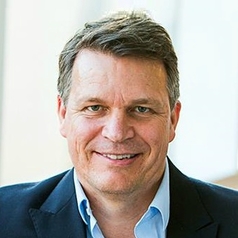
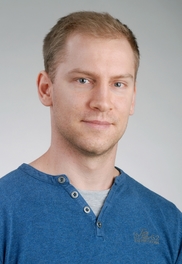
Terry D. Johnson is Senior Instructional Professor and Program Director for the Master of Engineering at the University of Chicago's Pritzker School of Molecular Engineering. He holds an MS in Chemical Engineering from MIT and is an emeritus Teaching Professor from UC Berkeley, where he co-founded the Masters of Translational Medicine program. Research integrates engineering and biomedicine, with patented innovations in tissue engineering and synthetic biology. Recent work develops sustainable textile dyeing technologies eliminating toxic reductants. Earlier projects include microfluidic hepatocyte cultures and EGF-functionalized biomaterials. Awards: Golden Apple Award for Outstanding Teaching (UC Berkeley 2010) Distinguished Teaching Award (UC Berkeley 2013) Co-authored the popular science book How to Defeat Your Own Clone . Teaches molecular engineering courses and directs master's programs bridging technical innovation and medical translation.
Michael Krivelevich is a Full Professor at the School of Mathematical Sciences, Tel Aviv University, holding this position since 2005. He previously served as Associate Professor (2002-2005) and Senior Lecturer (1999-2002) at the same institution. From 2015 to 2020, he acted as Dean of the Faculty of Exact Sciences at Tel Aviv University. Research Interests: Probabilistic and extremal combinatorics Random structures Applications of combinatorics to computer science Scientific Contributions: Authored two books: Positional Games (2014) and Random Graphs, Geometry and Asymptotic Structure (2016) Published over 200 research papers in combinatorics and related fields Editor-in-Chief of the Journal of Combinatorial Theory Series B (JCTB) Recognitions: Clay Lecturer (2019) Fellow of the American Mathematical Society (2017) Invited Speaker at ICM (2014) Pazy Memorial Award (2007) Academic Leadership: Dean of Faculty of Exact Sciences (2015-2020) Supervised 9 PhD and 16 MSc students at Tel Aviv University
Professor Michelle Cheong Lee Fong is a full-time faculty member at the School of Information Systems, Singapore Management University. She holds leadership roles as Associate Dean for Post-Graduate Professional Education and Director of the Doctor of Engineering program, and is actively involved in designing educational frameworks for technology-driven learning. Current affiliations: Singapore Management University (School of Information Systems) Research focus: Supply chain coordination, spreadsheet modeling, and educational technology Key courses taught: Computer as an Analysis Tool, Financial Modeling, Process Modeling Her research interests in supply chain coordination span strategic hub location optimization, tactical supplier coordination, and operational transportation planning. She also specializes in spreadsheet modeling for business decision-making, having developed textbook resources and case studies for logistics networks and financial planning. Recent work explores AI's role in digital education, including ChatGPT's impact on assessment design and ethical considerations in AI-driven pedagogy. The articles she has written or co-authored demonstrate expertise in operations research, educational technology, and AI applications. Topics include optimization theory, heuristic algorithms for scheduling, and digital assessment frameworks that integrate learning analytics. Her work bridges spreadsheet modeling's pedagogical value with modern challenges like ChatGPT's influence on student learning. Her teaching portfolio includes courses such as IS102 (Computer as an Analysis Tool), IS304 (Process Modeling), and FNCE645 (Financial Modeling). These courses emphasize practical skills in translating business requirements into technology solutions through spreadsheet-based analytical frameworks.
Nicholas Wormald is a Professor in the Department of Mathematical Sciences at Monash University, Australia. He joined the university in 2013 as an Australian Laureate Fellow, following a decade as a Canada Research Chair in Combinatorics and Optimization at the University of Waterloo, Canada. His primary research focuses on combinatorics, probabilistic methods, and random structures, with notable contributions to random graph theory, enumeration, and applications in optimization. Wormald holds a PhD from the University of Newcastle. His work spans topics including Hamilton cycles in random regular graphs, k-core emergence, probabilistic combinatorics, and algorithms for graph generation. He has contributed to foundational results such as the sudden emergence of giant components in random graphs and the contiguity of random graph models. He serves on editorial boards of journals like the Electronic Journal of Combinatorics and Random Structures and Algorithms . His research interests also include underground mine optimization and the study of Steiner trees. Notable projects include enumeration and random generation of contingency tables, properties of large discrete structures, and the analysis of random structures' applications. Wormald has authored or co-authored over 250 publications, with recent work focusing on asymptotic enumeration, hypergraphs, and the probabilistic analysis of combinatorial structures.
Charul Rajput is a Research Fellow at Aalto University's Department of Mathematics and Systems Analysis, School of Science. Their research focuses on Information Theory, Coding Theory, Discrete Mathematics, and Algebra, with a particular emphasis on caching systems and network optimization. Recent work includes advancements in hierarchical coded caching, hotplug models, and error probability analysis in communication channels. Publications span topics like function-correcting codes, private information retrieval, and locally recoverable codes. Rajput's research also intersects with systems analysis, addressing challenges in distributed storage and network efficiency. Research interests include the theoretical foundations of coding and information theory, with applications to modern communication systems. Key contributions address the design of efficient caching schemes and error-correcting codes for high-performance networks. No scientific awards or grants are explicitly mentioned in the provided texts. Rajput is affiliated with the Algebra and Discrete Mathematics research group at Aalto University, contributing to interdisciplinary projects that bridge pure mathematics and practical network systems.
Jeffry Kahn is a Professor of Mathematics at Rutgers, The State University of New Jersey, within the Department of Mathematics. His research focuses on discrete mathematics and related areas, with particular emphasis on combinatorics, graph theory, and probability. He holds an office in Hill Hall (HLL-728) on the Busch Campus. His work spans foundational contributions to extremal combinatorics, random graph theory, and probabilistic methods. Kahn has co-authored influential papers on threshold phenomena, phase transitions in statistical mechanics models, and structural properties of discrete systems. Notable contributions include resolving Borsuk's conjecture and advancing understanding of random matrix singularity probabilities. He teaches advanced courses such as Combinatorics II (642.583), emphasizing problem-solving and rigorous proofs. His research interests exhibit a cohesive thread in exploring combinatorial structures under probabilistic and extremal frameworks. Recent works address Shamir’s Problem asymptotics, maximal independent sets in hypercubes, and threshold conjectures. His articles often intersect with theoretical computer science, revealing interdisciplinary insights. Despite no explicitly listed awards, his publications in top journals like Annals of Mathematics and Combinatorica underscore his academic impact. His advising focuses on graduate-level combinatorial research, with courses structuring students via problem sets requiring precise, efficient solutions.
Ted Ralphs is a Professor of Industrial and Systems Engineering at Lehigh University’s Rossin College of Engineering. He serves as co-founder and director of the Computational Optimization Research at Lehigh (COR@L) Laboratory, and chairs the INFORMS Computing Society. His research focuses on large-scale computation and optimization, bridging theoretical and practical applications through high-performance computing and mathematical techniques. Ralphs holds a Ph.D. in Operations Research from Cornell University and advanced degrees in Mathematics and Applied Mathematics from Carnegie Mellon University. His expertise spans Supply Chain Management, Grid Computing, Mathematical Optimization, Financial Engineering, and Algorithm Development. He teaches courses in computational methods, discrete optimization, financial optimization, and algorithms in systems engineering. Ralphs has received notable honors including the 2021 Rossin College Outstanding Doctoral Student Advising Award and election as an INFORMS Fellow in 2023. His research contributions include advances in bilevel optimization, decomposition methods, and open-source optimization software (e.g., COIN-OR’s Cbc solver). He has led collaborative projects such as a Naval grant-funded initiative with the University of Pittsburgh on bilevel optimization. Ralphs’ work emphasizes scalable algorithms and their real-world applicability in energy markets, logistics, and combinatorial problems.
Luis Barba is a Research Fellow in the Machine Learning and Optimization group at École Polytechnique Fédérale de Lausanne (EPFL), Switzerland, working under Professor Martin Jaggi. He completed his PhD through a cotutelle program between Carleton University, Ottawa and Université Libre de Bruxelles, Brussels, supervised by Professors Stefan Langerman, Jit Bose, Pat Morin and Vida Dujmović. Prior to that, he earned his master's degree at Universidad Nacional Autónoma de México (UNAM) under Professor Jorge Urrutia. Dr. Barba's research spans computational geometry, algorithms, graph theory, and more recently, machine learning and optimization. His work addresses fundamental problems in geometric data structures, Voronoi diagrams, graph coloring, and distributed learning. He has made significant contributions to understanding time-space trade-offs in geometric algorithms and developing efficient methods for problems like geodesic Voronoi diagrams and dynamic graph coloring. Dr. Barba's publication record demonstrates a clear evolution from theoretical computational geometry to practical applications in machine learning. Early in his career, he focused on fundamental geometric problems including linear-time algorithms for geodesic Voronoi diagrams and efficient convex hull computation in polygonal domains with obstacles. More recently, his work has shifted toward machine learning, where he has developed novel optimization techniques for distributed and federated learning settings, including implicit gradient alignment methods and multilayer lookahead approaches. Dr. Barba has published extensively in top-tier conferences and journals including Symposium on Computational Geometry (SoCG), Canadian Conference on Computational Geometry (CCCG), Algorithmica, and Discrete and Computational Geometry. His collaborative work demonstrates strong connections across the computational geometry and algorithms communities, with frequent co-authorship with leading researchers in these fields. Throughout his career, Dr. Barba has maintained a consistent focus on algorithmic efficiency and computational complexity, whether addressing theoretical geometric problems or practical machine learning challenges. His work exemplifies how deep theoretical insights can inform practical computational approaches across different domains of computer science.
Simon Weber is a researcher affiliated with the ETH Zurich (Department of Computer Science). His work focuses on Unique Sink Orientations (USOs) , a combinatorial abstraction of optimization problems like Linear and Quadratic Programming. Simon's research spans three areas: (1) Structure of USOs and their links to Oriented Matroids; (2) Constructions of high-dimensional USOs to analyze algorithm complexity; and (3) Algorithmic improvements for sink-finding. He also explores topics in graph compression, neural networks, and ∃R-complete problems. Key Publications: PhD thesis on USO reductions, ∃R-completeness in neural training, and USO phase analysis. Scientific Contributions: Advances in USO complexity, FPT algorithms for MaxCut, and recognition of geometric hypergraphs and nerves of convex sets. He has supervised multiple theses at ETH Zurich, including topics on USO visualization, MaxCut algorithms, and necklace splitting. His teaching experience includes being a Head Assistant for courses like Geometry: Combinatorics & Algorithms and Topological Data Analysis . Simon's work has been recognized with Best Paper and Best Student Paper Finalist awards at SC19.
Torsten Ueckerdt is an Interim Professor in the Algorithmics I group at the Institute of Theoretical Informatics, Karlsruher Institut für Technologie (KIT). He has held academic positions since 2012, including postdoctoral roles and habilitation in Discrete Mathematics. His research focuses on combinatorial objects like graphs, posets, and hypergraphs in geometric settings, exploring structural properties, colorings, and geometric representations. Holds a PhD from TU Berlin (2011) and habilitation from KIT (2017). Professional service includes editorial roles (Annals of Combinatorics) and program committees for conferences like Graph Drawing, SoCG, and EuroCG. Supervised numerous students across Bachelor's, Master's, and diploma theses. Research interests span structural graph theory, geometric graph theory, Ramsey theory, discrete geometry, and combinatorial games. Active in graph drawing and algorithm design, with contributions to queue layouts, graph representations, and optimization problems like cartograms and wind farm cabling.
Dr. Santosh Aryal is an Associate Professor in the Department of Pharmaceutical Science and Health Outcomes at the University of Texas at Tyler (UT-Tyler). He holds a Ph.D. in Bionanosystem Engineering from Chonbuk National University, South Korea, and has held prior appointments at institutions including the University of California, San Diego, and Houston Methodist Research Institute. His primary research focuses on nanomedicine, particularly in designing nanoparticle-based systems for targeted drug delivery, photothermal therapy, and imaging applications in cancer and vascular diseases. Dr. Aryal's work emphasizes biomimetic approaches, leveraging extracellular vesicles and bioengineered membranes to enhance therapeutic efficacy and reduce off-target effects. Dr. Aryal's academic journey includes postdoctoral training in nanoengineering and cancer research, followed by six years as an Assistant Professor at Kansas State University. At UT-Tyler, his Aryal Lab develops innovative nanomedicines to address challenges in drug delivery, such as immune system compatibility and tumor targeting. His research is supported by grants from the National Science Foundation (NSF) and National Institutes of Health (NIH). Key research themes include nanoparticle-biomaterial interface studies, paramagnetic imaging agents, and combinatorial drug delivery systems. He has published extensively on topics like liposomal formulations, graphene-based nanocomposites, and enzyme-responsive drug release mechanisms. His work bridges engineering and medicine, aiming to translate nanotechnology into clinical solutions for unmet medical needs. Dr. Aryal's laboratory also explores physiologically based pharmacokinetic modeling to predict nanoparticle behavior in vivo, ensuring safe and effective clinical translation. His contributions to biomimetic nanoparticles and targeted therapies have advanced understanding of nanoparticle-cell interactions and imaging-guided cancer treatments.
Scientia Professor Jacob Goeree is a faculty member at the University of New South Wales (UNSW), affiliated with the UNSW Business School and the Department of Economics. His research focuses on economic theory, experimental economics, and game theory, with notable contributions to auction design, quantal response equilibrium, and market mechanisms. He has published extensively, including influential works on spectrum auctions, mechanism design, and stochastic game theory. Professor Goeree's research explores the intersection of theoretical models and experimental validation, particularly in understanding strategic behavior in complex economic settings. His work on quantal response equilibrium has advanced behavioral game theory by integrating bounded rationality into equilibrium analysis. Recent contributions include tropical analysis applications to resource allocation and studies on equilibrium synthesis in non-convex economies. Publications span topics such as spectrum auction mechanisms, risk aversion testing, and duality in economic systems. Notable projects include experimental comparisons of auction formats and the design of combinatorial exchanges for resource rights. While no explicit awards are listed, his prolific output reflects significant academic recognition in his field. He is actively involved in research partnerships, leveraging UNSW's infrastructure for collaborative projects. His work bridges theoretical insights with practical market design, influencing policy and industry applications in areas like emissions trading and telecommunications spectrum allocation.
Simon Lacoste-Julien is an Associate Professor at Université de Montréal, affiliated with the Department of Computer Science and Operations Research (DIRO). He also serves as the Associate Scientific Director of Mila – Quebec Institute of Artificial Intelligence and holds the position of Vice President Lab Director at Samsung SAIT AI Lab Montreal (SAIL). His research focuses on machine learning, optimization, and their applications in areas like deep learning, generative models, causality, and computer vision. Lacoste-Julien has held academic positions at INRIA in Paris and has a PhD from UC Berkeley, with postdoctoral work at the University of Cambridge. He teaches advanced graduate courses on probabilistic graphical models and structured prediction. His work includes contributions to optimization algorithms (e.g., Frank-Wolfe methods), causal discovery, and generative models. Lacoste-Julien has supervised numerous students and postdocs, and his awards include being a CIFAR Fellow and Canada CIFAR AI Chair. His research spans theoretical foundations and practical applications, with a strong emphasis on scalable and efficient machine learning techniques.
Ichiro Takeuchi is an Affiliate Professor at the University of Maryland, specializing in materials science and engineering with a strong focus on autonomous materials discovery and machine learning integration. He leads research in phase-change materials, elastocaloric cooling systems, and high-throughput experimentation platforms. His work bridges theoretical physics, computational methods, and experimental material synthesis. Key research areas include developing AI-driven tools for materials design, optimizing phase-change-based photonic devices, and advancing sustainable cooling technologies through elastocaloric effects. He pioneers automated platforms like the JARVIS-Leaderboard and SANE optimization frameworks, enabling rapid discovery of novel materials for energy and electronics applications. Takeuchi’s contributions span interdisciplinary collaborations, integrating neutron diffraction, scanning probe microscopy, and multi-modal data analysis. His group’s innovations in reconfigurable photonics and combinatorial library screening have positioned him as a leader in next-generation materials engineering.
Dr. Max Willert is affiliated with the Theoretical Computer Science Group at the Institut für Informatik, part of the Fachbereich Mathematik und Informatik at Freie Universität Berlin. His research focuses on computational geometry, algorithm design, and theoretical computer science, with a particular emphasis on problems involving polygonal domains, geometric algorithms, and combinatorial optimization. He has contributed to routing schemes, conflict-free chromatic guarding, and geometric covering problems. Education includes a Bachelor's thesis (2014) on orthogonal variants of the chromatic art gallery problem and a Master's thesis (2016) on routing schemes for disk graphs and polygons. His work bridges theoretical foundations with practical algorithmic solutions in geometric computing. Teaching spans from 2011 to 2020, covering courses like Informatik A/B, ProInformatik I, randomized algorithms, and programming. He has also led exercise sessions and seminars in topics such as logic, discrete mathematics, and object-oriented programming. His publications, including contributions to Computational Geometry: Theory and Applications and ISAAC , reflect expertise in geometric algorithms and discrete mathematics. Collaborations include work on routing in polygonal domains, chromatic guarding, and stabbing intersecting disks.