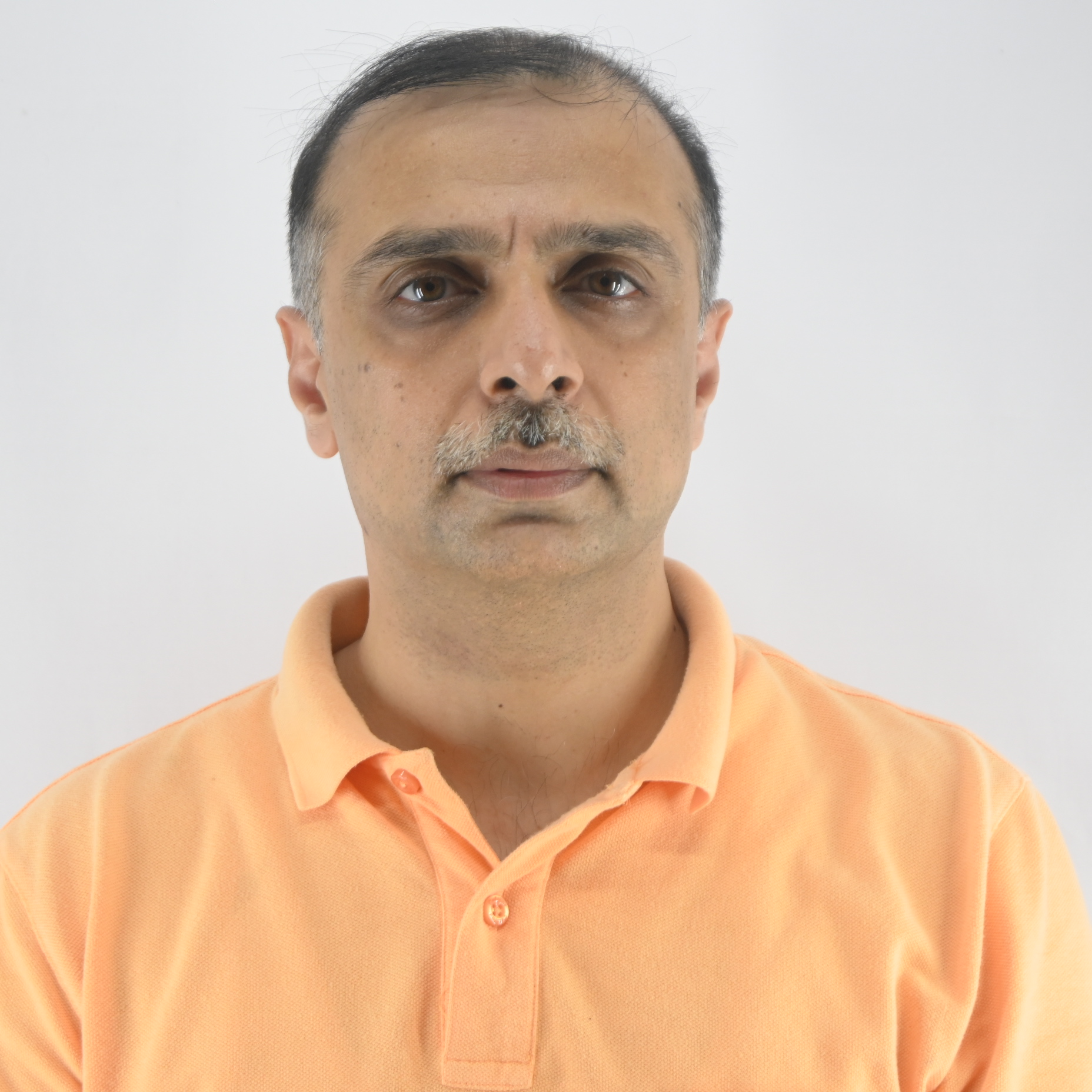
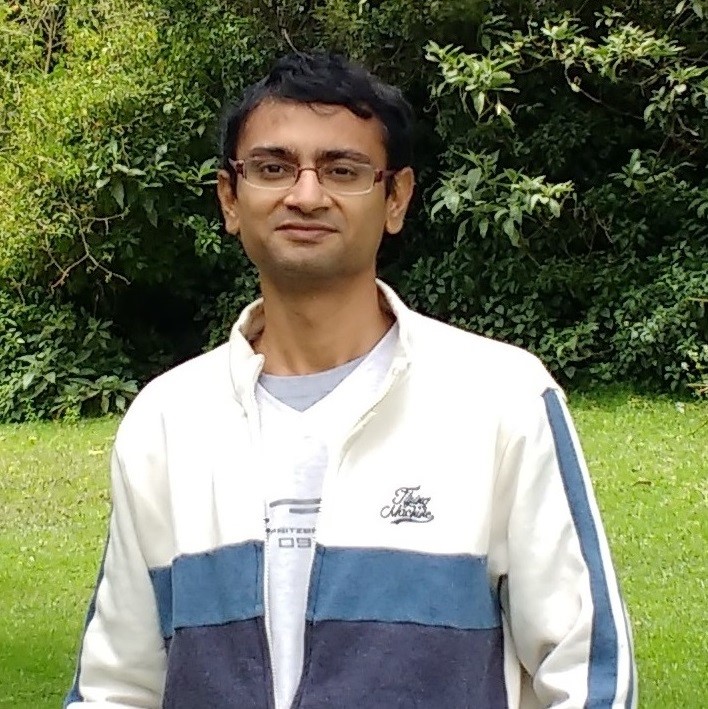
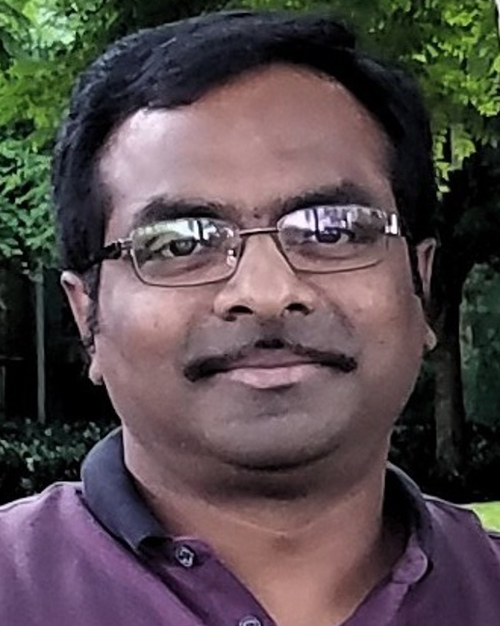
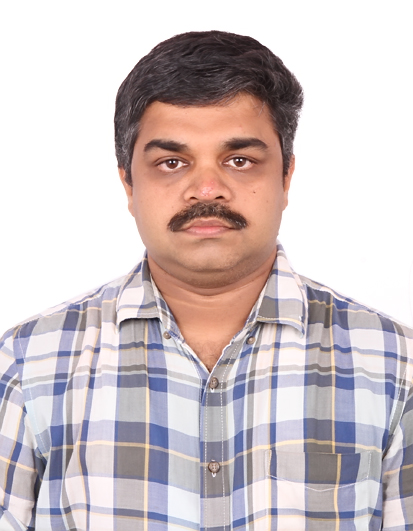
Ajit Rajwade is a Professor at the Department of Computer Science and Engineering , Indian Institute of Technology Bombay. His research spans Artificial Intelligence , Compressed Sensing , and Medical Imaging , with affiliations to the Centre for Machine Intelligence and Data Science and the Koita Centre for Digital Health . Education : PhD in Computer and Information Science and Engineering, University of Florida (2010) MSc in Computer Science, McGill University (2004) BTech in Computer Engineering, University of Pune (2002) His research interests focus on intelligent data acquisition, particularly in neural network analysis , graph signal processing , and medical imaging . He develops compressed sensing algorithms for inverse problems like tomography and MRI reconstruction , alongside applying group testing to pandemic response. Scientific awards include the Prof. S. P. Sukhatme Award (2024) and Departmental Teaching Excellence (2019). His publications demonstrate expertise in image restoration , noise modeling , and epidemiological algorithms . He has advised PhD students like Sabyasachi Ghosh and Jerin Geo James , with a focus on computationally efficient methods in medical imaging and machine learning .
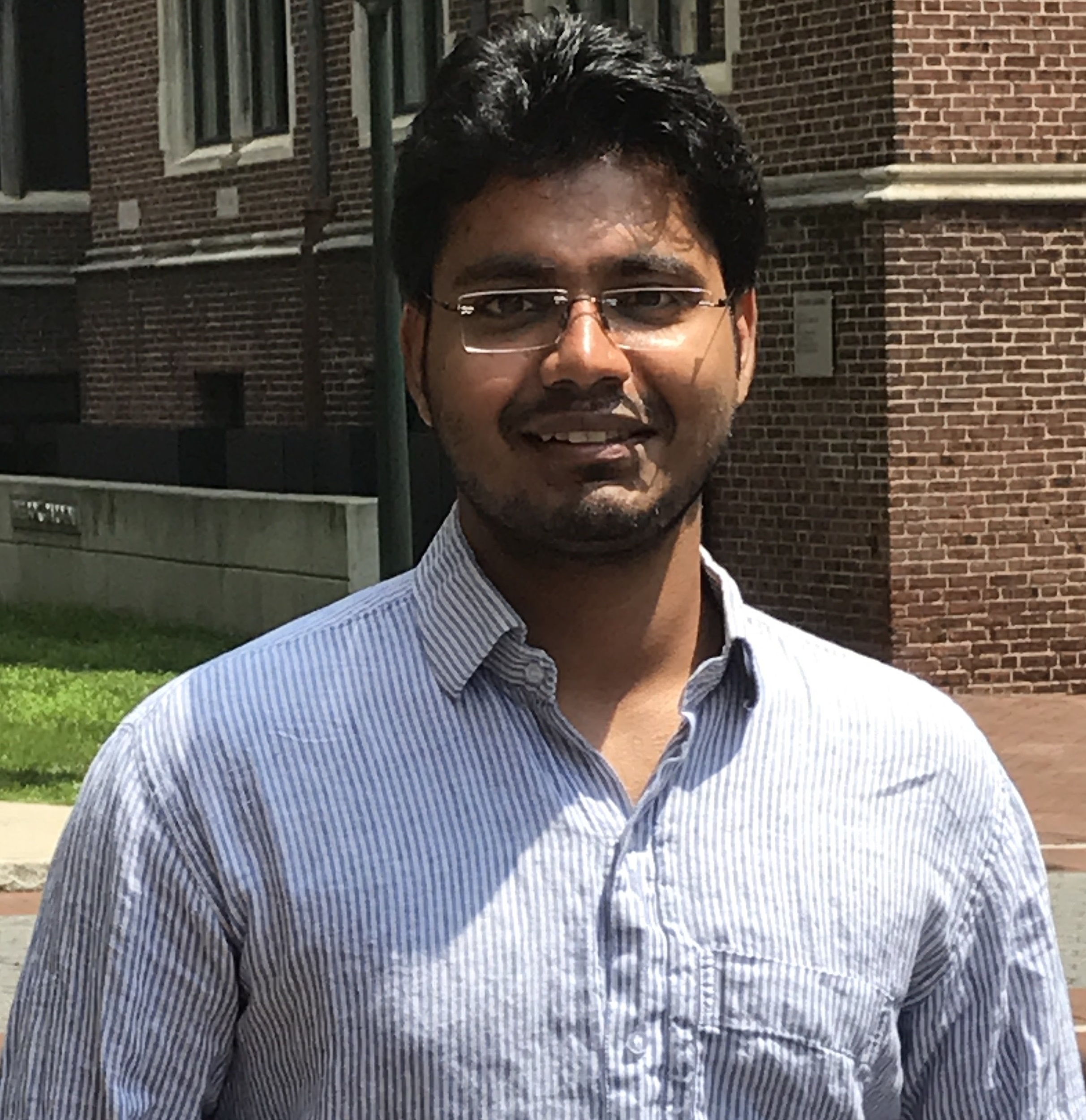
Arpit Agarwal is an Assistant Professor in the Department of Computer Science & Engineering at the Indian Institute of Technology, Bombay. He previously held postdoctoral positions at FAIR Labs (Meta) working with Max Nickel and at the Data Science Institute at Columbia University hosted by Prof. Yash Kanoria and Prof. Tim Roughgarden. He completed his PhD from the Department of Computer & Information Science at the University of Pennsylvania under the guidance of Prof. Shivani Agarwal. His research focuses on the intersection of human behavior and machine learning systems, with particular interest in learning from implicit, strategic, and heterogeneous human feedback. His work spans multiple dimensions of human-AI interaction including understanding long-term dynamics between humans and AI systems, designing responsible AI, and studying misalignment between user preferences and system objectives. His research methodology often combines theoretical machine learning with practical applications in recommendation systems and social AI. His recent publications reveal a strong focus on bandit algorithms, preference learning, and recommendation systems, with increasing attention to responsible AI design and human-centered considerations. His work demonstrates expertise in theoretical machine learning with applications to real-world problems, particularly in understanding how humans interact with and are influenced by AI systems over time. Dr. Agarwal teaches advanced courses including CS767 Theoretical Machine Learning (Autumn 2025) and CS6103 Human-Centered AI: From Learning Models to Responsible Systems (Spring 2025), which covers topics such as AI alignment, learning from pairwise comparisons, crowdsourcing, human-in-the-loop decision making, recommendation systems, interpretability, privacy, fairness, causality, and AI governance.
Indian Institute of Technology Hyderabad (IITH)India
Aditya T Siripuram is an Associate Professor at the Indian Institute of Technology Hyderabad (IITH), holding joint appointments in the Department of Electrical Engineering and the Department of Artificial Intelligence. He completed his PhD at Stanford University and holds B.Tech and M.Tech degrees from IIT Bombay. Education: PhD in Electrical Engineering, Stanford University (2017) - GPA: 4.17/4 M.Tech in Electrical Engineering, IIT Bombay (2009) - GPA: 9.79/10 B.Tech in Electrical Engineering, IIT Bombay (2009) - GPA: 9.79/10 Research Interests: His research spans Fourier analysis, signal processing, machine learning, convex and combinatorial optimization, with applications in AI/ML and applied mathematics. His work particularly focuses on computational aspects of Fourier analysis, including fast DFT computation for structured signals, convolution idempotents, and graph-based signal processing techniques. His recent research directions involve developing efficient algorithms for computing Discrete Fourier Transforms for signals with structured frequency support, investigating relationships between additive structures in frequency domains and computational complexity, and exploring graph learning techniques under spectral constraints. Awards and Recognition: Excellence in Teaching Award, IIT Hyderabad (2019, 2022) Stanford Graduate Fellowship Qualcomm Innovation Fellowship (awarded to his PhD student Charantej Reddy P in 2021) Teaching and Service: He has taught courses including AI1110 Probability and Stochastic Processes, EE5609 Matrix Theory, EE5606 Convex Optimization, and EE5328 Introduction to Submodular Functions. He serves as Departmental Undergraduate Committee Chair for the Department of AI at IITH (2020-present) and was MTech Admissions Coordinator for the same department (2019-2022). Research Group: He currently advises three PhD students working on signal processing based graph learning techniques, DFT computation for structured signals, and coded computing problems.
Anirban Chakraborti is a Professor at the School of Computational and Integrative Sciences, Jawaharlal Nehru University (JNU), New Delhi, India, where he has been a faculty member since 2014. He previously held academic positions at École Centrale Paris (France) as Chercheur Senior (Associate Professor) and Chargé de Recherche (Assistant Professor), and earlier roles at Banaras Hindu University, Brookhaven National Laboratory (USA), and Helsinki University of Technology (Finland). He is a leading figure in the interdisciplinary field of econophysics and complex systems. Education: Diplôme d’Habilitation à Diriger des Recherches (2013), Université Pierre et Marie Curie – Paris VI, France (Physics) Ph.D. in Physics (2003), Saha Institute of Nuclear Physics, Jadavpur University, India Post-M.Sc. in Physics (1999), Saha Institute of Nuclear Physics, Jadavpur University, India (Ranked First) M.Sc. in Physics (1998), University of Calcutta, India (Ranked First) B.Sc. in Physics (1996), Scottish Church College, University of Calcutta, India His research interests lie at the intersection of physics, economics, and data science. He is particularly known for pioneering work in econophysics , including the statistical mechanics of money, wealth distribution, agent-based market models, and network-based analysis of financial and social systems. He also works on complex systems , computational finance , statistical physics , and nanosciences , with applications in sensing and imaging. His work often involves modeling socio-economic phenomena using tools from statistical physics. His recent publications span topics such as financial fluctuations, wealth inequality, network analysis of conflicts, order book dynamics, and nanomaterial characterization. These works reflect a strong trend toward interdisciplinary research combining physics, economics, and data analytics, with a focus on real-world applications in finance, inequality, and social systems. Scientific Awards: Indian National Science Academy Young Scientist Medal (2009) He has advised Ph.D. students such as Kiran Sharma and leads the ETC (Experimental-Theoretical-Computational) Lab at JNU, which brings together physicists, computer scientists, and mathematicians. The lab has been involved in international collaborations, including projects funded by the Estonian Ministry of Education and Research and consultancies with TCS Innovation Labs and DONO Consulting. His research has been supported through grants and collaborative projects, reflecting strong industry and global academic engagement.
Faiz Hamid serves as an Associate Professor in the Department of Management Sciences at Indian Institute of Technology Kanpur. With a Ph.D. in Decision Sciences & Information Systems from IIM Lucknow (2012) and a B.Tech. in Computer Science and Engineering from Institute of Engineering & Management (2007), he brings strong technical and analytical expertise to his academic position. His research interests span Operations Research, Combinatorial Optimization, Network Optimization, and Data Science, with particular focus on transportation systems, pandemic response modeling, and revenue management applications. Dr. Hamid's scholarly work demonstrates consistent publication in high-impact journals including European Journal of Operational Research, Omega, Transportation Research, and IEEE Transactions on Signal Processing. His recent publications reveal a strong trend toward applying optimization techniques to real-world problems, particularly addressing pandemic-related challenges in transportation systems and developing sophisticated mathematical models for railway operations. His 2024 edited volume 'Optimization Essentials: Theory, Tools, and Applications' demonstrates his leadership in the field. Ph.D. Thesis recognized as runner-up for 2014 Best Dissertation Award by The INFORMS Technical Section in Telecommunications Best Paper Award at COSMAR 2010 Doctoral Conference, Indian Institute of Science, Bangalore Professor Dipak C Jain Best Paper Award at IMR Doctoral Conference 2010, IIM Bangalore Silver Medal, National Mathematics Olympiad 2002 Dr. Hamid has advised numerous students and collaborated extensively with researchers globally, particularly in transportation optimization problems. His professional journey includes industry experience as Associate Functional Architect at JDA Software and post-doctoral research at Telecom SudParis, France, before joining IIT Kanpur's faculty.
Arijit Bishnu is an Associate Professor at the Indian Statistical Institute in the Advanced Computing and Microelectronics Unit (ACMU). He has taught courses such as Design and Analysis of Algorithms , Randomized Algorithms , Computational Geometry , and Algorithms for Big Data over multiple years (2008–2025), focusing on theoretical and applied aspects of computer science. Research Interests: His work spans Theoretical Computer Science , Randomized and Approximation Algorithms , Computational Geometry , and Combinatorics . He explores problems in sublinear algorithms, streaming computation, geometric data analysis, and complexity theory. Publications: Recent papers include contributions to STOC 2025 , RANDOM 2025 , and APPROX 2024 , covering topics like property testing, triangle counting complexity, and streaming algorithms. Collaborations with researchers like Sourav Chakraborty, Gopinath Mishra, and Sayantan Sen highlight his interdisciplinary approach. Academic Leadership: He has co-organized research courses such as Approximation Algorithms and Topics in Algorithms and Complexity , emphasizing mentorship and knowledge dissemination in theoretical computer science. His comprehensive work integrates algorithmic innovation with rigorous mathematical analysis, advancing computational techniques for large-scale and geometric data.
Indian Institute of Technology Hyderabad (IITH)India
Dr. N.R. Aravind is an Associate Professor in the Department of Computer Science and Engineering at the Indian Institute of Technology Hyderabad. Holding a Ph.D. in Theoretical Computer Science from The Institute of Mathematical Sciences, Chennai, he is affiliated with the College of Engineering. His research spans algorithms, graph theory, combinatorics, and determinantal complexity, with a focus on parameterized algorithms and approximation techniques for NP-hard problems. Education: Ph.D., The Institute of Mathematical Sciences, Chennai (Advisor: Prof. C.R. Subramanian) Postdoctoral research under Prof. Sundar Vishwanathan at IIT Bombay Aravind's research explores structural questions in graph theory, social network modeling, and complexity bounds. His work on parameterized algorithms addresses tractable instances via input parameters, while his studies in graph coloring and forbidden subgraphs contribute to theoretical understanding. Recent publications focus on matching cut problems, happy coloring, and determinantal complexity. His 15 most recent publications (2010-2024) span computational complexity, graph algorithms, coloring problems, and determinantal complexity. These works emphasize parameterized approaches, structural graph theory, and algorithmic bounds for intractable problems. Scientific Awards: Aravind has mentored numerous PhD and MTech students, including Roopam Saxena, Anjeneya Swami Kare, and R.B. Sandeep, now holding academic positions at prestigious institutions. He has taught courses like Algorithms, Probability in Computing, and Cryptology, often collaborating with co-instructors such as Dr. Rakesh Venkat. His office is located in Room CS-408, Indian Institute of Technology Hyderabad.
Gurunath Gurrala serves as an Associate Professor in the Department of Electrical Engineering at the Indian Institute of Science (IISc), Bangalore. His research focuses on power systems dynamics, high-performance computing applications, and renewable energy integration. He maintains active collaborations with international institutions including Oak Ridge National Lab and Texas A&M University. His research interests center on Power Systems Analysis and Control , with specialization in High Performance Computing Applications, Nonlinear and Intelligent Control, Weak Grid Integration of Renewables, Microgrid Protection, and Smart Grid Stability. His work bridges theoretical control systems with practical power grid challenges, particularly for renewable-rich grids. His recent publications demonstrate a strong interdisciplinary trend, spanning power systems (35%), control theory (25%), renewable integration (20%), and emerging applications in biomedical engineering and environmental systems (20%). Key recurring themes include grid stability under high renewable penetration, advanced protection schemes for microgrids, and computational methods for power system analysis. IEEE Power and Energy Society (PES) Outstanding Engineer Award 2018 Young Engineer Award 2015, Indian National Academy Engineers Best Conference Paper, IEEE PES General Meeting 2015 Best Ph.D Thesis Award (Prof.D.J.Badkas Medal) 2010 Elevated to Senior Member IEEE (2016) Professor Gurrala has secured competitive research funding including the Young Scientist Grant from DST (2015) and International Travel Support from SERB (2017). He actively mentors students through PhD and Master's programs while teaching advanced courses including Power System Dynamics and Control (E4 231), Computer Control of Power Systems (E4 233), and Selected Topics in Integrated Power Systems (E4 237). His research group collaborates with power utilities and international research labs on grid modernization challenges.
Ajit A Diwan serves as a Professor in the Department of Computer Science and Engineering at the Indian Institute of Technology Bombay, where he has maintained continuous faculty membership since 1988. His work bridges theoretical computer science and discrete mathematics, with emphasis on structural graph properties and combinatorial optimization. His academic foundation includes a B.Tech from IIT Bombay (1983) and a Ph.D. from the Tata Institute of Fundamental Research Bombay (1989). These qualifications underpin his decades-long research trajectory in discrete structures. Diwan's research program focuses on graph theory, combinatorics, and algorithm design. He investigates decomposition theorems, factorization problems, and extremal properties of graphs, particularly examining planar graphs, cubic graphs, and cycle structures. His methodological approach combines combinatorial reasoning with algorithmic applications, contributing to fundamental understanding in discrete mathematics. Analysis of his 23+ publications (2000-2024) reveals persistent investigation into graph decomposition patterns, with recent work exploring modular cycle constraints (2024), clique factors in graph powers (2022), and structural properties of planar cubic graphs (2022). These contributions consistently appear in premier venues like the Journal of Graph Theory and Discrete Mathematics. Professor Diwan has mentored three Ph.D. students to completion on topics including upward planar drawings, locally connected planar graphs, and degree-constrained subgraphs. His M.Tech supervision spans five projects covering graph subdivisions, factorization in graph powers, and partitioning algorithms, demonstrating active engagement in graduate education.
L. Sunil Chandran is a Professor at the Department of Computer Science and Automation, Indian Institute of Science (IISc), Bangalore. His research spans graph theory, combinatorics, algorithms, and quantum computing, with extensive work on graph coloring, boxicity, rainbow connectivity, and computational complexity. He leads a large research group, advising PhD, MSc, and ME students, many of whom hold faculty positions at premier institutions like IITs, NITs, and international universities. Chandran's research focuses on combinatorial graph algorithms, structural graph theory, and applications in quantum physics. Key areas include approximation algorithms for NP-hard problems, graph representation (boxicity/cubicity), and rainbow coloring variants. His recent work explores quantum entanglement via hypergraphs and parameterized complexity for vertex deletion problems. His publications (15 most recent shown) demonstrate a consistent focus on graph-theoretic problem-solving, with innovations in algorithmic techniques for graph coloring, combinatorial optimization, and quantum-graph intersections. Trends include increased interdisciplinary work bridging computer science, physics, and discrete mathematics. Awards and Recognitions: Adjunct Professorship at NIT Calicut (2023) INSA Fellow (2022) & INAE Fellow (2015) Alexander von Humboldt Fellowship NASI-SCOPUS Young Scientist Award (2012) MSR India Outstanding Young Faculty Award (2009-2010) INSA Young Scientist Award (2007) He has secured grants from DST, UGC, SERB, and NBHM to support postdoctoral researchers and students. Current projects include quantum-graph theory applications and parameterized algorithms. His group maintains active collaborations with institutions globally.
Supratim Biswas is a Professor in the Department of Computer Science and Engineering at the Indian Institute of Technology Bombay, where he has served since 1995. His academic career spans over four decades, beginning as a Lecturer in the Computer Center in 1980, progressing to Assistant Professor in 1985, Associate Professor in 1990, and achieving full Professorship in 1995. He has held significant administrative roles including Dean of Academic Programs (2007-2010), Head of CSE Department (2000-2003), and Director of IITB-Monash Academy (2009-2010). His research interests focus on Programming Languages, Compiler Optimization, Parallelizing Compilers, Parallel and Distributed computing, and Combinatorial Optimization . Professor Biswas has made substantial contributions to compiler technology, particularly in parallelization techniques for modern architectures. His work bridges theoretical compiler design with practical applications in high-performance computing and CAD systems, demonstrating how compiler optimizations can significantly enhance computational efficiency in real-world applications. The publication record shows a consistent research trajectory spanning nearly four decades, with recent work (2012-2015) focusing on GPU-based parallel algorithms, loop parallelization techniques for non-uniform data dependencies, and mesh processing for CAD applications. His research demonstrates evolution from foundational compiler theory to contemporary parallel architectures, maintaining relevance through practical applications in computational geometry, CAD systems, and high-performance computing. Excellence in Teaching Award (2000) Professor Biswas has supervised over 60 doctoral and master's students, establishing himself as a dedicated mentor in systems software education. His sponsored research portfolio includes significant projects with CDAC (350 lacs), MIT (133 lacs), TCS (81.3 lacs), and Intel Corporation (10 lacs), demonstrating strong industry-academic collaboration. His teaching portfolio spans both undergraduate and postgraduate levels, including foundational courses like Discrete Structures and advanced topics like Parallelizing Compilers, reflecting his commitment to curriculum development across multiple generations of computer science education. His laboratory work has supported students across B.Tech, M.Tech, and Ph.D. programs, with particular emphasis on compiler construction and operating systems. Through the Continuing Education Program, he has extended his expertise to industry professionals, conducting numerous specialized courses for organizations including VSNL, TCS, DRDO, and Reliance.
Hemant Gehlot is an Assistant Professor in the Department of Civil Engineering at the Indian Institute of Technology Kanpur (IIT Kanpur), specializing in transportation engineering and related fields. Education: PhD, Purdue University, 2021 BTech-MTech (dual degree), IIT Kanpur, 2015 Dr. Gehlot's research focuses on transportation network modeling, combinatorial optimization, intelligent transportation systems, and disaster management. His work addresses critical challenges in transportation systems, particularly in the areas of network resilience, congestion management, and emergency response planning. He employs advanced modeling techniques including optimal control approaches, stochastic network analysis, and agent-based simulation to develop solutions for complex transportation problems. His research bridges theoretical advancements with practical applications in transportation systems engineering. Dr. Gehlot has received several prestigious awards throughout his academic career: Best Student Paper Award Finalist, IFAC Workshop on Distributed Estimation and Control in Networked Systems 2019 Purdue Civil Engineering Awards: Essam and Wendy Radwan Graduate Fellowship 2019-20 STV Civil Engineering Graduate Assistantship Endowment 2018-19 Academic Excellence Awards 2012-13 and 2011-12, IIT Kanpur CBSE Merit Scholarship for Professional Studies 2010 National Talent Search Examination Scholarship 2008 His publications demonstrate expertise in developing innovative approaches to transportation network management, disaster response, and infrastructure resilience, with work appearing in leading journals such as IEEE Transactions on Automatic Control and Transportation.
Partha Chakroborty is a Professor in the Department of Civil Engineering at the Indian Institute of Technology Kanpur. He has been a faculty member since July 1993 and has held visiting positions at the University of Delaware during Spring 1996 and Fall 2002. His educational background includes a PhD (1993) and M.C.E. (1990) from the University of Delaware, and a B.Tech (Hons.) from IIT Kharagpur (1988). Research Focus: Dr. Chakroborty specializes in transportation systems with core interests in: traffic flow theory (particularly for heterogeneous traffic streams without lane discipline), optimization techniques for resource allocation in transportation networks, urban transit routing/scheduling, and mathematical modeling of traveler behavior. His work bridges theoretical frameworks with practical applications in infrastructure design. Research Output: Publications demonstrate strong emphasis on mathematical optimization applied to transportation challenges, including stochastic modeling of traffic phenomena, behavioral analysis of drivers, and efficiency improvements in railway/transit operations. Recent works show increased focus on uncertainty quantification in transportation systems. Awards & Honors: University of Delaware Competitive Fellowship (1991) ASCE Journal of Transportation Engineering Best Paper Award (1996) AICTE Career Award for Young Teachers (1998) Frontiers of Engineering Award (2008) Rajeeva and Sangeeta Lahri Chair Professorship (2012) Infrastructure: Leads the Transportation Engineering Laboratory at IIT Kanpur, which supports experimental and computational research in traffic flow dynamics and transportation network analysis.
R. R. K. Sharma is a Professor in the Department of Management Sciences at the Indian Institute of Technology Kanpur , with a career spanning over three decades since joining in 1989. His work bridges Operations Research , Supply Chain Management , and Strategic Management . Specialization in Operations Research and Strategic Alignment Education: Fellow in Management (IIM Ahmedabad, 1988), BE in Mechanical Engineering (VNIT Nagpur, 1980) Research focuses on mathematical formulations for warehouse location, lot sizing, and supply chain optimization, with empirical studies comparing algorithmic approaches. His work extends to organizational culture-strategy alignment , ERP implementation , and technology management in manufacturing and retail contexts. Recent publications (2018-2023) emphasize sustainable supply chains , horizontal strategy in conglomerates, and IOT integration in retail formats. Earlier works (1991-2018) developed foundational methods in MRP performance , Benders' decomposition , and genetic algorithm applications . Key collaborations include work with researchers in Germany, Thailand, China, and India on manufacturing-flexibility interplay , TQM implementation , and retail analytics . His extensive 781 working papers cover diverse topics in management science, though no formal awards or student advisement details are listed in the provided text.
Indian Institute of Technology Kharagpur (IIT-KGP)India
Palash Dey is an Assistant Professor in the Department of Computer Science and Engineering at the Indian Institute of Technology, Kharagpur. His research lies at the intersection of theoretical computer science and algorithmic game theory, with a primary focus on computational social choice, voting theory, and parameterized algorithms. His research interests include: Theoretical Computer Science Parameterized Algorithms Approximation Algorithms Algorithmic Game Theory Computational Social Choice Voting Theory Algorithmic Fairness Network Games His recent publications, spanning from 2023 to 2025, demonstrate a strong and consistent research trajectory in the analysis of voting systems, manipulation, and fairness. The articles focus on complex problems such as bribery, gerrymandering, rank aggregation, and networked public goods, primarily using tools from parameterized complexity and algorithmic game theory. Key venues for his work include AAMAS, IJCAI, AAAI, and Theoretical Computer Science, indicating a high impact in the fields of AI and theoretical computer science. His professional service includes being the Newsletter and Social Media Chair of the IEEE Kharagpur Section and serving on the Senior Program Committee for AAAI (2021-2024) and the Program Committee for AAAI, IJCAI, AAMAS, and COMSOC. He has also organized significant workshops such as CALDAM 2019 and GAME-ARTS. Palash Dey actively advises Ph.D. students, including Sipra Singh, Koustav De, Ashlesha Hota, and Narayan Sharma. He teaches courses such as Algorithms II, Randomized Algorithm Design, and Algorithmic Game Theory. His email is palash.dey@cse.iitkgp.ac.in.