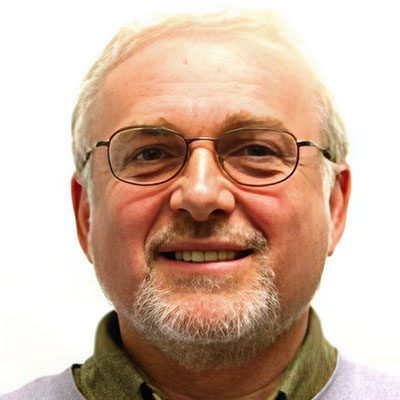
Joseph Glaz is a Professor in the Department of Statistics at the University of Connecticut. His work focuses on applied probability and statistical methodology, particularly in scan statistics and related inference techniques. Contact: joseph.glaz@uconn.edu Phone: (860) 486-4193 (Storrs Campus) Research highlights: Develops scan statistics for discrete , continuous , and conditional data frameworks Specializes in change-point detection for normal data mean/variance Innovates robust methods for outlier-prone datasets Extends scan statistics to network and graph structures Contributed to foundational texts like the Handbook of Scan Statistics Publication trends include: Scan statistics for genomic data (Hi-C translocation detection) Nonparametric and Bayesian extensions of scan methods Approximations and inequalities for sequential testing Applications in quality control , medical imaging , and sensor networks
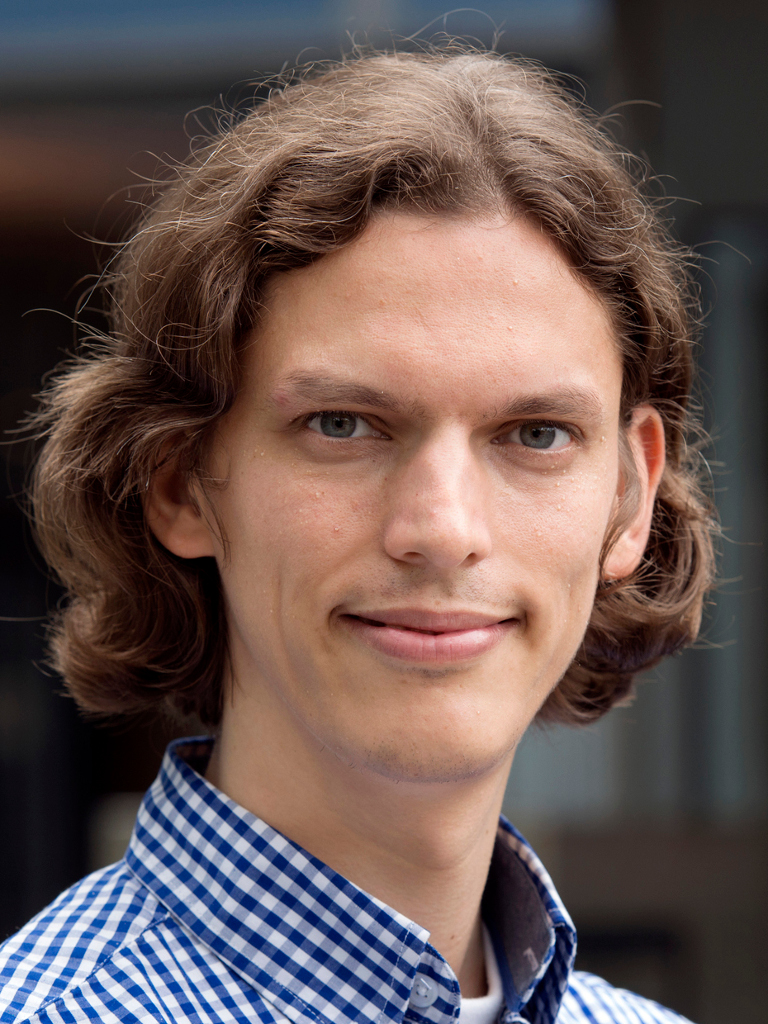
Professor Ran Levi is a Chair in Mathematical Sciences at the University of Aberdeen, affiliated with the School of Natural and Computing Sciences and the Department of Mathematics. His research bridges pure mathematics and neuroscience, focusing on algebraic topology and its applications to neural systems. BSc in Mathematics, Hebrew University, Jerusalem (1988) PhD in Mathematics, University of Rochester (1993) His research interests include Algebraic Topology , Homotopy Theory of classifying spaces , Combinatorial Topology , and Neuro-Topology —the application of topological methods to neuroscience. He leads the Aberdeen Neuro-Topology Research Group and collaborates with the Blue Brain Project at EPFL. His work explores how topological and geometric frameworks can model and predict neural structures, potentially inspiring new mathematical concepts. Recent publications reveal a strong trend in topological data analysis of neural circuits , p-local groups , and combinatorial constructions in topology. His interdisciplinary work appears in journals such as iScience , eLife , PLOS ONE , and Algebraic & Geometric Topology . His research has been supported by grants including: EPSRC: Topological Analysis of Neural Systems (EP/P025072/1) Collaboration with École Polytechnique Fédérale de Lausanne (Blue Brain Project) Professor Levi has advised several researchers, including Dejan Govc, Janis Lazovskis, Henri Riihimaki, and Jason Smith. He is actively involved in international collaborations with mathematicians and neuroscientists across Europe and the US. He is a key member of the Institute of Pure and Applied Mathematics (IPAM) at Aberdeen and contributes to the AberdeenML and Cybersecurity and Privacy research groups. His work exemplifies the growing synergy between mathematics and computational neuroscience.
Ramin Javadi is an Associate Professor of Mathematics at Isfahan University of Technology and a Visiting Professor at the Laboratoire de l'Informatique du Parallélisme (LIP) at ENS Lyon from June to July 2025. His research focuses on graph theory and combinatorics, with notable contributions to structural graph theory and algorithm design. He holds a Ph.D. in Mathematics from Sharif University of Technology (thesis: 'Isoperimetric problems on graphs'), and an M.Sc. from Isfahan University of Technology (thesis: 'Chip-firing game and b-coloring of graphs'). His collaboration with LIP aims to strengthen scientific exchange in structural graph theory and expand institutional ties. Key research areas include parameterized complexity, Ramsey numbers, and graph coloring. Despite no explicit mention of awards, his extensive publication record reflects impactful contributions to discrete mathematics. He has advised multiple students from Isfahan University of Technology, though specific names are not listed. His work bridges theoretical computer science and pure mathematics, particularly through interdisciplinary studies in graph algorithms and combinatorial optimization.
Anna-Lena Horlemann is an Associate Professor for Foundations of Computation at the School of Computer Science, University of St. Gallen. Her research focuses on algebraic coding theory, post-quantum cryptography, and network coding. She leads the Coding Theory and Cryptography research group, actively contributing to NIST's post-quantum standardization efforts. Her work addresses quantum computing threats to current cryptosystems and develops error-correcting codes for reliable data transmission and storage. Education: PhD in Mathematics from the University of Zurich (2013), supervised by Prof. Joachim Rosenthal. Diploma in Mathematics from Ruhr-Universität Bochum. Research interests span coding theory (e.g., rank-metric codes, subspace codes), cryptography (code-based systems, privacy protocols), and neuroinformatics (connectome analysis). Recent publications emphasize Lee metric applications, MDS code classification, and cryptanalysis of Gabidulin-based systems. She mentors doctoral researchers such as Nadja Willenborg and Violetta Weger, focusing on topics like code densities and quantum-resistant algorithms. Her team's work bridges theoretical foundations and practical implementations, with contributions to error-correction resilience and cryptographic security in post-quantum scenarios. No formal awards listed, but actively participates in international conferences (IEEE, CBCrypto) and journal reviews.
Siegfried Nijssen is an Assistant Professor of Data Mining and Artificial Intelligence at the Catholic University of Louvain (UCLouvain) in Belgium, working within the ICTEAM research institute's Artificial Intelligence and Algorithms group. He has been at UCLouvain since 2016, previously serving as an Assistant Professor at University Leiden (2012-2016) and completing postdoctoral work at KU Leuven (2006-2015). He earned his PhD in Computer Science from University Leiden in 2006. His research focuses on making data analysis simpler through intersections between pattern mining, exploratory data analysis, and programming paradigms in Artificial Intelligence, particularly constraint programming and probabilistic programming. He has developed techniques for analyzing diverse data types including graphs, networks, and multi-relational data. His work bridges theoretical foundations with practical applications in decision tree learning, probabilistic networks, and source code analysis. Nijssen's recent publications demonstrate a strong focus on optimal decision trees, constraint-based pattern mining, and applications in bioinformatics and education. His research shows consistent evolution from foundational graph mining work (including the Gaston algorithm developed in 2004) to current work integrating machine learning with constraint programming for interpretable AI solutions. As an educator, he teaches courses including Mining Patterns in Data, Databases, and Artificial Intelligence and Machine Learning seminars at UCLouvain. He has advised numerous PhD students and postdocs, primarily in collaboration with Pierre Schaus, with former students like Tias Guns now holding professorships.
Kenichi Oyaizu is a Professor in the Department of Applied Chemistry at the Faculty of Science and Engineering, Waseda University, Tokyo. His research spans polymer chemistry, energy storage, and materials science, with a focus on functional polymers for batteries, hydrogen storage, and high refractive index applications. He maintains active collaborations across academia and industry. Professor Oyaizu's research centers on designing polymers with tailored redox properties for energy storage systems, including organic radical batteries and hydrogen carriers. He pioneers high refractive index materials through molecular engineering of hydrogen-bonded networks and sulfur-rich frameworks. His group integrates machine learning with experimental synthesis, utilizing lossless data platforms for materials discovery and optimization in electrochemistry and optical applications. Analysis of his 15 most recent publications (2020-2025) reveals three dominant research trajectories: (1) High-refractive-index polymers leveraging hydrogen bonding and sulfur incorporation for optical devices, (2) Energy storage systems using redox-active polymers for batteries and hydrogen carriers, and (3) Materials informatics approaches applying generative models and quantum-inspired algorithms to accelerate polymer design. These streams demonstrate consistent innovation in structure-property relationships for functional materials. No scientific awards or major honors are documented in the provided materials. Professor Oyaizu leads an active research group mentoring graduate students and postdoctoral researchers in polymer synthesis and characterization. His work receives funding from Japanese national agencies supporting sustainable energy materials and advanced polymer research, though specific grant details are not disclosed in the source text. Current projects emphasize machine learning-driven development of solid-state electrolytes and hydrogen storage polymers. His laboratory operates within Waseda University's advanced materials infrastructure, utilizing specialized facilities for polymer synthesis, electrochemical testing, and optical characterization. The team collaborates with international researchers on battery technologies and participates in university-industry consortia focused on sustainable materials development, with recent projects highlighted in Waseda University News and EurekAlert!.
Jonathan A. Kelner is a Professor of Applied Mathematics at the Massachusetts Institute of Technology (MIT) and a member of the Computer Science and Artificial Intelligence Laboratory (CSAIL) . His research bridges pure mathematics and algorithms, focusing on spectral graph theory, combinatorial optimization, and distributed computing.
Virginia Vassilevska Williams is a Professor at the Massachusetts Institute of Technology (MIT) Department of Electrical Engineering and Computer Science (EECS), affiliated with MIT CSAIL. She earned her Ph.D. in Computer Science from Carnegie Mellon University in 2008 and held postdoctoral positions at the Institute for Advanced Study (Princeton), UC Berkeley, and Stanford. Education: B.S. in Mathematics and Engineering from Caltech (2003); Ph.D. in Computer Science from CMU (2008) Her research focuses on combinatorial and graph-theoretic approaches to computational problems, including shortest paths , pattern detection , fine-grained complexity , and computational social choice for analyzing election manipulation and tournament structures. Recent publications highlight advances in sparse graph algorithms , cycle detection , and approximate counting using matrix multiplication techniques. She co-organized programs at the Simons Institute (2023) and Dagstuhl Seminars (2016). Scientific Awards NSF CAREER Award Google Research Fellowship Alfred P. Sloan Research Fellowship Thornton Family Faculty Research Innovation Fellowship Invited Speaker at ICM 2018 She advises current Ph.D. students including John Kuszmaul , Yael Kirkpatrick , and Zixuan Xu . Former students like Amir Abboud (Weizmann Institute) and Nicole Wein (U. Michigan) have achieved academic and industry positions.
Claire Mathieu is a CNRS Research Director in the Computer Science department at École normale supérieure, specializing in algorithm design and analysis with emphasis on approximation schemes for NP-hard problems. Her academic background includes: Former student at École normale supérieure PhD in Computer Science from Paris-Sud University (1988) Dr. Mathieu's research focuses on theoretical foundations of algorithms, particularly developing local search methods for clustering problems where enlarged neighborhoods yield near-optimal solutions through separability structures. Her work bridges theoretical guarantees with practical applications in combinatorial optimization, advancing approximation techniques for computationally intractable problems. Prior to her current position, she held research and faculty appointments at CNRS, Paris-Sud University, École Polytechnique, and Brown University, demonstrating extensive international experience across French and American academic institutions.
Michael Hewitt is Professor of Supply Chain Management at Loyola University Chicago's Quinlan School of Business, holding the Ralph Marotta Chair in Free Enterprise. He concurrently serves as Executive Director of the Quinlan Business Leadership Hub and Director of the Supply Chain and Sustainability Center. His academic credentials include a PhD in Industrial and Systems Engineering from Georgia Institute of Technology, complemented by dual MS degrees in Financial Engineering and Industrial Engineering from the University of Michigan, plus a BS in Mathematics & Economics from the same institution. Dr. Hewitt's research pioneers advanced optimization techniques for freight transportation and supply chain networks, integrating mathematical programming with real-world logistics challenges. His work bridges theoretical innovation and industrial application, particularly in time-dependent scheduling and stochastic network design where algorithmic breakthroughs directly impact transportation efficiency. Analysis of his recent publications reveals consistent focus on dynamic discretization methods and decomposition algorithms for complex network problems, with increasing emphasis on sustainability integration in freight systems since 2017. The research trajectory demonstrates evolving sophistication in handling time-dependent variables and stochastic elements within transportation networks. His award-winning contributions include: CSoNet Best Paper Award (2023) for time-dependent traveling salesman research INFORMS TSL Freight Transportation & Logistics SIG Award (2021) Glover-Klingman Prize for Networks journal publication (2019) INFORMS TSL Best Paper Award (2018) Loyola Faculty Researcher of the Year (2015) Funded by the National Science Foundation, Material Handling Institute, and New York State Health Foundation, his research has directly influenced decision systems at Bayer Crop Science, Exxon Mobil, and major freight carriers. Professional service includes past presidency of INFORMS Transportation Science and Logistics Society and editorial board memberships. Through the Supply Chain and Sustainability Center and Quinlan Business Leadership Hub, he drives industry-academic collaboration on sustainable logistics innovation and leadership development, connecting theoretical advances with practical business transformation.
André Nichterlein is a Permanent Research Associate at the Technical University of Berlin, specializing in Algorithmics and Complexity Theory. He completed his PhD at TU Berlin (2014) and holds a Diploma from Friedrich Schiller University Jena (2010). His career includes postdoctoral research at Durham University (UK) under a DAAD fellowship and extensive work as a research assistant at TU Berlin. Research Focus: Nichterlein's work centers on parameterized algorithms , kernelization techniques , graph problem optimization , and algorithm engineering . His research addresses fundamental challenges in computational complexity through practical algorithmic solutions, particularly in graph theory and network optimization. Publication Trends: His recent articles (2020-2023) demonstrate a strong focus on parameterized complexity frontiers, efficient data reduction methods for NP-hard problems, and applications in network design. Recurring themes include kernelization innovations, graph modification problems, and experimental algorithmics, with consistent contributions to theoretical foundations of computer science.
Artem Kaznatcheev is an Assistant Professor at Utrecht University in the Department of Mathematics and Department of Information and Computing Sciences within the Science faculty. His research bridges theoretical computer science and evolutionary biology to analyze biological and social systems through an algorithmic lens. Current role since January 2023 Recruiting PhD students and postdocs Previously: James S. McDonnell postdoctoral fellow at University of Pennsylvania His work focuses on: Computational complexity of evolution Evolutionary game theory Algorithmic biology Mathematical modeling of cancer dynamics Cultural evolution of science Selected article trends show: Interdisciplinary integration of computer science and cancer biology Key themes: fitness landscapes, evolutionary games, treatment optimization 2021-2020 publications dominate Mathematical formalisms applied to biological and social phenomena Scientific contributions include: James S. McDonnell Foundation Independent Postdoctoral Fellowship 2019 Genetics paper on computational complexity as evolutionary constraint 2017 Nature Ecology & Evolution study on fibroblast-drug interactions in cancer Collaborative environments: Worked with Theory, Evolution and Games Group Previous affiliations: Oxford University, University of Pennsylvania, Moffitt Cancer Center, McGill University Developed teaching roles at Oriel College (Oxford)
Marc Hellmuth is an Associate Professor of Computational Mathematics at the Department of Mathematics, Stockholm University, Sweden. His academic career includes previous positions as Junior Professor for Biomathematics and Computer Science at University of Greifswald, Germany (2015-2020), Lecturer at School of Computing, University of Leeds, UK (2020), and PostDoc positions at Saarland University and Max-Planck Institutes. Dr. Hellmuth earned his PhD in Computer Science from University of Leipzig, Germany (2007-2010, summa cum laude), supervised by Peter F. Stadler, and completed his Venia Legendi (habilitation) at Saarland University, Germany (2016). His research spans the interface of discrete mathematics, computer science, and life sciences with emphasis on: Discrete Mathematics including Graph Theory, Combinatorics, and Optimization Algorithm Design and Complexity Theory Mathematical and Computational Biology Phylogenomics and Evolutionary Analysis Computational Chemistry and Atom Tracking His publication record demonstrates a consistent focus on developing mathematical frameworks and efficient algorithms for biological problems, particularly in phylogenomics, orthology detection, and evolutionary analysis. His work bridges theoretical computer science with practical applications in biology and chemistry, often resulting in open-source software tools. Dr. Hellmuth has developed numerous software tools including AsymmeTree for phylogenetic simulation, tralda for tree algorithms, and specialized tools for phylogenomics, atom tracking, and graph analysis. His collaborative work extends internationally with research visits to institutions including Yale University, University of Leoben, Vienna University of Economics, University of Southern Denmark, Université de Montréal, and institutions in China.
Prof. Dr. Karl-Josef Dietz holds a Professorial Chair (C4) in Biochemistry and Physiology of Plants at the Faculty of Biology, Bielefeld University since 1997. He is Head of the working group 'Biochemistry and Physiology of Plants' at the Center for Biotechnology (CeBiTec). His academic career spans prestigious institutions including Julius-Maximilians-Universität Würzburg (where he completed his PhD and Habilitation), Harvard University (postdoc position), and numerous international research stays in France, Japan, and the USA. Prof. Dietz's research focuses on plant stress responses, redox regulation, and photosynthesis. His work explores how plants acclimate to multiple environmental stresses through molecular signal integration, with particular emphasis on reactive oxygen species (ROS) signaling, thiol peroxidases, and oxylipin pathways. His laboratory investigates the mechanisms of redox regulation in chloroplasts and mitochondria, stress sensing, and plant defense responses against pathogens and abiotic challenges. His recent publications reveal a strong focus on redox biology, stress acclimatization mechanisms, and the role of peroxiredoxins in plant stress responses. His work spans both fundamental biochemical investigations and applied research in plant protection and stress tolerance. Scientific Awards and Recognition: Science Prize of the University Foundation Würzburg (1985) Gay-Lussac-Humboldt Prize (2012) Prof. Dietz has served in numerous leadership roles including Dean of the Faculty of Biology (2004-2006), President of the German Botanical Society (2012), and as a member of the Science Board of the German Research Foundation (DFG). He serves on the editorial boards of several prestigious journals including Journal of Experimental Botany, Physiologia Plantarum, and Plant Physiology. His professional activities demonstrate extensive involvement in national and international scientific communities, including the German Society of Botany, the American Society of Plant Biologists, and the Federation of European Societies of Plant Biology.
Erik Carlsson is a Professor in the Mathematics department at the University of California, Davis. His research spans multiple areas of pure and applied mathematics, connecting deep theoretical concepts with practical computational applications. He received his Ph.D. from Princeton University under Professor Andrei Okounkov in 2008, and a B.S. in Mathematics with honors and a minor in Computer Science from Stanford University in 2003. Carlsson's research focuses on representation theory, algebraic geometry, algebraic combinatorics, computational topology, and connections with nonconvex optimization. He is particularly interested in connections between Goresky-Kottwitz-Macpherson (GKM) spaces and applications to Macdonald theory and combinatorics. His work also includes computational topology, especially persistent homology, which he develops in collaboration with John Carlsson. One of his recent developments is a method for constructing the alpha complex in high dimension using the powerful duality principle in mathematical optimization. His recent publications show a clear trend toward bridging theoretical mathematics with computational applications. His work spans from proving deep conjectures in algebraic combinatorics (like the shuffle conjecture) to developing practical algorithms for topological data analysis. The interdisciplinary nature of his work connects pure mathematical theory with applications in data science, computer vision, and optimization problems. Carlsson has made significant contributions to multiple fields of mathematics through his collaborations and independent work. His research has implications for both theoretical mathematics and practical computational problems, with recent publications as of 2024 demonstrating his continued active research program.