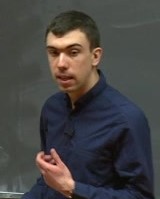
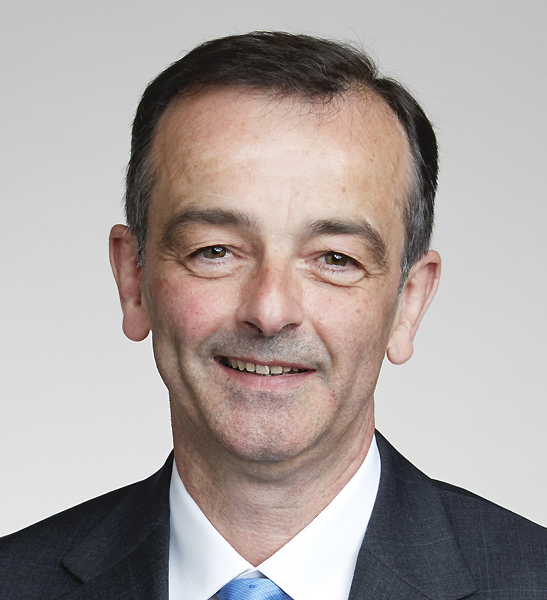
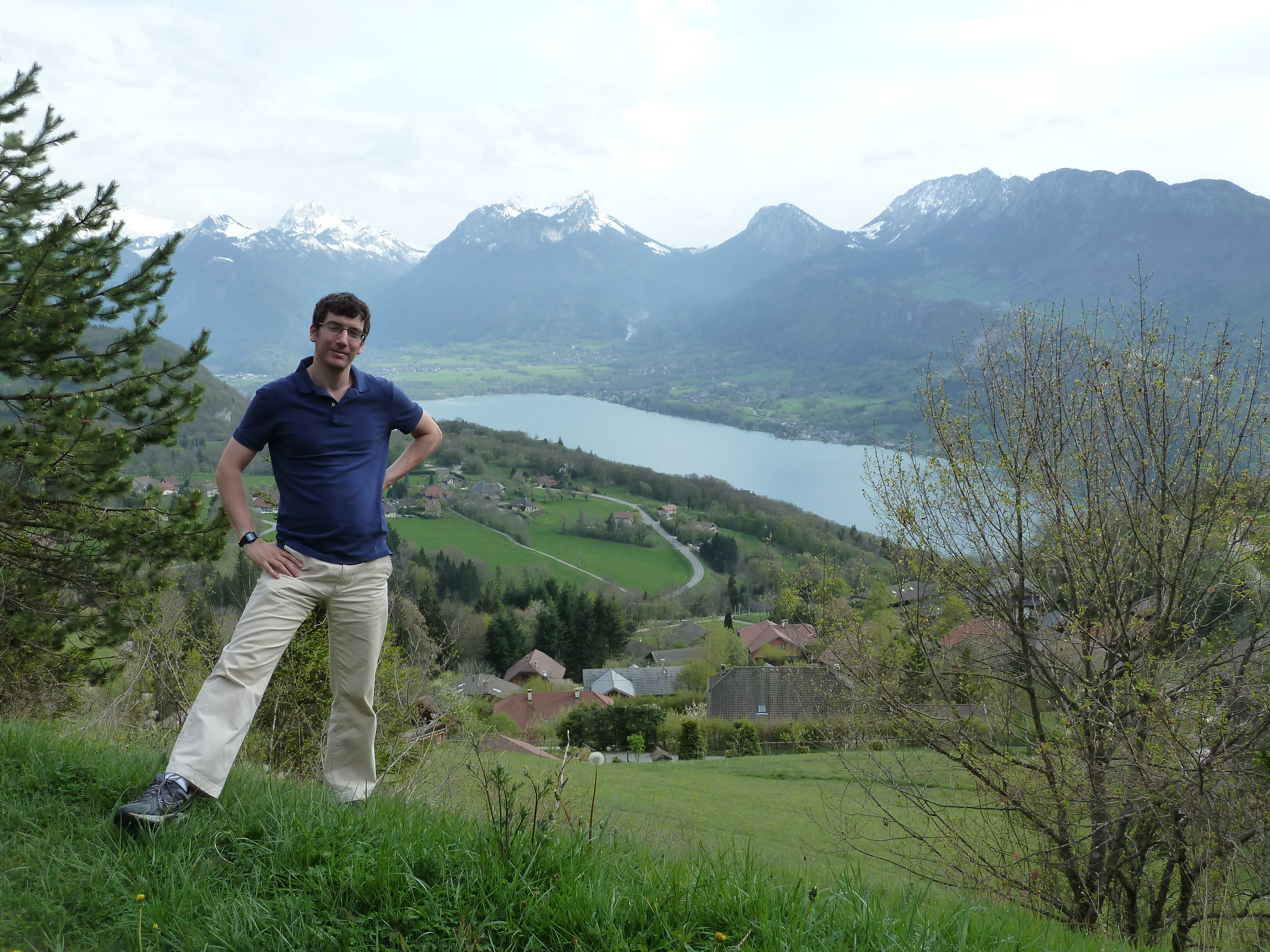
Sebastian van Strien is a Professor and Chair in Dynamical Systems at the Department of Mathematics, Faculty of Natural Sciences, Imperial College London. His research focuses on Dynamical Systems, with emphasis on low-dimensional dynamics, applications to economics, and complex systems. He leads the Dynamical Systems group and is affiliated with the CNRS-Imperial Abraham de Moivre UMI. His work spans pure and applied mathematics, including contributions to renormalization theory, entropy dynamics, and network analysis. He has supervised numerous PhD students and holds an ERC Advanced Grant. Key publications include studies on coupled maps, holomorphic dynamics, and entropy monotonicity. His research bridges theoretical foundations with real-world applications in networks and economic models. Research interests include nonlinear dynamics , chaos theory , and interdisciplinary applications. Notable contributions include work on universality in period-doubling, transversality in hyperbolic systems, and data-driven analysis of critical transitions. He collaborates internationally, organizing conferences such as the International conference in honor of Jean-Marc Gambaudo . His monograph One-Dimensional Dynamics (with Welington de Melo) remains a foundational text in the field. Current projects explore sparse network dynamics and quasiconformal rigidity. Grants: ERC Advanced Grant, CNRS collaborations. Labs/Teams: Dynamical Systems Group, CNRS-Imperial UMI.
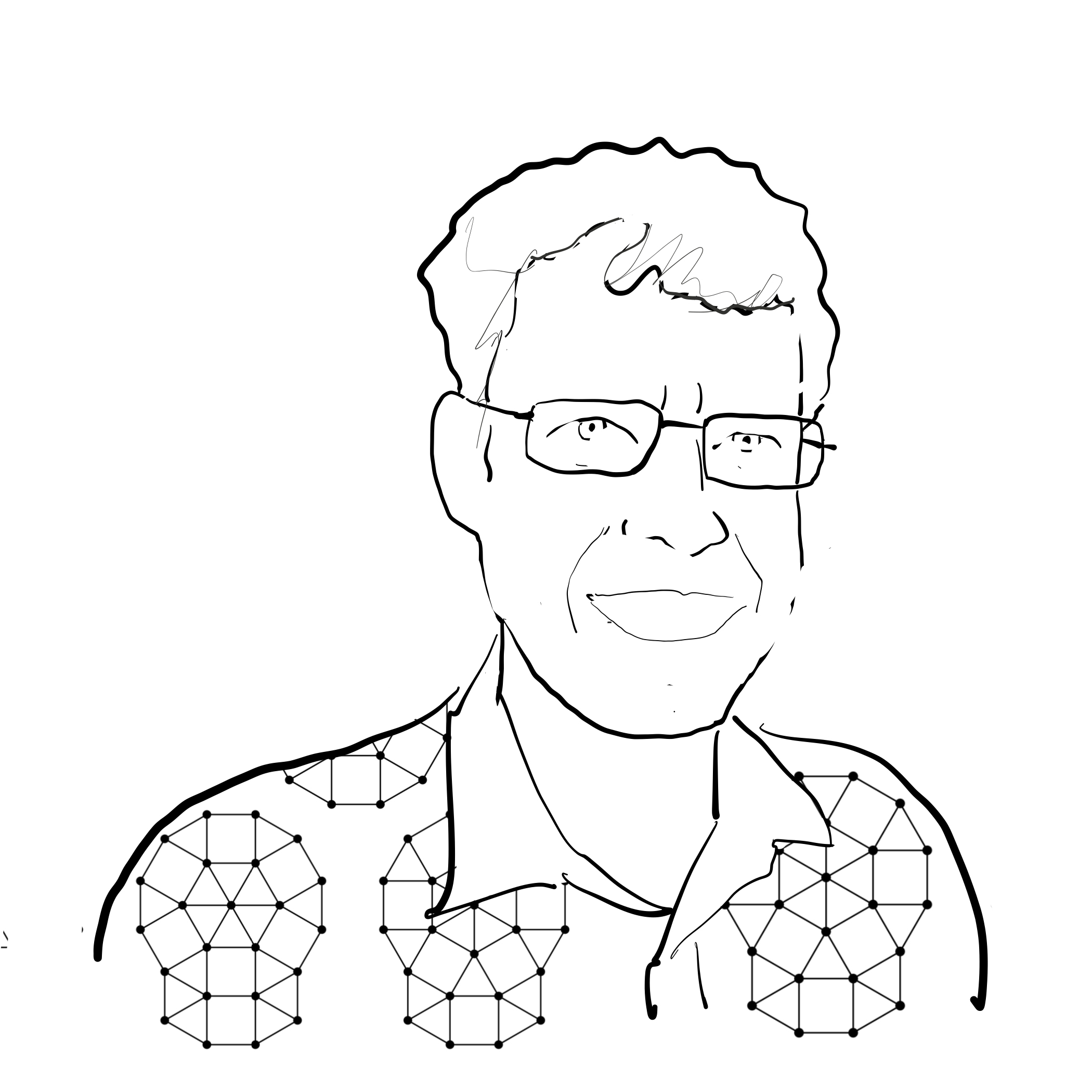
Richard Kenyon is the Erastus L. DeForest Professor of Mathematics at Yale University, serving as Director of Undergraduate Studies. His research focuses on statistical mechanics, probability, and discrete geometry, with notable contributions to dimer models, random tilings, and integrable systems. He has explored topics such as limit shapes, phase transitions, and combinatorial configurations. His work intersects algebraic geometry, combinatorics, and mathematical physics, often involving the analysis of lattice models and their applications. His research includes open problems such as tiling optimization, geometric spanning surfaces, number theory questions, and rigidity of tilings. Kenyon's gallery showcases visualizations of mathematical concepts, including random triangulations, Vinnikov curves, and conformal mappings. His academic contributions span over three decades, with recent articles addressing dimers, webs, and eigenvalue properties. He actively collaborates on projects like the six-vertex model, multiwebs, and renormalizable dynamical systems. Kenyon’s academic service includes directing undergraduate studies at Yale and contributing to initiatives in discrete differential geometry. His work highlights the interplay between pure mathematics and applied probability, with applications in physics and combinatorial optimization.
Camille Horbez is a CNRS researcher at Laboratoire de Mathématiques d'Orsay, Université Paris-Saclay, working on geometric group theory. His research explores groups like Out(F_n) through geometric actions, subgroup classification, and rigidity problems. He leads the ERC Starting Grant 'Artin groups, mapping class groups and Out(Fn): from geometry to operator algebras via measure equivalence'. Research focuses on: Classification of subgroups of Out(F_n) Measure equivalence rigidity Random walks on groups
Jayadev S. Athreya is an Associate Professor in the Department of Mathematics at the University of Washington, where he also serves as Director of the Washington Experimental Mathematics Lab. His primary affiliation is with the College of Liberal Arts & Sciences. He holds dual roles as a Professor of Mathematics and Professor of the Comparative History of Ideas. Athreya co-directs the Pacific Institute for the Mathematical Sciences and is a founder of the Washington Experimental Mathematics Lab, emphasizing interdisciplinary experimental mathematics. His research interests span dynamical systems, geometric topology, number theory, and algebraic geometry. He focuses on translation surfaces, billiards dynamics, geometric flows, and probabilistic methods in geometry. His work often intersects with problems in ergodic theory, Teichmüller theory, and moduli spaces. Athreya has an extensive publication record, with recent work exploring billiard complexity in regular polygons, linear flows on translation prisms, and spectral properties of marked tori. His papers frequently address counting problems, asymptotic distribution of geometric objects, and connections between number theory and dynamical systems. He has taught advanced courses such as Quasiconformal Maps and Teichmüller Theory, Complex Analysis, and Elementary Number Theory. His pedagogical approach emphasizes hands-on exploration through the Washington Experimental Mathematics Lab, fostering collaborative research projects with undergraduates. Athreya is committed to accessible mathematics education, reflecting his alignment with Federico Ardila-Mantilla's axioms on equity and inclusivity in mathematical experiences. His work bridges theoretical research with educational outreach, advocating for mathematics as a universal, adaptable tool.
Martin Bridson serves as President of the Clay Mathematics Institute since 2018 and holds the Whitehead Professorship of Pure Mathematics at the University of Oxford's Mathematical Institute, where he has been a Fellow of Magdalen College since 2007. Previously, he was Head of Oxford's Mathematical Institute (2015-2018), Professor of Pure Mathematics at Imperial College London (2002-2007), and Professor of Topology at Oxford (1999-2002). His academic journey began with undergraduate studies at Hertford College, Oxford, followed by PhD work at Cornell University. Bridson's research centers on Geometric Group Theory, Topology, and Spaces of Non-Positive Curvature. His work explores the deep connections between algebraic structures and geometric properties, particularly focusing on metric geometry, profinite completions, and the topology of non-positively curved spaces. His influential monograph "Metric Spaces of Non-Positive Curvature" (co-authored with André Haefliger) has become a foundational text in the field. His recent publications (2024-2025) demonstrate continued leadership in geometric group theory, with significant contributions to profinite rigidity, CAT(0) geometry, and automorphism groups. These works reveal evolving research directions toward computational aspects of group theory and deeper connections with low-dimensional topology. Steele Prize for Mathematical Exposition (2020, with Haefliger) Fellow of the Royal Society (2016) Fellow of the American Mathematical Society (2015) Royal Society Wolfson Research Merit Award (2012) London Mathematical Society Whitehead Prize (1999) Bridson has secured major research funding including EPSRC Senior Fellowships (2007-2012, 1997-2002), EPSRC Platform Grants (2010-2015), and multiple NSF grants. His leadership extends to directing the Mathematical Institute at Oxford and presiding over the Clay Mathematics Institute, where he influences global mathematical research directions. His collaborative work spans institutions including Princeton, Geneva, and Lausanne, reflecting his international research network.
Henry Wilton is a Professor of Topology and Group Theory at the University of Cambridge's Department of Pure Mathematics and Mathematical Statistics (DPMMS), and a Fellow of Trinity College. His research focuses on geometric group theory, topology, and low-dimensional topology, with particular emphasis on hyperbolic groups, 3-manifold groups, and residual properties of groups. He has contributed extensively to understanding limit groups, profinite completions, and decision problems in geometric topology. Wilton has taught courses including Part III Geometric Group Theory (2024), Part II Riemann Surfaces (2023), and Part III Mapping Class Groups (2021). He co-organizes the Groups and Geometry in the South East seminar series and actively contributes to academic communities through blogs (e.g., Low-Dimensional Topology) and collaborations with institutions like MSRI. His recent work addresses topics such as the congruence subgroup property for mapping class groups, rational curvature invariants in 2-complexes, and coherence of one-relator groups. He has published in high-impact journals like the Journal of the American Mathematical Society, Inventiones Mathematicae, and Duke Mathematical Journal. Wilton's research also explores profinite rigidity, virtual properties of 3-manifolds, and algorithmic problems in geometric topology. He collaborates with leading mathematicians such as Martin Bridson, Daniel Groves, and Pavel Zalesskii on projects spanning geometric group theory, hyperbolic geometry, and algebraic topology.
Joni Teräväinen is an Assistant Professor at the University of Cambridge , affiliated with the Department of Pure Mathematics and Mathematical Statistics. His research is funded by an ERC Starting Grant and has been supported by prestigious fellowships including the Academy Research Fellow, Marie Curie Fellow, and von Neumann Fellow. Current Role: Assistant Professor, University of Cambridge Previous Roles: Academy Research Fellow (University of Turku), von Neumann Fellow (IAS), Titchmarsh Research Fellow (University of Oxford) His research interests lie at the intersection of analytic number theory , additive combinatorics , and ergodic theory , with a focus on multiplicative functions, prime distribution, and higher-order Fourier analysis. Recent work explores correlations of multiplicative functions, Fourier uniformity in short intervals, and applications to the Chowla and Elliott conjectures. Joni has published extensively in top journals including the Journal of the European Mathematical Society , Annals of Mathematics , and Proceedings of the London Mathematical Society . His publications reveal a trend toward quantitative bounds for Gowers uniformity, shifted exponential composites, and function field analogues of classical problems. Scientific Awards: ERC Starting Grant Academy Research Fellow Marie Curie Fellow von Neumann Fellow Academy of Finland Postdoctoral Researcher Titchmarsh Research Fellow Contact: jt945@cam.ac.uk . More details are available on his personal homepage .
Dr. Arie Levit is a Senior Lecturer (tenure track) in the Department of Theoretical Mathematics at Tel Aviv University's School of Mathematics, a position he has held since 2021. Previously, he served as a Gibbs Assistant Professor at Yale University from 2017. His academic career centers on pure mathematics with emphasis on structural properties of discrete groups and dynamical systems. His educational background includes: B.A in Mathematics from the Hebrew University of Jerusalem (2004) M.A in Mathematics from the Hebrew University of Jerusalem (2012) Ph.D. in Mathematics from the Weizmann Institute of Science (2017) under Prof. Tsachik Gelander Levit's research spans discrete groups, geometric and analytic group theory, and ergodic theory, with significant contributions to lattice theory, invariant random subgroups, character rigidity, and group stability. His work integrates algebraic, geometric, and probabilistic frameworks to solve fundamental problems in classification and rigidity of group actions, particularly in non-Archimedean and hyperbolic settings. Analysis of his 14 publications (2014-2024) reveals evolving focus from foundational lattice theory toward contemporary stability phenomena and character theory, with 60% of recent work (2022-2024) addressing permutation stability, Hilbert-Schmidt representations, and ergodic properties of group actions. Key methodological threads include the application of ergodic theory to group-theoretic classification and the development of analytical tools for stability problems. His scholarly recognition includes: Klein Prize (2017) ISF-BSF research grant (2020) As principal investigator of the ISF-BSF grant, Levit leads research on group stability and ergodic theory. His extensive collaborations with Gelander, Lubotzky, and Lazarovich demonstrate active mentorship within the global mathematics community. His work is conducted within Tel Aviv University's Theoretical Mathematics department, which maintains strong international partnerships in geometric group theory and dynamics.
Dr. John Haslegrave is a Lecturer in Probability at Lancaster University's School of Mathematical Sciences, where he is an active member of both the Probability and Combinatorics research groups. Previously, he held positions at the University of Oxford (working with Peter Keevash), University of Warwick (with Agelos Georgakopoulos), and University of Sheffield (with Hong Liu and Chris Cannings). He completed his PhD at Trinity College, Cambridge under Béla Bollobás. His research focuses on: Random graphs and evolving network models (especially preferential attachment) Interacting particle systems and random walks on graphs Extremal problems in graph/hypergraph theory Percolation theory and geometric probability Combinatorial optimization and graph invariants Analysis of recent publications reveals strong emphasis on probabilistic combinatorics, with frequent exploration of: structural graph properties, asymptotic behavior of stochastic processes, geometric embeddings, and optimization problems. His work consistently bridges discrete mathematics with statistical physics concepts. Dr. Haslegrave welcomes PhD students interested in discrete probability and graph theory, with current supervision interests including preferential attachment models, interacting particle systems, planar percolation, and extremal problems. He teaches undergraduate courses in Graph Theory (MATH326) and Probability (MATH103), and organizes Lancaster's Pure Mathematics Seminar series.
Ron Peled is a Full Professor in the School of Mathematical Sciences at Tel Aviv University. Starting in summer 2024, he will serve as a Brin Professor in the Department of Mathematics at the University of Maryland, on leave from Tel Aviv University. During the 2022-2024 academic years, he visited Princeton University and the Institute for Advanced Study. His research spans multiple areas of probability theory and statistical physics, with significant contributions to understanding random surfaces, first-passage percolation, spin systems, and disordered models. Peled's research interests primarily focus on Probability Theory and Statistical Physics. His work examines the behavior of random systems, particularly in the presence of disorder or constraints. He has made significant contributions to understanding minimal surfaces in random environments, the structure of geodesics in first-passage percolation, phase transitions in spin systems, and the properties of random surfaces. His research often combines deep probabilistic insights with connections to statistical mechanics and mathematical physics, revealing universal behaviors in complex random systems. Analysis of Peled's recent publications reveals a strong focus on understanding the effects of disorder in statistical physics models. His work spans multiple domains including first-passage percolation, random surfaces, spin systems, and random matrix theory. A recurring theme is the investigation of how microscopic randomness affects macroscopic properties, with particular attention to phase transitions, correlation decay, and geometric structures emerging in random environments. His research often employs sophisticated probabilistic techniques combined with insights from statistical mechanics. Peled has received significant recognition through prestigious grants including multiple Israel Science Foundation grants (1048/11, 861/15, 1971/19, 2340/23), a Marie Skłodowska-Curie Actions International Reintegration Grant (SPTRF), an ERC Starting Grant (LocalOrder), and an ERC Consolidator Grant (Transitions). These awards reflect the importance and impact of his research in the mathematical community. Peled has supervised numerous students and postdocs throughout his career. His Ph.D. students include Daniel Hadas (joint with Wojciech Samotij) and Yinon Spinka (graduated August 2018). His Master's students include Michal Bassan (joint with Shoni Gilboa), Daniel Hadas, Yoav Bar Nir, Dor Elboim (who went on to do a Ph.D. at Princeton), Vital Kharash, Omri Cohen-Alloro, Alexey Gladkich, and Yinon Spinka. He has also mentored postdoctoral fellows including Lakshmi Priya, Paul Dario, Matan Harel, Raimundo Briceño, Alexander Glazman, Alexander Magazinov, Xiaolin Zeng, Nishant Chandgotia, Jeremiah Buckley, Wojciech Samotij, and Tom Ellis. Peled is actively involved in the academic community, serving as one of the organizers of the online Joint Israeli Probability Seminar and previously organizing the Horowitz Seminar on Probability, Ergodic Theory and Dynamical Systems. He has also organized several workshops and conferences including "Challenges in probability and statistical mechanics" at the Technion in 2022, the "Workshop on Strongly Correlated Random Interacting Processes" at Oberwolfach in 2018, and "Elegance in probability: A conference honoring Russell Lyons' 60'th birthday" at Tel Aviv University in 2017.
Carlo Angiuli is an Assistant Professor of Computer Science at the Luddy School of Indiana University . He is a leading researcher in type theory , with a focus on its applications to programming language design and logic . His work bridges theoretical foundations and practical implementations, particularly through dependent types , proof assistants , and homotopy type theory . His research interests include: Type Theory (foundational systems for programs and proofs) Programming Language Foundations (formal semantics and reasoning) Homotopy Type Theory (higher-dimensional structures) Dependent Types (expressive type systems) Proof Assistants (formal verification tools) Computational Logic (algorithmic reasoning) Angiuli actively contributes to the programming languages community as a POPL Program Committee member and co-author of a forthcoming textbook on dependent type theory. His students include Johnson He, Huang Xu, Kelton OBrien, and Ian Ray , who joined in Fall 2025. He has received significant recognition, including the Best Paper Award at FSCD 2019 and the School of Computer Science Distinguished Dissertation Award from Carnegie Mellon University. His current work explores advanced type-theoretic frameworks and their implementation in proof assistants like the red* family of tools. Scientific awards: Best Paper Award, FSCD 2019 (Junior Researchers category) School of Computer Science Distinguished Dissertation Award, Carnegie Mellon University He teaches courses such as Modern Dependent Types (CSCI-B619), Programming Language Foundations (CSCI-B522), and Introduction to Computer Science (CSCI-C211).
Eyal Lubetzky is a Professor of Mathematics at the Courant Institute of Mathematical Sciences, New York University, and an affiliate Associate Professor at the University of Washington's Mathematics Department since 2008. He holds a PhD from Tel-Aviv University (2007), supervised by Noga Alon, and completed postdoctoral research at Microsoft Research. His research focuses on Probability Theory, Combinatorics, and their applications to statistical physics and theoretical computer science. Key areas of research include phase transitions in statistical mechanics, mixing times of Markov chains, and probabilistic combinatorics. He has received prestigious awards such as the AMS Centennial Fellowship (2016–2017), Rollo Davidson Prize (2013), and fellowships from the American Mathematical Society and Institute of Mathematical Statistics. Lubetzky has mentored numerous interns and serves on editorial boards of journals like Probability and Mathematical Physics and Communications in Pure and Applied Mathematics . His teaching includes advanced courses on probability theory, stochastic processes, and spin glass dynamics. Collaborative work spans interdisciplinary topics, including percolation, random graphs, and the interplay between combinatorial structures and probabilistic models. His research outputs address foundational questions in statistical mechanics, such as cutoff phenomena in Glauber dynamics, interface fluctuations in Ising/Potts models, and the geometry of SOS surfaces. He has also contributed to understanding phase transitions in random media and the dynamics of complex systems.
Scott Balchin is a Lecturer at the School of Mathematics and Physics at Queen's University Belfast. His research sits at the intersection of homotopy theory, combinatorics, and category theory, with a focus on structures like N∞ operads, tensor-triangular geometry, and lattice theory in algebraic contexts. Research Interests Homotopy Theory Operads and Higher Structures Combinatorics in Algebraic Topology Tensor-triangular Geometry Model Categories and Lattice Theory Research Activity Recent work explores the combinatorial foundations of N∞ operads for finite groups, conjugacy-class-based bijections in homotopy theory, and rigidity phenomena in chromatic homotopy categories. His publications span journals like the Journal of Pure and Applied Algebra and European Journal of Combinatorics , often involving collaborations with researchers such as Emily MacBrough and Kyle Ormsby. Contact Email: s.balchin@qub.ac.uk
Joy Morris is a Professor at the Department of Mathematics & Computer Science at the University of Lethbridge. She earned her BSc from Trent University in 1992 and her PhD from Simon Fraser University in 2000 under Brian Alspach. Her academic journey includes tenure in 2005, promotion to Associate Professor, and full Professor status in 2015. Research Focus: Interactions between group theory and graph theory, with emphasis on Cayley graphs and automorphisms Key Contributions: Solving the distinguishing number problem for various graph families, advancing DCI/CI group theory Research Overview Her work bridges abstract algebra with graph theory through Cayley graphs. She investigates automorphism groups, Hamilton cycles, and graph symmetry properties. Notable contributions include resolving the DCI property for specific groups, analyzing Praeger-Xu graphs, and studying color-preserving automorphisms. Academic Leadership As a co-author of two influential open-access textbooks ( Proofs and Concepts with Dave Morris and her own Combinatorics text), she has shaped curriculum development and mathematical education outreach programs for parents in Alberta. Her teaching portfolio includes foundational courses like Math 2000 and advanced combinatorial theory instruction. Collaborative Impact With over 30 publications since 1996, her collaborations span international researchers including C. Praeger, P. Spiga, and E. Dobson. Current projects involve hypercube distinguishing costs and automorphism group analysis of vertex-transitive digraphs. She maintains active research into graphical regular representations and graph isomorphism problems.
Zinovy Reichstein is a Professor in the Department of Mathematics at the University of British Columbia, Faculty of Science. His research focuses on algebra, algebraic geometry, and algebraic groups. He serves on the editorial board for Transformation Groups and supervises graduate students in Mathematics (MSc and PhD programs). His research interests span various areas of pure mathematics, particularly focusing on: Algebraic groups and their representations Essential dimension theory and its applications Galois cohomology and field theory Invariant theory and geometric invariant theory Algebraic geometry, particularly related to moduli spaces Reichstein's recent publications (2022-2025) demonstrate a strong focus on essential dimension theory, algebraic groups, and related areas in algebra and geometry. His work often connects abstract algebra with geometric methods, exploring problems related to Hilbert's 13th problem, Brauer groups, and specialization phenomena. Many of his papers investigate the interplay between group actions, field extensions, and algebraic structures, with particular attention to problems in prime characteristic. His professional activities include: Member of the editorial board for Transformation Groups Supervision of graduate students in Mathematics Extensive publication record in top mathematics journals Reichstein teaches undergraduate courses including Math 300 (Introduction to complex variables) during Term 2 (January-April 2024).