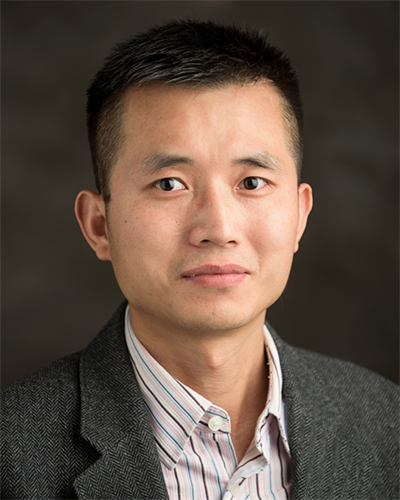
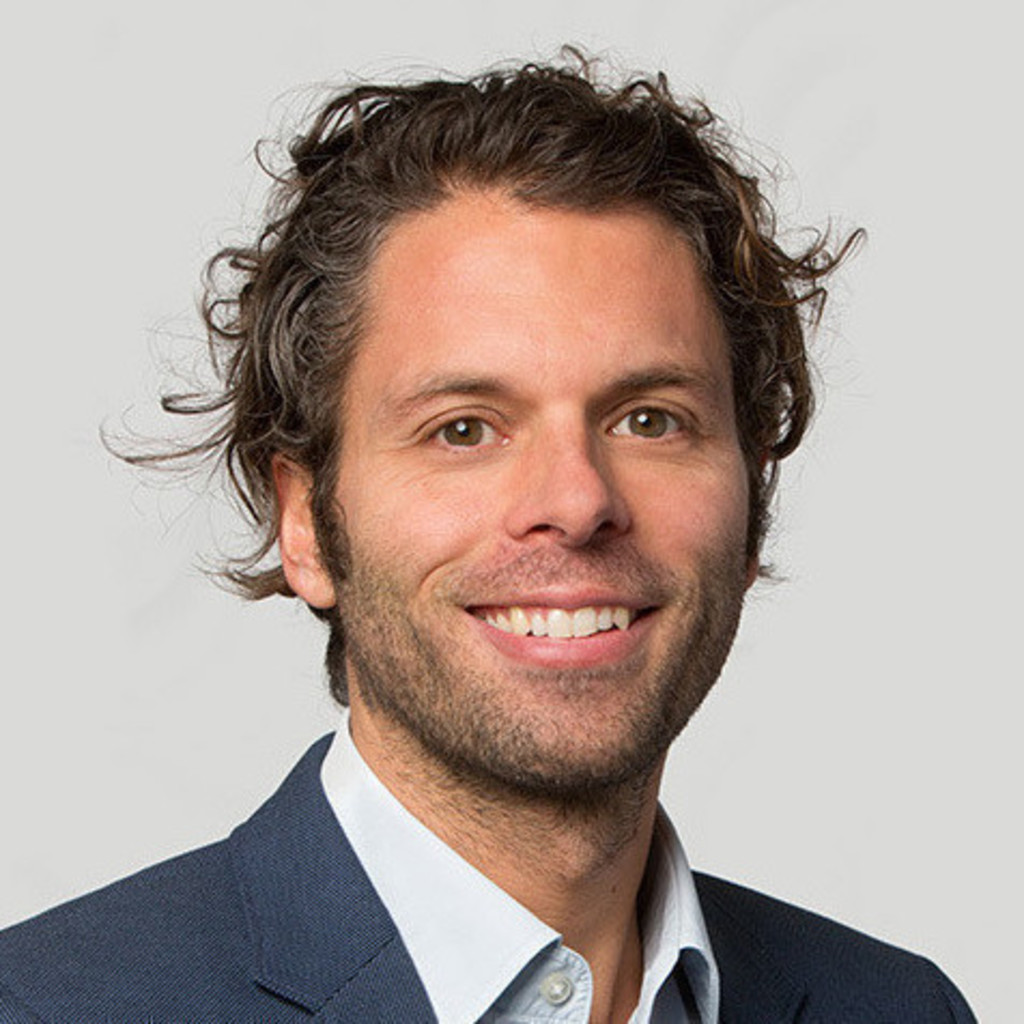
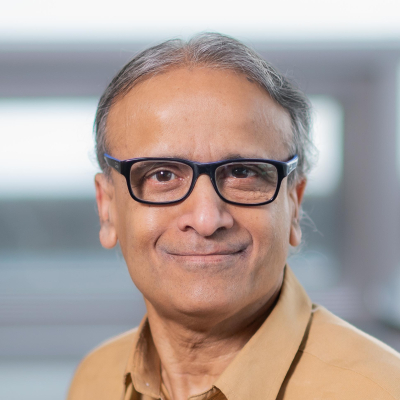
Liping Liu is an Associate Professor in the Department of Computer Science at Tufts University's School of Engineering. He holds a Ph.D. from Oregon State University and has held postdoctoral positions at Columbia University and Tufts. His research focuses on machine learning, generative models, graph learning, and their applications in biochemical data analysis and fluid dynamics simulation. His work on graph generative methods earned the NSF CAREER Award. Education: Ph.D. (Oregon State University, 2016), M.Sc. (Nanjing University, 2009), B.S. (Hebei University of Technology, 2006). Research Interests: Machine Learning, Deep Learning, Generative Models, Time Series, Graph Learning. Dr. Liu's research emphasizes probabilistic modeling and neural networks, addressing challenges in graph generation, data-driven physics simulation, and biochemical analysis. His recent work includes advancements in graph-based recommendation systems, turbulence modeling, and enzymatic reaction prediction. His publications span top AI conferences like NeurIPS, ICML, and ICLR. He has secured grants totaling over $9 million, including the NSF CAREER Award and NIH funding for metabolomics and enzymatic promiscuity studies. His teaching includes courses on generative models, deep learning, and machine learning for graph analytics. Awards: NSF CAREER Award (2023), NIH grants, DARPA ACT-NOW project (2019). Service: NSF panelist, program committee member for AAAI, NeurIPS, and IJCAI.
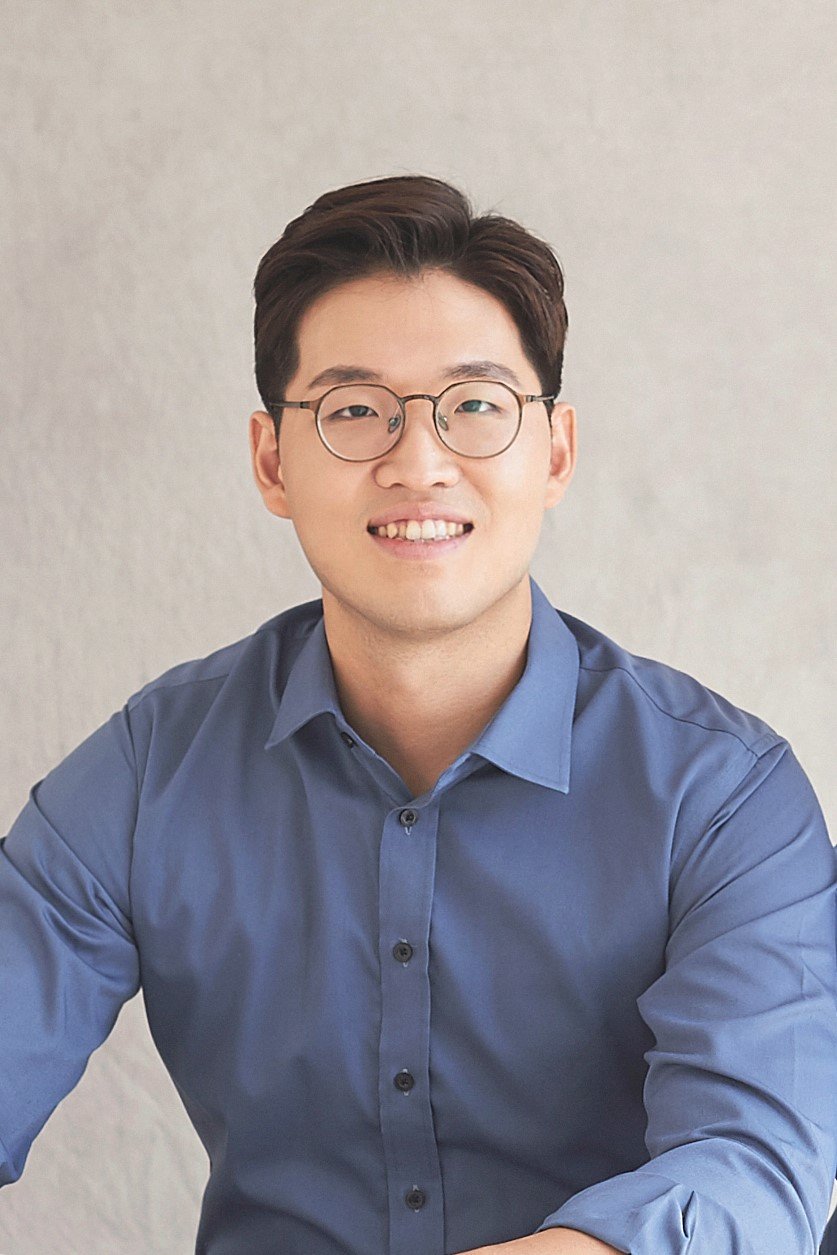
Seongjin Choi is an Assistant Professor in the Department of Civil, Environmental, and Geo-Engineering at the University of Minnesota, Twin Cities , where he began his role in January 2024. His research bridges Urban Mobility Data Analytics , Spatiotemporal Modeling , and Deep Learning to advance transportation systems. Affiliated with the Center for Transportation Studies , Minnesota Robotics Institute , and Data Science Initiative , he leads the Choi Research Group . Education: Ph.D., Civil and Environmental Engineering, Korea Advanced Institute of Science and Technology (KAIST), 2021 M.S., Civil and Environmental Engineering, KAIST, 2017 B.S., Civil and Environmental Engineering, KAIST, 2015 His research focuses on Urban Mobility Data Analytics and Deep Learning to optimize transportation systems. Key areas include: Spatiotemporal Data Modeling for forecasting and imputation Generative AI applications in transportation data Reinforcement Learning for Connected Automated Vehicles (CAV) Cooperative Intelligent Transport Systems (C-ITS) Recent publications in Transportation Science and Transportation Research Part C highlight his work on probabilistic traffic forecasting , deep generative models , and vision-language-action frameworks for autonomous systems. His methodologies often combine AI-driven analytics with real-time mobility optimization . Dr. Choi serves as: Associate Editor of The Journal of the Korean Society of Transportation (JKST) , 2023–Present Guest Editor for Journal of Advanced Transportation special issue on "Advanced Data Intelligence Theory and Practice in Transport 2023", 2023–2024 He actively seeks PhD students/postdocs for 2025 cohorts focused on machine learning for transportation challenges. Current projects include AI-enhanced traffic forecasting, CAV control, and urban air mobility (UAM) integration studies.
Edwin Romeijn holds the Jill Stewart Archer Family Chair and Professor position in the H. Milton Stewart School of Industrial and Systems Engineering at Georgia Institute of Technology. He served as School Chair from 2015-2024, overseeing the nation's top-ranked industrial engineering program. Previously, he held faculty positions at the University of Michigan, University of Florida, and Erasmus University Rotterdam, and served as Program Director at the National Science Foundation. Education: Ph.D. in Operations Research (1992), Erasmus University Rotterdam M.S. in Econometrics (1988), Erasmus University Rotterdam Romeijn's research centers on optimization theory and applications , with dual focus areas in radiation therapy treatment planning and supply chain management . His radiation therapy work develops algorithms for cancer treatment planning and clinic scheduling, while his supply chain research addresses integrated optimization of production, inventory, and transportation under demand flexibility, resource constraints, perishability, and uncertainty. His methodologies bridge theoretical operations research with real-world healthcare and logistics systems. His publication portfolio demonstrates consistent contributions to optimization methods across diverse application domains, with recent work spanning healthcare systems, renewable energy, sports analytics, and unconventional logistics. The research exhibits strong methodological continuity in stochastic programming, network optimization, and decision-making under uncertainty. Scientific Awards: Fellow of IISE and INFORMS (2017) Richard C. Wilson Faculty Scholar (2012-2013) Multiple best paper awards in industrial engineering conferences Pierskalla Best Paper Award (2003) Young Investigator’s Award at ICCR (2004) Romeijn has advised numerous graduate students and secured significant research funding through NSF and other agencies. His leadership extends to program direction at NSF and chairing Georgia Tech's Industrial and Systems Engineering school. He maintains active collaborations with healthcare institutions and manufacturing enterprises, translating theoretical advances into practical solutions for radiation oncology and supply chain resilience.
László Kozma is an Assistant Professor at the Theoretical Computer Science group of the Institute of Computer Science (Freie Universität Berlin). He obtained his PhD from Saarland University under Raimund Seidel, followed by postdoctoral positions at Tel Aviv University and TU Eindhoven. His research focuses on self-adjusting data structures , adaptive algorithms , and combinatorial optimization with applications to problems like the Traveling Salesman Problem, binary search trees, and geometric data structures. Academic Affiliation: Freie Universität Berlin (since 2018) Education: PhD in Computer Science (Saarland University, 2016); postdoc at Tel Aviv University and TU Eindhoven. His work explores the intersection of data structures, combinatorial algorithms, and geometric methods. He has made significant contributions to problems involving pattern-avoidance in inputs, saddlepoint detection , and self-adjusting heaps . Key areas include: Adaptive algorithms for pattern-avoiding inputs Optimal tree and heap structures Geometric and stochastic approaches to optimization Complexity analysis of classical algorithms Recent publications highlight efficient solutions for exponential cut problems (ESA 2025), balanced TSP partitioning (EuroCG 2025), and randomized saddlepoint algorithms (ESA 2024). His research often bridges theory and practice, exemplified by the smooth heap implementation and fun projects like Recursi and Cuckoo Hashing visualization.
Prof. Dr. Julia Rieck is a Full Professor of Business Administration at the University of Hildesheim , leading the Department of Business Administration and Operations Research within the Faculty of Mathematics, Natural Sciences, Economics and Computer Science. As Dean of the Faculty , she oversees academic programs, quality management, and research initiatives. Her roles include academic advising for the Business Information Systems (B.Sc./M.Sc.) programs and active participation in examination boards and quality committees. Education: PhD in Political Science (Dr. rer. pol.) with summa cum laude (2008), Habilitation at Clausthal University of Technology (2014), and studies in Business Mathematics (Diploma, University of Hamburg, 2003) and Mathematics (Georg-August-University Göttingen, 2000). Research: Focuses on Operations Research , Supply Chain Management , Project Planning , and Logistics . Her work integrates mathematical modeling , machine learning , and real-world applications , particularly in disaster response , dynamic transportation , and sustainable e-commerce . Projects: Leads third-party funded initiatives like "IT für die sorgende Gesellschaft" (AI in healthcare/social sectors) and contributes to the HULLS real-lab (AI in aging societies). Collaborates with regional companies (e.g., Youco, ADITUS) and institutions (HAWK, University of Hannover). Teaching: Emphasizes practical application through case studies, industry partnerships, and the IT-Speed Dating event for student-company connections. Her courses cover project resource planning , logistics , and digital transformation . Labs & Teams: Active in the Institute of Business Administration & Business Information Systems , contributing to the KET Kompetenzwerkstatt (entrepreneurship support) and interdisciplinary teams in AI and sustainability research.
Grigory Mikhalkin is a Full Professor at the University of Geneva, where he has been a faculty member since 2008. He is considered one of the founders of Tropical Geometry, a domain of algebraic geometry governed by (max,+)-calculus where geometric objects degenerate to their piecewise-linear limits. He leads the "ALGEBRA AND GEOMETRY" research group at the university. Mikhalkin studied at Leningrad and Michigan State University under the supervision of Oleg Viro and Selman Akbulut. After receiving his PhD in 1993, he completed postdoctoral training at Princeton, Bonn, Toronto, Berkeley, and Harvard (1993-2000). He served as associate and then full Professor at the University of Utah before moving to the University of Toronto, eventually joining the University of Geneva in 2008. Mikhalkin's primary research areas are Geometry and Topology, with a particular focus on Tropical Geometry. His work bridges algebraic geometry with combinatorial structures, exploring how complex geometric objects can be understood through their piecewise-linear tropical counterparts. This approach has proven fruitful in solving problems in enumerative geometry and has connections to mathematical physics through the study of sandpile models and self-organized criticality. His research group actively explores the connections between tropical geometry, symplectic geometry, and real algebraic geometry, organizing regular seminars including the "Séminaire Fables Géométriques." The recent publications of Professor Mikhalkin demonstrate a strong focus on the intersection of tropical geometry with sandpile models and self-organized criticality. His work has evolved to examine tropical aspects of number theory, lattice sums, and even applications to economics through auction theory. A significant portion of his recent research explores the patterns and structures that emerge in sandpile models across various lattices and dimensions, connecting discrete mathematics with continuum limits through tropical techniques. Prize of the St. Petersburg Mathematical Society (1999) Silver Medal of the Mexican Mathematical Society (2011) Canada Research Chair (2004-2009) Friedrich-Wilhelm-Bessel Research Award of the Alexander-von-Humboldt Foundation (2007-2008) European Research Council Advanced Grant (2010-2015) Chair of Fondation Sciences Mathématiques de Paris (2013-2015) Mikhalkin has successfully advised several PhD students to completion, including Kristin Shaw (2011), Lionel Lang (2014), Nikita Kalinin (2015), Mikhail Shkolnikov (2017), and Johannes Josi (2018). His research has been supported by prestigious grants including the ERC Advanced Grant and the Canada Research Chair. He presented his work at the Bourbaki seminar in 2003 and was selected as a Geometry speaker at the International Congress of Mathematicians in 2006, highlighting the significance of his contributions to the field. Professor Mikhalkin leads the "ALGEBRA AND GEOMETRY" research group at the University of Geneva, which includes current members Thomas Blomme, Francesca Carocci, Aloïs Demory, Gurvan Mével, and Antoine Toussaint. The group has a strong track record of postdoctoral fellows and alumni, including notable researchers such as Ivan Bazhov, Johan Bjorklund, Rémi Crétois, and others. They organize several seminars including the "Séminaire Fables Géométriques" and have historical connections to the Battelle Seminar and Tropical working group Seminar.
Ilan Shomorony is an Assistant Professor at the University of Illinois at Urbana-Champaign, affiliated with the Grainger College of Engineering, Electrical and Computer Engineering Department, and Coordinated Science Lab. He also holds an affiliation with the Carl R. Woese Institute for Genomic Biology. His research focuses on genomic data science, information theory, and their applications in DNA storage, bioinformatics, and machine learning. He has received an NSF CAREER Award for his work on genomic data science. Shomorony’s academic journey includes roles in multiple departments and labs, reflecting his interdisciplinary approach. His recent publications explore topics such as molecular communication channel capacity, metagenomic binning, and efficient sequence alignment algorithms. Education: Not explicitly stated in provided text, but his academic roles suggest advanced degrees in electrical engineering or computer science. Research Interests: His work bridges theoretical information theory and practical genomic applications. Key areas include DNA storage systems, algorithmic improvements for sequence analysis, and the application of machine learning to biological data. He develops novel coding schemes for molecular data storage and explores fundamental limits of genomic data reassembly. Grants & Awards: NSF CAREER Award (2021): Supported research on genomic data science, integrating informational theory and algorithm design. Labs & Teams: Active in the Coordinated Science Lab and collaborates with the Carl R. Woese Institute for Genomic Biology, emphasizing interdisciplinary research in genomics and computational biology.
Dr. Ilke Canakci is an Assistant Professor in the Department of Mathematics at Vrije Universiteit Amsterdam. She specializes in cluster algebras, combinatorics, and representation theory. Her research focuses on algebraic structures like perfect matchings, derived categories, and triangulations. She teaches Discrete Mathematics, Group Theory, and Linear Algebra courses. Key collaborators include researchers from institutions worldwide. Her recent work explores cluster categories for infinity-gons and infinite friezes related to annulus triangulations. Awards and grants are not explicitly mentioned, but her extensive publication record reflects active research in algebraic geometry and combinatorial mathematics. Research Interests: Cluster algebras, categorification of geometric structures, combinatorial patterns, representation theory of algebras, and applications of algebraic methods to geometric problems. Current projects involve extending Caldero-Chapoton maps and analyzing frieze patterns in non-traditional geometries.
Felix Naumann is a Professor at the Hasso Plattner Institute in Potsdam, Germany, specializing in data management and database systems. His research focuses on data quality, data profiling, entity resolution, functional dependencies, and database optimization. He has authored over 300 publications in top-tier conferences and journals, including VLDB, SIGMOD, and ICDE. His work bridges theoretical foundations with practical systems, such as TASHEEH for data cleaning and PRISMA for privacy-preserving schema matching. He serves as an editor for the ACM Journal of Data and Information Quality and has led initiatives on hybrid conference formats and inclusive computing. Key contributions include: Data Quality: Pioneered studies on data quality's impact on machine learning and developed tools like AutoTSAD for anomaly detection. Data Dependency Discovery: Advanced functional and inclusion dependency mining algorithms, including Hitting Set Enumeration methods. Schema Matching & Integration: Created systems like BrewER and Frost for entity resolution and schema alignment. Educational Impact: Led massive open courses in data engineering with over 10,000 participants. His work emphasizes practical applications in cultural heritage data (ReCLAIM), Wikipedia table analysis, and cross-platform data systems (RHEEMix). He collaborates extensively with industry and academia, addressing challenges in dynamic datasets and data governance.
Surajit Chaudhuri is a Researcher at Microsoft , with a career spanning decades in database systems and data management . He has received the prestigious SIGMOD Edgar F. Codd Innovations Award (2011) for his contributions to query optimization , index tuning , and data lakes . Research Interests : His work focuses on database tuning , approximate query processing , fuzzy similarity joins , automated data transformations , and machine learning integration for scalable data systems. Recent Publications : In 2025, his research includes Auto-Test for unsupervised error detection in tables, Esc for budget-aware index tuning, and MMTU for multi-task table understanding benchmarks. Earlier works in 2024–2023 address spreadsheet formula recommendation , low-overhead index filtering , and time-series pattern recognition . Scientific Impact : He has co-authored influential papers in SIGMOD , VLDB , and IEEE Transactions , shaping practices in cloud databases , query optimization , and self-service BI . His collaborations span institutions like Microsoft, MIT, and ETH Zurich.
Dr. Axel Lubk is a Group Leader at the Institute for Solid State Research (IFW Dresden) , specializing in advanced electron microscopy techniques for materials science. His research spans four key areas: (1) TEM method development (high-resolution imaging, tomography, holography, and in-situ techniques), (2) charge particle optics and scattering theory , (3) magnetic nanotextures (domain walls, skyrmions), and (4) plasmonics (mode hybridization in heterogeneous structures and semiconductor heterostructures). Dr. Lubk’s work focuses on three-dimensional magnetic texture analysis using electron holography and tomography, particularly in systems like skyrmion tubes , FeGe , and Cr2O3 thin films . He has pioneered techniques for vector-field electron tomography and phase retrieval under varying boundary conditions, advancing nanoscale magnetic imaging. His recent studies include plasmonic properties in AgAu nanosphere chains , thermoelectric multilayer systems , and topological insulators like NiRh2Sb and TaTMTe4 . Dr. Lubk has published extensively in high-impact journals such as Nature Communications and Advanced Materials , with a focus on TEM instrumentation and quantitative analysis . He frequently presents at international conferences like the International Microscopy Congress and European School of Magnetism , emphasizing applications in spintronics , quantum materials , and nanostructured systems . His contributions to holographic vector-field electron tomography and machine learning for spectrum-image data have set new standards in electron microscopy.
Felix Otto is a Director at the Max Planck Institute for Mathematics in the Sciences and an Honorary Professor for Analysis and Mathematical Modeling at the University of Leipzig. His research focuses on pattern formation, energy landscapes, and scaling laws, with contributions to stochastic homogenization, PDEs, and optimal transport. He has held academic positions at the University of California and the Hausdorff Center for Mathematics. Notable grants include projects on microstructure formation in thin coatings and stochastic homogenization. He has organized conferences such as the ICM satellite conference on Probability and Mathematical Physics. His work bridges pure and applied mathematics, with implications for materials science and fluid dynamics. Education: Diplom (1990), PhD (1993) from Bonn University. Postdoctoral roles at Bonn, Courant Institute, and CMU. Tenured faculty roles at UCSB (1998–2010) and Bonn (1999–2010). Research interests span stochastic PDEs, calculus of variations, and the mathematical theory of materials. Grants include BMBF and DFG projects on microstructure modeling and homogenization.
PD Dr. Kaspar Riesen is the Head of the Pattern Recognition Group at the Institute of Computer Science, University of Bern. His research focuses on graph-based methods for pattern recognition, with applications in document analysis, environmental modeling, and healthcare. Key interests include graph matching, neural networks, and spatio-temporal modeling. His work spans structural pattern recognition, graph embeddings, and keyword spotting in historical documents. Recent projects involve river network analysis using graph regression and hypoglycemia prediction via LSTM-GNN hybrid models. Publications emphasize graph theory advancements, such as normalized graph compression and geometric similarity learning. Collaborations include developing specialized algorithms for automated error detection and improving decision-making in simulated sports. Labs/Teams: Pattern Recognition Group (PRG) at the University of Bern.
Teresa Anna Steiner serves as an Assistant Professor in the Department of Mathematics and Computer Science at the University of Southern Denmark, specializing in algorithmic research with emphasis on privacy-preserving computational methods and theoretical computer science. Her research centers on differential privacy mechanisms, where she investigates trade-offs between data utility and privacy guarantees through rigorous analysis of noise injection techniques like Laplace and Gaussian distributions. She extends this work to dynamic graph databases requiring real-time privacy protections and develops novel text indexing approaches for regular expression pattern matching, contributing to foundational advancements in algorithm design for sensitive data environments. Recent 2025 publications reveal a cohesive research trajectory focused on practical implementations of differential privacy across diverse data structures, with particular attention to variance optimization in noise mechanisms, edge-level privacy in evolving graphs, and efficient indexing for textual pattern recognition. These works collectively address critical challenges in balancing computational efficiency with robust privacy guarantees in modern data systems. No scientific awards were documented in the available information. Details regarding student advising or research grant funding were not specified in the provided materials.
Laks V.S. Lakshmanan is a Professor in the Department of Computer Science at the University of British Columbia (UBC), within the Faculty of Science. His research focuses on data management, graph computing, machine learning, and algorithms, with notable contributions to dense subgraph discovery, influence maximization, and healthcare informatics. He teaches advanced courses on databases and data management, including CPSC 404 (Advanced Relational Databases) and CPSC 534L (Topics in Data Management). His awards include the ACM SIGMOD Research Highlight Award, the IEEE Data Science Best Paper Award, and recognition as an ACM Distinguished Scientist (2016). His work bridges theoretical algorithm design with practical applications in social networks, bioinformatics, and healthcare. Key research themes include optimizing graph algorithms for large-scale data, combating misinformation through network analysis, and developing efficient methods for subgraph enumeration and influence propagation. His recent publications explore topics like clinical event prediction (TRACE), cost-effective LLM selection (ThriftLLM), and cross-modal consistency in AI systems. Education: Details not explicitly provided in sources. Grants & Funding: Recipient of NSERC Discovery Accelerator Supplements. Labs/Teams: Engaged in UBC's data management research groups and collaborative initiatives with industry partners.