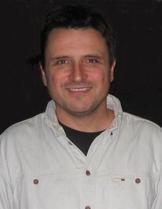
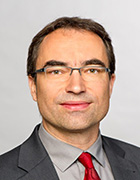
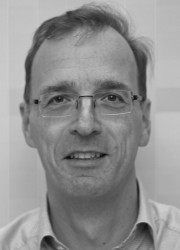
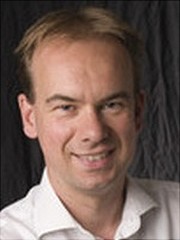
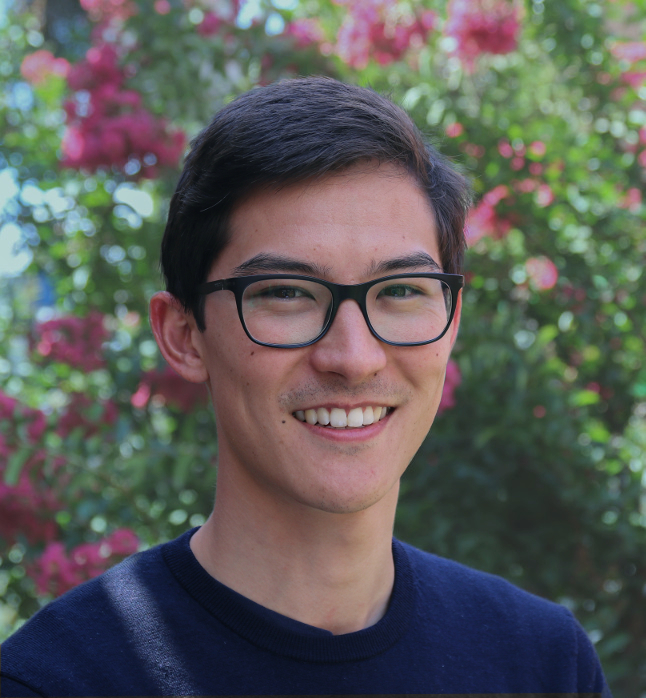
Dongwook Kim is affiliated with the Korea Advanced Institute of Science & Technology (KAIST) as a faculty member in the Department of Business and Technology Management under the College of Business. His research spans multiple domains including machine learning, robotics, signal processing, and biomedical engineering. Key contributions in Computer Vision (CNN-based semantic segmentation, 3D point cloud analysis) Significant work in Hardware Design (energy-efficient processors, neuromorphic computing) Interdisciplinary expertise in Medical Imaging (bone age assessment, retinal biomarkers) and Cybersecurity (attack detection, network analytics) Publications since 2015 demonstrate sustained innovation in AI applications , Signal Processing , and Smart City Governance . His work often integrates theoretical advances with practical implementations in real-world systems. No scientific awards or student mentorship details are explicitly documented in the provided records.
Nicole Megow is a Professor holding the chair for Combinatorial Optimization in the Faculty of Mathematics and Computer Science at the University of Bremen since 2016. She is affiliated with several research clusters including Humans on Mars Initiative, Minds, Media, Machines, and Dynamics in Logistics. Her academic journey includes positions at TU Berlin, Max Planck Institute for Informatics, TU Darmstadt, and TU Munich. Professor Megow's research focuses on mathematical optimization, algorithm design and analysis, and operations research. Her specific interests span combinatorial and discrete optimization, efficient algorithms, scheduling theory, resource allocation, packing problems, network design, routing, and uncertainty models including online, stochastic, robust, and explorable approaches. Her work bridges theoretical foundations with practical applications in logistics and decision-making systems. Her recent publications demonstrate a strong trend toward integrating prediction models with traditional optimization frameworks, particularly in scheduling and matching problems. She has made significant contributions to understanding the role of uncertainty in optimization problems, developing algorithms that work effectively with incomplete or uncertain information. Her work spans multiple prestigious venues including Mathematical Programming, Algorithmica, SODA, STACS, and NeurIPS. Dissertation Award by the German Operations Research Society (2007) Berlin Science Award for Young Researchers (2013) Heinz Maier-Leibnitz Prize (2013) Listed among Germany's top 40 researchers below 40 (Capital, 2014, 2015) Professor Megow actively supervises PhD students and postdocs, including Max Stahlberg, Joes Biburger, Sarah Morell, Bart Zondervan, Zhenwei Liu, and Alexander Lindermayr. She serves on numerous program committees for major conferences including SODA, IPCO, and STOC, and holds editorial positions for several prestigious journals. Her current research projects include Optimization under Explorable Uncertainty (DFG funded), How robots learn how to use structure (seed grant from MMM research cluster), and Scheduling Invasive Multicore Programs Under Uncertainty (within TCRC 89).
Dr. Kevin G. Jamieson is a faculty member at the University of Washington , School of Computer Science , with prior affiliations at the University of California, Berkeley (Department of Electrical Engineering and Computer Sciences) and the University of Wisconsin-Madison (Department of Electrical and Computer Engineering). His work spans machine learning, reinforcement learning, bandit algorithms, and robotics. Current university: University of Washington Academic rank: Professor His research focuses on: Bandit algorithms and sequential decision-making Optimization in non-stationary environments Reinforcement learning with real-world applications Multi-agent systems and game theory Efficient data selection for multimodal learning Human-in-the-loop AI systems Recent publications highlight his expertise in pure exploration strategies, robotic manipulation, and bridging simulation-to-reality gaps in RL. He has mentored numerous collaborators, though formal student advising details are not explicitly listed here. No scientific awards are mentioned in the provided data.
Professor Asaf Shapira is a faculty member in the Department of Theoretical Mathematics at Tel Aviv University's School of Mathematical Sciences. He has been actively contributing to combinatorics and graph theory research for over a decade, with numerous publications in top journals including Journal of the ACM, Advances in Mathematics, and Geometric and Functional Analysis. Professor Shapira's research focuses on extremal combinatorics, graph theory, and property testing. His work explores fundamental questions in Ramsey theory, hypergraph theory, and probabilistic methods in combinatorics. He has made significant contributions to the study of graph regularity, removal lemmas, and extremal problems in dense and sparse graphs. His recent publications demonstrate a consistent focus on theoretical aspects of combinatorics with connections to theoretical computer science. A notable trend is his work on developing polynomial bounds for various combinatorial theorems and exploring connections between combinatorial structures and computational complexity. His research often bridges pure mathematics with theoretical computer science applications. Professor Shapira teaches advanced courses at Tel Aviv University including Extremal Graph Theory, Basic Combinatorics, and seminars on specialized topics in combinatorics. His teaching spans undergraduate and graduate levels, reflecting his commitment to educating the next generation of mathematicians.
Martin Grohe is a Professor at the School of Logic and Theory of Discrete Systems , part of the Department of Computer Science at RWTH Aachen University . His research spans Algorithms and Complexity , Logic , Database Theory , Graph Theory , and Machine Learning , with a focus on integrating logical frameworks into computational models. His recent work explores graph neural networks , Weisfeiler-Leman algorithms , and parameterized complexity , as seen in publications on isomorphism testing , database repairing , and probabilistic query evaluation . While no specific scientific awards are mentioned, his contributions to graph theory and machine learning are widely recognized through numerous peer-reviewed publications.
Tsun-Ming Tseng is a Professor and principal investigator at the Chair of Electronic Design Automation at the Technical University of Munich (TUM). He leads the Emerging Technology Group and oversees multiple DFG/BMBF-funded research projects in the areas of microfluidic large-scale integration, optical network-on-chip design, and novel microfabrication techniques. Dr. Tseng's research focuses on design automation for emerging technologies, with particular expertise in three main areas: microfluidic large-scale integration, optical network-on-chip systems, and novel microfabrication processes. His work bridges the gap between electronic design automation and cutting-edge applications in bioengineering, photonics, and advanced manufacturing. His research group develops sophisticated algorithms and tools for optimizing design, reliability, and performance in these emerging domains. Analysis of Dr. Tseng's recent publications reveals a strong focus on practical implementation challenges in emerging technologies. His work spans both theoretical algorithm development and practical system implementation, with particular emphasis on reliability, performance optimization, and manufacturing considerations. The research shows increasing integration between different technology domains, particularly the convergence of microfluidics, optical networking, and electronic design automation. Dr. Tseng has been awarded multiple significant research grants including: "DE-TW-CloudWRONoC" (BMBF-NSTC project, PI, 2025-2028, EUR 797.7K) "DE-TW-PI3D" (BMBF-NSTC project, PI, 2024-2027, EUR 391.6K) "Physical Design for Microfluidic Large-Scale Integration" (DFG research grant, PI, 2024-2026, EUR 331.9K) Multiple other DFG and industrial projects totaling over EUR 3 million in funding He has successfully supervised numerous doctoral researchers and postdoctoral fellows, with current group members including Jiahui Peng, Debraj Kundu, Liaoyuan Cheng, and several others. Dr. Tseng leads the Emerging Technology Group at TUM, which focuses on developing design automation methodologies for next-generation technologies. The group maintains strong collaborations with international institutions, including partnerships with researchers in Taiwan and Hong Kong. The team operates state-of-the-art facilities for research in microfluidics, optical networking, and advanced microfabrication techniques.
Professor Charlotte Kloft is Head of the Department of Clinical Pharmacy & Biochemistry at the Institute of Pharmacy, Free University of Berlin since 2011, and spokesperson for the interdisciplinary Graduate Research Training Program PharMetrX 'Pharmacometrics and Computational Disease Modelling' since 2008. She previously served as Professor and Head of the Department of Clinical Pharmacy at Martin-Luther-University Halle-Wittenberg (2005-2011) and as Scientific Assistant/Senior Assistant at Freie Universität Berlin (1999-2005). Her academic credentials include a habilitation in Clinical Pharmacy from Freie Universität Berlin (2003) and a Dr. rer. nat. (summa cum laude) from the same institution (1997). She earned her license as a pharmacist in 1992 after completing pharmacy studies at Johannes Gutenberg-University, Mainz (1987-1991). Professor Kloft's research focuses on pharmacometrics, computational disease modeling, and therapeutic drug monitoring across multiple therapeutic areas. Her work bridges pharmaceutical sciences with clinical practice, with particular emphasis on personalized dosing strategies for oncology, antimicrobial resistance, and inflammatory bowel diseases. She has pioneered research in optimizing drug dosing through pharmacokinetic/pharmacodynamic modeling, with applications in both antibiotic and cancer therapies. Her recent publications demonstrate a strong evolution toward integrating advanced computational approaches with clinical pharmacology, including machine learning applications in pharmacometrics, personalized dosing strategies for biologics during pregnancy, and developing nationwide infrastructure for therapeutic drug monitoring in cancer therapy through the ON-TARGET study. Academic Center of Excellence of Pharsight (now Certara), USA (since 2000) Habilitationsreisestipendium of Dr. August and Dr. Anni Lesmüller-Stiftung (2002) Ernst-Reuter-Preis of Ernst-Reuter-Gesellschaft (1998) Joachim-Tiburtius-Preis of Berlin Senate (1998) Young Investigator Award of EORTC-PAMM (1997) Professor Kloft has successfully supervised numerous doctoral students whose research spans diverse areas including CAR-T cell therapy, antimicrobial resistance, inflammatory bowel disease treatment optimization, and pharmacokinetic modeling of novel therapeutic agents. Her research group has secured significant funding for projects including GlobalResist, ON-TARGET, ABIMMUNE, COMBINATORIALS, and TAIN. She leads a vibrant research ecosystem at the Free University of Berlin with strong collaborations across Europe and internationally, maintaining state-of-the-art laboratory facilities including Biosafety Level 2 certified labs for infectious disease research.
Max Planck Institute for Evolutionary AnthropologyGermany
Mahsa Ghasemi is an Assistant Professor in the Elmore Family School of Electrical and Computer Engineering at Purdue University, leading the AKADEMI Group. Her research focuses on theoretical advancements in trustworthy sequential decision-making for autonomous systems, emphasizing human-aware collaboration and adaptation to dynamic environments. She is affiliated with the Institute for Control, Optimization and Networks (ICON). Education: PhD in Electrical and Computer Engineering from The University of Texas at Austin (2021), MSE in Mechanical Engineering (2017), and BSc in Mechanical Engineering from Sharif University of Technology (2014). Research Interests: Reinforcement learning, control theory, active perception, multi-agent systems, robotics, and online learning. Applications span disaster response, healthcare, and autonomous systems design. Key methodological directions include compositional learning, human-AI collaboration, and adaptive decision-making under uncertainty. Teaching: Courses include Reinforcement Learning Theory (ECE 59500), Introduction to Reinforcement Learning (ECE 49595), and Python for Data Science (ECE 20875). Awards: Finalist for Student Best Paper Award at the 2018 American Control Conference (ACC). Students: Current advisees include Maheed H. Ahmed, Jayanth Bhargav, and Somtochukwu Oguchienti. Past members include Lai Wei and Juan Sebastian Mateo Ruiz Bulla. Service: Editorial roles at ICRA, ICCPS, and IFAC workshops. Reviewer for top conferences (NeurIPS, ICML) and journals (Automatica, IEEE TAC). Labs/Teams: Leads the AKADEMI Group, focusing on algorithmic and theoretical research in autonomous decision-making systems.
Tibor Szabó is a Professor in the Combinatorics and Graph Theory group at the Department of Mathematics, Freie Universität Berlin. He holds a PhD from The Ohio State University, advised by Ákos Seress. Prior to his current position, he held roles at McGill University, ETH Zürich, the Institute for Advanced Study (Princeton), and the University of Illinois (UIUC) as a J.L. Doob Research Assistant Professor. Research Interests: His work focuses on combinatorics and combinatorial optimization, including extremal problems, random structures and algorithms, pseudorandom graphs, positional games, and the combinatorics of linear programming. He explores tools from algebra, probability theory, and topology applied to combinatorics. Teaching: He teaches courses such as Algorithmic Combinatorics, Extremal Combinatorics, and runs the Combinatorics Seminar. His lecture notes include works on positional games and explicit constructions in extremal combinatorics. Students & Postdocs: Notable PhD advisees include Yamaan Attwa, Silas Rathke, Simona Boyadzhiyska, and Patrick Morris. Postdoctoral fellows include Olaf Parczyk and Anurag Bishnoi. His research has involved collaborations with over 50 co-authors. Funding & Grants: Supported by grants from the Swiss National Science Foundation (SNF) and German Research Foundation (DFG), focusing on topics like positional games and extremal graph theory.
Leibniz Institute for Solid State and Materials ResearchGermany
Dr. Anke Kirchner is a Researcher at the Leibniz Institute for Solid State and Materials Research Dresden (IFW Dresden) in the Department of Functional Oxide Layers and Superconductors. Her work focuses on superconducting materials, magnetic systems, and advanced thin-film deposition techniques for applications in levitation and energy-efficient transportation. Her research spans high-temperature superconductivity, nanocrystalline magnetic materials, and REBCO coated conductor development. Key contributions include optimizing artificial pinning centers in superconducting films, analyzing grain boundary structures in permanent magnets, and pioneering microacoustic sol atomization (MASA) for thin-film deposition. Her interdisciplinary approach bridges fundamental materials science with practical engineering applications in transportation and energy. Analysis of her 15 most recent publications (2000-2024) reveals consistent focus on superconducting levitation technologies and REBCO conductor performance enhancement. Her work demonstrates evolution from foundational studies of NdFeB magnet microstructures to cutting-edge innovations in coated conductor joints and tape-stack levitation systems, with strong emphasis on nanoscale characterization and process optimization. No scientific awards are mentioned in the provided text. Information regarding student advising, doctoral supervision, or research grants is not specified in the source material. The department specializes in oxide layer engineering and superconductor development, with Dr. Kirchner contributing to IFW Dresden's internationally recognized research on quantum levitation and magnet-superconductor interactions, frequently collaborating with Prof. L. Schultz on applied superconductivity projects.
Prof. Dr. Andreas S. Schulz is a faculty member at Technische Universität München (TUM), holding a chair in the Department of Mathematics and the Department of Business and Economics. He previously served as the Patrick J. McGovern Chair of Management and Professor of Mathematics at MIT. His research focuses on mathematical optimization, algorithm design, and their applications in logistics, production, healthcare systems, and online advertising. He has held visiting professorships at institutions such as the Sauder School of Business (UBC) and ETH Zurich. Prof. Schulz’s research bridges operations research, theoretical computer science, and economics. He develops analytical methods to solve complex decision-making problems in business, including scheduling, resource allocation, and network optimization. A key interest is applying mathematical approaches to enhance healthcare delivery and system efficiency. Education: PhD in Operations Research (MIT), prior academic roles at MIT and visiting institutions. Key Achievements: Alexander von Humboldt Professorship (2014), Humboldt Research Award (2010), Glover-Klingman Prize (2006). Research Themes: Robust optimization, approximation algorithms, scheduling theory, and algorithmic game theory. His publications span topics like integer programming, optimal transport, and congestion games. He collaborates across disciplines, emphasizing practical applications of theoretical insights.
Professor Stefan Glock is an Assistant Professor of Discrete Mathematics at the University of Passau's Faculty of Computer Science and Mathematics, a position he has held since September 2022. Prior to this appointment, he spent three years as a Junior Fellow at the Institute for Theoretical Studies at ETH Zurich, following the completion of his doctorate at the University of Birmingham. Stefan Glock received his mathematics education at Technische Universität Ilmenau from 2009 to 2014, then pursued his PhD at the University of Birmingham, which he completed in 2018. His doctoral dissertation, "Decompositions of Graphs and Hypergraphs," was the runner-up for the Richard-Rado-Preis 2018. Professor Glock's research focuses on discrete mathematical structures, with particular emphasis on their asymptotic properties. His work spans several interconnected fields of combinatorics: Extremal Combinatorics : Investigating the maximum or minimum possible size of mathematical structures satisfying certain properties Probabilistic Combinatorics : Applying probability theory to solve combinatorial problems Graph Theory : Studying properties of graphs and networks Ramsey Theory : Examining conditions under which order must appear in large structures Design Theory : Creating arrangements of elements satisfying specific balance properties Discrete Geometry : Analyzing geometric problems with discrete structures Analysis of Professor Glock's recent publications reveals a consistent focus on solving long-standing open problems in combinatorics using innovative methods that combine probabilistic techniques with structural insights. His work often bridges theoretical mathematics with applications in theoretical computer science, particularly in the analysis of algorithms and network structures. A significant portion of his research addresses fundamental questions about graph and hypergraph decompositions, which have implications for coding theory, cryptography, and network design. Professor Glock has received notable recognition for his contributions to mathematics: Runner-up for the Richard-Rado-Preis 2018 for his dissertation "Decompositions of Graphs and Hypergraphs" Awarded funding through the prestigious DFG Emmy Noether Programme in 2024 for his research group on "the interplay of structure and randomness in mathematics" As a faculty member at the University of Passau, Professor Glock leads the Discrete Mathematics research group and actively collaborates with mathematicians worldwide. He has established a strong research program that has attracted funding for academic visitors and supports multiple research projects. His approach to mathematical problems emphasizes developing new methods that have far-reaching implications beyond the specific problems being solved. Professor Glock's research group at the University of Passau focuses on the interplay between structure and randomness in discrete mathematics. The group maintains active collaborations with leading institutions including ETH Zurich, University of Birmingham, and various research centers across Europe. Through the DFG Emmy Noether Programme funding, his group is expanding its research on combinatorial structures and their applications.
Rhenish Friedrich Wilhelm University of BonnGermany
Stefan Hougardy is a Professor at the Research Institute for Discrete Mathematics, part of the Mathematisch-Naturwissenschaftliche Fakultät at the University of Bonn. He is actively engaged in research and teaching, with a focus on discrete mathematics and combinatorial optimization. He contributes to academic governance through roles in examination boards, teaching mentoring, and faculty committees. Stefan Hougardy's research lies at the intersection of theoretical computer science and practical optimization. His primary interests include approximation algorithms, the Traveling Salesman Problem (TSP), Steiner trees, graph theory, and VLSI design automation. He develops efficient algorithms for NP-hard problems and analyzes their theoretical performance guarantees. His work often bridges theory and application, particularly in electronic design automation and mathematical programming. His recent publications demonstrate a strong focus on the complexity and approximation of combinatorial optimization problems. Key themes include the analysis of local search heuristics like k-opt for TSP, edge elimination techniques, fast matching algorithms, and optimal legalization in chip design. His work combines rigorous theoretical analysis with practical implementation and computational experiments. MPC 'Outstanding Paper of the Year' Award 2024 Stefan Hougardy supervises graduate students and leads seminars on discrete mathematics and optimization. He is involved in the Bonn International Graduate School of Mathematics and the Hausdorff Center for Mathematics, contributing to doctoral education and mentoring. While specific grant details are not listed, his sustained research output and leadership roles suggest active funding support. He also contributes to curriculum development and academic quality assurance through various institutional committees. He is affiliated with the Research Institute for Discrete Mathematics at the University of Bonn, a leading center for combinatorial optimization and algorithmic research. The institute is closely linked with the Hausdorff Center for Mathematics, fostering collaboration in discrete and applied mathematics.
Prof. Dr. Matthias Rarey is a computer scientist and Professor at the University of Hamburg's Center for Bioinformatics. He holds a Ph.D. in Computer Science from the University of Bonn (1996) and has been leading the Algorithmic Molecular Design working group since 2002. His research focuses on molecular design algorithms, cheminformatics tools, and 3D bioinformatics. Co-founder of BioSolveIT GmbH Former cheminformatics group leader at Fraunhofer SCAI Former researcher at SmithKline Beecham and Roche Bioscience Head of Helmholtz Data Science Graduate School DASHH Director of Center for Data and Computing in Natural Science (CDCS) Research interests span algorithmic molecular design, cheminformatics, structure-based drug discovery, and machine learning applications in bioactivity prediction. His group developed widely used tools like FlexX, PoseView, and SpaceLight for molecular modeling and fragment space analysis. Recent publications focus on geometric pattern matching in protein-ligand interfaces, combinatorial fragment space encoding, adverse drug reaction network analysis, and efficient shape-based virtual screening. The work emphasizes scalable algorithms for billion-sized compound libraries and integration of machine learning with traditional cheminformatics approaches. Scientific awards include: GMD Award 1996 (Best Dissertation) GMD Award 2000 (Best Project) NRW Wissenschaftspreis 2002 Corwin Hansch Award 2005 Emerging Technologies Award 2011 Norddeutscher Wissenschaftspreis 2020 Academic leadership roles: Founding director of Center for Bioinformatics Co-founder of M.Sc. Bioinformatics and B.Sc. Computing in Science programs Chair of doctoral committee at Faculty of Computer Science Member of EMBL-EBI's Molecular and Cellular Structure advisory board Former Associate Editor of Journal of Chemical Information and Modeling
Matthew K. Tam is an Associate Professor at the School of Mathematics and Statistics, The University of Melbourne, specializing in Operations Research. He is also an investigator at the Melbourne Centre for Data Science and an associate investigator in the ARC Training Centre OPTIMA. PhD in Mathematics (2016) from University of Newcastle under Jonathan Borwein Postdoctoral research at University of Göttingen with RTG-2088 and Alexander von Humboldt Foundation Junior Professor at University of Göttingen (2017-2020) His research focuses on continuous optimization, monotone operator theory, and variational analysis, with applications in wavelet construction and inverse problems. Key trends include distributed algorithms, resolvent splitting, and convergence analysis for feasibility problems. Discovery Early Career Researcher Award (DECRA) Alexander von Humboldt Fellowship He collaborates with institutions like ANZIAM, Springer, and IEEE, with publications spanning mathematical optimization, harmonic analysis, and computational mathematics. His work emphasizes algorithmic design for complex data systems and real-world applications in imaging and industrial modeling.