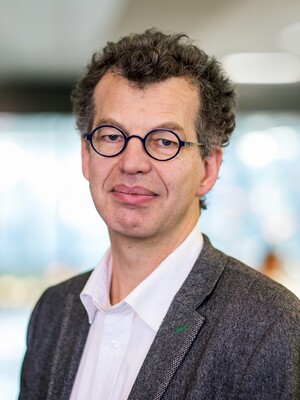
Julien Arino is a Professor in the Department of Mathematics at the University of Manitoba , specializing in Mathematical Epidemiology and Mathematical Population Dynamics . He is an active member of the Mathematical Biology group and focuses on the role of movement in disease transmission, with applications to both human and animal health. Department of Mathematics Faculty of Science University of Manitoba His research spans: Metapopulation dynamics with explicit movement Multi-pathogen and multi-species transmission modeling Computational epidemiology with data science integration Evaluation of travel control measures for disease variants Recent work includes publications on: Cholera transmission in Chad Multi-species bovine tuberculosis dynamics Measles resurgence patterns Software tools for R compilation and data visualization He maintains a public YouTube channel with lecture videos on Mathematical Epidemiology and contributes open-source code for scientific computing in R and Python. His methodological contributions include novel approaches to plot formatting and computational efficiency in epidemic modeling.
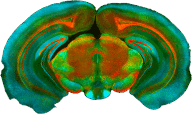
Tobias Bonhoeffer is Director of the Department of Synapses - Circuits - Plasticity at the Max Planck Institute for Biological Intelligence (formerly Max Planck Institute of Neurobiology) in Martinsried, Germany, and Professor at the Ludwig Maximilian University of Munich since 2002. He also serves as Associate Professor at the Norwegian University of Science and Technology (NTNU) since 2014. His research spans multiple levels of analysis, from molecular studies to systems neuroscience, with a primary focus on synaptic plasticity mechanisms and visual system organization. Born January 9, 1960 in Berkeley, California, Bonhoeffer earned his Physics diploma from Eberhard-Karls University of Tübingen (1984) and completed his neurobiology doctorate at the Max Planck Institute for Biological Cybernetics (1988). His postdoctoral work at Rockefeller University with Amiram Grinvald and Torsten Wiesel (1989-1990) was followed by research with Wolf Singer at the Max Planck Institute for Brain Research (1991-1992). He led a research group at the Max Planck Institute of Psychiatry (1993-1998) before becoming Director at the Max Planck Institute in 1998. Bonhoeffer's lab has made seminal contributions to understanding how synaptic plasticity relates to structural changes in the brain. They demonstrated that growth and retraction of dendritic spines underlies synaptic plasticity, that these structural changes facilitate relearning of previously acquired information, and how experience shapes cortical maps. His current research employs advanced imaging techniques to study neural circuits at unprecedented resolution, examining how visual experience drives representational changes in cortical organization and how these relate to memory processes. Analysis of his recent publications reveals a strong emphasis on mouse visual cortex organization, dendritic spine dynamics, and the relationship between structural and functional plasticity. His work increasingly incorporates computational approaches and advanced imaging methods to bridge cellular mechanisms with systems-level understanding of brain function. Member of the Academia Europaea (2003) Ernst Jung Prize for Medicine (2004) EMBO member (2006) Member of the German National Academy of Sciences Leopoldina (2010) Member of the National Academy of Sciences (NAS) (2020) Bonhoeffer has held significant advisory roles including Governor of the Wellcome Trust (2014-2021) and Scientific Advisor to the Chan Zuckerberg Initiative (since 2016). His lab continues to pioneer new methodologies for studying neural plasticity, with recent work focusing on synaptic changes during learning, structural correlates of memory, and how neural circuits adapt to changing environmental demands in both virtual and real-world contexts. The Bonhoeffer Lab maintains extensive international collaborations and trains the next generation of neuroscientists. Their research program integrates multiple approaches including two-photon imaging, virtual reality behavioral paradigms, and computational modeling to unravel the complex relationship between structural and functional plasticity in neural circuits.
Christian Høgel is Professor of Ancient/Byzantine Greek, Latin, and Modern Greek at Lund University's Centre for Languages and Literature within the Faculty of Humanities and Theology. He also serves as Manager of Research and Research Education for the Greek (Ancient and Byzantine) section and is a member of the Board of Section 3. Based in room SOL:L408c at Helgonabacken 12, Lund (Box 201, 221 00 Lund), he maintains an active research and teaching profile. Professor Høgel's research focuses on translation practices between Greek, Arabic, and Georgian; rewriting phenomena in Byzantine hagiography; and language in literary and historical contexts including Latin humanitas and imperial languages. His scholarly work bridges classical philology, Byzantine studies, and translation theory with particular attention to textual transmission and cultural contexts. His current research portfolio includes major projects such as StoryPharm (2024-2029), Retracing Connections (2020-2027), and Metaphrasis and Gender (2025-2029). Analysis of his recent publications reveals consistent engagement with hagiographical collections, female sainthood, translation practices, and imperial ideologies across Byzantine and medieval literature. His scholarly recognition includes: Working member of the Kungl. Vitterhetsakademien (elected 2024) Member of the Kungliga Humanistiska Vetenskapssamfundet in Lund (elected 2023) Editorial board membership for Interfaces , Eranos , and Scandinavian Journal of Byzantine and Modern Greek Studies Professor Høgel actively supervises research and has participated in significant collaborative initiatives including the Centre for Medieval Literature (2012-2022). His academic service extends to organizing international workshops, delivering invited talks globally, and contributing to major research networks focused on medieval literature and Byzantine cultural history. He teaches Greek Beginner's Course I (GREA01), Greek Level 3 - B.A. Course (GREK01), and Greek Literary History from Ancient Times to Early Byzantine Times (GREM15), training new generations of classical philologists and Byzantinists in language acquisition and literary analysis.
Anita Disney is an Assistant Professor of Neurobiology at Duke University and a Faculty Network Member of the Duke Institute for Brain Sciences and Center for Cognitive Neuroscience. Her research investigates neuromodulatory mechanisms in brain circuitry and pre-clinical Alzheimer's Disease neurochemistry using non-human primate models. Her educational background includes: Ph.D. from New York University (2005) Dr. Disney's research spans two integrated domains: Basic Research: Examining how acetylcholine, noradrenaline, serotonin, and oxytocin dynamically specify functional connectivity to enable flexible behavior Disease-Focused Research: Characterizing neurochemical alterations in the 20-30 year pre-symptomatic phase of late-onset Alzheimer's Disease (accounting for >95% of cases) Her lab pioneers question-driven methodology including novel biosensors combining electrophysiology with real-time neurochemical monitoring, proteomics, metabolomics, and comparative cortical anatomy. Analysis of her 15 most recent publications reveals persistent focus on cholinergic modulation in visual processing (60% of works), with increasing translational emphasis on Alzheimer's mechanisms since 2018. Her work consistently employs cross-species comparisons (macaque, marmoset, rodent) and integrates molecular, cellular, and systems-level approaches. No scientific prizes, fellowships, or medals were documented in the source material. However, her research program recently secured substantial funding through Duke's Research & Innovation Seed Grant program (December 2024; $2 million total). Dr. Disney leads an active research laboratory developing next-generation neurochemical monitoring tools. While specific advisees aren't listed, her lab trains researchers in electrophysiology, neuroanatomy, and proteomic techniques. Current funding supports her investigation of pre-clinical Alzheimer's biomarkers and neuromodulatory circuit dynamics. The Disney lab operates within Duke's neuroscience ecosystem as a core component of the Duke Institute for Brain Sciences, specializing in in vivo neurochemical-electrophysiological integration and comparative cortical architecture studies.
Professor Peter Österholm at Åbo Akademi University's Faculty of Natural Sciences and Engineering specializes in Environmental Geology with a focus on Acid Sulfate Soils . His work addresses critical environmental challenges through interdisciplinary approaches. 2023-2025 : Active principal researcher in two major projects, including EU BIONEER for post-mining waste management Research Themes : Geochemical remediation, microbial interactions, water quality impacts Recent publications highlight: 2025: Microbial responses to limestone/peat treatments in hypermonosulfidic sediments 2024: Machine learning applications for acid sulfate soil mapping 2023: Innovative macropore targeting to reduce acid-metal release Collaborations include European Regional Development Fund , Kiertokaari , and Finnish Transport Agency . He organized the 2024 GeoDays conference and serves as co-investigator in multiple international projects.
Dr. Heike Sträuber is a Senior Scientist in the Department of Microbial Biotechnology at the Helmholtz Centre for Environmental Research - UFZ (UFZ) in Leipzig, Germany. She leads research in the Working Group Microbiology of Anaerobic Systems, with additional collaboration with the Deutsches Biomasseforschungszentrum (DBFZ). Her work focuses on developing and analyzing anaerobic fermentation processes and their integration into biorefinery concepts for sustainable production of green chemicals. Dr. Sträuber earned her MSc in Biochemistry from the University of Leipzig (1992-1997) and completed her PhD at the Helmholtz Centre for Environmental Research - UFZ and University of Leipzig (1997-2001). Her academic journey includes postdoctoral positions at SIAB – Saxon Institute for Applied Biotechnology (2005) and UFZ (2002-2003), followed by research fellowships at UFZ in the Department of Bioenergy (2010-2014) and Research Group Flow Cytometry (2007-2009). Dr. Sträuber's research focuses on developing and analyzing anaerobic fermentation processes for the production of valuable green chemicals such as carboxylates, hydrogen, and biomethane. Her work specifically targets the conversion of organic agro-industrial waste, plant material, and gaseous substrates into useful products. A significant achievement is the development of the CAPRAFERM® process for producing medium-chain carboxylates from complex biomass, which has potential applications in future biorefineries. She also investigates how carboxylic acids can be produced alongside biogas or biomethane in existing biogas plants, working in close cooperation with the Biochemical Conversion and Biorefineries departments of the DBFZ. Her research methodology combines process engineering with microbial ecology to understand and optimize anaerobic fermentation systems through systematic material and energy flow analyses. Her extensive publication record demonstrates a focused research trajectory centered on chain elongation processes, microbial community dynamics in anaerobic systems, and process optimization for carboxylate production. The research spans fundamental microbial ecology, process engineering, and systems analysis, with increasing integration of machine learning approaches for predicting process performance. Her work addresses critical challenges in sustainable bioproduction, including feedstock utilization, process stability, and integration with existing infrastructure. Dr. Sträuber has been actively involved in several research projects including CapUp, Cell4Chem, PaplGas2, and AcMp, demonstrating her engagement with both fundamental and applied research questions. Her collaborative approach extends to working with both academic and industrial partners to translate laboratory findings into practical applications for sustainable chemical production. Based at the UFZ in Leipzig, Dr. Sträuber contributes to Germany's research infrastructure in sustainable biotechnology and bioeconomy. Her work bridges fundamental microbial research with practical applications, addressing critical challenges in sustainable chemical production including feedstock utilization, process stability, and integration with existing infrastructure. Through her research, she contributes to the development of circular economy approaches that convert waste streams into valuable products, supporting the transition toward more sustainable industrial processes.
Amine Mohamed Aboussalah is an Assistant Professor in the Department of Finance and Risk Engineering at the Tandon School of Engineering , New York University. He holds a Ph.D. in Artificial Intelligence and Operations Research from the University of Toronto. Research Interests: Focus on artificial intelligence, dynamical systems, and information geometry. Teaching Philosophy: Combines theoretical concepts with practical industry applications. Laboratory: Leads the Quantum Geometric Intelligence Lab .
Yingqian Zhang is an Associate Professor in the Information Systems group at the Industrial Engineering and Innovation Sciences department of Eindhoven University of Technology (TU/e). She is affiliated with the Eindhoven Artificial Intelligence Systems Institute (EAISI), specifically with the EAISI High Tech Systems and EAISI Foundational groups. Her research focuses on applying Artificial Intelligence to solve complex decision-making problems across various domains including logistics, transportation, manufacturing, and e-commerce. Dr. Zhang received her PhD in Computer Science from the University of Manchester, UK. Prior to joining TU/e, she served as an Assistant Professor in the Econometrics Institute at Erasmus University Rotterdam and as a postdoc researcher in the Algorithmics group at TU Delft. She was also a visiting professor at the Institute for Advanced Computer Studies at University of Maryland, College Park, USA. Her research expertise lies at the intersection of Artificial Intelligence and optimization, with particular focus on machine learning, deep reinforcement learning, and trustworthy data-driven optimization. Dr. Zhang develops socially aware algorithms that can optimize decisions in data-rich environments. Her work bridges the gap between theoretical AI advancements and practical applications in industrial settings, addressing real-world challenges through innovative algorithmic solutions. She is particularly interested in how AI can support human decision-making while maintaining transparency and trustworthiness. Dr. Zhang's recent publications reveal a strong trend toward applying graph neural networks and reinforcement learning to complex scheduling and optimization problems. Her work demonstrates increasing sophistication in handling stochastic elements in decision-making processes, with applications spanning healthcare diagnostics, logistics, transportation, and manufacturing. She has made significant contributions to the field of neural combinatorial optimization, particularly for job shop scheduling problems and vehicle routing. Dr. Zhang has received several prestigious awards recognizing her contributions to the field: Winner of the MLVRP2023 GECCO competition (2023) Best Paper Award from Omega-International Journal of Management Science (2017) Best Industrial Paper Award (2020) Best Student Paper Award (2019) Best Student Paper Award of ICAART 2022 (2022) As a dedicated mentor, Dr. Zhang supervises numerous PhD students including Mohsen Abbaspour Onari, Abdo Abouelrous, Luca Begnardi, Xia Jiang, Chengpeng Hu, Minshuo Li, Robbert Reijnen, Jesse van Remmerden, Bart von Meijenfeldt, Ya Song, and Igor Smit. Her research is supported by various grants, including the LEO (Learning and Explaining Optimization) project co-funded by Holland High Tech | TKI HSTM via the PPP allowance scheme for public-private partnerships. Dr. Zhang actively contributes to the academic community as the Chair of the Benelux Association for Artificial Intelligence (BNVKI) and as a member of the Technical Board for the European Big Data Value Association (BDVA). She serves as an associate editor for the "Annals of Mathematics and Artificial Intelligence" journal and participates in the technical Program Committee for major AI conferences such as IJCAI, AAAI, AAMAS, and ECAI. She is also on the executive committee of the Data Science meets Optimisation (DSO) working group of EURO to promote collaboration between AI and Operations Research communities.
Daniel Aloise is a Full Professor at the Department of Computer Engineering and Software Engineering, Polytechnique Montréal. He is a member of GERAD (Group for Research in Decision Analysis) and IVADO (Institute for Data Valorization), focusing on data science, optimization, and mathematical programming. His career spans institutions in Brazil and Canada, with significant contributions to clustering, classification, and operational research. Ph.D. in Exact algorithms for minimum sum-of-square clustering (HEC Montréal, 2009) Research Interests include data mining, optimization, mathematical programming, and algorithms. His work addresses challenges in big data, clustering algorithms, and classification models, applying these to diverse fields such as psychology, engineering, marketing, and disaster response. He explores polynomial-time algorithms for complex clustering problems and deep learning frameworks for unsupervised classification. Recent Articles emphasize optimization techniques (Benders decomposition, column generation), wireless signal prediction, bike-sharing inventory rebalancing, and serious games for disaster response data. These works integrate operations research, machine learning, and computational efficiency. Scientific Awards include the 2024 Omega Best Paper Award, 2023 CAPTRS Serious Games Award, and multiple CNPq Productivity Scholarships (2015–2018, 2012–2014). He received distinctions for his Ph.D. thesis and placement in international competitions. Supervision covers 7 Ph.D. and 12 Master's theses completed at Polytechnique Montréal, addressing topics like bug severity detection, anomaly analysis, and vehicle routing optimization. His lab collaborates with industry partners on real-time decision-making systems.
Prof. Dr. Dilek Tüzün Aksu is a faculty member at Yeditepe University's Faculty of Engineering, Department of Industrial Engineering. She has held various academic positions including Professor (2021-present), Associate Professor (2015-2021), and Assistant Professor (2006-2015). Her career spans institutions like Sabancı University and Lehigh University, with administrative roles as Department Head and Institute Deputy Director. Current role: Professor at Yeditepe University Research focus: Operations Research, Logistics, Optimization Industry collaborations: United Airlines, Obase Bilgisayar Education B.Sc. in Industrial Engineering, Boğaziçi University (1988-1992) Integrated Ph.D., Lehigh University (1993-1998) Research Interests center around Operations Research and Optimization , particularly in disaster response and logistics. Her work includes metaheuristics for post-disaster road clearance , dynamic programming for manufacturing optimization , and network modeling for transportation logistics . She combines mathematical programming with real-time decision systems in applications ranging from glass cutting to airline crew pairing . Scientific Contributions include 12+ peer-reviewed publications across disciplines like disaster management, urban planning, and production systems. Her 2017 Journal of Industrial Management Optimization paper introduced heterogeneous flow routing in constrained networks, while the 2022 IISE Transactions article developed stochastic models for debris clearance. Advising has involved 13+ theses across Yeditepe University and Sabancı University, including Elifcan Yasa's 2022 Ph.D. on earthquake road clearance and Bahadir Durak's 2018 dissertation on glass cutting optimization. Industry Engagement includes technical consulting for TÜBİTAK projects worth over 1.7M+ Turkish Lira between 2011-2023. She served as Principal Investigator for real-time glass cutting optimization and as Consultant for retail demand forecasting systems, container shipping scheduling, and workforce optimization platforms.
Vigneshkumar Balamurugan is a Tutor at Technische Universität München (TUM), affiliated with the Chair of Environmental Sensing and Modeling under Prof. Jia Chen. His work focuses on satellite-based environmental monitoring and emission modeling. Research Interests: His expertise lies in analyzing air pollutants and greenhouse gases (GHGs) through satellite measurements (TROPOMI, GOSAT, OCO-2/3, OMI) and machine learning techniques. He investigates the spatiotemporal dynamics of NO2, O3, and PM2.5, particularly examining the impact of the 2020-2021 COVID-19 lockdown on atmospheric composition. His methods integrate satellite data with ground observations and large-eddy simulation (LES) models to assess pollution drivers and emission patterns. Publication Trends: His recent work (2025-2023) emphasizes: Urban air quality modeling (Munich/Delhi) using LES and machine learning CO2 emission tracking via NO2 proxies in satellite data Comparative analysis of MODIS/VIIRS AOD products for PM2.5 prediction Standardization of low-cost sensor calibration models Contact: Email: vigneshkumar.balamurugan@tum.de
José Manuel Vasconcelos Valério Carvalho is a Full Professor at the School of Engineering, University of Minho, and Senior Researcher at Algoritmi Research Center's SEOR R&D Group. His academic career spans decades with significant contributions to combinatorial optimization and operations research. His educational background includes: PhD in Production Engineering (Operational Research major) from University of Minho MSc in Industrial Engineering and Operations Research from Virginia Polytechnic Institute (Fulbright scholar) Research focuses on large-scale integer programming applications in cutting/packing, network design, and operations planning. He develops exact and heuristic algorithms for complex optimization problems, frequently integrating domains like bin packing with vehicle routing using arc-flow formulations and column generation. Recent publications (2016-2025) reveal strong trends toward integrated logistics solutions, emphasizing temporal aspects, multi-trip scenarios, and combined routing/packing challenges. His methodologies consistently yield robust formulations for real-world supply chain applications. He has supervised 7 postdoctoral and 12 PhD students, many achieving award-winning work. Research leadership includes coordination of FCT-funded national projects and European project workpackages. As core member of Algoritmi's SEOR Group and former coordinator of the SEOOR Research Line (consistently rated 'Excellent' by international panels), he contributes to Portugal's leading operations research team.
Filipe Pereira Pinto Cunha Alvelos is an Associate Professor at the University of Minho's School of Engineering, Department of Production and Systems. He holds a PhD in Operational Research from the University of Minho and specializes in mathematical optimization models and metaheuristics for complex systems. His research focuses on: Operations Research and Optimization Integer programming and branch-and-price methods Local search metaheuristics for complex problems Applications in wildfire management, healthcare logistics, and telecommunications Recent work emphasizes wildfire prevention through optimization frameworks, resource dispatch algorithms, and fire spread modeling. He leads the O3F project (2021-2024) for forest fire reduction and chairs the Optimization and Wildfire Conference (2024). Scientific contributions include publications in European Journal of Operational Research , International Transactions in Operational Research , and conference proceedings of Lecture Notes in Computer Science . His work combines column generation techniques with metaheuristics for practical optimization.
Prof. Frits C.R. Spieksma is a full professor in the Department of Mathematics and Computer Science at Eindhoven University of Technology (TU/e) , where he leads research within the Combinatorial Optimization Group. He has held academic positions at Maastricht University, KU Leuven, and the University of British Columbia, and has been at TU/e since 2018. Education: M.Sc. in Econometrics, University of Groningen (1987) Ph.D. in Operations Research, Maastricht University (1992) Research Focus: His work lies at the intersection of combinatorial optimization and real-world applications . Key themes include: Scheduling and clustering problems, especially in sports tournaments Organ allocation optimization for Eurotransplant Assignment and transportation problems Approximation algorithms and graph-theoretic optimization Scientific Service & Leadership: Founder and ex-Chair, EURO Working Group OR in Sports Member, Steering Committees of MAPSP and MathSports International President, EURO (Association of European Operational Research Societies) Former Vice-President, IFORS Former President, Belgian Society of Operations Research (ORBEL) Editorial Boards: Associate Editor, 4OR (2015–present) Associate Editor, Journal of Quantitative Analysis in Sports (2014–present) Associate Editor, Operations Research Letters (2008–2024) Former Associate Editor, INFORMS Transactions on Education , OMEGA , Computers & Operations Research , IIE Transactions , Naval Research Logistics PhD Supervision & Mentoring: He has supervised more than 25 PhD theses at KU Leuven and TU/e, many of whom now hold academic positions worldwide. Conference & Workshop Organisation: Recent leadership roles include General Chair of IPCO 2022 (Eindhoven), organiser of Benders Day 2024 , and co-organiser of the Dagstuhl Seminar on Fairness in Scheduling and Resource Allocation (March 2025).
Kamlesh Mathur is a Professor and Chair of the Operations Department at the Weatherhead School of Management, Case Western Reserve University. He has been affiliated with the institution since his initial appointment in 1980 and contributes to supply chain logistics, vehicle routing, and service center location optimization. Education: PhD (Case Western Reserve University, 1980), MS (Wayne State University, 1976), MTech (IIT Kanpur, 1975), BE (Engineering College Jodhpur, 1972) His research focuses on supply chain distribution, emphasizing vehicle routing efficiency and service center location strategies . Recent publications highlight stochastic optimization, multi-echelon logistics, and reverse supply chain design, with applications in manufacturing and telecommunications. Key trends in his work include location-allocation modeling , heuristic algorithm development , and interactive software systems for operations research problems, reflecting interdisciplinary applications from biomedical engineering to radio frequency management. Dr. Mathur teaches courses in business statistics, predictive modeling, and global supply chain logistics. He serves on the editorial review board of the Journal of Business Logistics and is a long-standing member of INFORMS.