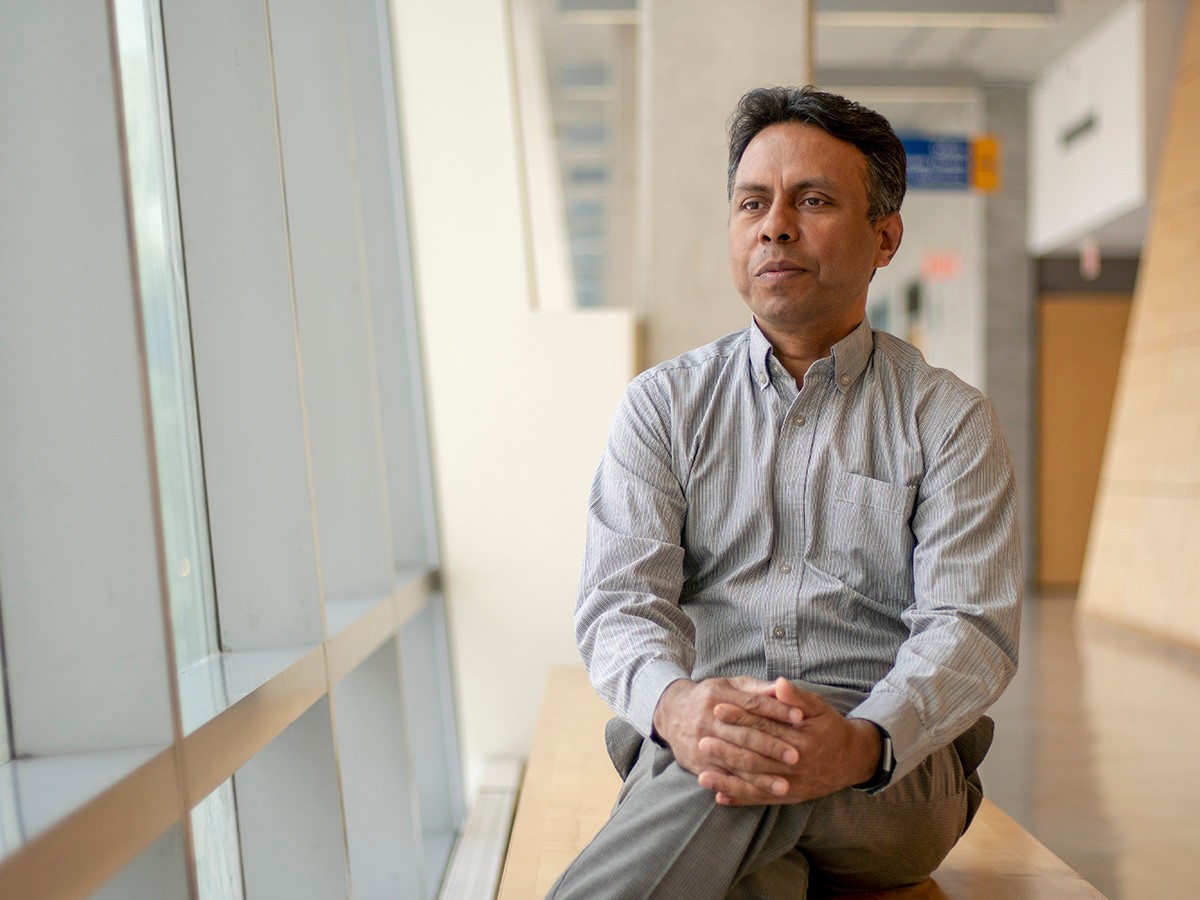
Dr. Mohamed Wahab Mohamed Ismail is a Professor in the Department of Mechanical, Industrial, and Mechatronics Engineering at Toronto Metropolitan University. He holds a PhD from the University of Toronto, an MEng from Asian Institute of Technology, and a BSc Eng from the University of Moratuwa. His expertise spans Real Options Analysis, Operations Research, Global Supply Chain Design, and Risk Hedging with applications in energy, healthcare, and manufacturing sectors. Research interests include optimizing decision-making under uncertainty, integrating machine learning with operations research, and addressing climate-related challenges in supply chains. Notable projects include modeling weather impacts on retail sales (e.g., coffee demand forecasting for a major grocery chain), financial modeling for flexible manufacturing systems in automotive industries, and rebate policy analysis for energy efficiency upgrades. Key Contributions: Developed frameworks for supply chain resilience, energy policy evaluation, and game-theoretic product launch strategies. Teaching: Teaches courses like IND 833 (Financial Engineering), IND 710 (Production Systems), and ME8142 (Supply Chain Management). His 2023-2025 articles focus on reinforcement learning applications in logistics, real options valuation for manufacturing flexibility, and multi-dimensional policy analysis. Awards include a prestigious scholarship from the King of Thailand during his master’s studies. Labs/Teams: Active in interdisciplinary teams addressing energy systems optimization, smart manufacturing, and climate resilience.
Hossein Hashemi Doulabi is an Associate Professor in Industrial Engineering (Operations Research) at Concordia University. His research focuses on healthcare optimization under uncertainty, large-scale optimization, stochastic programming, and decomposition-based algorithms. He holds a PhD from Polytechnique Montréal (2017) and completed a postdoctoral fellowship at Georgia Institute of Technology (2018). He also served as a Visiting PhD Student at MIT's Department of Computer Science (2015). Academic Background: Assistant Professor at Concordia University (2018–2023), transitioning to his current role. Education: PhD in Industrial Engineering (Polytechnique Montréal, 2017), Postdoc (Georgia Tech, 2018). Research Interests: Prioritizes healthcare system optimization under uncertainty, stochastic programming methodologies, and algorithmic advancements in integer programming. Specializes in decomposition techniques like Benders decomposition, Lagrangian relaxation, and column generation. Grants & Advising: No specific grants or advising details provided in the text. Focuses on mentoring through research in optimization theory and applications.
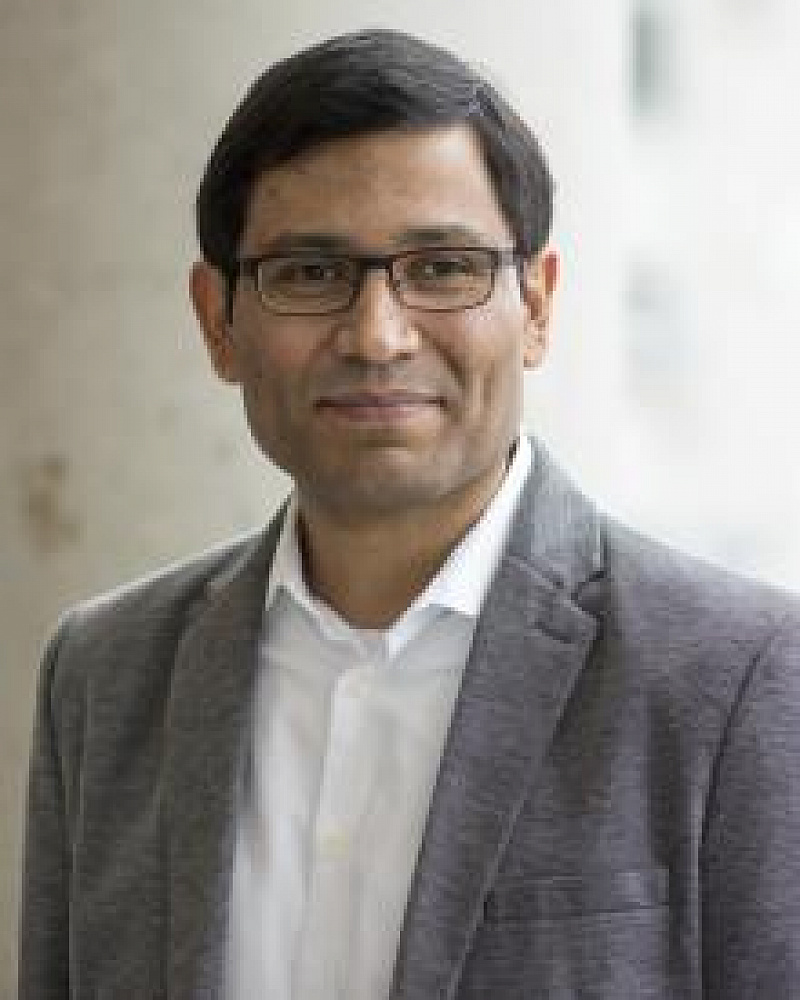
Davood Rafiei is a Professor in the Faculty of Science at the University of Alberta, specializing in the Department of Computing Science. His research bridges databases, natural language processing, and web technologies, with current projects on large language models and data integration. He holds a B.Sc. in Computer Engineering from Sharif University of Technology (1990), an M.Sc. in Computer Science from the University of Waterloo (1995), and a Ph.D. from the University of Toronto (1999). His work explores semantic annotation, table transformations, and adversarial analysis in social media. Recent publications emphasize applications of LLMs to structured data tasks like text-to-SQL conversion and knowledge graph integration. Research trends show consistent innovation in NLP-driven data management solutions, with collaborations spanning Google, Kyoto University, and the University of Paris. No awards, grants, or lab/team details are documented.
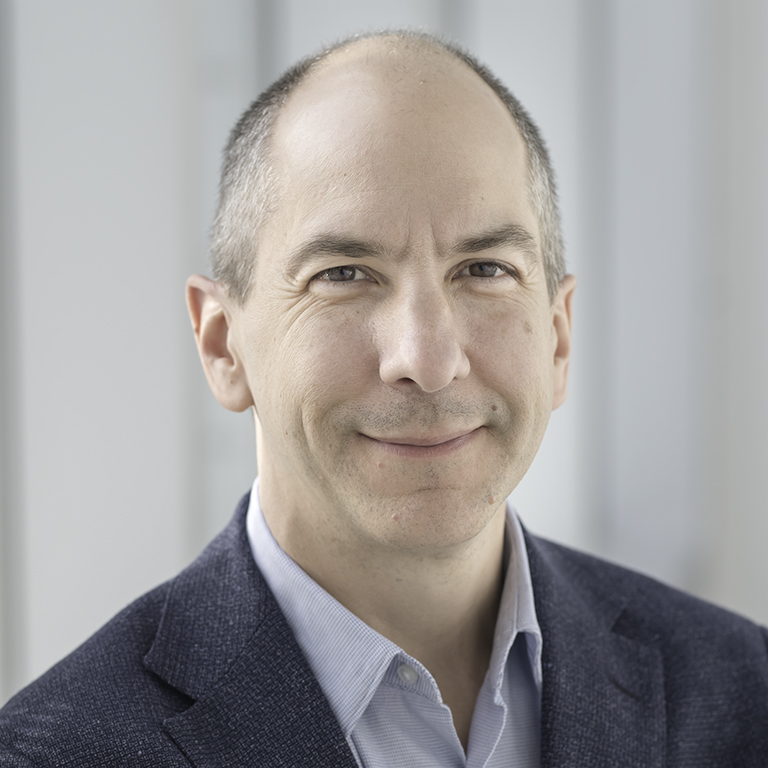
Antoine Sauré is an Associate Professor at the Telfer School of Management, University of Ottawa, where he holds the Telfer Research Fellowship in Healthcare Analytics. With a Ph.D. in Management Science from the University of British Columbia (2012) and prior degrees from the University of Chile, he brings over a decade of experience applying advanced analytics to large-scale service operations, particularly in healthcare. Education B.Sc. Eng., University of Chile B.Eng., University of Chile M.Sc., Operations Management, University of Chile Ph.D., Management Science, University of British Columbia (2012) Research Interests Dr. Sauré’s scholarship centers on stochastic optimization and approximate dynamic programming to solve complex resource-allocation problems under uncertainty. His work spans: Cancer-care operations and chemotherapy scheduling Capacity planning and patient flow optimization Home-care routing and scheduling with uncertain demand Disaster-response logistics for medical supply chains Digital platforms for learning health systems Methodologically, he integrates advanced mathematical modelling with real-world implementation, collaborating closely with the British Columbia Cancer Agency and other healthcare providers to improve timely access to quality care. Research Funding & Grants Since 2016, Dr. Sauré has secured more than CAD $2 million in research funding. Major ongoing projects include: Co-Principal Investigator, CIHR grant “Changing primary care capacity in Canada (4C)” (2024-2028, CAD $1,041,430) Principal Investigator, NSERC Discovery Grant “Approximate Dynamic Programming Methods for Dynamic Resource Allocation Problems in Health Care” (2018-2026, CAD $229,500) Co-Investigator, FONDECYT Chile “Advanced Analytics and AI for Public Health Policy Design” (2023-2027, USD $370,000) Co-Investigator, NRC “Resilience and Adaptation to Climatic Extreme (RACE) Wildfires” (2021-2024, CAD $75,000 share of CAD $1.9 M) Multiple Telfer internal grants supporting student thesis research and interdisciplinary teams (2016-2024) Student Supervision & Teams Dr. Sauré has supervised or co-supervised a diverse group of graduate students whose thesis topics range from staff-scheduling optimization to postpartum nurse-led clinic design. His research group actively collaborates with clinicians, policy makers, and industry partners to translate analytical insights into sustainable healthcare improvements.
Antoine Legrain is an Associate Professor at Polytechnique Montréal in the Department of Mathematics and Industrial Engineering since 2019. His research focuses on real-time operations management , stochastic optimization , and dynamic problem-solving to enhance healthcare access and multimodal transportation systems. He is affiliated with multiple research centers: GERAD (Decision Analysis Study and Research Group) CIRRELT (Interuniversity Research Center on Enterprise Networks, Logistics, and Transport) HANALOG (Tier 1 Canada Research Chair in Healthcare Analytics and Logistics) Canada Excellence Research Chair in Data Science for Real-Time Decision Making IVADO (Institute for Data Valorization) His expertise spans operational research , logistics , mathematical modeling , algorithm development , and optimization , with applications in public transport, healthcare scheduling, and waste management. His recent work includes systematic reviews on data privacy in MaaS and algorithmic solutions for dial-a-ride problems. Antoine holds a Ph.D. in Mathematics , an M.Sc.A. in Applied Mathematics , and an Engineering Diploma from École Centrale Paris . He has supervised one Master's thesis and secured research grants from organizations like the Fonds de recherche du Québec and Bank of Canada .
Jean-François Cordeau is a Professor at HEC Montréal, holding the Chair in Logistics and Transportation. He is affiliated with the Interuniversity Research Centre on Enterprise Networks, Logistics and Transportation (CIRRELT) and the Group for Research on Decision Analysis (GERAD). His expertise spans Logistics, Transportation, Combinatorial Optimization, and Mathematical Decomposition. Education: M.Sc. in Operational Research from HEC Montréal and Ph.D. in Engineering Mathematics from Polytechnique Montréal. Research focuses on logistics networks, transportation optimization, and stochastic modeling. Notable contributions include work on vehicle routing, hub network design, and supply chain planning. Recent publications address facility location under uncertainty, electric vehicle routing, and crowd-shipping optimization. Recipient of the Best Application Paper at the 10th IFAC Conference (2022) for a case study on optimizing routes for COVID-19 testers. Supervised 17 graduate students in recent years, including 3 PhD graduates and 14 MSc projects in logistics optimization and supply chain management. Teaches courses such as Optimization of Logistics and Transportation Networks and Planning and Control of Logistics Systems . Active in industry collaborations, contributing to maritime logistics, railway operations, and intermodal transportation solutions.
Jorge Mendoza Gimenez is a Professor in the Department of Logistics and Operations Management at HEC Montréal. He holds a Research Professorship in Clean Transportation Analytics and is a member of CIRRELT (Interuniversity Research Centre on Enterprise Networks, Logistics and Transportation). His expertise spans operations research, vehicle routing, scheduling, metaheuristics, and decomposition approaches. Education: Ph.D. in Informatique Appliquée (Université de Nantes), Ph.D. in Industrial Engineering (Universidad de los Andes), and M.Sc. in Industrial Engineering (Universidad de los Andes). Research Interests: Focus on solving complex logistics and transportation problems, particularly in electric vehicle routing, charging infrastructure optimization, and metaheuristic algorithm design. His work aims to bridge theoretical advancements with practical applications in sustainable transportation systems. Key Awards: Recipient of the 2023 Best Paper Award in Transportation Science for contributions to ride-hailing systems, and the HEC Montréal Research Prize 2023 for outstanding publication achievements. Advising & Grants: Supervised 4 doctoral and master’s students, including work on electric transit networks and stochastic production planning. Active in project supervision across supply chain optimization and sustainability initiatives. Labs/Teams: Engaged with CIRRELT and collaborates on clean transportation analytics projects.
Sylvain Perron is a Full Professor at HEC Montréal's Department of Decision Sciences, affiliated with GERAD (Group for Research in Decision Analysis) and IVADO (Institute for Data Valorization). He specializes in mathematical programming, global optimization, and network analysis. His work focuses on developing algorithms for complex systems, including column generation, clustering, and quadratic programming applications. Education: Ph.D. in Engineering Mathematics (École Polytechnique Montréal, 2004) M.Sc. in Modeling and Decision (HEC Montréal, 1998) B.A.A. in Business Administration (HEC Montréal, 1995) Research Interests: Perron's research bridges theoretical and applied optimization, addressing challenges in logistics, telecommunications, and data science. Key areas include community detection in networks, vehicle routing optimization, and energy planning models. Publications: Recent work spans dynamic network analysis, heuristic algorithms for dispersion problems, and energy management systems. His contributions highlight interdisciplinary applications of optimization techniques. Awards: Recipient of multiple grants and awards, including the Bourgoin Grant (2000-2002) and Excellence Awards from HEC Montréal. His research is supported by funding from MITACS, CRSNG, and FQRNT. Grants: Projects include trajectory optimization for aviation, supply chain management, and data mining collaborations. Notable funding includes a $1.028M CRIAQ grant for air trajectory research and a GERAD-sponsored column generation project. Supervision: Advised over 20 graduate students, focusing on optimization, network analysis, and algorithm development. Current and past students include leaders in logistics, telecommunications, and academic research. Labs/Teams: Active in GERAD's optimization group and IVADO's data science initiatives, contributing to collaborative research networks across Quebec and internationally.
Jacques Desrosiers is a Full Professor at HEC Montréal in the Department of Management Science since 1989. He has been with the institution since 1978 and is a founding member of the Group for Research in Decision Analysis (GERAD). His research focuses on optimization, transportation systems, and algorithmic methods for solving complex linear and combinatorial problems. He has received prestigious recognitions, including the Grand Prize for Excellence in Research (2015) and Fellowship in the Royal Society of Canada (2001). His work spans contributions to column generation techniques, degenerate linear programming, and vehicle routing problems. Notable achievements include advancing the minimum mean cycle-canceling algorithm, vector space decomposition for large-scale problems, and developing efficient heuristics for logistics challenges. His research bridges theoretical advancements and practical applications, influencing transportation and operations management globally. Desrosiers has authored over 150 peer-reviewed articles, with recent focus on algorithmic optimization, primal degeneracy handling, and decomposition methods. His contributions to software tools like COIN-OR’s CLP further highlight his commitment to advancing computational methods in operations research. Awards: Royal Society of Canada Fellowship (2001), HEC Montréal Grand Prize (2015) Key Research Themes: Column Generation, Network Flow Algorithms, Linear Programming, Vehicle Routing, Degeneracy Resolution Labs/Teams: Co-founder and active member of GERAD, collaborating on optimization projects
Margarida Carvalho is an Associate Professor in the Department of Computer Science and Operations Research at Université de Montréal, where she holds the FRQ-IVADO Research Chair in Data Science for Combinatorial Game Theory. She is also an Associate Academic Member at Mila (Quebec AI Institute), contributing to their research in AI for Humanity. Her academic journey spans from Portugal to Canada, where she has established herself as a leading researcher at the intersection of operations research and game theory. Carvalho earned her bachelor's and master's degrees in mathematics from the Faculty of Sciences of the University of Porto (FCUP), followed by a PhD in Computer Science from the same institution in 2016. Her doctoral work, which focused on game theory applications for kidney exchange programs, earned her the prestigious 2018 EURO Doctoral Dissertation Award, making her the first Portuguese woman to receive this honor. After completing her PhD, she worked as an IVADO Postdoctoral Fellow at Polytechnique Montréal before joining Université de Montréal as an Assistant Professor in 2018. Her research focuses on combinatorial optimization and algorithmic game theory, with applications spanning healthcare (kidney exchange programs, hospital operations), sustainable development (electric vehicle infrastructure, urban planning), and education (school choice systems). She develops novel mathematical programming approaches to model and solve problems involving multiple decision-makers with potentially conflicting objectives. Her work bridges theoretical advances in optimization with practical implementations that address real-world challenges in resource allocation and decision-making under uncertainty. Notably, her research on fairness in kidney exchange programs has contributed to more equitable organ allocation policies. Her 15 most recent publications reveal a strong trend toward integrating game-theoretic concepts with practical optimization challenges, particularly in healthcare and sustainable infrastructure. She has pioneered approaches that balance utilitarian objectives with fairness considerations, developed novel formulations for bilevel and multilevel optimization problems, and created learning-based frameworks for complex decision environments. Her work consistently demonstrates how mathematical rigor can inform practical policy decisions in critical domains. 2018 EURO Doctoral Dissertation Award for her PhD thesis on game theory applications for kidney exchange programs Mathematical Programming 2024 Meritorious Service Award Teaching Excellence Award from Université de Montréal Supervised student Maria Bazotte receiving the Dupačová-Prékopa Best Student Paper Prize in Stochastic Programming Carvalho actively advises graduate students, with Marylou Fauchard (Master's) and William St-Arnaud (PhD) among her current advisees. Her research is supported by grants from Hydro-Québec, the Natural Sciences and Engineering Research Council of Canada (Discovery grant 2017-06054 and Collaborative Research and Development Grant CRDPJ 536757–19), and FRQ-IVADO. She serves as an associate editor for INFORMS Journal on Computing, OR Spectrum, and Dynamic Games and Applications, and is a founding board member and treasurer of the Bilevel Optimization Society. She teaches courses in Mathematical Programming, Operational Research Models, and Discrete Mathematics at Université de Montréal. Carvalho is affiliated with Mila (Quebec AI Institute), where she contributes to research initiatives focused on AI for Humanity, particularly in the areas of algorithmic fairness and sustainable development. Her FRQ-IVADO Research Chair supports her work on combinatorial game theory applications, and she collaborates with researchers across disciplines through the IVADO research community. She has been instrumental in establishing the Bilevel Optimization Society, creating a dedicated forum for researchers working on hierarchical decision-making problems.
Onur Ozturk is an Associate Professor at the Telfer School of Management, University of Ottawa. He holds a PhD in Industrial Engineering from Grenoble Institute of Technology (2012), followed by a postdoctoral fellowship at Ivey Business School (2012–2014). Prior to his current position, he worked as an Assistant Professor at ESIEE Paris (2014–2017). His research focuses on large-scale optimization in healthcare and transport sectors, leveraging scheduling theory, simulation modeling, and stochastic processes. He has contributed to projects such as the Efficacity Institute’s urban freight transport optimization in Île-de-France. Research interests include: Integer linear programming and operations research applications Scheduling and simulation modeling for healthcare logistics and transportation Optimization of pandemic-related operations (e.g., staff scheduling in hospitals, patient admissions) Bi-criteria optimization in medical sterilization and manufacturing systems Recent funded research includes a NSERC grant (2019–2026; $169,000) for batch scheduling methods, and multiple internal grants addressing healthcare routing (2021), medical sterilization (2021), and pandemic staffing (2020–2021). His work emphasizes practical solutions for urban logistics, healthcare capacity planning, and crisis management. No scientific awards are explicitly mentioned in the text. His teaching focuses on business analytics, operations management, and stochastic modeling.
Daniel Aloise is a Full Professor at the Department of Computer Engineering and Software Engineering, Polytechnique Montréal. He is a member of GERAD (Group for Research in Decision Analysis) and IVADO (Institute for Data Valorization), focusing on data science, optimization, and mathematical programming. His career spans institutions in Brazil and Canada, with significant contributions to clustering, classification, and operational research. Ph.D. in Exact algorithms for minimum sum-of-square clustering (HEC Montréal, 2009) Research Interests include data mining, optimization, mathematical programming, and algorithms. His work addresses challenges in big data, clustering algorithms, and classification models, applying these to diverse fields such as psychology, engineering, marketing, and disaster response. He explores polynomial-time algorithms for complex clustering problems and deep learning frameworks for unsupervised classification. Recent Articles emphasize optimization techniques (Benders decomposition, column generation), wireless signal prediction, bike-sharing inventory rebalancing, and serious games for disaster response data. These works integrate operations research, machine learning, and computational efficiency. Scientific Awards include the 2024 Omega Best Paper Award, 2023 CAPTRS Serious Games Award, and multiple CNPq Productivity Scholarships (2015–2018, 2012–2014). He received distinctions for his Ph.D. thesis and placement in international competitions. Supervision covers 7 Ph.D. and 12 Master's theses completed at Polytechnique Montréal, addressing topics like bug severity detection, anomaly analysis, and vehicle routing optimization. His lab collaborates with industry partners on real-time decision-making systems.
Hatem Ben Amor is an Associate Professor in the Department of Mathematics and Industrial Engineering at Polytechnique Montréal. With over two decades of academic experience since completing his Master's degree in 1997, he has established himself as a researcher in operations research and mathematical optimization. His research primarily focuses on: Operations Research and Mathematical Optimization Column Generation Algorithms and Stabilization Techniques Shortest Path Problems with Resource Constraints Vehicle Routing and Scheduling Linear and Integer Programming Professor Ben Amor's publication record demonstrates consistent scholarly output in top-tier operations research journals including Operations Research, Transportation Science, and Computers & Operations Research. His work shows a progression from foundational research on column generation stabilization to more applied work in transportation optimization, reflecting both theoretical depth and practical relevance in the field. He has supervised graduate students, including at least one doctoral candidate whose research extended his work on shortest path algorithms. His research has practical implications for transportation logistics, manufacturing optimization, and resource allocation problems. Contact information: Email: hatem.ben-amor@polymtl.ca Phone: (514) 340-4711 ext. 6042 Office: AA-4431
Jean-François Côté is a Full Professor at the Department of Operations and Decision Systems within the Faculty of Business Administration at Laval University. His research focuses on combinatorial optimization, stochastic programming, and mathematical programming with applications in vehicle routing, cutting and loading problems, and logistics optimization. Dr. Côté holds a Doctorate in Computer Science, Operations Research from the University of Montreal, along with Master's and Bachelor's degrees in the same field from the same institution. His academic credentials provide a strong foundation for his interdisciplinary research at the intersection of computer science and operations research. His research spans several key areas in operations research including: Combinatorial optimization techniques for complex routing problems Stochastic programming approaches for handling uncertainty in logistics Mathematical programming models for integrated decision making Vehicle routing and delivery optimization in various contexts Cutting and loading problems in transportation and manufacturing Professor Côté's recent publication record demonstrates a strong focus on solving complex logistics and transportation problems with mathematical rigor. His work addresses challenging real-world problems including same-day delivery optimization, bike sharing systems, home healthcare routing, and automotive manufacturing sequencing. His methodological contributions include novel algorithmic approaches such as logic-based Benders decomposition, disaggregated integer L-shaped methods, and branch-and-regret algorithms. Dr. Côté has published extensively in top-tier operations research journals including: INFORMS Journal on Computing European Journal of Operational Research Transportation Science Computers & Operations Research Operations Research He actively collaborates with researchers across North America and Europe through the CIRRELT research center. His work addresses practical problems faced by industries including transportation, healthcare, manufacturing, and e-commerce. Professor Côté supervises graduate students working on cutting-edge optimization problems and contributes to advancing both theoretical and applied aspects of operations research. His laboratory, part of the broader research ecosystem at Laval University, focuses on developing innovative mathematical models and algorithms to solve complex decision-making problems in logistics and supply chain management.